Cushion Quality Evaluation: Understanding Foam Specifications
Introduction
It is surprisingly difficult to understand why one simple block of polyurethane cushion foam costs fifty dollars while another identical looking block costs five hundred. Sitting on a cushion for five minutes in a store reveals absolutely nothing about how it will feel on day three hundred.
I learned this the hard way after owning sofas that felt great for a month and then quietly collapsed into hammocks. At first I assumed I had just chosen the wrong style or that my body was the problem. Over time I realized the issue was almost always hidden inside the cushions, not in how they looked or how soft they felt on day one.
Most furniture stores encourage you to judge a sofa by a quick sit and a fabric swatch. That approach is almost useless for predicting comfort and durability. Foam quality reveals itself slowly, and by the time it does, the return window is long gone.
What I want to give you here is a way to look past the surface and ask better questions while you are still in the showroom. You do not need technical credentials or lab equipment. You just need to know what details actually matter and which sales answers are designed to sound reassuring without saying anything concrete.
If you understand a few basic truths about cushion foam before you shop, you can avoid paying premium prices for short lived comfort. My goal is to help you walk out with a sofa that feels boringly consistent years from now, not just impressive for the first week.
The Air Trap
The Air Trap
The furniture industry thrives on the "Day-One Feel." Manufacturers pump cheap, low-density foam full of air and chemical softeners so it feels plush in the showroom. Six months later, the air escapes, the chemical bonds break, and you are left sitting on the hard wooden rail beneath.This is the moment where I stop trusting my body and start using my head. The soft, welcoming cushion that makes you smile in the store is often doing that by cheating, not by being well made.
What actually determines whether a cushion survives is not how it feels today but how its foam is built. According to standardized testing like ASTM D3574, three properties decide the outcome, density, firmness, and resilience. You do not need to memorize the standard, but you do need to know how to ask about these ideas in plain language.
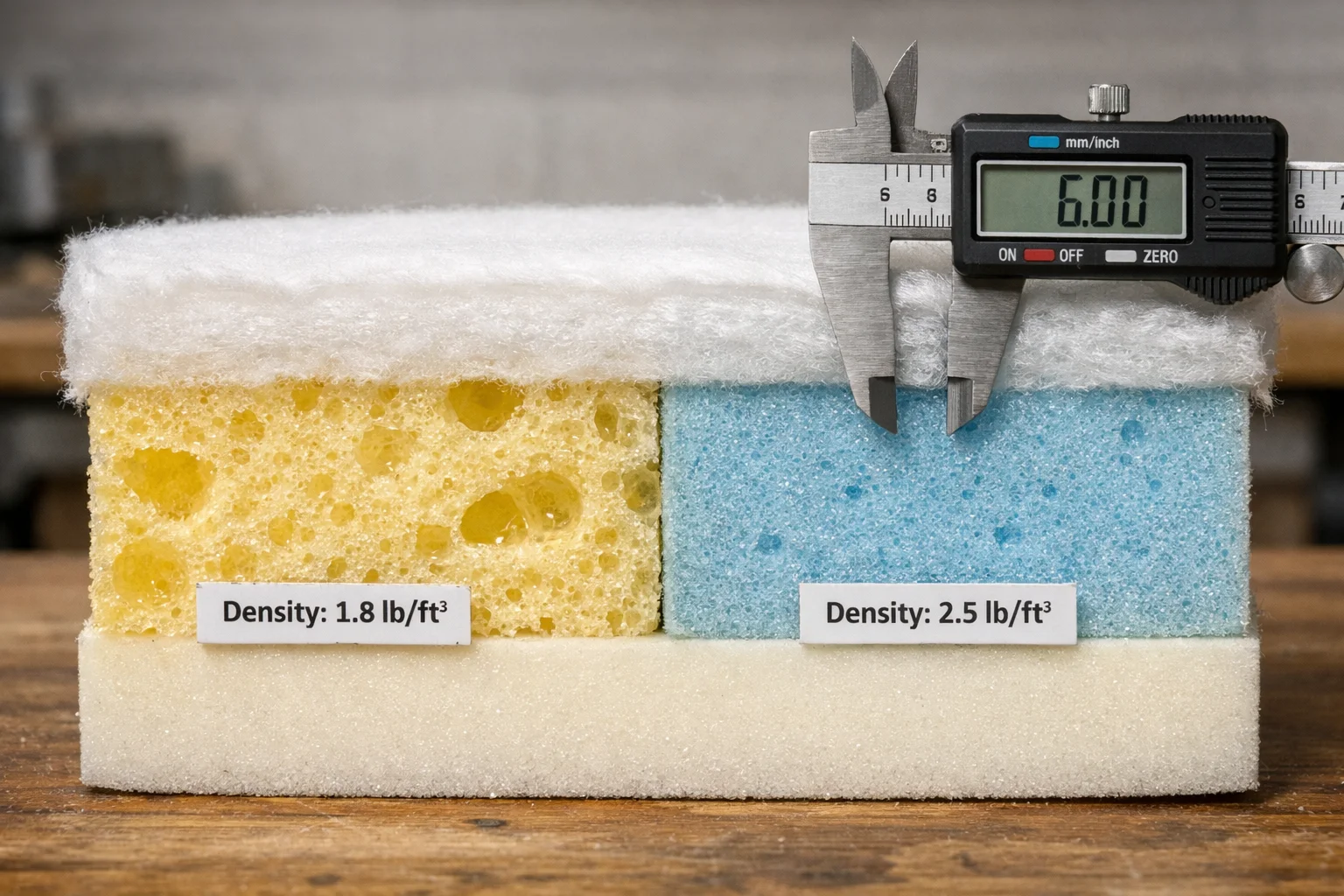
Density is the big one, and it has nothing to do with how firm the cushion feels. I learned to think of density as how much actual foam material exists versus trapped air. In a showroom, I ask the salesperson directly what the foam density is in pounds per cubic foot. If they cannot answer or dodge the question with comfort talk, I assume the density is low and move on.
When they do answer, I listen carefully. For a sofa that gets daily use, anything under about two pounds per cubic foot has repeatedly failed me over time. Higher density does not guarantee comfort, but low density almost guarantees sagging.
Firmness, often described as ILD, is where people get confused. A cushion can be very soft and still be high quality, or it can be firm and still collapse. I ignore whether the salesperson calls it plush or supportive and instead focus on whether the firmness is paired with decent density. Soft plus dense can last, soft plus light usually does not.
Resilience is harder to measure in a store, but you can fake a basic check. I press my hand slowly into the cushion and then release it. If it takes its time coming back or looks a little tired afterward, I take that as a warning. Good foam snaps back without drama.
The most important shift for me was realizing that comfort is not a feeling, it is a behavior over time. In the showroom, I am not testing how the sofa treats me for five minutes. I am testing whether the materials are honest enough to behave the same way after thousands of sits.
Once I started asking about what was inside the cushion instead of how it was supposed to feel, sales conversations changed. Some ended quickly, which saved me time. Others finally gave me real information, which is the only thing that protects you after the return window closes.
The Density Number
If you remember only one specification while shopping, this is the one I hold onto. Density equals duration. Everything else is secondary.
Density is simply how much foam material exists inside a cushion. It is measured as weight per cubic foot, and it has nothing to do with whether the cushion feels soft or firm when you sit down.
I have learned the hard way that very low density foam is mostly air. Around one point two pounds per cubic foot is common in cheap furniture, even when the price tag does not look cheap. That kind of cushion often feels great at first and then collapses somewhere between one and two years, sometimes sooner.
When I hear a density around one point eight pounds per cubic foot, I slow down and pay attention. That level has been the minimum that has not actively disappointed me in normal residential use. It is not luxurious, but it usually holds its shape long enough to feel fair for the money.
Once you get into the mid twos, around two point five pounds per cubic foot and up, the behavior changes completely. This is often called high resiliency foam, and what I notice most is the weight. These cushions fight gravity instead of surrendering to it, and they tend to look the same years later.
The 2.5lb Rule
I once lifted a cushion from a professional grade sofa and nearly dropped it from the weight. It was fifteen pounds of solid two point eight density foam. That cushion is still perfectly flat and supportive a decade later. Mass is the only hedge against gravity.In a showroom, I do not guess density by feel. I ask directly what the foam density is in the seat cushions, stated in pounds per cubic foot. If the answer is vague, rounded, or replaced with words like premium or luxury, I treat that as a no.
If the salesperson needs to look it up, I wait. If they cannot find it, I assume the density is low and move on. Good foam is something manufacturers brag about, not something they hide.
I also pay attention to whether the density applies to the entire cushion or just a thin top layer. Some sofas use a dense sheet on top of cheap foam underneath, which buys them a few months of decent behavior. I ask whether the core is the same density all the way through.
What density does for you is not immediate comfort. It buys you time. It buys you mornings where the cushion still looks level and evenings where you are not sinking into a permanent dent.
When I stopped letting initial softness distract me and started anchoring my decisions to the density number, my furniture lasted longer and my frustration dropped. If you want one simple filter that cuts through marketing noise, this is it.
The ILD Number: Firmness vs. Support
ILD stands for Indentation Load Deflection, which is a long way of saying how hard you have to push to compress the foam partway. In practical terms, it describes how firm the cushion feels when you first sit down.
This is where I see a lot of people, including sales staff, get led astray. Firmness is not support, and a firm cushion can still be badly made. I have owned cushions that felt stiff and upright in the store and still collapsed into nothing within a year.
What ILD really controls is initial resistance. A higher ILD pushes back harder when you sit. A lower ILD lets you sink in more easily. Neither one tells you how long the foam will survive once your body weight has worked on it every day.
The "Crust" Deception
One of the more frustrating tricks I have run into is what I think of as the crust. A manufacturer takes very cheap, low density foam and chemically stiffens it so it registers as firm. In the store, it feels supportive and reassuring. After months of use, that stiffness breaks down, and because there was very little actual foam mass underneath, the cushion offers no real resistance at all.When this happens, people often blame themselves. They think their posture is bad or that they chose something too soft. In reality, the cushion never had the structure to hold up long term.
What I look for instead is balance. Over time, I have found that a medium firmness, usually in the low to mid thirties for ILD, paired with genuinely high density foam behaves the most honestly. It does not try to impress you in the first five minutes, but it also does not betray you later.
In a showroom, I ask two questions back to back. I ask what the foam density is, and then I ask what the ILD is. If the answer is a very high ILD paired with a low density number, I walk away. That combination has failed me too many times.
If the salesperson talks only about firmness and never mentions density, I treat that as a warning. Firmness is easy to sell because you can feel it instantly. Density is harder to explain and easier to hide.
When you sit on the sofa, pay attention to whether the cushion feels firm on top but hollow underneath. If you feel a sudden drop after the first inch or two, that often means you are sitting on a stiffened surface layer over weak foam. That sensation has predicted early sagging for me more reliably than any comfort label.
What I want when I stand up is for the cushion to look unchanged. Medium firmness backed by real mass tends to do that. Extreme firmness backed by air and chemistry does not.
Once I stopped chasing firmness and started treating ILD as a secondary detail that only matters in context with density, my choices improved. The goal is not to buy the hardest cushion you can tolerate. The goal is to buy one that behaves the same way long after the showroom lights are gone.
The Resilience Check: The Snap-Back Test
This is the fastest test I know how to do in a showroom, and it has saved me from more bad cushions than any comfort label ever did.
I press my hand straight down into the seat cushion as deep as I can and then I let go. I do not bounce or jab it. I just watch how the foam behaves when the pressure disappears.
When the foam is healthy, it comes back immediately and cleanly. The surface levels out almost before your eyes, and there is no visible hesitation. That snap tells me the foam structure is elastic and still has the strength to resist permanent compression.
When the foam rises slowly, I pause. This often happens with memory foam or foam blends that are designed to feel cozy in the store. In daily use, that slow recovery can trap heat, make it harder to shift positions, and create the feeling that you are sinking into the sofa instead of sitting on it.
The real red flag is when the cushion stays dimpled after I lift my hand. Even a shallow dent that hangs around for a few seconds tells me the foam has already lost integrity. If it cannot recover from the weight of my hand, it will not survive the weight of a human body over time.
I repeat the test in a few different spots, especially where someone would normally sit. Corners and edges matter too, because cheap foam often fails there first. Good foam behaves consistently across the whole cushion.
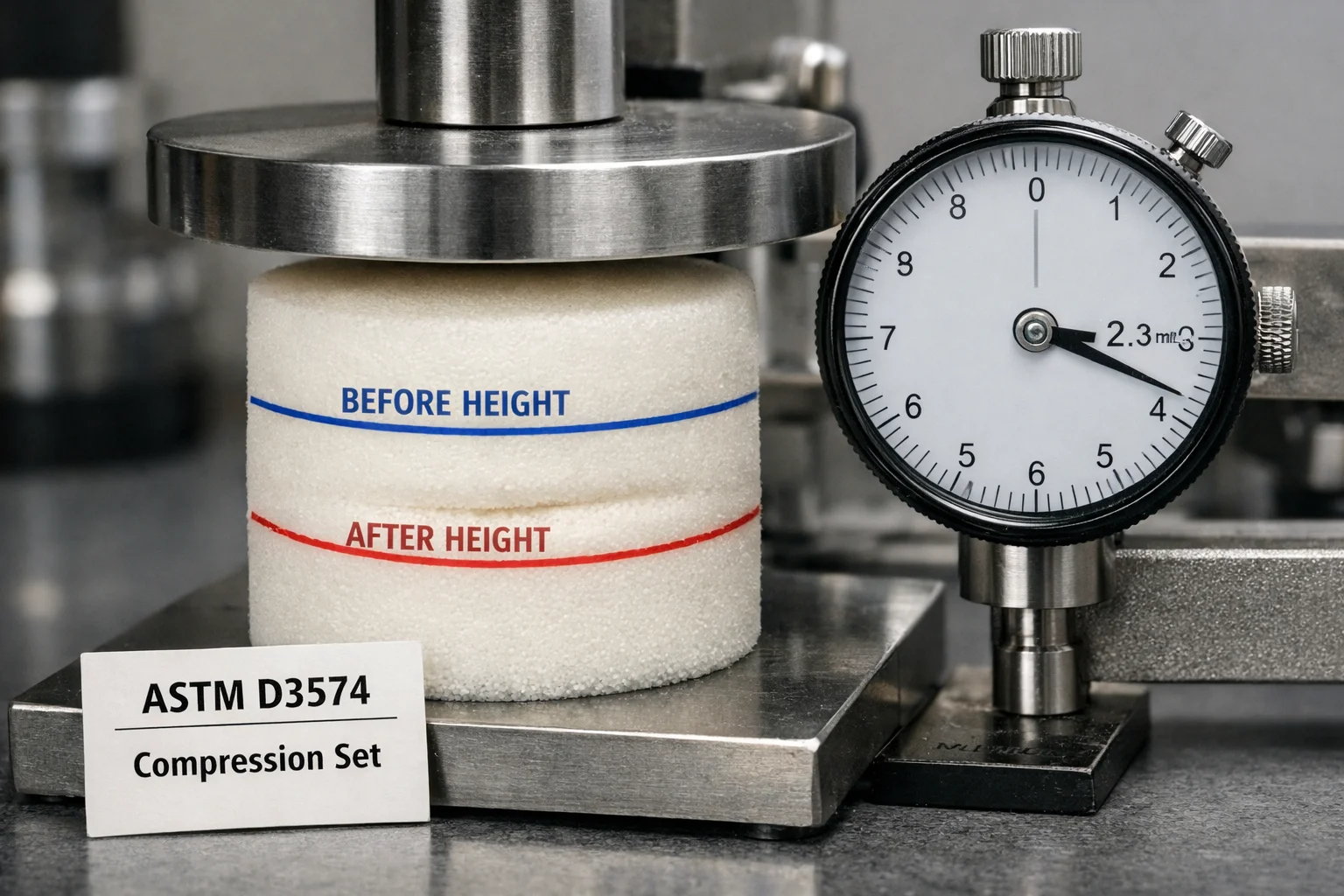
If the cushion has a removable cover, I sometimes unzip it and press directly on the foam. This removes fabric and padding from the equation and shows me what I am really paying for. I have been shocked at how often a nice outer feel hides tired foam underneath.
What I am looking for is not drama. I want boring, predictable recovery every time. Foam that snaps back without making a show of it tends to keep doing that for years.
This test does not replace asking about density, but it backs up what the numbers claim. When a salesperson tells me the foam is high quality and the cushion fails the snap back test, I believe my hand, not the story.
If you only have the confidence to do one physical test in the store, make it this one. It takes five seconds, it costs nothing, and it reveals problems that no amount of sitting politely ever will.
The Down Deception
For years I assumed that anything described as down filled had to be better. I paid more for it, bragged about it, and then quietly grew resentful as my sofa turned into a lumpy mess that needed constant attention.
What most stores call a down blend is not a cushion made of down. It is almost always a cheap foam core wrapped in a thin blanket of low grade feathers. The foam does the real work, and the down is there to create a first impression.
In the showroom, these cushions feel relaxed and luxurious. At home, they demand labor. If you do not remove the cushions and beat them back into shape regularly, they flatten and migrate, leaving hard spots and sagging edges.
I learned to ask a very simple question. I ask whether the seat cushions need daily or frequent fluffing to look right. If the answer is yes, I know I am signing up for maintenance, not comfort.
Another issue that caught me off guard was quill leakage. Cheap down contains sharp feather quills that work their way through fabric over time. Unless the cushion is wrapped in heavy down proof ticking, those quills will eventually poke you and the upholstery, no matter how nice the fabric feels at first.
When I see a down blend sofa, I now ask what kind of barrier exists between the feathers and the outer upholstery fabric. If the salesperson cannot explain it clearly, I assume there is none and move on.
There is also the allergy factor, which sales staff tend to minimize. Even if you are not allergic, guests might be, and down traps dust in a way that synthetic fills do not. Over years of use, that matters more than the romantic idea of natural materials.
What finally broke the spell for me was living with a well made synthetic wrapped cushion. Materials like micro denier fiber or branded alternatives such as Trillium are designed to mimic the soft surface feel of down without the constant reshaping and mess.
These synthetic wraps still rely on the quality of the foam core underneath, so all the density advice still applies. The difference is that the surface layer behaves predictably instead of drifting and clumping.
In a showroom, I squeeze the cushion at the corners and edges. Down blends often feel empty or uneven there, because the feathers move away from pressure. A good synthetic wrap feels consistent all the way across.
If you love the initial sink of down, I am not telling you to avoid it entirely. I am telling you to understand the trade. You are choosing romance and ritual over stability. If that sounds exhausting, trust that instinct.
What I choose now is boring. I look for a high density foam core with a thin synthetic wrap that softens the surface without changing the structure. It does not feel magical on day one, but it also does not demand my attention every night.
Down is not a guarantee of quality. It is a styling choice that comes with real costs in maintenance and longevity. Once I stopped equating feathers with luxury, it became much easier to spot cushions that were built to behave well instead of just feel indulgent for a moment.
Visual Indicators of Quality
This is the part where you stop listening and start looking. Even without asking a single question, there are a couple of visual cues that have consistently told me whether a cushion was built with any long term thinking behind it.
The Crown Shape
I always step to the side of the sofa and look at the seat cushion in profile. A well made cushion is not perfectly flat. It has a slight crown, meaning it is thicker in the middle than it is at the edges.
That shape is not decorative. It is a quiet admission that gravity and body weight will win over time, especially in the center where you actually sit. By starting a little higher there, the cushion settles into level instead of collapsing into a dip.
When a cushion is dead flat on day one, I assume it will be concave later. I have owned too many sofas where the center compressed first and never came back, leaving the edges puffed up and the middle exhausted.
You do not need to measure anything. Just trust your eyes. If the cushion already looks like it has somewhere to go, that usually means the manufacturer planned for wear instead of pretending it would not happen.
The Flip Test
This is one of my hardest rules, and it has saved me more money than any fabric upgrade ever did. I do not buy seat cushions that cannot be flipped and rotated.
I lift the cushion and look at the bottom. If I see cheap black felt or a different fabric than the top, I put it back down and move on. That design choice is not about style. It is about preventing you from distributing wear.
Cushions compress where you sit most. Being able to flip and rotate them spreads that compression around, which can almost double the usable lifespan. When a cushion is one sided, the damage concentrates in the same spot until it fails.
Salespeople sometimes tell me that modern foams do not need flipping. My experience says otherwise. Foam still fatigues, and gravity still works the same way it always has.
I also pay attention to whether the zipper runs along one side or wraps fully around. A full wrap usually means the manufacturer expected you to remove and rotate the cushion. A hidden or partial zipper often means they did not want you looking too closely inside.
If a sofa has loose seat cushions that are not reversible, I treat that as a cost cutting signal. It tells me the brand expects replacement, not longevity. No amount of fabric quality makes up for a cushion that is designed to wear out in one direction.
When I find a sofa with a visible crown and fully upholstered, reversible cushions, I slow down. Those two details do not guarantee great foam, but they tell me someone was at least thinking beyond the showroom floor.
These are quiet signals, not marketing claims. They do not show up on hang tags or feature cards, but they reveal intent. I have learned to trust visible honesty over promised comfort every time.
The Specification Inquiry
This is the point in the showroom where I feel a little awkward, and I do it anyway. I stop talking about color and delivery dates and ask for the actual cushion specifications in plain terms.
I have had salespeople sigh, deflect, or reassure me that it is all premium. I have learned that patience or annoyance in their response tells me a lot. If they act like these numbers are unreasonable to ask for, I remind myself that I am about to spend thousands of dollars on something I will sit on every day.
What I am really doing here is forcing the conversation away from feelings and back toward materials. Foam is not mysterious. It is engineered, tested, and sold by numbers. If those numbers cannot be confirmed, then the cushion is a gamble, no matter how good it feels right now.
I ask specifically about density first, and I wait for a number stated as pounds per cubic foot. If the answer lands below one point eight, I am already skeptical. If it is closer to two point five or higher, I lean in and keep asking questions.
Then I ask what the actual foam core is made of. High resiliency polyurethane foam or latex has behaved well for me over time. When I hear vague phrases like proprietary blend or comfort foam, I translate that to unknown and assume the worst.
Next I ask about what wraps the foam. I want to know whether there is a synthetic fiber wrap like Dacron or a down proof ticking if feathers are involved. This matters because the wrap controls how the surface wears and whether the core stays protected as the years pass.
I also confirm whether the cushion is fully upholstered on both sides and meant to be flipped. This is not a small detail. Reversible cushions age more evenly, and that alone can stretch a sofa’s useful life by years.
Finally, I look again at the shape. If there is a visible crown, even a subtle one, I take it as a sign that the manufacturer planned for compression instead of pretending it would not happen.
None of this is about being difficult. It is about refusing to buy a very expensive bag of air. Gravity does not care how much you paid, and it does not care how plush something felt on day one.
Technical Summary: Cushion Audit Protocol
Before I commit to a seat cushion, I mentally run through a simple audit. I confirm that the foam density meets at least one point eight pounds per cubic foot, and I strongly prefer something around two point five if the sofa will see daily use. I make sure the core is high resiliency polyurethane or latex rather than an unnamed blend. I check that the foam is wrapped in a proper synthetic fiber or sealed behind down proof ticking if feathers are used. I verify that the cushion is fully upholstered and reversible so wear can be rotated. I also look for a visible crown, which tells me the cushion was designed to settle into level instead of collapsing.Once I started treating these questions as non negotiable, my shopping experience changed. Some sofas dropped out of consideration immediately, which was a relief. Others justified their price for the first time.
If you take nothing else from this section, take the confidence to ask. You are not being obsessive. You are being realistic about how furniture actually fails, and you are protecting yourself before gravity gets the final word.
Explore Technical Reference
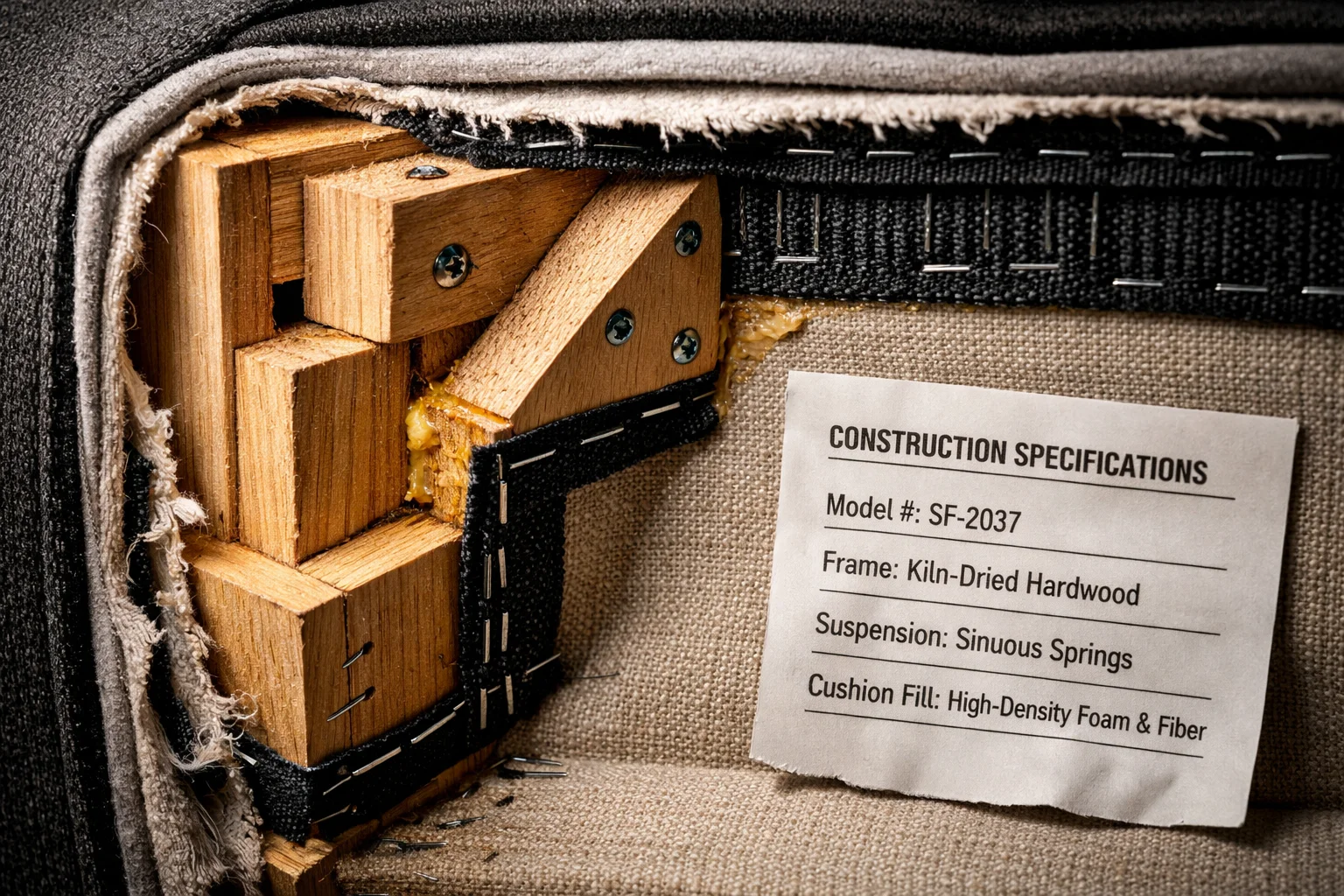
The Showroom Inspection Checklist: What to Verify Before Purchase
The physical and verbal inspection process for evaluating furniture quality in showrooms. How to examine floor models and interrogate specifications.
Analyze Details →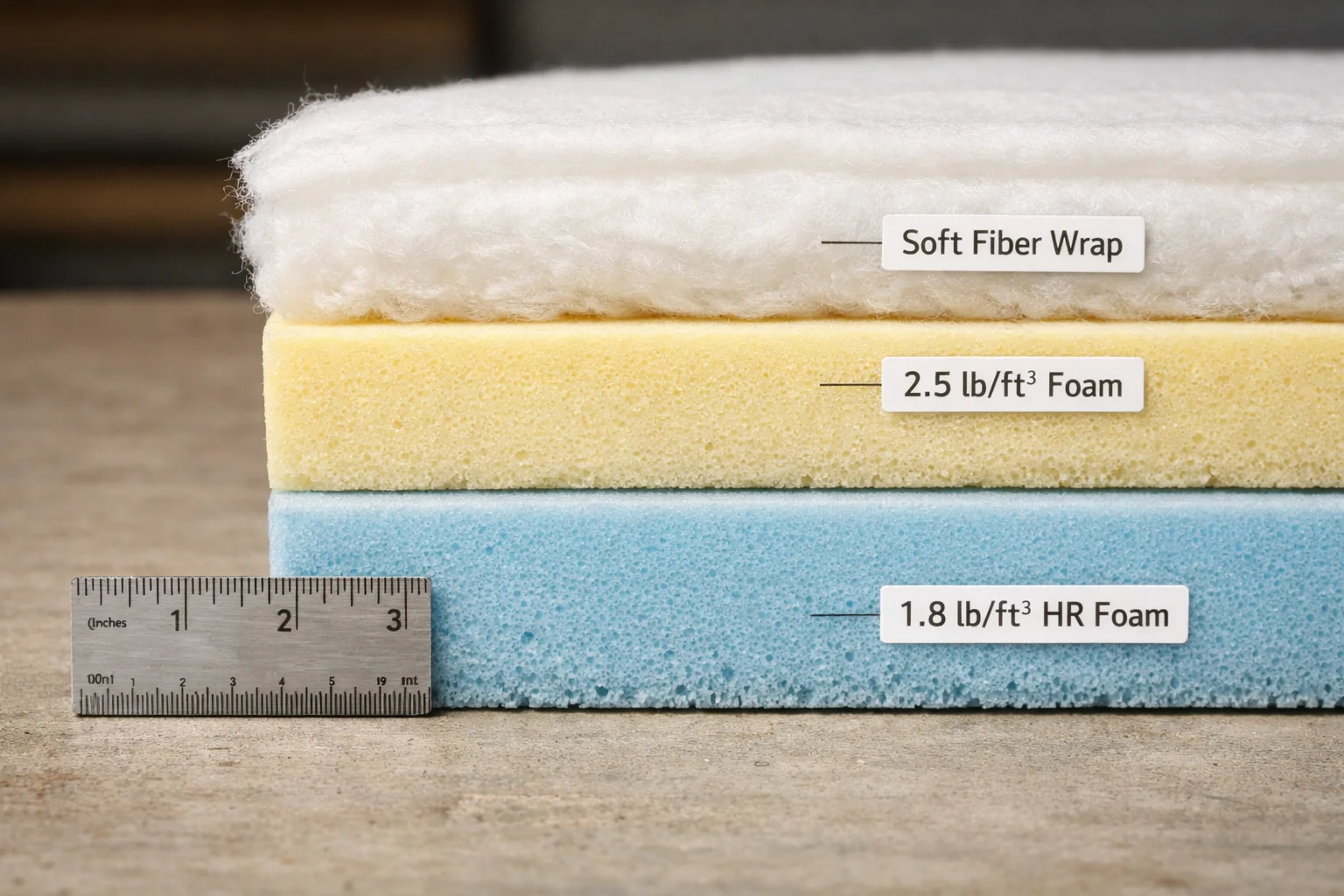
Custom vs Stock Sofas: Understanding the Patience Tax
Why estimated lead times rarely prove accurate. Understanding the risks of non-returnable custom orders versus the flexibility of stock items.
Analyze Details →