Polyurethane Foam: The Chemical "Engine" of Comfort
Introduction
I used to think foam was just a generic substance like plastic or wood. I didn’t realize it was a volatile chemical reaction frozen in time. The moment I understood that my sofa cushion was essentially solidified petroleum chemistry, I understood why it failed. It wasn’t bad luck, it was inevitable oxidation.
Once you see it that way, you stop asking, “Is this sofa comfy today?” and you start asking, “How fast is this comfort going to disappear?” That one shift in mindset saved me from buying a lot of good looking, good sitting furniture that would have turned into a saggy disappointment in a couple of years.
What I want for you is simple. When you walk into a showroom, you should be able to tell the difference between a cushion that is built to age slowly and one that is built to feel plush for ten minutes under bright lights. Salespeople often talk about softness and “luxury,” but the real issue is how the materials hold up to oxygen, heat, body oils, and repeated compression.
This guide is about what you can actually check with your hands, your eyes, and a few blunt questions. You do not need to memorize chemistry, but you do need to recognize the common tricks that make foam feel great on day one while quietly setting you up for early sagging.
I am not trying to scare you away from foam entirely. I am trying to get you to treat it like tires on a car, it is a wear item, and the only real question is whether you are buying the cheap tires or the good ones, and whether the store will stand behind them when they wear out.
As we go, I will keep coming back to two practical ideas. First, comfort in the showroom is easy, durability is what you are shopping for. Second, if a brand will not tell you what is inside the cushions and put it in writing, I assume they are hiding the weak link.
The "Engine" Analogy
I think about foam the way I think about a car engine, because it stops me from getting distracted by how nice it feels for a test drive. Density is like the size of the engine block, it is the amount of material doing the work. Firmness, which you will sometimes hear called ILD, is more like the stiffness of the suspension, it tells you how that foam pushes back when you sit.Oxidation is the part nobody can sell you out of, because it is like rust. You can buy a bigger engine, but you cannot stop metal from corroding, and you cannot stop foam from slowly breaking down as it meets oxygen, heat, skin oils, and time. Foam is a consumable, not a stone, so my goal is never “find foam that lasts forever,” it is “buy time.”
In a showroom, the most actionable thing you can do is separate “soft” from “durable” in your head. A low density foam can be tuned to feel amazing at first, and a higher density foam can be tuned to feel firm at first, so you cannot judge quality by initial plushness alone.
When you talk to the salesperson, I want you to ask a boring question and then stay quiet. Ask what the foam density is in the seat cushions and whether that number applies to the core, not just a thin top layer. If they cannot or will not tell you, I assume you are looking at a comfort demo, not a long term cushion.
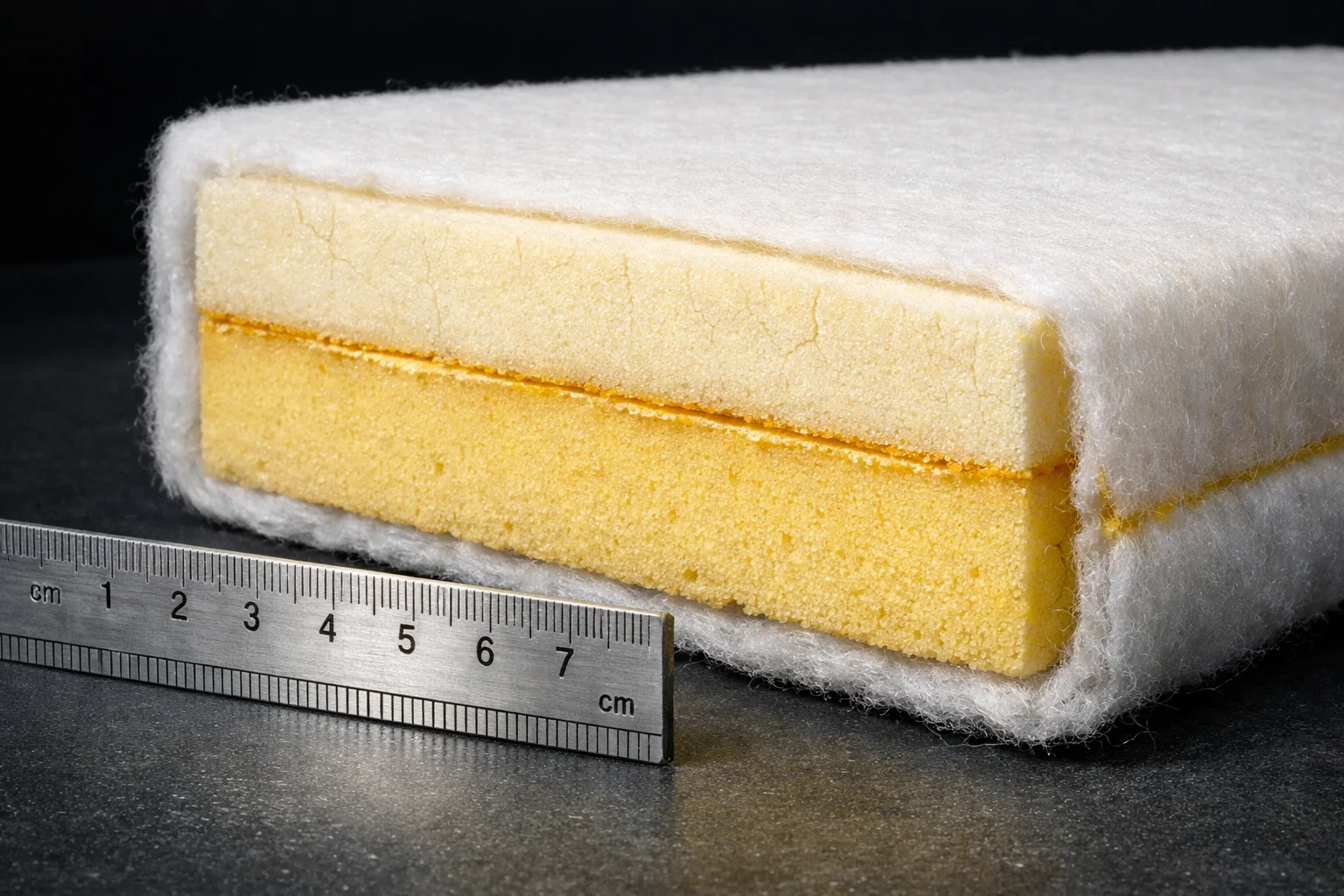
Then I want you to ask a second question that forces honesty about construction. Ask whether the cushion is a single slab of foam, a foam core wrapped in softer foam, or a fiber wrap over foam, because “wrapped” designs can hide a weak core that fails first while the outside still feels puffy in the store.
You can also do a quick reality check with your hands. I press down hard with my palm near the front edge where people slide in and out, then I move to the center, and I compare how quickly and how completely it rebounds. If it rebounds slowly, unevenly, or feels like it has a dead spot even when new, I treat that as an early warning.
Finally, I treat the warranty like the manufacturer’s confidence in their own engine. I am not impressed by long frame warranties if the cushion coverage is short or full of exclusions, because the cushions are where you will feel the “rust” first. If they will not put the cushion specs and the cushion warranty terms in writing on the invoice or spec sheet, I assume you are the one taking the risk.
How Foam is Made (The Reaction)
Polyurethane foam is brewed, not mined, and that is the mental model I want you to carry into a showroom. When you sit on a cushion, you are sitting on a chemical reaction that got trapped mid expansion and then cut into a block.
It starts with two liquid ingredients, polyol as the base and isocyanate as the reactive partner, and they get blasted together through a mixing nozzle. The important consumer takeaway is that this is not a “natural” solid material, it is manufactured structure, and the manufacturer has a lot of control over how much actual plastic ends up in the final cushion.
As soon as they mix, the reaction heats up and the whole mass rises like bread dough. It can expand massively, which is great for making a lot of foam quickly, but it also creates the main temptation to cheap out, because expansion is basically profit if you can get away with it.
While it rises, it traps gas into millions of tiny bubbles, then those bubbles harden into a plastic honeycomb. That honeycomb is what you are actually sitting on, and durability comes down to how thick and resilient those tiny bubble walls are.
When I say “the economy of air,” I mean the simplest cost cutting trick in foam. If the maker stretches the batch so it contains more air and less plastic, the foam can still feel soft and inviting at first, but the cell walls are thinner and they fatigue faster under repeated sitting.
When I say “the economy of plastic,” I mean the opposite choice. If the batch ends up with more actual polyurethane structure per cubic foot, the bubble walls are thicker, the foam resists crushing longer, and it is much more likely to rebound after thousands of sit downs instead of forming a permanent hammock.
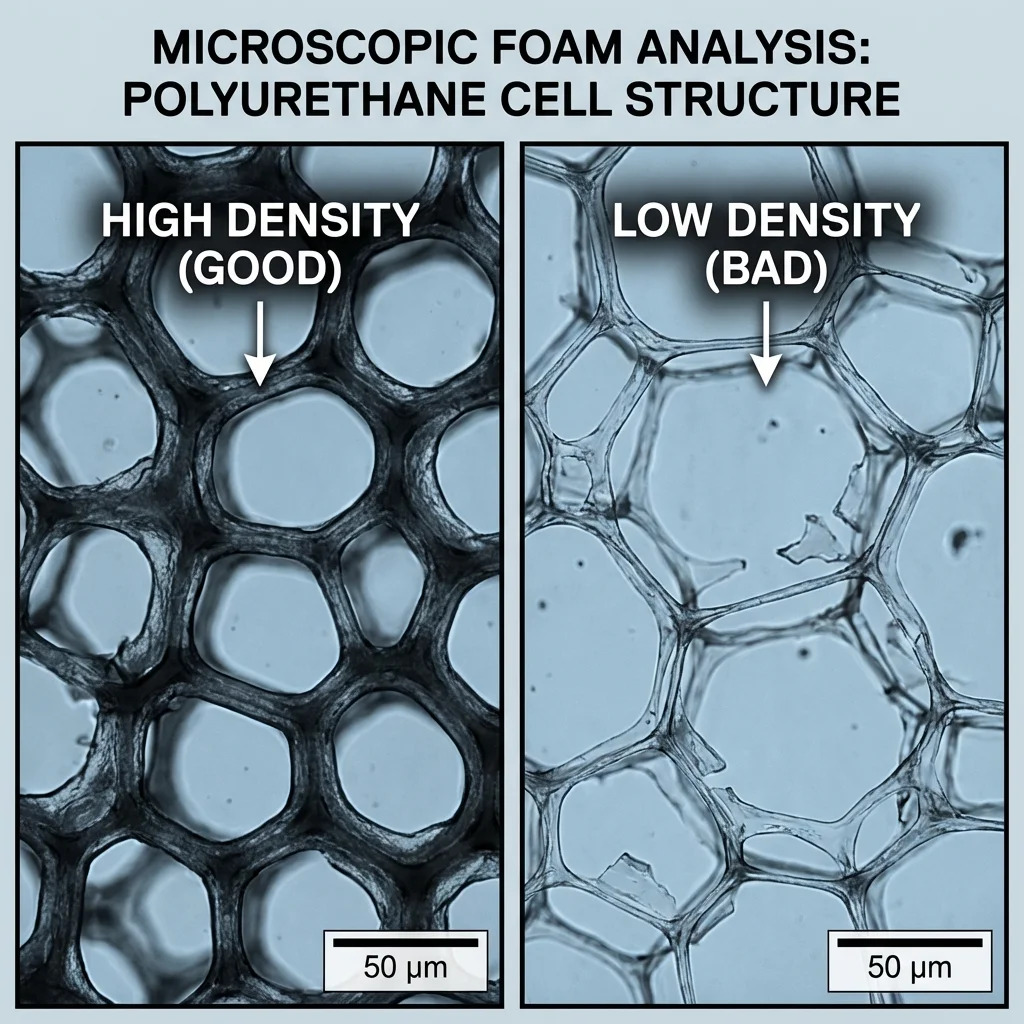
Here is how I translate that into something you can actually do in a store. When you ask about density, you are really asking, “How much plastic structure am I buying versus how much air am I buying,” because density is the best shorthand for how thick those internal walls tend to be.
If you only remember one practical move from this section, make it this. I ask for the seat foam density and I ask whether that number is for the core foam itself, not a thin comfort layer glued on top, because a plush topper can distract you while the low density core underneath is quietly set up to collapse.
I also watch how the cushion behaves at the front edge when I stand up and sit down a few times in the exact same spot. Thin walled foam often rebounds in a way that looks fine but feels “papery” or hollow under your palm, and the edge can start feeling less supportive even while the center still feels decent.
When a salesperson tells you “it is high density” but cannot give you the actual density, I treat that as a red flag, because they are asking you to trust a vibe instead of a spec. If they can give you a number, you are no longer guessing what you are buying, you are comparing how much real material is in the cushion that has to do the work for the next several years.
The “Open Cell” Lung
Foam is supposed to breathe, and once you notice that, you can do a surprisingly good durability check with nothing but your body weight.
When foam is made well, most of the tiny bubbles that formed during the reaction end up “popped” and connected to each other. That leaves a network of little passages through the cushion, so air can move in and out instead of getting trapped.
Here is what that means for you in a showroom. When you sit down, you are squeezing the foam’s cell structure and air should rush out through those tiny connections. When you stand up, the plastic walls should spring back and the cushion should pull air back in as it reinflates.
I pay attention to this because good open cell foam tends to feel supportive without feeling rubbery, and it recovers in a way that feels natural, not spring loaded. It is not silent science, you can often hear a faint “whoosh” and you can feel the cushion re expand under you instead of just pushing you up.
The failure mode is closed cell foam, where too many of those little bubbles never opened up. When that happens, the cushion can feel like a pneumatic tire, bouncy, tight, and oddly hard even if the top feels soft at first touch.
If you want a practical test, I sit down firmly and quickly, then I stand up and immediately press the same spot with my palm. With open cell foam, that spot usually rebounds smoothly and feels consistent as the air returns. With more closed cell behavior, I notice a blunter pushback and a kind of trapped air sensation, like the cushion is fighting compression rather than flexing.
I also do a slow sit test, because that is how a cushion reveals whether it is breathing or just acting like a balloon. I lower myself down gradually and pay attention to whether the cushion lets me sink in a controlled way, or whether it resists, then suddenly gives, then pushes back. That herky jerky feel is a big reason some sofas feel comfortable for five minutes and annoying after an hour.
When I feel that tire like bounce, I do not argue with the salesperson about chemistry. I just ask a simple question and listen to how they answer: is the seat foam conventional open cell polyurethane, or is it a specialty foam with a more sealed structure, and if so, what is it called on the spec sheet. If they cannot name it, I assume I am being sold a feeling, not a material.
One more thing I have learned the hard way is that closed cell behavior can be disguised by soft stuff on top. A thick fiber wrap or a soft topper can make the first sit feel inviting, but once you compress through that surface layer, the core is what you live with. That is why I always do at least one sit where I plant my weight, then shift forward toward the front edge, because that is where you compress through the fluff fastest.
If the cushion feels bouncy and hard in the core, I treat it as a comfort risk and a durability risk. Comfort, because that tire bounce can get old fast. Durability, because when a cushion relies on trapped air for its “support,” it often feels great until the structure fatigues, then it can go from perky to disappointing without much warning.
What I want you to walk away with is a simple mental picture. A good seat cushion acts like a lung, it breathes out when you sit and breathes in when you stand. A bad one acts like a ball, it pushes back because air is trapped, not because the structure is strong.
Use It or Lose It (Oxidation)
Foam has a mortal enemy, and it is not your body weight, it is oxygen.
What oxygen does over time is quietly attack the foam’s polymer structure, and the foam gets more brittle instead of more resilient. You do not notice it on day one because the cushion still has enough structure to bounce back, but the clock starts the moment the foam exists, not the moment you buy the sofa.
If you have ever opened an old seat cushion and seen the foam turn yellow or orange, that is not just “old.” I read that color shift as chemical rust, it is a sign the material has been oxidizing for years.
The end stage is what people call dusting. When you unzip a cushion and see yellow powder, that powder is the foam’s internal cell walls breaking down into crumbs, and the cushion is literally dissolving into air.
Here is the part that matters in a showroom. Oxidation is why I do not fall for a sofa that feels pillowy but has vague cushion specs, because the plushest foams are often the ones that feel magical first and then go flat faster once oxygen and heat have done their work.
So I try to buy time by making oxidation harder to notice and slower to matter. I do that by asking whether the seat cushions are reversible and truly meant to be flipped and rotated, not just “loose” or “detachable.” If a cushion is one sided, all the wear and all the oxygen exposure concentrate on one face, and you lose your ability to even out the aging.
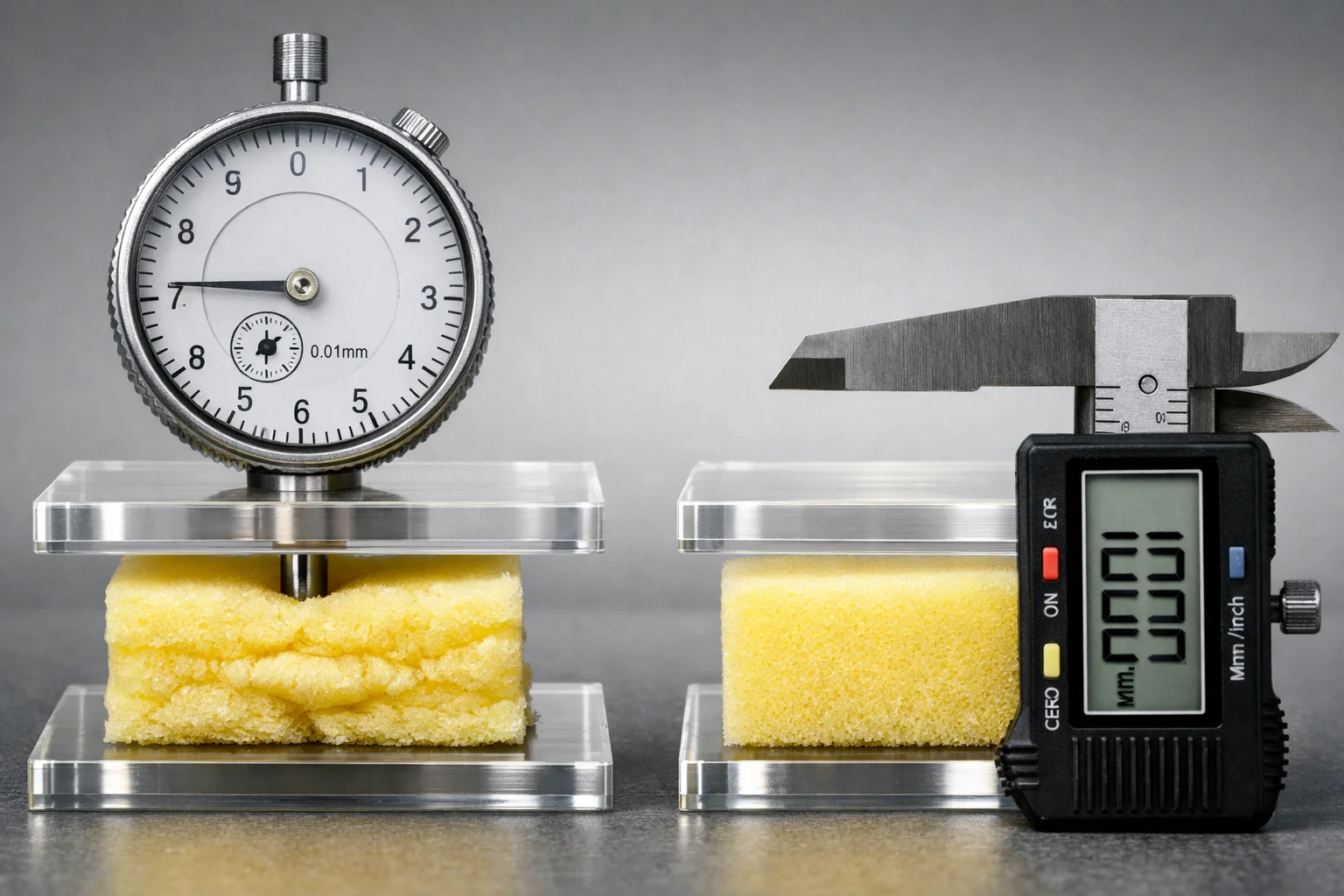
Then I look at the cushion cover like it is part of the material system, not just decoration. I prefer a cover that closes up well and fits snugly, because a baggy cover lets the foam flex and rub more, and that extra micro movement seems to speed up the path to that crumbly, dusty feel.
I also pay attention to heat, because heat makes oxidation feel like it is in a hurry. If a salesperson is steering you toward a very dark fabric, a leather match, or a sofa that will live in direct sun next to a window, I slow down and picture what that seat is going to feel like after a few summers of daily warmth and UV.
If your room is bright, I would rather you plan for that upfront than pretend it does not matter. I ask what the brand recommends for sunlight exposure, and if the answer is hand waving, I assume the cushions will age faster than the pretty floor model suggests.
Finally, I treat “stored inventory” as a real risk with foam, even when the sofa is technically new. I ask when the piece was manufactured, not when it arrived, because foam can oxidize sitting in a warehouse just like it can in your living room, and you do not get those months back.
If you take nothing else from this section, take this: you are not only buying how a cushion feels, you are buying how it ages in the presence of oxygen. That is why I push for clear cushion specs, reversible cushions when possible, and a realistic plan for heat and sunlight, because those are the levers you can actually pull.
The Weight Test
You cannot see foam density through a fabric cover, but you can often feel it the fastest way possible, by picking the cushion up.In a showroom, I ask permission and then I lift the actual seat cushion, not the back pillow. I try to lift it with one hand first, because that exaggerates the difference between a cushion that is mostly material and a cushion that is mostly air.
When the core is genuinely higher density foam, the cushion often feels surprisingly heavy for its size, like there is real substance in there doing the work. When the foam is low density, the cushion tends to feel oddly light and floaty, and my brain instantly files it under “pool toy,” even if the top feels plush.
I treat this as a quick audit, not a lab test. A heavy cushion does not automatically mean it will feel good for you, but a very light seat cushion is one of the most reliable warning signs I have found for early sagging, especially if the sofa is being marketed as deep, soft, or cloud like.
If the cushion is sewn to the frame, or the salesperson will not let you lift it, I do not argue. I just shift to the next best version of the same check, which is pressing down firmly with my palm and paying attention to whether it feels hollow and airy underneath the fabric, the way cheap foam often does.
If you do lift it and it feels substantial, I still follow up with the boring question that keeps everyone honest. I ask what the foam density is in the seat core, and whether that number applies to the whole core or just a thin top layer, because a heavy fiber wrap can sometimes fake a little heft while the real foam underneath is still the weak link.
Technical Summary: Foam Ownership Protocol
I want you to treat seat foam like a consumable component, the same way you treat tires on a car. If you buy a sofa expecting the cushions to feel brand new forever, you will almost always feel like you got cheated, even when the sofa was decent.In normal, real life use, I plan on quality foam giving you roughly five to ten years before it starts to feel meaningfully different, and that range depends on your weight, how many people use the sofa, and how warm and sunny the room is. In the showroom, I translate this into a simple buying move: I ask the store what their expectation is for cushion life for that exact model, and I watch whether they answer like someone who has dealt with real sag complaints, or like someone who is trying to end the conversation.
Once it is in your house, the easiest way to stretch that life is to rotate the wear. If the seat cushions are loose and reversible, I actually use that feature, because the “crush cycles” build up where you always sit, and foam does not forgive favoritism. If the cushions are not reversible, I still try to rotate them left to right when the shapes allow it, because even swapping positions can keep one seat from becoming the obvious bad spot.
When sagging does show up, I do not want you to think your only option is throwing the whole sofa away. If the cushion covers unzip, you can usually replace just the foam cores and keep the frame, the upholstery, and the look you already paid for. Before you buy, I open the zipper in the showroom if they will let me, or I at least confirm there is a zipper, because a sofa with serviceable cushions is a sofa you can keep alive, and a sofa with sealed cushions turns a normal wear item into a forced replacement purchase.
The practical shopping question I ask is simple: if the seat foam softens or takes a set in a few years, can I order replacement cores, and what would that cost. If they cannot tell you, or they act like replacing cores is bizarre, I treat that as a sign they expect the sofa to be disposable, and I shop accordingly.
Explore Technical Reference
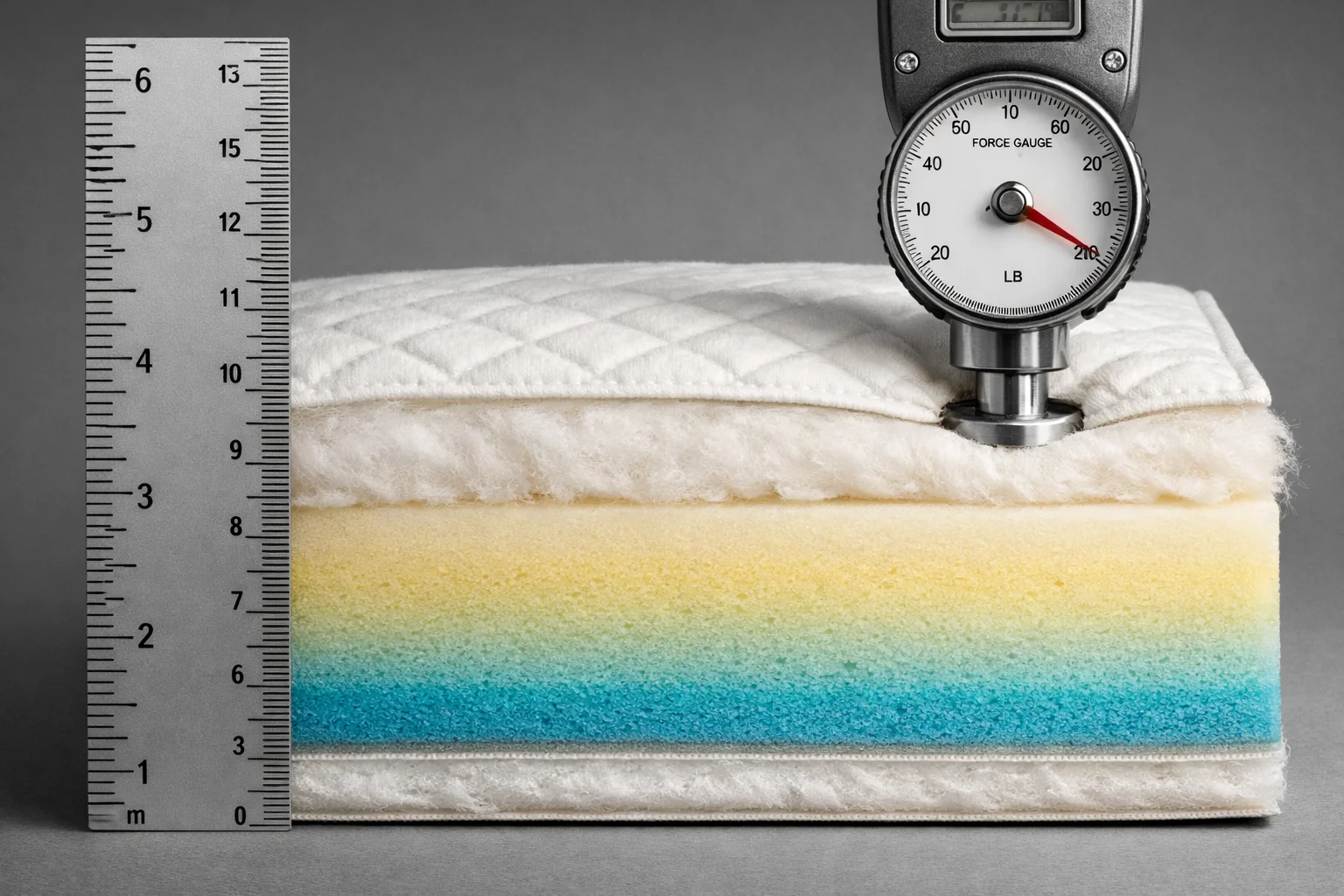
Foam Breakdown: The Physics of "Sagging"
The chemistry of sagging explained. Understanding oxidation, hydrolysis, and mechanical hysteresis in polyurethane cushion materials.
Analyze Details →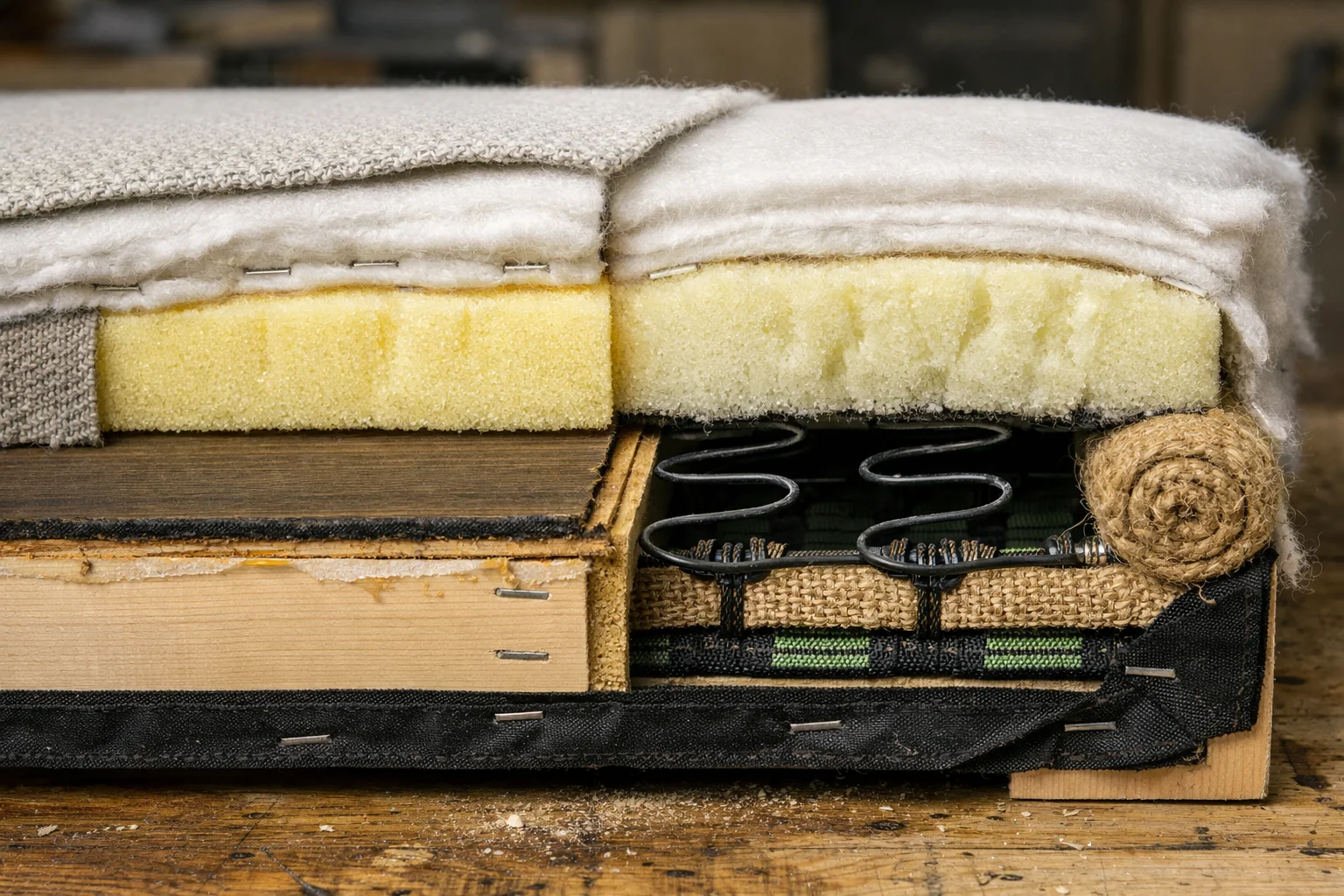
Sofa Support Systems: Making the Right Choice
The three tiers of suspension explained. Understanding webbing, sinuous springs, and hand-tied coils, and why heavier users need specific support types.
Analyze Details →