How to Budget for a Sofa
Introduction
I am not trying to convince you to buy an eight thousand dollar sofa. I am trying to help you stop buying the same five hundred dollar disappointment over and over again, because that cycle quietly costs more and feels worse each time.
What I learned is that price alone tells you almost nothing. What matters is where the money is spent, and most sofas hide that information very well. Showrooms are optimized to sell feelings, not durability, and the weak points only reveal themselves after months of use when the warranty language suddenly matters.
This guide exists because I kept asking salespeople simple questions and got vague answers. I started pressing on arms, lifting corners, unzipping cushions, and listening to what the frame did when I shifted my weight. None of this requires tools, training, or being rude. It just requires slowing down.
If you only remember one idea going forward, remember this. A sofa fails in predictable ways, and those failures start at the frame, the suspension, and the cushion core, not the fabric or the color. You can check all three in a showroom if you know what to touch and what to ignore.
I am going to walk you through how I evaluate a sofa as an ordinary buyer who got tired of being surprised. I will focus on what you can physically verify in five minutes on a sales floor, and what questions actually change the outcome. My goal is not perfection. It is avoiding regret.
The Consumable Tier
The hardest lesson was accepting that anything under a thousand dollars is not really furniture. It is a consumable good with a multi year use cycle rather than a durable asset.
Budget Warning: The Threshold of Disposability
Under $1000 = Disposable: In 2024, a sub-$1000 sofa is a rental. You are contributing to the millions of tons of discarded furniture and furnishings sent to landfills annually.A beautifully photographed mid century loveseat arrived from an online retailer for four hundred dollars. It came in a flat box. An Allen wrench assembled it. The result looked fantastic in the apartment corner.
Six months later, the armrest wobbled when pressure was applied. By month nine, the seat cushion had developed a permanent crater corresponding to regular sitting position. By year two, a leg snapped when a friend sat down with normal force.
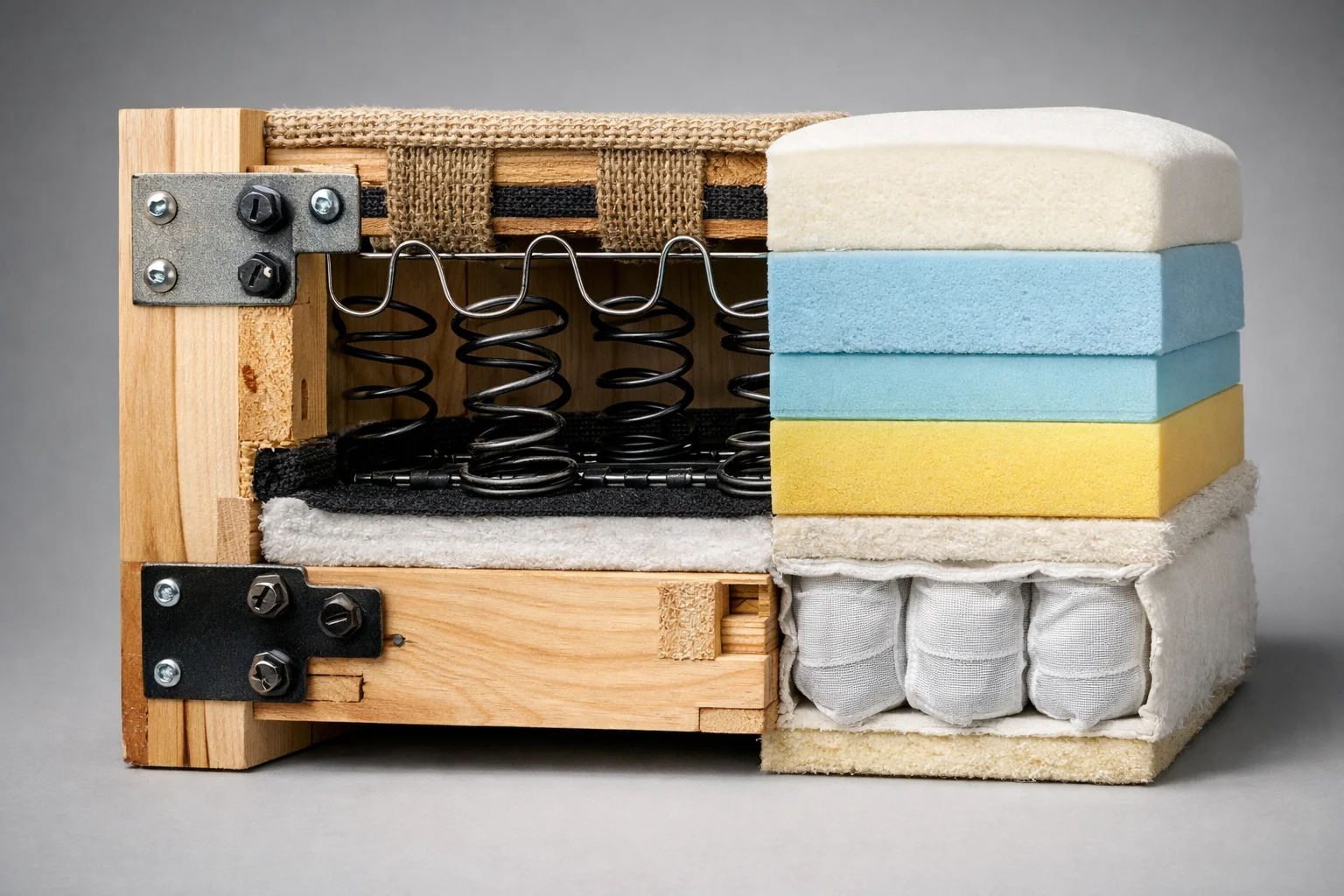
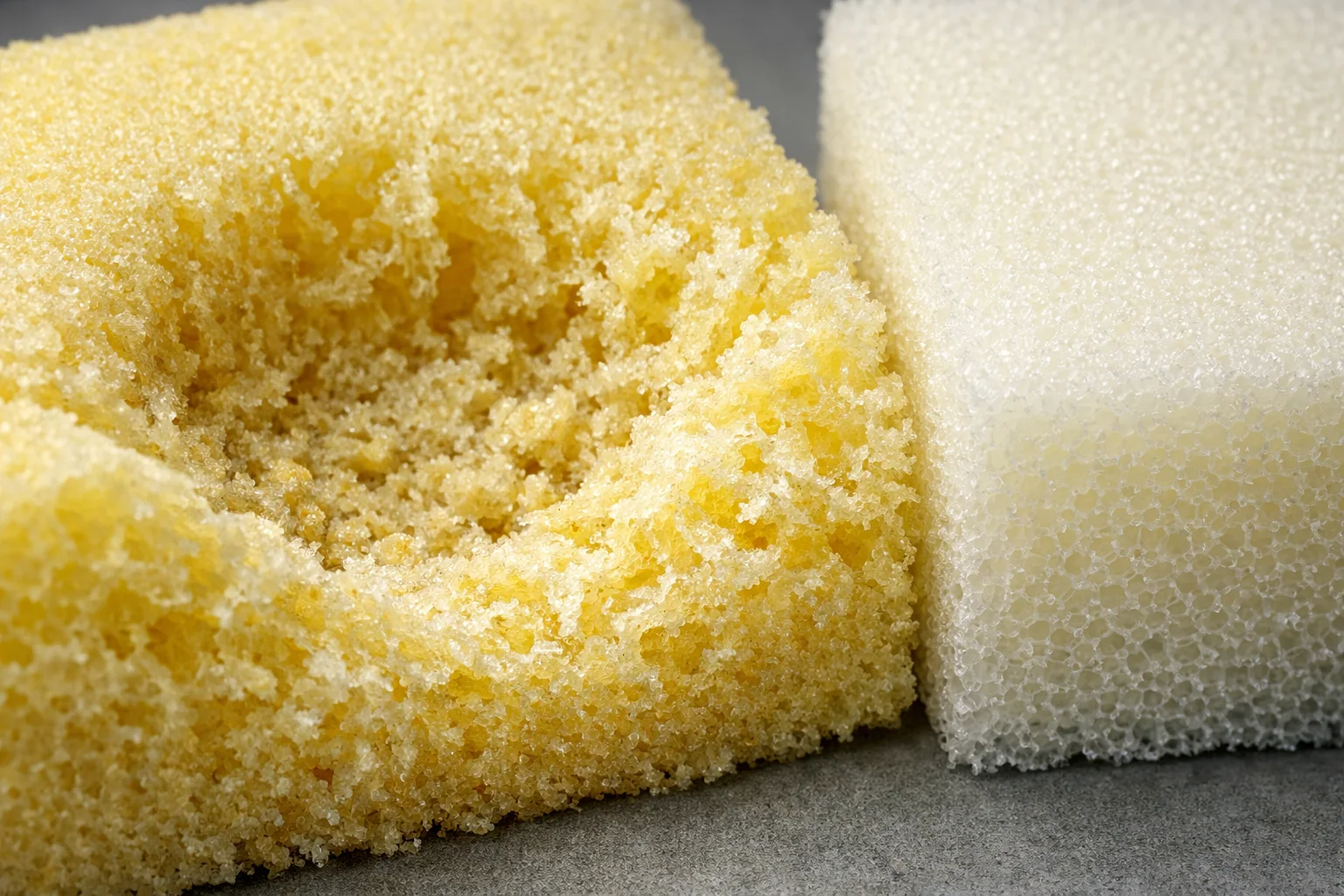
Dissecting the failed piece out of frustrated curiosity revealed materials that belonged in recycling bins rather than living rooms. The solid wood frame claim was actually stapled plywood scraps. The suspension was nylon webbing like a lawn chair rather than steel springs. The foam was barely denser than a dish sponge, failing to meet basic polyurethane foam industry standards for residential seating.
This tier exists for legitimate purposes. Dorm rooms where furniture survives a year before needing replacement. Staging for apartments being sold. Guest rooms used twice annually. But using this tier as a daily driver does not save money. It just spreads the cost across frequent replacements.

When you are standing in a showroom, this tier announces itself if you know what to feel for. I always start by lifting one front corner of the sofa a few inches off the floor. If the entire frame twists and the opposite leg lags behind, that softness will turn into looseness very quickly in your home.
I then sit down and shift my weight side to side without bouncing. If you hear faint creaks or feel movement in the arms, that is not a break in period. That is fasteners working loose because there is not much structure holding them.
Cushions tell the story even faster. I press my thumb into the center of the seat and watch how it recovers. If it collapses easily and comes back slowly or not fully, that cushion will memorize your body within months and never forget it.
The biggest red flag is how the sofa is assembled. If the salesperson mentions tools, home assembly, or shipping in multiple boxes, I stop imagining longevity. Ready to assemble construction almost always means thinner wood, fewer joints, and hardware doing the work that solid joinery should be doing.
If your budget puts you firmly in this tier, the most honest move is to treat the purchase accordingly. I would choose the simplest shape possible with fixed arms, minimal legs, and the fewest seams. Every added feature is another failure point.
What I would not do is talk myself into believing it will age gracefully. Consumable sofas do not slowly wear out. They cross a line where they suddenly feel wrong to sit on, and from that moment on you are counting days.
Understanding this tier is not about shame or snobbery. It is about clarity. Once you recognize when you are shopping for a temporary object, you can either adjust your expectations or adjust your budget, but you stop being surprised.
The Cost Per Sit Calculation
Once I stopped thinking in sticker price, my buying decisions changed completely. I started asking a quieter question, which is how much does this sofa actually cost me every day that I sit on it and do not regret it.
In a showroom, a six hundred dollar sofa feels like a win. It looks finished, it fits the room, and the salesperson talks about value. What you do not see is that 1.5 pound density foam and a stapled plywood frame are already on a countdown.
I have owned that sofa. It looked fine for the first year, felt wrong in the second, and became something I avoided sitting on by the third. When I divided the price by roughly a thousand days of use, the daily cost landed around fifty five cents.
The Daily Value Metric
The daily math matters more than the tag. A six hundred dollar sofa that lasts three years costs about fifty five cents per day. A twenty four hundred dollar sofa that lasts fifteen years costs about forty four cents per day. When durability stretches the timeline, quality becomes cheaper over its actual life.I know the second scenario sounds abstract until you sit on it. A sofa built with denser high resiliency foam, a kiln dried hardwood frame, and real steel sinuous springs does not ask you to compromise early. It stays supportive year after year instead of slowly turning into a sag.
When I run the same math on a twenty four hundred dollar sofa that remains comfortable for fifteen years, the daily cost drops below the cheap option. That calculation also ignores the lived experience, which is fifteen years of sitting down without bracing yourself for disappointment.
This is where I think people get misled in showrooms. Paying more feels irresponsible in the moment because the benefit is stretched out over time. The failure of cheap construction is delayed, so it never shows up in the sales pitch.
When you are standing in front of a sofa, I encourage you to quietly estimate its lifespan based on what you can verify. If the foam feels soft and light, if the frame twists when lifted, if the suspension feels vague instead of supportive, you are probably buying three years no matter what the fabric looks like.
If the cushions resist your thumb and recover instantly, if the frame feels dead solid when you lift a corner, and if the seat has a gentle spring instead of a hammock sag, you are likely buying a decade or more. That is the moment where the higher price starts to make sense.
I do this math in my head now without a calculator. I ask myself how many years I can realistically expect to enjoy sitting on this sofa, not just tolerate it. If the number feels small, the price is already too high.
Cost per sit is not about justifying luxury. It is about refusing to pay repeatedly for the same failure. Once you see the timeline, you stop chasing deals and start buying time.
The Thousand Dollar Trap
There is a price that keeps showing up in showrooms, and it is not an accident. Nine hundred ninety nine dollars feels safe, deliberate, and just under a psychological cliff.
I used to think this range meant I was stepping out of disposable furniture. What I learned is that this is actually the most optimized price point for looking durable without being durable.
To hit that number and still make money, manufacturers do not ask how to build a sofa that lasts. They ask how to build a sofa that survives the sales floor and the return window.
That means money gets spent where you can see it and feel it for five minutes. It goes into fabric texture, silhouette, and cushion softness. It does not go into what carries your weight every day.
This is where I have been fooled the most, because these sofas often feel better than cheaper ones when you first sit down. That initial comfort is the trap.
The Air Trap
In the showroom, cheap foam feels amazing because it is full of air. When you sit, the cushion compresses easily and gives you a plush first impression. Air does not support weight for long. Within a year, those air pockets collapse, and the cushion stops rebounding, leaving you sitting on the hard rail beneath.I learned to stop trusting my first sit. If a cushion feels pillowy right away, I slow down instead of getting excited.
What I do is sit all the way back, plant my feet, and stay there for a full minute. If I feel myself sinking lower as the seconds pass, that is the foam giving up already.
Then I stand up and look at the cushion. If there is a visible depression that lingers, I imagine that shape becoming permanent. It almost always does.
At this price point, the foam is usually the cheapest part that still passes as comfortable. You cannot see density numbers on the floor, but you can feel the absence of resistance.
The frame is the second compromise. A thousand dollar sofa often uses thinner wood and fewer joints, relying on staples and corner blocks instead of real joinery. It will feel solid enough when new, but it does not forgive years of shifting weight.
I check this by lifting one front corner just an inch or two. If the sofa feels light and the opposite corner hesitates, that flex is not harmless. It is the beginning of looseness.
Suspension is where corners get cut quietly. Instead of steel springs that push back, you often get stretched webbing that simply holds you up. In the showroom it feels fine. At home it turns into a hammock.
I press down on the seat near the front edge and release. If there is no spring back, just a dull stop, that support is already at its limit.
The danger of this tier is not that it falls apart immediately. It is that it declines just slowly enough to make you doubt yourself.
You will start shifting positions, adding throw pillows, and avoiding the seat you used to like. By the time you admit it is uncomfortable, the warranty language has already expired.
If you are looking at a sofa around a thousand dollars, I want you to be very honest with yourself. Ask whether you are paying for time or for appearance.
I am not saying never buy in this range. I am saying do not expect it to carry you through a decade of daily use.
If you choose it, choose it with open eyes. Treat it as a medium term solution, not a forever piece, and do not let the initial comfort override what your hands and ears are telling you.
The moment I stopped believing that a thousand dollars guaranteed durability, I stopped feeling betrayed later. That awareness alone saved me money and frustration.
The Investment Minimum
There is a point where the construction choices finally change, and in my experience that point sits around two thousand dollars. This is where the money starts going into parts you cannot see but will feel every single day.
Below this line, manufacturers are juggling compromises. Above it, they can afford materials that behave differently under load, year after year, instead of just surviving the sales floor.
At roughly two thousand dollars, kiln dried hardwood frames become realistic instead of green or mixed wood. That matters because dried wood stops moving as much once it is in your home. Less movement means joints stay tight instead of slowly working themselves loose.
This is also where real steel suspension shows up consistently. Eight gauge sinuous springs are not about luxury, they are about push back. When you sit, the seat meets you instead of sagging away, and that support does not vanish after a couple of years.
Foam changes here too, and this is the part most people underestimate. High resiliency foam costs more because it is heavier and denser, not because it feels fancy. It pushes back immediately and returns to shape without hesitation, even after thousands of sits.
The $2000 Baseline
At around two thousand dollars, you stop paying for marketing stories and start paying for industrial physics. Hardwood frames, heavy gauge steel springs, and high resiliency foam come together here, and this is the technical value sweet spot where longevity finally becomes realistic.When I am in a showroom at this price level, my body language changes. I stop hunting for red flags and start looking for confirmation.
I lift one corner and expect the whole sofa to rise as a single object. If it does, that tells me the frame is doing its job. If it still twists at this price, I walk away.
I sit down and notice whether the seat meets me with resistance instead of collapse. I am not looking for softness. I am looking for the feeling that the sofa is holding me up rather than letting me sink through it.
I press my thumb into the cushion and release. At this level, the foam should rebound instantly and completely. If it hesitates or leaves a shadow, the core is not what the price suggests.
This is also where I start asking very specific questions, because vague answers are no longer acceptable. I ask what the frame is made of and whether it is kiln dried. I ask what kind of springs are used in the seat. I ask whether the cushion cores are high resiliency foam and whether they are replaceable.
I am not trying to sound knowledgeable. I am watching how easily the salesperson answers. When the construction is real, the answers come quickly. When it is marketing, the conversation drifts back to fabric and color.
Two thousand dollars is not cheap, and I am not pretending it is. But this is the first price where I have repeatedly seen sofas age without apology.
These are the pieces that feel the same in year five as they did in month five. They do not ask you to rotate cushions constantly or add pillows to hide sag. They simply keep doing their job.
If your budget can stretch to this tier, my advice is simple. Stop shopping emotionally and start verifying physically. At this level, you are no longer buying hope. You are buying structure.
This is the minimum where I personally stop worrying about replacement timelines and start thinking about living with a piece. Once you cross this line, the conversation shifts from how long will this last to how well does this fit your life.
That shift is expensive up front, but it is calm afterward. For me, that calm has been worth every dollar.
The Diminishing Returns Zone
This is the part that surprised me the most once I finally bought a truly well built sofa. After a certain point, spending more money does not make the sofa meaningfully more comfortable or longer lasting in daily use.
Once prices climb past roughly four to five thousand dollars, the structure is usually already as good as it is going to get. Hardwood frames, serious suspension, and high quality foam have already been paid for. What changes above that line is not how the sofa performs, but how specific it becomes.
Diminishing Returns Threshold
Above four thousand dollars, you are typically paying for brand history, designer involvement, and rare or labor intensive finishing materials. The core structure that determines longevity has usually already reached its ceiling by this point.I want to be very clear here. I have sat on ten thousand dollar sofas that were stunning. The leather smelled incredible, the seams were perfect, and the proportions were intentional in a way you can feel.
What they were not was twice as comfortable as a solid four thousand dollar sofa. They did not hold my body in a fundamentally different way. They did not suddenly remove pressure points or make long sitting sessions feel effortless.
What you are buying in this zone is specificity. You are buying a particular silhouette that fits a designer vision. You are buying leathers that are harder to source or finishes that take longer to apply. You are buying the confidence that comes from a name people recognize.
None of that is bad. It just does not change the physics of sitting.
When I am in a showroom looking at sofas in this range, I actually slow down even more. The danger here is assuming that price guarantees superiority across the board.
I still lift a corner. I still listen for silence when I shift my weight. I still press into the cushions and watch how they recover. If a five figure sofa fails any of those tests, I do not care how famous the brand is.
One thing I pay close attention to in this zone is whether comfort has been sacrificed for shape. Designer driven sofas often prioritize a clean line or a low profile seat. That can look incredible and feel wrong after thirty minutes.
I sit the way I actually live, not the way the catalog photo suggests. I lean back, I slouch a little, and I put my feet on the floor the way I would at home. If the sofa asks me to sit correctly instead of comfortably, I notice that immediately.
Another thing I watch for is over engineered cushions. In this tier, you start seeing layered constructions with feathers, fiber wraps, and multiple foam types. That can feel luxurious at first, but it also adds maintenance.
I ask myself a simple question. Do I want to be managing this sofa, or do I want it to quietly support me for the next decade. If the answer involves constant fluffing, rotating, or babying the cushions, I factor that into the real cost.
This zone is where I see people overspend out of fear. They have been burned by cheap furniture, so they assume the safest move is to keep going up in price.
In my experience, that is not necessary. Once the frame, suspension, and foam hit a certain standard, durability plateaus. Past that point, you are choosing taste, not lifespan.
If your budget allows you into this range and the design genuinely makes you happy every time you walk into the room, that can be worth it. I just do not want you believing you are buying extra years of comfort by default.
The most grounded approach I have found is this. Identify the lowest price where the sofa passes every physical test without excuses. Then only spend more if you can articulate exactly what you are getting in return and you actually care about it.
When I stopped chasing the top of the market and started aiming for the top of the value curve, my buying stress dropped dramatically. I was no longer trying to future proof myself with money. I was simply choosing a well built object and letting it do its job.
The diminishing returns zone is not a warning. It is a boundary. Once you see it, you can stop climbing and start deciding.
Technical Summary: Market Tiers & Value Metrics
Technical Summary: Market Tiers & Value Metrics
When I zoom out and look at the market as a whole, I see four broad tiers that behave very differently over time. The mistake most people make is assuming these tiers blur together. In practice, they are separated by hard performance lines.The ready to assemble tier, usually priced between two hundred and six hundred dollars, is what I think of as consumable furniture. These sofas are designed to be light, easy to ship, and easy to assemble, which almost always means thin materials and hardware doing structural work. In real homes with daily use, I have seen these fail within two years so consistently that I no longer consider them unpredictable. If you buy here, you are buying something temporary on purpose.
The next tier, often sitting between eight hundred and twelve hundred dollars, is what I call the visual tier. These sofas are the most misleading because they look grown up. They have nicer fabric, fuller cushions, and more convincing shapes. Underneath, they usually rely on low density foam that is filled with air rather than material, and soft pine or mixed wood frames that flex early. They are built to photograph well and feel good for a short sit, not to carry the same body every night for a decade.
The technical standard tier starts roughly between eighteen hundred and three thousand dollars, and this is where I see a real shift. At this level, kiln dried frames become common, foam density increases enough to resist collapse, and suspension systems start doing actual work instead of just holding you up. When I say this is the engineering tier, I mean that the sofa begins to behave like a durable object rather than a styled product. This is where longevity stops being a gamble.
Above five thousand dollars sits what I think of as the luxury tier. These sofas are often beautiful and highly customizable, and they can absolutely be well built. What changes here is not the basic physics of sitting, but the emphasis on brand identity, finishes, and bespoke details. You are paying for aesthetics, story, and specificity more than additional years of use.
If you take nothing else from this summary, take this. Each price tier is tied to an expected lifecycle, whether the salesperson says it out loud or not. When you choose a sofa, you are choosing how long you want it to quietly do its job before it starts asking something from you. Once you match the tier to your real expectations, not your hopes, the decision becomes much clearer and the regret tends to disappear.
Explore Technical Reference
Construction Red Flags: Identifying Structural Shortcuts
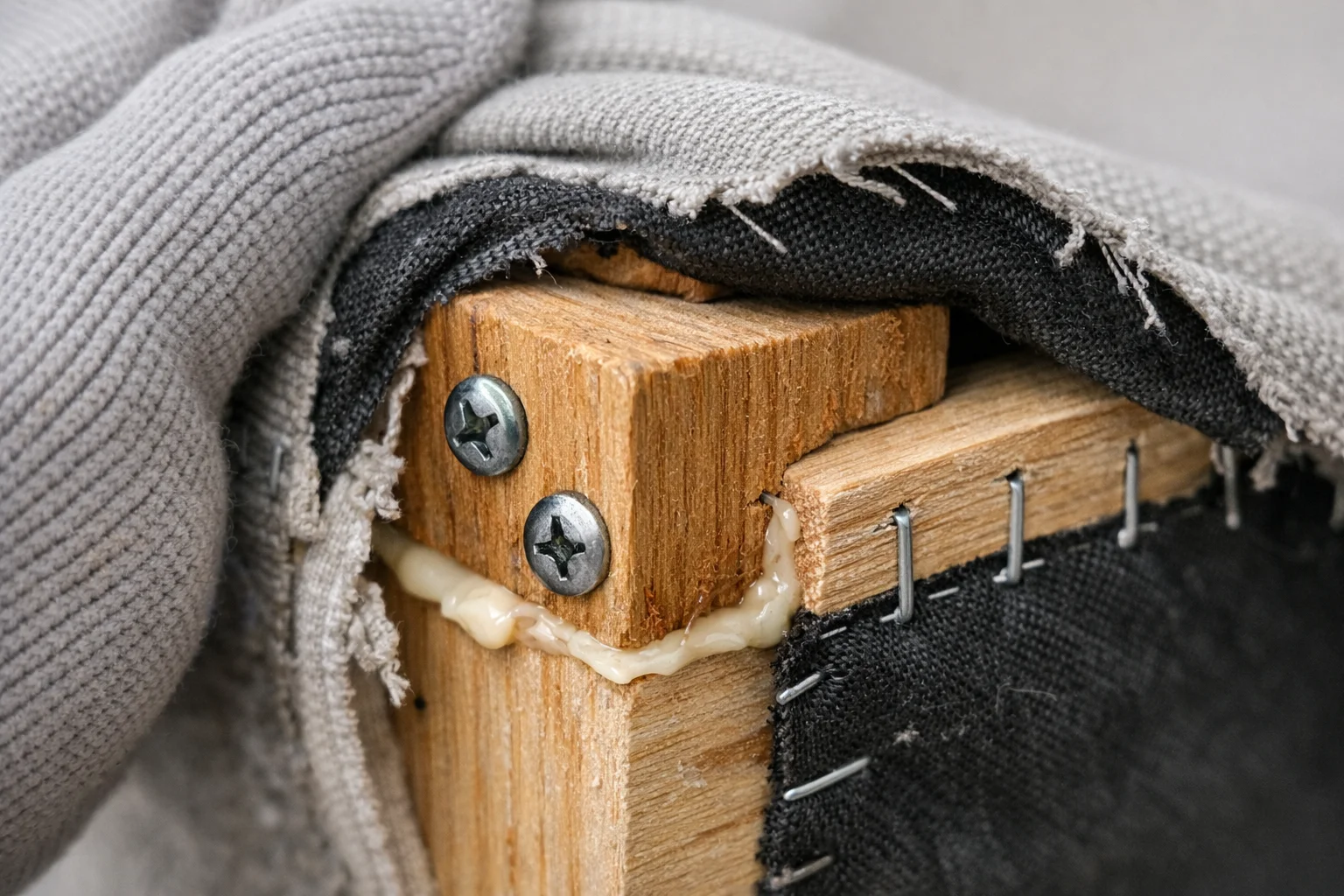
How to spot furniture that will fail. The subtle indicators of stapled frames, weak webbing, hollow arms, and non-reversible cushions that most buyers miss.
Analyze Details →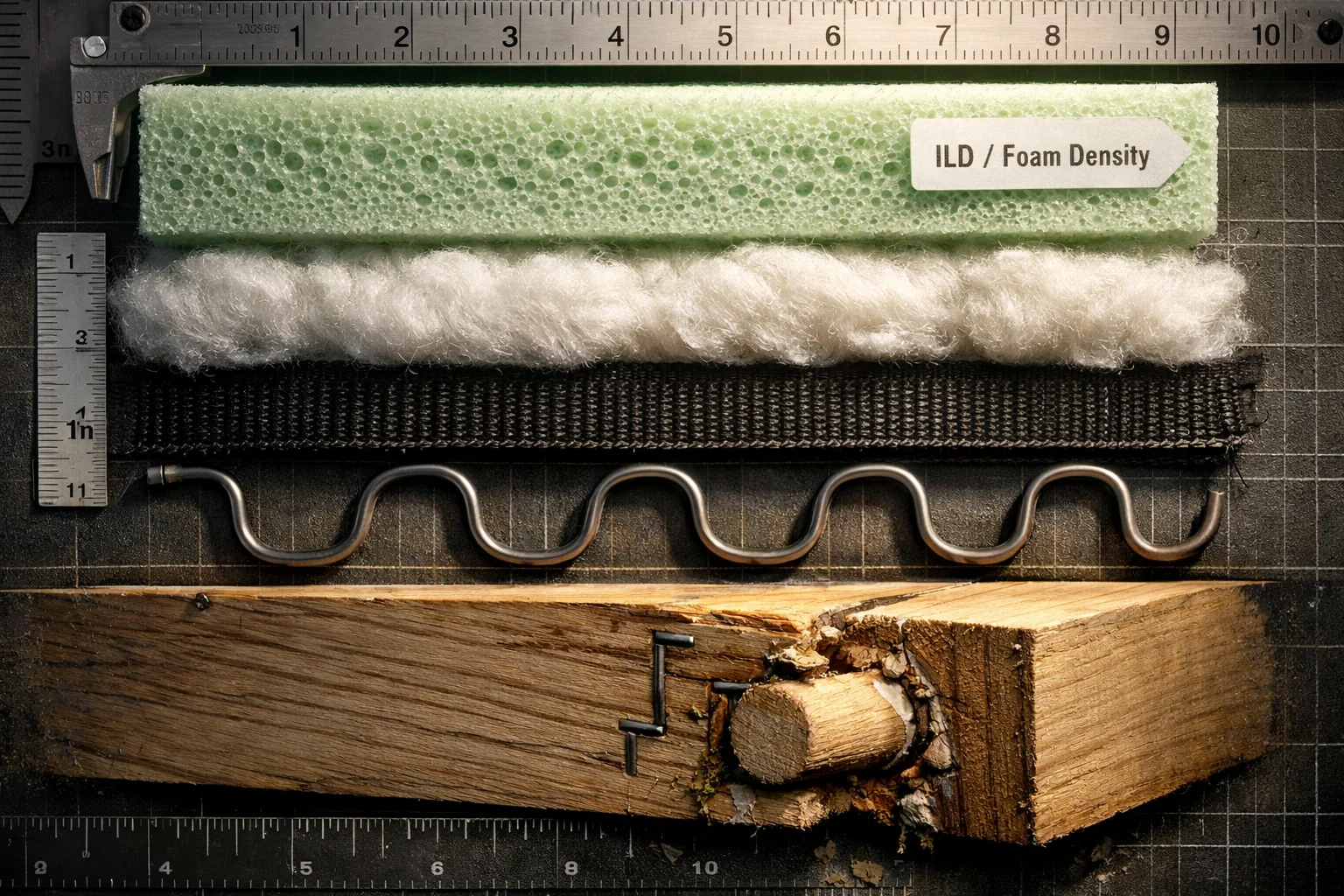
Long-Term Durability: Why "Buy It for Life" is Dangerous Advice
The myth of maintenance-free furniture. Why good furniture still needs care, and why serviceability matters more than invincibility.
Analyze Details →