Sofa Springs: Why They Squeak & How to Fix Them

Introduction
When I’m shopping for a sofa, I treat noise like a clue, not a quirk. If something squeaks on day one in a showroom, it is not going to get better once it has been sat on a few thousand times, moved for cleaning, and asked to survive a couple of careless flops.
What you are really buying is a structure that has to stay tight while everything around it flexes. Cushions compress and fabrics relax, that is normal, but a frame that shifts, rubs, or twists is a problem you will live with every single day.
I learned the hard way that most “comfort tests” people do in a store are too gentle and too short. You sit politely, you bounce once, you declare it comfy, then you find out at home that the sofa talks back every time you change positions.
So in this guide I’m going to keep bringing you back to one idea, you are not shopping for a look, you are shopping for a quiet, stable machine. The good news is you can catch a lot of the bad ones in a showroom if you know what to do and you are willing to feel a little awkward for five minutes.
Start by listening before you even sit down. When you walk around the sofa, put a hand on the back and give it a small shake, then do the same to each arm. If you hear a chirp, creak, or click from the joints, that is the sound of parts moving against each other, and you should assume that movement will increase with time.
Then sit down like you mean it. I don’t mean reckless, I mean realistic, the way you sit at home when you are tired. Put your weight down, shift your hips side to side, and change your posture twice. If it squeaks during those ordinary movements, you have your answer.
I also check one sneaky spot, the front rail under the seat. I crouch, grab the front edge with both hands, and gently pull up and push down. A solid sofa feels like one piece, a weak one feels like it is hinged together, and that hinge feeling is often what turns into noise later.
If the salesperson says squeaks are “normal,” I ask what in the construction is supposed to wear in and stop moving. If they cannot explain the source, or they joke it off, I take that as permission to walk away.
This is not about being picky, it is about avoiding a daily annoyance that you cannot unhear. A sofa you love should disappear into the background of your life, and the first requirement for that is silence.
The "Squeak" Physics
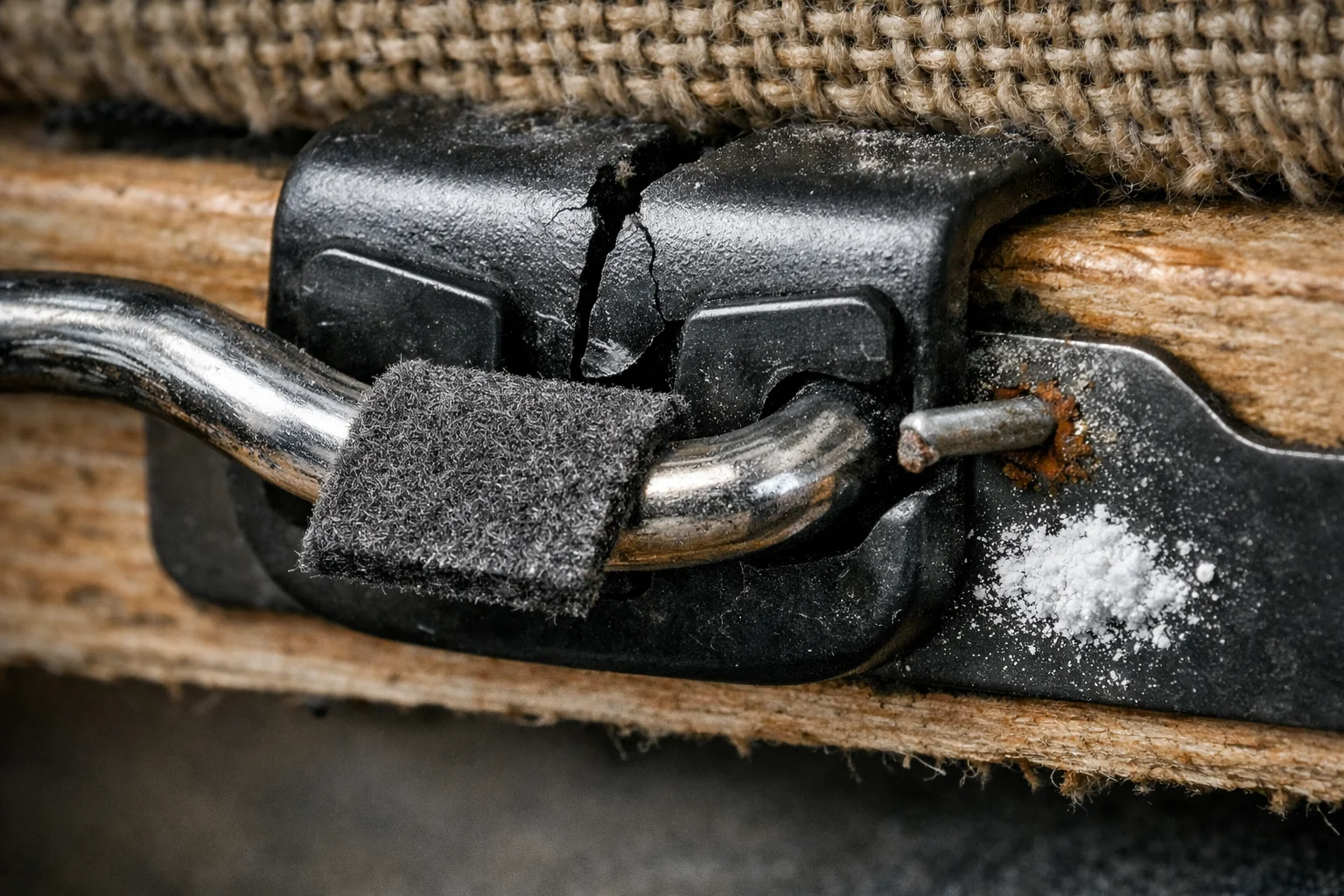
When a sofa squeaks, I assume one thing first, friction. Something is rubbing on something else, usually metal on metal in the spring system, or wood on wood where the frame is shifting.The reason I take it seriously is that squeaking is rarely “just noise.” It often means a fastener is no longer doing its job, like a clip that has cracked, a wire that has popped out of its holder, or a joint that is working loose so two parts are now free to move against each other.
In a showroom, I try to narrow down where it is coming from before I get talked out of my own ears. I sit in one spot and shift my weight left and right, then I lift my feet and press down through my heels, because that loads the seat differently and can make a loose spring or clip chirp. If the noise changes depending on where I sit, I assume it is in the seat suspension, not the floor or the legs.
If it squeaks when I twist my torso and push against an arm, I assume the frame is racking a little. That is a polite way of saying the box is not staying square under normal use, and that kind of movement tends to get louder as the sofa loosens up.
When you ask about “the fix,” this is where I get very specific. The real cure for a squeak is separation, meaning there needs to be a buffer between the rubbing parts, like a thin piece of felt, a plastic spacer, or tape placed where the contact is happening. If the salesperson tells you they can “just spray something,” I treat that as a red flag, because lubrication usually quiets it temporarily while the underlying looseness keeps getting worse.
At home, people often reach for oil or silicone spray because it is easy, but I have learned that it can also attract dust and make a gritty paste over time. More importantly, it does not stop movement, it only masks the sound until it comes back, sometimes louder and sometimes in a new spot.
So my buying rule is simple. If I can make a new floor model squeak with normal sitting and shifting, I assume there is already rubbing contact inside that sofa, and I move on unless the store can clearly explain what component is moving and how they would physically separate the parts, not just “tighten it” or “spray it.”
The “Drop-In Coil” Scam
When I see a sofa advertised as “coil suspension” at a surprisingly low price, I slow down, because that phrase gets used to make a cheap seat system sound like something you would find in better furniture. The pitch is usually some version of “the same coils used in high end furniture,” and it is technically true that there are coils in there, but the way they are installed is what matters.
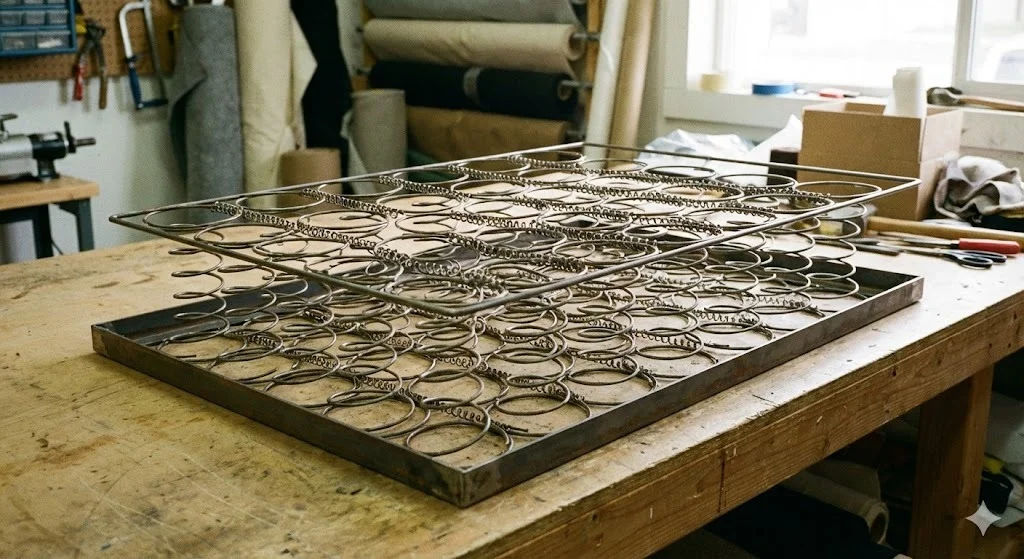
What I watch out for is the drop in unit, which is basically a pre made metal rack of coils that gets screwed into a plywood box. In the store it can feel springy and supportive, but it is also a big metal on metal grid, and that is where the long term annoyance comes from.
The failure pattern is predictable. Little movements that should be quietly absorbed by webbing, clips, or ties turn into rubbing and clicking, and once the grid starts shifting or a clip gets sloppy, you get clanks and squeaks that you cannot tune out.
If you want to catch this in a showroom, I do two things. First I sit down and shift my hips side to side while I keep my feet off the floor, because that loads the suspension without my shoes masking the sound. Then I plant my feet, press down hard through my heels, and listen for a higher pitched chirp or a metallic tick, because that is often the grid talking.
I also put my hand on the seat next to my thigh while I shift, because sometimes you can feel the vibration of metal contact even when the store is noisy. A good suspension tends to feel like one quiet surface moving as a unit, a drop in coil rack often feels like a separate layer doing its own thing.
The other tell is the sales conversation. If you ask, “Is it eight way hand tied, or is it a drop in coil unit?” and they dodge the question and just repeat “it has coils,” I assume it is the rack. If they are proud of real hand tied work, they usually say so plainly, because it is labor and it costs money.
I am not saying every sofa needs eight way hand tied springs, but I treat the drop in coil rack as a specific risk, because it gives you multiple metal contact points that can loosen and start making noise. If I can get even a hint of clanking or squeaking from a new floor model, I walk away, because the odds are very good you will be listening to that sound for years.
Springs vs. WD-40
If a sofa squeaks, I know the urge is to grab WD-40 and make it shut up. I do not do it, and I do not let a store “fix” a squeak that way either, because it solves the sound without solving the cause.
The first problem is the smell. That spray hangs around, and your living room can end up smelling like a garage for a long time, especially if it gets into the dust cover fabric underneath and keeps off gassing.
The second problem is staining. Oil does not always stay where you put it, it can wick along thread, piping, or any fabric seam it finds, then show up later as a shadowy stain that looks like it came from nowhere.
The third problem is that it is a temporary hush. When the lubricant dries out or migrates away from the contact point, the squeak returns, and in my experience it often comes back more persistent because the parts have kept wearing and loosening the whole time.
When I say “real fix,” I mean you physically stop two parts from rubbing. If you are in a showroom and a sofa is squeaking, I treat it as useful information, because it tells me there is already a contact point inside that should not be contacting.
At home, if you are dealing with a squeak on a sofa you already own and returning it is not realistic, I start by flipping it and listening from underneath while someone else shifts their weight on the seat. I am trying to locate the exact rubbing point, usually where a spring meets a clip, where a wire crosses another wire, or where a metal unit touches a staple or bracket.
Once I find the spot, I am not trying to oil it, I am trying to separate it. A small piece of felt or a thin scrap of leather wedged between the spring and the clip can act like a quiet buffer, and so can wrapping the contact point with electrical tape if you can do it neatly and keep it from slipping.
This is also a buying test I use in a store. If a salesperson tells you a squeak is “easy” because they can spray something, I hear that as, “We are going to mask it.” What you want to hear instead is that they would identify the exact contact point and add a physical separator, or replace the clip or spring that is moving.
If you cannot get a straight explanation of what is rubbing and how they would stop the rubbing, I would not gamble on it. Noise is rarely random, it is usually a preview.
Technical Summary: The Silence Test
In the showroom, I do not just sit, I bounce, because a sofa that is going to loosen up usually tells on itself when you load and unload it a few times in a row.I listen for two specific sounds. A click is usually a loose clip or fastener somewhere in the seat system, and I treat it like a defect, because it means something is already shifting and tapping under normal movement. A groan is different, it usually sounds like wood rubbing on wood, and when I hear that I assume the frame is flexing and the joints are not staying tight.
What I want is boring silence. If I can drop my weight into the same spot a few times, shift once, and the sofa stays quiet, that is one of the best quick signs that the frame, the suspension, and the fasteners are working together instead of moving against each other.
Explore Technical Reference
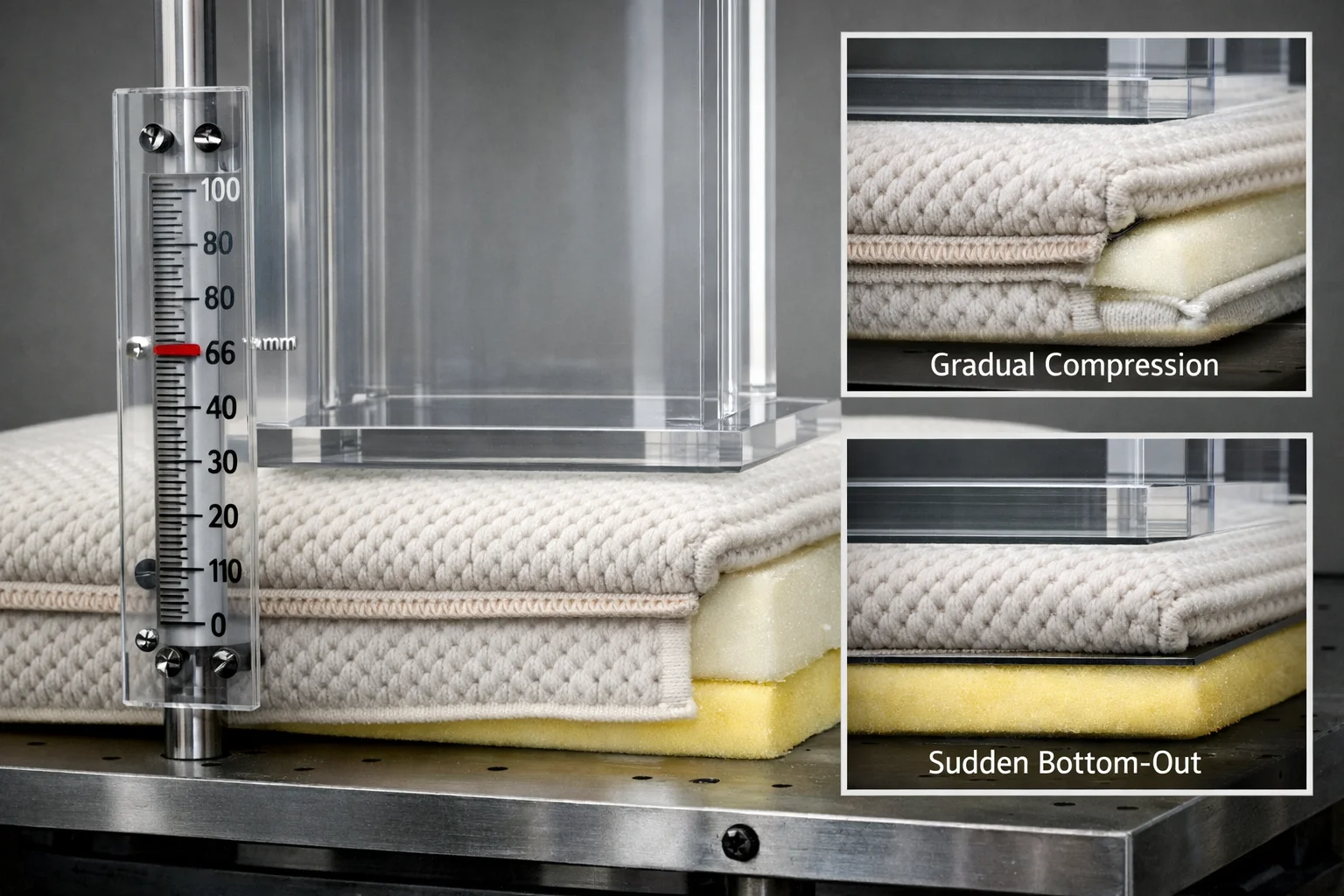
Cushion Construction: Why Multi-Layer Design Matters
Understanding the sandwich approach to cushion engineering. Why single-layer foam fails and how manufacturers stack layers for both comfort and support.
Analyze Details →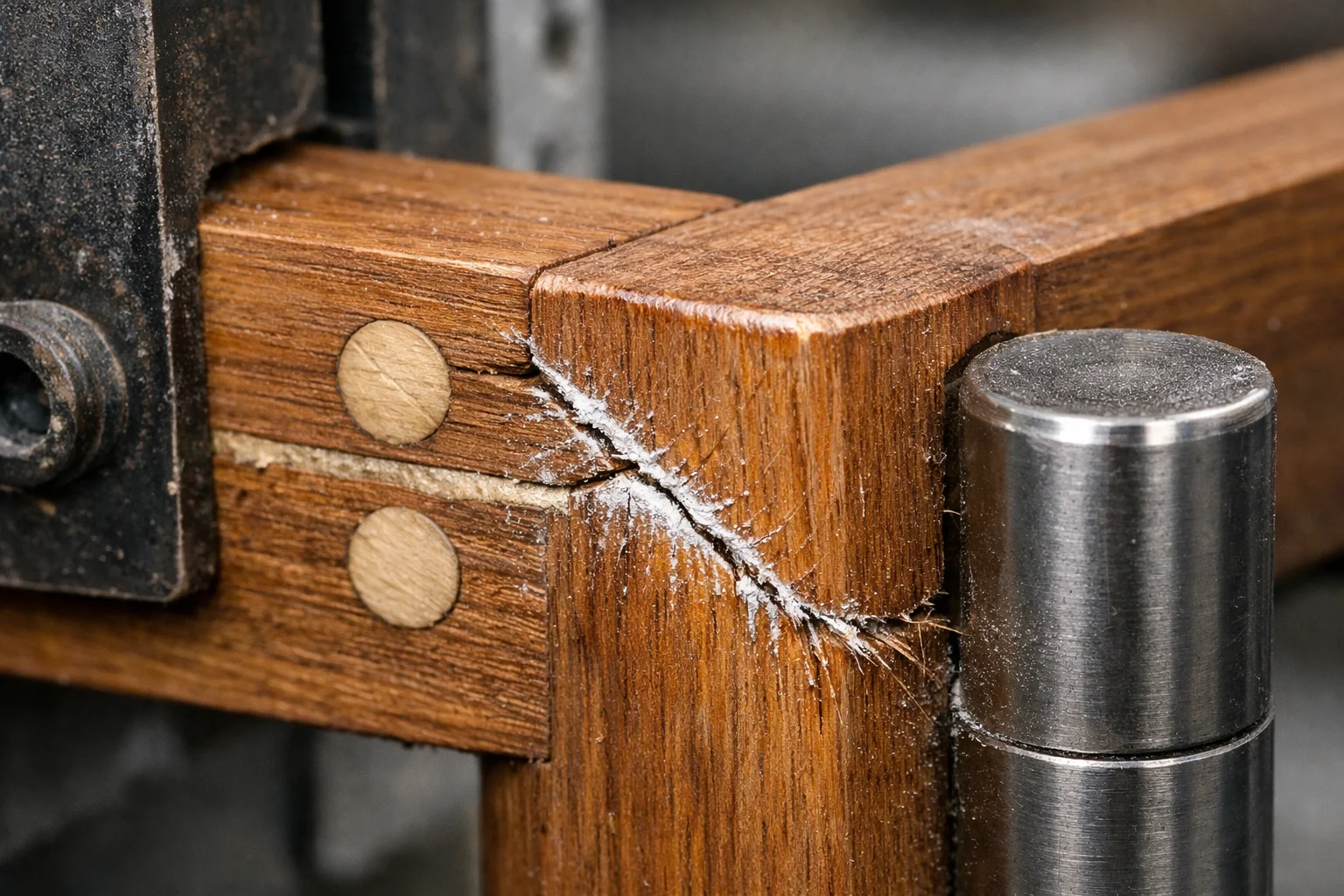
Frame Cracking: The Physics of Failure
Understanding why frames crack under stress. The role of knots, grain direction, and joint design in catastrophic failure versus gradual degradation.
Analyze Details →