Frame Cracking: The Physics of Failure
Introduction
That moment forced me to stop blaming bad luck and start paying attention to how sofas are actually built. I realized most of my past couches did not wear out, they gave up, and they gave up in predictable ways that I could have spotted if I had known what to look for.
I am not a designer or a repair pro. I am just someone who got tired of sagging seats, loose arms, and frames that quietly failed right after the warranty ended. What follows is not theory, it is what I now physically check when I stand in a showroom and put my money on the line.
If you take one thing from this guide, it is that comfort in the first five minutes tells you almost nothing. What matters is how the sofa handles stress, weight, and time, and you can test all three with your own hands if you know where to push and what questions to ask.
I will walk you through how I evaluate a sofa the same way I would test a ladder or a step stool. I press, twist, lift, and listen. None of this requires tools, insider access, or trust in a sales pitch.
If you want a second opinion that is not tied to a brand or a store, I sometimes cross check general durability advice at Consumer Reports. I use it only as a sanity check, never as a shopping list.
By the end, you should be able to walk away from a sofa that looks great but is quietly fragile, and feel confident choosing one that will not crack the first time life lands hard on it.
The “Knot” Killer
The "Knot" Killer
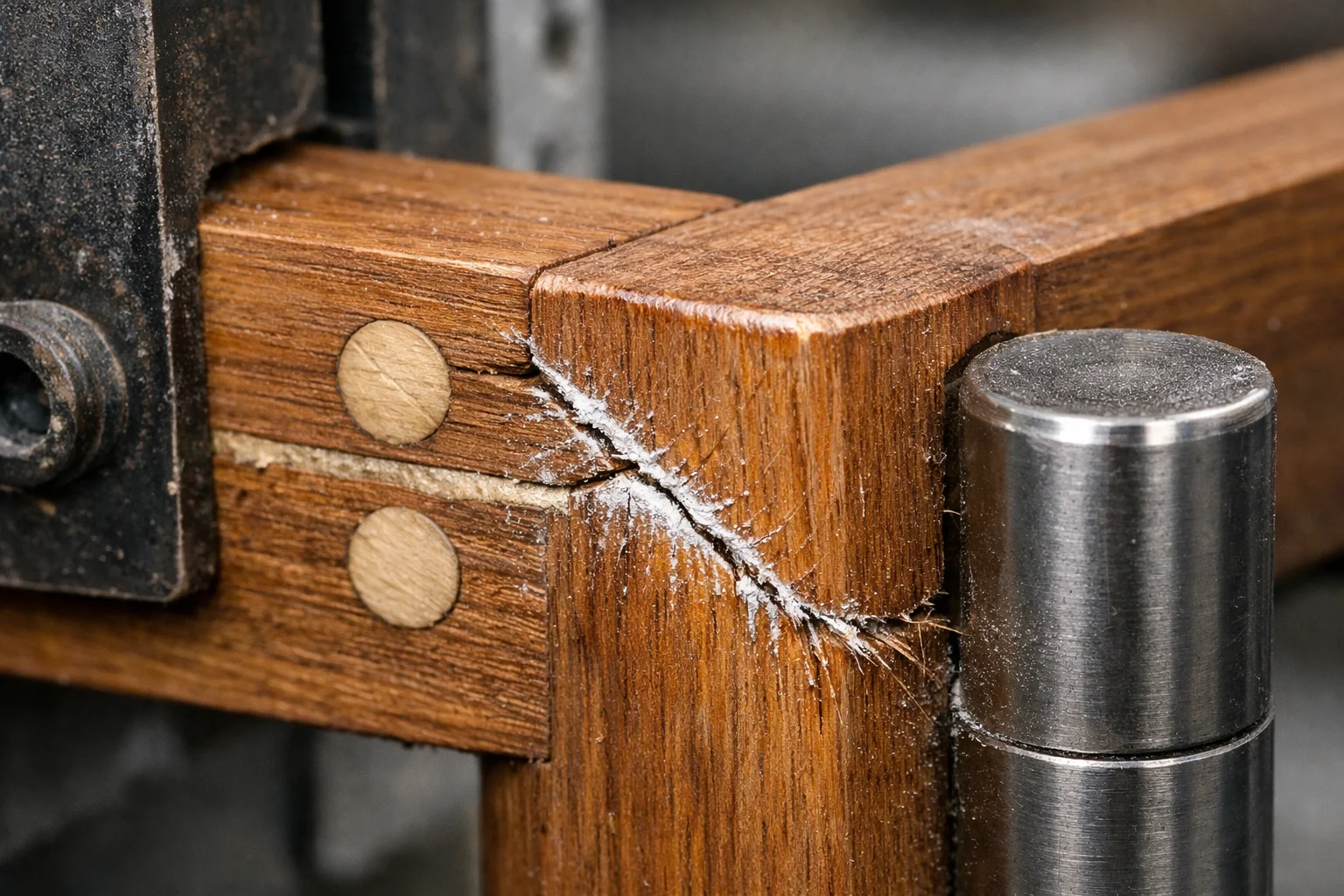
A knot in lumber is a dead branch that was grown over by the tree. It is much harder than the surrounding wood and it breaks the natural grain, the same way a rock disrupts flowing water. When weight or impact hits that spot, the force cannot spread out through the wood. Engineers call this a stress riser, which is a fancy way of saying the force piles up in one place until the wood cracks. Cheap sofa frames often use utility grade lumber that is full of knots, and if one of those knots ends up on the front rail right under your knees, it is only a matter of time before it snaps.This matters because the front rail takes more abuse than almost any other part of the sofa. Every time you sit down, stand up, or drop onto the cushion, that rail flexes. If it flexes across clean grain, it survives. If it flexes across a knot, it fails suddenly and without warning.
When I am in a showroom, I ignore fabric and cushions at first and get my hands under the front edge. I feel along the underside for rough bumps or dark circular marks telegraphing through the wood. If the sales floor model already feels uneven or lumpy there, I walk away.
I also lift the front corner of the sofa a few inches off the ground. I am not trying to show off, I am listening. A solid frame lifts quietly and evenly. A frame with knot ridden rails often makes small cracking sounds or twists instead of rising cleanly.
If the sofa has a dust cover stapled underneath, I gently peel back a corner or ask the salesperson to do it. You are not being rude, you are inspecting the structure you are about to pay for. I look directly at the front rail and I want to see long, continuous wood grain without dark knots sitting in the middle of it.
When I ask what the frame is made of, I listen for specifics, not reassurance. Phrases like hardwood frame mean nothing by themselves. What I want to hear is kiln dried hardwood with no knots in load bearing rails. If they cannot answer that or try to steer me back to color options, I take that as my answer.
The uncomfortable truth is that a single bad knot can doom an otherwise decent sofa. You cannot reinforce your way out of it with screws or brackets once the grain is broken. Catching it in the store is far easier than hearing a crack one night and realizing the seat will never feel right again.
The “Creak vs. Crack” Diagnosis
Not every noise means disaster, but every noise means something, and learning the difference has saved me from more than one bad purchase.
When a sofa is brand new, a sharp pop now and then does not bother me. That sound usually comes from glue joints settling or springs seating into place for the first time. If it happens once or twice and then disappears, I mentally note it and move on.
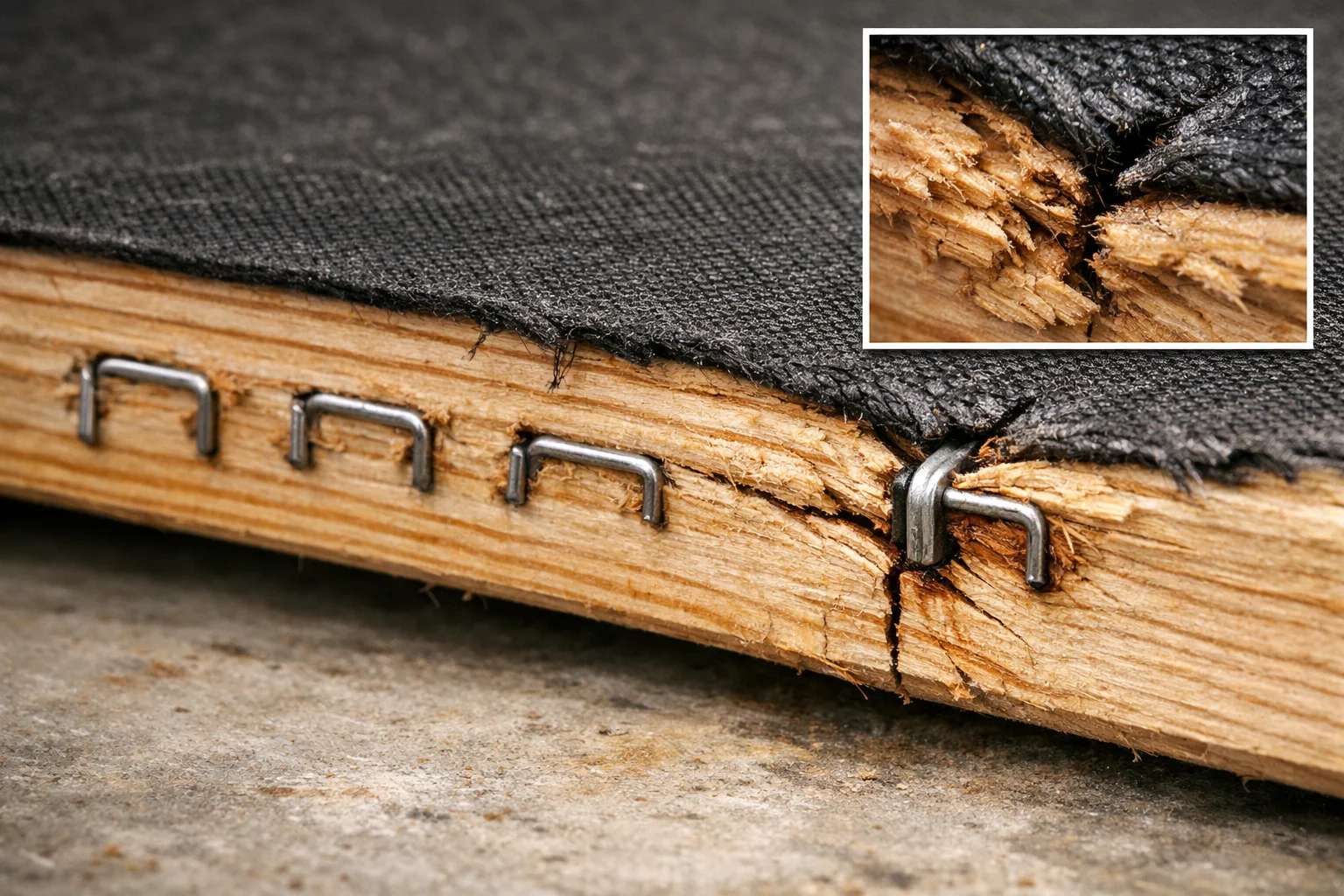
What makes me stop is a creak. If I sit down and hear a drawn out groan or squeak, especially if it repeats every time I shift my weight, I assume something is already moving that should not be. That sound is usually wood rubbing against wood because a joint is loose, and once that friction starts, it rarely reverses itself.
The sound I never ignore is a snap. A loud, dry crack followed by a sudden feeling that the seat or arm has gone soft tells me wood fibers have actually separated. At that point the structure is compromised, even if the sofa still looks fine on the outside.
I test for this before buying by being a little awkward on purpose. I sit down firmly instead of easing in. I lean my weight onto one arm, then the other. I listen with my ears and with my body, because looseness is something you feel as much as hear.
The Twist Test
This is how I check for internal damage without opening anything up. I lift the front left corner of the sofa about six inches off the floor and keep my eyes on the front right corner. If the right corner starts to rise almost immediately, the frame is acting like a single rigid box, which is what I want. If I can lift the left side several inches while the right side stays planted on the floor, the frame is twisting, and that tells me joints are flexing instead of holding.I always do this slowly and calmly, not yanking the sofa around. A well built frame does not complain during this test. A weak one often creaks, shifts, or feels like it is wringing itself out.
If a salesperson tells you not to lift it because it might damage the floor model, I hear that as a warning. A sofa should survive being lifted by one corner, because real life includes moving, cleaning, and uneven floors.
This diagnosis is about catching problems before they become permanent. Pops are usually harmless, creaks are early warnings, and cracks are the end of the story. If you learn to tell them apart in the showroom, you can walk away before the noise becomes part of your living room.
Why Repair is Impossible (The “Totaled” Car)
The real tragedy of a cracked frame is not that the wood broke, it is that the sofa instantly becomes uneconomical to save. I learned this the hard way after assuming a small internal crack would be a simple fix.
The actual piece of wood is almost meaningless. A new section of maple or similar hardwood can cost less than a decent lunch, so the material itself is not the problem.
What kills you is access. To reach a broken rail, someone has to remove the fabric, peel back padding, pull out foam, detach springs, and then rebuild everything in reverse. Even for a skilled upholsterer, that is most of a full workday.
Once you put real labor rates against that time, the math turns ugly fast. You end up paying hundreds of dollars to fix a sofa that is already worth less than the repair bill, and that assumes nothing else is weak or cracked nearby.
This is why a cracked frame is like a totaled car. The damage might look localized, but the cost to safely undo and redo everything around it exceeds the value of what you are trying to save.
I keep this in mind when I am standing in a showroom. I am not asking myself whether a problem could be repaired in theory, I am asking whether it would ever make financial sense in reality.
That mindset changes how picky I am up front. I would rather walk away from a sofa over a suspicious noise or a sketchy frame answer than convince myself it is fixable later.
When a salesperson says, if anything happens it can be repaired, I translate that in my head to, you will not want to pay for it. Structural repairs on seating furniture are almost never small, fast, or cheap.
The only practical protection you have is prevention. If the frame cracks after you own it, the sofa is effectively done, no matter how nice the fabric still looks.
That is why everything I do in the showroom is about avoiding that one failure. Cushions can be replaced and fabric can be reupholstered, but once the skeleton breaks, the rest of the body does not matter.
If you remember nothing else from this section, remember this. A sofa frame is a one strike part, and you only get one chance to choose it correctly.
Diagram
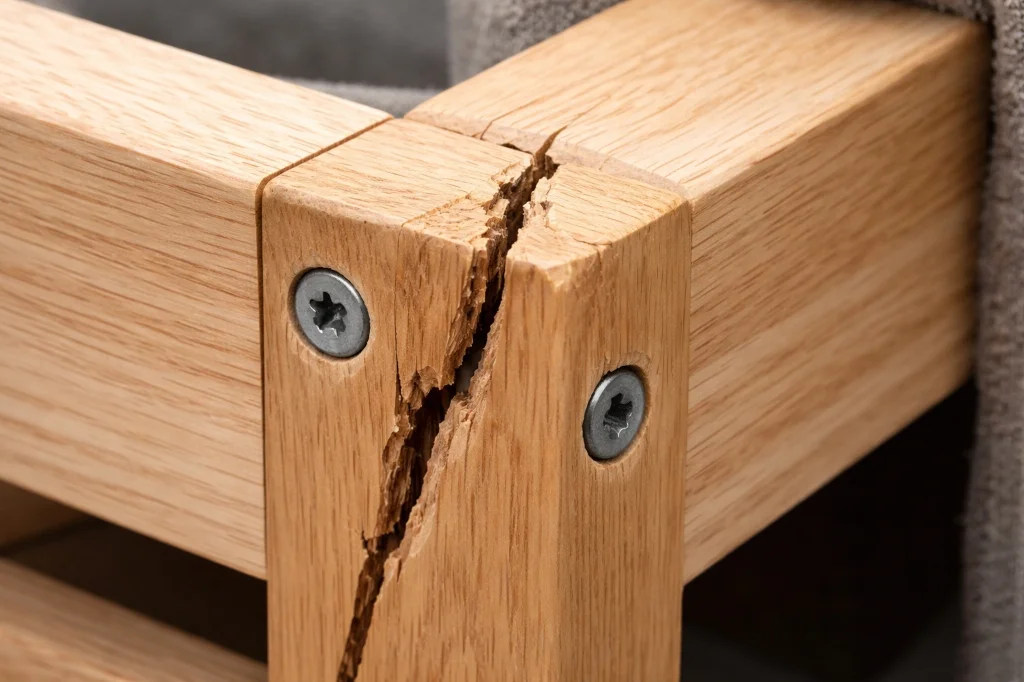
When I look at a diagram like this, I am not thinking like an engineer. I am translating it directly into where my hands should go when I am standing in front of a real sofa.
What this picture is really showing you is how force wants to travel. In clean wood, the load spreads out along the grain, which lets the rail flex and recover. When a knot interrupts that grain, the force hits a dead end and concentrates right at that spot.
In practical terms, this means that not all parts of a frame are equally risky. A knot in a back rail or a non load bearing brace is annoying but often survivable. A knot in the front rail, right under where your thighs hit when you sit down, is a ticking clock.
When I am in a showroom, I mentally overlay this diagram onto the sofa. I imagine where my weight lands when I drop into the seat, where guests perch on the edge, and where kids tend to bounce. Those are the areas where uninterrupted grain matters most.
This is why I do not accept vague reassurances like engineered to be strong. The physics do not care about branding. If the grain is broken in a high stress zone, the failure point is already built in.
I also use this mental image when I see extra brackets or metal plates screwed into the frame. Those often exist because the underlying wood is weak. Hardware can hold pieces together, but it cannot restore broken grain or eliminate a stress riser.
If you remember this diagram while shopping, it changes what you focus on. You stop obsessing over thickness alone and start caring about continuity. A slightly thinner rail with clean grain will usually outlast a thicker one full of knots.
I keep this picture in my head because it explains why some sofas fail suddenly instead of gradually. The break does not creep, it snaps, and it snaps exactly where the grain was compromised.
Once you understand that, inspecting a frame feels less mysterious. You are no longer guessing about quality, you are looking for specific visual and tactile clues that line up with how wood actually behaves under real life use.
That is the goal of this whole guide. I am not trying to turn you into a builder. I am trying to give you a way to see past upholstery and marketing and judge whether the skeleton underneath is quietly waiting to betray you.
Prevention: Hardwood vs. Softwood
This is where I finally stopped thinking all wood was basically the same. The difference between hardwood and softwood is not about luxury, it is about how failure shows up when real weight hits the frame.
Pine is a softwood that grows fast, and that speed shows up in the structure. When pine is pushed past its limit, it tends to snap suddenly instead of giving you warning. One day the sofa feels fine, the next day you hear a crack and the seat never feels right again.
Maple is a hardwood that grows slowly, and that slower growth creates denser, tighter grain. When maple is overloaded, it usually bends and flexes before it breaks. That flex is your early warning system, because you feel sagging or softness long before anything actually snaps.
As a buyer, I care less about the label and more about how the wood behaves under stress. Sudden failure is what totals a sofa, while gradual failure at least gives you time to notice a problem and stop abusing that spot.
In a showroom, I cannot overload a frame to the breaking point, but I can look for clues. I ask directly what species is used for the main load bearing rails, especially the front rail and the side rails. If the answer is just hardwood without a species, I assume it is doing marketing work, not structural work.
When they say pine or mixed woods, I slow down and test more aggressively. I sit firmly on the front edge, because that is where brittle wood shows its weakness first. I pay attention to whether the seat gives a little and recovers, or whether it feels rigid and then suddenly shifts.
When they say maple or another dense hardwood, I still test, but I expect a different response. A good hardwood frame feels slightly springy under load and then returns to shape. It should not feel like it is daring you to be the straw that breaks it.
I also look at how thick the rails are relative to the size of the sofa. Softwood frames often rely on bulk to make up for weakness, so you see oversized rails that are still full of knots. Hardwood frames can often be slimmer and still feel more solid because the grain does more of the work.
One trick I use is pressing up on the front rail from underneath while sitting down. If the wood feels dead and unyielding and then suddenly shifts, I get nervous. If it flexes slightly and smoothly, I relax.
This difference matters because you do not control how a sofa is used over its lifetime. Guests plop down, kids bounce, and someone eventually sits right on the edge. I would rather own a frame that complains slowly than one that stays quiet until it catastrophically fails.
Salespeople sometimes frame softwood as fine for normal use, and that word normal is doing a lot of heavy lifting. Normal life includes awkward loads and bad angles, and hardwood tolerates those mistakes better.
If you are choosing between two sofas that feel equally comfortable, I treat hardwood framing as cheap insurance. You may never notice it day to day, but it dramatically lowers the odds of a sudden, unrecoverable break.
This is not about chasing perfection or paying for prestige. It is about choosing a material that fails in a forgiving way instead of a dramatic one. After living through both outcomes, I know which one I am willing to gamble on with my money.
Technical Summary: Dynamic Load Limits
Furniture is engineered for static load, which means calm sitting, not dynamic load, which means dropping, flopping, or collapsing onto it.Here is the part that changed how I shop. When a two hundred pound person drops onto a sofa instead of easing down, the frame does not feel two hundred pounds. For a split second it feels several times that, because the force spikes on impact. That is why a sofa that feels fine under gentle sitting can still crack when someone plops down.
I do not carry formulas into a showroom, but I carry the implication. I assume every sofa I look at will eventually see dynamic load, whether from kids, guests, pets, or just a tired adult misjudging the seat. If a frame is only barely strong enough for polite sitting, it is living on borrowed time.
This is where material choice stops being abstract. Softwoods like solid pine can handle static weight reasonably well, but they do not like shock. When that impact hits, pine rails tend to split along the grain or snap at weak points, especially if there are knots. Once that happens, the failure is immediate and permanent.
When I know a household includes kids, frequent guests, or any kind of rough use, I draw a hard line. I only consider frames that use plywood or hardwood laminate for the main load bearing rails. Those layered materials spread shock across multiple grain directions, which is exactly what you want when someone drops straight down onto the seat.
In practical terms, this changes the questions I ask. I do not ask if the sofa is strong. I ask what the front rail is made of and whether it is solid wood or laminated. If the answer is solid pine, I picture a future impact and I usually walk away.
I also change how I test the sofa. I sit down with a bit of commitment instead of lowering myself gently. I pay attention to whether the frame absorbs that motion smoothly or whether it feels like it is taking a hit. A frame that is built for dynamic load feels controlled, not brittle.
This is not about blaming people for how they sit. Real life is dynamic, not careful. A sofa that cannot tolerate that reality is not a good value no matter how nice it looks or feels in the first five minutes.
Once I understood dynamic load, a lot of past failures made sense. Those sofas were not cursed, they were underbuilt for how they were actually used. Now I shop assuming impact will happen, and I choose frames that are designed to survive it instead of hoping it never occurs.
Explore Technical Reference
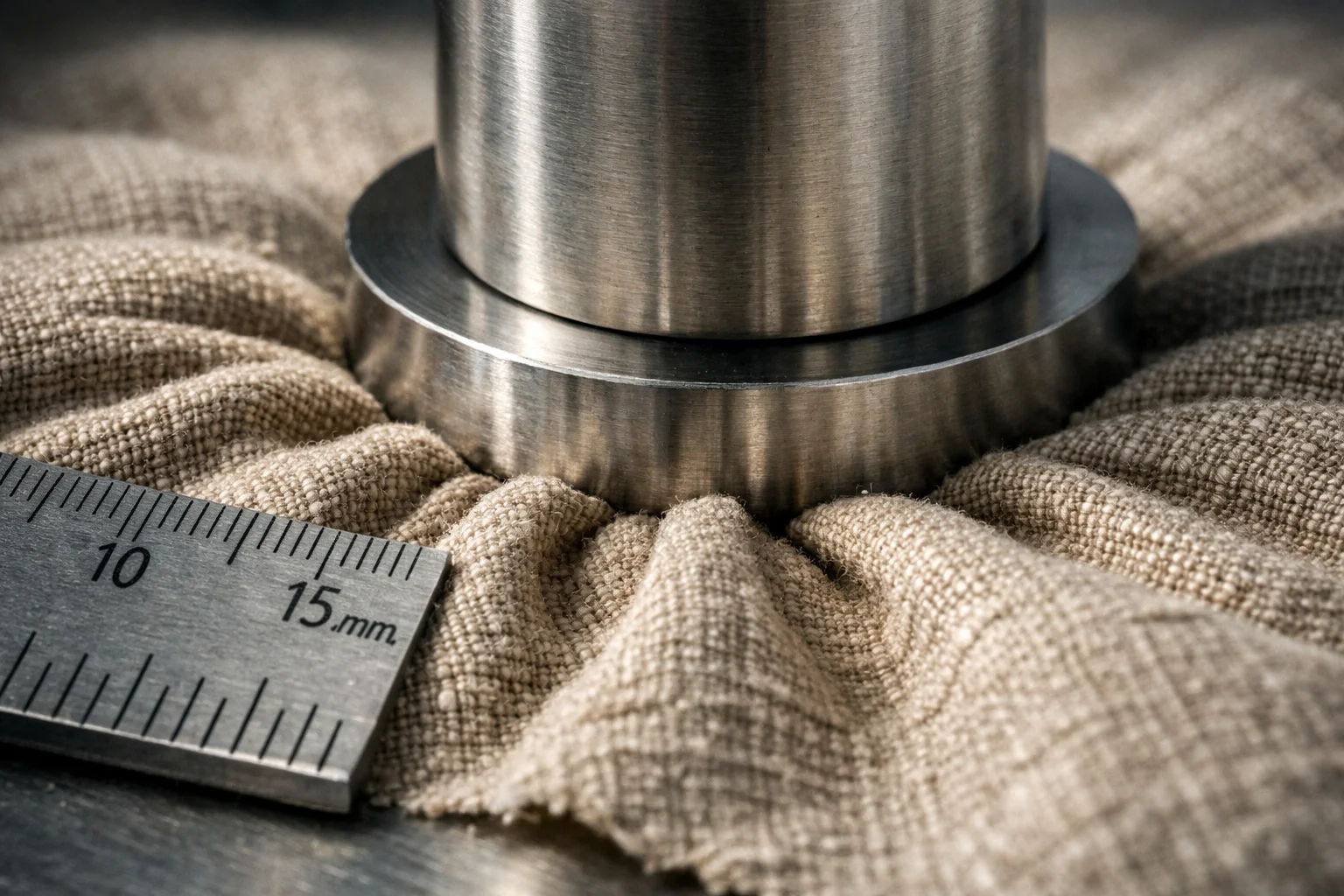
Fabric Behavior: Why Your Sofa Wrinkles (The Physics of Puddling)
Why your tight linen sofa looks sloppy after a month. Understanding the elongation properties of natural versus synthetic fibers.
Analyze Details →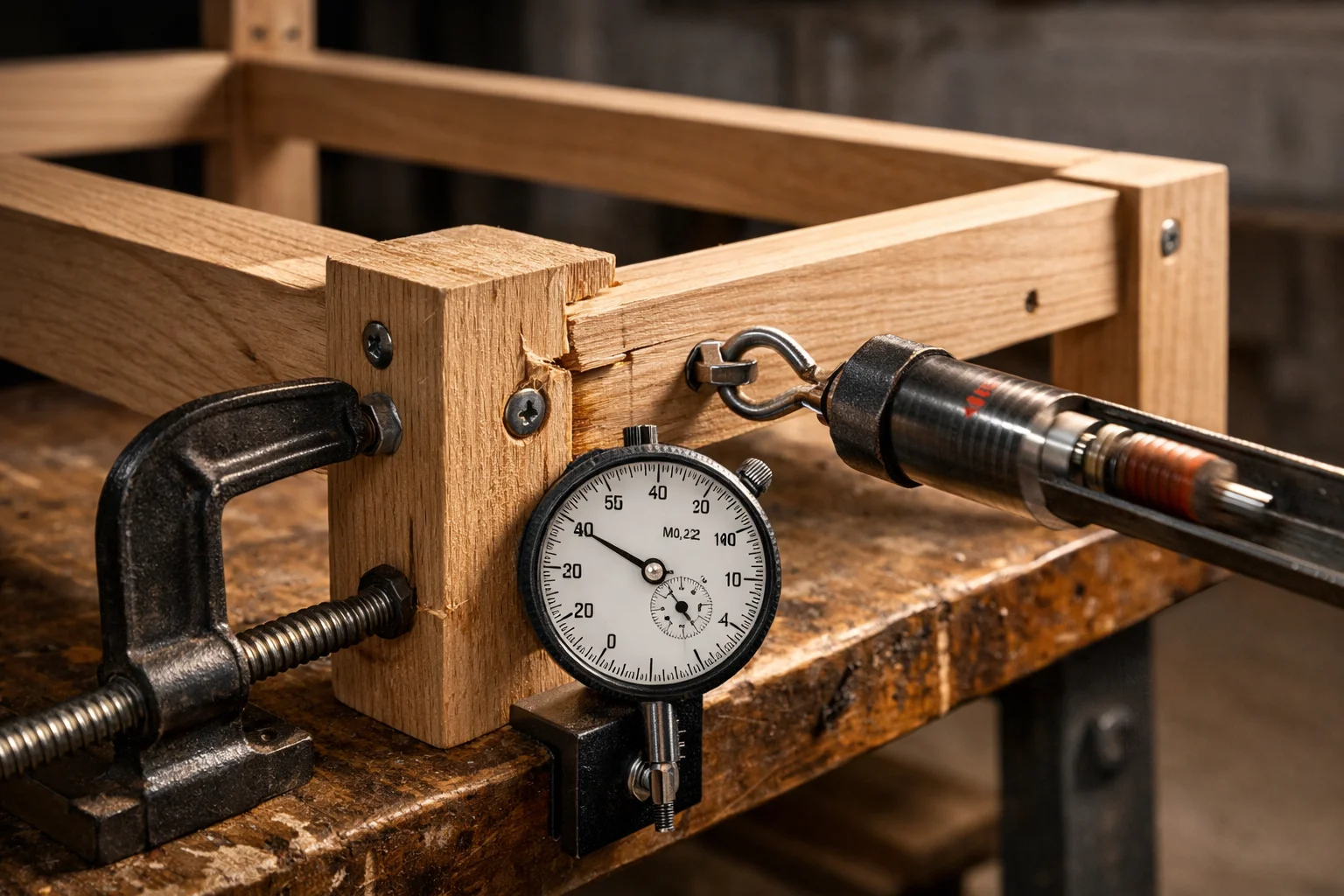
Frame Anatomy 101: The Skeleton of Comfort
The foundation of all furniture. Understanding the terminology of rails, stiles, stretchers, and localized reinforcement.
Analyze Details →