Long-Term Durability: Why "Buy It for Life" is Dangerous Advice
Introduction
My grandmother’s advice seemed unimpeachable: “Buy the best, and you only cry once.” While true for cast iron skillets or wool coats, this wisdom is profoundly dangerous when applied to sofas. The myth of long term durability assumes it is a passive state, that paying enough money purchases an exemption from physics.
What I have learned the hard way is that a sofa is not one object, it is a stack of compromises that age at different speeds. The cushions soften, the webbing stretches, the joints loosen, and the fabric pills or shines, and those things can happen even on an expensive piece if the build choices are wrong for how you actually live.
So when you shop, I want you to stop asking, “Is this a good sofa?” and start asking, “Which part will fail first for me, and can I see and feel the decisions that control that?” You cannot control everything in a showroom, but you can pressure test the things that tend to betray you later.
In this guide I am going to keep bringing you back to two practical ideas. First, comfort in the first five minutes is not the same as comfort in the fifth year, because many showroom sofas are tuned to feel plush up front and then collapse into a hammock. Second, price is not a shortcut, because a high ticket can buy nicer fabric and prettier detailing while the hidden structure is still doing the cheapest acceptable job.
If you only take one mindset into the store, take this one: treat every sofa like a machine with wear parts. You are not trying to buy something “forever,” you are trying to buy something whose wear parts are slow to wear, easy to replace, and matched to your body, your household, and your habits.
That is why I will keep nudging you to do simple, slightly awkward checks that most shoppers skip. I will ask you to sit the way you actually sit, to lift and push in places you would normally ignore, and to ask salespeople direct questions that force real answers instead of vibes.
You do not need to become a furniture engineer to avoid getting burned. You just need a repeatable way to spot the common failure points before they move into your living room and start charging you rent.
The ‘Cry Twice’ Reality
The "Cry Twice" Reality
I spent a fortune on a "buy-it-for-life" leather Chesterfield, expecting it to be a permanent fixture. Ten years later, the leather was cracked, the cushions were hammocks, and a spring was poking through. I cried once when writing the check, and once when realizing that even expensive assets decay.True durability is not about invincibility, it is about serviceability.
When I look back at that sofa, the mistake was thinking “expensive” meant “immune.” What it really meant was that the visible parts were nicer, while the parts that actually wore out were still just wear parts.
In a showroom, you cannot predict every future problem, but you can separate a sofa that can be maintained from one that becomes landfill the moment something sags. I want you to shop like you are buying a car you plan to keep, not a sculpture you plan to admire.
The simplest question I now carry into every store is this: “If the seat gets soft in three years, what do I do?” If the salesperson cannot describe a realistic path that involves replacing or refilling something, you are staring at a “cry twice” setup, no matter how good it looks under the lights.
Start with the cushions, because they are the fastest moving part in most homes. You want cushions that you can remove easily and that have covers with a real zipper you can run your fingers along, because that tells you the maker expects the insides to be accessed. If you cannot open anything, you are betting your comfort on foam you have never seen, from a supplier you will never meet.
Then ask, very plainly, whether replacement inserts can be ordered later, and whether they will match the original size and firmness. If the answer is vague, or if they tell you “you would just buy a new sofa,” believe them, that is the business model.
Next, look underneath, because serviceability lives under there. I flip the front edge of the sofa skirt up if I can, or I crouch and look with my phone flashlight, and I am looking for whether the bottom is a removable dust cover panel versus a permanently stapled fabric belly. A removable panel is not glamorous, but it means a tech can actually get in to deal with loose webbing, a squeak, or a spring issue without destroying the sofa to save it.
While you are down there, grab the front rail and give it a firm shake, then push down on one seat position and watch whether the whole frame participates or whether one section dips and twists. A frame that moves like it is made of separate moods tends to get louder and looser over time, and it is much harder to “service” because the problem is usually the structure itself.
Now shift to the upholstery, because “serviceable” also means you can live with how it ages. If you are looking at leather, ask what kind it is in normal language, not marketing language, and ask what part of the sofa is that leather. If the salesperson says the seating surfaces are one thing and the sides are another, that is common, but it changes how it will wear, and mismatched wear is one of those slow heartbreaks you cannot unsee once it starts.
I also want you to do one uncomfortable test: put your fingertips on the leather or fabric where your head and shoulders will rub, then look for early shine, surface coating, or a plasticky feel that suggests it will crack or get glossy rather than soften. You are not trying to prove it is bad in the store, you are trying to predict whether you will hate the patina in your own lighting after a few years.
Finally, treat warranties like a map of what the brand thinks will fail. A long frame warranty can be real, but it does not comfort me if the cushions are excluded or “normal softening” is waved away, because that is where most people feel the failure first. I ask the salesperson to point to the exact line about cushions and suspension, and if they will not, I assume the coverage is thinner than the brochure suggests.
If you remember nothing else from this section, remember this: you are not buying a promise that nothing will wear out. You are buying a plan for what happens when it does, and you can tell whether that plan exists by how accessible, replaceable, and honestly discussed the wear parts are while you are still in the showroom.
The Physics of Use: Inevitable Decay
Every time you sit down, you are doing tiny damage, even if the sofa is “good.” Foam cells get crushed and do not fully spring back, fabrics stretch at stress points, and the heat and oils from your body speed up the slow breakdown of finishes, adhesives, and coatings.
The reason I start with this grim framing is practical, not cynical. If you accept that change is guaranteed, you stop getting hypnotized by a sofa that looks perfect on day one, and you start looking for the kind of change you can live with on day one thousand.
In a showroom, I can often tell when a sofa is built to hold a showroom shape until it suddenly gives up. The common trick is stiffness that feels like quality at first touch, where the seat feels board firm and the arms feel rock solid, but the comfort is coming from hard layers and thin materials that do not have much “travel” left in them.
When I sit on those, I do a simple reality check: I sit in the exact same spot twice, getting up fully in between, then I look at the cushion surface and the front edge. If the cushion creases sharply, or the front edge already shows a little ridge where my thighs were, that tells me it is not designed to recover gently over time, it is designed to resist until it cannot.
I also pay attention to how the sofa hides wear. If the seat cushions are fixed and over tailored, and everything is pulled drum tight with no ability to rotate or swap positions, you are depending on every layer staying “correct” forever. That usually ends with one seat becoming the bad seat, and you cannot redistribute the damage because the sofa will not let you.
A better kind of sofa does not pretend it will stay frozen. It expects softening, it expects some wrinkling, and it expects you to rotate cushions and occasionally refresh the parts that take the beating.
You can test for that mindset in really plain ways. I unzip a cushion cover if they will let me and squeeze the insert, not to judge “soft” versus “firm,” but to see whether it has a supportive core that will still be there when the top layer relaxes. If everything feels like one uniform, marshmallowy slab, it often feels great under bright lights and then collapses into a low spot where you always sit.
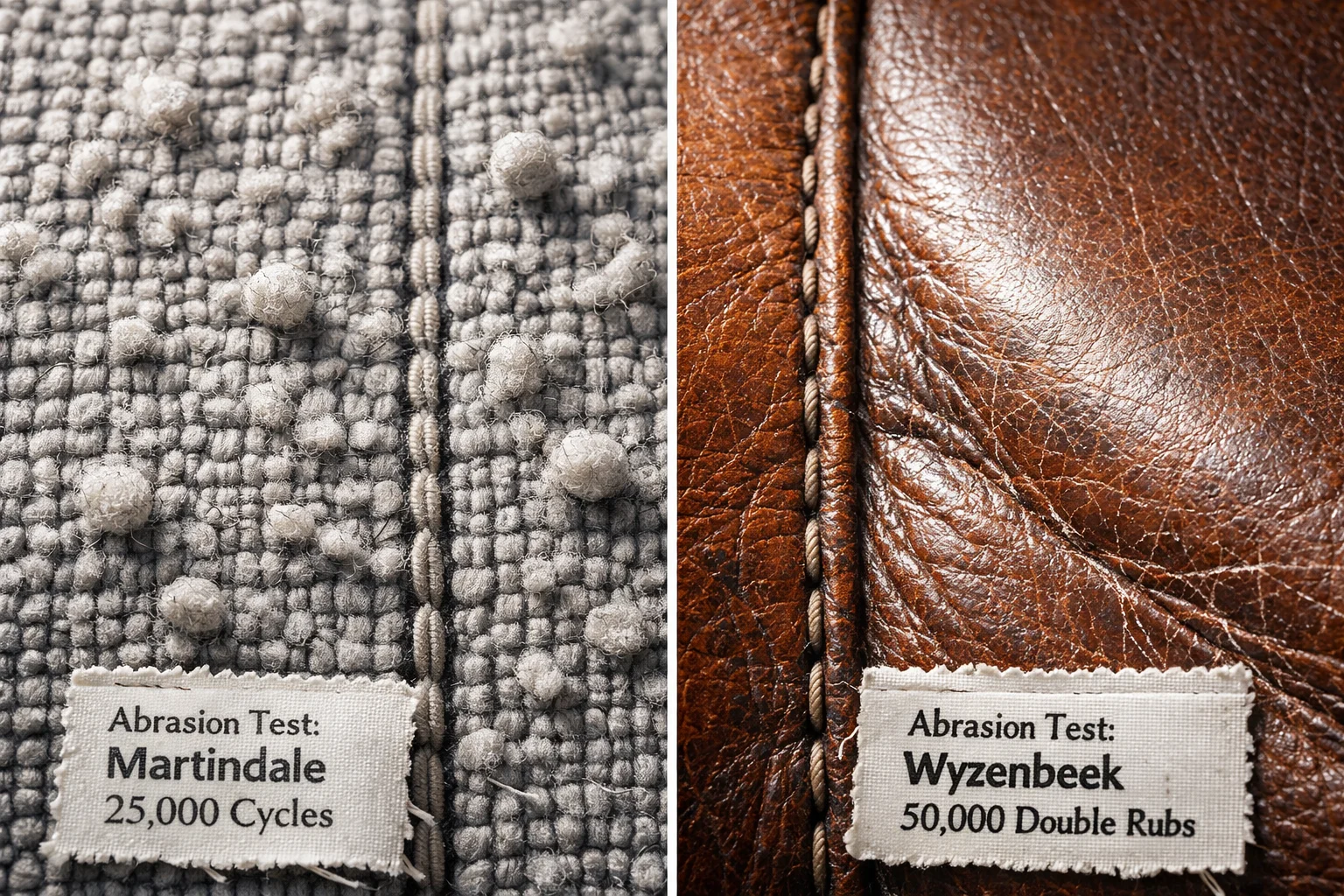
Then I look at the upholstery like a thing that will get a life story written into it. With leather, I am looking for whether it feels like it will develop a lived in softness or whether it feels coated, sealed, and a little plastic, which is the kind that often goes shiny where your head rests and then starts to look tired instead of honest. With fabric, I rub an inconspicuous spot with my palm for ten seconds and see if it immediately changes direction, sheen, or fuzz, because those little reactions tend to get worse, not better.
The most useful shift you can make as a buyer is to decide what kind of aging you can tolerate. I can live with a little wrinkling and rounding of edges if the support stays good, but I cannot live with a hammock seat or a frame that starts talking in squeaks, so I prioritize the stuff that keeps the geometry of sitting intact.
If you want a quick gut check while you are still in the store, focus on what happens when you sit off center. I plant myself near the edge of one seat, lean back, and notice whether the sofa holds me in a stable way or whether it subtly twists and encourages me to slide into the middle. That twisty, sliding feeling is often the first hint of a structure and suspension combo that will feel worse with every month of use.
I also pay attention to the “perfect sofa” look, the one that seems to have no wrinkles, no give, no visual compromise. Perfect is not always bad, but I have learned to be suspicious when perfection depends on tight skins and stiffness rather than on solid support you can feel underneath.
If the salesperson talks like wear is a defect instead of a reality, I treat that as a warning. A sofa that is built to age gracefully is usually sold by someone who can say, calmly and specifically, how it will look after a few years, what will soften first, and what you can do about it.
What I want for you is a sofa that changes slowly, predictably, and in ways you can manage. You are not shopping for something that never shows life, you are shopping for something that keeps its job, supporting you, even after life has sat on it thousands of times.
The Leather Lesson: Bonded vs. Full-Grain
Bonded leather is an expensive lesson in marketing, and I say that as someone who has watched it go from “wow” to “what happened” in real time. It is essentially leather dust and scraps glued to a backing, then coated and colored so it presents like leather under showroom lighting. If you are curious why it behaves so differently, it is because it does not have the continuous fiber structure of a hide, which is the thing that lets real leather bend, stretch a little, and recover without its surface shell letting go.
In a store, bonded leather is the one that looks almost too perfect. The color is dead even, the grain pattern looks stamped, and the surface often feels a little cool and sealed, like a jacket with a coating on it. If you run your fingertips across it, there is less of that warm, slightly grabby drag that you get on a hide, and more of a smooth, slightly slick finish that feels like it wants to stay pristine.
The reason I want you to spot it is not snobbery, it is failure mode. Bonded leather tends to hold its “new” look for a while, then it starts to flake and peel because the top layer is basically a finish sitting on an engineered base. When that starts, you are not looking at a scuff you can condition away, you are looking at the surface separating, and there is no real repair that makes it disappear because there is no intact hide underneath to rework.
So in the showroom, I do a very simple check for any leather that seems suspiciously uniform. I look at high wear zones, the front edge of the seat where your thighs slide in and out, the top of the arms where skin oils and friction live, and the upper back where heads rub. Then I tilt my head and look for a painted on look, meaning the color seems to sit on top rather than having depth, and I look for a repeating “printed” grain that looks identical from panel to panel.
If you are allowed to, I also pinch and flex an inconspicuous area near the back or lower side. Real leather will crease in a way that looks organic, then relax. Bonded and heavily coated surfaces often show a sharper, whiter looking stress line or a plasticky crease that suggests the coating is doing most of the work.
Full grain leather is the opposite kind of deal. It is not trying to stay perfect, it is trying to stay itself. It will scratch, it will shift color a bit where you touch it a lot, and it will pick up a patina that can look better in year five than day one if you actually like a lived in look.
What I have learned to ask for is plain language, not branding language. I ask, “Is this full grain on the seating surfaces, or is it a coated split, or something bonded,” and then I ask them to tell me what the sides and back are. If they dodge with words like “leather match” or “genuine leather” without explaining where, I assume the best leather is only on the areas you touch and the rest is a different material, which means it will age at a different speed and sometimes a different color.
Then I decide whether I can live with that mismatch. If the sides and back are vinyl, that can be totally fine in a room where the sofa sits against a wall and you care more about wipeability than romance. If the sofa floats in the room and you will see the back every day, mismatched aging can look like a patchwork of sheen and tone that makes the whole piece feel cheaper over time.
I also want you to be honest about your household, because leather choice is really about your tolerance for change. If you want a surface that looks the same every day and you will be upset by scratches, full grain is not a magic shield, it is more like a material that wears in instead of wearing out. If you have pets, jeans rivets, or a habit of perching on the same edge, I would rather you buy a leather that can take honest marks and still look intentional than a coated surface that holds out and then fails all at once.
If a salesperson tries to reassure you that a bonded or heavily coated leather is “more durable because it has a protective layer,” I pause right there. Protective layers help with spills and quick wipe downs, but they can also be the exact thing that later cracks, peels, or goes shiny where you always sit, so the question is not “does it resist on day one,” it is “how does it age after thousands of flexes.”
The last thing I do is look at the tags and the sample swatch book, not because I expect a confession that says “bonded,” but because vague labeling is a clue. If all you get is a poetic name and no material breakdown, I treat it like buying shoes without being told what they are made of. When it comes to leather, I would rather walk away than gamble, because the wrong kind does not just look tired, it can become irreversibly ugly in a way that makes you want to replace the whole sofa even if the frame is still fine.
The Serviceability Rule
The Serviceability Rule
Softened foam is not a defect, it is a car tire that has lost its tread. If you purchase fixed cushions sewn to the frame, you have purchased a disposable product. If you purchase loose cushions with removable covers, you can replace the [foam core](/repair-vs-replace/foam-replacement) for $50 and restore the sofa's "Day-One" comfort.When I say “serviceability,” I mean you can bring the sofa back from the most common kinds of disappointment without replacing the whole thing. Most of the time that disappointment is not a snapped frame, it is a seat that slowly turns into a low, tired pocket.
I want you to treat foam like tires and brake pads. It is supposed to wear, and it is supposed to be replaceable, and the moment a sofa design prevents you from doing that, you are locked into whatever the factory decided was “good enough” for the first couple years.
In the showroom, I start by checking whether the seat cushions are actually loose and truly removable, not just “looks loose” but secretly attached with Velcro you cannot reach, or shaped in a way that only fits one way and cannot be rotated. If you can lift the cushion out with one hand and set it back cleanly, you have already bought yourself options later.
Then I look for a zipper I can run my fingers along, and I want it on the cushion cover itself, not only on a decorative pillow. A real zipper is the simplest proof that someone expected the cushion to be opened, and that usually means the cushion can be rebuilt when it stops feeling right.
If the salesperson tells you the cushions are “non removable for a cleaner look,” I translate that to, “when it sags, you live with it.” Fixed seat cushions can still be well built, but they are unforgiving, because you cannot swap a bad seat with a good seat, you cannot rotate for even wear, and you cannot easily replace what actually wears out.
I also ask a question that feels almost rude, because it forces the truth out early. I ask, “When this seat gets softer, can I buy a replacement insert from you, and if not, can an upholsterer open it and rebuild it without wrecking the cover?” If they cannot answer clearly, I assume the path to “like new” does not exist.
If they say yes, I ask one more thing that matters more than it sounds. I ask whether the inserts are standard sizes or proprietary shapes, because weird curves and odd tapers can make later replacement harder and more expensive, even if the cover technically has a zipper.
You can do a quick realism check by looking at the cushion seams and corners. If the cover looks extremely sculpted, with lots of tight contouring and piping that seems to fight the cushion, it can be hard to get a rebuilt insert back in without stressing seams, and that is when “serviceable” becomes “possible, but annoying.”
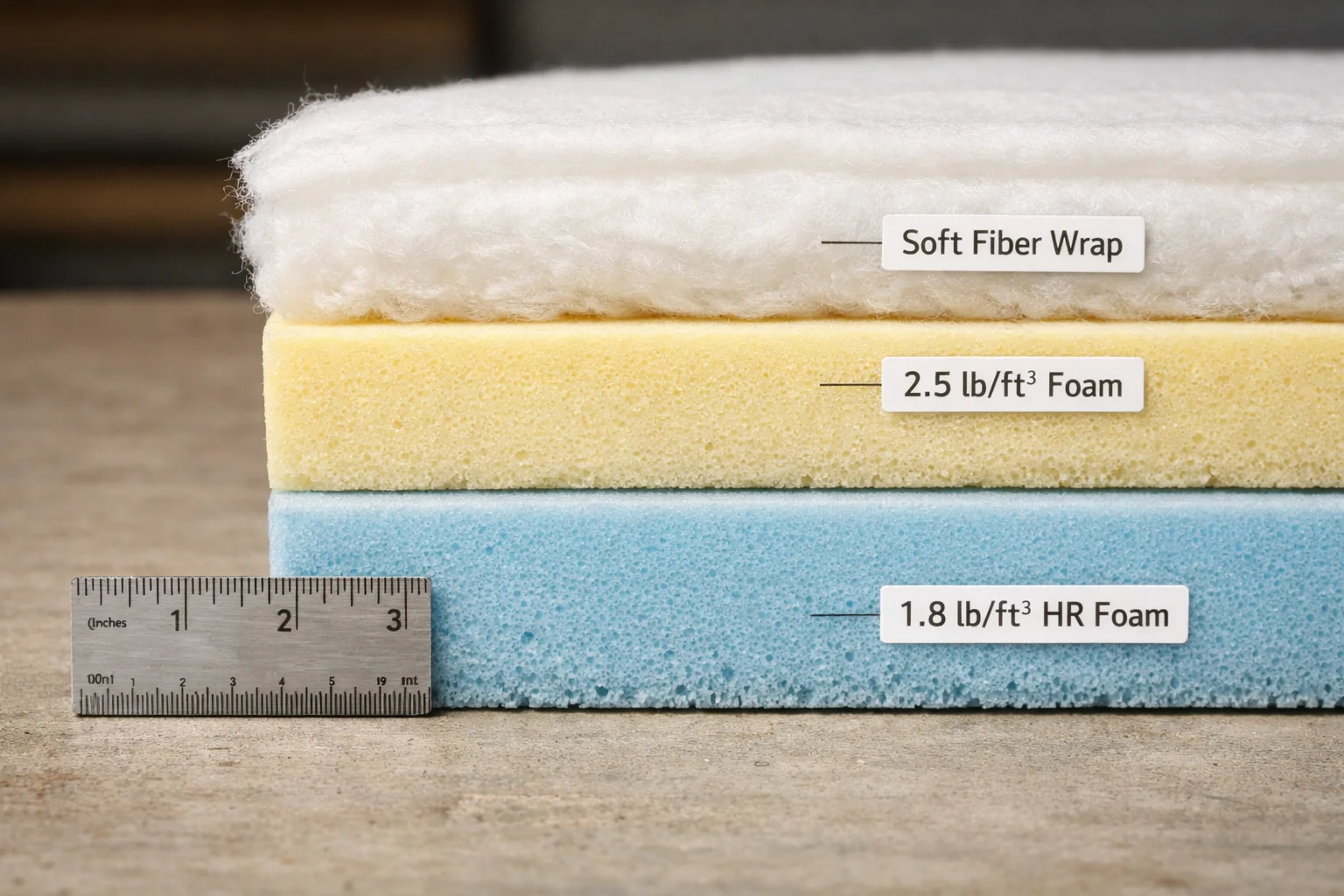
I also pay attention to how the cushion is filled, because it changes how service works later. If the sofa uses a foam core wrapped in something like fiber or down blend, it may feel great, but the wrap can migrate and bunch, and you might need a refresh even if the foam is still fine. In that case I want you to ask whether the wrap can be replaced or refilled separately, because sometimes the fix is not a whole new foam core, it is restoring the top layers that make it feel inviting.
If you are allowed to open a cushion, or if there is a floor model with an accessible insert, I look for a simple, modular situation. I like when I can see a distinct core and a distinct wrap, because it means you can tune comfort later, firmer foam if it got too soft, or a fresh wrap if it got lumpy, without gambling on a whole new sofa.
The last part of this rule is about how honest you are willing to be with yourself. If you already know you always sit in one exact spot, you should prioritize designs that let you rotate and swap cushions, because you can spread wear across positions instead of creating one doomed seat. I have owned the “favorite seat” sofa, and it turns into a two tier piece of furniture where one cushion becomes the warning label for the whole purchase.
If you want one quick takeaway to hold onto while you shop, it is this. I am willing to pay more for a sofa that expects me to service it, because that is the only kind that has a chance of feeling good to you for a long time after the showroom spell wears off.
The ‘Maintenance Tax’ on Quality
Here is the part people skip when they “buy up” in a showroom. A nicer sofa often asks more of you over time, not less, because the nicer materials are usually more honest about wear, and they punish neglect in slow, irreversible ways.
I treat this like a tax you pay either in small, planned habits or in one big regret later. If you hate maintenance, I want you to admit that now, because the wrong “premium” choice can become a stressor you resent.
Leather is the clearest example. Real leather can age beautifully, but it is not self sustaining, and if it dries out it stops bending and starts cracking. When I am looking at a leather sofa in a store, I ask the salesperson what the brand expects me to do to maintain it, and I listen for whether they can say, plainly, that conditioning is part of ownership and how often they recommend it.
If they act like leather is basically maintenance free, I do not treat that as good news. I treat it as a sign they are either selling a heavily coated leather that may go shiny and plasticky, or they are not being honest about what it takes to keep a hide from drying over years of heat, sunlight, and forced air.
You can also judge your future maintenance burden by touching the leather and looking for thirst. If the surface already feels a little dry or squeaky under your fingertips on a floor model, imagine what it will feel like in your house after winter heat and summer sun, especially on the seat front edge where it flexes every time you stand up.
Fabric has its own tax, and it is not just about stains. Dust is a quiet sandpaper, and the more textured the weave, the more it holds grit that gets ground in every time someone shifts their weight. When I shop fabric sofas now, I picture my vacuum, because weekly vacuuming is not me being fussy, it is me slowing down abrasion that makes upholstery go flat, fuzzy, and thin at the same contact points.
In a showroom, I do a quick check that tells me whether vacuuming will be realistic for you. I look at the depth of the seams, the amount of tufting, and whether there are lots of tight channels that trap crumbs and grit, because if it looks like a pain to clean, you will not do it consistently, and then the fabric pays the price.
Rotation is the maintenance task that most people underestimate because it feels optional. If you have loose seat cushions, rotating and flipping them spreads your body’s wear across more foam and more fabric, which delays the day you end up with one “bad seat.” If you cannot rotate anything because the cushions are fixed, sculpted, or one direction only, then the sofa is basically telling you, up front, that it expects a favorite spot to turn into a permanent dip.
When I am in a store, I physically check whether rotation is actually possible, not in theory. I lift each seat cushion and see if it is the same shape front to back, I look for a top and bottom that are truly finished, and I check whether the fabric pattern will look weird if you flip it, because “you can rotate” only helps if you will not hate how it looks afterward.
This is also where I stop being shy and ask a lifestyle question out loud. I ask myself, and sometimes the salesperson if they seem honest, whether this sofa is meant to be babied or lived on. A piece that demands careful conditioning, frequent vacuuming, and disciplined cushion rotation can be a great long term buy if you are the kind of person who will actually do those things, but it can be a terrible buy if you are already maxed out.
What I want for you is not low maintenance at all costs. It is a maintenance load you can realistically carry, because the best built sofa in the world still loses the fight if you never do the small boring tasks that keep its materials from degrading.
Repairability over Immortality
I stopped searching for “immortal” sofas because I have never actually met one. What I look for now is a sofa that expects to be repaired, because that is the difference between a piece you keep and a piece you replace the moment something internal gives up.
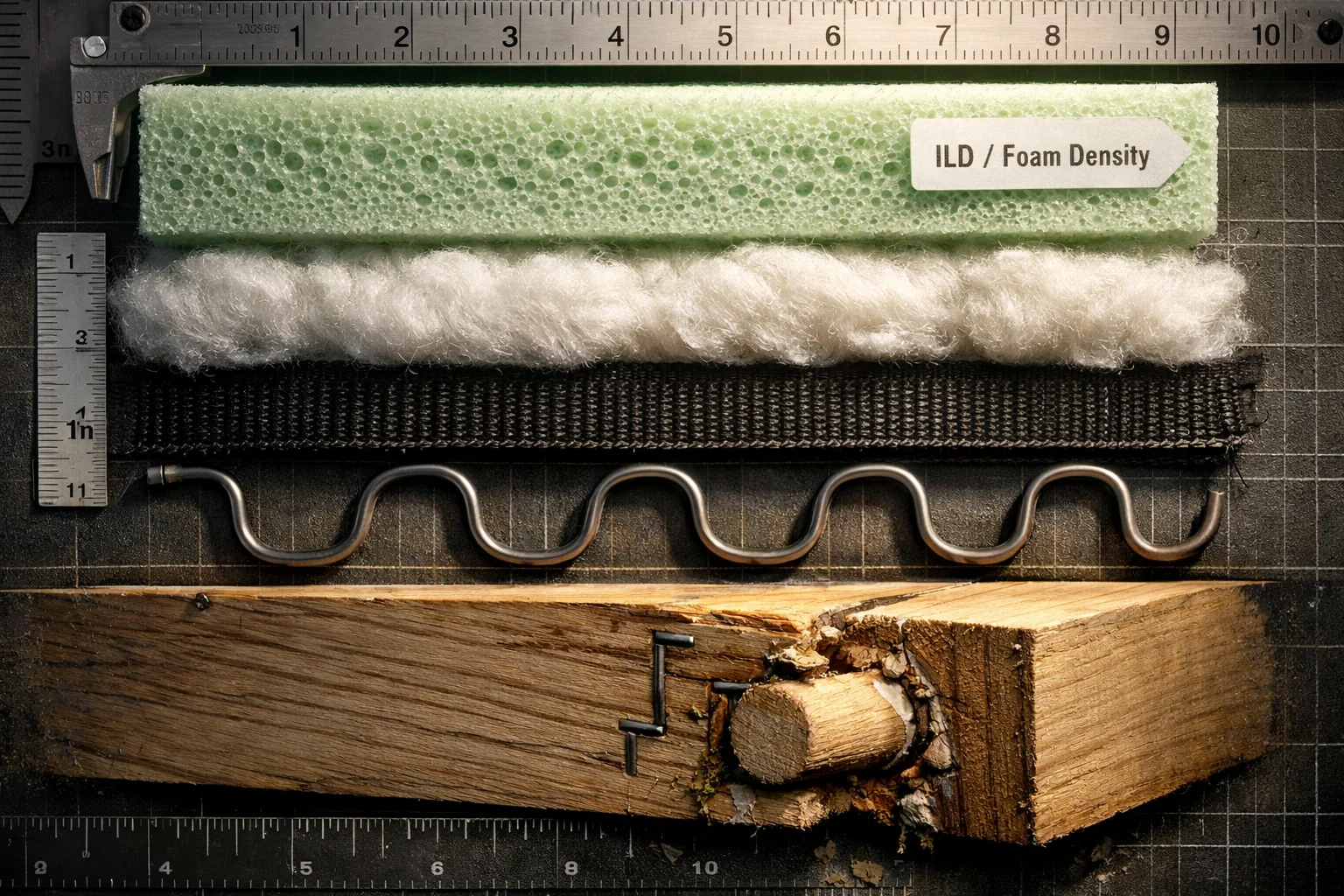
The frame is where this starts, because a frame is the thing that makes later repairs worth doing. When a frame is built from a solid hardwood like maple or oak, it tends to hold screws and staples more reliably when something needs to be reattached years later, and it is less likely to crumble at a fastener point when a technician has to open it up and put it back together.
In a showroom, I cannot verify the species of wood by vibes, so I force the conversation into specifics. I ask what the frame rails and corner blocks are made of, and then I ask whether any structural parts are particle board or MDF.
If the answer is “some engineered wood is used,” I do not automatically walk away, but I do get more cautious about whether the sofa is built to be serviced. Engineered panels can be fine in non structural places, but if the rails that hold the suspension are basically compressed crumbs, repairs can fail because there is nothing solid left to bite into.
Then I go straight to the suspension, because that is where a lot of sofas become disposable. If a sofa has eight way hand tied springs, the key benefit for you is not romance or craftsmanship bragging rights, it is that individual ties can often be retied if something loosens or snaps, which means the support can be restored instead of written off.
If the sofa uses sinuous springs, I am not reflexively against them, but I get very particular about what those springs are attached to and how. A sinuous system attached to solid rails can last well, but when the clips are stapled into weak material and one rips out, the fix can be ugly or impossible because there is no good structure left to anchor the hardware.
This is one of my favorite showroom checks because you can actually do it without tools. I crouch down, look under the front edge, and try to see what the spring clips are biting into, and whether I am looking at solid wood or a layered, fluffy looking board.
If you cannot see anything because the bottom is fully sealed, I treat that as a meaningful data point. It does not guarantee the suspension is bad, but it does tell you the brand is not optimizing for future access, and that should change how much you are willing to gamble.
Now I want you to make peace with the idea of consumables, because it will save you money and disappointment. In ten to fifteen years, a “forever” sofa will often need new foam, and maybe new fabric, even if you bought well and treated it well.
The trick is making sure the expensive parts, the frame and the fundamental build, are good enough that redoing the wear parts is a smart investment. Replacing foam and even reupholstering can feel reasonable when the underlying structure is still square, quiet, and supportive, but it feels like throwing good money after bad when the frame is loosening, twisting, or built from materials that do not hold fasteners anymore.
So when you are in the store, I want you to ask one calm question that exposes whether the sofa is meant to be kept. I ask, “If I love this sofa, who repairs it in ten years, and can they actually open it up without destroying it?”
If the salesperson has a clear answer, even if it is “any upholsterer can handle it,” that is a good sign. If they steer you back to buying a new sofa, I take them at their word and I price the purchase as a short term item, no matter how luxurious it feels today.
Technical Summary: The Serviceability Audit
Before you let anyone sell you a “lifetime” story, I do a quick serviceability audit in the showroom, because it tells me whether I am buying a maintainable object or a future disposal problem.First I check access, meaning can someone realistically reach the underside of the frame later to tighten something, reattach something, or fix a noise without destroying the sofa. I crouch down, use my phone light, and look for a bottom panel that can be removed and put back, not just a sheet of fabric stapled tight across the entire underside.
Then I check replacement, because cushions are the wear part you will feel first. I want loose cushions that you can remove easily, and I want a real zipper on the cushion cover so replacing the foam core is straightforward instead of a surgery that ruins the upholstery.
Next I look at hardness, which is my non technical way of asking, “Will this frame still accept a screw or staple in ten years.” I ask what the structural rails are made of, and I listen for a clear answer that points to kiln dried hardwood rather than vague “wood products,” because repairs often fail when fasteners have nothing solid to bite into.
Last I check patina, because serviceability is not only mechanical, it is emotional. I stand back and ask myself whether this fabric or leather will look better with honest wear, or whether it will get shinier, fuzzier, or patchier in a way that will make me want to replace the whole sofa even if it is still usable.
If you do these four checks, you do not need to predict the future perfectly. You just need to avoid the designs that trap you, the ones where the first sag or squeak becomes permanent because you cannot access, replace, anchor, or tolerate the way the materials age.
Explore Technical Reference
Custom vs Stock Sofas: Understanding the Patience Tax
Why estimated lead times rarely prove accurate. Understanding the risks of non-returnable custom orders versus the flexibility of stock items.
Analyze Details →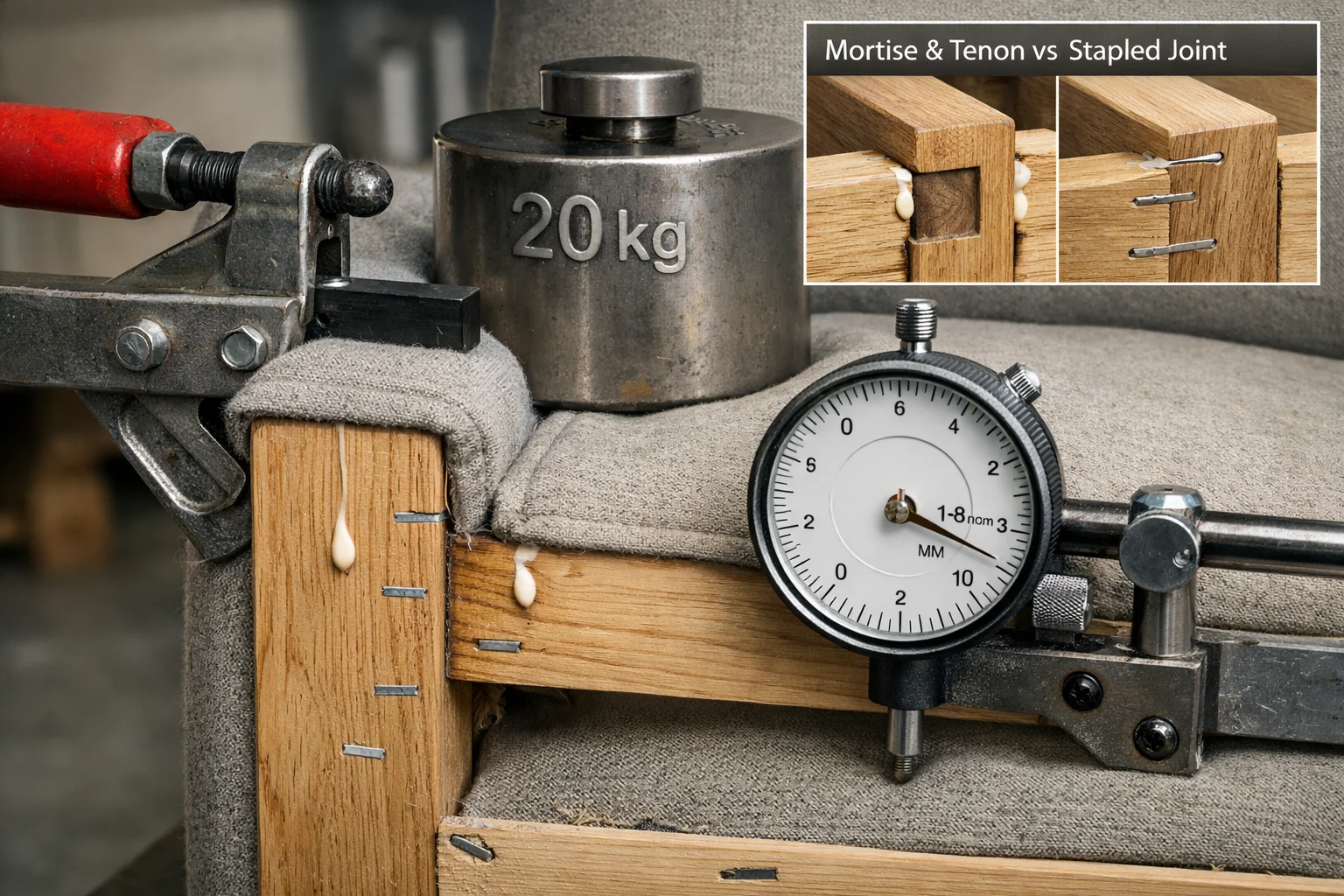
Online vs In-Store Furniture Buying: Understanding the Blind Bet
Why buying a sofa online is fundamentally different from buying shoes online. Understanding the sit test gap, color calibration problems, and the hybrid approach.
Analyze Details →