Wrapped Foam: The "Secret Sauce" of Cushions
Introduction
That ugly cushion taught me something I wish I had known earlier. Foam by itself is never how real cushions are made, even when the foam is expensive. When you see a sofa that looks neat and inviting, there is always something between the foam and the fabric doing quiet, important work.
Professionals wrap the foam in a soft layer before it ever goes into the cover. This wrap rounds the corners, fills out the fabric, and keeps the cushion from looking like a block. It is why showroom cushions look smooth instead of sharp, and why they hold their shape instead of collapsing into weird dents.
When you are in a store, this is one of the easiest quality clues to check. I unzip a cushion if I am allowed, or I gently squeeze and pinch the corners. If the cushion feels slightly padded and forgiving at the edges instead of abrupt and hard, there is probably a wrap inside doing its job.
If a salesperson tells you the cushion is just solid foam and that this is a good thing, I get skeptical. Naked foam is cheaper and faster to assemble, but it almost always looks worse over time. The fabric loosens, the corners stay pointy, and the seat starts to feel tired long before the foam itself is actually worn out.
As a buyer, you do not need to know brand names or technical terms to protect yourself here. You just need to look for cushions that feel finished, not raw. That soft, slightly cushioned feeling around the foam is one of the first signs that someone actually cared how the sofa would age in a real living room, not just how it would look on the sales floor.
The "Naked Foam" Mistake
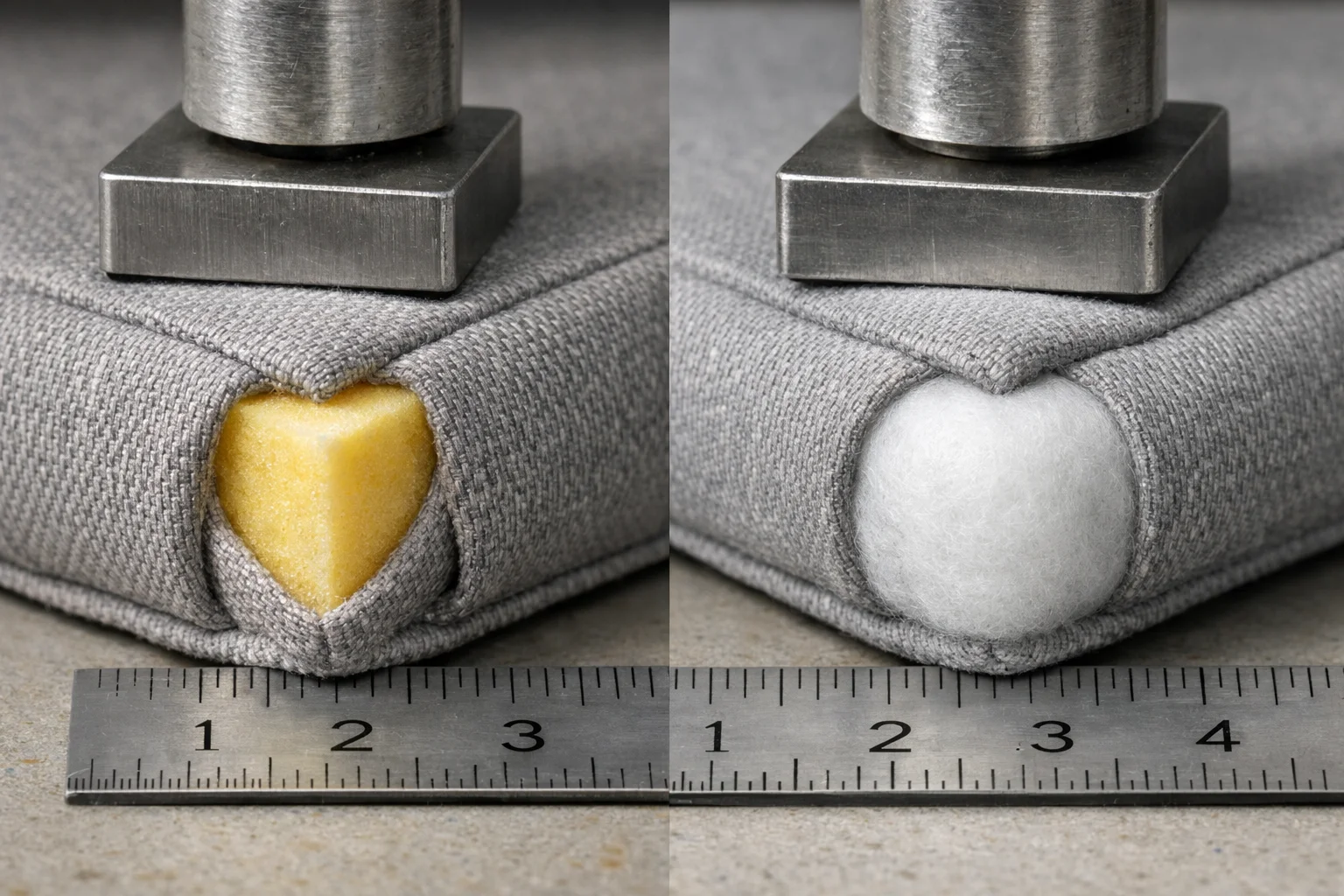
When a square block of foam is shoved directly into a fabric cover, problems start immediately. Foam has a grabby surface, so it clings to the fabric instead of letting it slide and relax, which leads to wrinkles that never quite smooth out.The shape is another giveaway. Foam by itself keeps hard right angle corners, so the cushion looks boxy and industrial instead of soft and inviting, even when the fabric is nice.
The worst part shows up later. That rough foam surface slowly rubs against the inside of the fabric every time you sit down and stand up, and over the years it wears the cover from the inside out.
When I am testing a sofa, this is why I pay attention to how the cushion moves inside the cover. I press down and then run my hand across the surface to feel whether the fabric can shift a little instead of sticking in place.
You can also lift the cushion and give it a gentle squeeze. If it feels like fabric over something slightly slippery and padded, that is a good sign. If it feels like fabric glued to a solid block, that cushion is likely naked foam.
If the store will not let you unzip cushions, I treat that as information too. I understand display rules, but quality construction usually does not need to be hidden.
I have learned that naked foam cushions can feel fine on day one. The real cost shows up later when the fabric starts to pucker, the corners look tired, and the sofa suddenly looks older than it should.
When you are spending real money, you want cushions that are built to move and age gracefully. A small soft layer between foam and fabric is invisible when done right, but you will feel its absence every single day if it is not there.
What is “The Wrap” (Batting)?
When people talk about a cushion wrap, they mean a thin, fluffy layer that is wrapped around the foam before it goes into the fabric cover. Most of the time it is a white polyester fiber that feels a bit like quilt batting. It is glued or lightly bonded to the foam so it stays in place.
I think of the wrap as the cushion’s manners. Foam on its own is blunt and literal, while the wrap softens how that foam presents itself to you and to the fabric. You do not see it, but you immediately feel the difference when it is missing.
One job of the wrap is rounding. Foam is cut into sharp rectangles, and without help those edges stay sharp forever. The wrap softens those corners so the cushion reads as a gentle shape instead of a box with fabric stretched over it.
In a showroom, you can check this by pressing the corner of a seat cushion between your fingers. If it compresses gradually and feels forgiving, there is probably wrap there. If it hits a hard angle almost immediately, the foam is likely bare or barely wrapped.
The wrap also creates crowning, which is what keeps the center of a cushion from looking dead flat. A good wrap adds a little loft so the cushion looks full even when no one is sitting on it. This is why some sofas still look inviting from across the room years later, while others look tired even when they are technically fine.
I check for this by stepping back and looking at the cushions straight on. If the center has a subtle fullness and the fabric is not pulling tight like a drum, that is usually the wrap doing its job. Flat, tense cushions often mean there is very little padding between the foam and the fabric.
The last job of the wrap is slip, and this one matters more over time than most people realize. The wrap creates a slightly slick surface so the foam can move inside the cover when you sit down and get up. That movement is what lets the fabric relax instead of grinding against the foam.
You can feel this by pressing down on a cushion and then smoothing the fabric with your hand. If the fabric shifts easily and settles back into place, that is a good sign. If it feels like the fabric is stuck and dragging, the foam is probably rubbing directly against it.
I have learned that a proper wrap is not about making a sofa feel softer on day one. It is about protecting the fabric, improving the shape, and letting the cushion age without looking beat up. When I am choosing a sofa, this quiet layer matters almost as much as the foam itself.

I like this diagram because it matches what my hands feel in a showroom. The yellow core is the muscle, but it is not supposed to be what your fabric touches. The white layer is doing more work than most people realize, and the blue cover is only as good as what is underneath it.
When I look at a sofa in person, I mentally picture this stack. I ask myself whether the cushion I am touching seems to have all three layers working together or whether it feels like fabric stretched straight over foam. That simple mental check keeps me from getting distracted by color or stitching.
The key thing to notice is that the wrap fully surrounds the foam. It is not just a thin sheet on the top. If the wrap is only on one side or barely there, the cushion might look fine from the front but still develop sharp edges and loose fabric over time.
You can test this without seeing inside. I press along the edges and corners, not just the center. If the softness disappears the moment I reach a corner, I assume the wrap is minimal or missing. A well wrapped cushion feels consistently finished all the way around.
This image also explains why flipping cushions matters. When the wrap is properly bonded to the foam, turning the cushion over helps it wear evenly and keeps that white layer from compressing in one spot. If a salesperson says flipping does not matter, I usually take that as a sign that the cushion construction is basic.
I have found that once you understand this simple anatomy, a lot of sofas suddenly make sense. The ones that still look good after years usually have a generous middle layer quietly protecting the fabric and shaping the foam. The ones that age badly often skipped it, even if everything else sounded impressive on the tag.
Wrapping Materials
Once I started paying attention to wraps, I noticed that not all of them behave the same. Two cushions can feel similar for a minute in the showroom and then age in completely different ways at home, mostly because of what that soft layer is made from.
The most common wrap you will run into is polyester fiber. It is usually white and fluffy and feels like quilt filling when you touch it. This is not a bad thing at all, as long as there is enough of it.
In a store, I press the cushion and watch how fast it recovers. A good polyester wrap lets the cushion spring back smoothly without looking puffy or deflated. If it pops back too fast and looks tight, the wrap may be very thin. If it stays rumpled, the fiber is probably cheap or already breaking down.
I also pay attention to whether the cushion looks rounded or just padded on top. Polyester works best when it fully surrounds the foam. If the edges still feel sharp, the wrap is either minimal or only applied to one face.
Some sofas use a foam wrap instead of fiber. This feels like a very thin, soft foam skin around the main foam core. When it is done well, it can work, but I am cautious with it.
In the showroom, a foam wrapped cushion often feels clean and tailored at first touch. The problem is that foam does not have the same slippery quality as fiber, so the fabric does not relax as easily over time. I test this by smoothing the fabric after sitting. If it resists and stays tense, I know it may not age gracefully.
You will also hear about down or feather blends used as a wrap. These can feel luxurious, but they come with tradeoffs that matter in real life. I only consider them if I am willing to fluff cushions regularly.
When I press on a down wrapped cushion and release, I look to see if it holds its shape or collapses unevenly. If it needs immediate hand smoothing to look decent again, that is a preview of daily maintenance. I ask myself honestly whether I want to do that every day.
There are also mixed wraps that combine fiber with a small amount of down or soft foam. These are often a good compromise. They feel finished and inviting without demanding constant attention.
You do not need to memorize materials to protect yourself. You just need to notice behavior. I sit, stand, smooth the fabric, and look at the cushion from a few steps back. A good wrap makes the cushion look calm and settled without effort.
If a salesperson cannot tell you what the wrap is made of, I treat that as a yellow flag. I do not need a chemistry lesson, but I expect a clear answer like fiber, foam, or a blend. Vagueness usually means the wrap is not something they are proud of.
Over time, I have learned that the best wrapping material is the one you do not think about after you buy the sofa. It quietly protects the fabric, softens the shape, and lets the cushion recover without fuss. In a showroom, that shows up as a cushion that feels finished from every angle, not just comfortable for a quick sit.
1. Dacron (Polyester Fiber)
This is the wrap I trust the most, mostly because I have seen how it behaves after years of normal use. Dacron is just polyester fiber, the same basic idea as quilt batting, and that simplicity is a good thing.
In a showroom, a Dacron wrapped cushion usually feels quietly right rather than impressive. When I sit down and stand up, the cushion returns to shape without drama. It does not balloon up and it does not stay dented, it just settles back into a calm, rounded form.
What I like most is how forgiving it is. Dacron keeps its loft without needing daily fluffing, and it does not care much if you sit in the same spot every night. Over time it compresses a little, but it does so evenly, which means the cushion still looks intentional instead of lumpy.
You can spot it with your hands. When you squeeze the edge of the cushion, it should feel softly padded before you hit the firmer foam core. The transition should be gradual, not abrupt. That soft buffer is usually Dacron doing its job.
I also pay attention to how the fabric behaves on top of it. With Dacron, the fabric can slide and relax when you smooth it with your hand. It does not feel glued in place. That movement is what keeps wrinkles from becoming permanent creases.
Cost matters here too, even if the tag never mentions it. Dacron is cheap for manufacturers, which means there is no good excuse to skip it. When I see a mid range or expensive sofa without a proper fiber wrap, I assume corners were cut where I cannot see.
If a salesperson uses the word polyester fiber or Dacron, I relax a little. It tells me the cushion is built in a very normal, proven way. If they act like this material is boring, that is fine with me. Boring is exactly what I want from something that is supposed to quietly protect my sofa for years.
For almost every household, this wrap is the safe choice. It does not demand maintenance, it does not hide problems temporarily, and it does not create new ones down the road. When I am unsure about everything else, a generous Dacron wrap is often the detail that convinces me the sofa will age like furniture instead of a disposable prop.
2. Down Envelope
This is where I slow way down, because down sounds better than it behaves for most people. A down envelope means the foam core is wrapped in feathers or a down blend instead of polyester fiber.
In a showroom, this usually feels amazing for the first thirty seconds. When you sit, the cushion welcomes you and molds around your body in a way fiber never will. That softness is real, but it comes with strings attached.
The first thing I do is stand up and step back. If the cushion looks slumped, hollowed out, or uneven the moment I stop sitting on it, that is not a defect. That is how down behaves. It does not recover on its own, it waits for you to fix it.
I press on different spots and watch what happens. A down wrapped cushion often collapses where you touch it and stays there until you smooth and fluff it by hand. If it already looks messy in a quiet showroom, it will look worse in a real living room.
This is the maintenance part most people underestimate. Down envelopes need regular fluffing to look decent, sometimes daily. If you skip that, the feathers migrate, the corners go empty, and the cushion starts to look tired even though nothing is technically broken.
I also pay attention to the edges. With down, the corners can feel wonderfully soft but also undefined. Over time that softness can turn into a saggy outline, especially if you sit in the same spot. If you like crisp looking cushions, down will fight you.
Cost matters here too. Down envelopes are expensive, and you are paying for feel, not durability or ease. If I see down used on a mid priced sofa, I get cautious, because it often means the money went into softness instead of long term structure.
There is one place where I think down envelopes make sense, and that is in true spring down cushions. These combine an inner spring unit, a foam layer, and a controlled down wrap so the structure does the work and the down adds surface comfort. When done right, this can be wonderful, but it lives firmly in luxury territory. If you want to understand that construction better, I point people to Spring Down Cushions.
Outside of that specific use, I personally avoid down as a wrap. I know myself well enough to admit I will not fluff cushions every day, and I do not want furniture that looks unkempt unless I babysit it.
My advice in the store is simple. If you love how a down wrapped cushion feels, ask yourself whether you love how it looks after you stand up and walk away. If the answer is no, believe that preview.
Down envelopes are not bad, but they are demanding. They reward owners who enjoy fussing with their furniture and notice small changes in shape. If that does not sound like you, this is an upgrade that will quietly turn into regret.
3. Wool
Wool is the wrap I almost never see in the wild, but when I do, I stop and pay attention. It is one of those materials that works quietly and does not need tricks to sound impressive.
In a cushion, wool behaves differently from polyester fiber and down. It has a springy resilience that comes from the fiber itself, not from trapped air. When you press on a wool wrapped cushion and let go, it recovers in a calm, controlled way instead of popping back or slumping.
What I notice first in a showroom is temperature. Wool does not feel cold when you first sit down and it does not get clammy after a few minutes. If you tend to overheat on synthetic cushions, this difference is real and immediate.
Another thing I check is how the cushion handles edges and corners. Wool has more body than polyester, so the shape tends to look full without looking puffy. When I squeeze a corner, I expect to feel a firm but forgiving transition into the foam, not a sharp angle and not a mushy collapse.
One practical advantage that rarely gets mentioned on the tag is fire resistance. Wool naturally resists ignition, which is why it has been used in upholstery for a long time. As a buyer, this matters because it means less chemical fire treatment added to the cushion, even if the salesperson never brings it up.
The downside is cost, and you will feel it. Wool wraps usually show up on more expensive sofas, and they are not advertised loudly because the word does not sell itself the way down does. If a salesperson mentions wool casually and without fanfare, that is often a good sign.
Finding it takes effort. I usually have to ask directly what the wrap is made of, and I ask them to check the spec if they are not sure. If the answer comes back as wool felt or wool batting, I take that seriously because it is not a cheap substitution.
I also look at how honest the cushion feels. Wool does not fake softness. It feels supportive at first touch, and that tells me it is not trying to hide a weak foam core underneath. If a cushion feels great only when you sink into it, I am more suspicious.
Maintenance is another quiet win. Wool does not need fluffing like down, and it does not cling to fabric the way bare foam does. When I smooth the fabric with my hand, it should glide and settle without resistance.
The hardest part is availability. Many stores simply do not carry wool wrapped cushions, and some salespeople have never handled one. That does not make it a myth, it just means you may need to shop higher end or ask custom builders.
My honest verdict is this. If you care about natural materials, stable shape, and low fuss ownership, wool is excellent. If you want instant plushness or a dramatic showroom feel, it will seem underwhelming.
When I do find a sofa with a wool wrap, I judge it the same way I judge everything else. I sit, I stand, I smooth the fabric, and I look at it from across the room. If it looks composed without effort, that is wool doing exactly what it is supposed to do.
The “Book Wrap” Technique
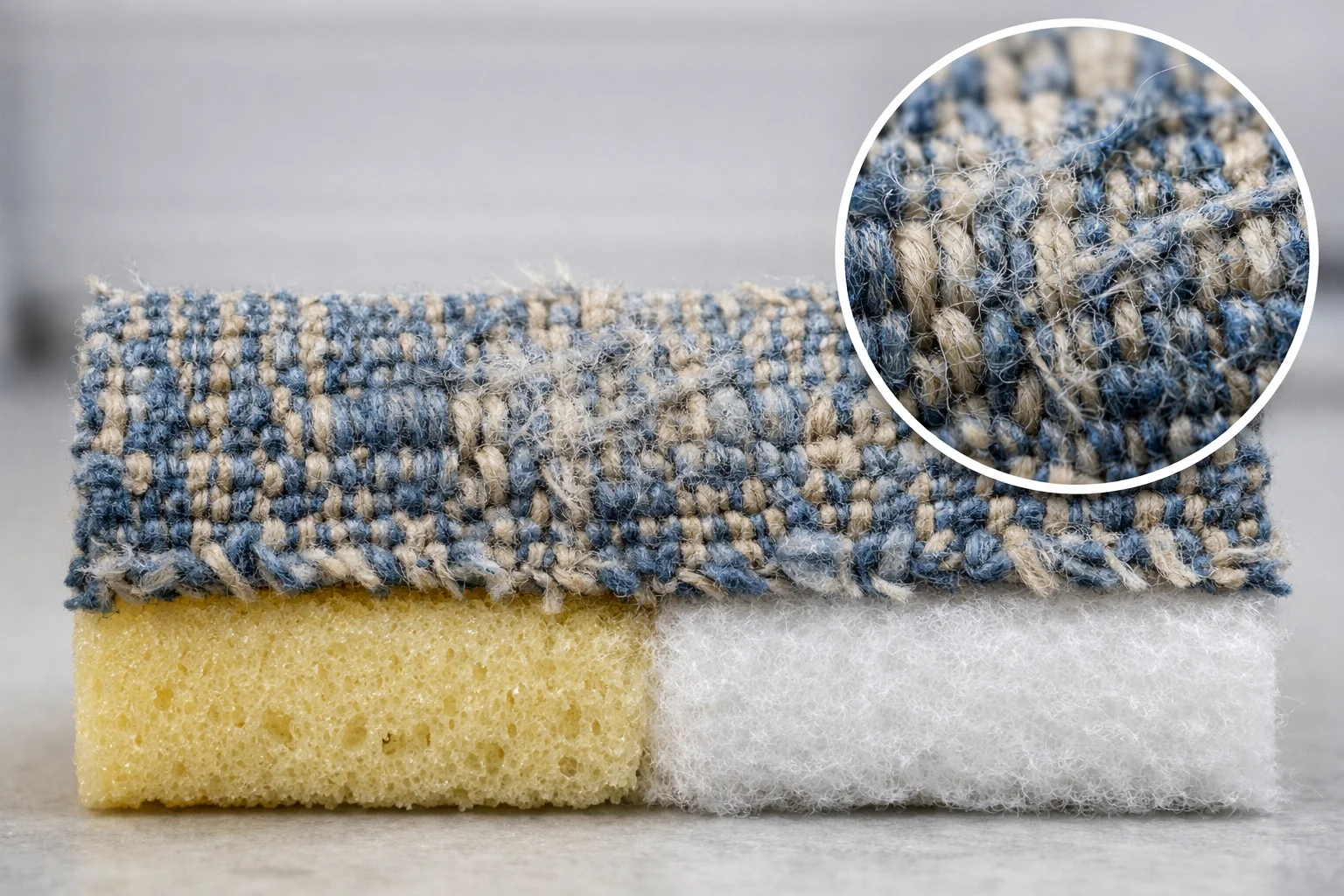
The "Book Wrap" Technique
When a cushion is wrapped well, the wrap is not just thrown around the foam like a package. The best method I see is when the maker applies adhesive only to the top, bottom, and front edge of the foam, then folds the wrap around the front like a book cover closing. The result is a smooth, seamless front edge that feels soft against your legs, while the sides and back are left more open so air can escape when you sit.This detail sounds small, but I have learned it matters more than most specs on a tag. How the wrap is attached changes how the cushion feels every single time you sit down.
When all six sides of the foam are tightly wrapped and glued, the cushion can feel sealed and stiff. Air has nowhere to go, so you get that slow, resistant sink instead of a natural give. Over time, those fully wrapped cushions also tend to trap wrinkles because the fabric cannot relax.
With the book wrap approach, the front edge is the star. That is the part your legs touch, and it is the part your eye reads first. Wrapping it smoothly gives you that rounded bullnose look without needing extra foam tricks.
I test for this in the showroom by sliding my hand under the front edge of the seat cushion. If it feels soft and padded without a sharp line, that is a good sign. If I feel a hard edge right away, the wrap is either minimal or badly applied.
The airflow part matters more than people realize. When the sides and back are not glued tight, the cushion can breathe. You sit down, air moves out, and the cushion settles naturally instead of fighting you.
You can feel this by sitting and standing a few times in the same spot. A well wrapped cushion with open sides will rebound quickly and quietly. A fully sealed cushion often makes a faint whoosh or feels slow to recover, like pushing on a vacuum packed pillow.
I also look at how the cushion behaves after I stand up. With a book wrapped cushion, the front edge keeps its shape without looking puffed up. It looks calm and intentional, not overstuffed.
This technique also protects the fabric where it matters most. The front edge gets the most wear from legs, jeans seams, and constant movement. That soft wrapped bullnose acts like a buffer so the fabric is not rubbing directly against hard foam every time you sit.
If you want to check this without touching too much, look straight at the sofa from across the room. A book wrapped cushion usually has a clean, continuous front line that looks inviting instead of blocky. If the front edge looks sharp or collapses unevenly, the wrap is probably not doing much.
Salespeople rarely mention this by name, and that is fine. You do not need the term. You just need to notice whether the cushion feels welcoming at the front and relaxed at the sides.
I have found that sofas built with this approach tend to age better in subtle ways. The cushions keep their shape, the fabric stays smoother, and the seat feels the same year two as it did month two.
When I am choosing between two similar sofas, this is one of those quiet tie breakers. If one has that soft, rounded front edge and easy recovery, I trust it more. It tells me someone thought about how the cushion would live, not just how it would photograph.
In the end, the book wrap technique is not about luxury. It is about comfort, durability, and common sense. When a cushion is allowed to bend, breathe, and soften where your body meets it, the whole sofa feels more human.
Technical Summary: The DIY Order of Operations
I want to end this section by translating the technical process into something you can actually use as a buyer. You do not need to do this work yourself, but knowing the order tells you whether a cushion was built with care or just stuffed together.
The foam is always cut slightly larger than the cover on purpose. That tells me the maker expected compression and wanted the cushion to fill out the fabric instead of floating loosely inside it. In a showroom, this shows up as a cushion that looks full without the cover looking strained or stretched thin.
Next comes adhesive, and this is a quiet but important step. The glue is there to keep the wrap from shifting or bunching over time, not to glue the fabric to the foam. When this step is skipped or rushed, the cushion might feel fine at first but will start to look uneven as the wrap migrates inside.
After that, the foam is wrapped in a single, generous layer of high loft batting. One proper layer matters more than stacking thin scraps. In person, this reads as consistent softness all the way around the cushion, including the edges and corners, not just the center where you sit.
Only after those steps does the cushion go into the cover. When everything underneath is done correctly, the final result looks almost boring in the best way. The cushion sits calmly, the fabric relaxes easily, and nothing feels like it is fighting against anything else.
This is why I do not get distracted by fancy foam names or dramatic comfort claims. If a cushion follows this basic order, foam sized to fill the cover, wrap bonded to the foam, and fabric allowed to float over a soft layer, it usually behaves like a professional cushion no matter the price point.
As a buyer, you can reverse engineer this without seeing the process. I look for fullness without tension, softness before hardness at the edges, and fabric that can move and settle after I touch it. When those signs are there, I know the invisible steps were probably done in the right order.
When they are missing, the sofa may still be comfortable today. What it will not be is forgiving over time. This simple sequence is not about perfection, it is about respecting how cushions actually live in a home.
Once I learned to think this way, a lot of sofas stopped fooling me. The ones that feel finished usually follow this order, whether the tag talks about it or not. The ones that age badly almost always skipped or rushed one of these quiet steps.
Rebuild a Cushion the Right Way
- High-loft polyester batting — the correct wrap material for rounding foam edges and crowning cushion tops.
- High-density replacement foam — when the core itself needs replacing, not just the wrap layer.
Explore Technical Reference

Dacron Wrapped Cushions: The Illusion of Softness
Why plush-looking cushions often go flat quickly. The difference between visual loft from fiber wrapping and actual structural density from foam cores.
Analyze Details →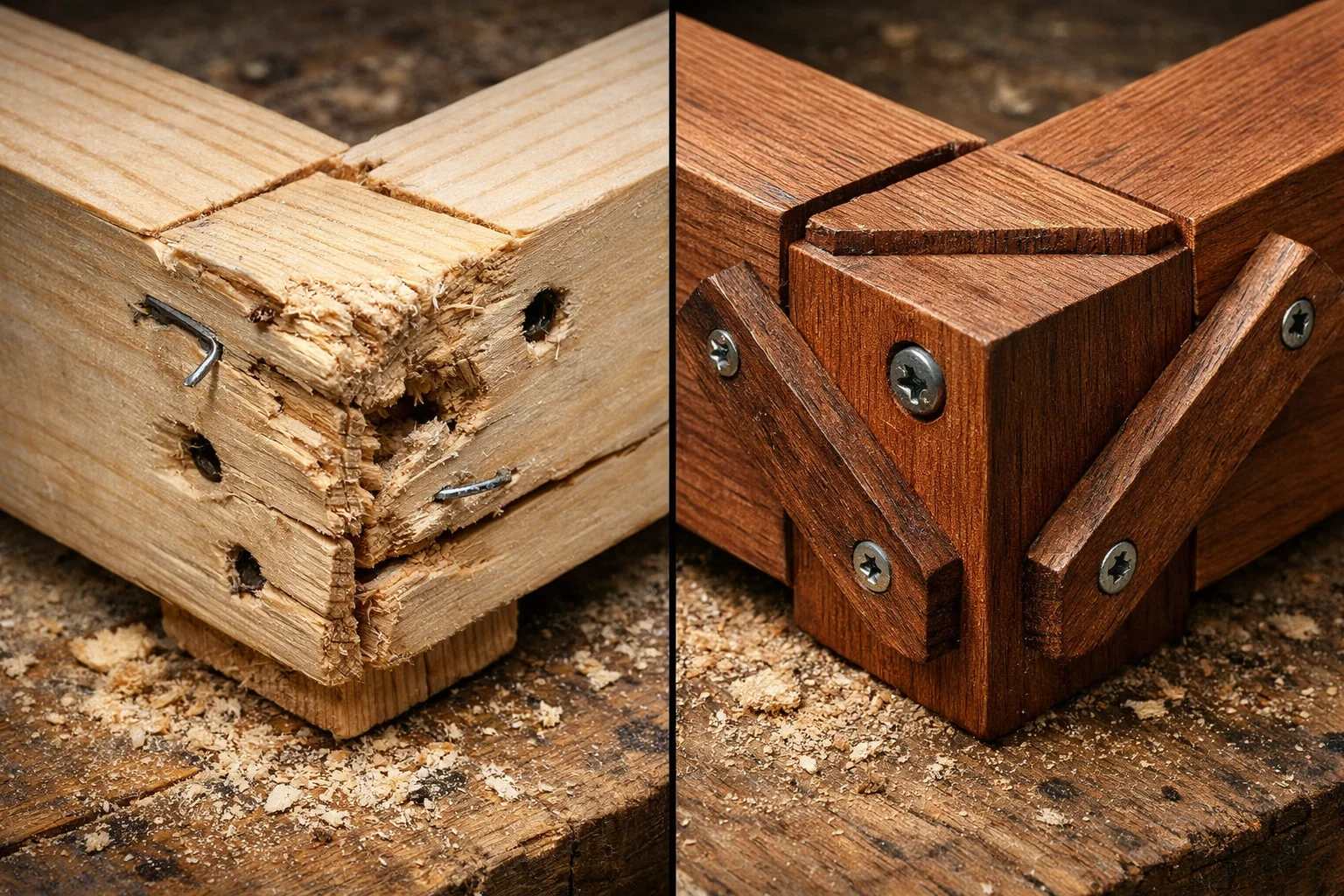
Solid Wood Frames: When "Natural" Means Weak
Why solid wood can warp, twist, and crack. Understanding dimensional instability and why joinery matters more than raw material selection.
Analyze Details →