Foam Density vs. Firmness: The Difference Between Weight and Feel
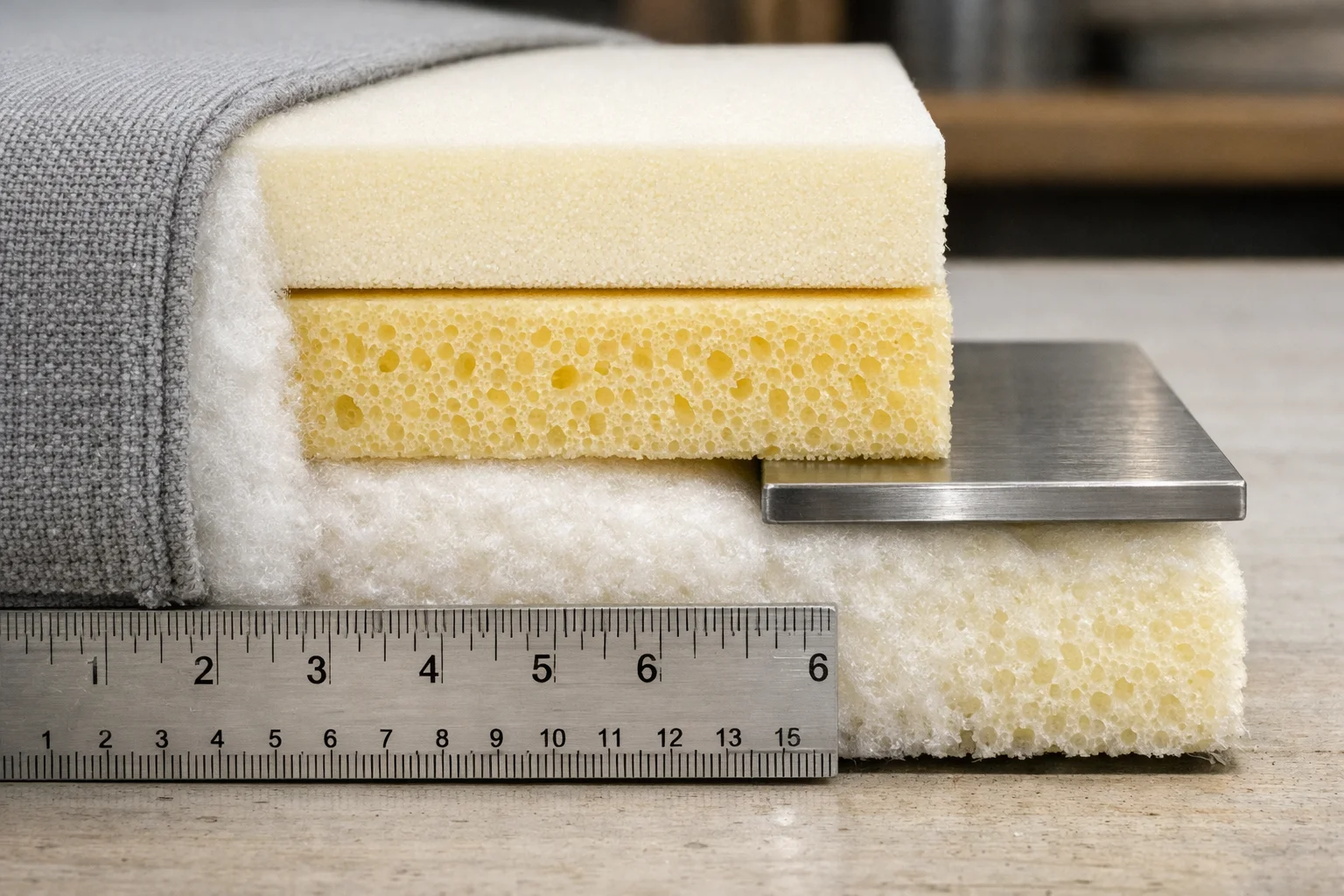
Introduction
I learned the hard way that “firm” is a feeling you can fake, and quality is what’s still there after a few years of sitting. A sofa can feel tight and supportive in a showroom and still collapse into a dented, saggy mess at home, because the materials underneath can be low grade even when the surface feels convincing.
When you test a seat, you are mostly feeling two things mixed together. You are feeling the recipe of the cushion foam and fibers, and you are feeling how the sofa is built underneath that cushion, meaning the springs or webbing, the platform, and how the frame holds everything in place. If either one is weak, the other can temporarily mask it.
Here’s the shift that helped me: in the store, I stopped asking myself “Is this firm?” and started asking “Does this feel firm because it is truly substantial, or because it is artificially stiff?” The first usually stays comfortable longer. The second often turns into either a crater or a board, sometimes both in different spots.
You can do a simple check that does not require tools or insider knowledge. Sit in your normal lounging position for a full minute, then stand up and look at the cushion and the fabric. If the cushion slowly comes back and the surface looks basically the same, that is a good sign. If it stays compressed, wrinkles sharply, or shows a clear outline of where you sat, I treat that as an early warning that the foam, the fill, or the cover is going to show wear fast.
Then I use my hand to press straight down near the front edge of the seat, right where your thighs would land, because that area gets punished every day. If it bottoms out quickly, meaning you can feel the hard structure underneath with modest pressure, that “firm” impression is often just a thin top layer over something that will feel harsh later. If it resists in a deeper, springy way without feeling like a trampoline, it is more likely you are feeling real support rather than a stiffened top.
I also pay attention to how the support feels across the whole seat, not just in the sweet spot in the middle. I sit in two or three places, including near the arm, because cheaper builds often have inconsistent support. If one spot feels noticeably looser, that usually gets worse with time, and it is one of those things you cannot unfeel once it happens at home.
In the next sections, I’m going to translate this into what you can ask, what you can touch, and what you can look for on tags and spec sheets, without getting lost in jargon. My goal is to help you separate “this feels nice for thirty seconds” from “this will still feel good after years of real use.”
The "Firmness" Trap
Density is not firmness, and salespeople love to let you mix those up. Firmness is how hard the cushion feels right now when you sit down, and it is often described with ILD. Density is how much actual foam material is in the cushion, basically how much “stuff” is there to resist breaking down over time.The trap is that a low density foam can be made to feel impressively firm in a showroom. It can feel rock hard because it is formulated stiff, or because it has a thin firm cap layer, but it still does not have much material to sacrifice as it gets crushed day after day. On the flip side, a higher density foam can feel soft and plush and still be the one that keeps its shape longer, because there is simply more foam structure there to survive years of use.
When I hear “this one is firmer so it will last,” I stop and ask a very specific question: what is the foam density in the seat cushions, and is that density for the core foam or just a thin topper layer. If they cannot tell you, or they dodge and only repeat how it feels, I treat that as a risk, because “feel” is easy to sell and hard to warranty.
If you can get the spec sheet, I look for density listed in pounds per cubic foot for the seat foam, and I care more about the seat than the back because the seat takes the beating. If the only number they can produce is for a whole cushion stack that includes fiber and fabric, that number is less useful, because it is the foam core that usually determines whether you get a long slow aging process or a sudden permanent dent.
I also learned not to let my hands be fooled by “initial stiffness.” In the store, I press down slowly with my palm and pay attention to whether the cushion ramps up smoothly as it compresses, or whether it feels like a stiff crust that suddenly gives way. That stiff crust feeling often turns into a seat that looks fine from across the room but feels uneven and tiring, because the top breaks in and the lower quality foam underneath starts to collapse.
A quick check that helps me separate firmness from durability is to sit, then stand, then immediately sit again in the exact same spot. If the second sit feels dramatically different, like it suddenly got softer and lower, I assume the foam is quick to take a set, which is exactly what I do not want in a daily use sofa. A better cushion feels consistent, it might warm and relax a little, but it does not feel like it is giving up within seconds.
If the salesperson keeps steering you back to “firm equals better,” I redirect the conversation to what happens after a year. I ask what the cushion is made of, whether the seat cores are replaceable, and what the warranty actually covers, because many warranties exclude normal foam softening, which is the main failure you will notice. That is why I treat density like destiny, since it is one of the few clues you can use to predict whether today’s firmness is real support or just a temporary pose.
The “Bread” Analogy
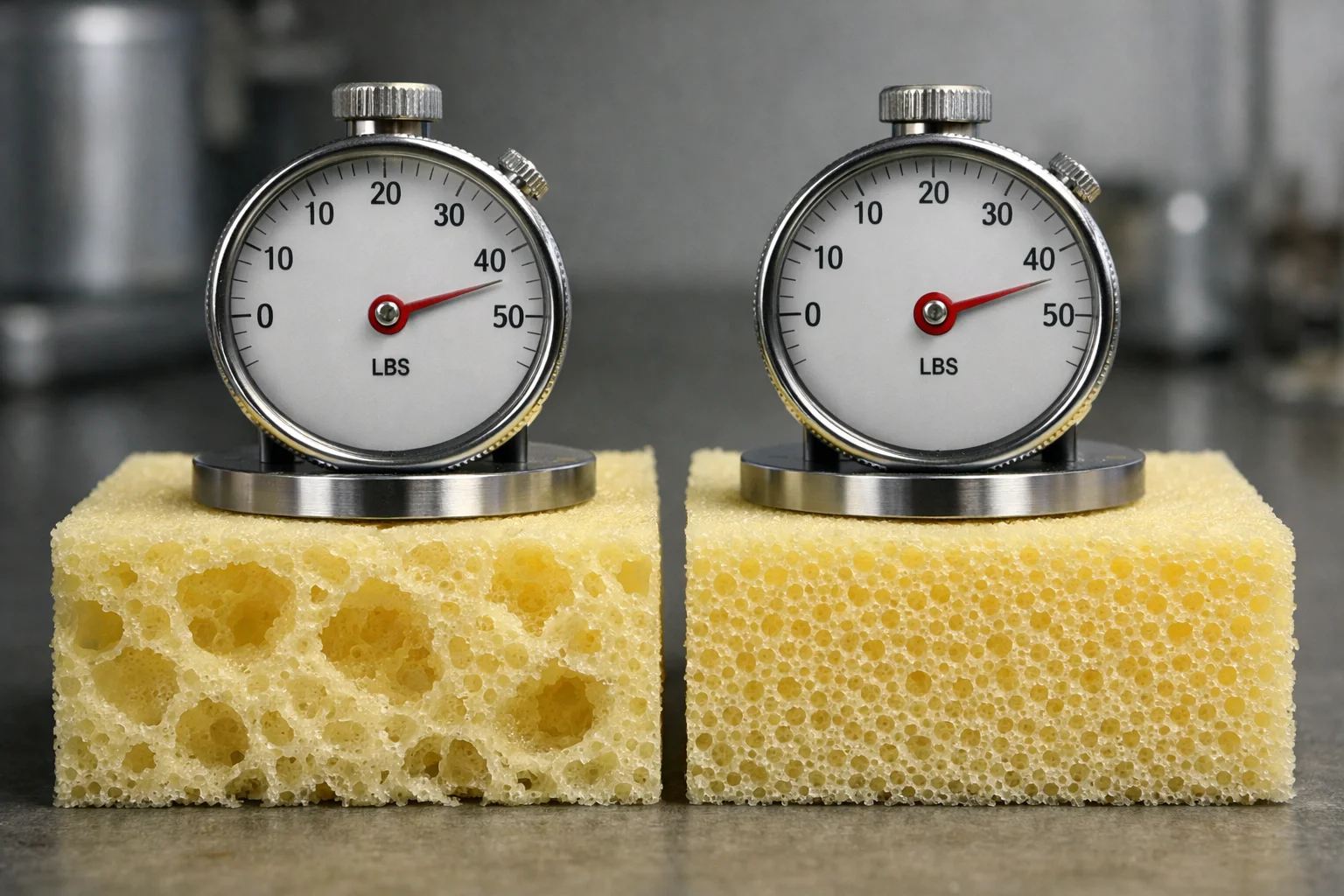
I think of polyurethane foam like bread, because it makes the idea of density click fast when you are standing in a showroom with a pushy pitch in your ear.
Low density foam is like supermarket white bread that looks tall and fluffy because it is mostly air. It can feel surprisingly firm at first if the “crust” is stiff, but when you actually put weight on it day after day, it crushes down and stays down, and you end up sitting closer to the frame than you expected.
Higher density foam is like a dense sourdough with a tight crumb, more actual material, less empty space. When you sit on it, it compresses in a more controlled way, then pushes back and returns closer to its original shape when you get up, because there is more structure there to take the abuse.
This is the mental shift I use when a sofa feels great for thirty seconds. If it feels firm, I ask myself whether I am feeling “big bubbles with a thin crust,” or “real substance all the way through.”
In practical terms, when you buy low density foam, you are paying for a cushion that is physically larger than the amount of foam holding it up. I call that expensive air, because you are buying volume that disappears quickly once the foam starts breaking down.
When you buy higher density foam, you are paying for plastic structure, meaning more actual foam material that can be crushed and rebound thousands of times before it gives up. That does not guarantee comfort for your body, but it does dramatically improve your odds of not getting the permanent butt print and the dead front edge.
Here’s how I apply the bread test with my hands. I press down with my palm slowly and I try to feel whether the resistance is “puffy then suddenly gone,” or “steady resistance that increases smoothly as I go deeper.” That steady, progressive pushback is what I want, because it usually means the cushion has real foam body instead of a showroom stiffness trick.
Then I do the stand up and look test again, but I watch the speed and the completeness of the recovery. If the cushion pops back quickly but still looks slightly deflated where I sat, that is often the early stage of the foam taking a set, which is exactly what turns into the permanent dip later.
If you can unzip the cushion cover in the store, I do it. I want to see how thick the foam core is, whether it is one honest block or a thin firm layer glued to a cheaper, lighter core, and whether the fill around it is just there to create loft that will migrate and clump.
When you ask about foam density, this analogy keeps you from getting distracted by the word “firm.” I am not trying to buy the hardest bread in the bakery, I am trying to buy the loaf that still looks like a loaf after a few years of sandwiches.
The Durability Hierarchy
Once I started paying attention to foam density, I stopped thinking of sofas as “cheap, mid, expensive” and started thinking in tiers of how long the seat is likely to stay seat shaped. I have not found a clearer predictor of cushion lifespan than how much actual foam is in the core.
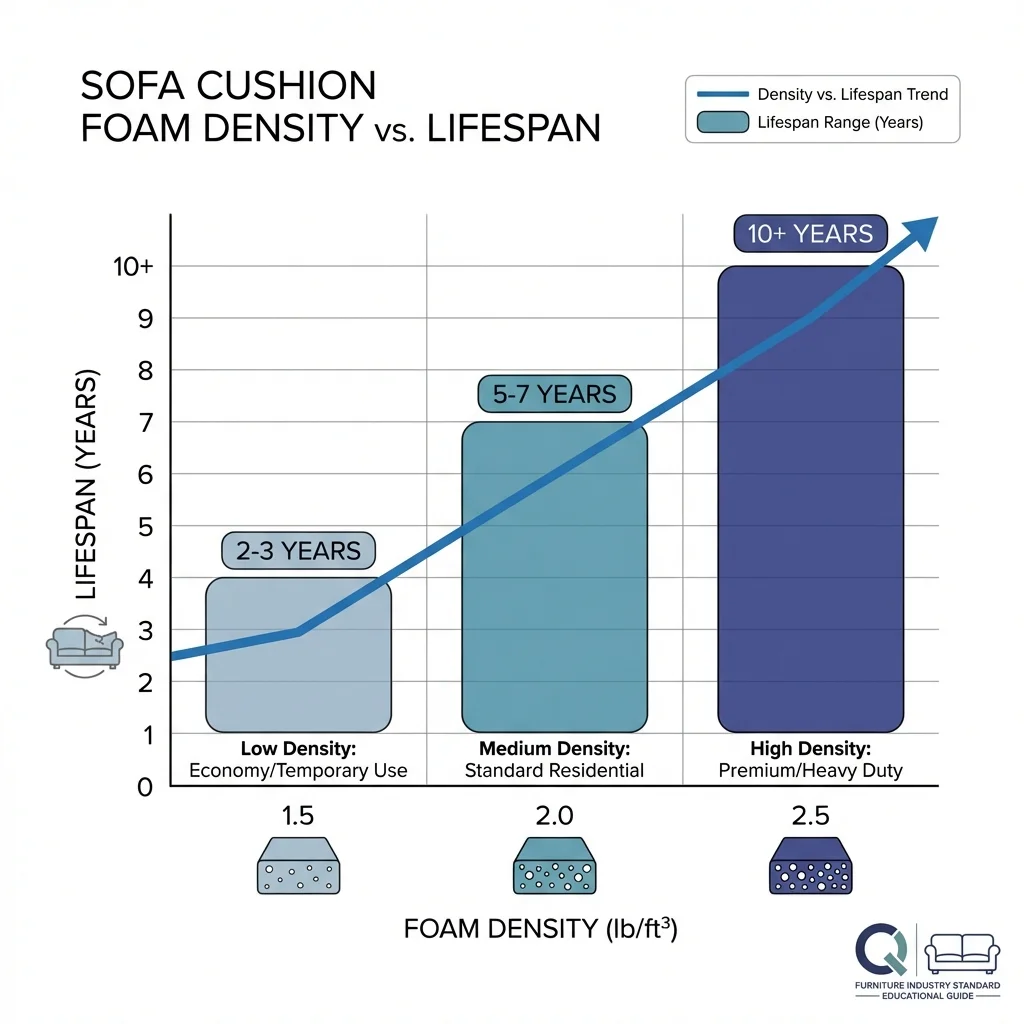
The low end is what I think of as packaging grade foam, usually around 1.2 to 1.5 pounds per cubic foot. I see it a lot in the kind of sofas that look generous for the money, often under about $800, and it can feel surprisingly decent in a quick sit because the cover is tight and the top can be stiffened.
In real life, this is the tier where the foam structure tends to crack and crush fast, sometimes within a year to a year and a half of daily use. If you want an actionable showroom tell, I treat a seat that looks visibly impressed after a single minute, especially near the front edge, as a strong hint you are in this territory, even if the tag will not say it out loud.
The middle tier is the industry standard I run into constantly, around 1.8 pounds per cubic foot. This is the baseline for a lot of mainstream mid price brands, and it is not a joke material, it is just not built for decades.
If you sit on it normally and rotate cushions and you are not abusing the front edge, this tier often gives you a few years of respectable comfort before you notice the “favorite spot” forming. When I am looking at a sofa in this range, I ask myself if the price makes sense for three to five years of good use, because that is the trade I am usually making whether the salesperson says it or not.
The tier that actually changes the long term outcome is what I look for when I want a sofa to age slowly instead of failing suddenly, roughly 2.5 pounds per cubic foot in a high resilience foam. These cushions tend to feel substantial in a very literal way, the whole seat has a heavier, deeper resistance, and when you lift a loose cushion it often surprises you with how dense it feels.
In practical terms, this is where I start expecting ten years of decent shape if the rest of the sofa is competently built. In the showroom, I use a simple check: I press down hard with one hand near the front edge and then release, and I watch for a clean rebound without a lingering wrinkle halo in the fabric, because better foam usually recovers more completely instead of staying slightly “tired” after one press.
What matters most here is getting the density for the seat core foam, not a marketing phrase like “high density” and not a blended number that includes fiber wrap. When you ask, I have found the wording matters, so I say: “What is the foam density in pounds per cubic foot for the seat cushion core, and is it the same foam through the full thickness.”
If they tell you they do not have that information, I assume they are not proud of it, or they are not controlling it, and either way you are taking a gamble. If they give you a density but it is only for a thin topper layer, I treat that like buying a good crust on cheap bread, it can feel nice at first, but it is not the part doing the long term work.
When you are standing in the store trying to decide what tier you are looking at, I focus on two things you can actually verify. I try to confirm the spec in writing, meaning a tag, a product sheet, or an emailed build description, and then I try to make the cushion “admit it” with the sit, stand, look test and the front edge press.
If you are forced to choose without specs, I default to being conservative. I would rather buy a simpler looking sofa with replaceable seat cushions and honest support than a stylish one that feels firm because the cover is tight and the foam is light, because I have learned the hard way that the first year is not the test, the third year is.
The “False Loft” Deception
Once you start looking for it, you will notice how many sofas are engineered to feel luxurious for the first five minutes. One of the easiest tricks is what I think of as false loft, where a cheap foam core is wrapped in a thick, fluffy polyester fiber so the seat looks tall and feels cloud like in the showroom.
What you are actually reacting to is the wrap, not the foam doing the real work. The fiber is basically trapped air, so it gives you that puffy first impression, and it also hides how quickly the core wants to bottom out.
The problem shows up fast at home because that loft is not structure. After a short period of real sitting, the air squeezes out, the fiber pack stays packed, and suddenly you are sitting on the weak core you never really tested. This is the “cloud to pancake” crash, and it is why a sofa can feel amazing on day one and strangely harsh or dented by month three.
In the store, I try to separate puff from support by doing a slow, deliberate sit, then shifting my weight forward toward the front edge. If the seat feels like it has a soft marshmallow layer that disappears and then you meet a much harsher, flatter resistance underneath, I assume I am feeling a thick wrap over a cheaper core.
I also watch the silhouette of the cushion from the side if I can. A cushion that looks very tall and rounded at the edges can be perfectly fine, but when that height is mostly fiber loft instead of foam substance, it tends to lose its shape in a way that looks sloppy, not just “broken in.”
If the sofa has reversible cushions, I lightly squeeze the front edge and the top corner between my hands. When the outer inch feels like fluffy batting but the inside feels thin or squishy in a less resilient way, I get suspicious that the cushion is being cosmetically bulked up.
The Lift Test
I stopped relying on sitting alone, because sitting tells you how it feels today, not what it is. When I can, I unzip a seat cushion and physically lift the foam core out, because weight is one of the few things marketing cannot convincingly fake.If the core feels weirdly light for its size, almost like you are picking up a big empty object, I assume it is low density foam and I treat the puffiness around it as a cover up. If it has that unexpectedly heavy, substantial feel in your hands, closer to lifting a dense block than a pillow, it is much more likely you are dealing with a core that can take years of compression.
If you cannot unzip anything, I ask the salesperson to show me a floor model with a zippered cushion, or I ask if any cushion samples exist in the back. If the answer is no and they keep steering the conversation back to how “plush” it feels, I mentally file that as a sign that the build may not hold up.
What I do with this in a real buying decision is simple. If a sofa is being sold on that big, puffy, sink in feel, I make myself confirm one hard fact before I fall in love with it, which is what the seat core foam density is, specifically for the core and not including the wrap. If I cannot confirm it, I assume I am paying for showroom drama, not long term comfort.
If you love the look of an overstuffed cushion, you can still get it, I just try to make sure the loft is supported by a real core. The goal is for the cushion to feel good after the wrap has stopped doing tricks, because that is the version of the sofa you will live with.
The Sales Script
Salespeople are trained to keep you in the world of “comfort,” because comfort is subjective and hard to pin down. When I want to protect myself, I force the conversation into facts, because physics is what you live with after the new sofa smell is gone.
What I actually say is, “What is the foam density rating in the seat cushions.” You will often hear, “It’s high density,” and I do not accept that as an answer because it is not a spec, it is a vibe.
I keep it calm and specific: “I need the number in pounds per cubic foot for the seat core. Is it around 1.8, or is it closer to 2.5.” The reason I offer real numbers is that it makes it harder for them to float away into adjectives, and it signals that you are not shopping blind.
A very common response is, “The manufacturer doesn’t provide that.” When that happens, I translate it in my head like this: if the foam were genuinely excellent, it would be printed on the tag, on the placard, or in the brochure, because good numbers sell sofas. If nobody in the building can produce the density, I assume it is likely down in the cheaper range, often around that 1.2 to 1.5 territory that looks fine early and caves fast.
At that point, I pivot to what you can still verify. I ask to see anything in writing, like the law label under the seat, the product spec sheet, or the manufacturer description, and I ask them to email it to me so I can read it without showroom pressure. If they cannot produce a single document that describes the seat cushion construction in plain terms, I treat that as the product telling on itself.
If they keep repeating, “It’s high density,” I tighten the question instead of arguing. I say, “High density compared to what. What is the exact density of the seat core foam, and is it the same foam through the full thickness or is there a topper layer.” The topper layer trick matters because a thin firm cap can create a convincing first sit even when the core underneath is light and disposable.
If the conversation turns into “You’ll love how it breaks in,” I translate that too. Some breaking in is normal, but “break in” is also a polite way of saying the foam will soften, and many warranties do not treat that as a defect. So I ask the question that connects directly to your pain later: “If the seat develops a visible dip where I sit, is that covered, and what is considered normal softening.”
When I get a dodge, I do not get confrontational, I just slow down and let the silence do some work. If they cannot answer, I thank them and keep shopping, because I have learned that the best deals in the store can turn into the most expensive sofas you ever buy once you factor in replacement and regret.
If you want a simple rule I use to stay grounded in the moment, it is this. If they had a great number, they would brag about it in bold print, and they would do it before you even asked. If they will not give you a number, you are being asked to buy on feelings, and feelings are exactly what low grade foam is designed to win for about five minutes.
Technical Summary: The Density Rule
Right before you swipe your card, I want you to stop thinking about firmness as a quality signal, because hard foam softens and soft foam also softens, they just get there in different ways. What matters is whether the cushion has enough actual material in it to survive that softening without turning into a dip you can see from across the room.So I push the conversation to density, not feel. For a sofa that is going to be used only occasionally, I personally treat 1.8 pounds per cubic foot in the seat core as the bare minimum worth considering, and I want to see that number tied to the actual seat foam, not a vague “high density” claim. For daily use, where you are going to build a favorite spot fast, I look much harder for something closer to 2.5 pounds per cubic foot in the seat core, because that is where the long term odds finally start to shift in your favor.
Then I do one last reality check with my hands, which is lifting the cushion. If the cushion or the foam core feels surprisingly light for its size, like you are picking up an empty box, I take that as the sofa telling on itself and I put my wallet away. If it has that dense, substantial weight that makes you instinctively use two hands, I relax a little, because that is usually what higher density foam feels like in the real world.
Explore Technical Reference
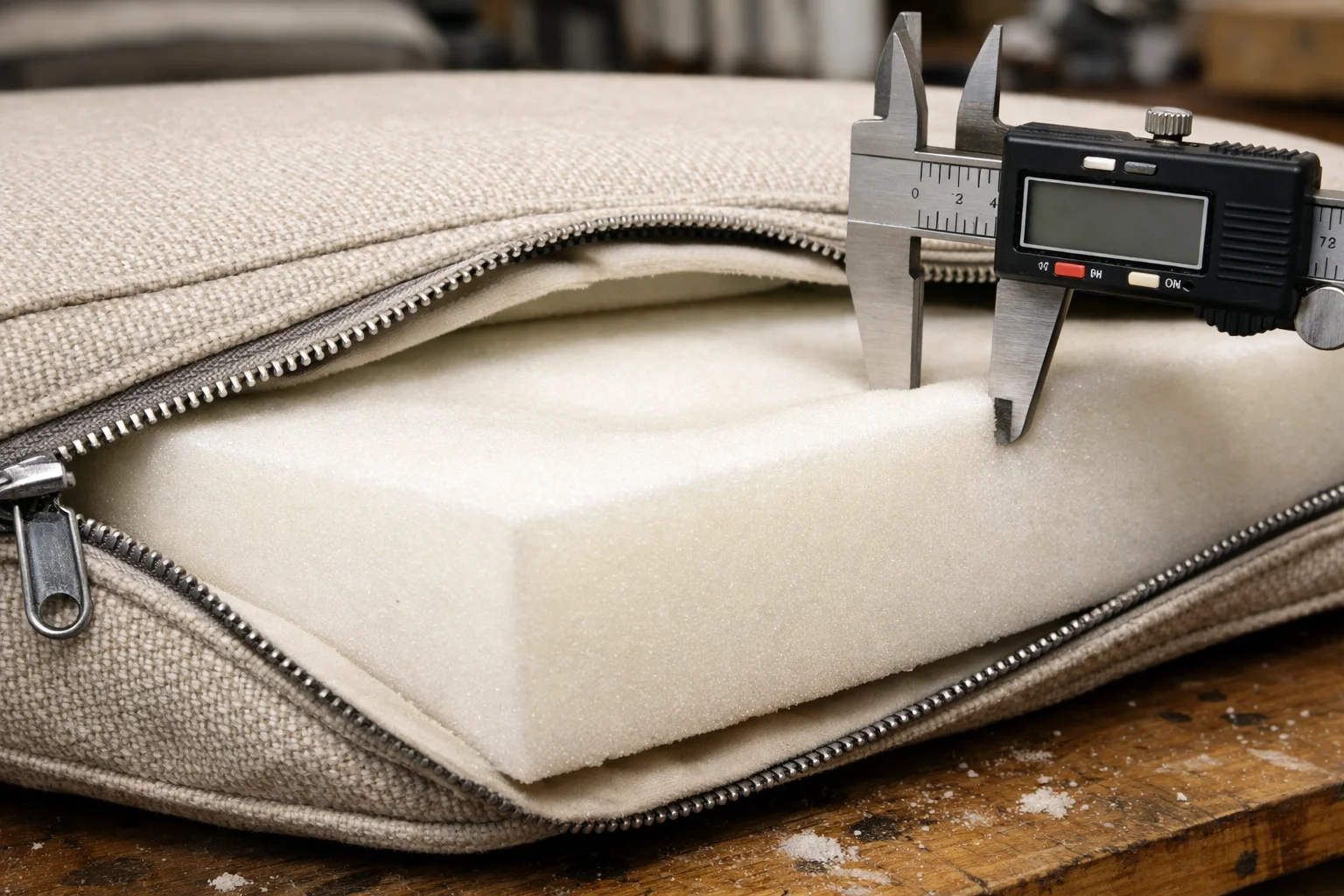
Single Slab Foam: Why Cheap Cushions Bottom Out
Understanding why uniform foam blocks fail where layered construction succeeds. The physics of linear compression and how single slab construction creates bottoming-out problems.
Analyze Details →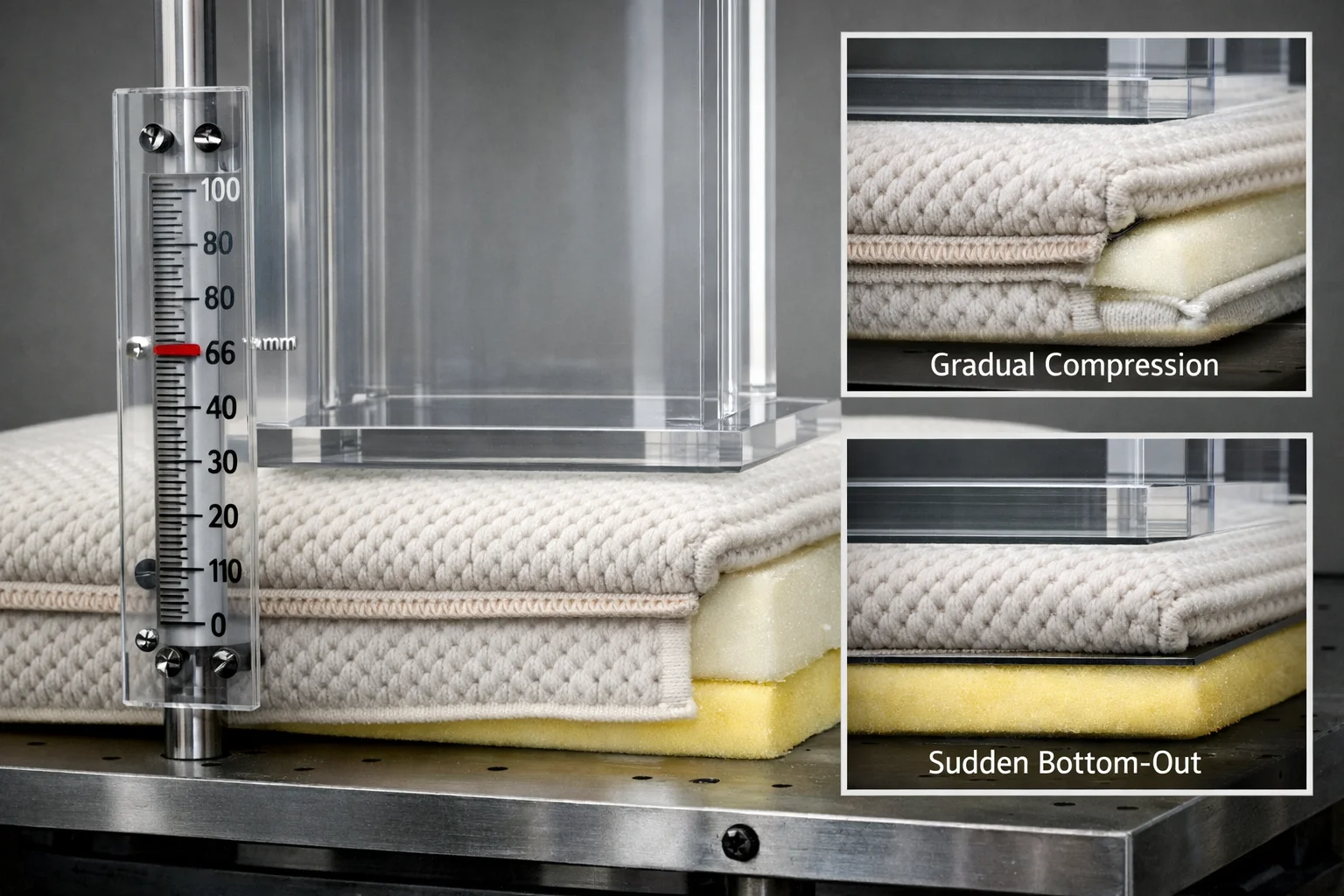
Cushion Construction: Why Multi-Layer Design Matters
Understanding the sandwich approach to cushion engineering. Why single-layer foam fails and how manufacturers stack layers for both comfort and support.
Analyze Details →