Single Slab Foam: Why Cheap Cushions Bottom Out
Introduction
At first, my sofa felt fine. Six months later, I noticed my knees were higher than my hips. I opened the cushion and found a single block of white foam. No layers. No core. Just a single slab that had lost the fight against gravity.
That moment is why I started paying attention. I am not a designer or a repair pro, I am just someone who got tired of replacing seating that looked good on day one and felt awful by year two.
What I learned is that most sofas fail in very predictable ways. The problem is not mysterious, and it is usually not your fault as a buyer. The problem is that the weak parts are hidden, and sales floors are designed to distract you from checking them.
This guide is about helping you see past the fabric and the showroom lighting. I want you to know what to press on, what to unzip, what questions to ask, and when to walk away. Everything here is something I either missed myself or learned after being disappointed.
If you only remember one thing going in, remember this. Comfort in a store means almost nothing if the structure underneath is cheap. The rest of this guide is about learning how to tell the difference while you are still standing in the showroom.
The "Linear Compression" Trap
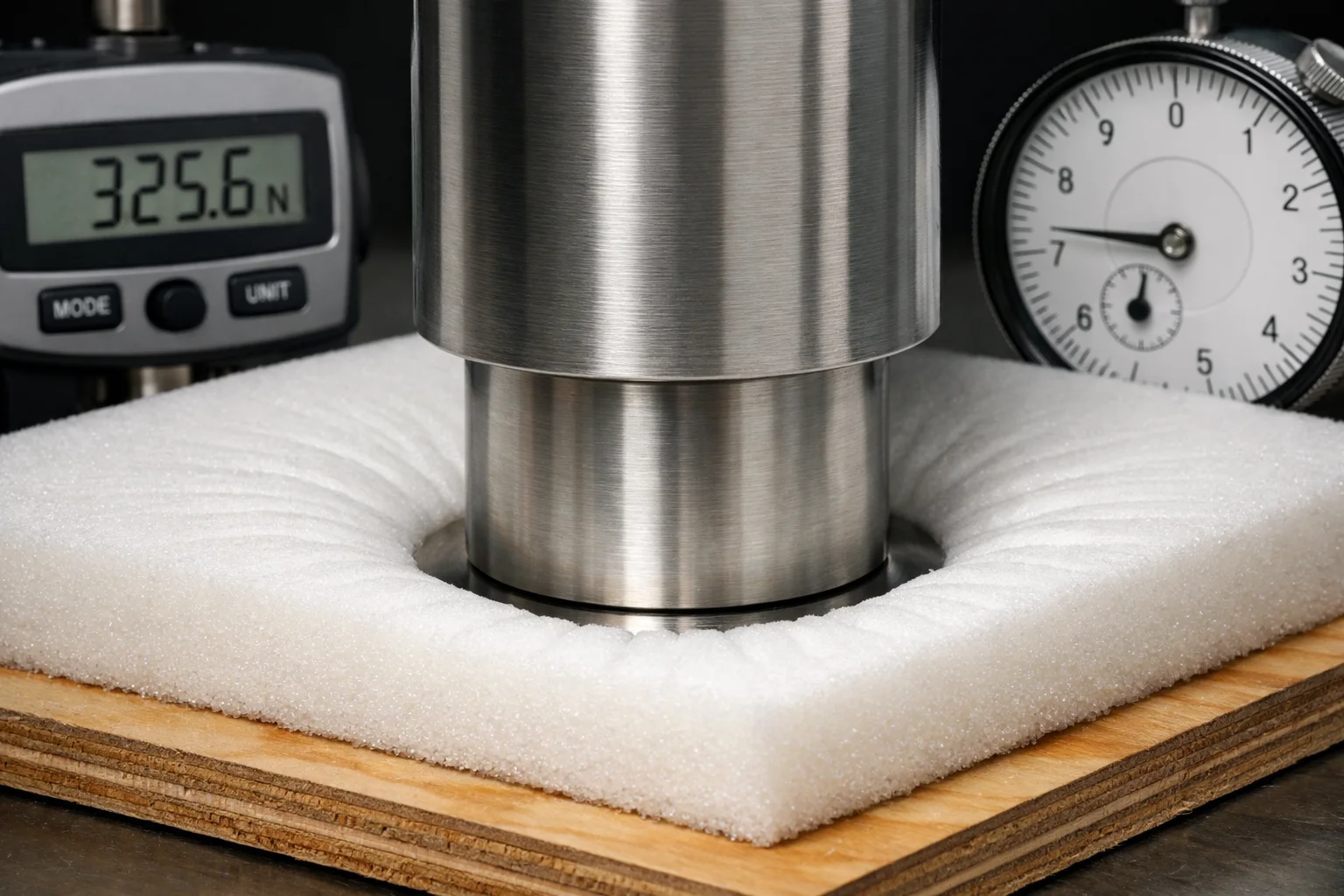
Single slab foam fails in a very predictable way. If it is soft enough to feel good when you first sit down, your weight pushes straight through it until you hit the frame, which is why people talk about bottoming out. If it is firm enough to stop that from happening, it feels hard and unforgiving, more like a park bench than a sofa.The core problem is simple. One material at one density cannot give you a soft welcome and firm support at the same time. Foam compresses in a straight line under weight, so once it starts giving way, there is nothing inside it to change how it behaves as you sink in.
When I learned this, a lot of past disappointments suddenly made sense. That couch that felt plush in the store but painful a year later was not a mystery defect. It was doing exactly what a single slab of foam always does once the initial softness wears off.
You can spot this trap in a showroom if you know what to do. Sit down normally, then shift your weight slightly forward like you are getting up. If you feel a sudden stop or a hard surface under your thighs or hips, that is the foam giving up and the frame taking over.
I also press straight down on the center of the cushion with my hand and then near the front edge. If the resistance feels exactly the same all the way through, that usually means one uniform block of foam. Good cushions change how they push back as you compress them.
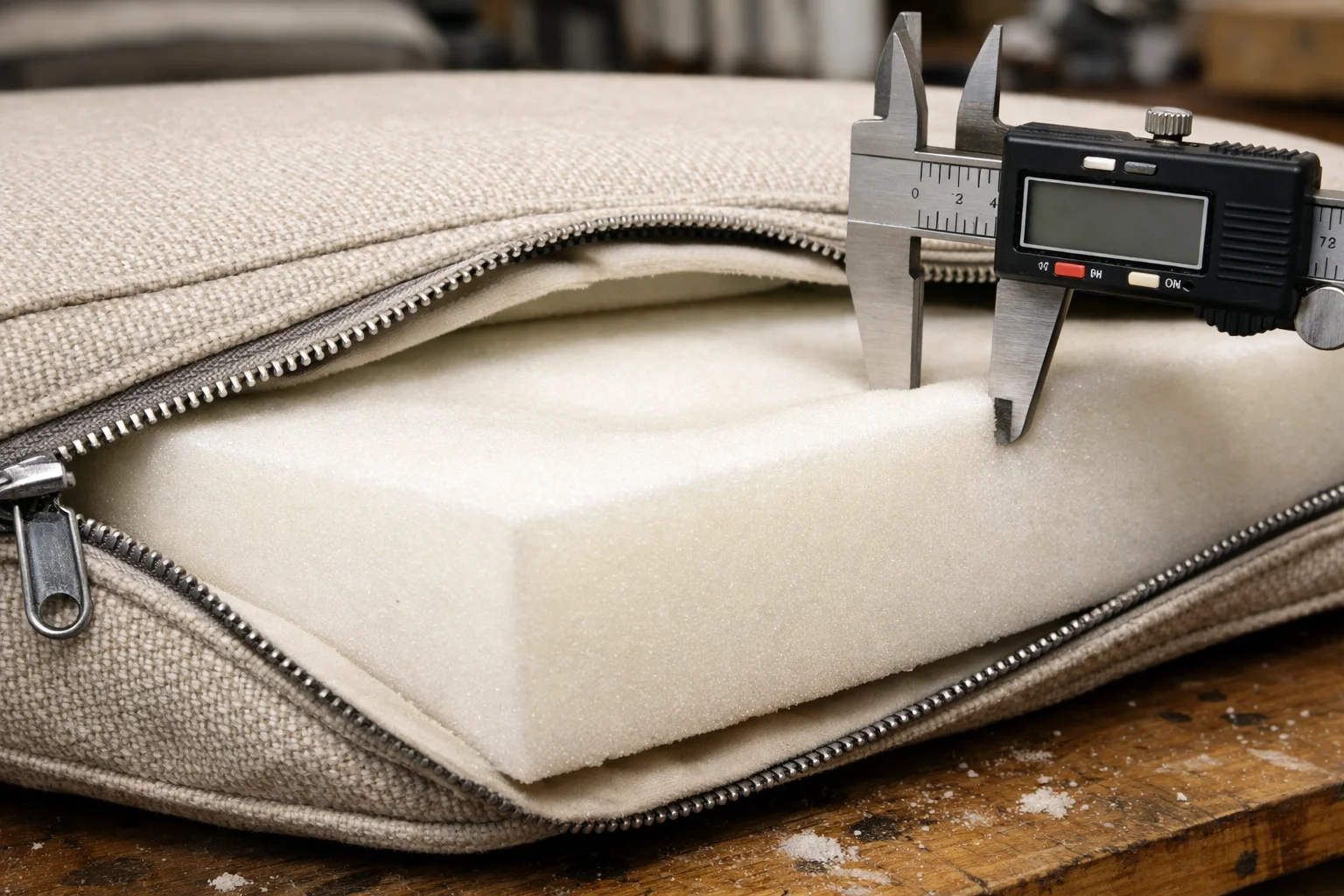
The most important move is to unzip the cushion if the store allows it. I always ask, and I walk away if the answer is no. If you see a single, solid block with no layers and no inner core, you are looking at the linear compression trap, no matter how nice the fabric feels.
This does not mean the sofa will feel bad today. It means you are betting against physics to feel good later. I have lost that bet enough times that I no longer take it.
Why Use Single Slabs? (Follow the Money)
When I finally understood why single slab cushions are everywhere, it stopped feeling like an accident and started feeling like a business decision. Manufacturers do not use them because they work better. They use them because they are cheaper in ways you never see on the sales floor.
Cutting one block of foam is fast. A worker can slice it to size in seconds and move on. Building a layered cushion takes real time because someone has to cut different foams, glue them together, wait for them to bond, and make sure they line up. That extra labor costs money, so most brands skip it.
Single slabs also simplify inventory. A factory can buy one type of low cost foam in bulk and use it in every model. They do not need to stock softer foams, firmer cores, or transition layers. Fewer materials mean fewer mistakes and higher margins.
What that means for you is simple. The company saves a small amount per sofa, but the cost shows up later in your living room. The cushion loses its shape sooner, stops supporting you, and turns a decent looking sofa into something you avoid sitting on.
I have heard salespeople talk about foam like it is a luxury upgrade, but the reality is more basic. A single slab is not a premium choice, it is the minimum viable product. It does the job just long enough to get past the return window.
Once you see this, the pricing on the floor starts to look different. A sofa that costs thousands can still have the same single block of foam as a bargain model. Price does not protect you here, only construction does.
This is why I always treat single slab cushions as a warning sign, not a deal breaker that needs debating. If the inside is built to save time and money, the rest of the sofa is probably built with the same mindset.
You do not need to argue about it with a salesperson. You just need to decide whether you want to pay full price for something designed to wear out quietly. I have done that before, and I do not do it anymore.
The Timeline of Failure
This is the part no one explains on the sales floor. Single slab foam does not usually fail all at once. It fails on a quiet schedule that lines up very neatly with how long you are allowed to return it.
In the first month, the cushion feels fine. The foam is full of air and the internal structure has not been stressed yet. When you sit down, it pushes back enough to feel supportive, and this is the version of the sofa you remember when you sign the paperwork.
Around six months in, something changes. The foam has been compressed thousands of times, and the tiny internal supports inside it start to fatigue. You notice that you sink a little deeper than you used to, and you might start shifting around to get comfortable. Most people blame themselves at this stage and assume they are sitting wrong.
By about a year in, the damage is done. The foam no longer rebounds, and your weight goes straight through to the deck underneath. This is when people say a sofa is uncomfortable or sagging, even though the fabric still looks new. The timing is cruel but predictable, because this is usually just after the warranty on cushions expires.
What matters here is not the exact month, but the pattern. Single slab foam has no backup plan. Once it starts to give, there is nothing inside the cushion to slow the fall or change how it supports you.
This is why I pay attention to how a cushion behaves when I stay seated for a few minutes in the store. I do not just sit and stand once. I settle in, shift my weight, and notice whether I keep sinking or if the cushion pushes back consistently. A slow sink is the early warning sign.
I also think about warranties differently now. If a cushion warranty is one year, I assume the foam is expected to last a little over a year. A longer warranty does not guarantee quality, but a short one almost guarantees shortcuts.
The goal when you are shopping is not to find something that feels good for five minutes. It is to avoid something that follows this exact timeline. Once you know how predictable the failure is, it becomes much easier to walk away before you repeat the cycle in your own living room.
The DIY Fix (The “Booster Shot”)
If you already own a sofa with single slab cushions, I want you to know you are not trapped. I have fixed this problem myself, and it changed how the sofa felt almost immediately. I think of it as giving the cushion a booster shot rather than replacing the whole thing.
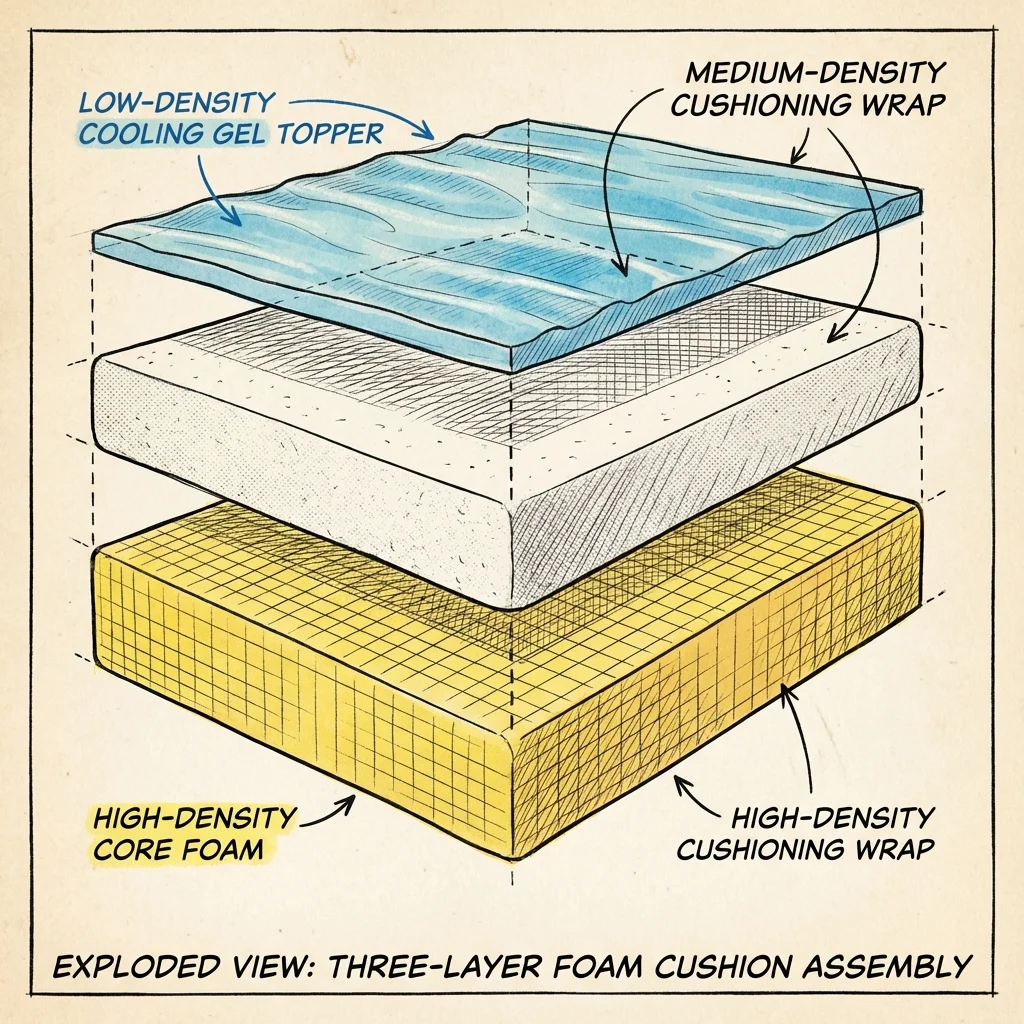
What you are trying to do is add support without destroying the comfort you already have. You do that by turning one weak piece of foam into a simple layered system. The original cushion stays on top and does the welcoming, and a new, firmer layer underneath does the heavy lifting.
I start by measuring the cushion and buying a one inch thick sheet of high density foam that matches the size as closely as possible. When you are shopping for foam, ignore words like luxury or premium and focus on firmness. If you press it with your hand and it barely gives, you are in the right zone.
I take the existing foam out of the cover and clean off any loose dust or crumbs. I spray adhesive onto the bottom of the original slab and onto one side of the new foam, then carefully press them together. This part does not have to be perfect, it just needs full contact so the layers do not slide around later.
Once the foam is bonded, the edges can feel a little sharp where the new layer ends. I wrap the whole thing in a thin layer of Dacron batting to soften that transition. This step matters more than it sounds, because it keeps the cushion from looking boxy when it goes back into the cover.
When I zip the cushion back up and put it on the sofa, the difference is obvious. You still sink in at first, but then you feel the cushion catch you instead of collapsing. My hips stop lower, my knees sit better, and the hard frame feeling disappears.
This fix does not turn a bad sofa into a great one, but it can turn an unusable sofa into something you actually want to sit on again. More importantly, it teaches you what layered support feels like in real life. After you sit on a retrofitted cushion for a week, it becomes much easier to spot what is missing when you test new sofas in a store.
I share this not because I think you should plan to fix new furniture, but because it changes how you evaluate value. If a simple extra inch of firm foam can solve the problem, then the original failure was never complicated. It was just a shortcut that someone hoped you would not notice.
Once you understand that, you stop blaming yourself for being uncomfortable. You start blaming the cushion, which is exactly where the blame belongs.
Technical Summary: Inspection Guide
When I am standing in a showroom, I start with what I call the pinch test. I grab the cushion from the top and bottom and try to squeeze it together. If it collapses easily and my fingers almost meet, that tells me there is not much resistance inside and very little is going to stop my weight once the foam starts to fatigue.
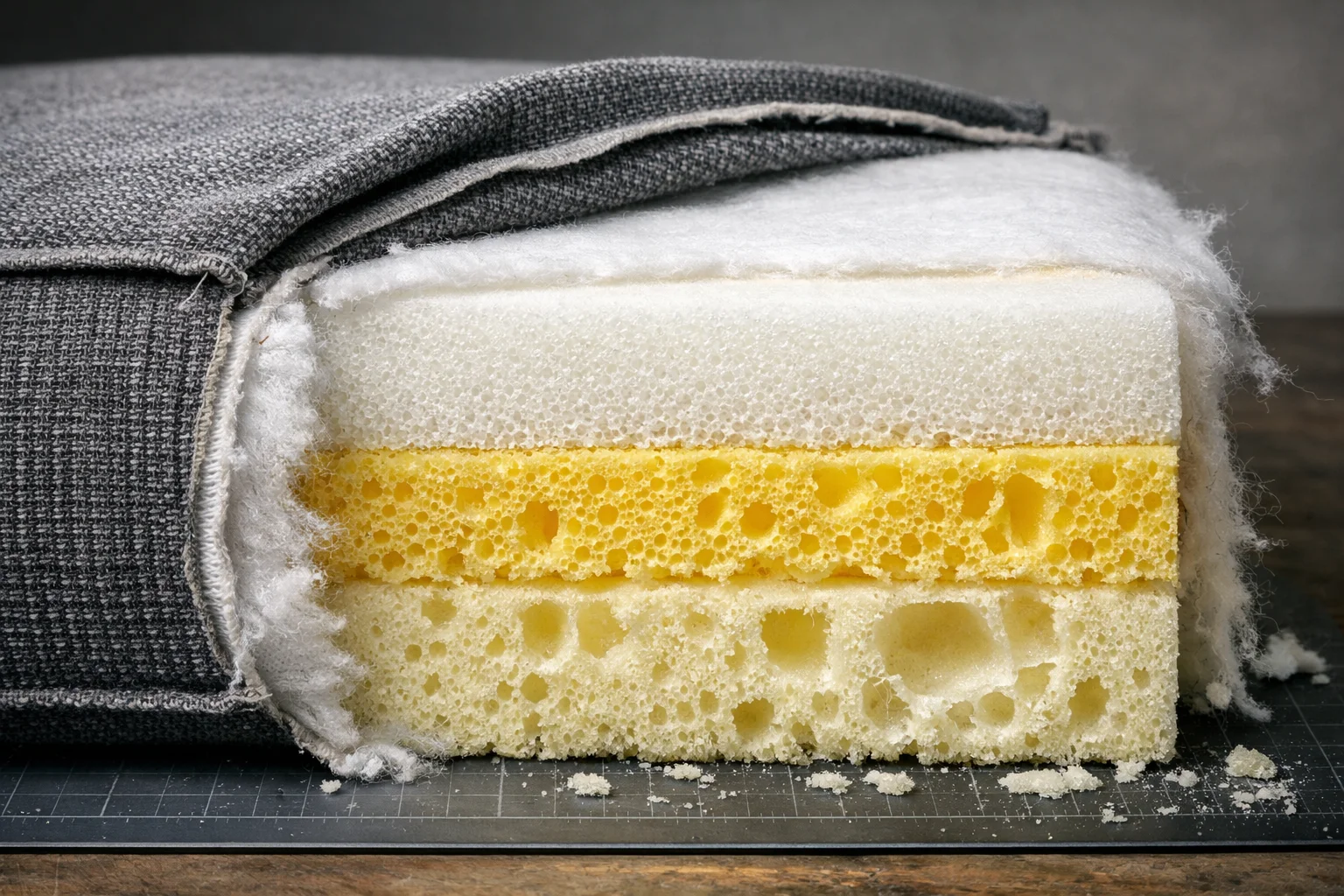
Next, I do the sight test, and this is the step most people skip. I ask to unzip the cushion and look inside. If I see one uniform color from top to bottom, usually white or pale yellow, I know I am looking at a single slab. When there are layers or a core, you can usually see color changes or seams that tell a different story.
Once I see both of those signs together, the diagnosis is straightforward. A cushion built from one solid block of foam is going to feel fine briefly and then wear out fast. I assume I will be unhappy within about two years, and I make my decision right there instead of hoping I will be the exception.
Explore Technical Reference
Foam Lifespan: Predicting When Your Sofa Will Die
How long should a cushion last? Understanding the density-to-duration ratio and the phases of foam death.
Analyze Details →
Frame Anatomy 101: The Skeleton of Comfort
The foundation of all furniture. Understanding the terminology of rails, stiles, stretchers, and localized reinforcement.
Analyze Details →