Foam Lifespan: Predicting When Your Sofa Will Die
Introduction
I ignored the divot for two years. It started as a subtle impression, a ghost of my body left in the cushion. Eventually, it became a permanent crater. I realized I was renting my comfort for $700 a year because my $2,000 sofa died in 36 months.
What bothered me most was how normal it felt while it was happening. The first year I told myself it just needed “breaking in,” then I started rotating cushions like that would magically put the foam back, and by the time I admitted it was failing, the store warranty window had already slammed shut.
That experience is why I pay attention to sofas in a completely different way now. I do not start with color, trend, or how good it looks in a staged room. I start with the parts that actually take your weight every day, because that is where a sofa either earns its price or quietly gives up.
This guide is for the moment you are standing in a showroom, feeling pressured, trying to decide if a sofa is “nice” or just expensive. I am not here to make you memorize industry jargon, I am here to help you do a few simple checks with your hands and your body so you can spot the stuff that tends to sag, loosen, and creak long before it should.
I am also going to be honest about the uncomfortable truth I learned. Many sofas are designed to feel great for a short time, not to hold up for a long time. If you know what “short time” feels like in the store, you can avoid paying long time money for it.
When I say “getting ripped off,” I do not mean you have to buy the most expensive sofa to be safe. I mean you should be able to tell, in a few minutes, whether the structure under the fabric is built like furniture or built like a disposable prop.
If you only take one mindset into the store with you, make it this. You are not buying a look, you are buying a system that has to resist gravity, sweat, kids, naps, and the same seat being used over and over. If the salesperson cannot help you understand that system clearly, I treat that as a warning sign and I slow down.
The Duration Formula
I learned to stop judging foam by how it feels for thirty seconds and start judging it by how long it can resist being crushed thousands of times. There is a real relationship between how much material is in the foam and how long it tends to keep its shape, and in the store the easiest way to talk about that is foam density.When you see around 1.2 pound density foam in a seat cushion, I treat it like disposable comfort. It can feel soft and welcoming on day one, but it is the kind of foam that often gives up within about a year of daily sitting, especially in the favorite seat.
Around 1.8 pound density is the basic threshold where a sofa stops being a quick burnout for many households. If everything else is decent, this is the range where three to five years is a common outcome before you start noticing that you are sitting lower and the cushion is not rebounding the way it used to.
When you get into roughly 2.5 pound density, that is the first time I start thinking “this could actually be a long term sofa,” assuming the cover, suspension, and frame are not cutting corners. Ten plus years is realistic in a normal home because the foam has more substance to lose before it feels flat.
Anything under 1.8 is what I privately call “rental foam,” because it is built for short stays, not for your daily life. If you buy it anyway, do it with your eyes open and with a price that matches the timeline.
Here is the practical part you can actually use in a showroom. Ask the salesperson, “What is the seat foam density in pounds?” and then stay quiet. If they cannot answer, cannot find it in the spec sheet, or start pivoting to vague words like “premium” and “high resilience” without a number, I treat that as information you are not supposed to have.
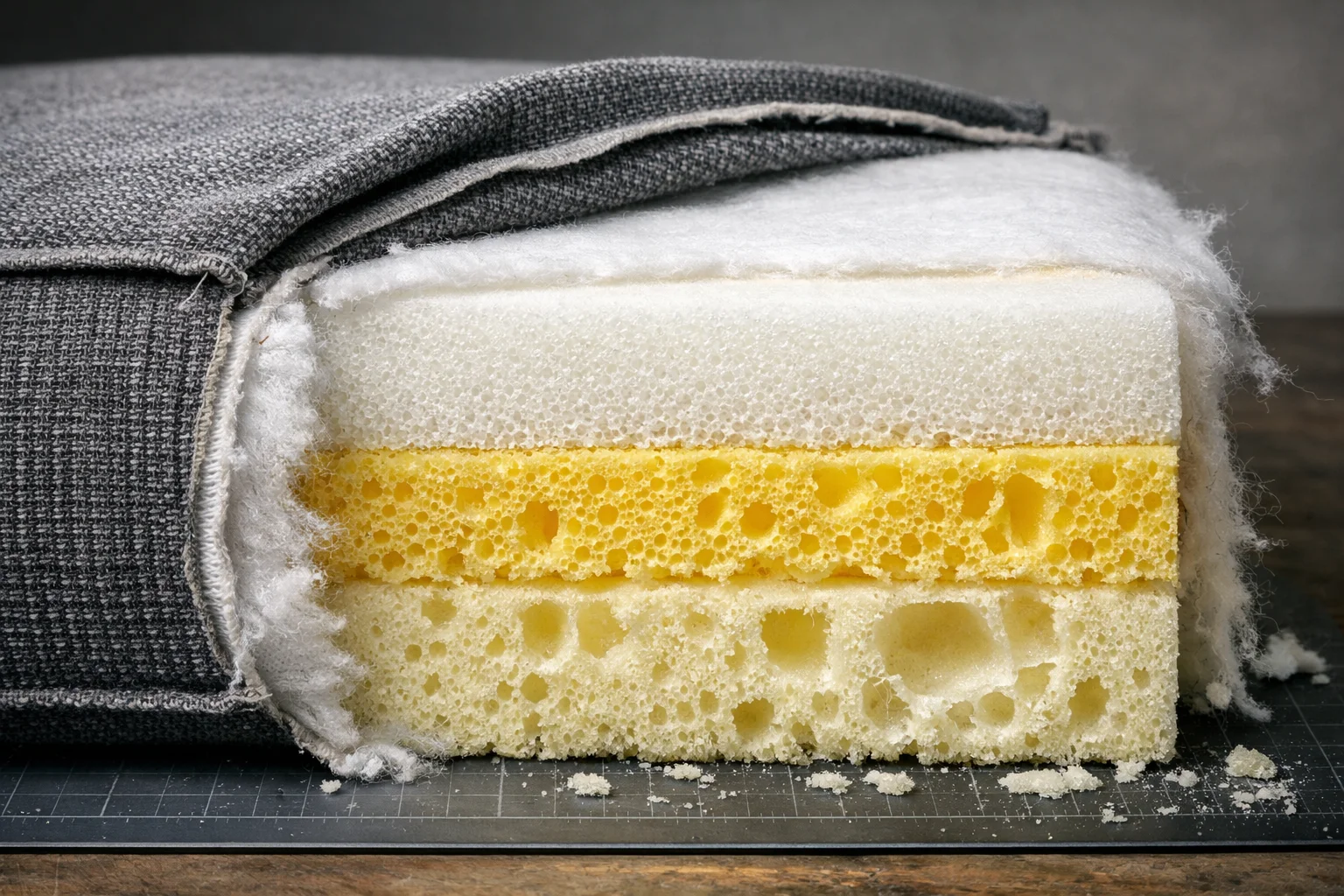
If they tell you the cushion has a softer top layer, ask for the density of the core foam, not the wrap. A lot of cushions have a bit of fiber or down on top to feel nice, but the core is what decides whether you are still happy in two years.
If the sofa uses a spring down or down blend seat, I still ask what the foam core density is inside that construction. Those cushions can be comfortable, but if the core is low density you can end up with a lumpy, constantly fluffed cushion that never really returns to level.
The Three Phases of Foam Death
Foam failure is a progression, not a sudden event, and once I started looking at it that way, a lot of confusing shopping experiences finally made sense. In the store, you are usually feeling a cushion somewhere between brand new and lightly broken in, but at home you live through the whole arc, and the early part can trick you.
The first phase is softening, and it tends to happen in the first months. The foam is basically breaking in, the little internal cell walls relax, and the seat feels plusher than it did on day one. This is the phase where people, including me, confuse “getting comfortable” with “being high quality,” because the sofa is rewarding you right away.
In a showroom, I protect myself from that mistake by doing something slightly annoying on purpose. I sit down normally, then I stand up and immediately press my palm hard into the exact spot where my sit bones were, and I watch how fast it pushes back. If it rebounds slowly, or if the impression lingers like memory foam when the cushion is not advertised as memory foam, I assume it is going to feel great early and then start losing height faster than I want.
The second phase is what I call false loft, and it often shows up around the one to two year mark. The cushion can still look puffy from the outside, especially if it has fiber or down on top, but the internal foam lattice has started to fracture and you stop feeling evenly supported. This is where you notice yourself shifting, perching, sitting a little sideways, or constantly changing positions because the “good spot” keeps moving.
The showroom clue for false loft is unevenness that shows up under movement, not under a quick sit. I sit, then I scoot a few inches forward and back, and I pay attention to whether the cushion support feels consistent across the whole seat or if it feels like there are softer pockets and firmer ridges. If I can feel channels, dead zones, or a vague hammock effect even on a floor model, I treat that as the cushion telling me what it will become when I put a couple years of daily use into it.
This is also where I stop letting a thick wrap distract me. A fat layer of fiber can make a cushion look full while the core is quietly giving up, so I ask to unzip the seat cushion cover if possible. If they will not let you, or if the cushion is sewn shut, I take it as a sign the brand does not want the core inspected, because the core is where the timeline lives.
The third phase is the crater, and it is the one you cannot unsee once you have lived through it. The foam has lost structural integrity, the cushion collapses, and you end up sitting much closer to the suspension than you should, sometimes close enough to feel the springs or the webbing through the seat. People describe it as “suddenly uncomfortable,” but in my experience it is usually a slow slide that crosses a tipping point.
You can sometimes spot a sofa that is already headed toward crater mode by looking at how the seat behaves at the front edge. I sit, then I slide forward until most of my weight is near the front rail, because that edge gets abused by real life. If the front edge collapses sharply, if I feel a hard bar, or if the cushion squirts forward instead of staying put, I assume the foam is not resisting compression well and the whole seat will eventually follow.
When you understand these phases, you can use time against the sales pitch. If the salesperson keeps steering you back to how “soft” and “cloudlike” it feels, I bring it back to the future version of the cushion by asking how it avoids false loft and cratering. If they can tell you the seat foam density, the core construction, and whether the cushion is designed to be rotated and flipped, I relax a little, because those are answers from the part of the product that actually fails.
If you remember nothing else from this section, I want you to remember this: the most dangerous cushion is the one that still looks fine while it is already losing the support you bought it for. In the store, your job is to catch that disconnect by testing rebound, consistency under movement, and front edge collapse, because those are the little tells that show up before the crater does.
Graph showing the foam degradation curve over time
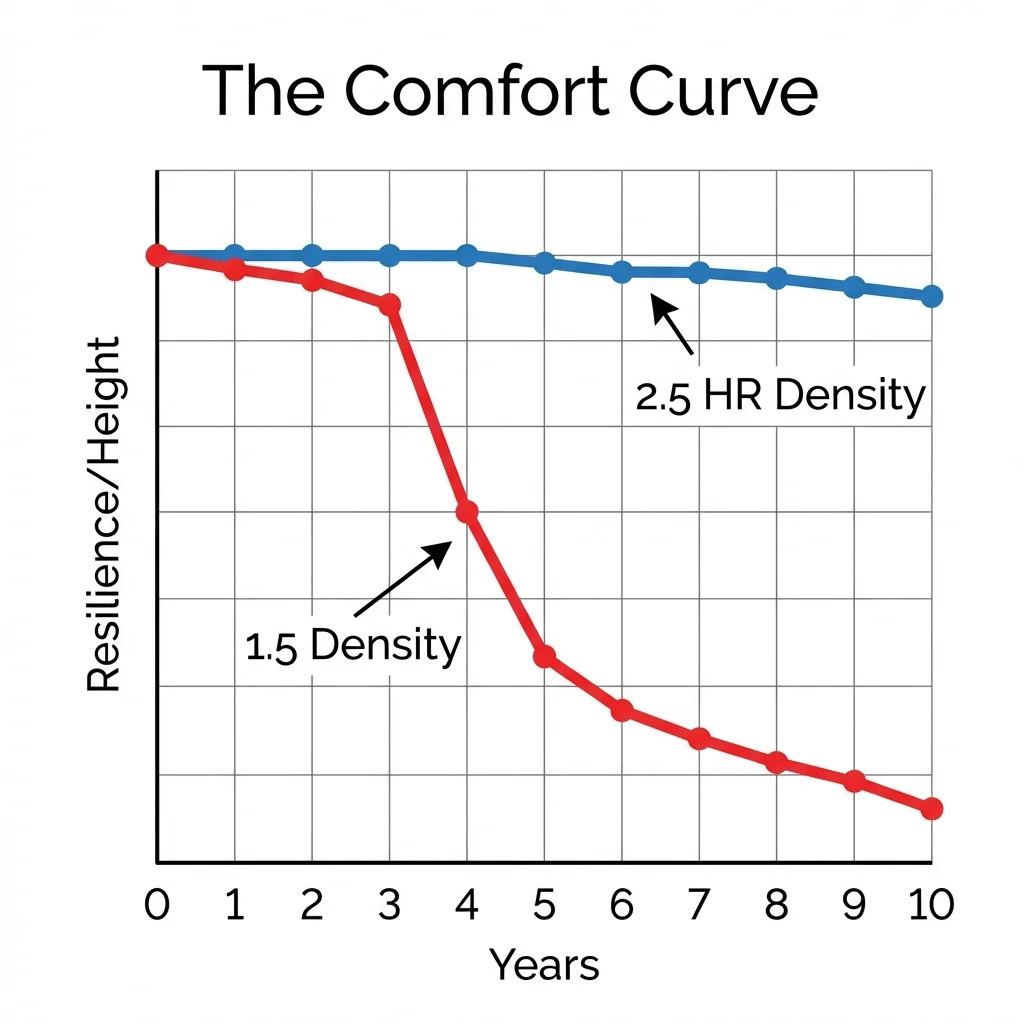
When I look at this curve, I stop thinking in terms of “Will I like it today?” and start thinking “When does this cushion fall off the cliff?” That cliff edge is the moment you go from mildly annoyed to actively uncomfortable, and it is usually right after the return window, the warranty window, or your patience runs out.
The key idea is that bad foam does not always decline politely. It often holds up just long enough to feel like you made a decent choice, then it drops fast, and you end up confused because you swear it was fine not that long ago.
In a showroom, you cannot time travel, so I try to find signs of where on the curve a cushion is likely to land. The first thing I do is ask for the foam density and I treat the answer like a timeline estimate, not a quality label. If the salesperson will not give you the number, I assume you are being asked to buy blind, and I do not let “high resilience” or “premium” substitute for a spec.
Then I use the floor model as a stress test, even if it is not that old. I look for the favorite seat, which is usually the one closest to the end or the one facing the walkway, and I compare it to the seat next to it. If one cushion already sits lower, looks slightly rumpled, or feels less supportive under the same quick sit, I take that as a preview of the curve, because even a few months of random shoppers can expose weak foam faster than you would think.
I also watch how much the comfort depends on fluff instead of structure. If a cushion feels great until I press down and I realize I am mostly feeling a thick, marshy top layer, I assume the good feeling is front loaded. The curve for that kind of build is often “awesome now, vague later, crater soon,” because the wrap hides the core getting tired.
If you want one simple body test that matches this graph, I do a slow sit and a slow stand. I lower myself into the seat gradually, then I stand up slowly and immediately look at the cushion and feel it with my hand. A cushion that is going to stay on that flatter, longer line tends to spring back with some confidence, while the cliff edge candidates tend to keep my shape for a beat, then lazily ooze back, or they bounce back but feel thinner and less supportive under my palm than they should.
The other thing this graph changes for me is price logic. If the cushion is built in a way that suggests an early cliff, I only consider it if the price matches a short relationship, because replacing foam later is not cheap and it is not fun. If the sofa is priced like a long term piece but built like a short term one, that is the rip off, even if it feels incredible under showroom lighting.
If you are deciding between two sofas that both feel good, I would rather you choose the one that feels slightly firmer but has the density and construction that tends to stay flatter for longer. My experience is that you adapt to slightly firmer in a week, but you never adapt to a seat that keeps sinking year after year.
Accelerated Aging (The Murder Weapons)
I used to think my sofa “wore out” because it was low quality, and that was true, but I also learned I helped it along. I basically ran a harsh little experiment on it every night, and the sofa lost because chemistry and repetition always win.
The first murder weapon is point loading, which is a fancy way of saying I sat in the exact same spot like it was assigned seating. Foam is a field of tiny structures, and when you crush the same zone thousands of times while the rest of the cushion stays almost new, you create a lopsided timeline where one section is aging years ahead of everything around it.
You can use this idea in a showroom even though the sofa is not yours yet. I look at a floor model and I hunt for the “favorite seat,” usually the one closest to the arm on the TV side, then I compare it to the seat next to it by sitting in both for a full minute. If one spot feels lower, softer, or less steady, I treat that as a warning about how the cushion behaves under repeat use, not just how it feels under one sit.
Then I do a simple palm check in both seats. I press down hard in the center of each cushion and feel whether one has a mushier, less springy core, because that is the kind of difference you will create at home if the cushion is not designed to resist point loading well.
The second murder weapon is UV cooking, and I did not respect it until I watched foam get brittle. Sunlight through a window is basically slow heat and radiation on the same materials that are supposed to stay elastic, and when the foam dries out and gets fragile, it stops rebounding even if you have not “used it up” by sitting.
In a showroom, I now ask myself where this sofa will live in your house. If you have a bright window that hits the seat, especially in the afternoon, I treat that like an extra stressor and I stop pretending the cushion spec is the whole story. This is also where I push you to pay attention to which side of a sectional will take the sun, because one side can age faster and you will feel it as mismatched support.
If you want the practical fix, I learned to treat rotation like basic maintenance, not a desperate move after sagging starts. If the cushions are loose, I rotate them weekly at first until it becomes automatic, and I swap left with right so the same body does not always hit the same foam cells in the same direction.
If the cushions are reversible, I flip them too, because flipping spreads the stress across more material. If they are not reversible, I take that as a small durability negative, because it means the sofa is asking one face of the foam to do all the work forever.
And if sunlight is part of your room, I close the blinds during the strongest hours or I use a curtain that actually blocks light, not just a decorative sheer. It sounds annoyingly simple, but I have learned that preventing UV damage is cheaper than any upgrade you can buy later, because you cannot “condition” foam back into being resilient once it gets cooked.
The Cost per Sit Calculus
I stopped thinking about foam upgrades as “nice to have” when I realized they are often the cheapest durability you can buy. HR foam usually costs more at checkout, but if it keeps its height and support for years longer, it ends up costing you less for every normal, boring sit on a random Tuesday.
Here is the ugly little math I keep in my head in a showroom. A manufacturer can save something like fifty bucks by swapping a higher density core for a low density one, like using 1.5 pound foam where 2.5 pound foam belongs. You do not see that fifty dollars, you see the same fabric, the same silhouette, and a cushion that can still feel great under your first sit.
The bill shows up later, when that fifty dollars turns into years you do not get back. If the better foam would have carried you seven more years before the crater phase, you are effectively paying for a whole extra sofa cycle just because the core was built to hit the cliff early.
When I am deciding whether an upcharge is real or just marketing, I ask one blunt question: “What exactly changes in the seat if I pay more?” Then I wait for a specific answer like a higher density core, a different cushion construction, or a better suspension under it. If the answer stays in the land of “premium comfort” and “plush feel,” I assume the price change is not buying me more sits, it is buying me a nicer first impression.
If they do offer a foam upgrade, I ask for the numbers for both versions, not just the upgraded one. I have seen salespeople proudly quote the upgraded density while quietly avoiding the fact that the base build is in rental foam territory, and that changes whether the upgrade is a smart buy or just the sofa becoming acceptable.
I also try to pin down what “HR” means on that specific model, because it is not a magic word on its own. In practice, the only version of HR that matters to you is the one with a density you can verify on the spec sheet, paired with a cushion you can actually unzip or at least feel is a single substantial core and not a thin core hiding under a thick wrap.
If you want a fast way to translate all of this into a buying decision, I do it like this in my head. If a sofa has a core density I trust and it passes my rebound and front edge tests, I can justify spending more because I am buying time. If the density is vague, low, or unknown, I treat any high price as a risk premium you are paying for the showroom feeling, and I only consider it if you are genuinely fine replacing it sooner.
The other practical move I make is to ask about replacement cushions before I fall in love with the sofa. If the brand can sell you a replacement seat core later, and the price is not insane, that lowers the risk of committing. If they cannot, or they act like it is a strange question, I assume you are buying a one way ticket where sagging means living with it or replacing the whole piece.
This is the mental shift I want you to take with you. You are not only buying a sofa, you are buying a certain number of sits before it turns into a problem, and foam density is one of the few specs that actually predicts that number. If paying a little more moves you from an early cliff to a long flat line, that is not an upgrade, it is insurance against the most common way sofas quietly rip you off.
The Upgrade Test
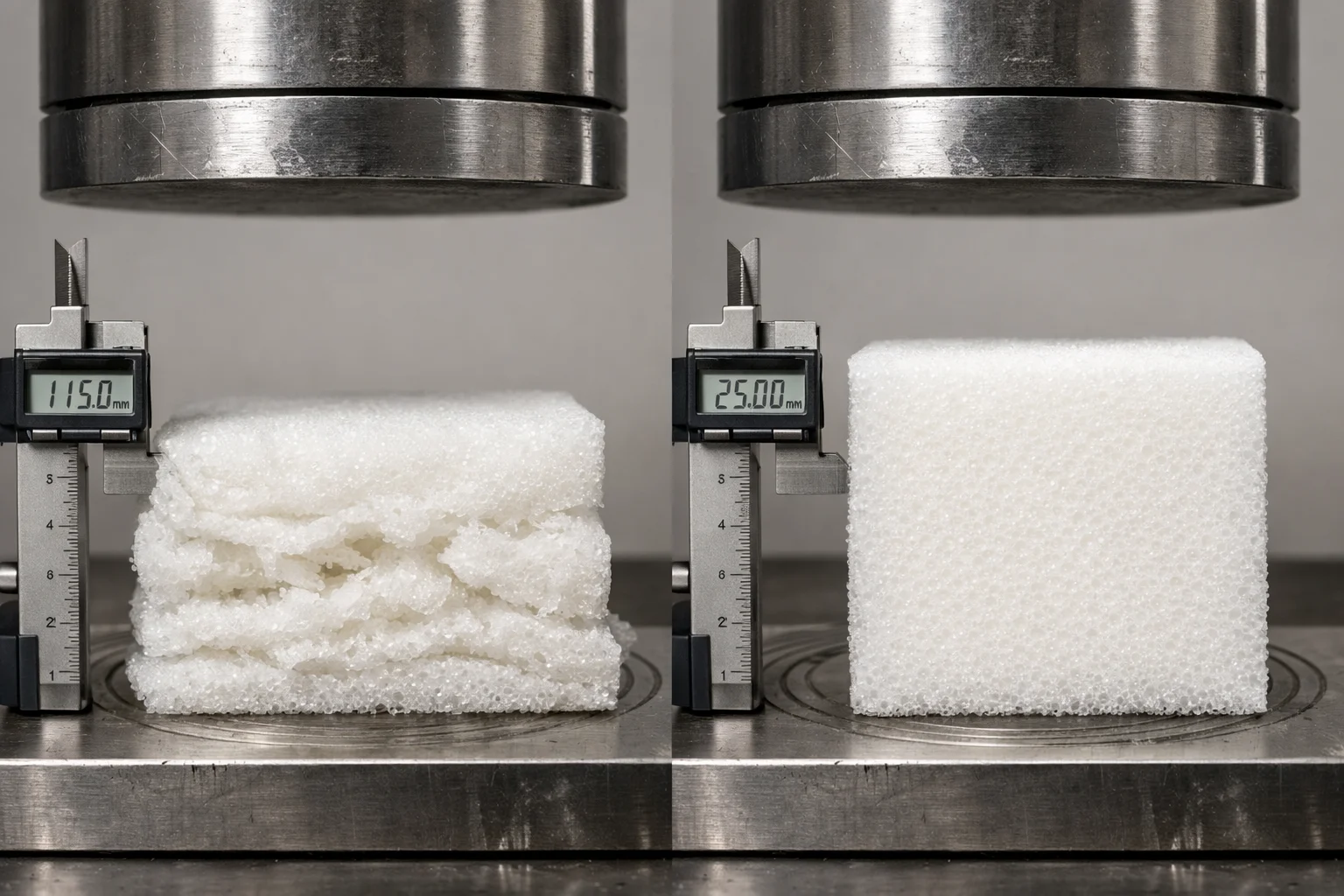
I once replaced my dead cushion cores with custom 2.8 pound HR foam for about $300, and it changed how I judge every sofa you and I look at.The feeling was not just “firm.” The new foam did not merely hold me up, it pushed back in a steady, supportive way, and it stopped that slow sinking sensation that makes you shift around even when you cannot explain why.
The lesson I took from that is simple. If the frame is good, especially if it is solid wood and it is not already loosening and racking, I do not treat a sagging seat as a reason to throw the whole sofa away. I treat it like a heart problem, and the heart is usually the foam.
Here is how you can use this as a buying test while you are still in the showroom. You want to know whether the sofa you are considering is the kind you can “save” later with new cores, or the kind that becomes landfill the moment the seat gives up.
I start by asking the salesperson whether replacement seat cores are available for this model, and I ask what they cost. If they can order them, that tells me the cushion is a component, not a mystery blob, and it means you have an exit plan if the foam fails sooner than you hoped.
Then I look at how the cushion is built, because some sofas are quietly designed to make upgrading difficult. If the seat cushion cover has a zipper, I ask to see it opened, because a zippered cover usually means you can swap the core without paying an upholsterer to do surgery.
If the cushion is sewn shut, or the salesperson says you cannot inspect the insert, I assume the brand does not want you thinking in replaceable parts. That does not automatically make it a bad sofa, but it raises the stakes, because if it sags, you may be stuck living with it.
I also pay attention to whether the cushion looks like a straightforward foam core with a wrap, or a complicated stack of thin layers. When a cushion is built like a layer cake, upgrading later can get expensive fast, and it can be hard to replicate the original feel without trial and error.
This test also changes how I interpret a firm seat in the store. If a sofa feels a little firmer than you expected but the frame feels stable and the cushion looks serviceable, I am more willing to consider it, because you can always soften a seat slightly with the right wrap or topper later. What you cannot easily fix is a seat that is already collapsing at the front edge, or a frame that flexes, because that is not a “replace the heart” situation anymore.
If you want one quick, physical clue that an upgrade would actually work, press down hard on the seat near the front and then near the back, and notice whether the cushion compression feels like it is happening inside the cushion, not down in the deck. When the cushion is doing the work, you usually feel a controlled resistance and a clean rebound. When the understructure is doing the work because the cushion is weak, you tend to feel a vague hammock drop, sometimes with a harder sensation underneath.
The point of all this is not that you should plan to replace foam on day one. It is that I want you to buy a sofa that is worth saving, because the smartest long term sofa purchase is often a good frame with replaceable comfort parts, not a “perfect” showroom sit built around foam that is meant to die quietly.
Technical Summary: Lifespan Audit
When I am trying to predict a sofa’s life in a store, I do a quick “lifespan audit” that forces the conversation away from vibes and into the parts that fail. I start by asking, “What is the seat foam density in pounds?” and I treat anything other than a real number as a red flag.If the answer I get is “standard,” “regular,” or “our usual foam,” I assume I am looking at a short timeline unless they can prove otherwise on a spec sheet. I have learned to translate that kind of vague answer into something like a three year relationship in a normal home, sometimes less if you have a favorite seat, kids, or a lot of daily use.
If they can clearly say something like “2.5 pound high resilience,” and it is written down somewhere official, I relax because that is the first type of answer that usually lines up with a long useful life. I still test the cushion and the front edge, but now I am at least not buying blind.
Then I do what I call the lift test, because your hands can catch what your butt misses in a two minute sit. I pick up a seat cushion if it is loose, and I pay attention to whether it has some honest weight to it. A cushion that feels weirdly light for its size often ends up being a cushion that runs out of material to lose, which is another way of saying it hits the cliff early.
I am careful here because weight is not magic, and a heavy cushion can be heavy for reasons that do not help you. What I want is that solid, dense, single piece feeling that suggests there is real foam doing the work, not just a fluffy wrap doing the selling.
The last part of my audit is the warranty reality check, because this is where a lot of people, including me, get fooled. I ask, “Does the cushion warranty cover softening, not just defects?” and I listen closely to how they answer, because most warranties quietly treat softening as normal wear. If it is not covered, which is common, then your only real insurance is buying foam that is slow to soften in the first place.
If the salesperson says the frame has a long warranty and the cushions have a short one, I do not let that reassure me. In real life, the cushion is usually what ruins the sofa first, so I treat the cushion spec as the headline and the warranty as fine print that rarely saves you.
When you put all three parts together, density you can verify, a cushion that feels like it has substance, and a warranty that does not pretend softening is your imagination, you get a much clearer idea of what you are about to live with. If even one of those parts turns into evasive language, I slow down, because that is usually the moment you are being asked to pay long term money for short term materials.
Explore Technical Reference
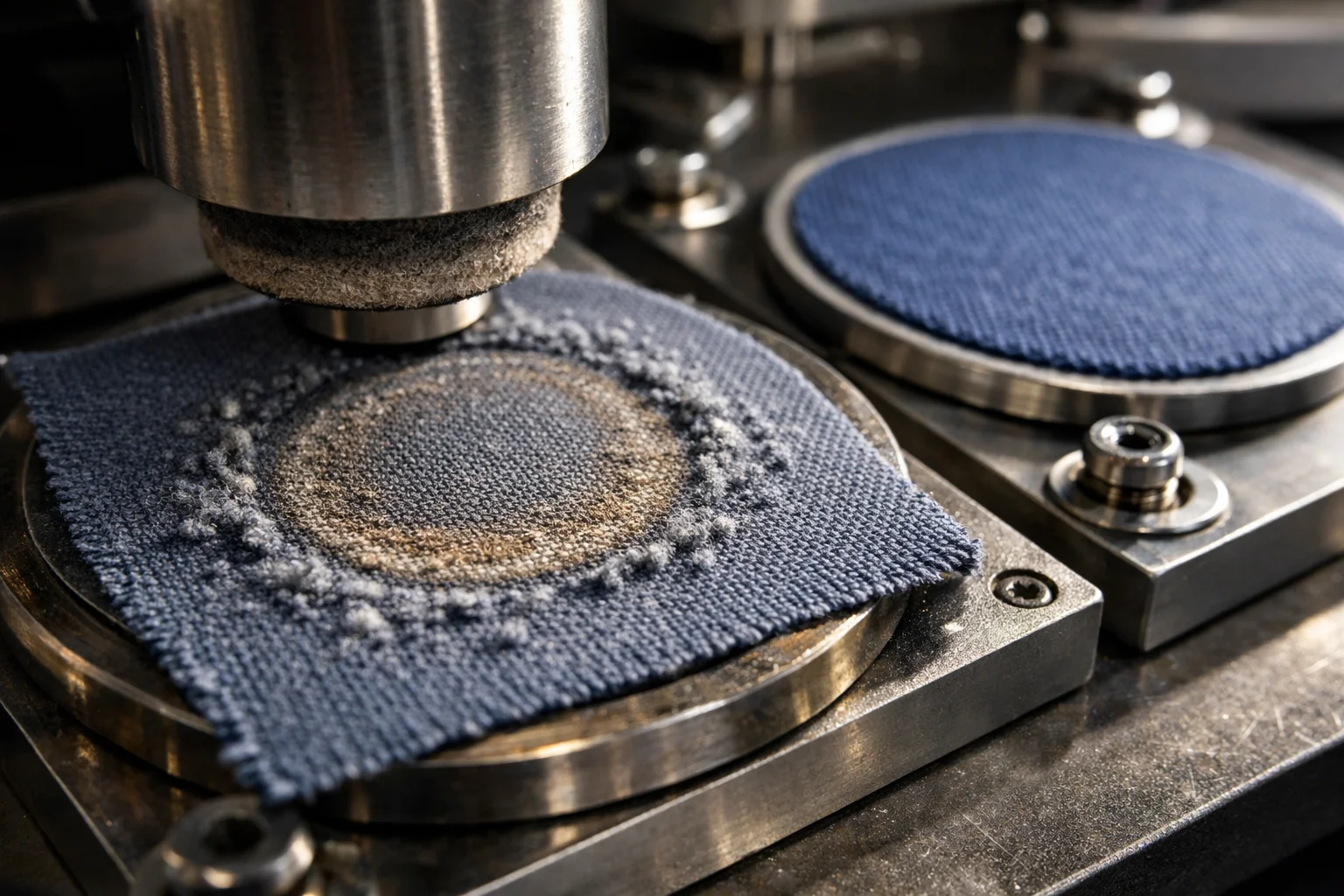
Fabric Types: The Durability Hierarchy (Pet & Kid Proofing)
Understanding the durability hierarchy from microfiber to silk. Why velvet is tough and cotton is fragile despite common assumptions.
Analyze Details →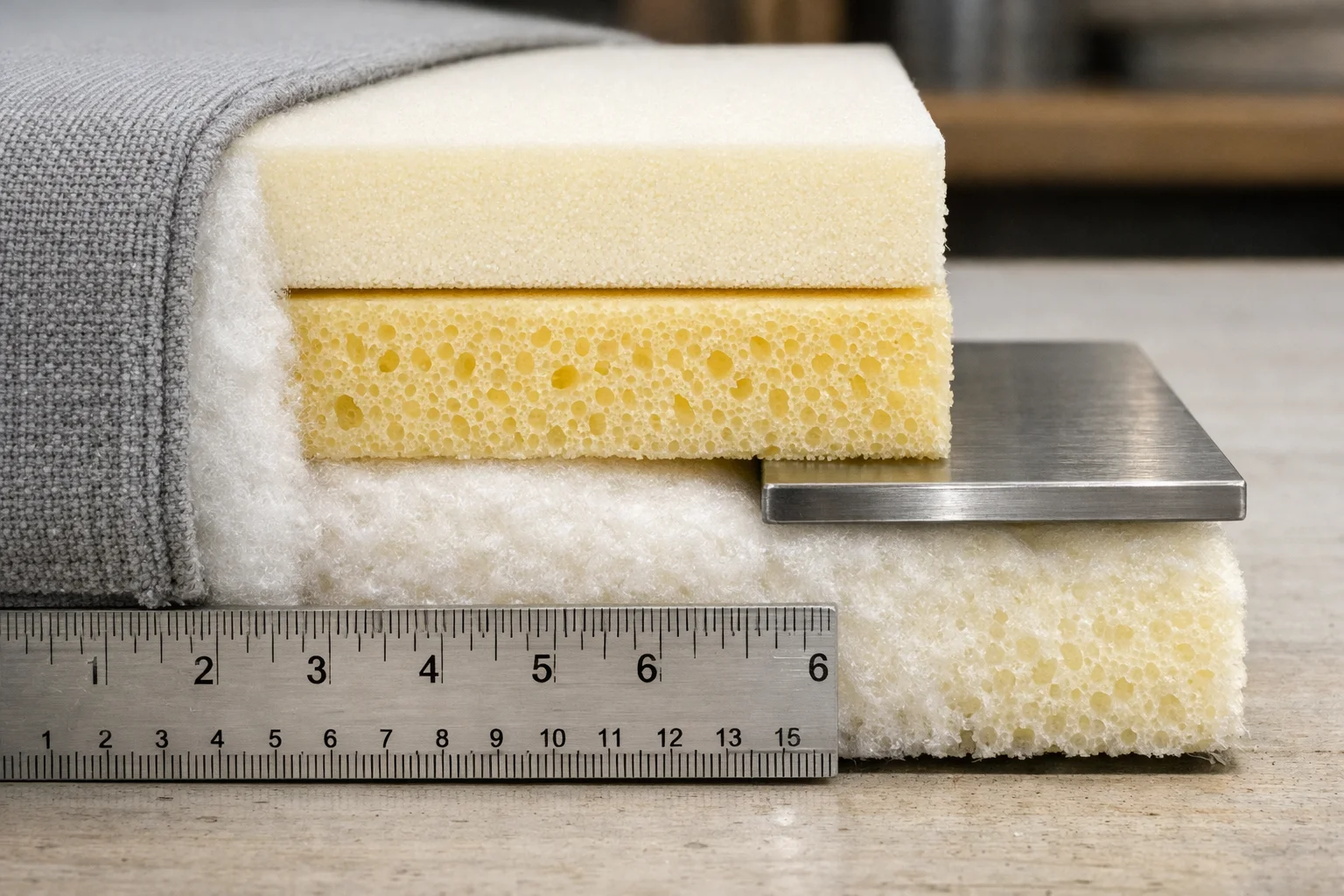
Foam Density vs. Firmness: The Difference Between Weight and Feel
Understanding the difference between density (weight) and ILD (firmness). Why the mass of foam predicts lifespan and why you cannot feel quality by hand.
Analyze Details →