Fabric Types: The Durability Hierarchy (Pet & Kid Proofing)
Introduction
I used to think fabric choice was about color and whether I could toss it in the washer. After fighting a soaked, shrunken slipcover that refused to go back on, I learned the hard way that washable does not mean livable. Laundry instructions are not a plan for how a sofa survives years of sitting, sliding, and friction.
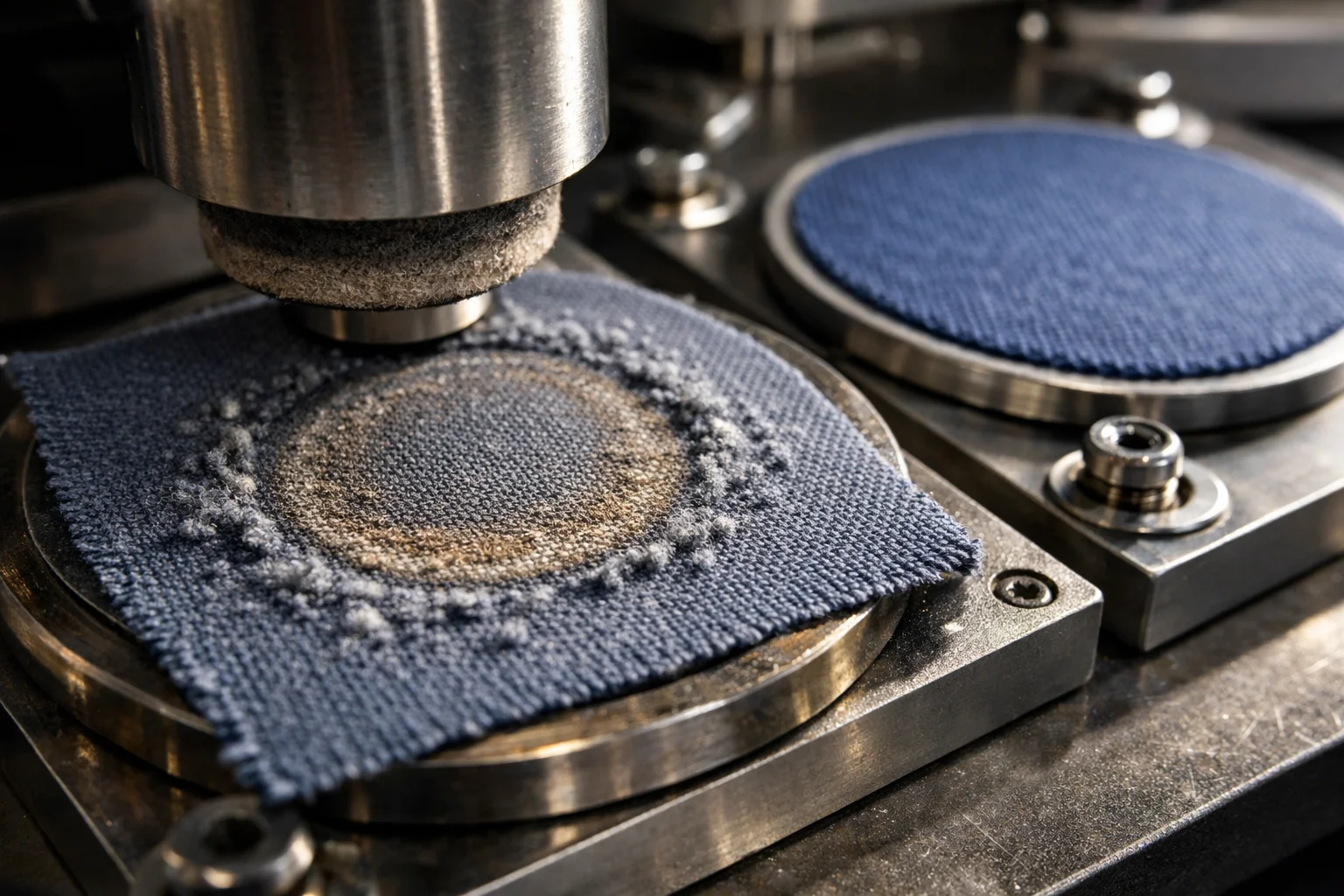
What finally clicked for me is that a sofa fails in predictable ways. Fabric stretches, pills, thins, or tears where your body rubs it every day. If you do not think about those forces when you buy, no amount of cleaning advice will save you later.
When you are in a showroom, I want you to stop imagining spills and start imagining motion. Picture how you sit, how you get up, where your legs drag, and where hands push off. Fabric choice is about how it handles constant stress, not how it looks on day one.
I am not a designer or a salesperson. I am just someone who got tired of replacing furniture that looked fine but aged badly. In this guide, I will walk you through how I now judge upholstery with my hands and eyes so you can avoid the same expensive lessons.
The "Natural" Trap
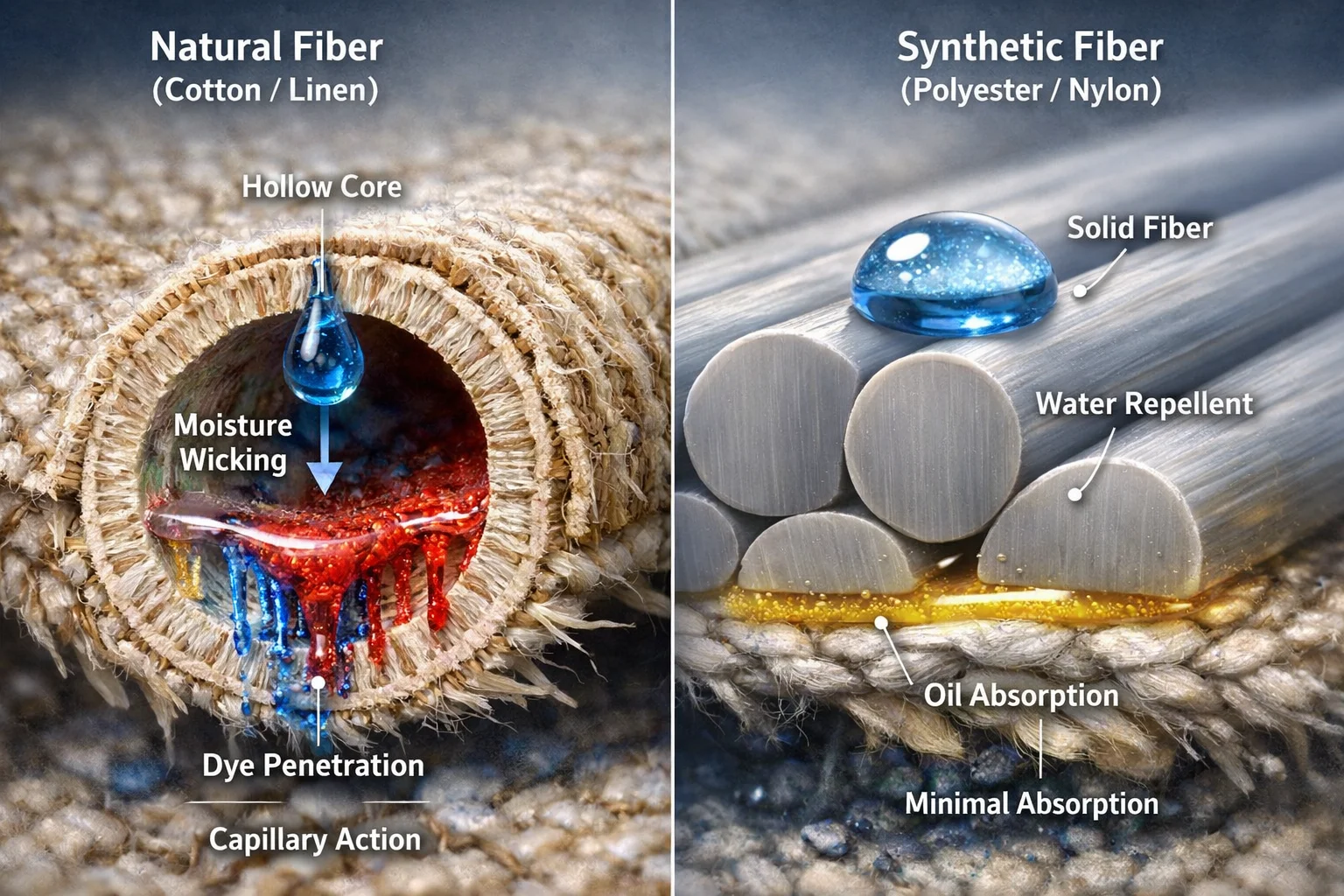
When a tag says cotton, linen, or wool, it sounds wholesome and safe. I used to think that meant durable. What it actually means is that the fiber itself is a hollow tube that loves to drink whatever you spill on it.That structure is the fatal flaw. Liquids soak straight in and carry dye and oils deep into the fiber, which is why red wine stops being a stain and starts being a memory. Even clear water can leave rings because it dries unevenly.
There is a second problem that shows up slowly. These fibers break down with sunlight and friction, so the exact spots where you sit and rub every day get fuzzy, thin, and tired long before the rest of the sofa does.
The honest verdict is simple. If you live with dogs, kids, or sunlight, a pale natural fabric is not brave or classic. It is a gamble that usually loses.
When I am standing in a showroom and see a sofa wrapped in white or beige linen, I stop and touch it with a critical hand. I rub the arm with my palm and imagine doing that twice a day for years. If the surface already feels dry or papery, I walk away.
If you love the look of natural fabrics, the only version I trust is when they are blended with something synthetic. You can ask the salesperson to show you the fiber content tag and look for a noticeable percentage of polyester or nylon mixed in. That blend gives the fabric some resistance to friction and slows down how fast it absorbs spills.
I also pay attention to color in a different way now. Mid tones and heathered weaves hide wear far better than flat, solid light colors. In the showroom, I tilt the cushion toward the light and look for depth in the weave rather than a smooth, uniform surface.
If you are set on linen or cotton, my advice is to choose it knowingly. Put it in a low use room, away from windows, and accept that it will age like clothing, not like leather. If this sofa is for daily life, not a photo, I would keep walking and keep your money in your pocket.
The Synthetic Advantage
After getting burned by natural fabrics, I stopped treating the word synthetic like an insult. Polyester, nylon, and olefin are basically plastic threads, and that turns out to be a huge advantage for a sofa that gets real use.
The simplest way I think about it is carrots versus radishes. With a printed cotton or linen fabric, the color lives mostly on the surface, like the skin of a radish. Sunlight, rubbing, and cleaning slowly scrape that color away, which is why seat cushions fade and look washed out before anything else fails.
With solution dyed synthetics, the color is mixed into the liquid plastic before the fiber even exists, more like a carrot where the color runs all the way through. When you rub it, sit on it, or clean it, you are not wearing off a surface layer because there is no surface color to lose.
This also changes how stains behave. On synthetics, spills tend to sit on top instead of soaking in immediately. That gives you time to blot instead of panic, and it means oils from skin do not creep deep into the fiber and darken your favorite seat over time.
When I am in a showroom, I do a very specific test. I pinch the fabric between my fingers and twist it slightly, then let go. If it springs back and looks the same, that tells me the fibers have resilience. If it stays wrinkled or looks stressed, I know friction will win eventually.
I also ask a blunt cleaning question. I want to know what happens if someone spills coffee or drags a dirty sock across the cushion every night. With many solution dyed synthetics, even harsh cleaners are less scary because the color is not fragile. Some of these fabrics can even tolerate diluted bleach, which would absolutely destroy most natural fibers.
This does not mean every synthetic feels cheap. The good ones are woven to mimic linen, wool, or cotton, but they behave very differently over time. If you close your eyes and run your hand across it, you should feel a smoothness that does not catch or fuzz easily.
If you are comparing two sofas that look similar, I almost always choose the one with a synthetic or heavily synthetic blend for daily seating. It is not about being fancy or eco or trendy. It is about buying a surface that forgives real life instead of punishing it.
I still look closely at the tag. Words like polyester, nylon, acrylic, or olefin tell me I am dealing with a fiber that resists absorption and fading. If the salesperson hesitates or cannot explain the fiber content clearly, I treat that as a warning sign and slow the conversation down.
For a sofa that will be sat on every day, I have learned to stop chasing romance and start choosing durability. Synthetics are not perfect, but they age quietly, and that is exactly what I want from something I plan to live on for years.
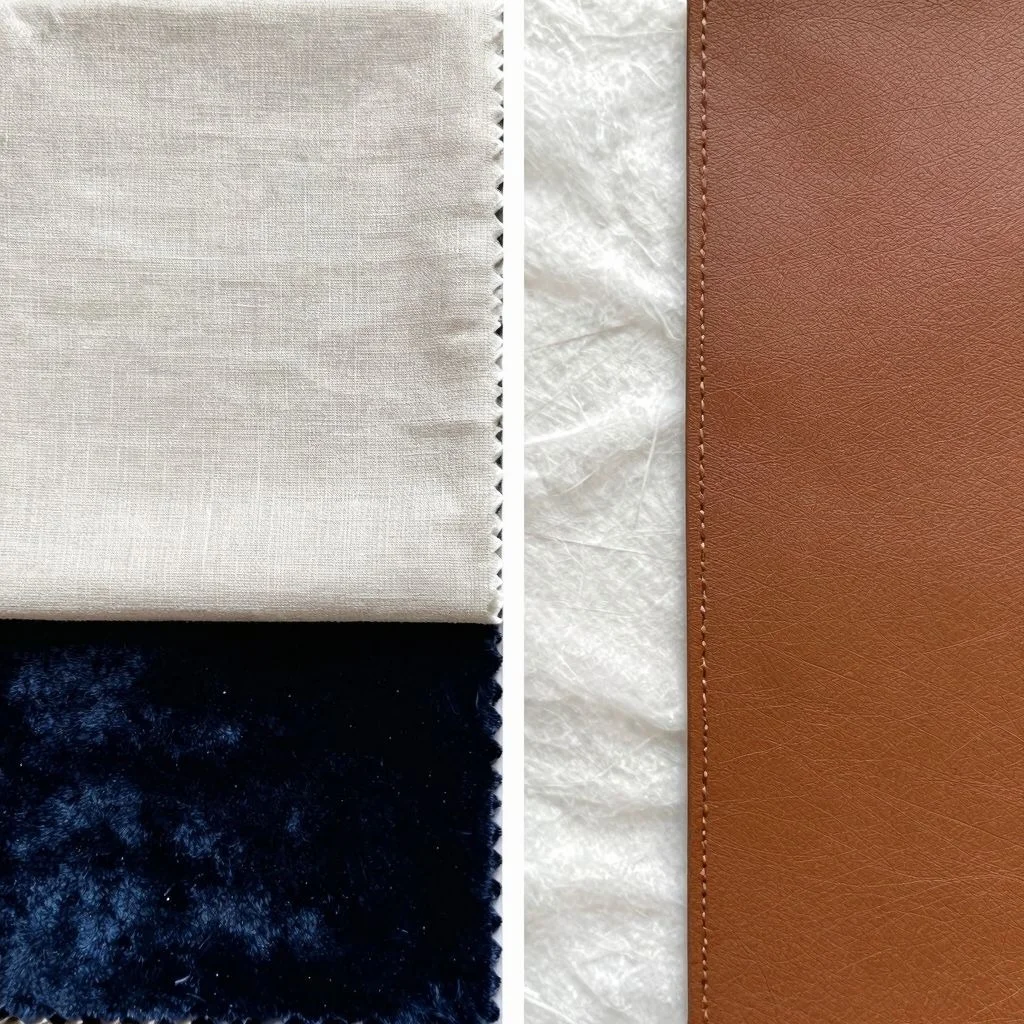
When I first saw a chart like this, I thought it was marketing fluff. After living with a few different sofas, I now see it as a warning label written in pictures.
The point of the pyramid is not fashion. It is friction. Fabrics at the top survive constant rubbing, sliding, and pressure without showing it quickly. Fabrics at the bottom look beautiful at first and then quietly lose the fight where you sit every day.
Microfiber sits high because it is made of extremely fine synthetic threads packed tightly together. When you run your hand across it in a showroom, you should feel a smooth, almost suede like surface that does not grab your skin. That density is what keeps it from pilling and thinning at the edges of seat cushions.
Velvet surprises people, including me at first. The good velvets are usually synthetic and woven so the pile can bend and recover instead of breaking off. In a store, I brush it one way and then the other and look to see if the color evens out again. If it does, that fabric can take daily use better than most flat weaves.
As you move down the pyramid, the fabrics start to rely more on looks than structure. Looser weaves and visible threads mean there are more places for friction to grab and pull. When I see a chunky weave, I imagine jeans seams and dog nails catching it over and over.
In the showroom, I now match this mental chart to how the sofa will actually be used. If it is a main family couch, I keep my eyes near the top of the pyramid even if my taste pulls me lower. If it is a formal piece that rarely gets touched, I can afford to be more forgiving.
I also use this as a way to ask better questions. Instead of asking if a fabric is durable, which gets vague answers, I ask where it sits compared to microfiber or velvet in terms of wear. The reaction I get tells me a lot about whether the salesperson actually understands the product.
This diagram does not mean you must buy one specific fabric. It means you should be honest about gravity and time. Every sofa slides down this pyramid eventually. The only real choice you have is how fast it gets there and how ugly the ride looks along the way.
The Durability Hierarchy
When I break durability down for myself, I think in tiers because it keeps me honest. Not every fabric is trying to survive the same life, and problems start when a delicate fabric is asked to live like a workhorse.
At the top of the hierarchy is microfiber, sometimes sold as microsuede. I call this the tank because it is built around density, not beauty. When you press your fingernail into it in a showroom, you should not be able to separate the threads or see a gap open up.
That tight structure is the whole point. There is nowhere for claws, seams, or rough clothing to dig in, so damage tends to stay superficial instead of turning into tears. If you spill something, it usually sits on the surface long enough for you to blot it without leaving a permanent mark.
The downside shows up in daily comfort, not longevity. Microfiber can feel warm because it does not breathe much, and in dry climates it can build static. I also think it has a casual look that some people read as cheap, even when it is doing exactly what it was designed to do.
If you are in a showroom and want to spot good microfiber, run your hand quickly back and forth across the seat cushion. If it feels smooth and consistent instead of grabby or squeaky, that fabric is likely woven tightly enough to last. If it already feels fuzzy or uneven, keep moving.
Just below that sits performance velvet, which still surprises people. I used to assume velvet was fragile until I lived with a good synthetic one and watched it outlast flat weaves that cost more. The key is that these velvets are usually polyester, not cotton or silk.
What makes them durable is how the pile behaves. When you brush it one direction, it darkens, and when you brush it back, the color evens out again. That tells me the fibers are bending and recovering instead of snapping off under friction.
In a store, I press hard with my thumb and then smooth the spot out. If the mark disappears easily, that velvet can handle bodies shifting and sliding every day. Liquids also tend to bead up at first, which buys you time and saves your nerves.
The tradeoff is maintenance, not damage. Velvet loves pet hair and lint, and it will show it. If you hate lint rolling or vacuuming cushions, this fabric will annoy you even though it is holding up structurally.
Then there is what I think of as the danger zone, which includes tweeds, bouclé, and any fabric with visible loops or chunky texture. These are often sold as durable because they are thick, but thickness is not the same thing as resistance to friction.
Those loops are invitations. Cat claws hook them instantly, but even without pets, rough denim seams and fingernails can start pulling threads loose. Once a loop is pulled, it rarely goes back, and one snag tends to invite the next.
In a showroom, I do a simple test on these fabrics. I drag my fingernail lightly across the surface and watch closely. If threads lift or catch at all, I know that same motion will happen hundreds of times at home, just slower and more expensively.
These fabrics can work if the sofa is more visual than functional. In a low use room where people perch instead of sprawl, the texture may stay intact for years. On a main family couch, I have learned to treat them as a short term relationship.
The hierarchy is not about shaming taste. It is about matching the fabric to the life you will actually live. I ask myself how often this sofa will be used, who will use it, and how forgiving I need it to be when life gets messy.
When I stay near the top of the hierarchy for everyday seating, the sofa fades into the background of my life, which is exactly what I want. When I ignore it, the fabric becomes a constant reminder that I chose looks over longevity, and I end up paying for it twice.
The Performance Brand Name Game
This is the part of the showroom conversation where I slow everything down. When I hear names like Crypton or Sunbrella, I know I am being sold a category, not a guarantee.
I used to think these names meant the fabric was bulletproof. What they really mean is that the fabric is engineered to solve one specific problem, usually water based spills. That is useful, but it is not the whole story of how a sofa lives.
Crypton is the one I hear pitched most aggressively. It is a fabric with a chemical barrier bonded into the fibers, which makes liquids bead up instead of soaking in. When you pour water on it in a demo, it looks impressive, and it is impressive for that exact moment.
What I pay attention to instead is how it feels in my hands. Many Crypton fabrics feel stiff or boardy compared to regular upholstery. That stiffness comes from the protective treatment, and over time it can translate into a fabric that does not drape or recover as gracefully where you sit every day.
In a showroom, I always scrunch a Crypton cushion corner and then smooth it out. If it fights me or stays slightly creased, I imagine that stiffness turning into visible wear lines after a few years of real use. Some versions are softer than others, so I am not writing it off, but I am not hypnotized by the name either.
Sunbrella shows up more on sofas now, not just outdoor furniture. It is solution dyed acrylic, which means the color is extremely stable and sunlight barely touches it. If your sofa sits in a bright room, that part is genuinely valuable.
The tradeoff I notice with Sunbrella is texture. Many versions feel more like outdoor fabric than indoor upholstery, even when they are softened for interior use. I run my hand slowly across it and ask myself if I want to feel that every night on bare skin.
Revolution and other olefin based fabrics get pitched as eco friendly because they are often made from recycled plastic. From a wear standpoint, they resist stains well and are tough against water based spills. The thing I watch for is heat sensitivity and surface feel.
Olefin can feel slightly waxy, and it does not love friction plus heat. In daily life, that can show up as shiny spots where you sit most, or damage if someone tries to iron a slipcover or uses high heat to clean it. In a store, if the fabric already feels slick or plasticky, I assume that feeling will only get stronger with time.
Here is the part that salespeople rarely linger on. The biggest weakness of almost all performance fabrics is oil. Water beads up and wipes away, which is what you see in the demo. Oil behaves very differently.
Pizza grease, salad dressing, body oils, and lotion do not bead up the same way. They are attracted to synthetic fibers and can slowly bond with them. That is how you end up with a darker, grimy looking seat where someone always sits, even though nothing obvious was ever spilled.
In the showroom, I ask a very specific question that cuts through the script. I ask what happens to repeated skin oil over years, not a one time spill. The answer I get, or the hesitation, tells me more than the brand name ever will.
I also look at color choice differently with performance fabrics. Light colors still show oil buildup faster, even if they repel water. If you want pale cream because it looks clean, you need to accept that it will slowly darken where it is loved the most.
What I actually do when faced with a wall of performance labels is ignore the marketing cards and go back to my hands. I rub the fabric firmly on the arm and seat, twist it slightly, and look at how it recovers. Performance treatment does not cancel out poor weave or low density.
If a salesperson leans hard on the brand name, I redirect the conversation to fiber content and feel. I want to know if it is polyester, acrylic, olefin, or a blend, and how tightly it is woven. Those answers affect daily life far more than a trademark.
My bottom line is simple. Performance fabrics are tools, not magic spells. They are great if you understand what problem they solve and what problem they do not.
If you spill drinks often and live in a bright room, a good performance fabric can buy you peace of mind. If you are trying to avoid visible wear from bodies, friction, and oil over time, you still need to choose wisely within that category.
I treat performance names as a starting point, not a finish line. When the fabric feels right, recovers well, and matches how you actually live, then the label becomes a bonus instead of a distraction.
The "Pilling" Panic
This is the moment that scares people the most, and it almost always happens with a new sofa. A few weeks or months in, little fuzz balls start showing up on the seats and arms, and it feels like the fabric is already failing.
I used to think pilling meant cheap fabric or a manufacturing defect. What it actually means is that excess loose fibers are working their way to the surface, very much like a new sweater shedding when you first wear it. Friction pulls those loose ends out, and they tangle into pills instead of disappearing quietly.
The key thing I want you to hear is that early pilling is normal and expected on many fabrics, especially synthetics and blends. It is not a reason to return a sofa, and it does not mean the fabric will keep degrading forever.
What matters is what happens after you deal with it once. I buy a simple fabric shaver, the kind that costs about fifteen dollars and looks like a small electric razor. I gently shave the pills off the affected areas, and in most cases, that solves the problem for good.
In my experience, once the excess fiber is gone, the fabric settles down and stops producing new pills at the same rate. If pilling keeps coming back aggressively after the first year, that is when I start to question the weave quality. Early pilling alone does not tell you much.
In a showroom, you cannot see pilling yet, but you can predict it. I lightly rub the fabric between my fingers or across my palm and see if it immediately feels fuzzy. A fabric that sheds aggressively under light friction is more likely to pill heavily at first, which is annoying but usually temporary.
I also look at how the fabric is woven. Tighter weaves tend to pill less dramatically and stop sooner. Looser weaves can pill more at the start, but that does not automatically make them bad if the underlying threads are strong.
The real mistake I see people make is panicking and returning a sofa that would have aged just fine. Pilling feels emotional because it shows up fast, but it is often a cosmetic phase, not a structural failure.
I think of fabric shaving the same way I think of breaking in shoes. It is a small bit of early maintenance that saves you from a much bigger mistake. Once you know this, pilling stops being a red flag and starts being a manageable nuisance.
If you are buying a sofa for daily life, I would rather deal with a little early pilling than buy a fabric that never pills but thins, fades, or tears where you sit. Pills can be removed. Worn through fabric cannot.
When I remind myself of that, the panic disappears, and I can judge the sofa on what really matters, how it holds up after years, not weeks.
The Cleaning Codes (Read the Label)
This is the small tag that most people ignore, and it is one of the few pieces of information on a sofa that actually predicts daily frustration. I now treat the cleaning code as a permission slip for real life, not a suggestion.
When I see a Code W label, I relax a little. It means the fabric can handle water based cleaners and usually steam, which is how most normal people clean a couch after a spill. In a showroom, this tells me I can blot with water, use mild soap, and not panic every time someone drops a drink.
For a main family sofa, this is the safest territory. It does not mean the fabric is indestructible, but it does mean normal cleaning will not make things worse. If you have kids, pets, or friends who bring red wine, this code buys you margin for error.
Code S is where I start asking myself hard questions. This label means solvent only, which is dry cleaning chemicals, not water. Even clear water can leave rings, cause shrinkage, or permanently mark the fabric.
I have owned a Code S sofa once, and I will not do it again for daily seating. Every spill becomes a crisis because the one thing you instinctively reach for, a damp cloth, is exactly what you are not supposed to use. If a salesperson calls this code low maintenance, I know they are not thinking about real homes.
Code WS sounds like the best of both worlds, and often it is. It means you can use water based cleaners or solvent based ones, which gives you flexibility. I still pay attention to how the fabric feels and recovers, but this code tells me the manufacturer is not terrified of moisture touching it.
In a showroom, a WS code makes me more confident choosing a lighter color or a sofa that will see heavy use. It does not cancel out oil buildup over time, but it does reduce the chance that cleaning itself ruins the fabric.
Then there is Code X, which I now read as a warning, not an option. Vacuum only means no water, no solvent, no spot cleaning of any kind. If you spill something, your only approved move is to watch it dry and hope for the best.
I call this a disaster waiting to happen because sofas exist to be sat on by humans with food, drinks, and bodies. A fabric that cannot tolerate any kind of cleaning is not built for living rooms, no matter how expensive it is. I do not care how beautiful it looks under showroom lights.
When I am shopping, I physically find the tag and read it myself. I do not rely on a verbal summary because words like easy care mean nothing without that code. If the tag is missing or the salesperson cannot show it to me, I slow down and assume the worst.
I also think about who will be doing the cleaning. If you know you are not going to call a professional for every small stain, you need a code that matches that reality. Most people clean with water and mild soap, whether the label likes it or not.
My personal rule is simple. For a daily use sofa, I look for W or WS and move on quickly from anything else. For a low use, decorative piece, I might tolerate S if I truly accept the risk.
This one inch tag will not tell you everything about durability, but it will tell you how much stress cleaning will add to your life. After years of owning the wrong sofas, I have learned that peace of mind is a feature worth paying attention to.
Technical Summary: The Selection Algorithm
When I step back and try to simplify everything I have learned, I use a mental sorting rule instead of memorizing specs. I ask one honest question about how the sofa will be used, then I narrow the fabric choice aggressively.
If you live with cats, I steer you toward performance velvet or any dense fabric with no visible loops. The absence of loops matters more than softness because claws need something to hook into, and a smooth pile gives them nothing to grab. I have watched looped fabrics unravel quietly while the velvet next to it stayed intact.
If you have kids, especially younger ones, I look for solution dyed acrylic or a similar synthetic that tolerates aggressive cleaning. This is the category where being bleach tolerant actually matters, not because you want to pour bleach on your sofa, but because it tells you the color is deeply stable and hard to ruin with normal panic cleaning.
If the sofa will live in a sunroom or near big windows, I default to Sunbrella or another solution dyed acrylic built for UV exposure. Sun damage is invisible at first and irreversible later, so this is one case where I let the environment make the decision for me. Even a perfect indoor fabric will lose this fight eventually.
If the sofa is truly formal and lightly used, I loosen my rules. This is where linen can make sense if you accept what comes with it. Wrinkles, softening, and visible wear are part of the deal, and I only say yes if you genuinely like that aging instead of hoping it will not happen.
No matter which category you land in, there is one test I never skip because no tag can replace it. I rub the fabric on my cheek while standing in the showroom. If it scratches my face, I know it will scratch the backs of my legs, my arms, and my neck during long sits.
This test sounds silly, but it has saved me from multiple expensive mistakes. Texture cannot be audited on a spec sheet, and discomfort is something you feel every single day. If a fabric fails the cheek test, I do not care how durable or stain resistant it claims to be.
I think of this whole process as eliminating bad matches rather than hunting for a perfect fabric. When the fabric suits your life, your light, and your tolerance for maintenance, the sofa stops demanding attention. That, to me, is the real sign you chose well.
Explore Technical Reference
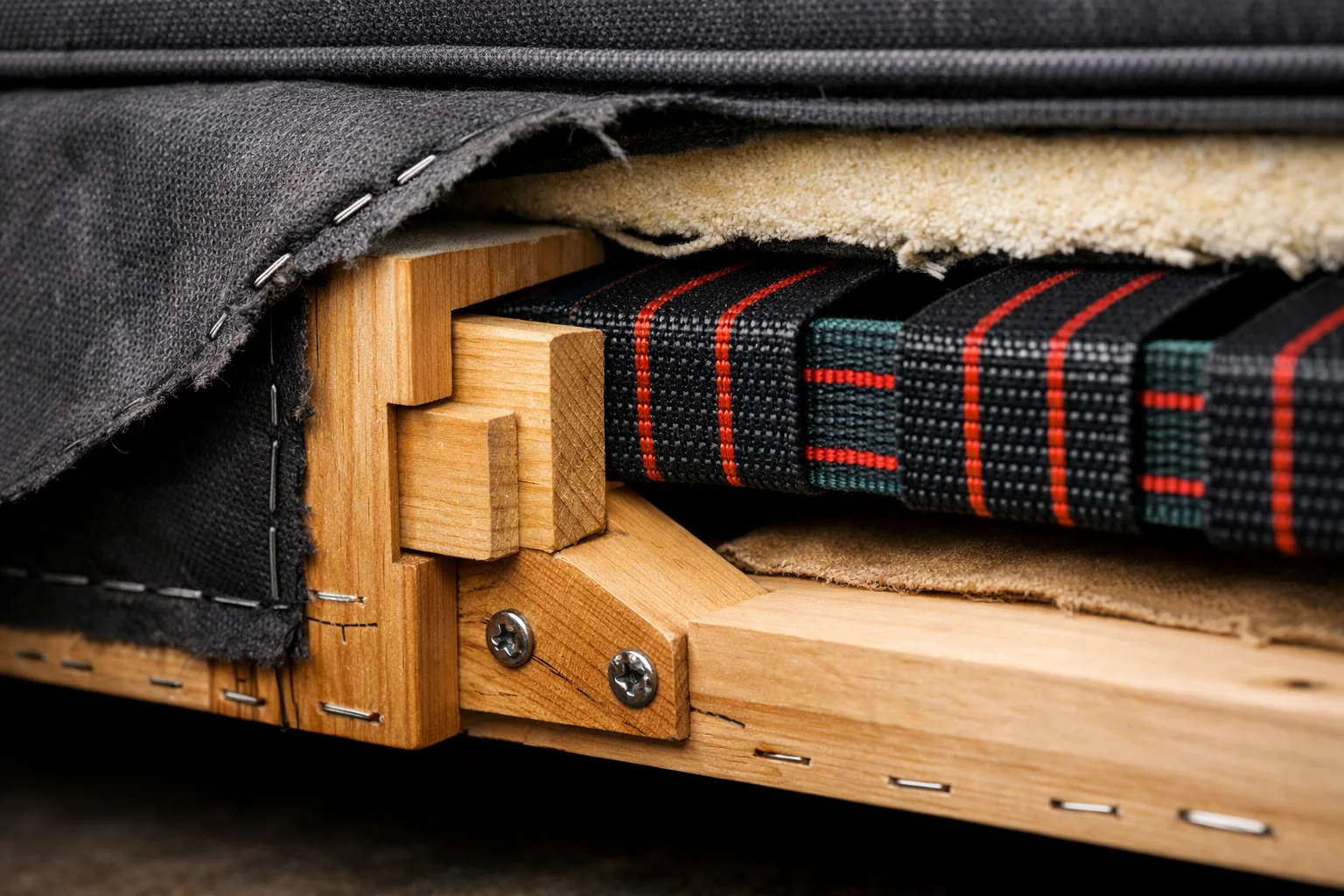
Seat Suspension: Webbing vs. Springs vs. Hand-Tied
Comparing sinuous springs, elastic webbing, and coil spring systems. Understanding why the foundation under your cushions determines sitting comfort more than the cushions themselves.
Analyze Details →
Frame Failure: Is It Fixable?
Understanding when a frame is dying and when it is already dead. The stages of decay from wobble to snap and why repair economics rarely justify salvage.
Analyze Details →