Foam Breakdown: The Physics of "Sagging"
Introduction
Once I noticed that feeling, I started paying attention to every couch I sat on, at friends’ houses, in showrooms, even in waiting rooms. I realized most sofas feel fine for the first few minutes, and many feel fine for the first year. The failure shows up slowly, when the cushion stops pushing back and your body starts doing the work instead.
What bothered me most was how normal this is treated. Salespeople talk about fabric, color, and style, but they rarely talk about what is actually holding you up. I learned the hard way that the hidden parts matter more than the visible ones, and they are where corners are quietly cut.
I am not writing this as an expert or an insider. I am writing as someone who paid real money for a sofa that looked solid and felt comfortable, then sagged long before it should have. I want you to walk into a showroom with better instincts than I had, and with a few simple ways to tell whether a sofa is built to last or just built to sell.
This guide is about noticing warning signs while you can still walk away. It is about using your body, your hands, and a few direct questions to figure out whether a sofa will support you for years or slowly collapse underneath you. If you know what to pay attention to, you can avoid the slow boil that got me.
The “False Loft” Trap
The "False Loft" Trap
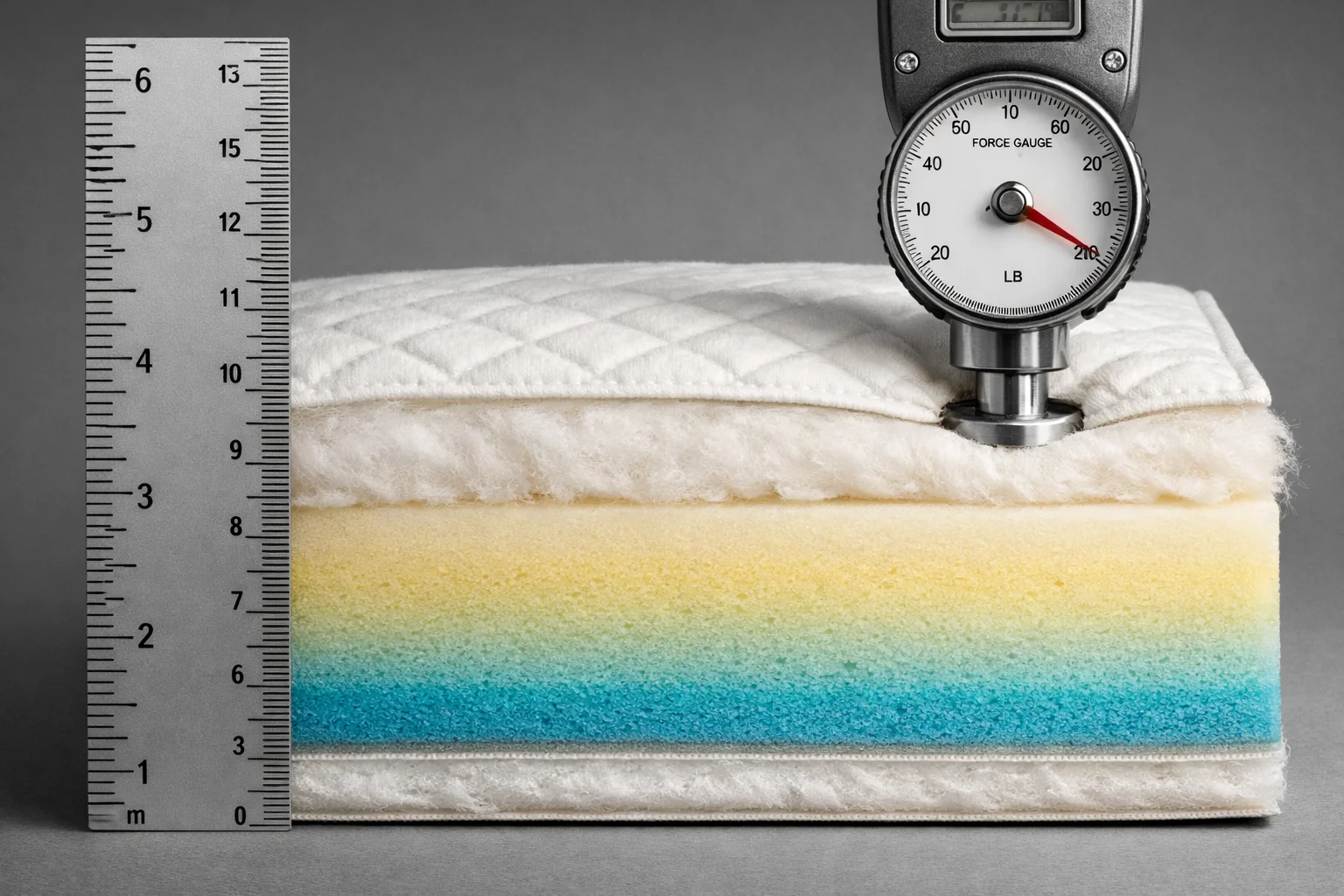
A failed cushion often still looks full, like a soufflé. This is "False Loft." The internal skeleton is shattered, but the dead plastic still takes up space. As soon as you sit, it collapses to zero because the resistance is gone.This is the trick that fooled me the longest because it looks fine from across the room. The cushions are tall, rounded, and inviting, and your brain reads that as support. What you cannot see is that the foam inside has already given up, even if the cover is still holding a nice shape.
When you sit on a cushion with false loft, the drop is immediate and final. There is no gradual compression and no sense of being held up. You sink straight through until you hit the base, and then you stay there because nothing is pushing back.
In a showroom, I now test for this on purpose. I sit down normally and pay attention to the first two seconds, not the first impression. If the cushion collapses quickly and then stops abruptly, that is a red flag even if it feels soft and cozy at first.
I also stand up and look at the cushion right away. A healthy cushion should slowly recover and regain some height. If it pops back instantly but felt dead when I was sitting, that tells me the loft is visual, not structural.
Your hands can tell you even more. I press straight down with my palm near the front edge where people sit the most. If I can bottom out with little effort, that cushion is already on borrowed time.
Salespeople may describe this kind of cushion as plush or relaxed. I have learned to translate that as low resistance. Plush is fine if it still pushes back, but relaxed often means the foam is doing very little work.
If you notice false loft in the showroom, it will not improve at home. It will only get worse, because the internal structure is already compromised. I walk away at that point, no matter how good the sofa looks or how good the sale sounds.
Mechanism 1: Microscopic Fatigue (Hysteresis)
This is the quiet way foam dies, and it is the most common. Every time you sit, the foam bends on a microscopic level, and every time you stand up, it tries to return to shape. Over thousands of sits, those tiny plastic connections weaken, then snap, and the cushion loses its ability to rebound.
What matters to you is not the science term but the feeling. A fatigued cushion stops giving energy back. Instead of pushing you up, it just absorbs you and stays there, which is why old foam feels dull and heavy even if it still looks thick.
In a showroom, I look for early signs of this by doing the same motion twice in a row. I sit down, stand up, then sit again in the exact same spot. If the second sit drops noticeably farther or feels flatter, that foam is already tiring out.
I also pay attention to how the cushion responds as I shift my weight. Healthy foam resists a little when you lean, then gently supports you. Fatigued foam feels like it gives up all at once, especially under your hips, and then offers nothing as you move.
Your hands are useful here too. I press down firmly and then release, and I watch how the foam comes back. If it hesitates, creeps upward slowly, or never quite reaches the original height, that tells me the internal structure is struggling.
Sales floors are deceptive because the cushions have been rested, fluffed, and sometimes rotated. I try to imagine what happens after an hour of sitting at home, not ten seconds in a store. Foam that relies on visual loft instead of real rebound will feel worse the longer you sit, not better.
If a salesperson says the foam will soften over time, I am careful. There is a difference between breaking in and breaking down. When foam loses resistance early, it is not maturing, it is wearing out.
Microscopic fatigue cannot be reversed. Once those internal connections are gone, no amount of fluffing will bring the support back. That is why I treat early signs of weak rebound as a deal breaker, even if everything else about the sofa seems right.
When you understand this mechanism, you stop chasing softness and start looking for resilience. I have learned that a cushion that feels slightly firmer in the showroom but pushes back consistently is far more comfortable in the long run than one that feels cloudlike for the first minute and disappears under you after that.
Mechanism 2: Oxidation (Chemical Rust)
This one surprised me because it has nothing to do with how often you sit. Foam can die just from being exposed to air and light, even if it is barely used.
When foam oxidizes, it changes color and becomes brittle. If you ever unzip an old cushion and see foam that is orange or yellow instead of creamy white, that is not dirt. That is the material breaking down.
The scary part is that oxidation can happen while the cushion still looks full and tidy. The foam keeps its shape, but the internal walls are turning to dust, which means support disappears without warning.
At home, people often notice this when they smack a cushion and see a faint yellow cloud. That dust is the foam itself. Once that starts, the cushion is already beyond saving.
In a showroom, you usually cannot unzip cushions, so I look for indirect clues. I pay attention to the smell when I press my face close to the seat. Oxidized foam often has a dry, stale, almost chemical odor that fresh foam does not.
I also ask how long the floor model has been out and whether it sits near windows or strong lighting. Constant light speeds up oxidation, and a cushion that has been baking on display for a year may already be compromised.
If the cushions are removable, I squeeze and twist one slightly with my hands. Oxidized foam tends to feel crumbly or crackly inside, not elastic. It may make a faint crunching sound instead of a smooth compression.
Fabric choice matters here in a way salespeople rarely mention. Tightly woven covers and inner liners slow down air exchange. Very breathable fabrics feel nice, but they let oxygen reach the foam more easily over time.
I also look for cushions that are fully encased in an inner sleeve, not just bare foam inside the cover. That extra layer is not about luxury, it is about slowing chemical decay.
When I talk to a salesperson, I ask directly what kind of foam is inside and whether it is treated for oxidation resistance. I do not need a chemistry lecture. I just want to hear whether this was even considered.
If the answer is vague or shifts back to fabric and style, I take that as information. Oxidation damage is rarely covered by meaningful warranties, so once it happens, you own the problem.
This mechanism is why a sofa that feels fine but lives in a sunny room can fail faster than one that is used more but protected. It is also why very cheap foam can look acceptable at first and then collapse suddenly into dust.
I cannot test oxidation perfectly in a store, but I can stack the odds in my favor. I avoid floor models that have clearly aged under bright lights, I favor cushions with inner barriers, and I am wary of foam that already feels dry or brittle to the touch.
If a cushion is already oxidizing before you buy it, no amount of gentle use will save it. Walking away from that is not being picky. It is avoiding a slow, invisible failure you will only notice when it is too late.
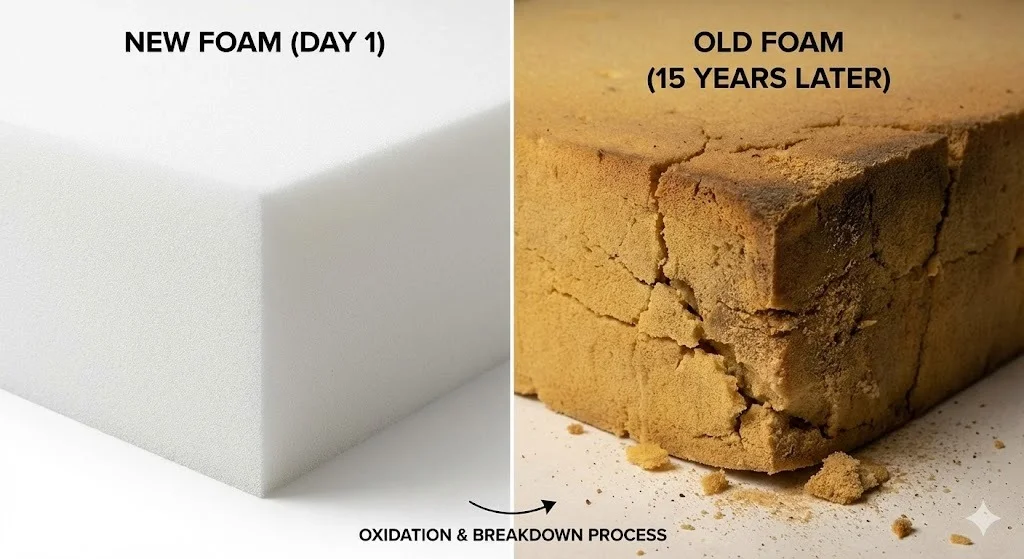
When I first saw a close up like this, it finally clicked why some cushions fail all at once instead of slowly sagging. The white foam on the left still has flexible walls that can bend and recover. The orange foam on the right looks solid, but those walls have turned brittle and weak.
You will never see this view in a showroom, but you can use it to guide how you judge risk. Foam does not need abuse to end up on the right side of this image. It just needs time, air, and light.
This is why I pay attention to where a sofa has been sitting before I buy it. If a floor model has lived under bright lights or next to a big sunny window, I assume the foam has aged faster than one stored in a dim warehouse.
I also think about where the sofa will live in my home. If you plan to put it right against a sunny window, especially one that gets strong afternoon light, you are asking the foam to age faster even if you barely use it.
In the showroom, I use my hands and nose again. Foam that is drifting toward that orange, oxidized state often feels dry instead of springy. It can also have a faint stale smell that reminds me of old packing material.
I have learned to ask one very specific question at this point. I ask whether the seat cushions have an inner liner or barrier around the foam. If they do, that extra layer helps slow down the kind of chemical breakdown you see here.
If the salesperson cannot tell me or seems confused by the question, I assume there is no barrier. That does not automatically mean the sofa is bad, but it does mean I need to be more careful about placement and expectations.
This image also reminds me not to be fooled by color and thickness alone. Foam can look full, clean, and untouched on the outside while already breaking down inside. By the time you feel the failure at home, it is usually too late to do anything about it.
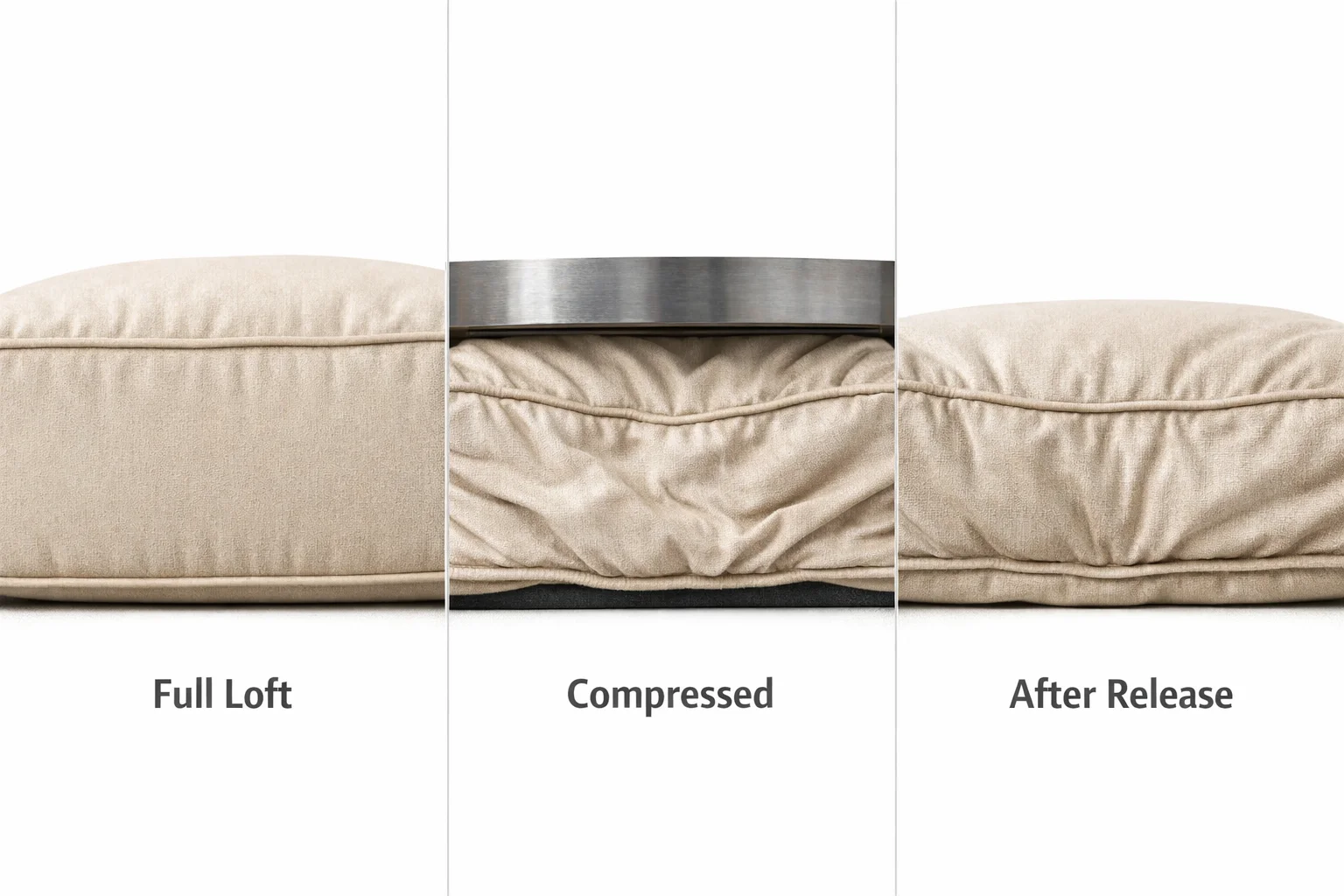
When I buy a sofa now, I mentally picture which side of this image I am more likely to end up with in five years. I choose cushions that feel resilient, are protected by inner layers, and have not been quietly cooking under showroom lights.
You cannot stop oxidation completely. What you can do is slow it down enough that the sofa wears out from honest use instead of silent chemical decay. That is the difference between a couch that ages gradually and one that collapses without warning.
Mechanism 3: Hydrolysis (The Sauna Effect)
This one took me a long time to understand because it feels unfair. You can ruin a cushion just by sitting on it, even if you are gentle and even if the foam itself is not cheap.
Hydrolysis means water is breaking the foam apart. Urethane foam is held together by chemical bonds that do not like moisture, and over time, water slowly cuts those bonds until the structure gives up.
The water does not have to come from spills or cleaning accidents. Your body produces moisture constantly, and when you sit, that moisture has nowhere to go unless the cushion can breathe.
The real problem shows up when fabric traps that moisture. Thick, tightly backed, or heavily treated fabrics can act like a vapor barrier, especially so called performance velvets and dense synthetics.
When you sit on a cushion like that, your body heat warms the foam and your moisture gets pushed inward. Instead of evaporating, it stays inside, and the cushion turns into a tiny steam room.
I think of it as a slow internal rot. The outside can look perfect while the inside is quietly breaking down every time you sit for more than a few minutes.
At home, this is why some cushions feel fine at first and then suddenly start losing support all at once. The foam did not just wear out, it chemically failed from the inside.
In a showroom, I cannot see hydrolysis directly, but I can look for risk factors. I pay close attention to the fabric on the seat cushions, not just how it feels on my skin but how dense and sealed it feels in my hands.
If I press my palm flat against the cushion and it feels almost airtight, that tells me moisture will have a hard time escaping. Fabrics that feel slightly open or breathable tend to release heat and humidity better.
I also notice how warm the cushion gets after I sit for a minute or two. If it heats up quickly and stays warm when I stand, that tells me heat and moisture are being trapped.
Removable cushions give me another clue. I unzip them if allowed and check whether the foam is wrapped in a breathable inner sleeve or a plastic like liner. A fabric sleeve that feels similar to a pillow protector is a good sign. A slick or rubbery barrier makes me nervous.
Salespeople often praise stain resistance here, and I listen carefully to how they describe it. When stain resistance comes from heavy coatings or laminated backings, it usually comes at the cost of breathability.
I now ask a very plain question. I ask whether the seat fabric is breathable or moisture permeable. I am not looking for a lab report. I just want to see if this was considered at all.
If the answer is vague or focuses only on spills and pets, I assume moisture management was not a priority. That does not automatically kill the deal, but it changes how cautious I am.
Your body type and habits matter here too. If you tend to run warm, if you lounge for long stretches, or if this is a sofa for movie nights and naps, trapped moisture becomes a much bigger issue.
Climate plays a role as well. In humid environments, the foam has less chance to dry out between uses. What survives in a dry showroom can struggle in a damp living room.
This mechanism is why I stopped chasing the toughest sounding performance fabrics for everyday seating. Durability is not just about resisting spills, it is about letting the cushion recover after real human use.
If a cushion smells faintly musty or sour when you press your face close, that is a warning sign to me. Fresh foam should smell neutral. Moisture damaged foam often carries a damp odor even when dry.
Hydrolysis damage cannot be reversed. Once those bonds are cut, the foam loses strength permanently, and it usually fails faster than fatigue would have caused on its own.
When I balance everything now, I look for a middle ground. I want a fabric that can handle life but still breathe, and I want cushion construction that does not trap heat and moisture against the foam.
This is one of those failures you only understand after living with it. The sofa looks fine, the fabric holds up, and yet the seat turns dead far too soon. Knowing this ahead of time lets you avoid the sauna effect instead of slowly cooking your cushions from the inside out.
The Steam Trick (And Why It Fails)
At some point, you will see someone suggest steaming old cushions to bring them back to life. I tried it myself after seeing enough convincing videos, and I understand why people want to believe it works.
The idea sounds reasonable. Heat makes the trapped gas inside the foam expand, so the cushion puffs up and looks taller. For a brief moment, it feels like you won.
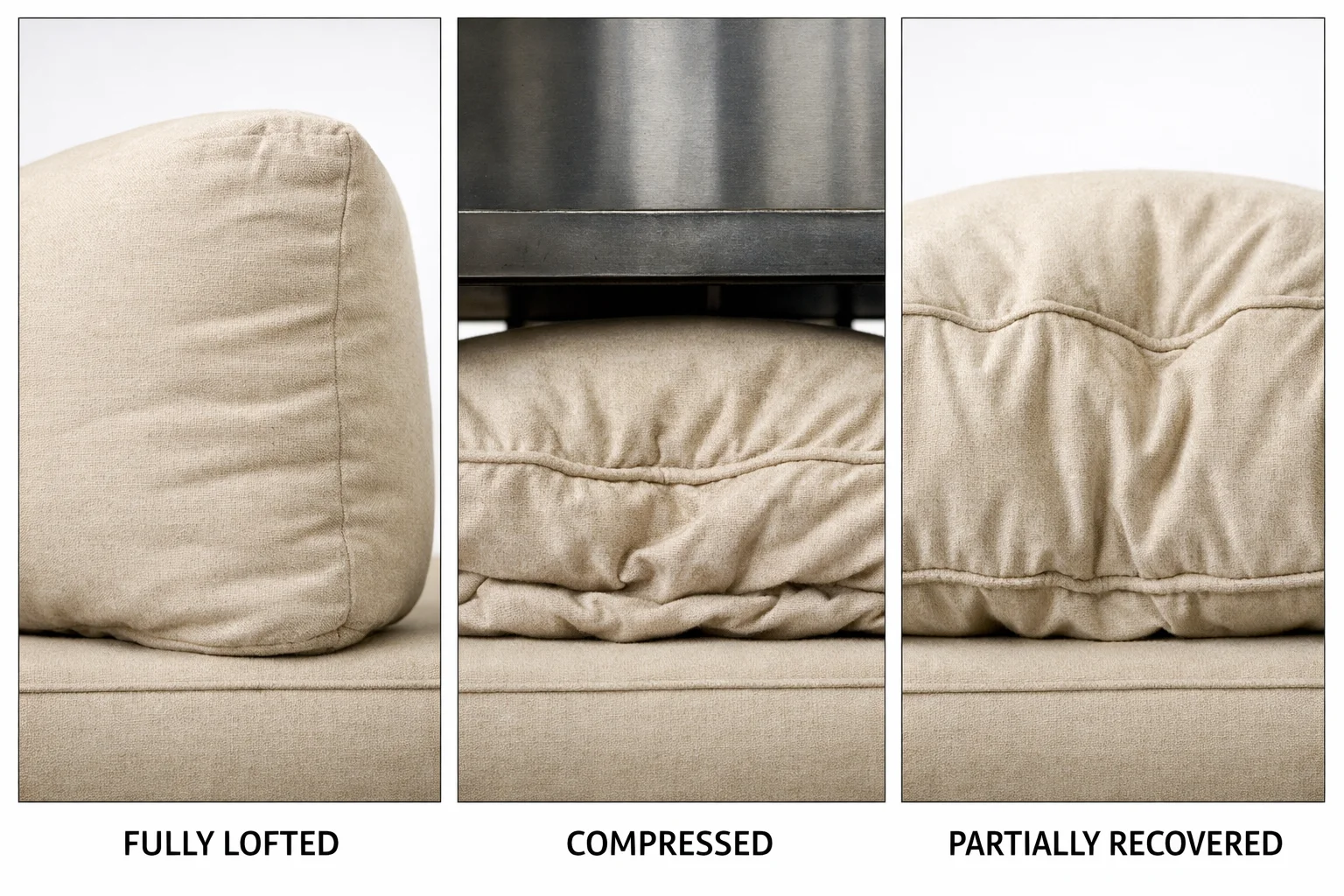
Here is what actually happens when you sit down afterward. The steam temporarily inflates whatever foam structure is still intact, but it does nothing for the internal struts that already snapped from fatigue, oxidation, or moisture damage.
When those internal connections are gone, there is no skeleton left to do the work. Steaming just stretches the skin over a broken frame, and your body finds that out very quickly.
The first sit after steaming often feels encouraging. The cushion looks fuller and offers a bit more resistance. Within a day or two, sometimes even within hours, it collapses back to where it was before.
What fooled me was the visual recovery. The cushion stood taller, rounded out, and looked healthier, so I assumed the support had returned. As soon as I sat for more than a few minutes, the dead feeling came right back.
Steaming is a cosmetic fix, not a structural one. It can make a worn cushion look presentable for guests, but it cannot restore the rebound that actually holds you up.
This matters when you are shopping because the steam trick is sometimes used before resale or display. A cushion can be freshly fluffed with heat and look great on the floor while still being fundamentally worn out.
In a showroom, I protect myself by focusing on behavior, not appearance. I sit for a full minute, shift my weight, then stand up and sit again in the same spot. Steamed foam often gives up quickly on that second sit.
I also press down firmly with my hand and release. If the foam jumps back instantly but feels hollow or bottomed out when I sit, that mismatch tells me the loft is artificial.
If a salesperson suggests that sagging can be fixed later with steaming, I take that as a warning. That means the cushion is expected to fail and the solution is temporary cosmetics, not real support.
Steaming does not reverse fatigue, it does not undo oxidation, and it does not repair hydrolysis damage. Once the internal structure is gone, the only true fix is replacing the foam.
Knowing this keeps me from chasing after false hope. If a cushion already feels dead in the showroom, I do not tell myself it can be revived later. I assume what I feel now is the best it will ever be.
I now treat the steam trick as a test in itself. If a cushion needs heat to look acceptable, it is already past the point where I want to bring it into my home.
A sofa should earn your trust without tricks. Real support comes from foam that pushes back on its own, not foam that needs to be inflated like a balloon every few weeks.
When you understand why steaming fails, it becomes easier to walk away. You stop trying to rescue cushions that are already broken and start choosing ones that do not need saving in the first place.
Technical Summary: The Core Transplant
Once foam fails, you cannot fix it. I had to accept that the cushion itself is the problem, not the cover, not the frame, and not how I was sitting.
The diagnosis is simple and physical. If you sit down and feel yourself drop until you are almost resting on the frame or deck below, the foam core is dead. At that point, no amount of fluffing, rotating, or steaming will bring back real support.
The solution that actually works surprised me because it is not buying a whole new sofa. If the frame and cover are still solid, I replace the foam itself with custom cut high resiliency foam, like this custom-cut 2.8lb High Resiliency Foam. That one change can make an old sofa feel better than it ever did new.
What matters most is how you size the replacement. I always order the new foam one inch larger than the cushion cover in every direction. That extra size forces the foam to compress slightly inside the cover, which creates a crowned surface and real resistance instead of a loose, pancake fit.
You can use this knowledge even when you are shopping for a new sofa. I now ask myself whether I could realistically replace the seat foam later if I had to. If the cushions are sewn shut or oddly shaped, I know I am locked into whatever foam comes with it, good or bad.
In a showroom, this also changes how I judge firmness. I am no longer afraid of a cushion that feels a little firm at first. I know that real support comes from foam that pushes back, and that kind of foam can always be softened slightly with use. Dead foam never gets better.
Understanding the core transplant gave me leverage as a buyer. I stopped feeling trapped by sagging cushions and started seeing foam as a replaceable component. That mindset alone has saved me from buying sofas that look good but are disposable underneath.
If a cushion already feels like it is letting you sink to the bottom, assume replacement is the only true fix. Then decide whether the rest of the sofa is worth saving, or whether it is smarter to walk away before you own the problem.
Explore Technical Reference
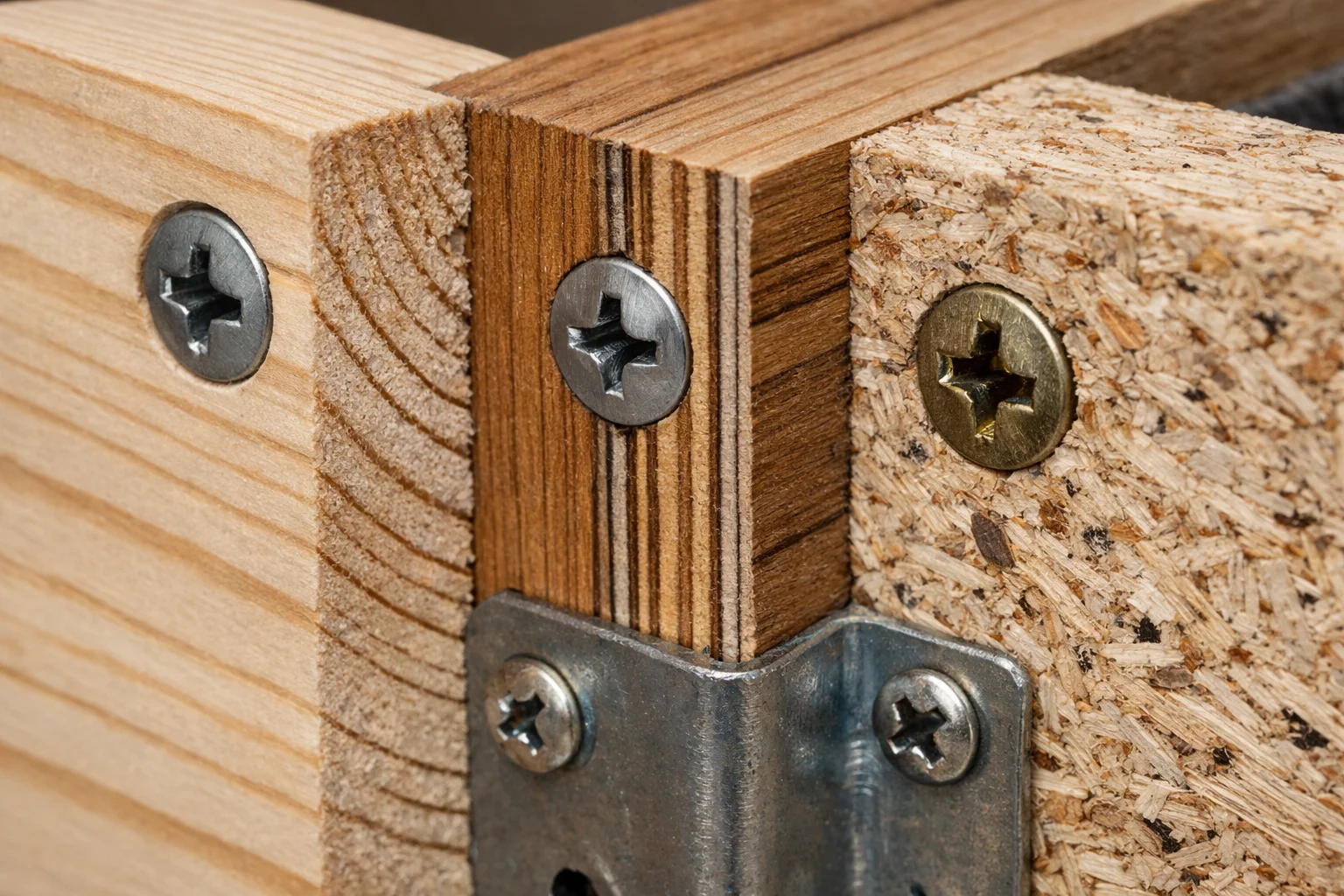
Frame Materials: The Hierarchy of Bones (Pine vs. Maple)
Understanding the hierarchy of frame materials. Why metal can be too rigid, softwood too weak, and properly specified hardwood the most reliable choice.
Analyze Details →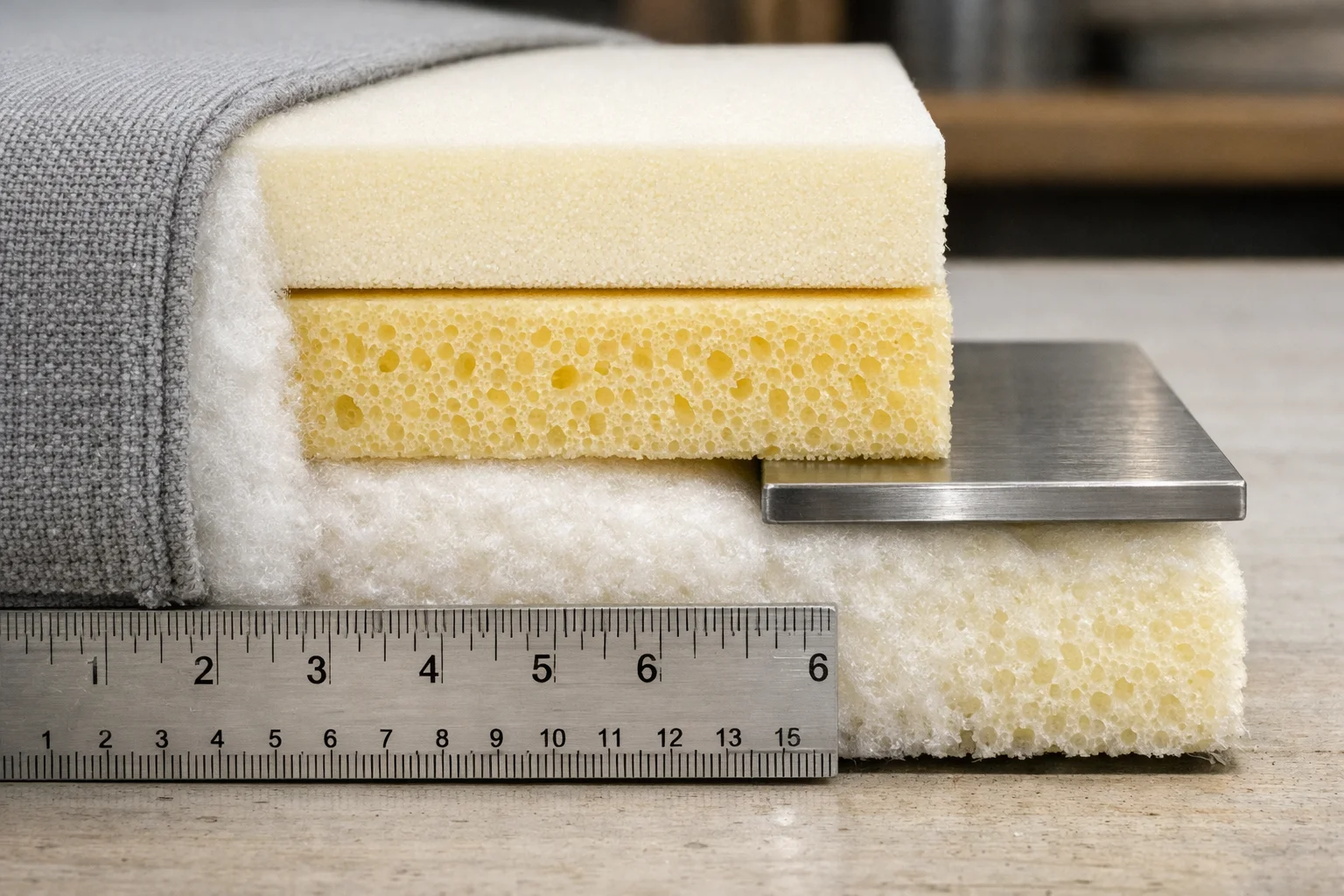
Foam Density vs. Firmness: The Difference Between Weight and Feel
Understanding the difference between density (weight) and ILD (firmness). Why the mass of foam predicts lifespan and why you cannot feel quality by hand.
Analyze Details →