Frame Materials: The Hierarchy of Bones (Pine vs. Maple)
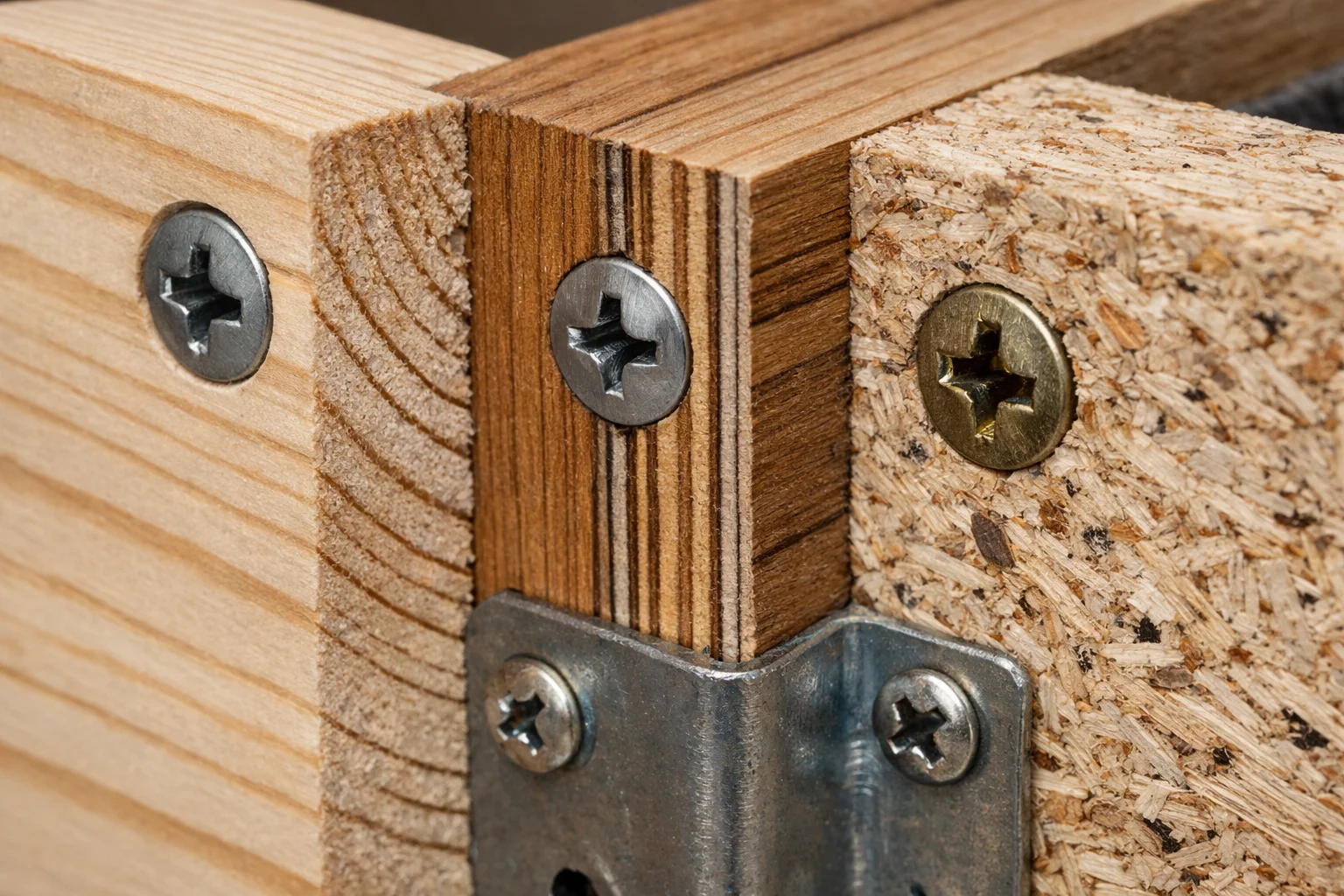
Introduction
I learned the hard way that most sofas do not fail all at once. They quietly rot from the inside while the fabric still looks fine. By the time you notice sagging or wobble, the damage is already done and it usually cannot be fixed without rebuilding the whole thing.
If you only remember one thing when shopping, remember this. The frame matters more than the cushions, the fabric, or the brand name. Everything else wears out slowly, but a bad frame ends the sofa’s life early and permanently.
When you are in a showroom, no one is going to volunteer what the frame is made of unless you ask. Salespeople will talk about comfort and style because those are easy to demonstrate. I now ignore the pillows and look for clues about what is hidden underneath.
I am not a designer or a repair tech. I am just someone who got tired of replacing sofas every few years and started paying attention. This guide is about what you can realistically check in a store, with your hands and your eyes, so you can avoid buying something that looks good but is already on a countdown timer.
The "Moving Truck" Test
I think about sofas in terms of how they handle abuse, not how they look on day one. A moving truck is the fastest way to reveal what a frame is really made of, because vibration, twisting, and being carried up stairs attack all the weak joints at once.Particle board frames almost never survive a single move. The glued joints crack from vibration, and once that glue fails there is nothing left to hold the frame square. If you have ever heard a sofa start creaking loudly after a move, that is usually what died.
Solid pine does a little better, but it is still on borrowed time. Pine is soft, so screws slowly wallow out their holes as the frame flexes. I have had pine framed sofas feel fine at first, then loosen noticeably after a couple of moves even when they were handled carefully.
Hardwood laminate frames are the only ones I have seen shrug this off. The layers resist splitting, the joints stay tight, and the frame keeps its shape even after years of moving and daily use. They cost more up front, but they are boring in the best way because nothing dramatic ever happens to them.
My personal rule is simple. If you rent and expect to move even every few years, you cannot afford cheap furniture. It will not survive the stairs, no matter how gentle you think the movers will be.
In a showroom, I ask one direct question. What is the frame made of. If the answer is vague or full of marketing words like engineered wood without specifics, I assume the worst and move on.
I also do a small physical test. I lift one corner of the sofa a few inches and watch the opposite corner. If the whole frame rises together and feels stiff, that is a good sign. If it twists or lags behind, I know it will hate being carried through a doorway.
This test is not about being rough. It is about imagining your future self, tired, relocating, and trusting this thing not to fall apart when life gets inconvenient. If it feels delicate in a calm showroom, it will not magically get stronger later.
Level 1: The “Composite” Trap (Avoid at all costs)
This is the category I avoid without exception, because every sofa I have owned with a composite frame failed the same way. It did not matter how careful I was or how little it was used. Once the internal structure started loosening, there was no path back.
When a salesperson says particle board, MDF, or OSB, what they mean is compressed wood crumbs held together with glue. It can look solid when it is new, especially when it is hidden under fabric and padding. The problem only shows up after months of sitting, standing up, and small movements that slowly work the joints loose.
The core issue is how screws behave in this material. Screws need real wood fibers to bite into, and composite boards do not have them. The first time a joint loosens and a screw shifts, the hole turns into dust and the screw never tightens again.
You will not see this damage from the outside at first. What you feel instead is a soft wobble that was not there before, or a creak that gets louder every week. By the time the arm or back starts visibly moving, the internal connection is already ruined.
In a showroom, I listen carefully to how the frame is described. If I hear engineered wood without a clear explanation, I assume composite. If I hear phrases like furniture board or eco board, I assume composite. Vague language almost always hides cheap structure.
I also use my hands. I press down hard on the arm near the front corner, then do the same on the opposite side. On composite frames, I often feel a slight crunch or delayed movement, like the sofa is thinking about responding instead of doing it instantly.
Another clue is weight. Composite framed sofas are often deceptively heavy because the material is dense, but that weight does not equal strength. When I lift one corner and feel the frame twist instead of rising as a unit, I walk away.
Salespeople sometimes say these frames are fine for light use or apartments. I learned that this is not true. Normal sitting is enough to destroy them, and once a single joint fails, the rest of the frame starts taking stress it was never designed to handle.
I treat composite frames as disposable furniture with a short clock. If you need something for a year and plan to throw it away, that may be acceptable. If you want a sofa that survives daily life, guests, and at least one move, this is the trap that costs you the most in the long run.
When I ask what the frame is made of and the answer includes any form of glued wood particles, I do not negotiate, hesitate, or hope for the best. I thank them and keep shopping.
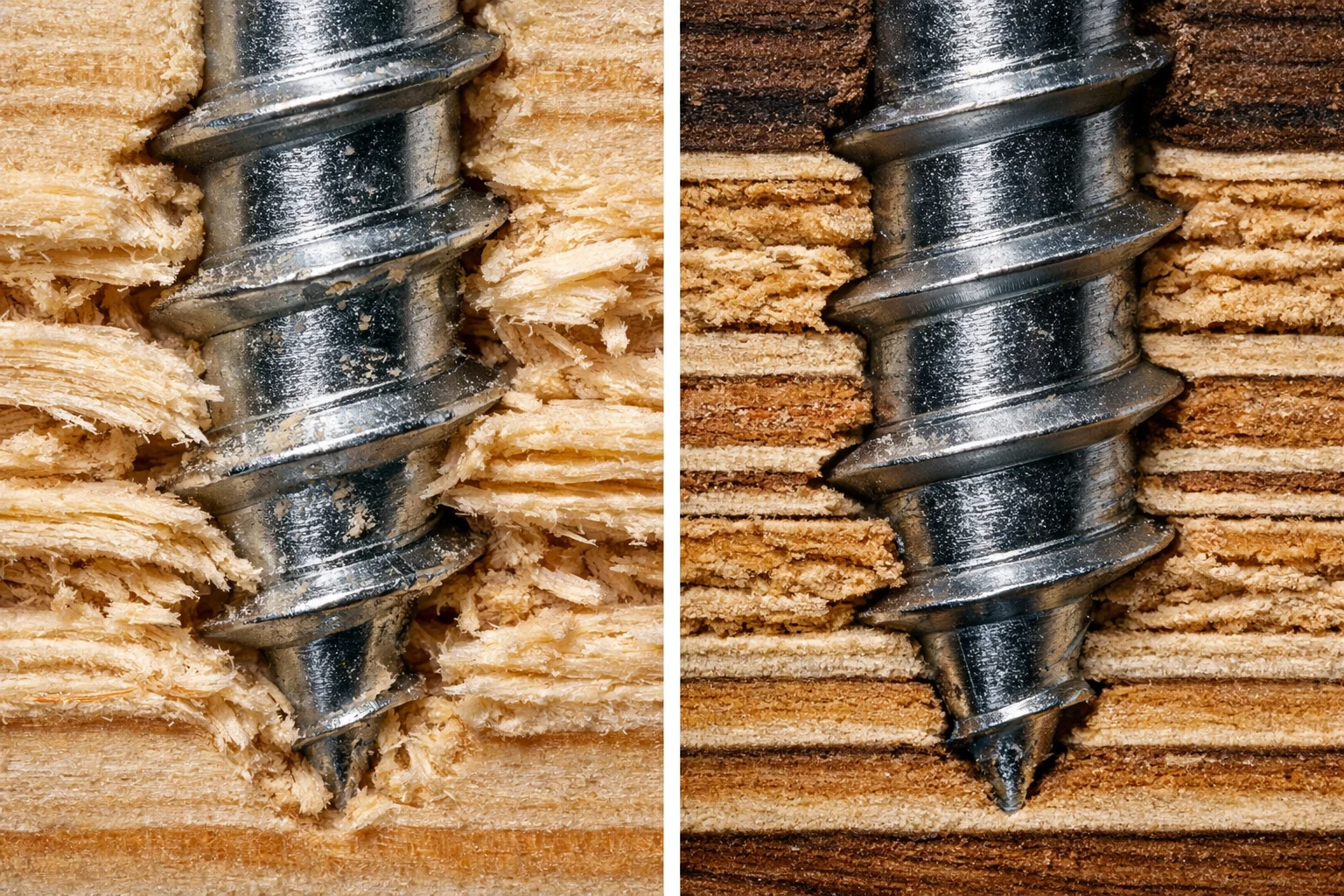
Level 2: The “Solid Wood” Compromise
This is where many people think they are being smart. I did too. The tag says solid wood, the price is higher, and it feels like a responsible upgrade from composite frames.
The catch is the type of wood. Most of the time this means fast growing pine, which is technically solid wood but behaves very differently from the hardwoods people imagine.
Pine is soft. I can usually dent it with a fingernail, and that softness matters once the sofa is assembled and stressed. Every time you sit down, the joints compress a little, and they do not fully spring back.
Over time, screws and staples slowly lose their grip. Upholstery staples are the first to complain, then the joints start to loosen as the wood fibers crush and widen the holes.
Humidity makes this worse. Pine moves a lot as the seasons change, and that movement works against tight joints. Even if the sofa never moves, the frame is still twisting slightly as the air gets wetter or drier.
In a showroom, pine framed sofas often feel fine at first. The problem is not immediate failure, it is gradual slop that sneaks up on you. After a few years, the sofa still looks okay, but it no longer feels solid when you shift your weight.
I test these frames the same way every time. I press hard on the arm near the front corner and pay attention to how quickly it responds. With pine, I often feel a faint delay or a soft give before the frame catches up.
I also listen. Pine frames tend to develop quiet squeaks early on, even when new. If I hear any noise during a simple sit or lean, I assume it will only get louder once the wood starts compressing.
When I ask what kind of solid wood it is, the answer matters. If the salesperson just repeats solid wood without naming the species, I assume pine. If they say pine directly, I appreciate the honesty but I adjust my expectations.
For me, pine framed sofas are a compromise, not a win. They usually last longer than composite frames, but they still feel tired after a few years of normal use, especially if you move or have guests who are not gentle.
If you are buying for a short term space and want something better than disposable furniture, pine can be acceptable. I just would not pay a premium or expect it to age gracefully.
My rule with solid pine is simple. If it already feels even slightly flexible or noisy in the showroom, I walk away. Pine never tightens up with age, it only gets looser.
Level 3: The “Forever” Frame
This is the category that finally stopped my cycle of replacing sofas. When a frame is made from kiln dried hardwood or high quality laminated plywood, everything else becomes secondary because the structure simply does not give up.
When I hear kiln dried maple, oak, ash, or Baltic birch plywood, I lean in. These woods are dense and stable, and that stability is what you feel years later when the sofa still sits square on the floor.
Kiln drying matters more than most people realize. It means the wood has already gone through the shrinking and moving it wants to do, so it is not fighting the joints after the sofa is built. In practical terms, this is what keeps a frame from slowly twisting as seasons change.
I have noticed this most clearly when moving. Hardwood and quality plywood frames lift as one rigid shape, without the subtle racking I feel in cheaper sofas. That stiffness is not discomfort, it is structural confidence.
The screw grip is the quiet hero here. Dense hardwood gives screws something real to bite into, so joints stay tight year after year. When I sit down hard or lean on an arm, the frame responds instantly instead of settling a beat later.
Baltic birch plywood deserves special mention because it confuses people. This is not the same as cheap plywood or composite board. The layers are solid wood veneers, stacked and glued in a way that resists splitting and spreading, which is exactly what destroys other frames.
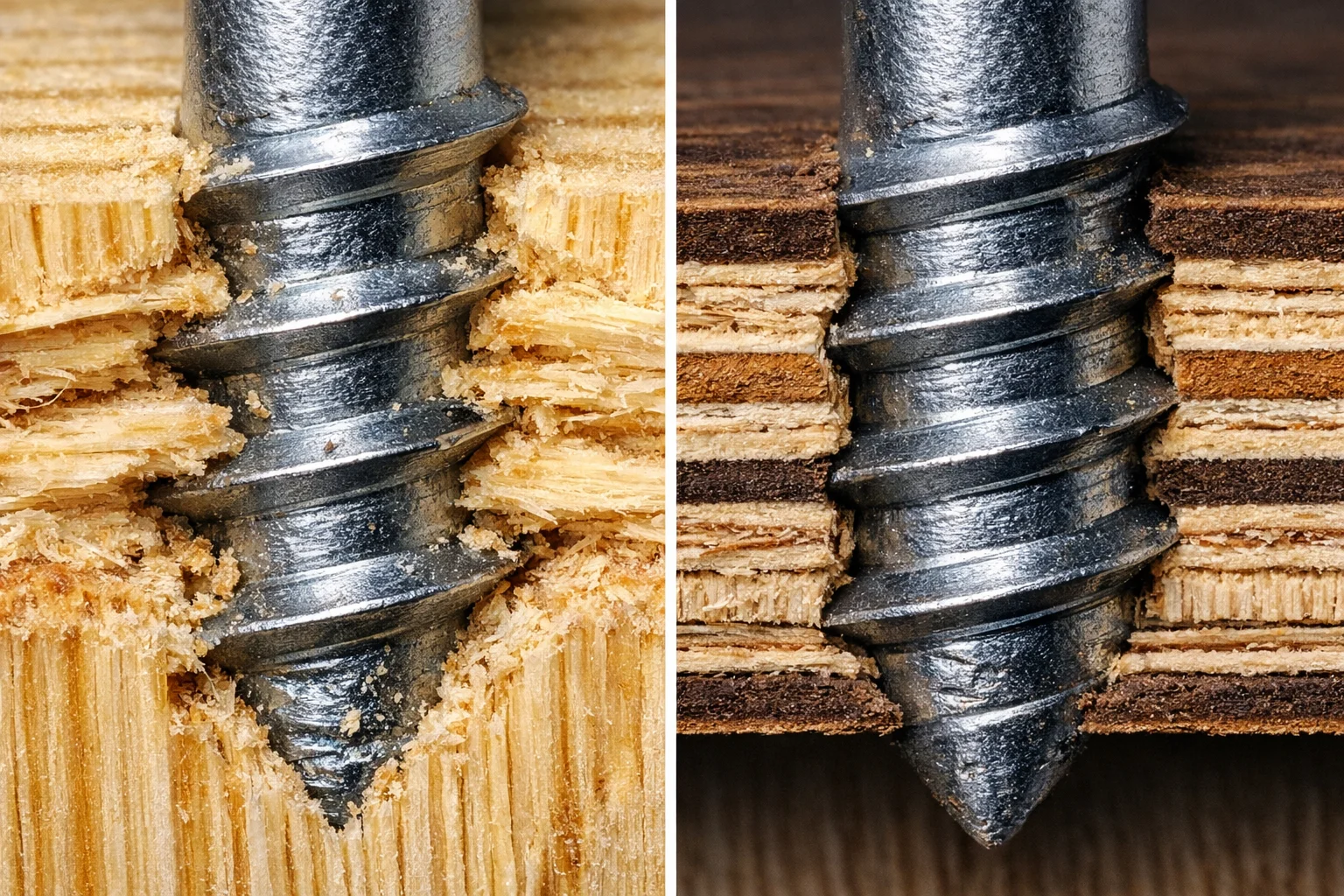
In a showroom, I still do my usual tests. I lift one corner and watch the opposite corner rise with it. I press down on the arms and feel for immediate resistance instead of softness. With these frames, there is no drama and no noise.
I also pay attention to how the salesperson describes it. If they can name the wood species or clearly say kiln dried hardwood or Baltic birch plywood, that is a good sign. If they hesitate or switch back to comfort talk, I ask again or move on.
These frames cost more, and I used to resist that. What changed my mind was realizing I was already paying more by replacing cheaper sofas every few years. A frame like this outlives multiple sets of cushions and even reupholstery.
This is the level where a sofa stops feeling temporary. I expect this kind of frame to last decades, not because it is indestructible, but because it does not quietly degrade under normal use.
If you want one sofa that follows you through moves, changing rooms, and years of daily sitting, this is the line I do not cross below anymore. Once you have lived with a truly rigid, stable frame, everything else feels like a compromise you can suddenly feel with your hands.
Chart comparing the breaking strength of Particle Board vs Solid Pine vs Plywood
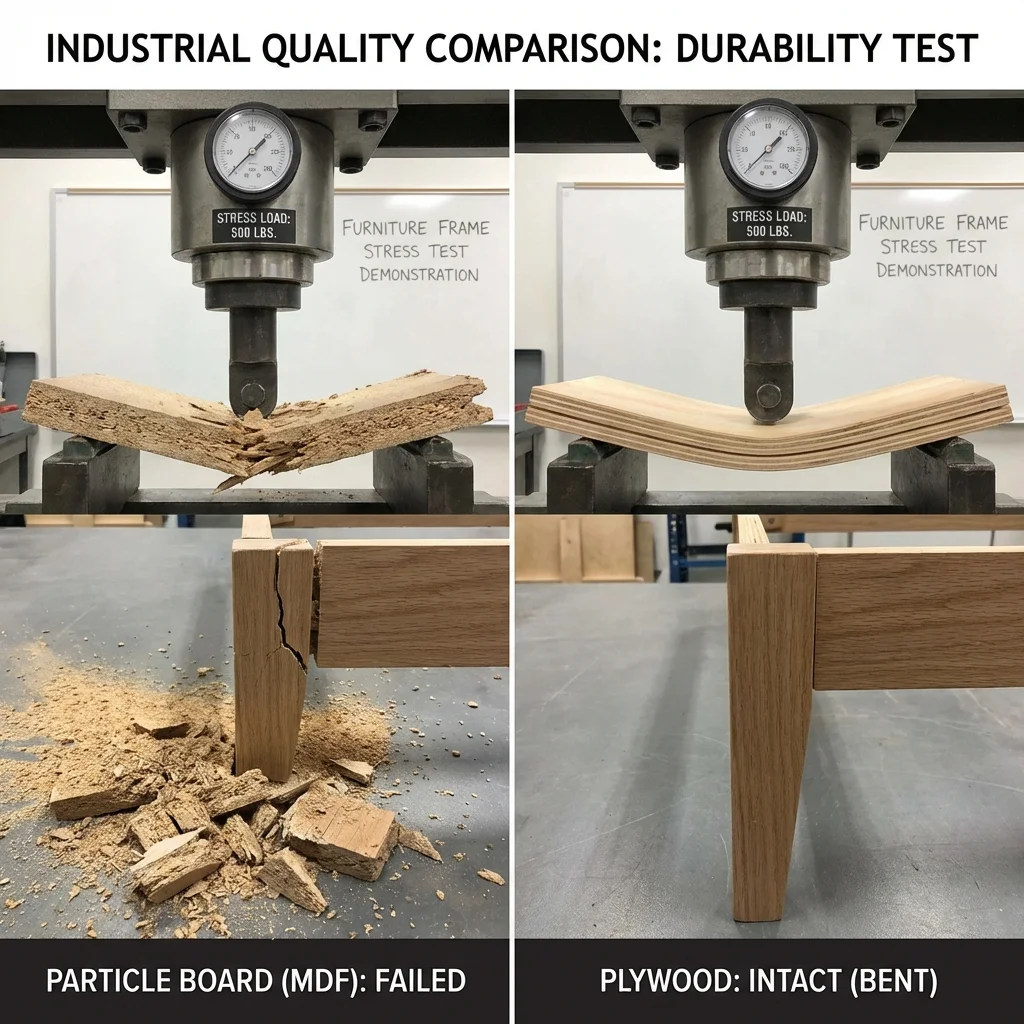
When I first saw a break test like this, it finally explained why my old sofas failed in such predictable ways. This is not about lab conditions or marketing claims, it is about how different materials behave when real weight and leverage are applied.
Particle board snapping under a low load matches exactly what I felt in my living room. The arms felt fine until one day they did not, and once that internal break happened the sofa was effectively done. You cannot tighten or reinforce material that turns to crumbs when stressed.
Solid pine sitting in the middle makes sense too. It does not explode right away, but it gives up gradually. The frame survives moderate force, yet it slowly deforms, which is why pine sofas tend to feel tired instead of catastrophically broken.
The plywood result is the one that matters most when you are shopping. Holding many times more weight means the frame has margin, and margin is what keeps daily sitting, kids, guests, and moving from turning into damage. I am not expecting my sofa to hold hundreds of pounds in one spot, but I want it to laugh at normal use instead of negotiating with it.
In a showroom, you obviously cannot recreate this test. What you can do is translate it into feel. Materials that fail early always feel a little uncertain under your hands, even when they are new.
When I press down hard on a plywood or hardwood framed arm, the resistance is immediate and final. With particle board, there is often a tiny sense of give before it stops, like the structure is compressing internally.
This chart also changed how I hear sales language. When someone says engineered wood and gestures vaguely, I think about that 50 pound snap. When someone says multi ply hardwood plywood, I think about that wide safety buffer.
I do not need exact numbers when I am buying. What I need is confidence that the frame is operating far below its limits during normal life. This chart helped me stop gambling on materials that are already close to failure on day one.
If you are standing in a store trying to decide whether a higher price is justified, this is how I ground myself. I ask whether the frame material belongs on the left side of this chart or the right. Everything else, fabric, cushions, color, can be replaced or lived with.
Once you have felt the difference between a frame that is barely strong enough and one that has real reserve strength, it is hard to unfeel it. This is why I now treat plywood and true hardwood frames as the baseline, not the upgrade.
The Metal Alternative (Steel)
Every so often I run into a sofa that proudly advertises a steel frame, and I understand the appeal. Steel does not rot, it does not split, and it does not care about humidity. On paper, it sounds like the end of every frame problem I have ever complained about.
What I learned is that steel solves one problem and introduces another. Wood has a natural ability to absorb small shocks and vibrations. Steel does not. It is rigid, and that rigidity gets passed directly to you if the rest of the sofa is not perfectly designed.
When a steel framed sofa is done right, it can feel solid and confidence inspiring. When it is done wrong, it feels harsh, almost like sitting on something that refuses to cooperate with your body. There is very little middle ground.
In a showroom, I pay close attention to the first sit. I do not ease into it. I sit down with normal weight and notice whether the impact feels softened or abrupt. A bad steel frame often gives a sharp stop at the bottom of the sit, instead of a gentle catch.
The reason is suspension. With wood frames, the frame itself absorbs some unevenness from springs or webbing. With steel, the suspension has to do all the work. If the springs are cheap or poorly spaced, the steel frame exposes that instantly.
I also try shifting my weight side to side. On a good design, the seat responds smoothly and evenly. On a bad one, I feel pressure points and a kind of mechanical stiffness, like the sofa is telling me exactly where the structure is underneath.
Noise is another giveaway. Steel frames should be silent. If I hear any clicking, ticking, or faint metal sounds when I sit or lean on an arm, I walk away. Metal on metal noises only get worse with time, not better.
I always ask how the steel is used. Is the entire frame steel, or is it a steel perimeter with wood inside. Vague answers make me suspicious. If the salesperson cannot explain how the suspension connects to the steel, I assume corners were cut.
Weight can fool you here. Steel framed sofas are often heavy, and that weight can feel reassuring. What matters more is how that weight behaves when I lift one corner slightly. If the sofa lifts cleanly and stays quiet, that is a good sign. If it twists or makes sound, I do not care how heavy it is.
One thing I have learned to avoid is steel paired with thin foam and minimal suspension. The frame will last forever, but your comfort will not. The rigidity means the cushions and springs wear out faster because they absorb all the stress.
I treat steel frames as a specialty choice, not a universal upgrade. If you like a firm, structured feel and the suspension is clearly robust, steel can work. If you want something forgiving and relaxed, wood often feels better over long sitting sessions.
My bottom line is simple. Steel does not forgive design mistakes. In a showroom, trust your body more than the spec sheet. If it feels stiff, noisy, or abrupt when it is brand new, it will feel worse after a year of daily use.
I do not automatically reject steel, but I am far more cautious with it than with a good hardwood or plywood frame. Indestructible does not always mean comfortable, and comfort is what you live with every day.
The "Reupholstery" Calculus
I used to think reupholstery was a luxury option for people with designer taste and deep pockets. What I eventually realized is that it is actually a math problem about whether the bones of the sofa deserve another life.A genuinely good hardwood or quality plywood frame can usually survive three or four full reupholstery cycles. That means the fabric, padding, and springs can all be replaced multiple times while the frame stays quietly solid underneath.
Here is how I think about the money. Spending around two thousand dollars to reupholster makes sense if the frame is maple, oak, ash, or a serious multi ply hardwood plywood. In that case, you are refreshing something that is still structurally young. The sofa comes back feeling tight and confident, not just prettier.
The same math completely collapses if the frame is pine or any kind of composite. You can put beautiful new fabric on it, but the frame underneath is already tired or actively failing. In that situation, reupholstery feels like putting a new engine into a car with a rusted chassis. It might look impressive for a moment, but the foundation is still compromised.
This matters when you are buying new because you are also buying future options. When I stand in a showroom now, I ask myself a simple question. Would I ever pay real money to reupholster this exact frame ten years from now. If the honest answer is no, then the sofa is disposable whether the price tag admits it or not.
You can even ask this directly while shopping. I have asked salespeople whether a particular model is considered reupholster friendly. If they look confused or say most people just replace it instead, that tells me everything I need to know about the frame quality.
With a true forever frame, the fabric choice becomes less stressful. I know stains, pets, sun, and fashion will eventually win, and that is fine. The frame is what I am really buying, and the rest is just a removable skin.
This way of thinking also changes how I react to higher prices. A sofa that costs more but can be reupholstered several times is often cheaper over its real lifespan than a cheaper sofa that has to be thrown away once it loosens up.
If you want to avoid getting ripped off, do not just ask how the sofa feels today. Ask whether the frame is worthy of being kept when everything else wears out. If it is not, then no discount or fabric upgrade turns it into a long term purchase. That question alone has saved me more money than any sale ever did.
Technical Summary: Material Specification
When I want to cut through all the marketing quickly, I focus on how the frame material is described and how specific the answer is. I ask directly whether the frame is kiln dried hardwood or softwood, and I listen for a real answer instead of a dodge. If they can name a hardwood species or clearly say multi ply hardwood plywood, I stay engaged. If they hesitate or fall back on vague phrases, I assume the frame is not worth my time.
I also ask how the joints are built, because this is where good materials still fail if corners are cut. I am listening for the phrase corner blocked, which means there is an actual block reinforcing the joint instead of just staples or glue. In practical terms, this is what keeps the frame square when you sit down hard or when the sofa is lifted during a move. If the salesperson cannot explain the joinery or changes the subject, I take that as a quiet no.
There are a few words that immediately end the conversation for me. If I hear composite, engineered board without the word plywood, furniture board, or MDF, I stop considering the sofa. Those materials might look fine when new, but I have never seen them age without loosening and noise. I do not argue about it anymore, because my past living rooms already proved the outcome.
If you feel awkward asking these questions, I get it. What helped me was realizing that this is not rude or picky, it is basic due diligence for something you will sit on every day. A salesperson who believes in the product will answer clearly. A sofa with a good frame can handle a few direct questions without falling apart, and so can the sales pitch.
This summary is how I protect myself from getting distracted by fabric, color, or a good sale price. If the frame passes these material checks, then I let myself think about comfort and style. If it does not, I move on no matter how nice it looks, because I know exactly how that story ends once the sofa is in your living room and the return window is long gone.
Explore Technical Reference
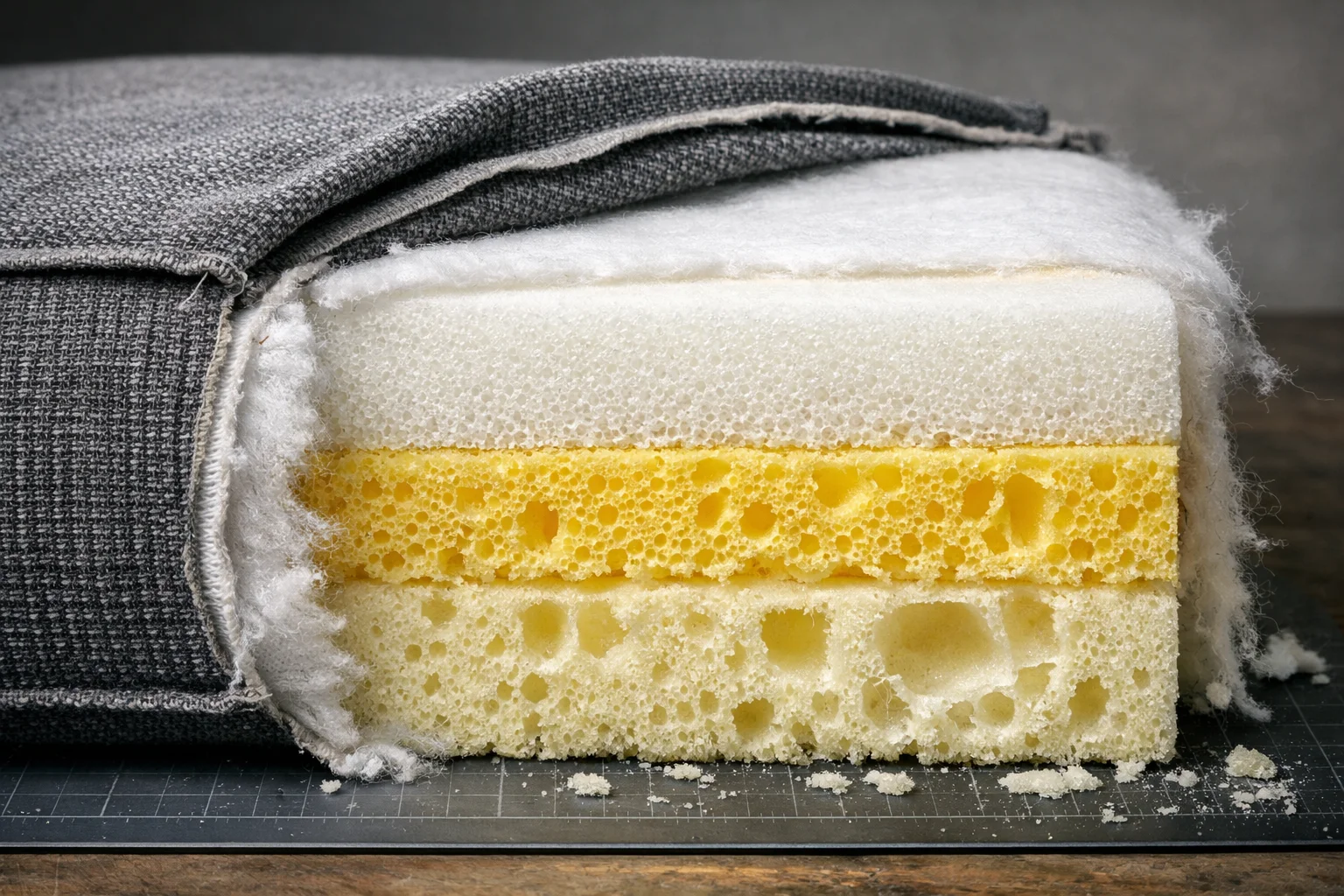
Foam Lifespan: Predicting When Your Sofa Will Die
How long should a cushion last? Understanding the density-to-duration ratio and the phases of foam death.
Analyze Details →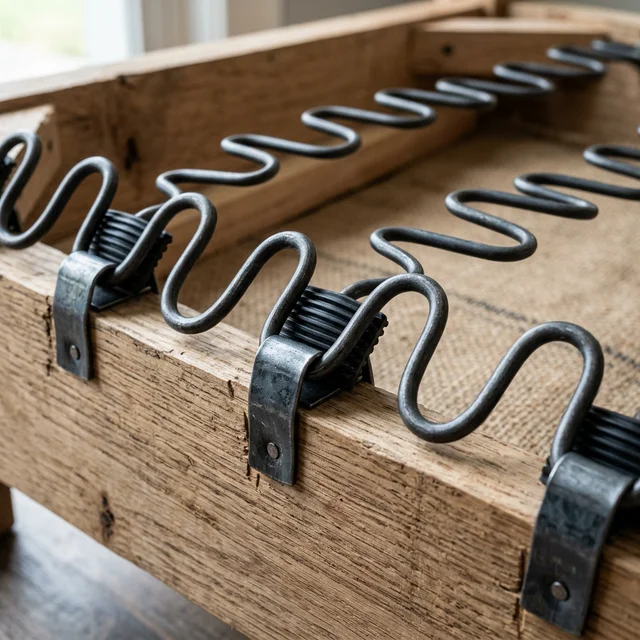
Sinuous Springs: The "No-Sag" Myth
Why No-Sag springs sometimes sag. Understanding wire gauge, clip quality, and tie wire construction that determine whether sinuous springs provide lasting support.
Analyze Details →