Sinuous Springs: The "No-Sag" Myth
Introduction
I bought a sofa because the tag said “No Sag Springs.” I thought it was a warranty from God. It was not. “No Sag” is just a brand name, like Kleenex. It is a trademark, not a deviation from physics. If the wire is thin, a “No Sag” spring will sag within two years.
That experience is why I do not treat any single feature on a hangtag as proof of quality anymore. I have learned that most sofa failures are boring and predictable, cushions that flatten, seats that dip, frames that loosen, and fabric that pills, and the marketing language usually stays optimistic right up until your back starts complaining.
My goal here is to help you shop like a skeptic without turning you into an engineer. When you are in a showroom, you need a few simple checks you can actually do with your hands, your eyes, and a couple of direct questions, so you can spot the sofas that are built to survive daily sitting, not just the first month of “new sofa” excitement.
I am also going to be blunt about what matters most over time. The parts you cannot see, like the frame joints, the suspension wire thickness and attachment method, and the cushion fill quality, decide whether a sofa stays supportive. The parts you can see, like the fabric texture and the style, matter too, but they are not the reason most people end up shopping again sooner than they expected.
As you read, keep one idea in your head: a sofa is a system, not a label. If a salesperson tries to win you over with one magic phrase, whether it is “no sag,” “high density,” “performance fabric,” or “lifetime warranty,” I want you to slow down and verify what that phrase actually means on that specific sofa, in that specific seat, with that specific cushion.
The "Kleenex" Effect
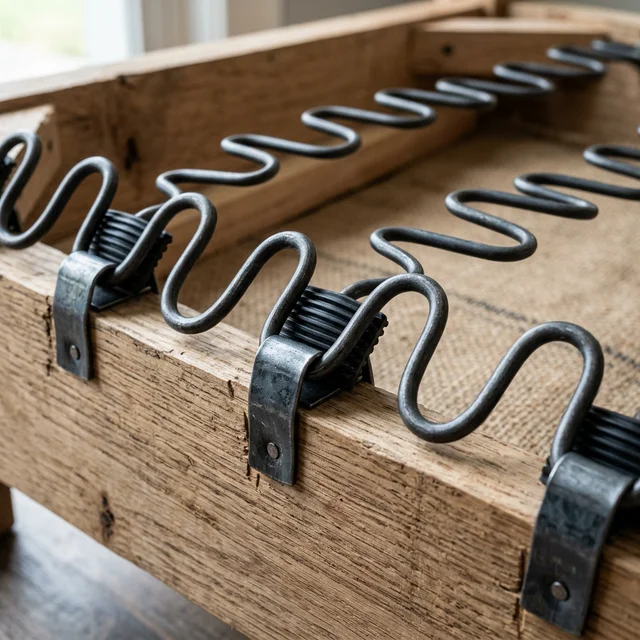
“No Sag” is a registered trademark of Leggett and Platt, a long running components company, and that is the whole point of this section. The label sounds like a promise, but it is really a name people use the way they say Kleenex when they mean tissue.The myth I fell for, and I still hear in showrooms, is “this sofa has No Sag springs, so the seat will never drop.” What it actually tells you is much less magical. It tells you the sofa is using zig zag wire springs, which can be good, average, or disappointing depending on how thick that wire is and how it is fastened to the frame.
The reality is that wire thickness, often described as gauge, is what decides how quickly those springs relax and how much the seat settles. If the wire is thin, the sofa can feel great on day one and then start to hammock on day ninety, especially in the one seat everyone uses.
When you are standing in front of a sofa and the salesperson says “no sag,” I want you to treat it like they just told you “this car has tires.” It is not a lie, it is just not enough information to predict how it will feel in two years.
What you can do in the showroom is ask a very specific follow up: “What gauge are the zig zag springs, and can you show me that in writing on the spec sheet?” If they cannot tell you, or they wave it off like it does not matter, I take that as a warning sign that the build is being sold on vibes instead of materials.
Then I do a quick body check that catches a lot of weak suspensions. I sit in the same spot I would at home, plant my feet, and bounce lightly a few times, then I stop and notice whether the seat feels like it rebounds cleanly or if it lingers low like a stretched trampoline.
After that, I slide my hand between the seat cushion and the front rail and press down near the front edge. If I can easily push the seat down near the front and feel it dip without much resistance, that often shows the suspension and its attachments are not stout enough, because that front edge is where sagging starts to announce itself.
I also pay attention to sound. A little spring noise is not automatically doom, but sharp pinging, crunchy squeaks, or a click that repeats in the same spot tells me something is rubbing, shifting, or under too much stress, and those noises rarely improve with age.
If the store model already has a visible low spot or a seat that feels different from the one next to it, I do not let anyone blame “floor sample wear” unless the store is honest enough to admit the floor sample gets used because it is comfortable. Heavy use exposes weak components, and I would rather learn that in a showroom than in my living room.
One more question I like, because it forces a real answer, is “How are the springs attached to the frame?” Zig zag springs can be clipped on in different ways, and some methods stay tight longer than others. If the answer is vague, I ask to see a cutaway, an underside photo, or the manufacturer’s construction description, because I am not buying a hidden system on faith anymore.
The biggest takeaway I want you to hold onto is simple: “No Sag” is not a quality grade. It is a type of suspension and sometimes a brand name, and the durability lives in the details the hangtag usually does not print.
The “Gauge” is Everything
Wire thickness is measured in “gauge,” and the annoying part is that the numbers run backward. A lower gauge number means a thicker wire, and in a zig zag spring system that usually means a spring that resists bending and relaxing for longer.
When I am shopping, I treat gauge like the weight rating on a ladder. You can still break a thick spring with bad design, but thin wire is a predictable path to that hammock feeling, especially in the favorite seat.
In the showroom, I ask for the actual gauge number and I keep the question narrow so I do not get a speech about comfort. I say, “What gauge are the zig zag springs in the seat, and is that listed on the spec sheet or the build description?” If the answer turns into “heavy duty” or “industry standard,” I assume they either do not know or do not want me comparing.
If they do give you a gauge, your job is not to memorize some magic cutoff. Your job is to use that number to compare two sofas that otherwise look similar and cost similar money. If one brand is willing to tell you the gauge and the other acts like it is proprietary, I find the transparent one is usually the safer bet.
I also pay attention to whether they specify the seat and back separately, because some sofas use sturdier wire where you sit and lighter wire in the back. That can be totally fine, but when everything is described with one vague phrase, it is easy for a salesperson to let you assume the whole piece is built the same way.
If you cannot get a gauge number at all, you can still protect yourself by treating the sofa like it already belongs to you. I sit down, then I shift my weight forward and back, and I notice whether the support feels consistent or if it ramps up and then suddenly gives. That sudden give is the feeling I associate with thinner wire and weaker attachments, even when the cushion is thick enough to hide it at first.
I also try a simple comparison that has saved me from a couple of bad buys. I sit in the seat I like, then I sit in the seat next to it, and I look for any difference in how quickly the seat returns when I stand up. When one seat pops back and the other stays a little low, I assume the “good seat” is the one no one uses, and the “low seat” is my future.
Gauge is not the whole story, but it is one of the few suspension details that can be stated plainly and checked on paper. If you take nothing else from this section, take this: when someone says “no sag,” I want you to hear “zig zag springs,” and your follow up is “what gauge?” because the thickness of that wire is where the long term support starts.
1. 8-Gauge (The Tank)
When a sofa uses 8-gauge zig zag springs in the seat, I treat it like the manufacturer is at least trying to build something that will stay honest under daily use. This is the thick, heavy duty wire, and you feel it right away because it is stiff and it fights back when you sit.
In a showroom, that stiffness can confuse people because it does not always feel plush for the first ten seconds. What I am looking for is whether that firmness feels supportive and even, instead of hard in one spot and mushy in another, because unevenness is often a hint that the spring layout or the attachments are sloppy even if the wire itself is thick.
If you are trying to decide whether 8-gauge is right for you, I would think about your real life, not the “quick sit” in a store. If this is the main sofa where you watch TV every night, where friends end up piled together, or where the same one seat gets claimed every day, this is exactly where thicker wire earns its keep.
The way I test it is simple. I sit down normally, then I slide forward so most of my weight is closer to the front edge, because that front edge is where weak suspensions start to fail first. With a tanky spring setup, I can still compress it, but it does not collapse, and when I stand up it rebounds promptly instead of staying a little low like it is tired.
I also do a side to side comparison, because thicker springs should make the seats feel consistent across the sofa. If one seat feels dramatically softer than the seat next to it on a brand new floor model, I do not let the “8-gauge” fact calm me down, because something else in the system is off, like a loose clip, a weak rail, or a cushion that is doing all the work.
Where 8-gauge really shines is lifespan, and I have seen enough sofas age badly to appreciate that. If everything else is decent, meaning the frame is solid and the springs are attached well, I would expect this kind of suspension to stay supportive for a long time, often in the 15 to 20 year range, instead of developing that familiar hammock dip after a couple of years.
One thing I want you to watch out for is a mismatch between the spring and the rest of the build. A thick spring can highlight cheap cushions, because the seat will not sag much, but the foam can still pack down and make you feel like you are sitting “on” the frame instead of “in” the sofa. When I feel that stiff pushback underneath but my hips still bottom out quickly, I stop thinking about the springs and start asking what is inside the seat cushion.
If you can get the spec sheet, I also like to confirm the store is talking about the main seat suspension, not the back or some secondary area. I ask, “Is that 8-gauge in the seat deck where you sit every day, or is that somewhere else?” If they cannot answer cleanly, I assume the claim is being used as a vibe, not a real build detail.
My personal rule is that 8-gauge is a great sign for a primary sofa, but I still make it prove itself with my body. If it feels consistently supportive across seats, rebounds cleanly, and does not let the front edge dip too easily, I put it in the “built to last” category and move on to checking the frame and the cushions, because those will be the next things to disappoint you if they are cut-rate.
2. 11-Gauge (The Trampoline)
When I hear “11-gauge” for zig zag springs, I think thin wire and a seat that can feel fun in a showroom, then quietly turn on you later. It tends to feel very bouncy, like the suspension is doing a lot of moving instead of a lot of supporting, and that is the exact sensation I associate with a seat that will slowly stretch out of its original shape.
The tricky part is that a trampoline feel can read as comfort on a quick sit. If you sit down and you get a lively rebound, your brain files it as “responsive,” but what I am watching for is whether you feel held up in a steady way or whether you feel like you are being launched and then settling lower than you expected.
In real life, 11-gauge usually shows its weakness as permanent stretch. The sofa does not necessarily break, it just starts to live in a slightly lower position in the favorite seat, and once the wire relaxes you cannot un sag it with fluffing or cushion rotation.
If a manufacturer uses 11-gauge in the back, I do not automatically panic. Back support carries less load than the seat deck, so lighter springs can make sense there, especially if you like a softer backrest and you are not using it as a headboard every night.
Where I get annoyed is when 11-gauge shows up in the seat, because that is often a cost saving move dressed up as “soft comfort.” If the salesperson tells you it is used in the seat, I treat that as permission to become extra picky about how the sofa behaves at the front edge and in the exact spot you will sit every day.
My showroom test for 11-gauge is basically the trampoline test, and I do it on purpose. I sit in my normal posture, then I do a few small bounces, and then I stop completely and notice where the seat settles. If it settles low and stays there for a beat, or if it feels like it wants to keep oscillating under me, I assume that same movement will turn into a dip after a few years of daily use.
Then I do the front edge check again, because thin wire loves to show itself there first. I slide forward so most of my weight is near the front rail, and I pay attention to whether the edge feels like it is holding me up or tipping me into that subtle slide forward. If I can feel the cushion trying to mask a weak, springy under layer, I walk away unless the sofa is priced and positioned as a short term piece.
If you are stuck without a spec sheet, I try to get the truth indirectly by asking a question that forces them to separate seat from back. I ask, “Is the lighter gauge in the back only, or is it also under the seat cushions?” If they answer in circles, I assume it is in the seat and they do not want to say it plainly.
The lifespan I expect from 11-gauge in the seat is not “forever,” it is more like a handful of years before the favorite spot starts to feel a little hammocked. That does not mean you should never buy it, but I only consider it when the sofa is for lighter, occasional use, or when I am consciously trading durability for a particular look at a price I can live with.
If you really love a sofa and you learn it has 11-gauge in the seat, the best protection you have is to make the whole system prove itself harder than you normally would. I would sit in every seat, focus on the front edge, and pay attention to whether any spot already feels more lively and less supportive than the one next to it, because that difference is usually what gets amplified over time.
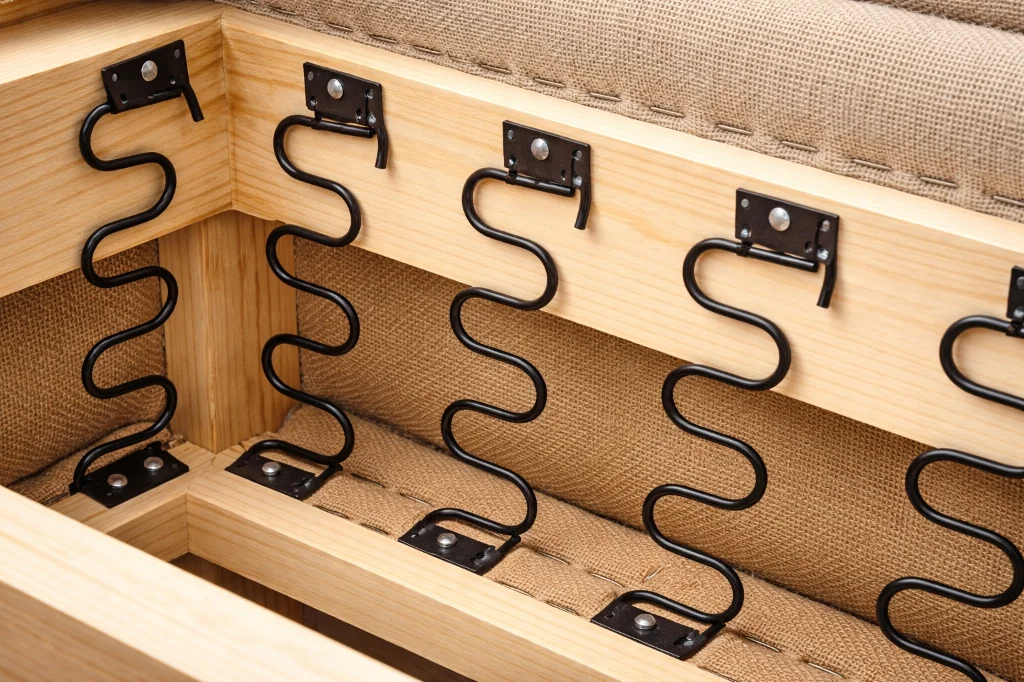
When you look at that photo, I want you to notice something that sales talk tends to blur.
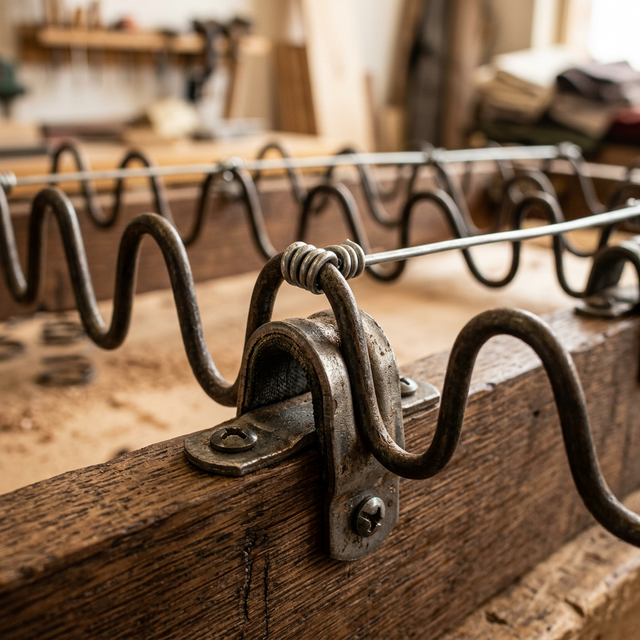
In a showroom you usually cannot see the springs, so I use the picture as a mental anchor when I am asking questions and doing the sit tests. If the salesperson says “no sag” and the sofa feels lively and springy right away, I assume I am closer to that thinner wire behavior until proven otherwise.
If you are allowed to see the underside, either because the sofa has a dust cover you can peek past or the store has a cutaway model, I try to look for the simplest visual clues. Thicker wire tends to look like a pronounced zig zag with real presence, while thinner wire looks more like a bendable coat hanger, especially where it turns at the curves.
If you cannot see anything underneath, you can still use your hands to “see” the difference. I press down firmly through the seat cushion with my palm near the front edge and I pay attention to whether I hit a steady wall of resistance or whether it sinks and then starts to bounce back at me. That bouncy recoil is not automatically bad, but if it feels like the support is coming from motion instead of strength, I start treating the suspension as a likely weak point.
I also compare seats using the same pressure in the same spot. I will press the front edge on the left seat, then the middle, then the right, and I am looking for consistency more than any one feeling. A sofa with decent springs and decent attachment usually feels boringly uniform, and the ones that fail early often have that one spot that gives more, rebounds more, or sounds different.
If the store has a matching loveseat, chair, or sectional piece from the same line, I use that as a cheat code. I sit on the smaller piece because it often gets less traffic on the floor, then I sit on the main sofa. If the smaller piece feels more supportive and the main sofa feels more trampoline-like, I do not let anyone tell me that is just “break-in,” because break-in is gradual and even, not a different personality between pieces.
The point of the image is not that you need to memorize what 8 gauge looks like. The point is that gauge is not a decorative spec, it is literally the thickness of the metal doing the job. When you keep that in your head, it becomes easier to trust what you feel when you do the front edge test and the rebound test, and it becomes harder for vague words like “heavy duty” to override your own hands.
The “Clip” Weakness (Why it Squeaks)
Even when the springs themselves are decent, the most common long term failure point is boring and small. It is the clip that fastens the zig zag spring to the wood frame, and I have come to think of that clip as the whole suspension system’s weakest link.
In daily use, every sit is the spring trying to move, and the clip trying to hold it in the same place anyway. If that connection is cheap, loose, or noisy on day one, it usually gets worse, not better.
The cheapest version is a plastic clip, and when those go, they do not “wear gracefully.” They get brittle, they crack, and then one day you get a sharp bang and the seat suddenly feels wrong because a spring end is no longer where it belongs.
In a showroom you usually cannot see the clip, so I try to catch plastic clips indirectly. I press down hard near the front edge and then let go, and I listen for a click or a snap sound that repeats in the same spot. If the sofa feels lively like a trampoline and I also hear sharp little ticks, I start assuming the attachment hardware is bargain grade.
If the store will let you tip the sofa forward a few inches, or if there is any way to peek past the dust cover, I look for the clip material and I ask the question plainly: “Are the spring clips plastic or metal?” If the salesperson dodges it, I assume plastic until proven otherwise, because “you don’t need to worry about that” is usually code for “you would not like the answer.”
The next problem is metal clips that are not lined. This is where a lot of squeaks come from, because you have metal spring ends flexing inside a bare metal holder, and that movement turns into friction noise.
I do not accept “it will go away after break in” when the sound is a high, consistent squeak that happens every time I shift my weight. Fabric can loosen and foam can soften, but metal rubbing on metal rarely becomes silent on its own, and if it is already talking in the showroom, it is going to sing at home at midnight.
My test for this is simple and a little annoying on purpose. I sit, then I slowly shift my weight left, then right, without bouncing, and I listen for a squeak that appears during the sideways load. If I can make it squeak with a slow shift, I know it is not just a one time showroom creak, it is a moving joint.
The best version I have run into is a lined metal clip, meaning a steel clip with a plastic or vinyl liner inside where the spring sits. The liner acts like a buffer so you get the strength of metal without the metal on metal squeal, and when this is done well the seat feels quiet even when you deliberately rock and shift.
You can ask for this directly without sounding like you are trying to impress anyone. I say, “Are the spring clips lined or unlined, and is that described in the construction details?” If they can answer cleanly and they can show you a spec sheet that mentions lined clips, I treat that as a surprisingly meaningful quality sign.
If you cannot get any visibility or documentation, I fall back to a practical rule. I will not buy a sofa that already squeaks in a repeatable way, because that noise is telling you there is movement where you do not want movement, and it usually means wear is happening in the exact place the sofa depends on staying tight.
If you love everything else about the sofa and you are trying to talk yourself into accepting a little squeak, I would at least force the issue by testing multiple seats and multiple body positions. If the noise is tied to one seat or one corner, that can be a clip or fastener problem that is already starting, and I have learned the hard way that you do not want to “adopt” that seat and hope it behaves.
The “Tie Wire” Check
The "Tie Wire" Check
When I am allowed to, I look underneath the sofa, or I feel through the dust cover, because I am not just checking that there are zig zag springs. I am checking whether those springs are being forced to behave like a coordinated platform.What I want to see are paper wrapped wires running horizontally across the zig zags. Those are tie wires, and the point is simple, they connect the springs so your weight gets shared instead of one spring doing all the bending.
When I do not see tie wires and the springs look like they are just sitting there independently, I assume the seat will develop that bucket seat feeling where you slowly roll into the low spot between springs. If I can feel little valleys under the cushion when I press down with my palm, that is usually the early version of the same problem.
In the showroom, I do this check in a very unglamorous way. I kneel down at the front of the sofa and look under the edge for any sign of horizontal wires, and if there is a dust cover blocking the view, I press upward gently and feel for thin wires crossing left to right.
If you find tie wires, you still want to make sure they are doing a real job and not just existing in one token area. I put my hand under the middle seat area and then under a side seat area, because I have seen sofas where one section is tied and another section is not, especially on sectionals.
If you cannot see anything and you cannot feel anything because the dust cover is thick and tight, I treat that as a reason to ask a direct question. I ask, “Are there tie wires tying the sinuous springs together, or are the springs independent?” and then I wait to see if they answer like it is a normal construction detail or if they try to pivot back to fabric and color.
The reason I care is that independent springs can still feel fine at first, especially with thick foam on top. Over time, though, your body tends to find the easiest low spot, and once you start sitting in a slight trough you keep loading the same few springs harder than the rest.
I also use a quick feel test that mimics the bucket seat problem. I press down with my palm in two spots a few inches apart, and if I feel a dip between those two spots that is deeper than the cushion alone would explain, I start suspecting the springs are not being tied together into a flatter, more unified deck.
If you are comparing two sofas that feel similar on top, tie wires can be the hidden difference that shows up years later. I have learned to treat tie wires as a teamwork feature, because even thick springs and decent clips have a harder time staying consistent if each spring is left to do its own thing.
Technical Summary: The Spec Sheet
Sinuous springs are the industry standard, and I am fine with that as long as the details are honest. When I am trying to decide quickly, I want a spec sheet that separates the seat from the back, because a lot of brands quietly build those two zones very differently.For the wire, what I look for is a thicker seat spec and a lighter back spec, and the simplest “good sign” version is 8 gauge in the seat and 11 gauge in the back. When you see it written that way, it usually means the manufacturer understands where the load really is, and you can then judge comfort separately from durability instead of having those two things blurred together.
For the clips, I want lined metal, and I ask for that phrase specifically because it is one of those small parts that decides whether a sofa stays quiet and tight. If the spec sheet just says “metal clips” without mentioning any liner, I take that as a reason to do the slow side to side squeak test again before I let myself fall in love with the fabric.
For spacing, I look for springs that are roughly four inches apart, because wide spacing is how you end up with that slow forming hammock, even with decent cushions on top. In a showroom you probably cannot measure it precisely, so I translate this into a practical check: I press down in a few neighboring spots across the seat, and if I can feel distinct little valleys between support points, or a repeating pattern of soft hard soft, I assume the springs are spaced too far apart or not acting as a tied together platform.
If you want one clean way to use the spec sheet without overthinking it, I would treat it like a permission slip to trust your own body. When the seat wire is clearly specified as thicker, the clips are called out as lined metal, and the spring layout does not feel valleyed under your hands, then the “no sag” claim finally starts to mean something in real life.
If Your Springs Are Already Failing
- Sinuous spring repair kit — replacement springs and clips for DIY suspension repair.
- Sofa seat support board — a temporary fix to restore firmness while you assess whether the springs need replacing.
Explore Technical Reference
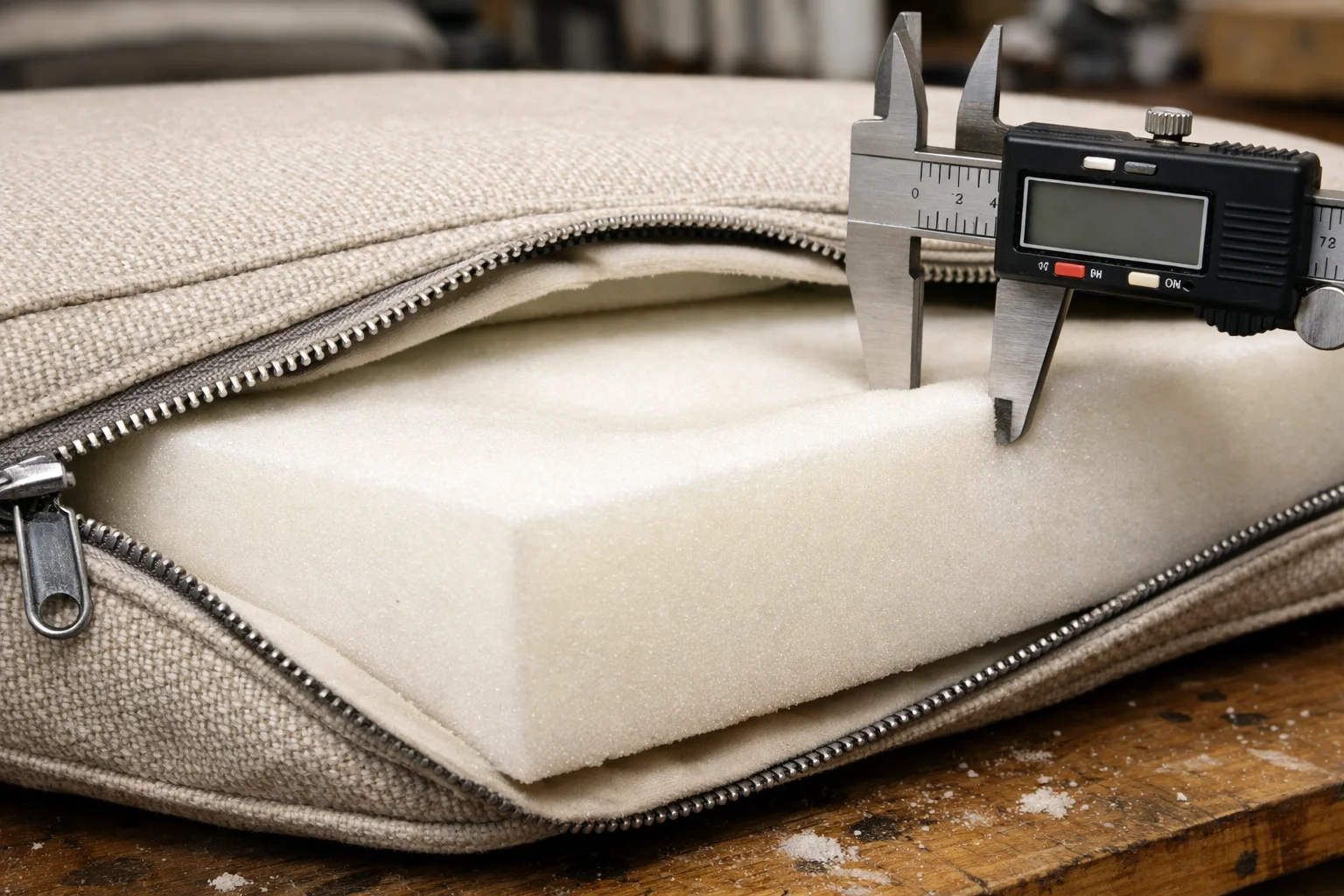
Single Slab Foam: Why Cheap Cushions Bottom Out
Understanding why uniform foam blocks fail where layered construction succeeds. The physics of linear compression and how single slab construction creates bottoming-out problems.
Analyze Details →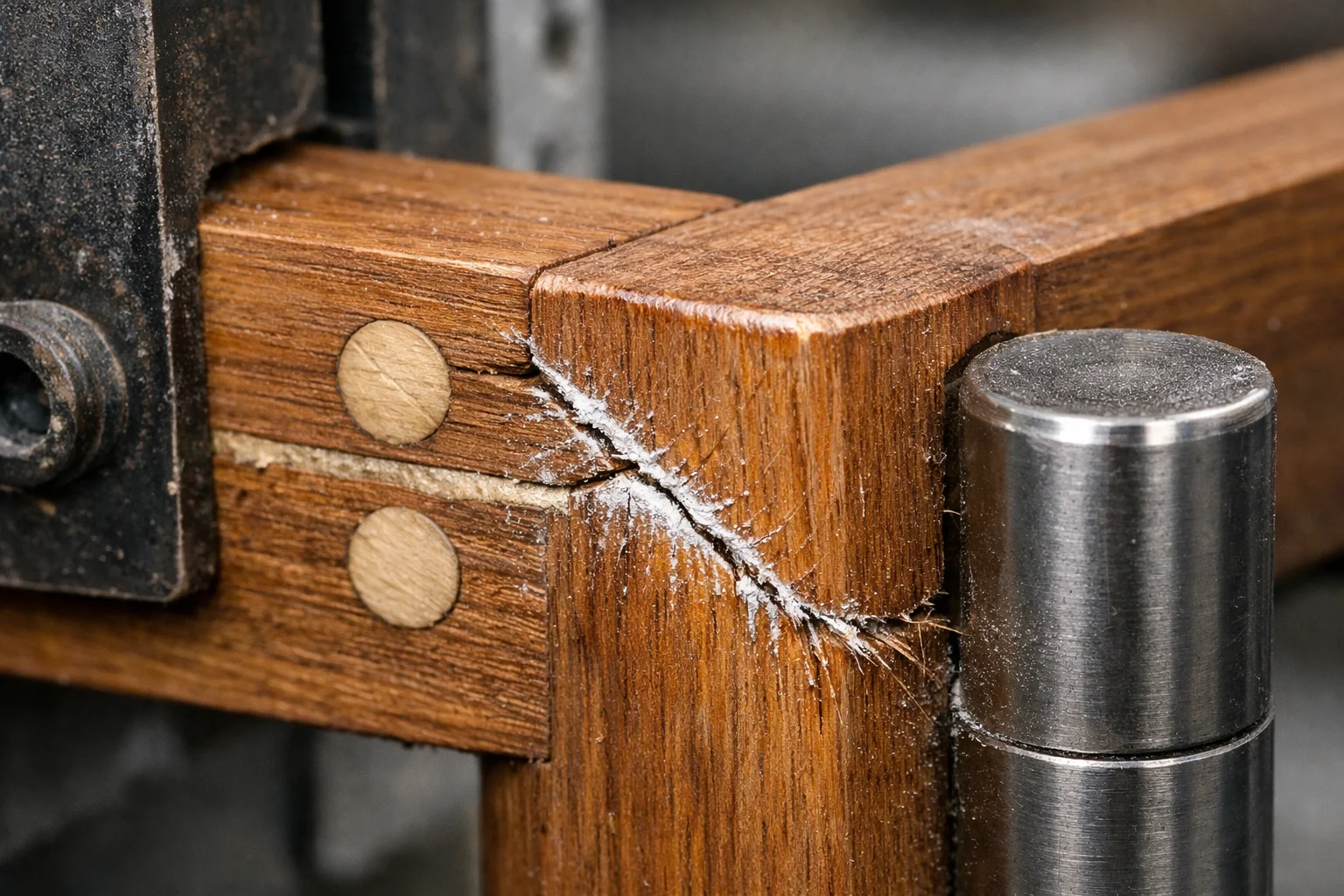
Frame Cracking: The Physics of Failure
Understanding why frames crack under stress. The role of knots, grain direction, and joint design in catastrophic failure versus gradual degradation.
Analyze Details →