High Density Foam: The "Heavy" Truth About Quality
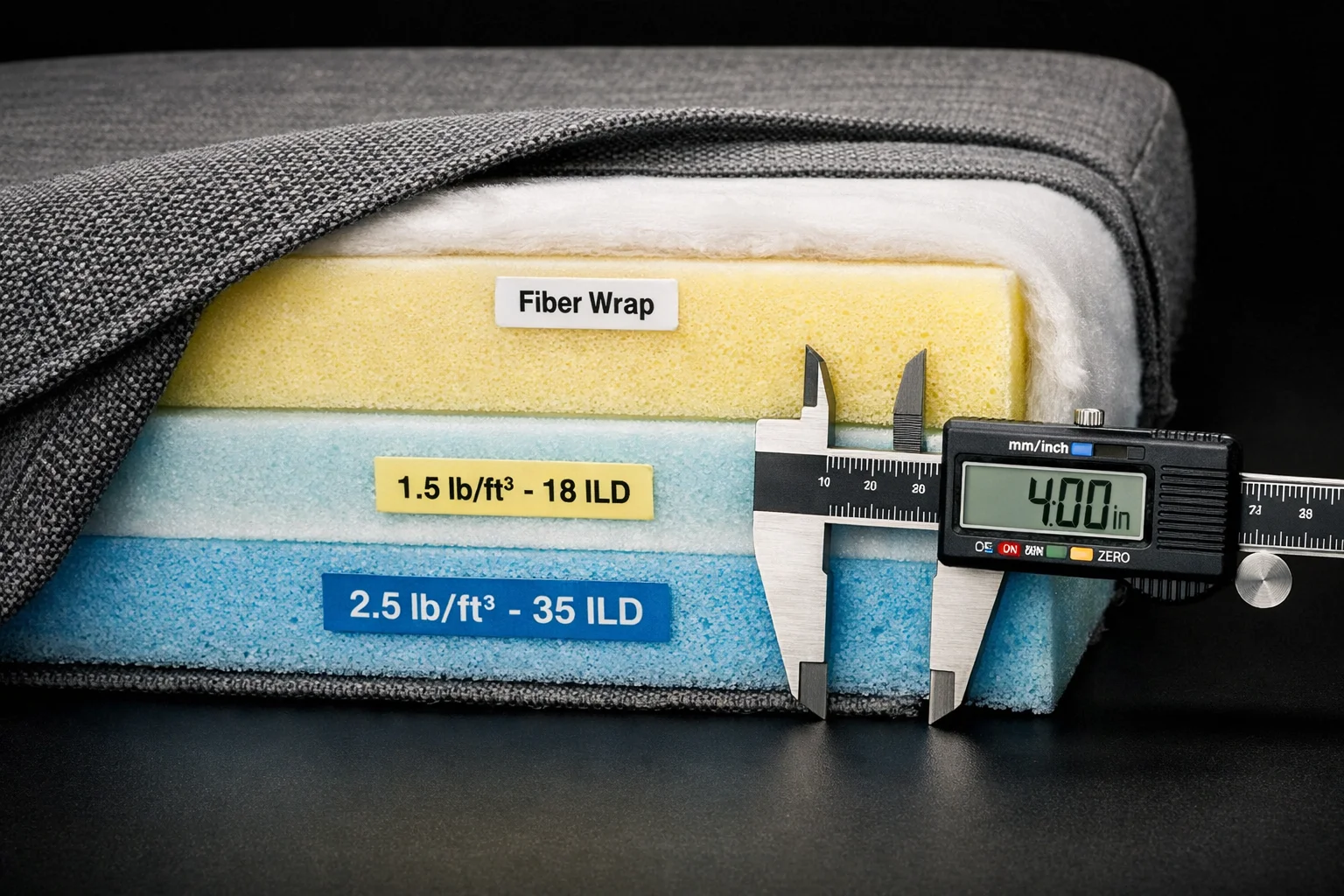
Why does hotel furniture always feel better than home furniture?
When I sink into a decent hotel sofa, it usually feels supportive in a way my past home sofas stopped feeling after a couple of years. The biggest reason is boring but important, hotels often buy commercial grade seating that is built to take daily abuse without losing its shape fast.
A lot of that “hotel feel” comes down to the foam inside the cushions. Hotels tend to pay for higher density foam because replacing sofas across dozens or hundreds of rooms is a logistics nightmare, so they would rather spend more once than keep swapping saggy cushions and angry-guest reviews.
At home, many mainstream sofas are built to hit a price point, not to stay comfortable for a decade. You will hear salespeople talk about softness and “plushness,” but what I care about now is whether the foam has enough density to resist that slow collapse where the cushion still looks fine, but you feel the frame and you keep sliding into the same crater.
When you are shopping, you can often get the truth just by asking a very specific question and then staying quiet. Ask what the seat foam density is, and ask if the core is high density or “standard.” If they cannot or will not tell you, I treat that as a warning sign, because the good stuff is usually something they are proud to name.
If they do give you a number, here is how I translate it into a buying decision without getting lost in jargon. Many residential sofas use around 1.8 lb density foam, which can feel great in the showroom and then start to soften and dish out with regular use. If you can get into higher density territory, closer to what gets called commercial grade, you are usually buying more time before the cushions go flat, especially in the seat you use every night.
I also try to separate cushion feel from cushion durability while I am sitting in the showroom. A higher density foam core can still feel soft if it is wrapped with a softer top layer, so “firm” is not the same thing as “high quality.” What I do is sit down hard, then shift my weight forward like I am getting up, and pay attention to whether the cushion rebounds quickly and evenly instead of staying compressed where my sit bones were.
If the store has a floor model that has been sat on for months, I use it like a free test. I press my hand into the center and the front edge of the seat cushion and compare how springy each area feels, because cheap foam often breaks down first where people perch on the edge.
One more hotel trick you can copy is choosing cushions that are easier to refresh. If the seat cushions are removable and reversible, you can rotate them and even replace the foam later without replacing the whole sofa. If the cushions are attached and already feel a little mushy on the floor, I assume you will be stuck with that sag for years.
If you want the hotel experience at home, I would not chase a “hotel brand,” I would chase hotel priorities. You are looking for a sofa where the maker will clearly state what is inside the seat, where the cushions bounce back instead of staying dented, and where the design lets you maintain it, not toss it when the comfort fades.
The "Firmness" Paradox
I have watched a lot of people, including past me, sit on a sofa in a showroom, feel that instant sink in, call it “soft,” and assume that means comfort. The trap is that a low density seat can feel cozy on day one because it is mostly air and not much material is actually holding you up.
What that “soft” feeling often really means is weakness. When the foam is too light, it gives up fast, so your body drops until you are effectively being supported by whatever is underneath, and that is when you start feeling the frame, leaning into a rut, and fighting your way out of the same crater every night.
The uncomfortable truth is that the better foam often feels a little stiff at first. When you sit on higher density foam, it can feel like it is pushing back instead of welcoming you in, and that is exactly what I want early on because it means there is real substance doing the supporting.
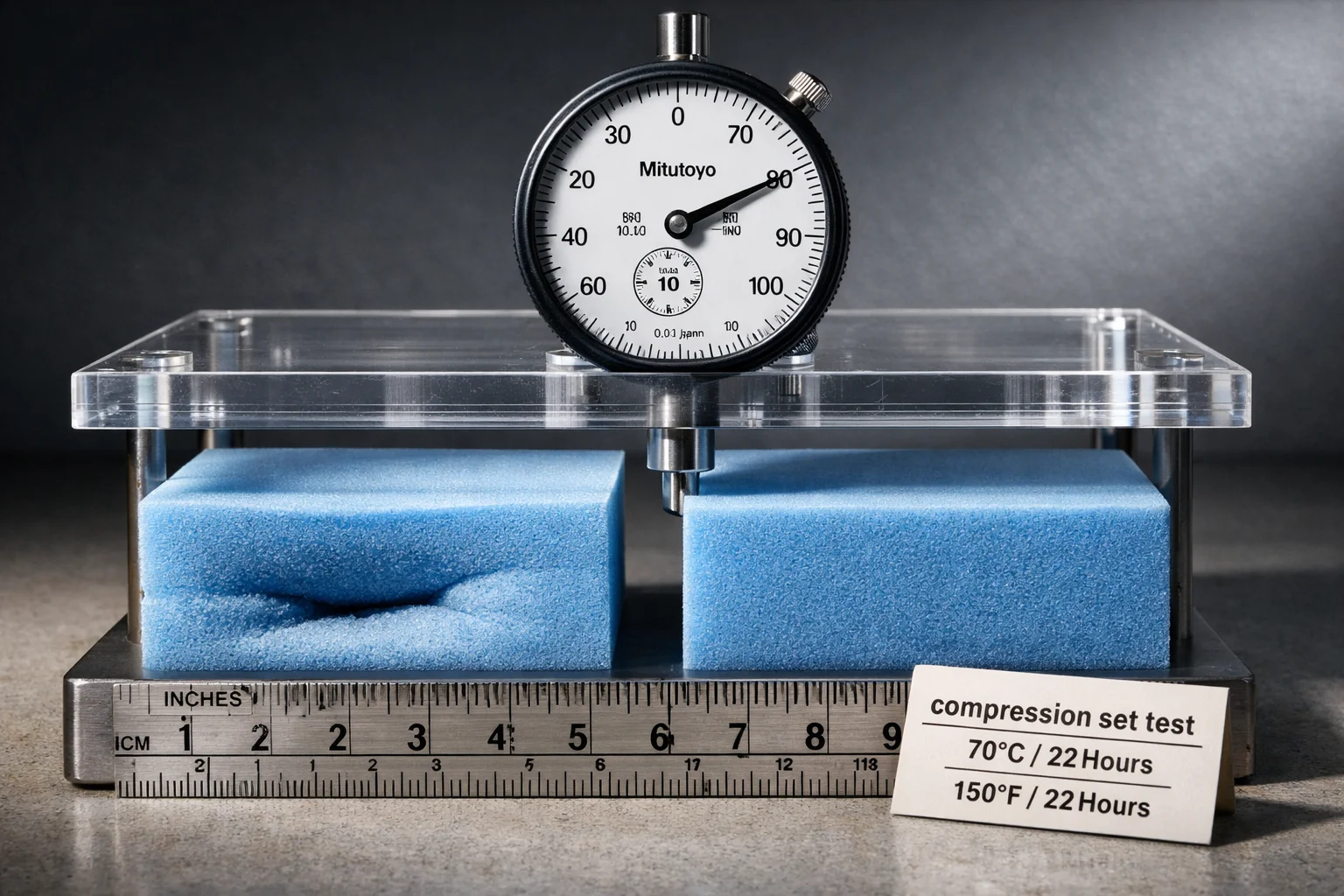
In a showroom, I try to separate “I like this right now” from “will this still be supportive after a couple of years.” I sit for a full minute, not ten seconds, then I stand up and look at the cushion surface, because the weak stuff shows a deep impression that lingers, while the stronger stuff rises back more cleanly.
I also do a very unglamorous test that has saved me from bad buys. I sit on the same spot twice in a row, then I move one seat over and sit again, and I pay attention to whether I immediately start chasing the lowest point, because that is the early sign of a cushion that is already learning your shape too quickly.
If the sofa feels firm but you like everything else about it, I do not automatically reject it anymore. I treat it like raw denim or new boots, you sometimes have to earn the comfort, and that break in period is often the price of a seat that does not collapse into a hammock.
The key is making sure the firmness is coming from a supportive core, not from something else that will turn harsh. If the cushion feels hard and unyielding at the very top, or you feel a sharp pressure point instead of broad support, that can be a thin layer over something cheap, so I press down with my palm near the front edge and see if it quickly bottoms out.
When a salesperson tells you, “Most people prefer soft,” I take that as a cue to steer the conversation back to what matters. I ask again for the foam density of the seat core and whether there is a softer wrap on top, because a good build can give you both initial comfort and long term support, but it rarely comes from ultra soft, low density foam doing all the work.
The Physics of Mass (2.5 lb vs 1.8 lb)
Foam density is usually described in pounds per cubic foot, and the easiest way I have found to think about it is simple, you are paying for how much actual material is inside the cushion instead of air.
When I hear 1.8 lb foam for the seat core, I assume I am looking at typical residential foam that can feel inviting fast and then lose its fight against gravity. In my own couches, this is the stuff that starts out fine, then quietly turns into that “air sandwich” feeling where you sink through the cushion and the support disappears right where you sit most.
When I hear 2.5 lb foam, especially when it is described as high resiliency, I get interested because it usually means thicker internal structure. In real life, that tends to behave more like a honeycomb, it holds its shape longer, rebounds more consistently, and it does not learn your body’s crater as quickly.
In a showroom, I do not let anyone hand wave this with “it’s high density” or “it’s premium.” I ask, “What is the seat foam density in pounds per cubic foot, and is that the core or just a layer?” and then I wait, because the answer tells me whether they actually know what is inside the sofa.
If you get a straight answer and it is around 1.8 for the seat core, I treat it like a negotiable compromise, not an automatic no. I start looking for other things that buy you time, like removable seat cushions you can rotate, or a construction where the cushion is thick enough that you are not going to bottom out the moment the foam softens.
If you get 2.5 lb for the seat core, I still check how it is being used. I press down hard with my palm near the front edge, because that is where cheap builds reveal themselves, and I pay attention to whether the resistance feels springy and uniform, or whether it collapses suddenly like there is not much substance under the fabric.
One thing I watch out for is vague language that hides the real number. If you hear “high density” without a density, or you hear the density quoted for the back cushions instead of the seats, I assume the good foam is not where it matters, because back cushions can be light and still seem fine, while seat cushions take the daily pounding.
If you love a sofa but the seat foam is 1.8, the most practical move you can make is to ask what it costs to upgrade the seat cores to a higher density option, or whether the manufacturer sells replacement inserts later. I have found that a sofa you can re-foam is very different from a sofa you have to replace when the cushion quits.
If you want one simple rule that keeps you out of trouble, this is mine, I try not to pay “forever sofa” money for a seat core that is basically standard 1.8 lb foam. That does not mean it will fail instantly, it means you are more likely to be buying that great day one comfort with a shorter countdown timer than you expect.
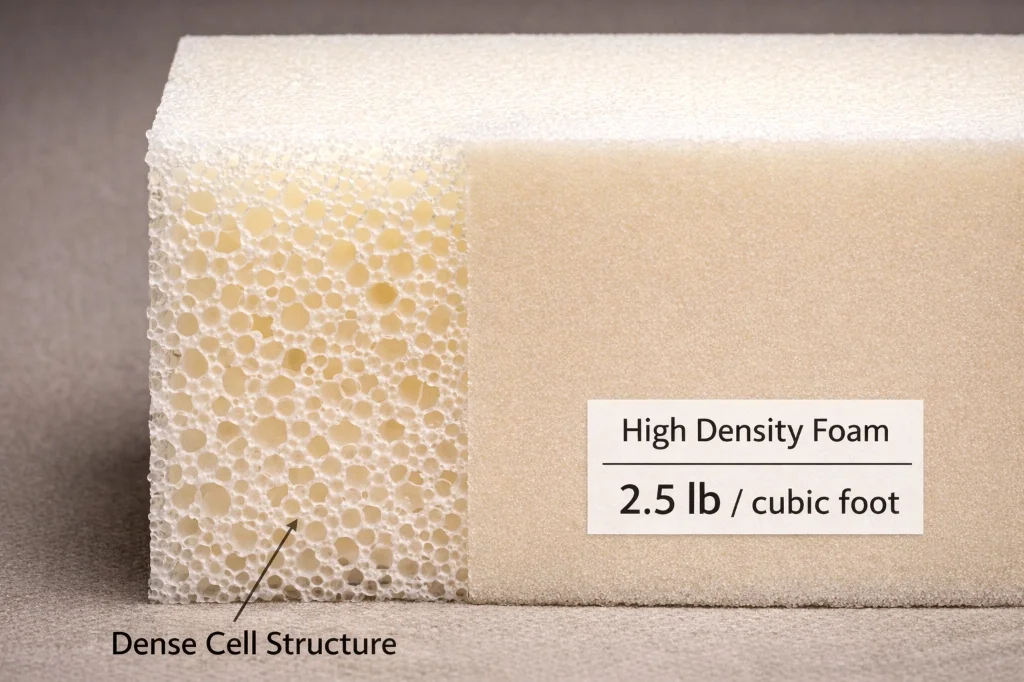
When I look at that kind of microscope image, I stop thinking about foam as “soft” or “firm” and start thinking about it like a structure. The low density foam looks airy and thin because it is, and that is why it can feel wonderful for a short time, then give up fast once the cell walls start tearing and staying compressed.
The high density foam looks tighter and more packed because there is more material doing the work. In a showroom, you cannot bring a microscope, but you can still shop as if you are trying to detect “fishing net” foam versus “fortress wall” foam.
What I do is a slow, hard press test with my palm in two places, right in the center where people plop down, and right on the front edge where people perch to put on shoes. If the cushion suddenly drops, or if I can easily feel a firmer layer underneath after a short press, I assume the internal structure is thin and I am going to end up bottoming out later.
Then I do a time test, because weak foam lies by feeling good for ten seconds. I sit for a full minute in my normal slouch, then I stand up and watch whether the cushion rises back smoothly or whether it keeps a dent that lingers like memory foam even though it is not marketed as memory foam.
I also pay attention to how the cushion rebounds at the edges, not just the middle. On sofas that wear poorly, the front edge is where you first see the “roll off” feeling, where you start sliding forward because the edge has softened into a ramp.
If you are comparing two sofas and one feels a little too firm at first but springs back evenly, while the other feels plush but stays squashed where you pressed, I usually bet on the firmer one. I have learned the hard way that the soft, net-like foam often becomes the uncomfortable one once your body has punched it into a permanent shape.
If the salesperson cannot give you the foam density, I try to get a different kind of clarity by asking whether the seat cores are replaceable and whether the brand sells inserts later. A sofa with removable zippered seat cushions gives you an escape hatch, because even if you compromise today, you can re-foam the seats instead of shopping for a whole new sofa when the “fortress” you thought you bought turns out to be a fishing net.
The “Cost per Year” Math
Once I started getting burned by “great deal” sofas, I stopped thinking in sticker price and started thinking in cost per year. The price tag is loud, but the ownership cost is what actually drains your money, especially when the cushions quit long before the frame looks “old.”
Here is the simple math I use when I am standing in a showroom trying to decide if the upgrade is worth it. If a $1,000 sofa feels nice but the seat foam is the kind that tends to give up in about two years, you are effectively paying about $500 per year to sit on it before you are shopping again or plotting a cushion hack. If a $2,000 sofa lasts fifteen years because the seat cores hold up, that works out to about $133 per year, even though the price tag looks scary.
This is why I do not automatically flinch at a higher price if the store can clearly tell you what is inside the seats. High density foam costs more because there is literally more material in the cushion, and in practice that extra material is often the difference between a sofa that stays supportive and one that turns into a permanent dent where you watch TV.
What I want you to take from this is not that you must buy the expensive sofa. It is that you should make the salesperson earn the price. If a sofa is priced like it is built for the long haul, I ask for the seat core density and whether the cushions are designed to be replaced later, and I treat vague answers as a sign that the “cost per year” is going to be worse than the tag suggests.
When two sofas feel similarly comfortable, I lean toward the one that gives you a longer runway before the cushion collapses, even if it costs more up front. I have learned that the “expensive” sofa can be dramatically cheaper to own, but only when the durability is real and not just a fancy fabric and a flattering showroom sit.
The Showroom Investigation
In the showroom, I ignore words like “premium” and “deluxe” because they cost you money without telling you anything. I try to force the conversation into one concrete detail that predicts how the sofa will feel after the honeymoon period, which is what is inside the seat.
What I ask, plainly, is “What is the seat foam density code, is it 1.8 or 2.5?” Then I stop talking. If you get a clean answer right away, that usually means the store actually has the spec sheet and the brand is not trying to hide the build.
If they respond with, “It’s high density,” I treat that as a dodge and I ask again, “High density meaning what number, and is that number for the seat core, not the back cushions or a thin topper?” I am not trying to be difficult, I am trying to keep you from paying for a story instead of a sofa.
When the salesperson truly cannot get you a number, I shift to the next best thing, which is whether the seat cushions unzip and whether the foam insert can be replaced later. If you cannot verify what is inside today, you at least want an exit plan for when the seat starts to dish out.
Then I do my favorite low tech test, I pick up the seat cushion. I know it feels a little ridiculous, but it tells me a lot in two seconds, especially when I compare it to other cushions in the same store.
If the cushion feels weirdly light for its size, like there is not much there, I assume you are dealing with airy foam that will feel great fast and then quit early. If it feels noticeably heavy, more like lifting a bag of sugar than a throw pillow, I get more confident that there is real material doing the supporting.
I also pay attention to how the weight is distributed as I lift it. A cushion that feels heavy but floppy can still be a problem, because sometimes the weight is coming from a thick fabric wrap or a dense topper while the core underneath is still basic.
After the lift, I do a quick squeeze at the front edge while I am holding it. If the edge compresses down to nothing with a simple hand squeeze, that is usually the same edge that will turn into the “slide off” ramp after a year of perching.
If the store will let you, unzip the cushion cover just enough to peek at the insert and confirm there really is a single foam core inside, not a thin layer over something cheap. If they will not let you unzip it, I do not argue, I just treat that as information and I become stricter about getting the foam density in writing before I buy.
Technical Summary: The Specification
When I say I want “hotel quality” at home, this is the spec I am trying to confirm on paper, not just feel for ten seconds in a showroom. I want the seat cushion core to be in the 2.5 lb to 2.8 lb density range, because that is where I have consistently seen cushions keep their shape and stop doing that slow collapse into a permanent rut.I also look for the foam type to be HR, which stands for high resiliency polyurethane. In plain English, I want a foam that springs back repeatedly instead of just compressing and staying tired, and “HR” is one of the few labels that often correlates with that behavior. If they tell you it is “poly foam” but cannot confirm it is HR, I treat it as unknown, and I go back to asking for the actual density number for the seat core.
Then I set my expectations about feel so I do not accidentally reject the good stuff. If the seat core really is in that 2.5 lb to 2.8 lb HR range, I expect a break in period of around 90 days where the cushion starts out noticeably firmer than the one that feels instantly plush on the sales floor. I have learned to interpret that early stiffness as evidence there is enough material to resist wear, as long as it still feels broadly supportive and not like I am sitting on a board.
When you are standing there deciding, I would rather you buy a sofa that feels a touch too firm on day one, but rebounds cleanly and evenly, than one that feels perfect instantly and already shows a lingering dent when you stand up. If you can get the density, confirm it is HR, and accept that it will relax over the first couple of months, you are much closer to that hotel sofa feeling that does not disappear after the honeymoon.
Explore Technical Reference
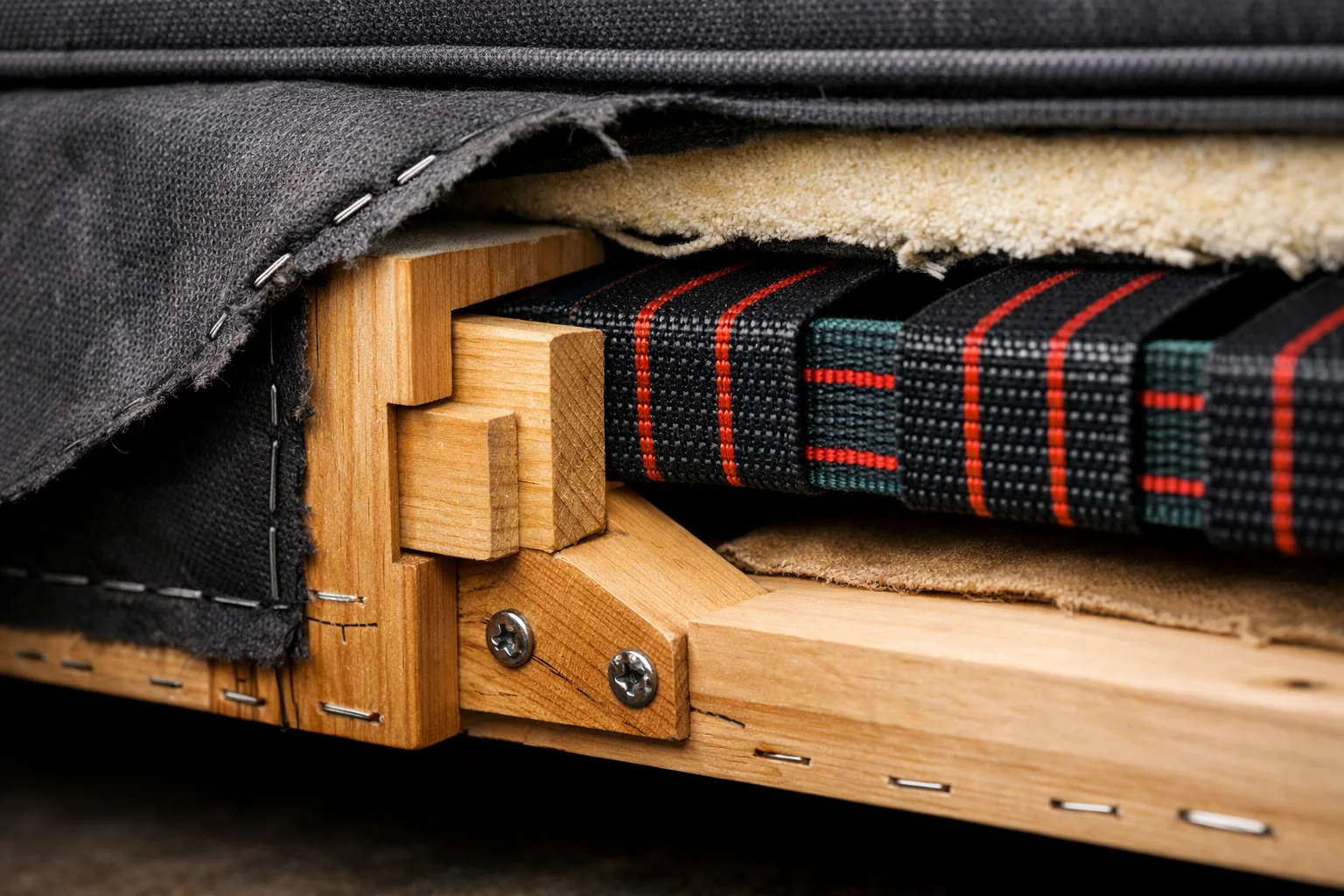
Seat Suspension: Webbing vs. Springs vs. Hand-Tied
Comparing sinuous springs, elastic webbing, and coil spring systems. Understanding why the foundation under your cushions determines sitting comfort more than the cushions themselves.
Analyze Details →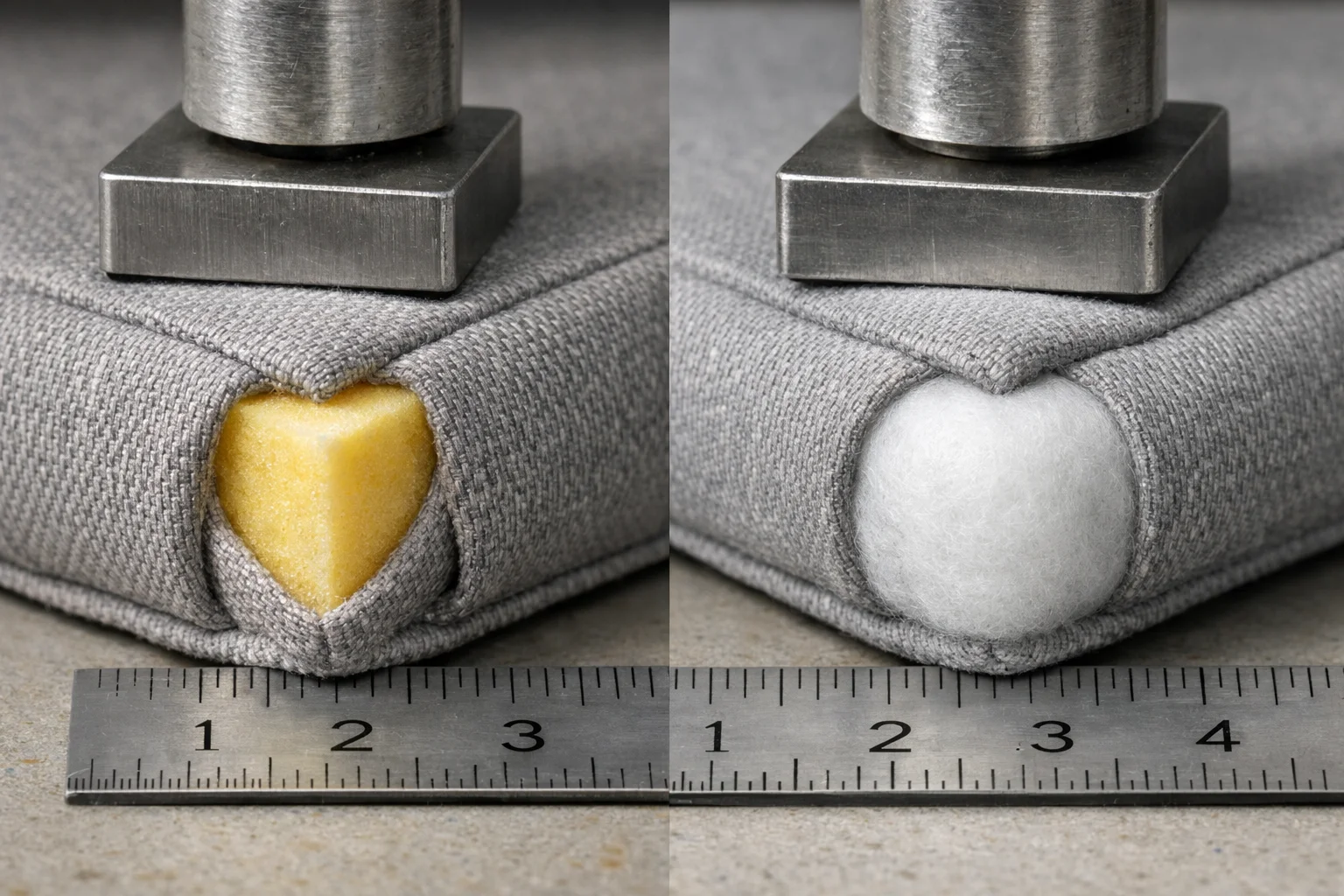
Wrapped Foam: The "Secret Sauce" of Cushions
Understanding the batting layer that creates smooth cushion appearance and protects both foam and fabric. The difference between Dacron, down, and wool wrapping materials.
Analyze Details →