Storage Sofas: The Capacity vs. Comfort Trade-off
Introduction
I have owned enough sagging sofas to stop believing that poor comfort is just bad luck. Over time I noticed a pattern, especially with sofas that promise hidden storage. They look clever in the showroom, then quietly fall apart under normal use.
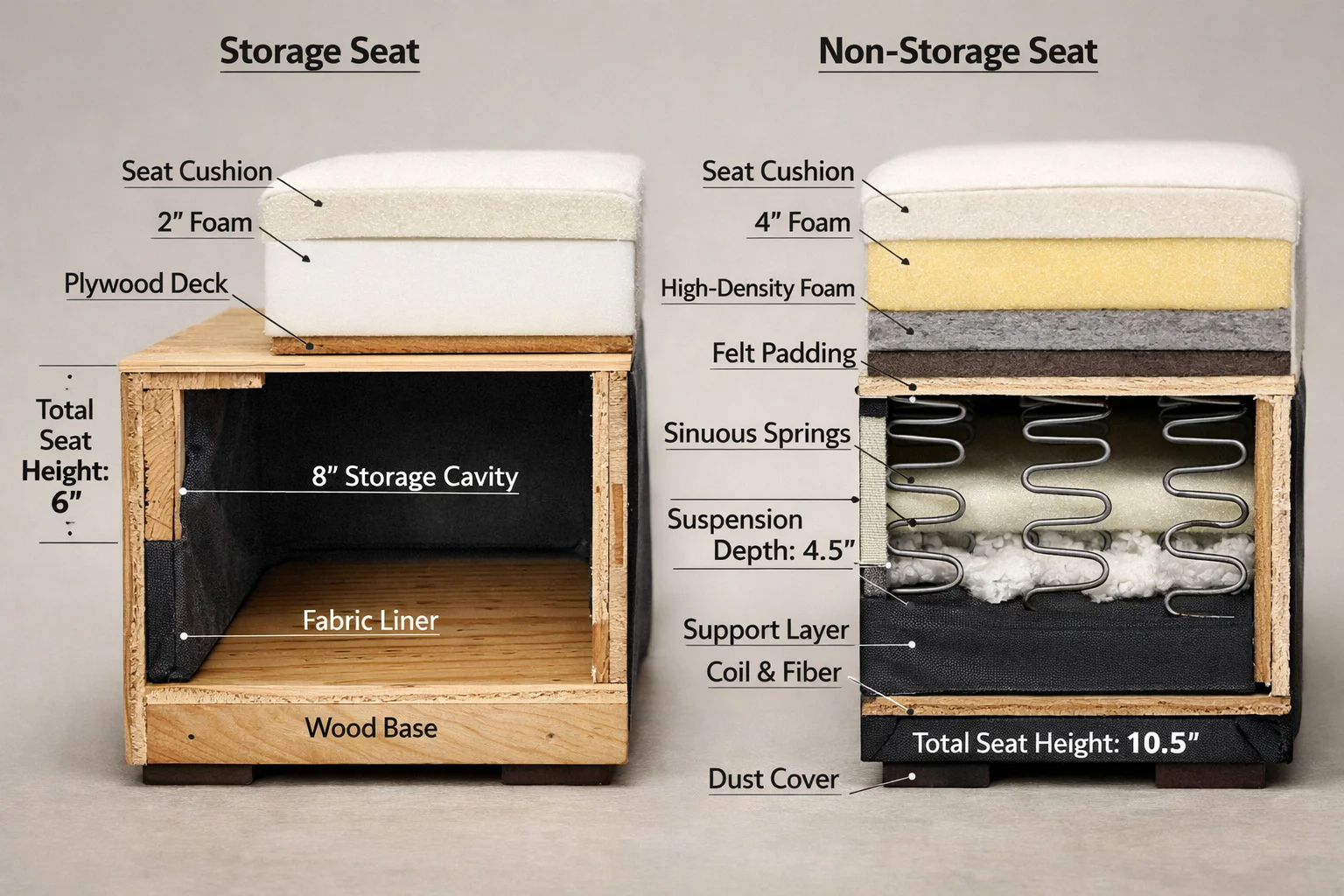
The core problem is simple and rarely explained to you. A sofa has a fixed amount of vertical space from the floor to the seat, and that space has to be divided between storage and the suspension that actually holds your weight.
When a brand adds a storage box under the seat, it does not magically create extra room. It steals height from the suspension system, which means thinner springs, cheaper webbing, or sometimes almost nothing at all between you and a hard panel.
I want you to understand this upfront because it changes how you shop. Integrated storage is a zero sum game. Every inch given to storage is an inch taken away from long term comfort and support.
This does not mean all storage sofas are automatically bad. It does mean you need to be far more skeptical and far more hands on when you test them.
As you read the rest of this guide, I want you to keep one idea in your head while you are standing in a showroom. You are not judging how clever the storage looks. You are judging what had to be sacrificed to make that storage fit.
The "Rigid Deck" Sensation
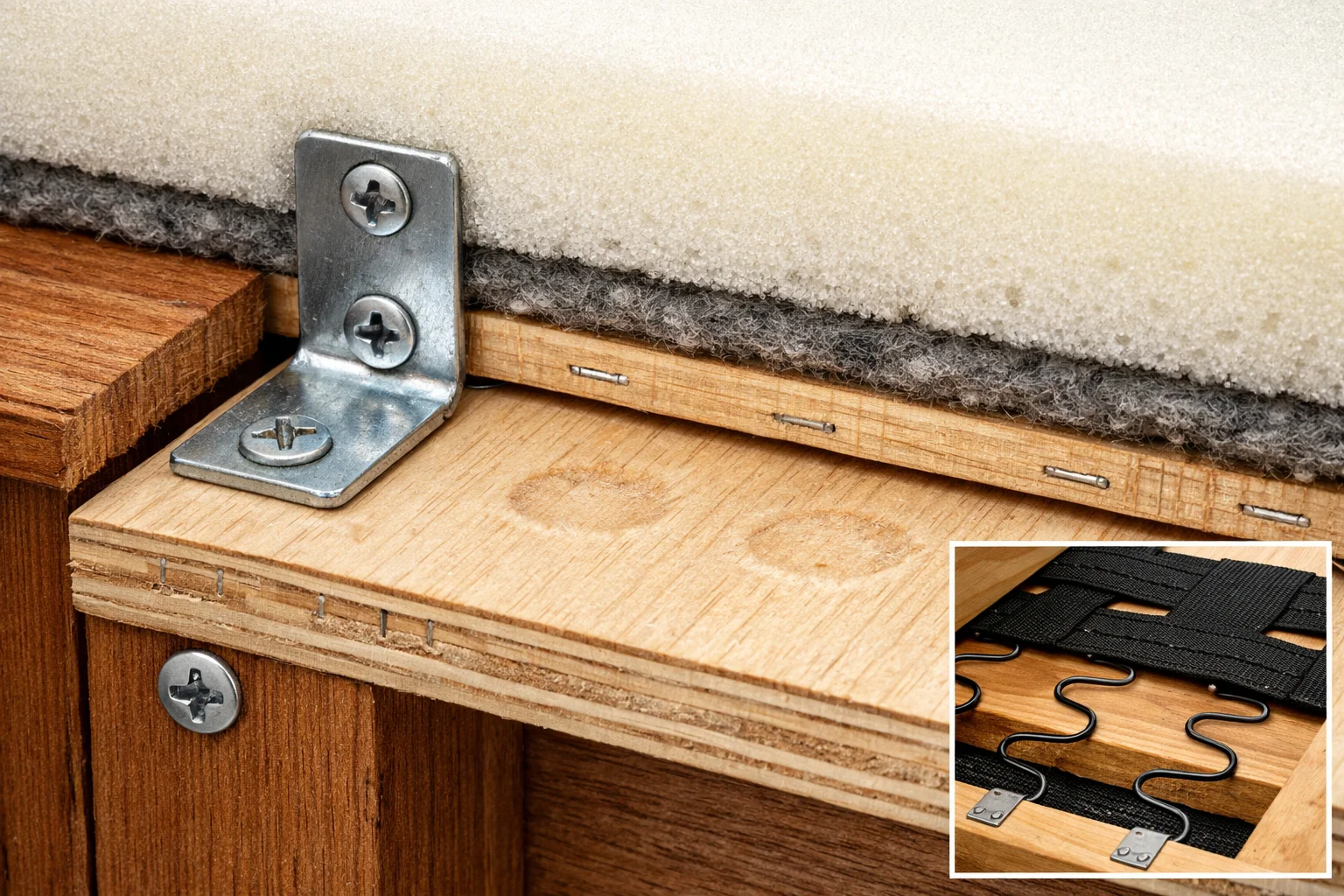
When I sit on a normal sofa, there is usually several inches of spring or webbing underneath me. That hidden space is what gives you the soft dip when you first sit and the slow support that keeps your hips from feeling slammed onto a hard surface. It is what makes a sofa feel deep instead of shallow, even if the cushions look thick.With a storage sofa, that space has to disappear. To make a hollow box, the maker removes the springs or webbing entirely and replaces them with a flat plywood lid. Your seat cushion is no longer sitting on a flexible support system. It is sitting on a rigid deck, which is just a stiff panel with no give.
What this means for you is very simple and very noticeable. Even if the cushions look identical to the non storage version, the storage seat will feel dramatically firmer, often closer to thirty to fifty percent firmer by feel. There is no bounce and no travel underneath you. The foam has to absorb all of your weight, all of the time.
I want you to test for this in the showroom in a very deliberate way. Sit down quickly instead of easing yourself onto the seat. If you feel a sharp stop instead of a gentle catch, you are feeling that rigid deck. Stay seated for a few minutes and pay attention to your hips. If you start shifting or feel pressure building, that is the plywood announcing itself.
If you are looking at a sectional with one storage seat and one normal seat, I strongly suggest you treat them as different chairs. I would use the storage section for short visits, chatting, or the spot no one claims for long movie nights. I would reserve the non storage section for daily lounging, naps, and anywhere you expect to sink in and relax.
None of this means you should automatically walk away. It does mean you should stop trusting your first impression. A storage seat can feel fine for thirty seconds. The rigid deck only shows its true colors after a few minutes of real sitting, which is exactly what most people never do in a showroom.
Types of Storage Mechanisms
Not all storage sofas fail in the same way. The mechanism used to create the storage matters as much as the idea of storage itself, and you can usually spot the good and bad versions just by interacting with them for a few minutes.
The most common type I see is the lift up seat with hinges and gas struts. This is the one where the entire cushion platform lifts to reveal a box underneath. When this is done cheaply, the seat rests on a solid panel and all the comfort loss I described earlier applies in full.
When I test a lift up seat, I always lift it myself and then lower it again. If it feels heavy, jerky, or slams shut unless you guide it carefully, that tells me the hardware is minimal and the panel is doing structural work instead of just acting as a lid. A better version will lift smoothly, stay open without effort, and settle back down gently without a hard thunk.
I also pay attention to what happens to the cushion alignment after I close it. If the cushion no longer sits flush or you can feel a ridge where the lid meets the frame, that unevenness will only get worse with use. You will feel it every time you sit.
The second type you will see is drawer based storage that pulls out from under the seat. I am generally less hostile to this design because it does not always require removing the entire suspension system. In better sofas, the seat above the drawer can still use springs or webbing, with the drawer riding lower and forward.
In the showroom, I pull the drawer all the way out and push it back in several times. If it flexes, scrapes, or feels like it is riding on thin plastic wheels, I assume it will fail once dust, weight, and real life get involved. I also sit on the seat while the drawer is closed and rock slightly. If I hear creaks or feel movement, the drawer frame is probably contributing to the structure, which is not what you want.
Chaise storage is its own category and often the least offensive option. Because a chaise already has a longer footprint, there is sometimes enough vertical room to keep some suspension while still carving out storage space. This is the only storage setup where I have personally owned a sofa that remained tolerable over time.
Even here, I test it like a normal seat. I sit back, then slide forward, then sit upright for a few minutes. If the chaise feels noticeably firmer than the rest of the sofa, that tells me storage won the argument over comfort.
I am very cautious with arm storage and drop down backs. These features tend to add weight and hinges to parts of the sofa that get leaned on constantly. I press my weight into the arm or back and see if it shifts or creaks. If it does this in a quiet showroom, it will sound worse at home.
The big takeaway I want you to keep in mind is that mechanisms reveal priorities. Smooth motion, quiet hardware, and consistent seat feel usually mean the storage was designed around the sofa. Rough movement, noise, and uneven comfort usually mean the sofa was designed around the storage.
You do not need to memorize mechanism names or construction diagrams. You just need to interact with the sofa like a person who will live with it. Lift it, sit on it, move it, and listen to it. The mechanism will tell you very quickly whether it is going to be a convenience or a constant compromise.
1. Hydraulic Gas-Strut Lift
This is the lift mechanism I see most often on storage chaises and sometimes on full sofa seats. You grab the front edge of the seat and the whole platform swings up on hinges, helped by gas struts that are doing most of the lifting for you.
In the showroom, this mechanism often feels impressive at first. The seat rises easily and stays open without you holding it, which makes the storage feel usable instead of annoying. I understand why people like this, because you can use both hands and you are not fighting gravity.
What I want you to focus on is how much the struts are doing versus how much you are doing. When I lift the seat, I pay attention to whether it almost floats up on its own or whether I still have to muscle it past the halfway point. A good strut should take most of the weight once you get it started.
I also always leave the seat open for a few seconds and gently nudge it. It should stay put without wobbling or slowly sinking. If it drifts downward even a little, that tells me the struts are already working hard, and they will only get weaker with time.
Gas struts are sealed units filled with compressed gas, and those seals do not last forever. From what I have seen as an owner, five to seven years is a realistic window before they start losing strength, sometimes sooner if the seat is heavy or used often.
When struts weaken, the sofa does not fail dramatically. Instead the seat just feels heavier every year. Eventually it will not stay open on its own, which turns that clever storage into something you avoid using.
This matters because replacing struts is not as simple as tightening a screw. You need the correct size and strength, and most stores do not tell you what was used. If the salesperson cannot tell you whether replacement struts are available or how they would be sourced, I assume you will be on your own later.
I also look closely at what the struts are attached to. If they are mounted into thin plywood or particle board, I press gently sideways on the open seat and watch for flex. If the mounting points move now, they will loosen over time and no new strut will fix that.
My practical advice is to judge this mechanism as if it will someday lose assistance, because it probably will. Ask yourself whether you would still tolerate using the storage if the seat felt twice as heavy and no longer stayed open by itself. If the answer is no, you should be very cautious.
When done well, a gas strut lift can be convenient and safe. When done cheaply, it quietly turns into a daily annoyance that reminds you the sofa was built around a feature, not around long term use.
2. Front-Pull Drawer
This is the storage design where a shallow drawer slides out from the base of the sofa, usually on metal ball bearing slides mounted on the sides. When it is done right, the seat above can still have real suspension, which is why I am more open to this option than lift up seats.
The first thing I do in a showroom is look at the space in front of the sofa and imagine my own room. This drawer needs a surprising amount of clear floor to open fully, often closer to the length of a coffee table than people expect. If you have a rug, a low table, or a tight walkway, this drawer may end up half used simply because it is annoying to open.
I always pull the drawer all the way out, then push it back in, several times. I am listening and feeling for smoothness. A good drawer should glide without chatter, grinding, or a sudden drop at the end of its travel. If I feel resistance or hear metal clicking, I assume dust and weight will only make that worse at home.
Next I put one hand under the front edge of the open drawer and gently lift. I am not trying to break it, I am just checking for flex. If the drawer bottom bows easily with light pressure, it will bow much more once you fill it with blankets, books, or anything dense.
This matters because when a drawer bottom sags, it does not fail upward where you would notice it. It fails downward, closer to your floor. On hardwood or tile, that sag can turn into scraping every time you open the drawer, which is both noisy and damaging.
I also pay attention to how low the drawer sits when it is closed. If it already looks close to the floor in the showroom, there is very little margin left for real world use. A few months of loading and unloading can be enough to make it drag.
One thing I see people miss is how the drawer interacts with the seat structure. I sit on the sofa with the drawer fully closed and shift my weight forward and back. If I feel movement or hear creaks coming from below, that tells me the drawer box is helping support the seat, which is not ideal. The drawer should feel like an add on, not a load bearing part.
I also look inside the drawer and check how the bottom is attached. If it is just a thin panel stapled into shallow grooves, I am cautious about using it for anything heavier than pillows. If the salesperson suggests storing books, shoes, or weights, I take that as a warning sign, not a feature.
My practical rule with front pull drawers is to treat them as light duty storage. They are fine for throws, extra covers, or things you access occasionally. If you are planning to load it up and open it daily, the mechanism and the floor beneath it need to be nearly perfect, and most mass market sofas are not.
When this design is executed well, it is one of the least comfort destroying ways to add storage. When it is done cheaply, it becomes a source of scraping, sticking, and quiet frustration that you only notice once the sofa is already in your home.
Diagram of a hydraulic gas strut in a storage chaise
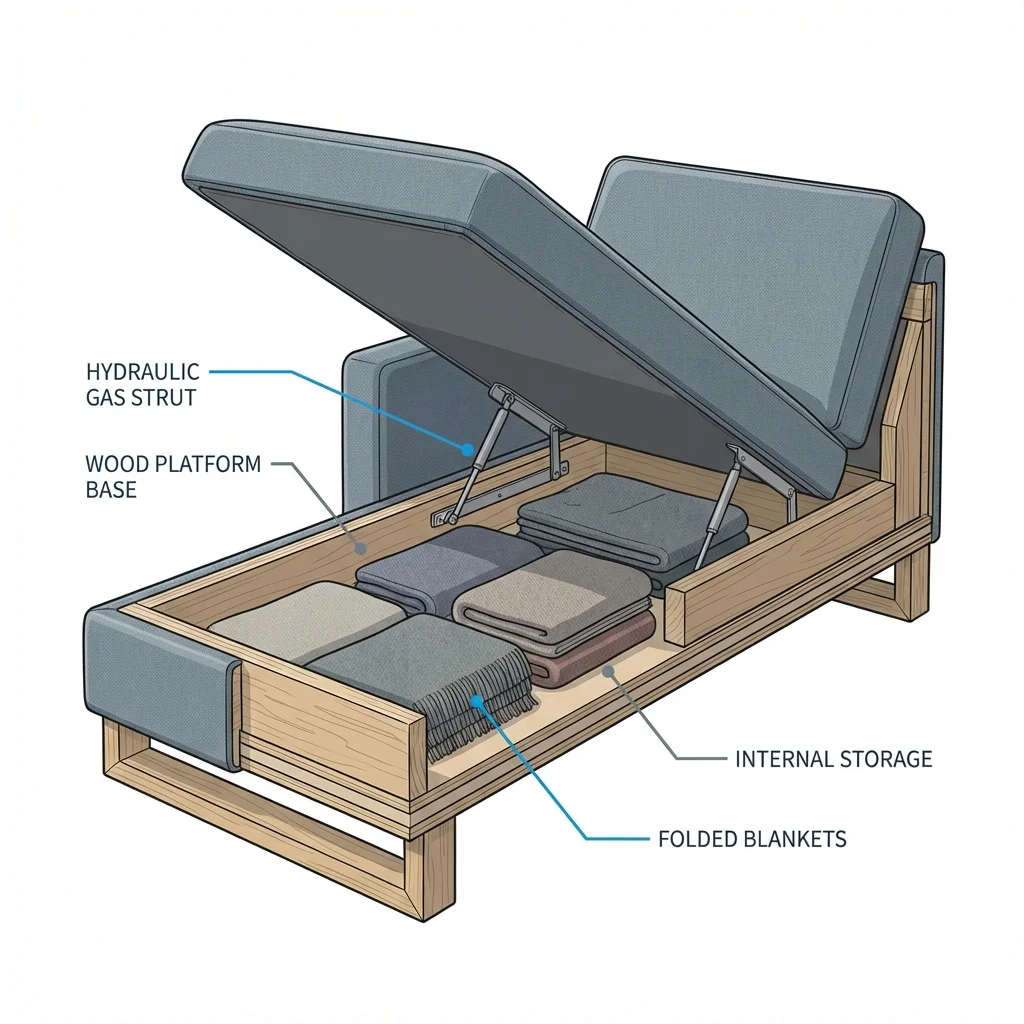
When you see a diagram like this, I want you to stop thinking about clever engineering and start thinking about everyday use. This mechanism exists for one main reason, to stop the seat from slamming shut on your hands, knees, or anything else underneath it.
In the showroom, I always picture what would happen if the strut was not there. That lid is heavy, often much heavier than it looks, because it includes the frame, the cushion, and the upholstery. Without assistance, gravity would win fast, and that is why I take the presence and behavior of the strut very seriously.
What I physically do is lift the seat and then deliberately let go, while keeping my body out of the way. A healthy strut should hold the seat fully open without hesitation. If it pauses, sinks, or needs you to prop it with your shoulder, that is not just an inconvenience, it is a safety warning.
I also pay attention to the closing motion. I guide the seat down slowly and see if the strut resists all the way to the bottom. If the last few inches drop quickly, that means the strut is only helping part of the time. That is how fingers get pinched, especially if kids or guests use the storage without thinking.
The diagram shows the strut attached at two pivot points, and this is where I lean in and look closely. I check whether those attachment points are anchored into solid wood or into thin sheet material. You do not need to know wood types to do this, you just watch for flex while the seat is open and you gently press sideways on the lid.
If the whole assembly twists or creaks with light pressure, I assume the mounting points are marginal. Over time, that stress does not disappear, it enlarges the screw holes and loosens the hardware. Once that happens, even a brand new replacement strut will not restore the original feel.
Another thing I always do is imagine the worst day, not the best day. Gas struts slowly lose pressure, and they never regain it. I ask myself whether I would still feel safe lifting and lowering this seat if the assistance was cut in half. If the answer is no, I treat that storage as temporary, not a long term feature.
From a buying perspective, this diagram tells you something important that salespeople often gloss over. The strut is not there to make your life easier, it is there to compensate for a design that would otherwise be dangerous. That means the sofa depends on it.
My advice is simple and very practical. If the strut feels marginal in a quiet showroom with a brand new floor model, it will feel worse at home after years of use. If it feels smooth, strong, and predictable now, it has a better chance of remaining merely acceptable later.
I am not trying to scare you away from storage chaises. I am trying to get you to treat this mechanism with the same seriousness you would treat a car door that will not stay open on a hill. You would not call that a small flaw. You would call it a problem waiting to happen.
When you understand what this diagram really represents, you stop being impressed by the lift and start evaluating whether you trust it. That shift in mindset alone will save you from a lot of regret later.
The "Mildew Micro-Climate"
This is a problem I learned the hard way, because it does not show up in a showroom and no one warns you about it. When you store organic items like cotton blankets or wool pillows inside a storage sofa, you are creating a small sealed environment that behaves very differently from a closet.
When you sit on the sofa, your body heat travels downward into the seat and into the storage box below. At the same time, the bottom of that box is close to the floor, which is usually cooler. That temperature difference matters more than people realize.
What happens next is simple physics playing out quietly. Warm air holds moisture, and when it hits a cooler surface inside that closed box, condensation can form. You never see dripping water, but you get just enough dampness to encourage mildew.
Because the storage compartment is usually sealed on all sides, that moisture has nowhere to go. There is no airflow to dry it out. Over time, the fabrics you store inside start to develop a musty, stuffy smell that does not wash out easily.
If you have ever pulled a blanket out of a sofa and thought it smelled like a basement, this is why. It is not because your house is dirty. It is because the sofa created its own little climate.
In the showroom, I always open the storage and smell it, even on a brand new floor model. If I catch even a faint chemical or enclosed odor, I assume it will turn into something worse once real heat, real humidity, and real fabrics are involved.
I also look at the bottom of the storage box. If it is a solid panel with no openings at all, I mentally flag it. That design traps air completely, which is exactly what mildew likes.
The technical fix for this is ventilation holes drilled through the floor of the storage compartment to allow passive air exchange. I am not suggesting you bring a drill into the showroom. I am suggesting you recognize whether the design even allows for air movement.
From a buying perspective, you have two practical choices. You can decide to never store organic materials in that sofa and limit it to items like spare cables or plastic wrapped items. Or you can accept that you may need to modify it at home later to let it breathe.
What I do is ask myself a very honest question. If this sofa was delivered tomorrow and I filled it with blankets, would I feel confident pulling them out in six months and using them without hesitation. If the answer is no, the storage has already failed its most basic job.
This is not a dramatic failure like a broken hinge or a sagging seat. It is a slow, quiet one that only shows itself after you are committed. Once you understand how this micro climate forms, you stop assuming storage is harmless and start treating it as something that needs scrutiny, just like comfort and durability.
Storage Specification Matrix
When I look at storage sofas now, I mentally run through a simple comparison like this, not as a chart, but as a set of tradeoffs you can feel and test in person. The goal is not to find the most storage on paper, it is to understand what kind of problems you are buying along with that storage.
A hydraulic lift top gives you the most obvious usable space because it opens the entire chassis. You can fit bulky items and still close the lid. The price you pay is mechanical risk. Those gas struts are doing real work, and when their seals weaken, the storage becomes heavy, awkward, or unsafe. Access is usually good at first because the lid stays open, but only as long as the struts remain healthy. The seat is always sitting on a rigid deck, so suspension is effectively zero, and all of your comfort depends on foam. I assume a realistic load is around what a couple of packed suitcases would weigh, and I would be nervous pushing it beyond that.
A front pull drawer feels more modest because the storage volume is limited by drawer depth. You will not fit oversized items, but you can organize smaller things more easily. The main risk here is alignment. Slides wear, drawers sag, and floors are rarely perfectly flat. Access is decent, but only if you have enough clear floor space in front of the sofa every time you want to open it. Like the lift top, the area directly above the drawer usually sits on a rigid platform, but in better designs the main seating area still has real suspension. I treat these drawers as light duty and assume they are happiest carrying the equivalent of folded blankets, not dense or heavy gear.
Lift off modular storage is the most brute force option. You physically remove a cushion or panel and then reach into a large open cavity. There is no hardware to fail because there is nothing assisting you. That also means access is the least convenient, since you have to move cushions out of the way every time. The upside is capacity. You can store as much as the structure will physically hold, because there are no slides or struts setting limits. Comfort is still affected because the seat usually rests on a solid deck, but there is less that can break quietly over time.
When you stand in a showroom, you can use this mental matrix without ever mentioning it out loud. If you want maximum capacity and easy access, you are also accepting mechanical parts that will age. If you want minimal risk, you are accepting inconvenience. There is no version that gives you high capacity, zero mechanics, perfect access, and plush suspension all at once.
What I personally do is decide which failure I am most willing to live with. Am I more annoyed by lifting cushions, or by hardware that slowly stops working. Am I more sensitive to firm seating, or to awkward access. Once you answer that honestly, the right storage style often eliminates itself very quickly.
This is why I encourage you to slow down at this stage. Salespeople will often point to capacity numbers or clever features, but those numbers do not tell you how the sofa will feel or behave after years of normal use. Your hands, your weight, and your patience are better measuring tools than any spec sheet.
If you use this matrix as a way to frame what you are feeling in the showroom, you stop being impressed by storage volume alone. You start seeing storage as a set of compromises that you get to choose, rather than a free upgrade that somehow comes without cost.
Explore Technical Reference
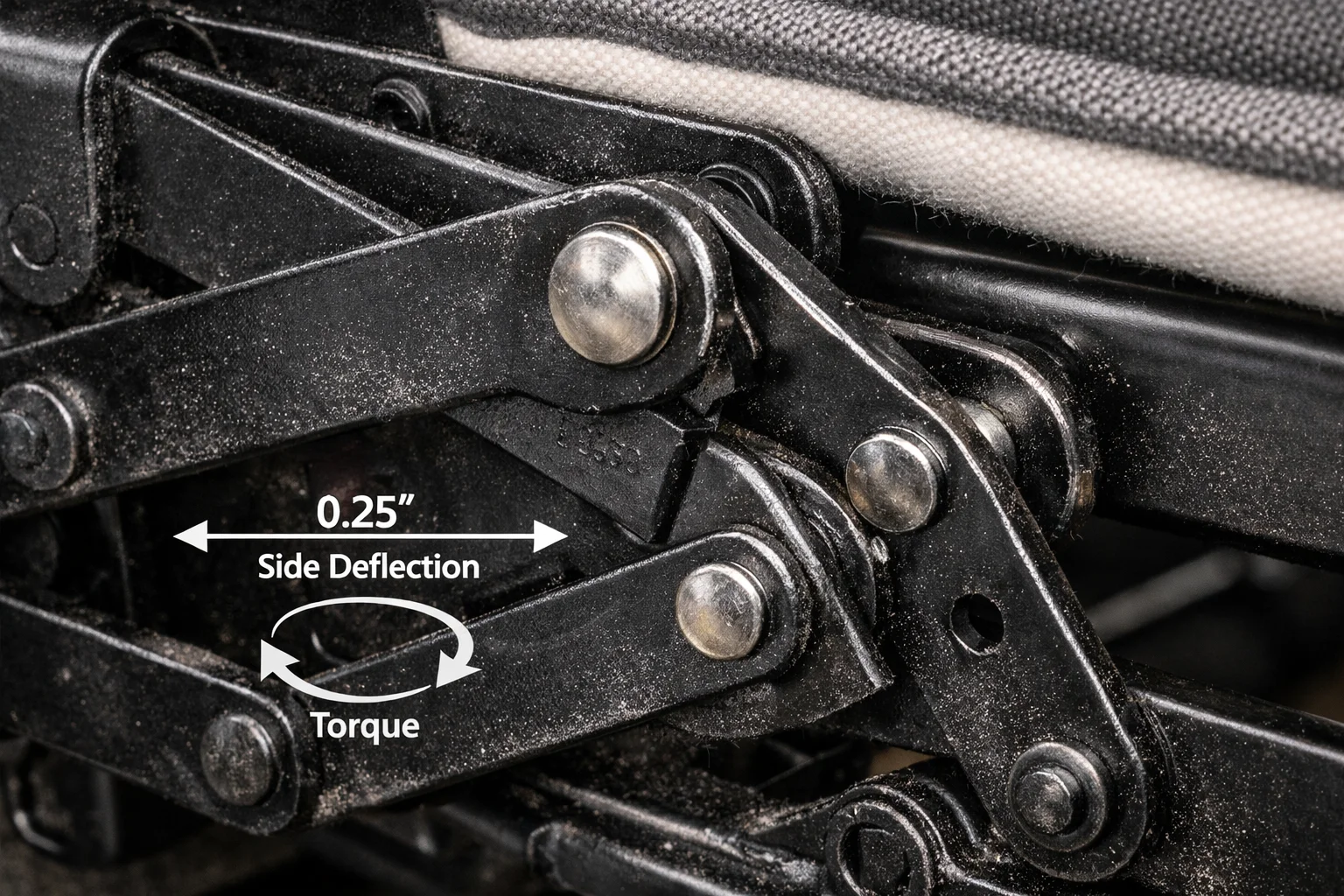
Pull-Out vs. Fold-Down: The Physics of Sleep
Choosing your compromise. The 'Bar in the Back' torture of pull-outs
Analyze Details →
Futon Comfort: The Density/Flexibility Paradox
Why most futons feel terrible and what construction features separate comfortable futons from disappointing ones. The material and design choices that determine daily comfort.
Analyze Details →