Pull-Out vs. Fold-Down: The Physics of Sleep
Choosing a sofa bed
When I shop for a sofa bed, I treat it like I am choosing which problem I would rather live with. The pull out style is the triple fold linkage, and the fold down style is the bifold hinge, and each one tends to fail in a very specific way once the newness wears off.
With a pull out, you are basically buying a hidden metal bed frame that lives inside a sofa. The predictable comfort failure is the bar and joint feeling, where you can feel structure through the mattress, especially at the hip and shoulder, and it gets worse as the thin mattress breaks in and the webbing or support wires lose tension.
In a showroom, I do not just lie down for ten seconds. I pull the bed out fully, sit on the edge like I am putting on socks, then lie on my side and roll slowly until I find the hard spots. If I can feel a crossbar or a hinge line immediately, it will not get better at home, it will get more obvious.
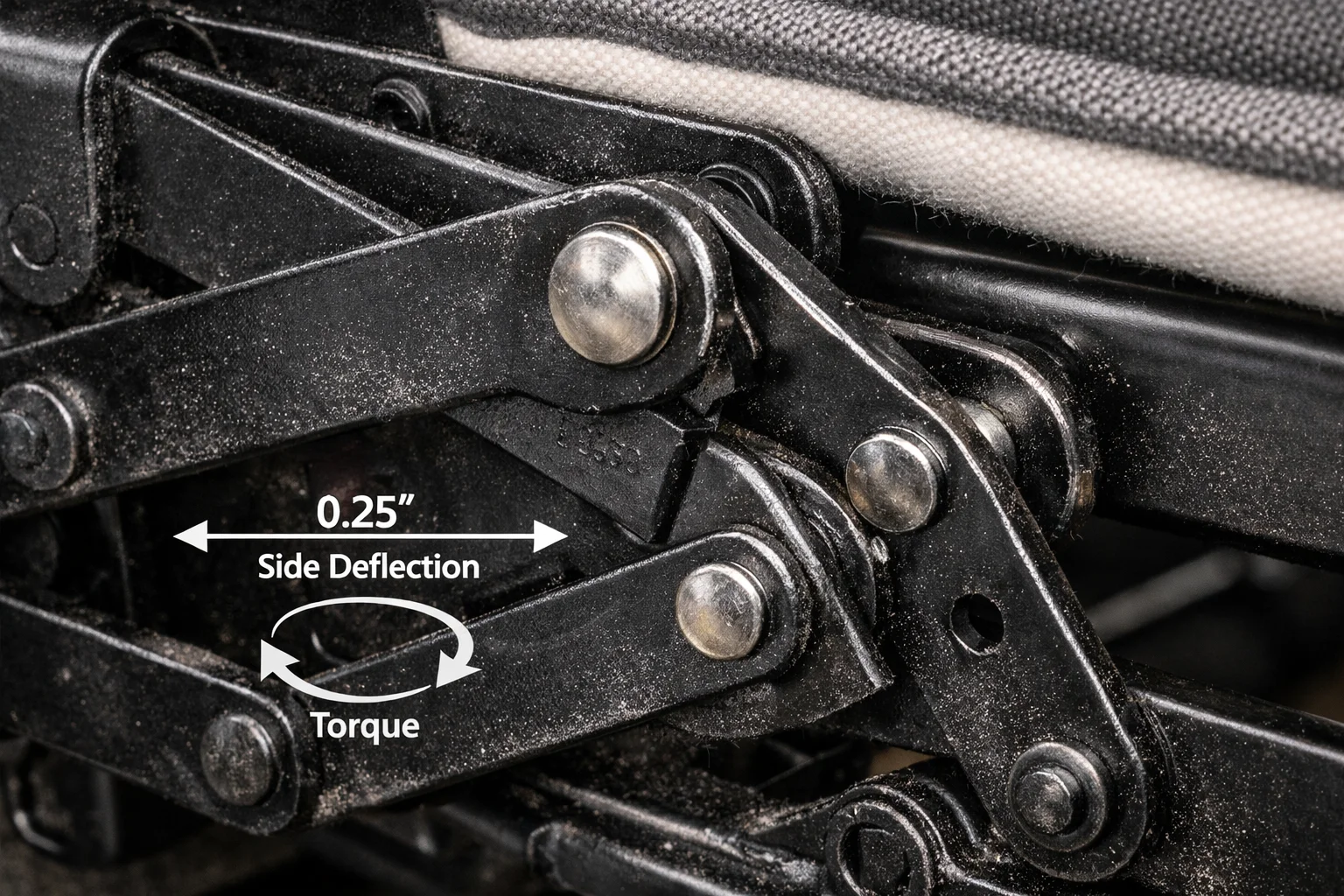
I also watch how the mechanism moves because that is where long term annoyance comes from. If the frame scrapes, twists, or needs a little lift and wiggle to lock, I assume it will be worse on carpet, worse with dust, and worse when someone is tired and trying to set it up quickly.
Ask the salesperson to let you remove the seat cushions and look inside before you buy. I am looking for a frame that opens without racking side to side, and I want the inner metal to look like it is meant to be handled, not like sharp stamped edges and thin little link arms that already flex when I tug them.
The mattress matters, but not in the way people think. Thickness helps only if the support below it is decent, so I focus on whether the platform under the mattress is firm and continuous or whether it is mostly wires and gaps. If the store offers a “memory foam upgrade,” I still lie down and hunt for the bars because foam can mask a problem for a minute and then compress right onto it.
A fold down, the bifold hinge type, is a different bargain. It usually sleeps flatter than a cheap pull out because you are not dealing with as many crossbars under your torso, but the predictable failure is that it becomes a compromise sofa, a compromise bed, or both. The seat can feel stiff because you are sitting on a structure that has to become a sleeping surface, and the hinge line can create a ridge or dip that your back notices over a full night.
In the showroom, I convert it from sofa to bed and back more than once and I do it slowly. I pay attention to whether the back panel lands flush, whether the two halves meet evenly without a step, and whether it feels like the hinge is doing controlled work or slamming into place.
Then I test it like a real person uses it. I sit in the middle where people actually sit, and I check if I feel the fold line through the upholstery. When it is in bed mode, I lie across the hinge area and see if my spine wants to bend into a trough or perch on a ridge.
One practical thing I always do is measure in my head while I am standing there, even if I do not have a tape. For pull outs, you need clearance in front of the sofa for the whole bed to extend, and you also need room to walk around it. For fold downs, you need space behind and in front as it flips out, and you need to make sure it will not crash into a coffee table, a radiator, or a low windowsill.
If you are buying it mainly as a sofa with occasional guest duty, I lean toward whatever feels like the better sofa first, because you will sit on it far more hours than anyone will sleep on it. If you are buying it mainly as a bed, I stop thinking like a sofa shopper and I start thinking like a bed shopper, which means I prioritize a flatter, less lumpy surface and a mechanism that feels stable under movement.
I also try to get a clear answer on what is replaceable. Ask whether the mattress is a standard size you can swap later, and ask what happens if the mechanism loosens, whether parts are available or if the whole unit is considered disposable. If the salesperson cannot tell you anything beyond the length of the warranty, I treat that as a hint about how the brand expects it to age.
Finally, I do not let “easy open” marketing substitute for your hands and your ears. If it feels fiddly, sounds crunchy, or needs a hard yank to start moving, you are feeling the future in the present, and it is usually telling the truth.
The "Taco" vs. The "Gutter"
With sofa beds, there are two signature discomfort patterns I look for because they show up even when everything is brand new. If you can spot them in the showroom, you can save yourself from buying a sleeper that only works on paper.On a pull out, the common issue is what I call the Taco effect. The mattress is basically hanging on a springy perimeter and a flexible deck, so the middle tends to sag, and when two people lie on it they drift toward the low spot and toward each other. If you and your partner can not stay put and you keep rolling inward, your lower back is going to pay for it by morning.
In the store, I test this by lying on my back in the center first, then shifting my hips left and right to feel how quickly the surface tries to funnel me back to the middle. If I have someone with me, I ask them to lie down too, because the Taco effect is much more obvious with two bodies on it than with one.
If I am shopping alone, I do a crude version of the same test by putting a heavy bag or a folded showroom pillow right next to me, then I see whether my body angle changes as the surface dips and pulls me in. If my spine feels like it is being bent into a shallow V shape, I treat that as a real warning sign, not a nitpick.
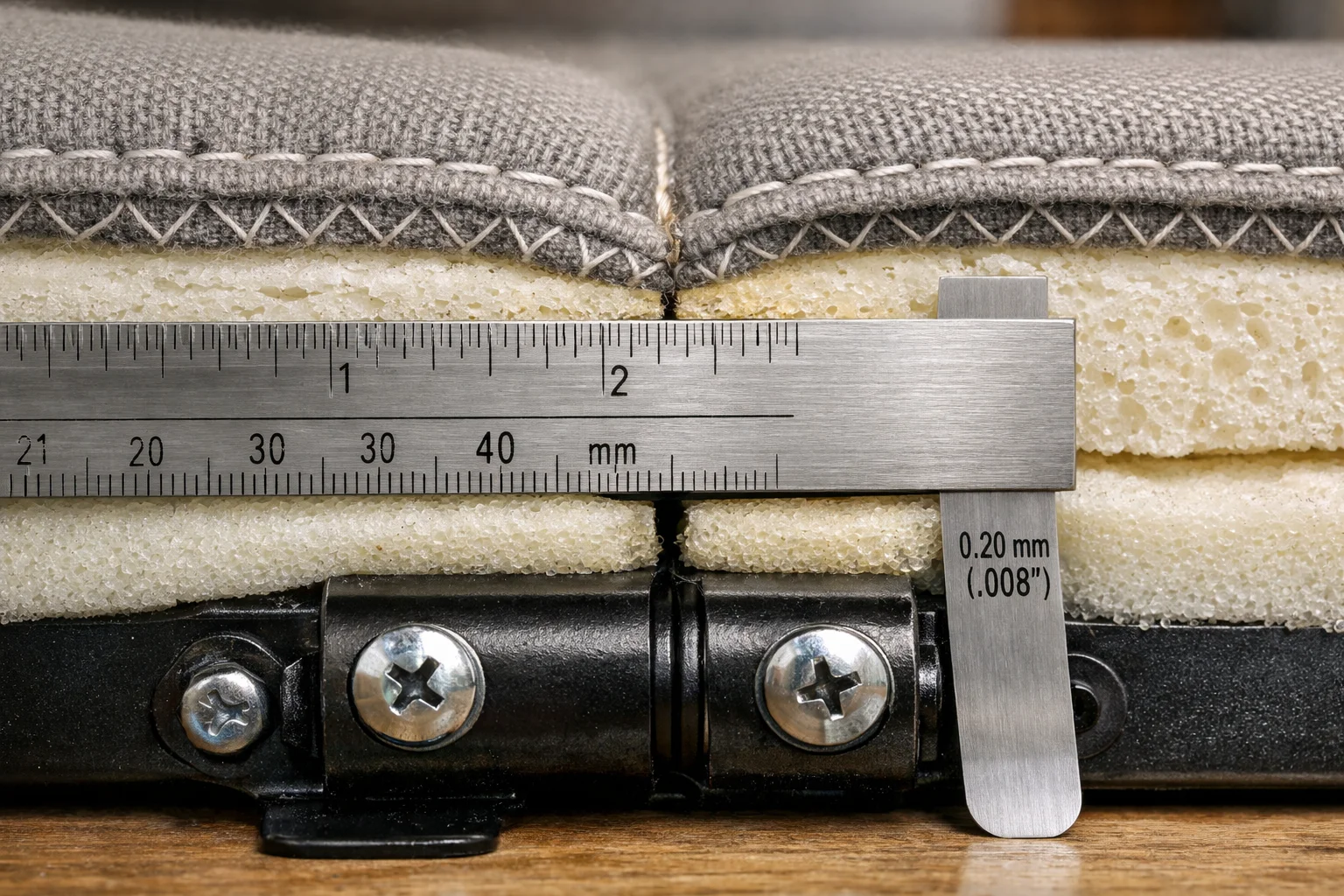
On a fold down, the big problem is what I call the Gutter effect. The sleeping surface is two cushion sections meeting at a hinge, and there is usually a real gap where support disappears, even if the fabric makes it look continuous. That gap is where your pelvis or shoulder wants to settle, and once you find it at 2 a.m. you will keep finding it.
In the showroom, I do not just lie lengthwise and hope for the best. I line my body up so the hinge is under my hips, then I roll so it is under my ribs and shoulder, because that is when you feel whether the “middle” is actually supportive or if you are spanning a trench.
I also press my hand straight down into the hinge area and compare it to the firmness a few inches away on either side. If my hand drops easily in one spot, that is the gutter, and no mattress topper is going to magically create support where there is literally a gap.
If you are deciding between the two, I ask you to be honest about how it will be used. If it is mostly one person sleeping, the Taco effect might be tolerable if the rest of the pull out feels stable and the bars are not obvious. If it is often two people, I treat Taco roll together as the more relationship destroying problem, because you can not ignore it all night.
If you expect a lot of solo sleeping and you move around, the Gutter can be worse, because you will keep falling into the same dead zone. If you do go fold down, I try to pick the one where the hinge area is as shallow and as well supported as possible, and I only trust what I can feel with my hand and hips, not what the upholstery is trying to hide.
The other thing I do, before I get seduced by the idea of “two pieces of furniture in one,” is decide what failure I am least willing to tolerate: a bed that is annoying to sleep on, or a sofa that is annoying to sit on. If you tell yourself it will mostly be for guests but you actually plan to use it as your main hangout spot, you will resent a stiff fold down every single evening.
When I am standing in the showroom I also think about who will operate it, not just who will sleep on it. If you have a partner, a teenager, a parent, or a guest who will be opening this thing, you want a mechanism that behaves even when someone is not careful. If it only opens smoothly when the salesperson does it with perfect technique, I assume it will eventually get forced, bent, and cussed at.
I pay attention to the front edge in sofa mode, because that is where sofa beds quietly betray you. On a pull out, the front rail can feel bulky against the back of your legs, and on some models it ends up being the first upholstery area that looks tired because it takes all the friction when you slide past it. I sit, stand up, and sit again a couple of times to see if anything shifts or clunks.
If you can, ask to see the exact bed setup they will deliver, not just the floor sample that has been babied by staff. Floor models are often the best case for smoothness and alignment, and they are still a good test, but I treat any visible slop, uneven gaps, or squeaks as a red flag because that is the direction everything goes with age. If you hear metal pinging or rubbing when you fold it, imagine that sound at midnight in a small apartment.
I also try to confirm what kind of support is under the sofa cushions in sofa mode, because some sleepers sacrifice everyday comfort to make room for the bed. If you sit and you feel a flat, unyielding platform instead of spring or webbing give, that is not “firm support,” that is often the folded mechanism telegraphing through. I am fine with firm, but I want it to feel like intentional cushioning, not like I am perched on luggage.
If you are tempted to rely on a topper to fix the bed, I would rather you use that idea as a filter instead. A topper can smooth minor texture and take the edge off a hinge seam, but it cannot move a crossbar, fill a missing support zone, or stop two people from rolling into the middle. If the bed needs a topper to be tolerable, it is probably telling you it is a guest only solution, not a “someone will sleep on this every week” solution.
Before you commit, I like to ask one blunt question that cuts through a lot of sales talk: if something loosens, squeaks, or bends, who fixes it and how. I want to hear whether there is an actual service path, not just a warranty promise, and I want to know if they can get the mechanism as a part rather than telling you the sleeper insert is basically disposable. If the answer is vague, I assume you are buying something that will be replaced, not maintained.
Finally, I do a last reality check with your room and your habits. If you hate moving a coffee table every time you make a bed, you will stop using the bed function and you will own a compromised sofa for no reason. The best sofa bed is the one you will actually open without turning it into a small household project.
The Performance Breakdown
Once you get past the showroom wow factor, sofa beds tend to disappoint in the same handful of ways. I try to predict those failures up front, because the return window is short and the irritation window is basically forever.
The first breakdown I watch for is comfort drift, where it feels acceptable in month one and then slowly turns into a nightly negotiation with your spine. On pull outs this is usually the deck losing tension and the mattress compacting right where you sleep, and on fold downs it is the hinge zone becoming more noticeable as the cushioning takes a set.
In the store, I press for early clues by using my knees and hands, not just my back. I kneel on the bed surface, shift my weight forward and back, and pay attention to whether I feel a sudden drop or a hard line, because those are the spots that will become permanent landmarks later.
The second breakdown is motion and noise, and it matters more than people admit. A mechanism can be structurally fine and still make you dread using it, because it squeaks, clicks, or pops every time someone rolls over.
I listen for sounds while I move it, but I also try to create the sounds that happen at home. I put a little side load on the frame by sitting slightly off center and then standing up, because that is when cheap joints complain, and if it is already chatty on a clean showroom floor it will not get quieter in real life.
The third breakdown is alignment, which is the boring one that turns into daily annoyance. A sleeper can look square and tidy when it is new, then the frame loosens and you end up with a bed that opens slightly crooked, a fold down that does not land flush, or cushions that never sit straight again.
You can catch a lot of this by opening it and closing it more than once and watching the gaps. I look at the left and right sides as it extends, I check whether one side gets ahead of the other, and I notice whether I have to help it into the last inch of travel, because that is the inch that starts turning into a shove later.
Then there is the fabric and cushion reality, which is where the sofa part of a sofa bed quietly fails. Because the inside has a metal frame and moving parts, the upholstery often has less room for generous foam, and you can end up with a seat that looks plush but bottoms out fast.
I do a simple test you can copy without feeling weird about it. I sit in my normal lounging spot for a full minute, then I stand up and look at whether the cushion bounces back or stays cratered, and I run my hand across the front edge of the seat to feel if it is already turning into a firm ridge.
If the model uses loose seat cushions over a pull out, I pay extra attention to cushion drift. I slide the cushions forward and back and see how easily they wander, because once you own it you will be re squaring those cushions constantly, especially after you open the bed and everything shifts.
I also try to spot stress points that will show wear early. I look at the arms where hands push off, the front rail where heels rub, and any skirt or flap that has to move out of the way when the bed opens, because those areas tend to fray, snag, or start looking tired long before the rest of the sofa does.
One last performance issue is heat and breathability, and this one sneaks up on people who buy foam upgrades. If the bed surface feels warm and slightly swampy after just a few minutes in the showroom, it tends to feel worse at 2 a.m., especially with two people.
I handle this by doing an unglamorous test. I lie there for a bit, then I lift my back and feel the fabric and the top layer with my palm. If it already feels damp or overly warm in a climate controlled store, I assume it will be a problem at home unless you plan on using a breathable mattress pad.
If you want a quick way to summarize all of this while you are standing in front of a tempting display, I ask you to judge it on repeatability. If it opens the same way every time, lies flat the same way every time, and feels the same in the center as it does near the edges, that is usually the sleeper that stays tolerable after the honeymoon period ends.
The Traditional Pull-Out
The traditional pull out is the classic sleeper sofa most of us picture, a full metal bed frame folded up inside the sofa with a thin mattress strapped to it. When you buy one, you are not just buying a place to sleep, you are buying a heavy machine that the sofa has to carry around for its whole life.
What I wish someone had told me earlier is that the mattress is basically dead weight when you are using the sofa normally. That hidden bed can easily add well over a hundred pounds inside the chassis, and that extra load changes how the sofa ages because the frame, joints, and legs are always supporting it, even when nobody is sleeping on it.
In the showroom I test this by grabbing the front rail of the sofa, not the cushions, and giving it a careful shake side to side. If the whole thing feels top heavy, or if I see the legs flex or the frame creak while it is just sitting there, I assume the weight of the sleeper unit is already asking too much of the build.
Then I do a boring check that saves me from a lot of regret, I look underneath. If the store will not let you tip it slightly or at least show you the underside, I treat that like a red flag, because the legs and the center supports are where that parasitic weight gets paid for over time.
Comfort wise, the traditional pull out fails in a very specific way, and you can predict it. The mattress has to be thin to fold into the sofa, usually around that four to five inch range, so your body is much closer to the structure than it would be on a real bed.
That is why the cross steel support bar becomes the villain. Even if the mattress feels okay for the first minute, I assume your hips will eventually find the hardest line in the system, and it is usually that bar, especially for side sleepers and anyone with bony hips.
In the store I do not just roll around hunting for lumps, I also do a direct bottom out test. I put my hand under my hip area and press down until I feel what is beneath the foam, and if I can touch a bar with a moderate push, your body will find it at 2 a.m. when the mattress has warmed up and softened.
If the salesperson offers a thicker replacement mattress, I still verify that the frame can actually handle it without folding awkwardly or sitting proud when stowed. A bulkier mattress that barely fits can create new problems, like the bed not closing cleanly, the seat cushions never sitting right again, or the fabric getting chewed up from constant friction.
There is one real advantage to this design that I do not dismiss, and it is hygiene. Because you are sleeping on a dedicated mattress that stays folded away, you are not putting your face on the same cushions that collect spills, skin oils, and whatever life throws at a living room sofa.
If hygiene is your top priority, I would lean into that advantage and treat the mattress like a real sleep surface. I would ask how it is ventilated when stored, whether the mattress cover is removable, and whether you can realistically keep a protector on it without making it impossible to fold.
The last thing I do before I move on is picture the ownership routine. If the pull out is heavy and fussy, you will use it less, and guests will fight with it more, and you will end up storing bedding somewhere else because you do not want to wrestle the thing twice.
So when you are standing there deciding, I want you to judge the traditional pull out on two truths. The first truth is whether you can tolerate the bar risk after you have done a real hip and shoulder test, and the second truth is whether the sofa frame feels like it is built to carry that hidden weight for years without going loose and crooked.
The Modern Fold-Down (Click-Clack)
The modern fold down, the click clack style, is the simplest sleeper idea on the market because the sofa’s own backrest becomes the mattress. When it is done well, it avoids a lot of the lumpy metal frame drama of a pull out, but it replaces that with a different set of problems you should feel for on purpose.
The main thing I keep in mind is that this is a direct load system. When you sleep on it, you are sleeping on the same foam that takes all the daily sitting, and that is why these often feel firm at night even if they feel okay for a quick sit.
In the showroom, I do not just lie down and decide if it is flat. I press my palm down where my hips would go, then I press again a foot away, because foam that is already tired in the center will feel slightly easier to compress, and that difference usually gets worse fast once it lives in a real home.
Comfort wise, the honest pitch is that these tend to be much firmer than a pull out mattress, especially for side sleeping. If you are a side sleeper, I want you to lie on your side for a full minute with your shoulder planted, then check whether your shoulder feels jammed up and whether your waist is floating, because that is the kind of pressure point that feels fine for ten seconds and miserable for a night.
The real advantage, and it is a practical one, is that the surface is usually perfectly flat once it is in bed mode. Because the foam sits on a solid platform, wood or metal, you usually do not get the taco roll together feeling that shows up on many pull outs.
I still verify the flat claim with my eyes and my body. I stand at the side and look for a hinge step or a slight bow, then I lie diagonally across the middle, because that is when you find out whether the platform is truly continuous or whether there is a subtle hinge zone your hips keep settling into.
Where click clacks quietly trap people is hygiene. You are sleeping on the same fabric that people have been sitting on all day, and you are putting your face where jeans, pets, hair products, and snack hands have been.
So I make the buying decision with that reality included, not as an afterthought. If you are going to use it often as a bed, I would only buy a click clack if you are also willing to use a dedicated cover or a thick washable pad that lives with the bedding, because otherwise you are basically accepting that the mattress cannot be cleaned like a mattress.
In the store, I check whether the upholstery material is the kind you can actually live with in that role. If it is a loose weave that grabs lint and hair, or a textured fabric that feels like it will hold onto skin oils, I assume it will start to look and smell like a heavily used couch fast, because it is one.
I also look at how the back converts, because click clacks are supposed to be simple, but cheap ones feel sloppy. I flip it down and back up and I watch whether both sides move together, whether it lands cleanly without me shoving one corner, and whether the locking positions feel positive rather than vague, because vague is how you end up with a bed that never quite sits square again.
Then I do one last test that matters more on this style than people realize. I sit on the bed surface near the edge, like someone putting on socks, and I see if the platform flexes or if the whole unit wants to tip or skate, because the lighter frames can feel stable as a sofa and sketchy as a bed if the support points are minimal.
If you are choosing between a click clack and anything with a separate mattress, I want you to decide based on how often it will actually be slept on, and by whom. If it is truly occasional, the simple flat surface can be a win, but if it is frequent, I would rather have a dedicated sleep surface you can protect and clean, even if the pull out comes with its own comfort risks.
If you do go click clack, I would buy it like you are buying a firm guest bed that happens to fold into a couch, not like you are buying a plush sofa that happens to become a bed. That mindset pushes you to test firmness honestly, pay attention to alignment, and plan for hygiene from day one instead of regretting it later.
Diagram of pull out mattress vs fold down cushions
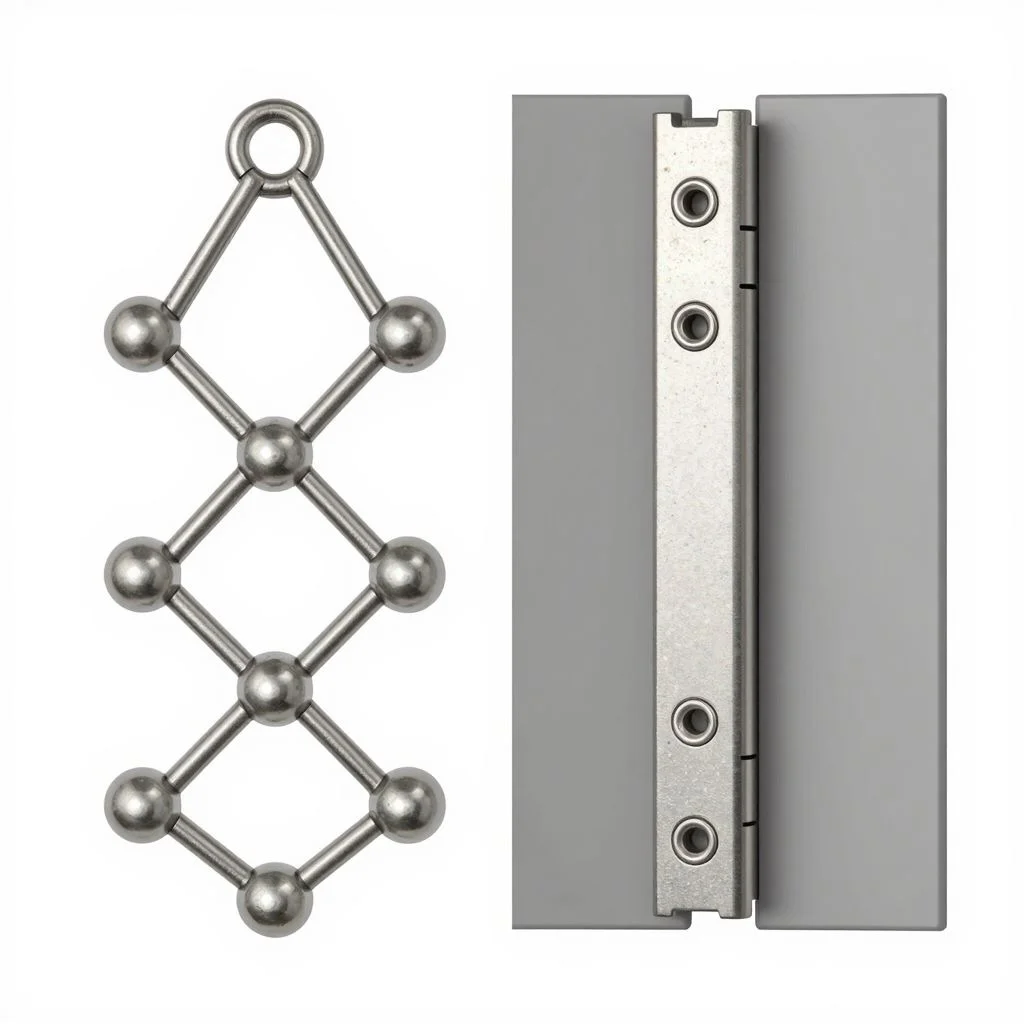
When you look at that diagram, I want you to focus on what is actually holding your body up, because that is the part that changes the least with marketing and the most with time. The pull out is basically a thin mattress hanging over a deck that has give, and the fold down is foam over something much more solid that does not give much at all.
On a pull out, that “suspended” feeling is why you get the taco sag over time. In the showroom, I check this by kneeling near the middle and then near the edge, because if the middle sinks noticeably more even when it is new, it is already telling you where it will hammock later.
I also look for edge collapse, because it is the fastest way a pull out becomes annoying. Sit right on the edge like you are tying your shoes and see whether the edge holds you up or whether it tips you inward, because that inward tip is the same geometry that makes two sleepers drift together.
On a fold down, the “solid deck” is why it can feel flatter and more stable, but it is also why thin padding becomes a real problem. In the showroom, I do a blunt bottoming out test by pressing my palm down hard where my hips would go, then I do it again at my shoulder zone, and if I can feel the platform quickly through the foam, you are going to feel it at night once the foam warms up and softens.
Then I check the hinge area like it is a support joint, not just a seam in fabric. I press straight down on the seam, then I press a few inches to either side, and I am looking for a sudden difference in resistance, because that is the gutter forming in real time.
If you are trying to choose between these two based on the diagram alone, here is how I translate it into a showroom decision. If you hate sagging and roll together, you should be suspicious of anything that feels like it is hanging in the middle, even if the mattress is “upgraded.” If you hate hard floors and pressure points, you should be suspicious of anything where you can feel the platform too easily through the cushions, even if the surface looks perfectly flat.
I also use the diagram to remind myself what I can and cannot “fix” later. A topper can soften a too firm fold down and blur a seam a little, but it will not replace missing support at a hinge. A thicker mattress can help a pull out hide some bars, but it will not stop a suspended deck from relaxing and sagging with age.
The last practical thing I do while this picture is fresh in my head is ask one very specific question while I am still standing there with the bed open. I ask what part is taking the load, and whether that part can be replaced, because a replaceable mattress is nice, but a worn out deck system or a loosening hinge is what usually ends the relationship. If they cannot explain what is under you in simple terms, I assume I will be on my own when it starts to feel like a taco or a gutter.
Room Clearance: The "Expansion" Test
Before you buy, I want you to measure what I call the full open footprint, meaning the sofa bed fully deployed the way a tired guest will actually use it, with bedding on it and enough space to walk past without turning sideways.With a pull out, the expansion happens long, straight out into the room, perpendicular to the wall behind the sofa. In real apartments that can mean the bed reaches roughly ninety inches into the space, and the problem is not just whether it fits, it is whether it cuts your room in half and blocks the path to a door, a bathroom, or the only clear walkway.
In the showroom I mimic this with my body, because it makes the clearance issue obvious. I stand at the end of the pulled out bed and ask myself if I could still pass by carrying a laundry basket, then I picture a nightstand, a suitcase, or even just someone stepping around the corner in the dark. If you already feel boxed in at the store, it will feel worse at home when there is a coffee table that never quite moves far enough.
With a fold down, the expansion usually happens wide, more parallel to the wall, and it often adds only about a foot or so of extra depth into the room. That is why I consider it the safer layout choice for hallway style studios, where your main fear is turning your only walking lane into a dead end.
In the store I still do not trust the “it only sticks out a little” story until I check it against the stuff you cannot wish away. I look at where your coffee table would live, where a radiator or baseboard heater might be, and whether a low windowsill or a wall mounted TV would end up right in the swing zone when you convert it.
If you take one action from this section, make it this: when the bed is fully open, you should be able to trace a normal walking path from the room to the door without doing that awkward sideways shuffle. If you cannot do that, you are not buying a sleeper, you are buying a nightly furniture rearrangement ritual.
What I am really trying to protect you from here is the “it technically fits” trap. A sleeper that forces you to dead end your room stops being a guest friendly feature and becomes a weird obstacle you resent, especially if the only way to live with it is to drag the coffee table to a wall every single time.
At home, I like to sanity check this with tape on the floor before I buy, even if I feel a little silly doing it. I mark the sofa depth, then I mark the bed depth when open, then I walk the routes you actually use, like couch to bathroom, couch to bedroom door, couch to kitchen, and I do it holding something bulky so I cannot unconsciously cheat the clearance.
If you are buying for a small space, pay attention to where the bed steals your “parking spots.” When the sleeper is open, you still need a place for the coffee table to go that does not block a door, and you need a place where a person can set a phone and a glass of water without balancing it on the floor.
In the showroom, I also look down at the legs and the underside clearance, because it predicts how annoying the open bed will be on your actual floor. If the open frame sits low and looks snaggy, it is going to catch on a thick rug, it is going to complain on uneven flooring, and it is going to turn setting up the bed into a slow, careful maneuver instead of a quick pull and done.
Mechanism Duel: Technical Specifications
When you see a spec table like this, I translate it into a few quick tests you can actually do in a showroom, because the numbers and labels only matter if they predict what will annoy you later.The setup action difference is real. A pull out asks you to remove cushions, find the handle, lift and guide a heavy frame out, then reverse the whole process without pinching fabric or smashing fingers. In the store, I make myself do it the exact way a guest would, with no coaching, and I pay attention to whether the cushions feel like a puzzle that never goes back the same way, because that becomes the nightly ritual you dread.
A fold down is usually a simple rotate, and that simplicity is the whole point. In the showroom I still cycle it a few times and I watch the last bit of the motion, because cheap hinges feel easy until they hit the stop, then they slam, bind, or land slightly off, and that is how a simple mechanism becomes loud and sloppy over time.
Surface flatness is where the two designs trade strengths. The pull out’s suspended deck is why you get that hammocking, taco feeling, especially with two people. If you want to know whether you are buying that problem, lie in the center and then shift your hips a few inches side to side, if you keep getting guided back to the same low spot, you just found your future.
The fold down usually wins on flatness because it is more like a solid table under the cushions. The way it loses is not lumps, it is that you can compress through the padding and start feeling the platform, so I always stay on my side long enough for the foam to warm up and give. If my shoulder starts to feel jammed and my hip stops sinking before it feels supported, I assume it will be worse after a year of sitting wear.
Surface hygiene is one people ignore until they regret it. With a pull out, you are typically sleeping on a dedicated mattress, so you can treat it like a bed with a protector and sheets that live with the guest set. With a fold down, you are sleeping on your sofa upholstery, and I want you to picture your face going where people sit in jeans, where pets nap, and where snacks happen, then decide if you are truly willing to manage that with a washable cover every time.
Weight is not just a delivery concern, it is an aging concern. A pull out unit can be extremely heavy, and that weight lives inside the sofa full time, which means the legs, joints, and frame are constantly paying for it. In the store I do an unglamorous check by putting one hand on the arm and one on the front rail and giving a gentle rock, if the whole thing feels like a loaded shopping cart, I stop trusting it to stay tight and square for years.
A lighter fold down can be easier on the frame long term, but the lightness can show up as skating, flexing, or shifting when someone sits on the edge in bed mode. I test this by sitting near the edge like I am putting on socks and then standing up without using my hands, if the base moves or the platform feels like it twists, I assume it will feel even less planted on a rug.
Pressure points are the part of the table that I take most seriously because they are so predictable. On a pull out, the signature problem is what I call the lumbar bar, where your lower back finds a crossbar or hinge line once the thin mattress warms up. My showroom test is to lie on my back and slowly exhale and relax, because tension can hide the problem, then I slide a hand under my lower back and see if it feels like there is a hard ridge forcing an arch.
On a fold down, the signature problem is what I call the hip gutter, where the hinge zone or meeting line becomes a dead spot and your pelvis keeps settling into it. I do not just press with my hand, I actually place my hips directly over the seam and then roll slightly, because that is how you find out whether the flat surface is truly supported or just nicely upholstered over a gap.
The best for line is blunt, but it matches how these tend to get used. If you genuinely host multi night guests and you want bedding that feels separate and clean, I usually see pull outs age into the better compromise, as long as you have done the bar and sag tests and the frame feels stout enough to carry the weight. If this is mostly a one night situation, the fold down can be fine, but only if you accept that you are basically offering a firm pad on a platform and you are willing to manage the hygiene with a cover.
When you are stuck deciding, I ask you to pick the failure you can live with. If you hate lumpy support and you need flat, you will probably be happier fighting firmness on a fold down than fighting bars and hammocking on a pull out. If you hate sleeping on your own sofa fabric and you need a real bed feeling, you will probably tolerate some mechanism fussiness on a pull out as long as it opens smoothly and the deck feels taut.
Explore Technical Reference
Futon or Sofa Bed: The Conversion Conflict
Comparing the two main approaches to dual-purpose seating and sleeping furniture. Why the choice depends on priorities rather than either being universally better.
Analyze Details →
Foldable Floor Sofas: The Physics of Frameless Seating
How floor sofas, foam blocks, and origami-style seating work. Understanding the trade-offs of purely foam-based seating without traditional frame construction.
Analyze Details →