Foldable Floor Sofas: The Physics of Frameless Seating
Introduction
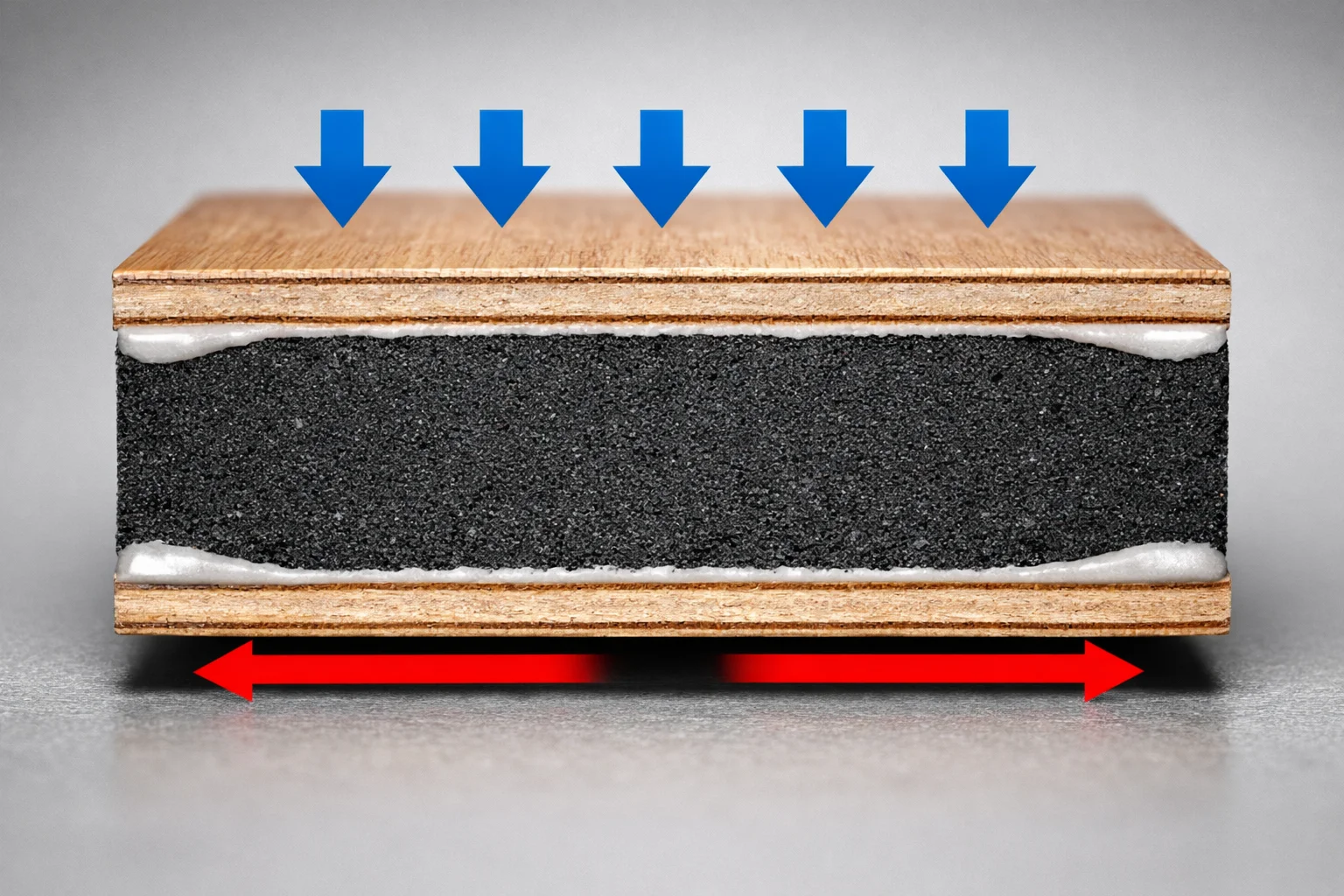
Foldable floor sofas live or die by the foam, because the foam is not just the cushion, it is the frame, the suspension, and the thing holding its shape over time. That single fact changes how I shop for them, and it should change how you shop for them too.
With a traditional sofa, I can forgive a slightly soft seat if the frame is solid and the support system is decent. With these modular foam blocks, there is nowhere for weakness to hide, because every sit, every fold, and every lounge position is literally bending and compressing the structure itself.
That also means the most common disappointment is predictable: they feel great for a few minutes in a showroom, then they start to feel like a deflating mattress after weeks or months. If you have ever owned cheap foam anything, you already know the sensation, it stops pushing back and starts bottoming out.
When you are evaluating one in person, I want you to treat it less like “couch shopping” and more like testing a big piece of athletic foam. Spend time on it, not seconds, because slow sinking is the problem that quick sitting does not reveal.
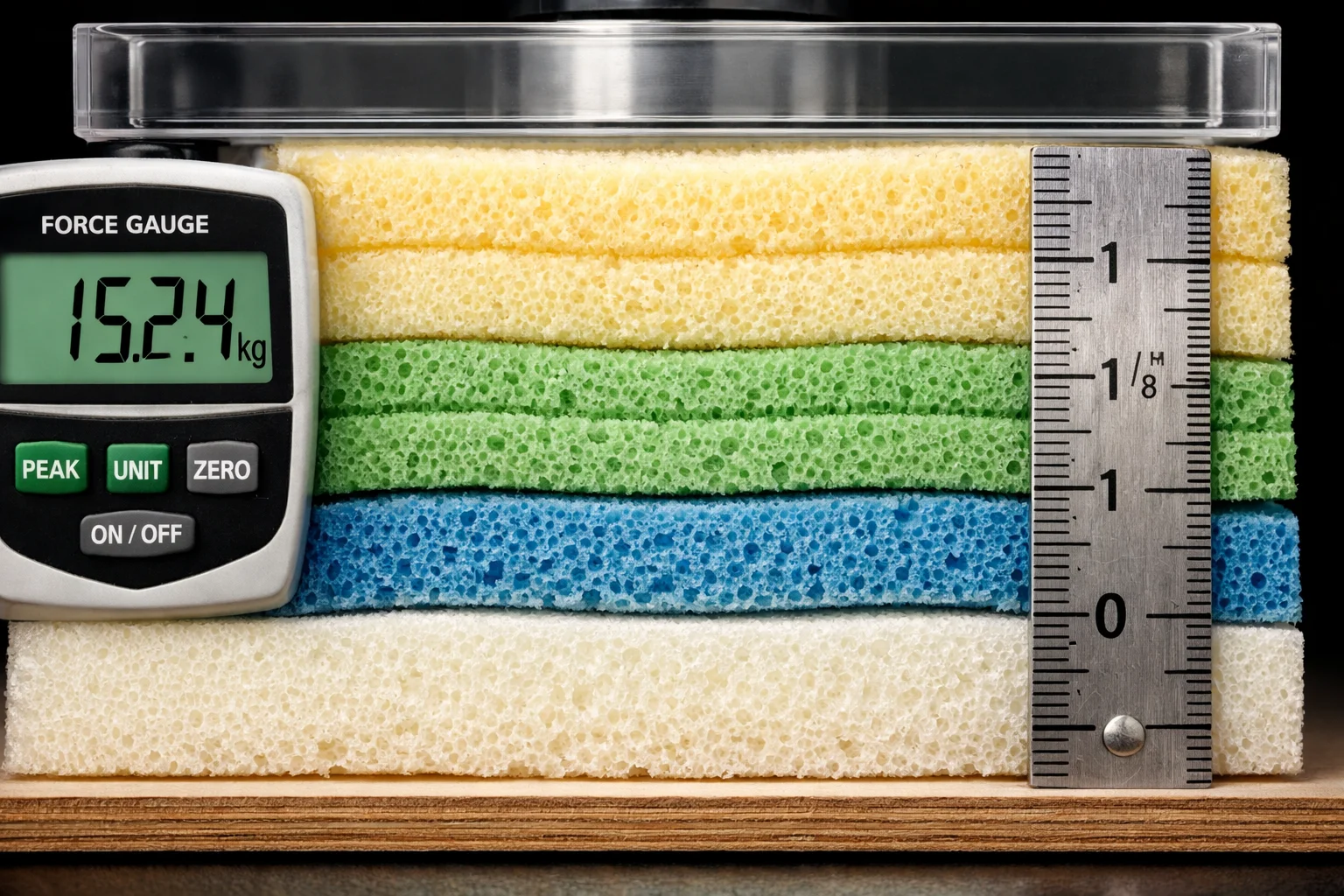
I press down hard with my hand and pay attention to how it recovers, not just whether it feels soft. If the foam pops back quickly and evenly, that is a good sign, but if it rebounds lazily or feels like it stays slightly dented, I assume it will get worse fast once it lives in your house.
I also try to “break” the concept in the showroom by using it the way people actually use these. I sit right on an edge, I shift my weight, I lean back without babying it, and I notice whether it folds or collapses in a way that would make me constantly adjust it at home.
Because there is no frame, the cover and the internal construction matter more than you might expect. If the cover is loose and stretchy and the seams look light duty, the foam is going to migrate and the shape will look sloppy sooner, especially around corners and fold lines.
In the next sections, I am going to keep coming back to one practical idea: your job is to figure out whether the foam will still be doing its job after thousands of compressions, not whether it feels cozy for five minutes under showroom lighting. If you test it like a structure, you will avoid most of the “it was amazing at first” purchases.
The "Grounding Out" Problem
When a regular sofa starts to feel a little tired, the frame and the support system still keep you off the floor. With a floor sofa, there is no backup plan, so once the foam loses its spring, you feel it immediately.The failure mode I watch for is simple: the foam compresses all the way, and your body weight is basically riding on whatever is underneath. In a showroom it can feel plush and inviting, but at home you start to notice your hips or sit bones finding the hard plane below, especially if you sit in the same spot a lot.
When I test for this, I do not just sit gently in the middle and call it good. I sit like I would at home, then I shift my weight forward and back, and I pay attention to whether the support “catches” me before I feel that hard base. If I can make it bottom out even a little when it is brand new, I assume it will be a floor pillow in disguise after some months.
If you are allowed to, I also press down hard with both hands in one small area and see if I can easily force it to full compression. What I want is resistance that builds as it compresses, not a soft start that turns into a sudden hard stop, because that hard stop is what you will feel through your body later.
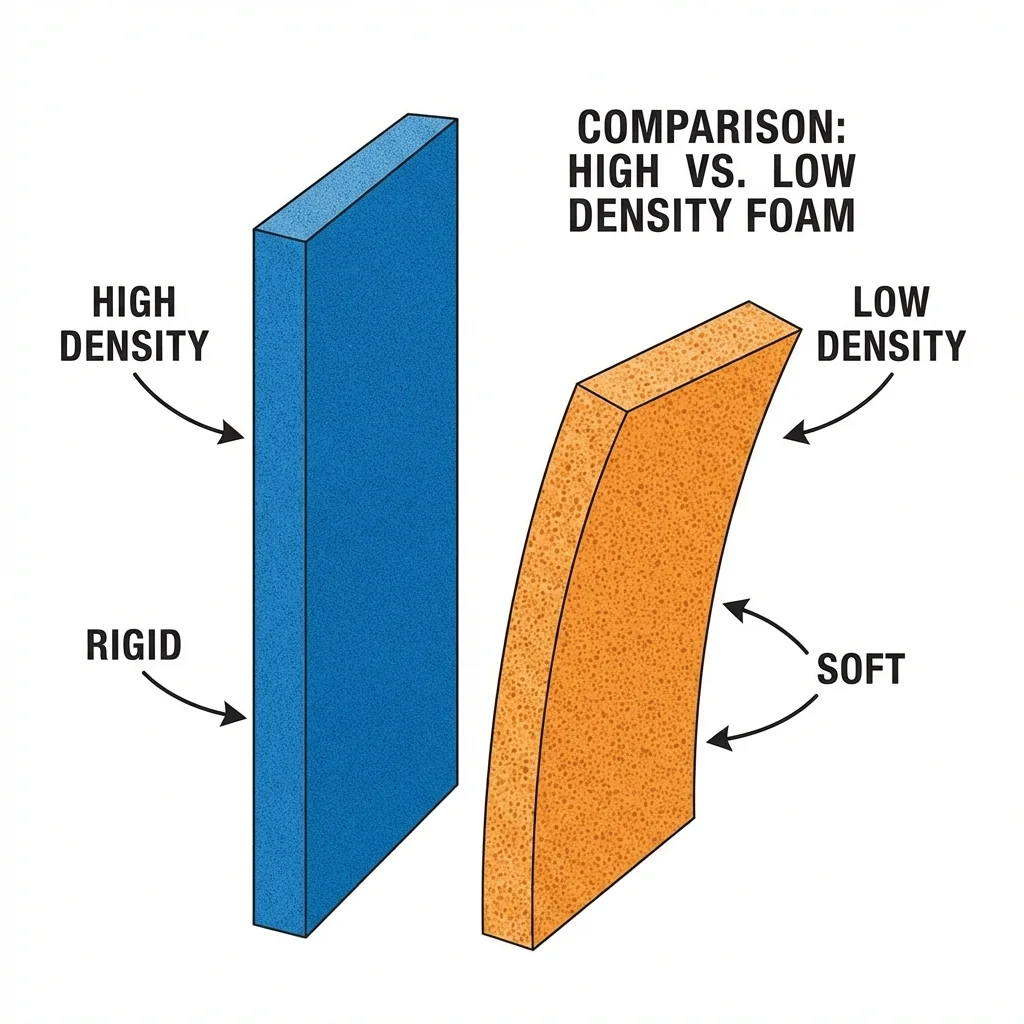
Here is the part that is annoying as a shopper: you usually cannot tell foam quality just by touching it. The one spec that matters most for avoiding grounding out is foam density, and for adult seating I personally will not take it seriously unless the brand can tell you it is high resiliency foam around 2.2 pounds per cubic foot or higher, or show an actual spec sheet that says the same thing.
If the seller cannot or will not tell you the density, I treat that as the information. Low density foam is cheaper, it sells well in a quick sit test, and it is exactly what takes a compression set, meaning it stays squished, and it tends to happen fast in the high pressure spots where you actually sit.
If you want one more real world check, ask about the return policy and then sit on the exact piece for a longer stretch, not a quick perch. Slow sinking is what gives it away, and it is the slow sink that turns into permanent sagging once the foam has been crushed a few thousand times.
Anatomy of a Frameless Sofa
When you strip away the marketing, a frameless floor sofa is basically a few dense foam “bricks” wrapped in a cover that is doing structural work. If you remember that, it gets easier to evaluate what you are actually buying, because you can focus on the three parts that fail first: the foam cores, the fabric hinges, and the bottom surface that keeps it from skating across your floor.
The foam cores are the closest thing this sofa has to a frame, and I want you to treat them that way in the showroom. When you sit with your back against it, notice whether the back block holds you up like a firm backrest or whether it slowly rounds and buckles, because that rounding is what turns “supportive lounge” into “pile of cushions” over time.
I also check whether the seat block feels firm enough that my hips are supported without me having to constantly shift to find a thicker spot. A lot of these feel nice at first because the top layer is soft, but the core underneath is the real story, and if the core is not firm and springy when it is brand new, it is not going to magically get better once you live on it.
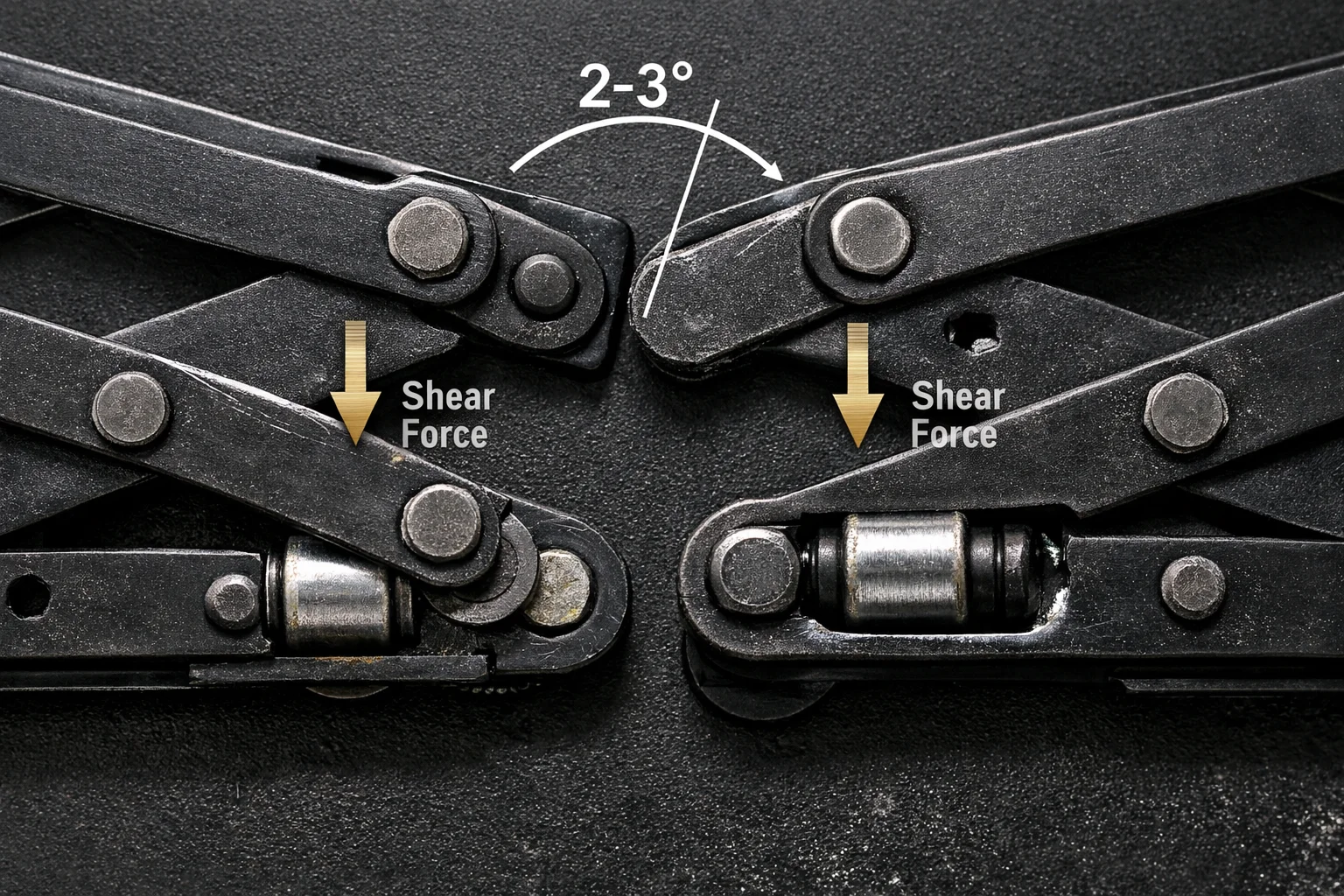
The next part is the fabric hinge, which is usually just the seam and the reinforced fabric section that lets the blocks fold and rotate. This is the only thing holding the geometry together, so I don’t just glance at the stitching, I actually put it through a few slow open and close cycles and watch what the seam does while it’s under tension.
If the hinge area looks like it is stretching, rippling, or twisting as you fold it, I assume it is going to feel sloppy later, because the fabric is already acting like it wants to deform. If you can see the seam allowances inside, or the zipper lets you open the cover, look for wide, tidy seams and reinforcement around the hinge line, because a narrow seam with minimal reinforcement is what I have seen start to pop first when people use these like they are meant to be used.
I also pay attention to whether it can rotate cleanly into each advertised position without you fighting it. When the hinge design is good, it moves like a controlled joint. When it is not, the blocks feel like they are sliding past each other and relying on the cover to “wrangle” them into place, and that is when you end up constantly re-squaring it at home.
The last part people overlook is the bottom fabric. These sofas do not weigh much, so if the base fabric is slick, it will drift every time you lean back or stand up, especially on wood or tile, and that gets old fast.
In the showroom, I do a simple check: I plant my weight, lean back like I am watching a movie, and see if the whole thing creeps. If it moves easily, ask what the base fabric is and whether it is meant to grip. A grippy base is not a luxury detail on a floor sofa, it is what keeps the sofa from feeling like it is always trying to escape from under you.
One more practical check I like is to lift one edge slightly and set it back down, then try to nudge it sideways with my leg. A quality gripper bottom tends to “catch” the floor instead of gliding, and that usually tells you more than the brand’s description does.
If you only remember one thing from this anatomy lesson, make it this: the foam cores determine whether it supports you, the hinge seams determine whether it keeps its shape, and the bottom determines whether it stays put. When any one of those is weak, you don’t just lose comfort, you lose the whole point of the design.
The Ergonomic Gap
A traditional sofa usually puts you up around that familiar chair height, roughly 18 inches, and your knees tend to like that because you can get your feet under you and stand without turning it into a mini workout. A floor sofa is often more like 8 to 10 inches, and that difference sounds small until you actually try to get up from it a few times in a row.
What I have learned the hard way is that low seating is not just a comfort choice, it is a leverage problem. When you start that low, your thighs have to do much more of the work to lift you, and if your knees or hips are even a little sensitive, you feel it immediately, especially after you have been sitting for a while and you are stiff.
In a showroom, I do not just sit and see if it feels cozy, I run a simple “get up” test. I sit normally, I let my body relax for a minute like I would at home, then I stand up without using my hands, and I pay attention to whether I have to rock forward, whether my knees complain, or whether I instinctively hunt for something to grab.
Then I repeat it the way real life happens, meaning I stand up again after reclining, after sitting cross legged, and after sliding forward a bit. Floor sofas often feel fine in the one perfect posture you use for ten seconds in a store, but the strain shows up when your posture changes and you still have to get back to standing.
This is also why I think these work best for kids and a lot of college student apartments, because the “up and down” part is easy when you are young and your joints are forgiving. If you are buying for a mixed household, or you know you have knee or hip issues, I want you to treat seat height as a primary decision, not a detail you rationalize after you fall in love with the look.
If you still want the floor sofa style, I would look for any design that cheats the height upward, like a thicker base layer, a platform underneath, or a model that sits higher in its chair configuration. In the showroom, bring it into its tallest seating mode and measure it the simplest way possible, by comparing it to where your knee bends when you stand next to it, because that tells you more than a spec on a tag.
The other thing I watch is how the low height interacts with the foam over time. A floor sofa that starts at 10 inches can turn into 8 inches once the foam takes a set, and that is not just less plush, it is a bigger climb every single time you stand up, which is where regret tends to show up first.
The "Wall Anchor" Necessity
Most foldable sofas have soft backs, meaning the “backrest” is really just foam with a cover pulling it into shape. If you put it in the middle of a room and lean back like you would on a normal couch, it can tip or fold backward in a way that feels surprising the first time it happens.The practical fix is not hidden engineering, it is placement. A lot of these are effectively designed to be anchored against a wall, because the wall becomes the rigid thing that resists your weight when you recline, and it stops the back from flipping.
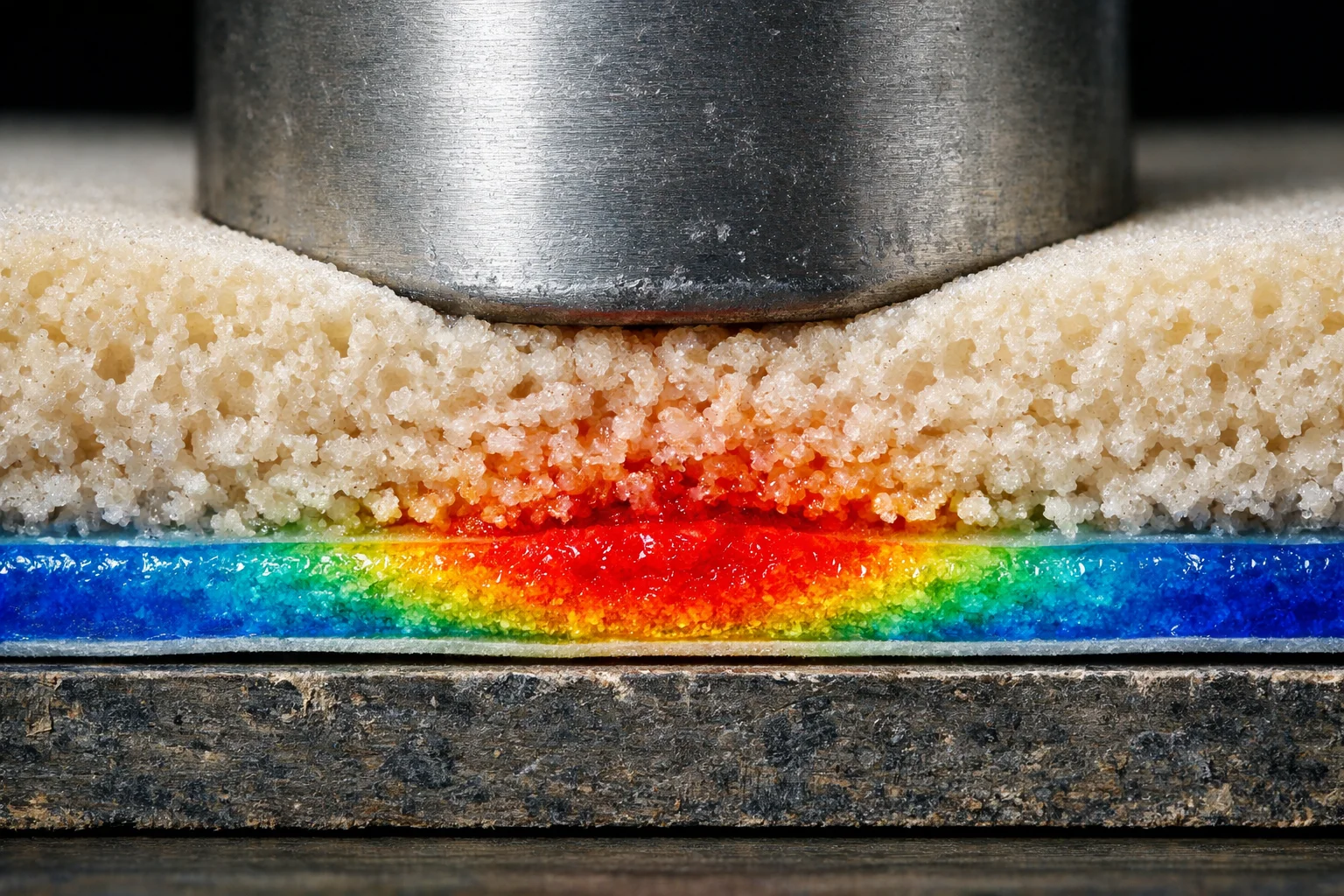
In a showroom, I test this on purpose by sitting in the chair position and leaning back gradually, then a little more firmly, while watching what the base does. If the whole piece tries to scoot away or the back angle starts to open up on its own, I assume it will need a wall at home to feel stable.
Then I do the same test with the sofa pushed firmly against a wall or a display panel if the store has one. If it suddenly feels “normal” and secure only when it is braced, that tells you how you need to live with it, and you should decide now if you actually want a sofa that has a required parking spot.
I also want you to think about your baseboards and outlets, because this is where the real life annoyance shows up. If the cushion has to sit a few inches off the wall because it is hitting a thick baseboard or a plug, you may not get the bracing effect you thought you were buying, and the back can still feel a little floppy.
If you are shopping in person, bring your phone and take a quick photo of the back edge and the bottom edge when it is against the wall, so you can see whether it is making real contact or hovering on a cord, trim, or a protruding radiator cover. I have had pieces feel stable in the store and then feel worse at home because the wall behind them was not flat and unobstructed.
If you know you want it floating in a room, I personally walk away unless the back has a real internal frame or a clearly stiffened panel, and the salesperson can explain what is providing that resistance besides foam. If they cannot describe anything more than “high density foam,” I assume the back will always act like a hinge under pressure, because that is what foam does when you load it from the top.
The simplest way I decide is this: if you need to relax into the backrest, not perch upright, you should only buy a model that still feels stable when you deliberately try to make it misbehave. If it only behaves when it is pushed against a wall, treat that as a requirement, not a suggestion.
Technical Specification Matrix
Specs are only useful if they change what you do in the showroom, so I read a “matrix” like this as a translation guide. It tells me whether the product is built to be a kid safe play lounger that happens to be sit-able, or an actual adult seat that will not turn into a limp pad after a season of use.
Foam density is the big divider. When I see 1.5 pound foam, I assume it is optimized for softness, low cost, and light use, and I plan on it losing height and pushback quickly if adults regularly sit in the same spot. When I see 2.2 pounds or higher high resiliency foam, I take it more seriously for adult seating, and I still test it for slow sink and bottoming out because density alone does not guarantee good support, but low density almost guarantees early disappointment.
Seat height is the other spec that changes daily life. A 5 to 7 inch “seat” reads to me like floor cushion territory, so I immediately do the stand up test and I pay attention to whether I have to use my hands or rock forward. A 10 to 12 inch seat is still low compared to a normal sofa, but it is often the difference between “this is fun occasionally” and “I can actually use this every day,” especially if your knees or hips are not thrilled about deep squats.
Fabric type matters less for comfort and more for whether the thing stays looking decent while being dragged, folded, and lived on. Microfiber usually buys you easy cleanup and decent stain resistance, but I watch for cheap microfiber that pills or gets shiny where you sit, because that can make it look worn long before the foam is truly dead. Performance velvet and canvas can be great for durability, but I do a quick rub test with my palm and then look at the nap or weave, if it marks instantly, catches lint, or feels like it will snag on a rough seam in jeans, I assume it will look tired fast in real life.
Support is where I stop thinking about materials and start thinking about your room. If it is described as free standing, I try it away from the wall and I deliberately lean back the way you will at home, because that is where a lot of these reveal that the back is really just another fold. If it is described as wall anchored, I treat that like a usage requirement and I picture your baseboards, outlets, and radiator covers, because anything that keeps it from making full contact with the wall can make the “anchored” advantage disappear.
When a brand will not provide basic specs like density, I do not waste time arguing with myself about it. I treat missing specs the same way I treat a mattress company that will not say what is inside, it usually means the numbers do not help them sell it, and that is not a great sign for you.