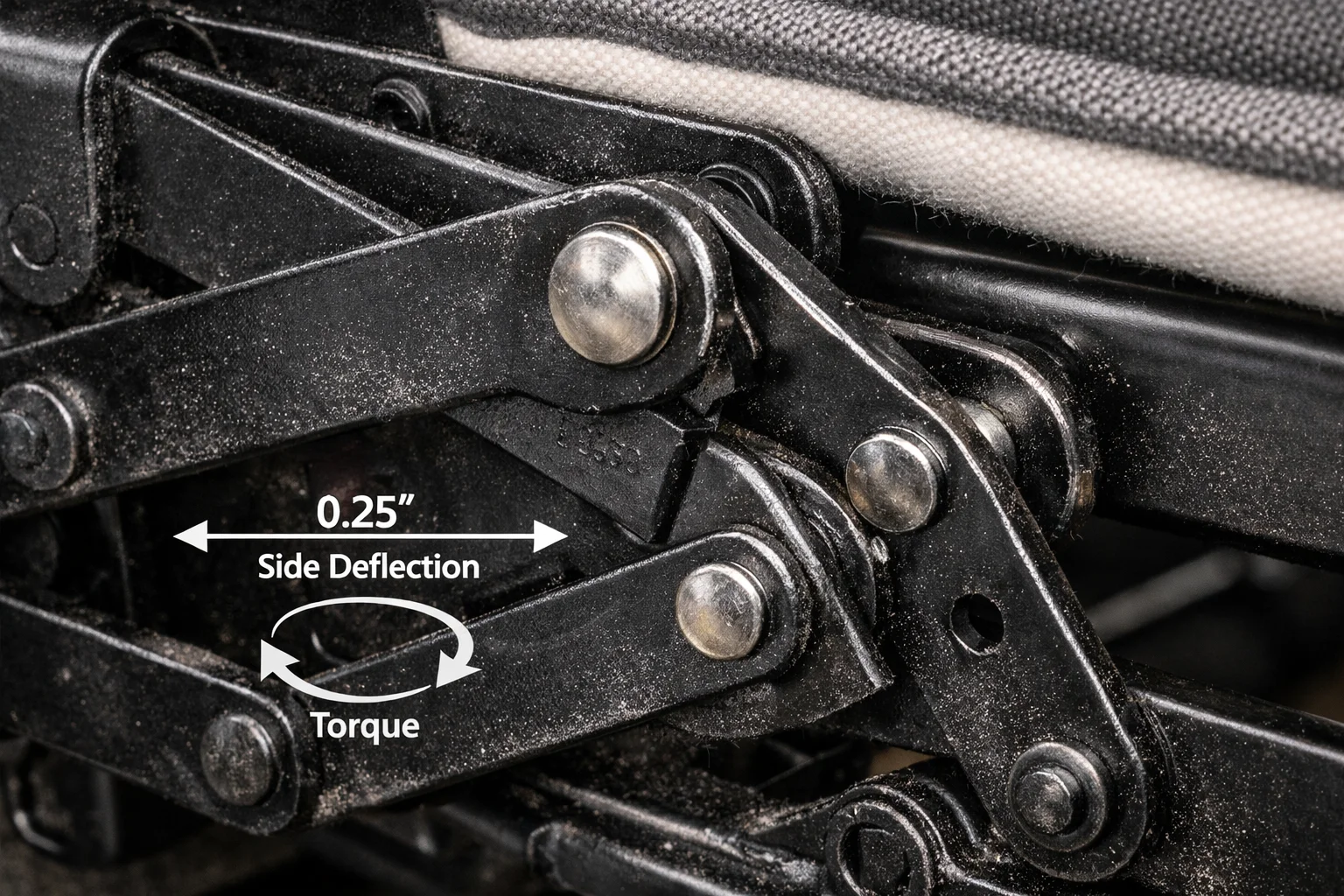
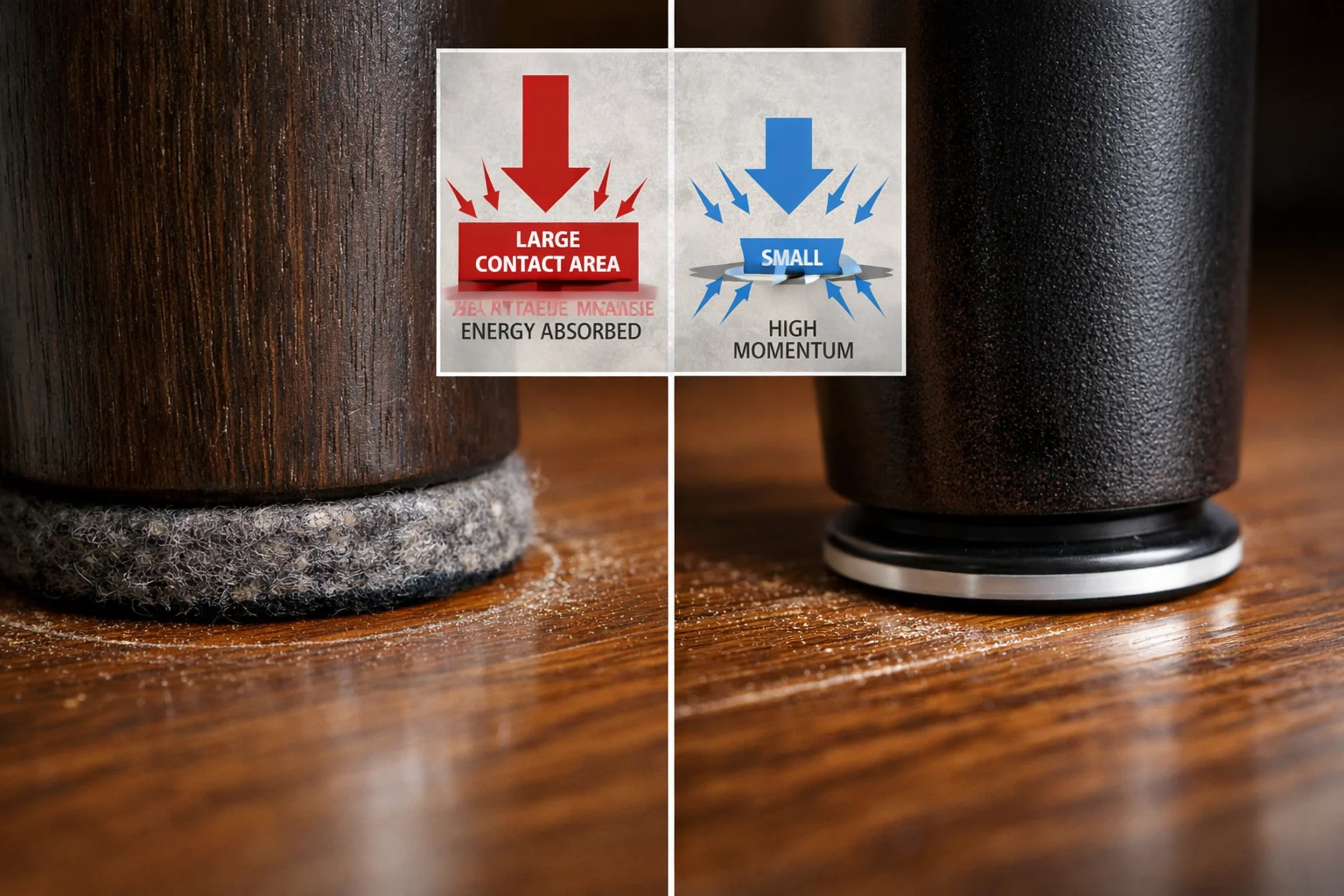
Sectional Stress Points: The Geometry of Collapse
Introduction
I learned the hard way that sectionals fail differently than regular sofas. They look bigger and more relaxed, but the shape itself creates a problem most sales floors never mention. Parts of a sectional hang out into space without a leg directly under them, and over time that unsupported weight has to go somewhere.
When you sit on a chaise or the inside corner, your weight is not traveling straight down to the floor like it does on a simple sofa. It is trying to bend the frame outward, almost like you are standing on the end of a diving board. That bending force is what causes sagging, creaking, and frames that feel fine at first but slowly give up.
I want you to understand this before you shop, because it changes how you should look at every sectional in a showroom. You are not just judging comfort. You are checking whether the sofa was built to deal with this awkward, uneven load or whether it is quietly hoping you will not notice until the warranty is long gone.
The "Missing Fifth Leg" Problem
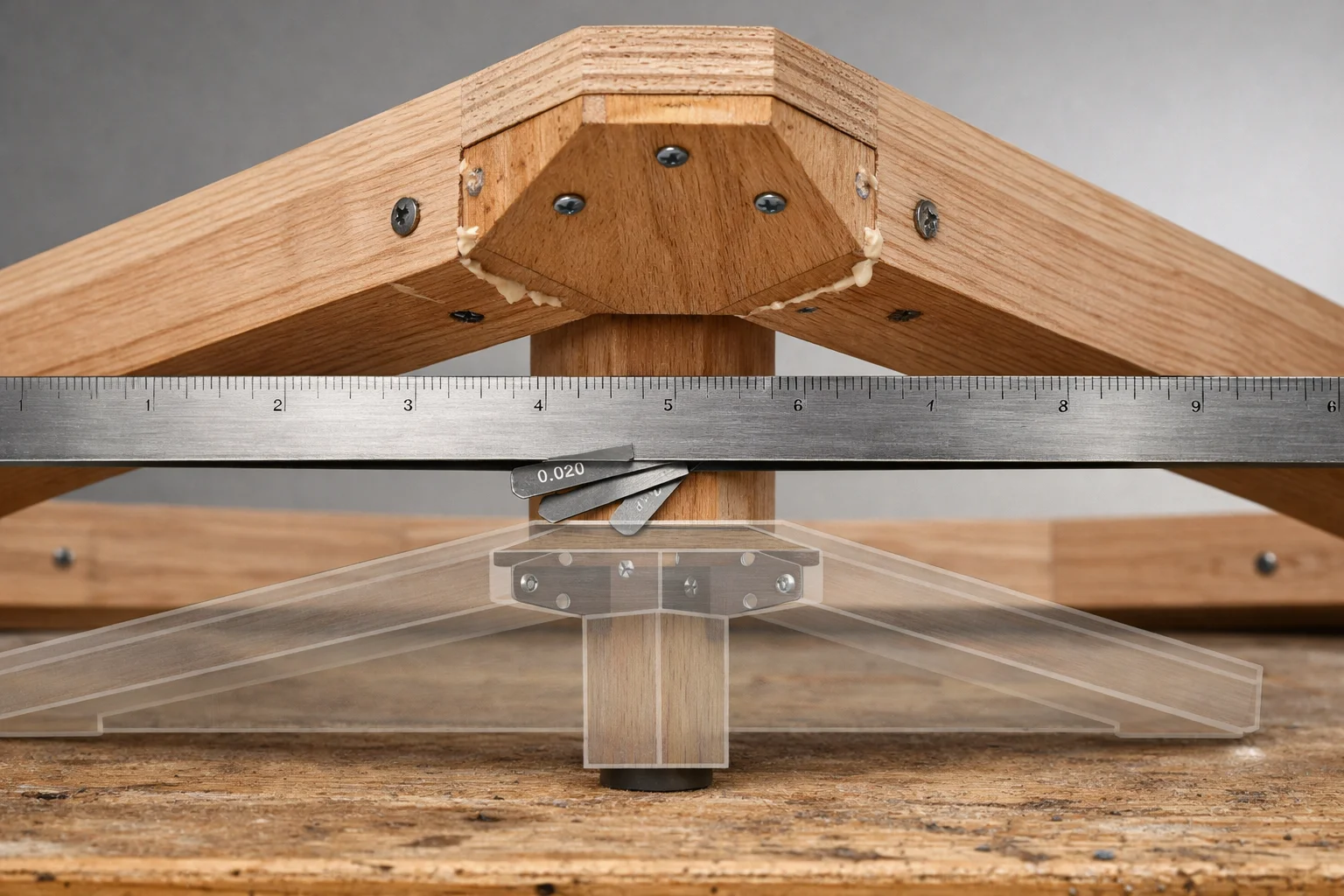
This is the failure I see most often in L shaped sectionals, and it is almost always hidden in plain sight. The corner wedge is not a simple square, it is a five or six sided shape that sticks out into the room, which means part of the frame is floating without a straight path down to the floor.
What many manufacturers do is place legs only around the outer edge of that shape. From the outside it looks supported, but the deepest interior corner is spanning a long distance with nothing underneath it. When you sit in that exact spot, which is usually the favorite seat, you are not being supported by a leg. You are sitting on a bridge of wood.
At first this feels fine. The cushions hide what is happening underneath. Over time that unsupported span starts to flex every time someone drops their weight there. The wood bends slightly, the fasteners loosen, and the frame starts to complain with a creak. Eventually it stops bouncing back and you are left with a corner that feels permanently sunken and unstable.
What I look for now is simple and you can do it in any showroom. I crouch down and look directly under the deepest part of the corner seat. I am not checking the outside edge, I am checking the interior point where two sections meet. If there is a solid leg touching the floor right under that point, the frame has a fighting chance.
If there is no leg there, I do not care how comfortable it feels or how good the fabric looks. I assume that corner will fail because it has been asked to do something it was never properly supported to do. A well built sectional corner always has a fifth leg placed dead center under the interior vertex, even if it is smaller or less visible than the others.
Once you train your eye to look for this, you will start seeing how many sectionals skip it. I wish I had known to check this before I bought my first one, because that single missing leg was the reason the most used seat in my living room gave up long before the rest of the sofa did.
Image Block
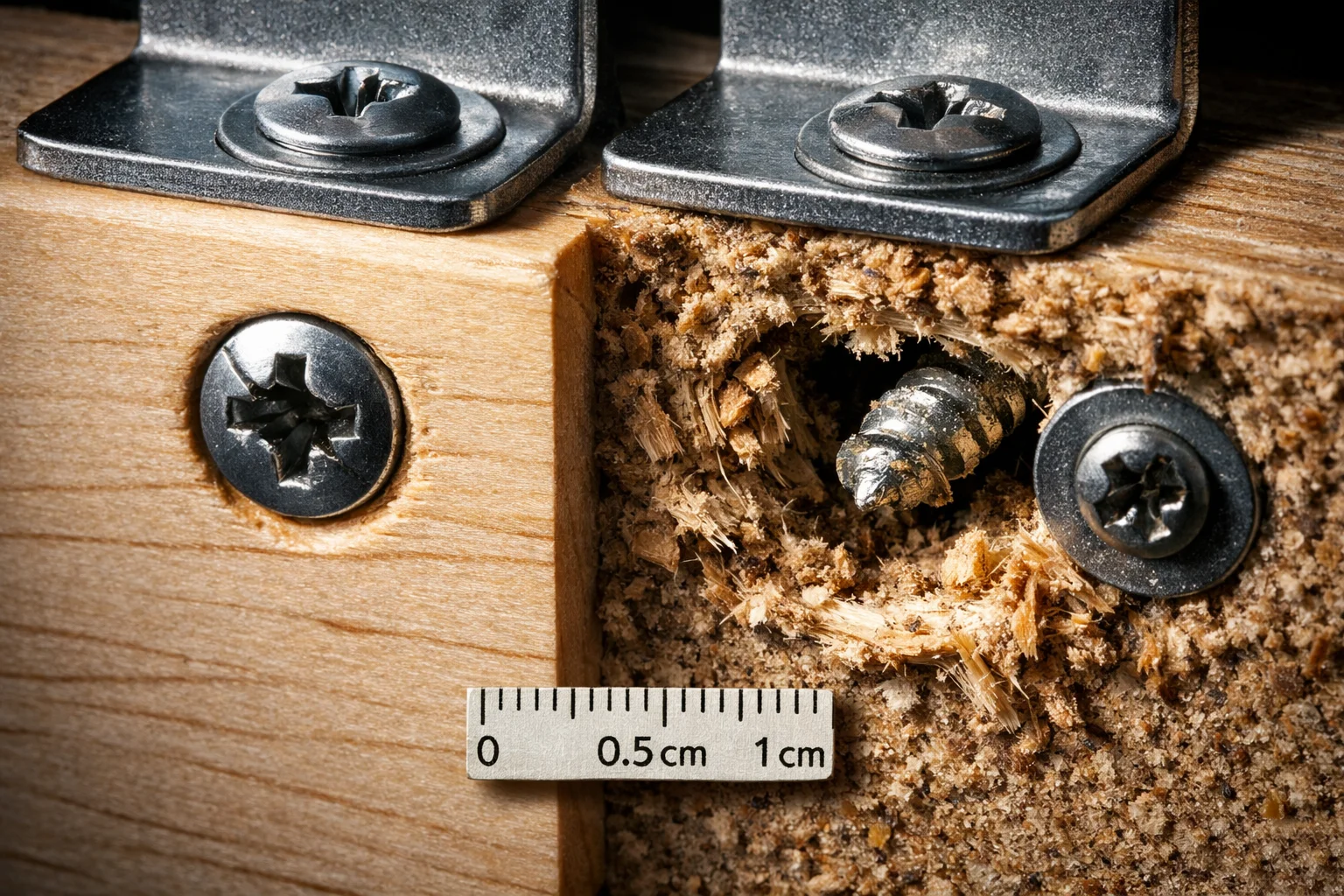
This photo shows another failure I learned to spot only after owning a sectional that slowly pulled itself apart. The problem is not the metal bracket itself, it is what that bracket is screwed into.
When two sectional pieces join, all the twisting force from sitting and standing travels through those connectors. If the screws bite into solid hardwood, the joint can flex a little and recover. If the screws bite into MDF or particleboard, they slowly chew out the hole until the bracket has nothing left to grab.
You can check this in a showroom without tools. I ask the salesperson to separate the sections or tilt one up so I can see the underside where they connect. I am looking for thick, real wood rails where the bracket lands, not crumbly brown board or thin layers that look pressed together.
If you see fuzzy screw holes, stripped screws, or metal brackets sunk into soft board, I treat that as a warning sign even on a brand new floor model. That joint is already on borrowed time, and once it loosens there is no clean fix because the material itself has failed.
I also grab the end of one section and gently twist it side to side while watching the joint. A solid hardwood connection moves as a unit. A weak connection shows tiny delays, squeaks, or visible shifting where the screws are fighting the wood.
This matters most on sectionals because those connectors are under constant sideways stress, not just straight down weight. If the frame uses real wood where it counts, the sofa ages slowly. If it uses cheap board at the joints, it feels fine until one day it suddenly does not.
The Three Critical Stress Zones
Once I understood how sectionals fail, I stopped thinking of them as one big piece of furniture. I started seeing three very specific zones that take most of the abuse, and almost every long term problem shows up in one of them first.
The first zone is the inside corner seat, which we already talked about, because it combines weight, leverage, and often a missing leg. That seat is usually the most popular and the most vulnerable. If a sectional survives that spot, it usually survives a lot.
The second zone is the end of a chaise, especially the front edge where your legs hang off. This area looks innocent, but it acts like a long lever sticking out from the rest of the frame. Every time you sit down there, the force is trying to pry the frame downward and outward at the same time.
In a showroom, I test this by sitting right on the very end of the chaise, not tucked back comfortably. I let my weight drop straight down and then shift slightly side to side. If the front edge dips, creaks, or feels like it is hinging instead of staying level, I know the internal frame is too light for the job.
I also crouch down and look for how many legs are actually under that chaise. One lonely leg at the far corner with nothing in between is a red flag for me. A well supported chaise usually has an extra leg somewhere along its length, even if it is set back and hard to see.
The third zone is the seam where a regular seat meets a chaise or corner piece. This is different from the main sectional connector you already checked. This is where two different load patterns collide, one wanting to go straight down and the other wanting to bend outward.
I press down hard right on that seam with one hand while sitting with my weight nearby. I am feeling for any delay or softness, like the two sections are negotiating with each other before they respond. A strong frame feels boring here, which is exactly what you want.
If that seam feels spongy or you hear a faint tick or creak, it usually means the internal rails are too thin or the joint is relying on fasteners instead of wood strength. That kind of weakness rarely gets better with time.
I used to ignore these spots because the cushions made everything feel fine for the first few minutes. Now I deliberately stress them in the showroom, even if it feels a little awkward. I would rather feel awkward for five minutes than annoyed for five years.
When you focus on these three zones instead of the overall look, a lot of sectionals reveal their weaknesses very quickly. Comfort still matters, but structure decides whether that comfort lasts or slowly collapses under the way real people actually sit.
1. The Connector Bracket Site
This is the spot where I now spend the most time in a showroom, because it quietly decides whether a sectional stays tight or slowly pulls itself apart. Unlike a regular sofa, each piece of a sectional has to help carry the weight of the piece next to it, especially when the floor is not perfectly flat or the sections drift slightly over time.
What happens in real life is that one section ends up hanging a bit off its neighbor. When someone sits down, that weight is no longer going straight to the floor. It is trying to shear sideways through the metal connector bracket that holds the pieces together.
The bracket itself is almost never the problem. Even cheap ones are strong enough. The failure happens in the wood underneath, and this is where manufacturers save money in ways you can actually detect.
If the screws for that bracket go into particleboard or MDF, they do not have much to grip. Every little shift works those screws back and forth, slowly grinding the hole larger. One day the section feels loose, and when you look underneath you see a blown out hole that cannot be tightened because there is no solid wood left.
I have learned to treat any connector screwed into soft board as a deal breaker. Once that material tears out, there is no real repair that restores the original strength. You can stuff it, glue it, or add bigger screws, but the damage is already baked in.
What I want to see instead is a thick strip of real hardwood right where the bracket lands. It does not have to be pretty, but it should look like actual wood with visible grain and solid thickness. When screws bite into that kind of rail, they hold year after year instead of slowly loosening.
You do not need a spec sheet to check this. I simply ask to see the underside, and if the sections are already joined, I ask if they can be pulled apart for a moment. A confident store usually has no problem with this, and a hesitant one often tells me more than the answer itself.
When I look under there, I am not impressed by fancy labels or extra metal. I am checking what the screws disappear into. Solid wood looks dense and clean around the screw head. MDF and particleboard often look fuzzy, swollen, or crumbly even when new.
I also pay attention to how the joint behaves when I move it. I hold one section steady and gently rock the other. If the connection feels immediate and moves as one unit, that tells me the wood is doing the work. If there is a tiny lag or a faint creak, that usually means the screws are already fighting weak material.
This joint takes constant sideways stress in daily use, not just when you first assemble the sofa. If it is built right, you never think about it again. If it is built cheap, it slowly announces itself every time you sit down, until one day the sections will not stay together no matter how often you push them back.
I used to assume all sectionals handled this the same way. Now I know this one hidden spot often separates a sectional that ages quietly from one that slowly self destructs. If you only crawl under one part of a sectional in the showroom, make it this one.
2. The Chaise Lever Point
The chaise is where I see otherwise decent sectionals quietly fail. It looks like just a longer seat, but structurally it behaves like a long arm sticking out from the main frame.
When you sit near the foot of a chaise, your weight is not just pressing down. It is trying to pry the back of the chaise upward where it connects to the rest of the sofa. That twisting force is constant, and it is much stronger than most people realize.
I think of it like a crowbar. The farther out you sit, the more leverage you create at the joint behind you. Over time that leverage works on the frame every single day, even if the chaise feels firm when it is new.
What keeps this from turning into a problem is not thicker wood or more metal. What actually matters is whether the frame is locked into triangles instead of rectangles. Wood rectangles like to twist. Triangles do not.
Inside a well built chaise, the side rails are tied together with diagonal bracing, often small triangular blocks glued and screwed into the corners. This stops the frame from slowly twisting into a diamond shape under uneven load.
You do not need to know the term parallelogramming to spot the difference. You just need to look underneath and see whether the corners are reinforced or left open.
In a showroom, I crouch down and look under the chaise from the side. I am looking for diagonal pieces of wood running from one rail to another, especially near the back where the chaise meets the main sofa. If I only see straight rails meeting at right angles with empty corners, I get cautious.
I also sit directly on the very end of the chaise and stay there for a moment. I do not ease myself in. I let my weight settle like it would at home. Then I pay attention to what the back of the chaise does, not the cushion, but the frame feel underneath.
If the chaise feels like it is hinging or gently lifting somewhere behind me, that is the lever effect in action. It means the frame is flexing instead of staying locked.
A reinforced chaise feels boring when you do this. The front edge stays level, the back does not protest, and nothing feels like it is being pried apart. That lack of drama is exactly what you want.
I have owned a sectional where the chaise looked solid but had no diagonal bracing at all. After a year, the back corner started to creak. After two years, the connector bolts needed tightening every few months. The problem was not the hardware. It was the frame slowly twisting itself out of square.
Once that twisting starts, it never really stops. Cushions hide it, rugs hide it, but the wood remembers every bit of stress you put into it.
Now I treat the chaise as a stress test, not a luxury feature. If the frame under that long arm is properly braced, the rest of the sectional usually follows the same logic. If it is not, I assume the manufacturer was hoping no one would ever sit on the end, which of course is exactly where people love to sit.
When you start checking for this, you realize how many chaises are built like afterthoughts. They sell comfort on the surface and gamble on structure underneath. I no longer take that gamble, because the leverage always wins in the end.
This diagram matches what I feel in real life when a sectional corner starts to fail. The red zones are not abstract engineering ideas, they are the exact spots where wood starts to flex, fasteners start to loosen, and noises begin.
What matters for you is understanding why that stress shows up there. When a corner seat has no leg directly under the interior point, all the weight is forced to travel sideways through the rails before it can go down to the floor. The frame is not being compressed, it is being twisted.
I think of it like holding a shelf up by the ends and then pressing down in the middle. The shelf does not snap right away, but it bends a little every time. That repeated bending is what slowly changes a solid feeling corner into one that feels tired and loose.
You can use this diagram mentally when you are in a showroom. When you look at a corner piece, imagine where your weight would land if you sat back and relaxed. Then trace a straight line down in your head and ask yourself where that force actually goes.
If your mental line hits a leg touching the floor, that stress is being handled properly. If your mental line hits open air and then has to travel sideways to find a leg, you are looking at one of those red zones in real life.
I physically check this by pressing down hard on the interior corner with my hand while watching the frame underneath. I am not trying to break anything. I am watching whether the wood directly below moves straight down or whether it bows and shifts sideways first.
A well supported corner feels direct and dull when you do this. A stressed corner feels springy, delayed, or slightly rubbery, even on a brand new floor model.
This is also why extra metal plates or thicker connectors do not fix a bad corner design. The problem is not holding pieces together, it is asking horizontal rails to do the job of a vertical support. Metal cannot change the direction of force, only structure can.
When I see a sectional that skips the center leg under the corner, this diagram is what I picture. I assume those rails will spend their life bending instead of resting, and wood does not enjoy that kind of work for very long.
Once you start thinking this way, the marketing language fades into the background. You stop being impressed by size or softness and start asking one simple question. Where does my weight actually go when I sit right there.
If the answer is straight down into the floor, the sectional is working with gravity. If the answer is sideways through a long stretch of wood, gravity will eventually win.
Testing the “Rack”
Testing the "Rack"
Before you buy, I always do what I call the end lift test, and it tells me more in five seconds than most sales pitches. I go to one end of the sectional and lift it just a couple of inches off the floor, not high, just enough that the weight shifts. While I do that, I watch the other end of the same section closely.If the sectional is built well, the whole piece rises together like a single solid block. There is no hesitation, no lag, and no visible twisting as the weight comes up. That tells me the frame rails are tied together properly and the internal blocking is doing its job.
If the far end stays on the ground for a moment and then reluctantly follows, I take that as a clear failure. What I am seeing is the frame racking out of square, twisting instead of lifting. That twisting means there is not enough internal blocking, and over time it almost always turns into squeaks, loosened joints, and a frame that never quite feels solid again.
I know this test can feel a little bold to do in a showroom, but I have never had a good sectional fail it. I have also never had a bad one pass it. Gravity does not lie, and this test uses gravity to reveal whether the frame is acting like a box or like a loose picture frame.
What you are really checking here is whether the internal rails are locked together or just connected at the corners. A locked frame spreads the force across the whole structure. A weak frame lets one corner move independently, which is where noise and looseness start.
I keep the lift small on purpose. If a frame only shows problems when you yank it hard, that is not realistic. In real life, the stress comes from small daily movements like sitting down, standing up, or someone plopping onto one end while the other end is already loaded.
I also pay attention to sound during this test. A solid frame is quiet, even on a showroom floor. A racking frame often makes a faint tick, pop, or wood on wood complaint as it twists. That sound usually gets louder with age, not quieter.
If a salesperson looks nervous when you do this, I take note. A well built sectional can handle being lifted slightly without drama. If they rush over to stop you, it often means they already know the frame does not like to be stressed sideways.
I learned to trust this test after owning a sectional that felt fine when I sat on it but failed this lift immediately. Two years later, that same sofa creaked every time someone shifted their weight. The frame had been telling the truth from day one, I just did not know how to listen yet.
When I am torn between two sectionals that feel equally comfortable, this test often makes the decision for me. The one that lifts cleanly is the one I trust to stay square, stay quiet, and stay comfortable long after the novelty wears off.
If you remember only one physical test to do in a showroom, make it this one. It costs nothing, takes seconds, and it exposes problems that cushions and fabric are designed to hide.
Structural Specification Checklist
When I am standing in a showroom and trying to make a final call, this is the quiet checklist I run through in my head. I am not asking for spec sheets or engineering drawings. I am just confirming that the frame follows a few non negotiable rules that experience has taught me to respect.
The first thing I verify is leg count under the corner wedge. An L shaped sectional corner is not a simple four sided box, it is a shape that sticks out into space. For that reason alone, I want to see at least five legs supporting that corner, with four around the perimeter and one placed directly under the interior point where people actually sit. If I only see legs along the outside edges, I assume the deepest part of the seat is being asked to span too far and I walk away.
Next I think about how the frame pieces are actually joined together. I have learned to be very cautious of frames that rely on staples alone, especially in sectionals where the joints are constantly being twisted sideways. What I want is evidence of real joinery like double dowels or mortise and tenon connections, which you can often spot by looking at exposed rails or unfinished areas underneath. Even if I cannot see the joint directly, I listen to how the frame behaves when I twist or lift it, because weak joints announce themselves quickly.
I also make a point to look for corner blocks inside the frame. These are small triangular pieces of wood that reinforce right angle joints. In a well built sectional, every ninety degree junction has one, glued and screwed into place. When I look underneath and see open corners with nothing tying the rails together diagonally, I know that frame is relying on fasteners instead of structure, and that almost always leads to racking over time.
Finally, I pay attention to the thickness of the rails where stress concentrates, especially at connection points between sections. I am not measuring with a ruler, but I am looking for rails that feel substantial in the hand and look at least about an inch and a quarter thick where brackets and joints land. Thin rails might save material cost, but they do not leave much margin once screws start working back and forth under daily use.
I do not expect a salesperson to volunteer this information, and I do not need them to confirm it verbally. I let the frame show me what it is made of by looking underneath, gently stressing it, and watching how it responds. If a sectional meets these basic structural conditions, I relax and start thinking about comfort and layout. If it fails even one of them, I assume the problems I cannot see yet will show up later, usually right where I like to sit the most.
This checklist is not about buying the most expensive sofa. It is about avoiding designs that quietly depend on hope instead of support. When a sectional respects gravity and load paths at this basic level, it usually rewards you with years of boring, quiet use, which is exactly what good furniture should do.