Sectional Durability: The Drift Equation
Introduction
Most people, including me the first time I bought a sectional, get steered into obsessing over cushion foam and fabric swatches because those are easy to touch and easy to sell. What I learned the hard way is that a sectional can look and feel great in the showroom, then slowly turn into two mismatched pieces at home if the connections are weak.
When a sectional “drifts” and you start seeing a widening gap between the chaise and the main sofa, that is not a cosmetic annoyance. I treat it as a structural failure, because it changes how the weight is carried, it makes the seating feel uneven, and it creates extra strain on the frame and the floor contact points every time someone sits down.
Connection integrity is the real service life limiter for a lot of sectionals, especially the popular chaise plus sofa setups. If the two pieces cannot stay locked together under normal use, it does not matter how expensive the upholstery is or how “high density” the foam sounds on the tag.
In the rest of this guide, I am going to keep bringing you back to one simple idea you can actually test in a showroom: do the sections behave like one stable unit when you push, sit, and shift your weight, or do they act like furniture that is constantly trying to separate. If you can catch that tendency before you buy, you avoid the most frustrating kind of “it wore out” problem, the one that shows up even when everything still looks new.
The "Horizontal Thrust" Force
Every time you sit down on a sectional, you are not just pushing straight down. I learned to think of it as a sideways shove, too, because most sectionals have a back that leans, and your body naturally presses into it as you settle.What matters for you in a showroom is this, that angled back turns part of your sit into a push that tries to slide one piece away from the other. If the sectional relies on light duty connectors, or if the connectors only sort of “catch” instead of locking, the sections can creep a tiny bit each time, then you end up with that familiar widening seam between the chaise and the sofa.
I do not try to measure it, I just try to provoke it. After the salesperson connects the pieces, I sit near the inside corner where the two sections meet, then I lean back firmly and shift my hips like I am getting comfortable for a movie. If you see the seam open up, or you hear clicking and feel a tiny release, that is the sectional telling you it cannot resist that sideways thrust.
Then I stand up and do a simple push test with my hands. I brace one hand on the seat deck of one piece and the other hand on the other piece, right next to the joint, and I push them in opposite directions like I am trying to “rack” the connection. A good connection feels like one chassis, and a bad one feels like two boxes rubbing.
When you can, ask them to tip the front edge up just enough for you to see the actual connector hardware. What I want to see is a real interlocking mechanism, not just a couple of thin tabs or a shallow hook that could bounce out when the frame flexes.
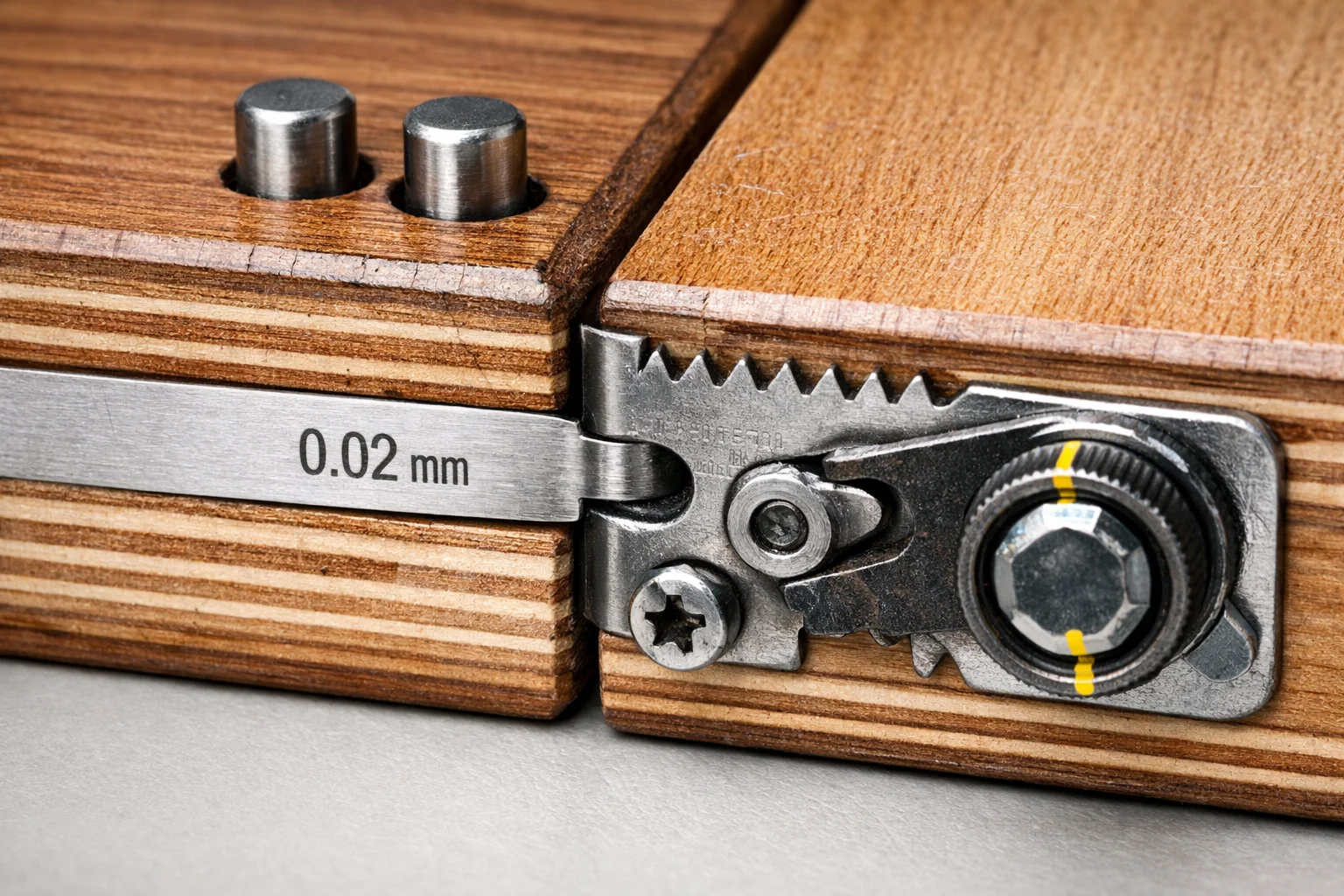
The best version I have seen in stores is the ratchet style alligator clip connection, the kind that bites and stays put when the sections try to slide. If you hear the connector click into place and it takes a deliberate lift and pull to separate the pieces, that is usually a good sign that the sectional is built to resist the shove that happens every single time you sit.
If the salesperson tells you “a rug pad will stop it” or “you can just push it back together,” I treat that as an admission that the connector is not doing its job. Rugs and grippy pads can help with sliding on the floor, but they do not fix the internal separation force that creates the gap in the first place.
The Three Tiers of Connection Quality
When I look under a sectional and see how the pieces join, I mentally sort it into three tiers. I am not trying to be snobby about it, I just want a quick way to predict whether you will still have a tight seam a year from now, or whether you will be doing the annoying weekly shove to reunite the chaise and the sofa.
The bottom tier is what I call “it technically connects.” This is where you see small, thin metal tabs, shallow hooks, flimsy brackets, or anything that looks like it was designed more for keeping the pieces aligned during delivery than for resisting daily sideways shove. In the showroom these often feel fine until you do the lean back and hip shift test, then you feel a tiny give or hear a click that is not a confident lock, it is a little slip.
If you are looking at a sectional in this tier, I want you to treat it like a red flag even if everything else feels nice. The reason is that the first few months at home are when frames loosen a bit, floors reveal their unevenness, and people get less careful about how they sit, and that is exactly when a marginal connector starts “walking” open.
The middle tier is “it locks, but it still depends on everything else being perfect.” This is where you get a more substantial hook in bracket style, a deeper engagement, or a connector that at least has a clear on and off motion that you can feel. When these are done well, you can often lift one side a little and the other side wants to come with it, which tells me the sections are actually behaving like one unit.
What makes me cautious even in this tier is when the connection feels strong only in one direction. If it holds when you push the pieces together but it feels easy to pry apart with a small upward lift, or if the connector is mounted in thin wood that looks like it could wallow out over time, I assume you will eventually get play in the joint. In the showroom I try to separate and reconnect it myself, because if it takes almost no effort to disengage, that is usually what will happen gradually with normal frame flex.
The top tier is “it wants to stay married.” This is where I see a real interlocking mechanism, typically something that bites tighter under load, or at least something with a positive latch feel where you hear and feel it seat decisively. The key difference is that when you provoke that horizontal thrust, the connector does not just resist it, it uses it, the shove makes the joint want to stay closed instead of creeping open.
When you are trying to spot this tier without turning into a mechanic in the middle of a furniture store, I focus on two practical checks. First, I want the seam to stay visually tight after you do a few aggressive sit and scoot cycles near the joint, not just immediately after the salesperson “sets it.” Second, I want it to take a deliberate, intentional move to disconnect, meaning you have to lift and align and pull with purpose, not just tug and watch it pop loose.
If the salesperson cannot or will not show you the connector, I do not automatically walk away, but I stop assuming the best. I ask a very plain question, “Is this a locking connector, and what keeps it from lifting out when the frame flexes?” If the answer is vague, or you get redirected to fabric, or you hear anything like “that’s normal, sectionals move,” I take that as a sign you are probably in the bottom tier, even if the price tag is not.
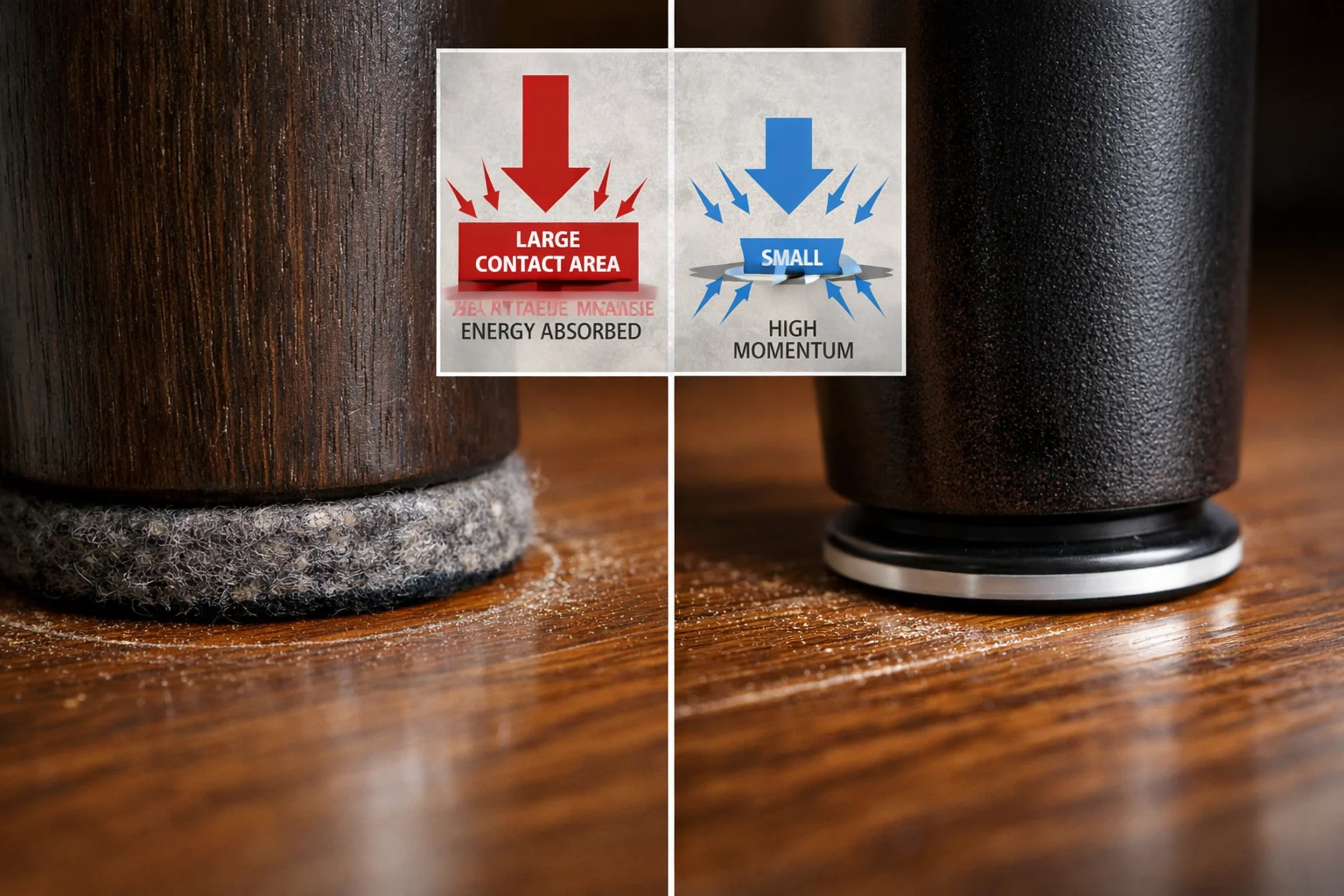
One more thing I have learned to watch for is mismatched effort. If the connector is strong but the pieces still drift on the floor, you will still feel like you bought a problem, because you will be pushing the whole sectional back into place instead of just keeping the seam tight. I like to gently nudge the chaise leg with my foot while my hand rests on the other piece, because if the whole unit skates easily, you are going to fight it on smooth floors unless you plan ahead with a proper grippy pad under the legs.
What I want for you is not perfection, it is a connection that fails gracefully. A good joint stays tight and quiet, and even if the floor is slick or the frame relaxes a little, it does not start turning your sectional into two independent furniture items. If you only remember one thing from this section, remember that “easy to connect” is not the same as “hard to separate,” and you are shopping for hard to separate.
1. The Friction Tier (Budget)
In this bottom tier, the “connection” is basically no connection. The pieces just sit next to each other, and the only thing trying to keep them aligned is rubbery grip feet, a rough fabric strip, or a slightly tacky pad stapled under the frame.
I have seen this look fine for the first hour in a showroom because the floor is level, the pieces were just nudged into place, and nobody has lived on it yet. At home, normal use creates sideways shove every time you sit and lean back, and friction alone is not a real countermeasure, it is just a delay.
If you have hardwood, laminate, or any smooth tile, I want you to assume this kind of sectional will start drifting quickly, sometimes in a day or two, even if the feet feel “grippy” when you first touch them. Once it starts, it usually becomes a routine where you keep noticing the gap, then you do the little awkward shove to close it, then it opens again.
In a showroom, you can spot this tier fast if you know what to look for. When the salesperson says it “just lines up” or you do not hear or feel any locking action at all, get down and look for actual metal connectors between the frames. If you only see legs and dust cover fabric and nothing bridging the two sections, treat it as friction tier until proven otherwise.
Then do the test that tells you the truth. After the pieces are placed together, sit right near the seam where they meet, lean back firmly into the angled back, and scoot your hips like you are getting comfortable. If the seam opens even a little, or the chaise shifts so the front edges are no longer flush, you are watching your future weekly annoyance happen in real time.
I also do a simple floor test because this tier fails two ways. I plant my hand on the sofa piece and give the chaise a sideways nudge with my foot at the leg. If it skates easily, that is not a maybe, that is the design working as intended, and the intention is basically “you will be pushing this back into place a lot.”
If you are determined to buy in this tier anyway, I think the only sane way to do it is to plan for management, not stability. You will want a rug or a proper non slip underlay under the front legs so the whole unit does not walk across the room, and you should be honest with yourself about whether you are willing to realign it regularly. What I would not do is let anyone sell you on “the rubber feet are enough,” because in my experience, they are enough only until the first couple of normal movie nights.
What I want you to take from this tier is simple. If there is no hardware locking the sections together, you are not buying a sectional that behaves like one piece, you are buying two pieces that hope your floor is sticky. That can be acceptable at a price you truly feel good about, but you should only choose it with your eyes open, because the maintenance is not optional, it is built in.
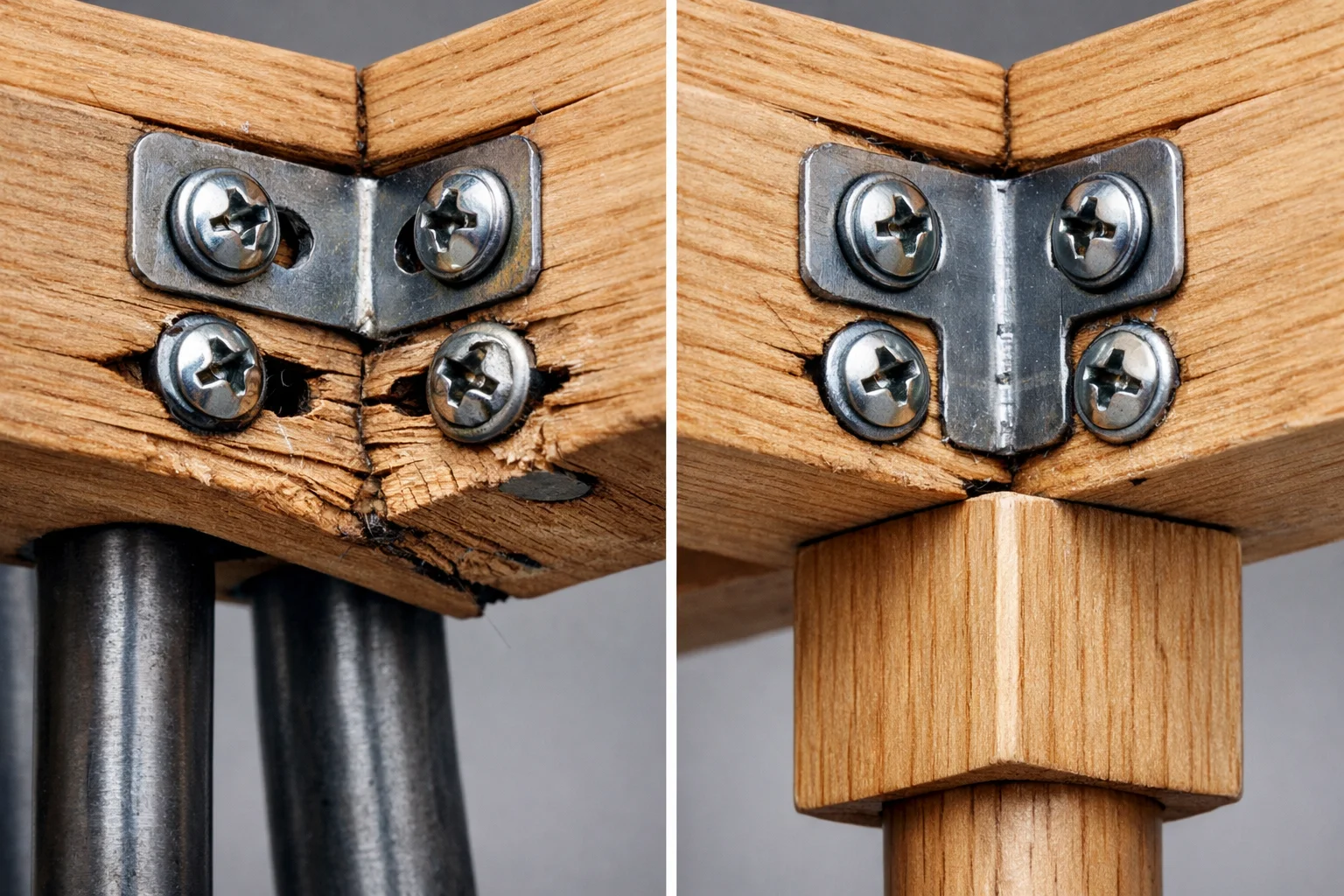
This photo is the kind of underside detail I wish more people looked at before buying, because it explains a very common “it started sagging out of nowhere” story. When a corner wedge or inside corner seat does not have its own leg support near the joint, the connector hardware and the screws start doing a job they were never meant to do, which is holding up a share of your body weight.
In a showroom, I try to spot this by finding the inside corner where two sections meet and then looking at where the nearest legs actually land. If you see a long span with no leg close to that junction, especially on a wedge piece, I assume the joint will get stressed every time someone drops into that corner, leans back, or uses it as a pivot to stand up.
You can feel this risk without tools. I sit right on the inside corner and do a gentle bounce, then I shift my weight diagonally toward the seam like I am trying to “wring” the corner, and I pay attention to any creak, tick, or slight settling that repeats. If the corner feels like it is hanging from the connectors instead of being propped up from the floor, that is when you later get sag, wobble, and a joint that loosens even if the connectors looked decent on day one.
The simple question I ask the salesperson is, “Does this corner have a leg directly under it, or is the support coming from the neighboring frames?” If the answer is basically “the connectors handle it” or “it’s designed that way,” I treat that as a durability downgrade, because connectors are great at keeping sections together, but they are a lousy substitute for a leg taking weight straight down into the floor.
If you like everything else about the sectional and you are on the fence, I would rather you choose the version that has a visible leg near that inside corner, even if it is not as pretty. In my experience, an “ugly but present” support leg beats a clean look that slowly turns into a soft corner and a widening gap that you cannot fix with tightening, because the wood and fastener holes have already started to wear.
2. The Gravity Tier (Mid-Range)
This is the tier where the sectional finally has real metal hardware connecting the sections, but the connection is still more “hang together” than “lock together.” The common versions I see are drop in plates and U clips, where you lift one section, line up a pin or post, and then drop it into a hole or slot on the neighboring section.
In the showroom, these often feel reassuring at first because the pieces stop doing that sloppy sideways skate you get with pure friction setups. The seam looks cleaner, and the tops of the seats usually line up nicely.
The catch is the same one that made me regret a mid range sectional I once owned, these connectors do not create a true locking force. They are great at keeping one piece from sitting higher than the other, but they do not inherently stop the pieces from pulling apart horizontally when real life happens.
Real life is an imperfect floor, a little frame flex, and people sitting near the joint and leaning back. If the floor slopes even slightly away from the seam, gravity quietly helps the sections drift apart, and the connector is basically just riding in its slot while the gap grows.
You can test whether you are looking at this tier without even seeing the hardware. Ask them to connect the pieces, then stand at the joint and try to pull the chaise straight away from the sofa while keeping everything level, like you are trying to open the seam without lifting. If it slides apart with a steady tug, or if you feel a little scrape and then it gives, that is the no lock reality showing itself.
Then do the test that matters more to me, sit right next to the seam on the inside edge of one piece, lean back hard into the backrest, and do that normal movie night shift where you scoot your hips and settle. If the seam opens a hair and stays open, you are watching the beginning of the long term drift pattern, even though the connector is technically still “connected.”
I also like a simple uneven floor simulation that is gentle but revealing. I put one hand on the top of one section near the seam and I lightly lift up just a bit, not enough to disengage anything, just enough to take weight off the feet for a second, then I set it down and see if the seam returns to tight or stays slightly separated. On a drop in setup, that tiny lift and set down can let the pin re seat in a slightly different spot, and if it re seats with a gap, you will be chasing that gap at home.
If you can get them to tip the front edge up so you can peek underneath, a gravity tier connector usually looks like a simple vertical engagement. You will see a post going down into a bracket, or a U shaped receiver that the other piece drops into, and you will not see a latch, a spring, or a mechanism that would resist a straight pull.
When I am deciding whether this tier is acceptable, I stop thinking about the connector in isolation and I start looking for what else will keep it honest. I want legs close to the joint so the frames do not teeter, I want the floor contact to feel stable so one piece is not rocking and slowly walking, and I want the seam to stay tight after repeated sit and scoot cycles, not just right after setup.
If you love a sectional that uses these connectors, I would rather you find out now whether your room will make it miserable later. Tell the salesperson what your floor is, especially if it is old hardwood or anything that is not dead level, and ask plainly, “If my floor slopes a little, what keeps these from drifting apart over time?” If the answer is basically “you just push it back,” then you are buying a connection that depends on you doing maintenance.
The main thing I want you to remember about this tier is that it is not junk, it is just not self securing. It can be fine if the sectional is heavy, the legs are well placed, and your floor is cooperative, but if you already know you hate fiddling with furniture, this is where I personally start pushing harder to see a true locking connector before I pay mid range money.
3. The Mechanical Lock (Professional Standard)
This is the first tier where I stop worrying that normal sitting will slowly “unzip” your sectional. A true mechanical lock uses real interlocking hardware, often tempered steel alligator style clips or a male female ratchet plate setup, and you can feel it when it engages.
In a showroom, I am listening and feeling for a decisive click as the two sections come together. When it is the good kind, the connection does not just settle into place, it bites into place, and it feels like it wants to stay there.
The simplest check I do is separation effort. After they connect it, I try to pull the chaise straight away from the sofa without lifting, and nothing meaningful should happen besides the upholstery compressing a little and the whole unit trying to move as one.
Then I try the move that defeats weaker systems, which is a lift at the seam. I put both hands near the inside edge of one section and I lift firmly just enough to see if it will pop free, and with a real mechanical lock it should resist that casual lift and make me either commit to a bigger, deliberate lift or use a release.
If there is a release lever, I actually want to see it and use it. I have learned that “it comes apart easily for delivery” often translates to “it will come apart easily when the frame flexes,” so I am much happier when disconnection requires an intentional step that you would not accidentally recreate by sitting down hard or dragging the piece during cleaning.
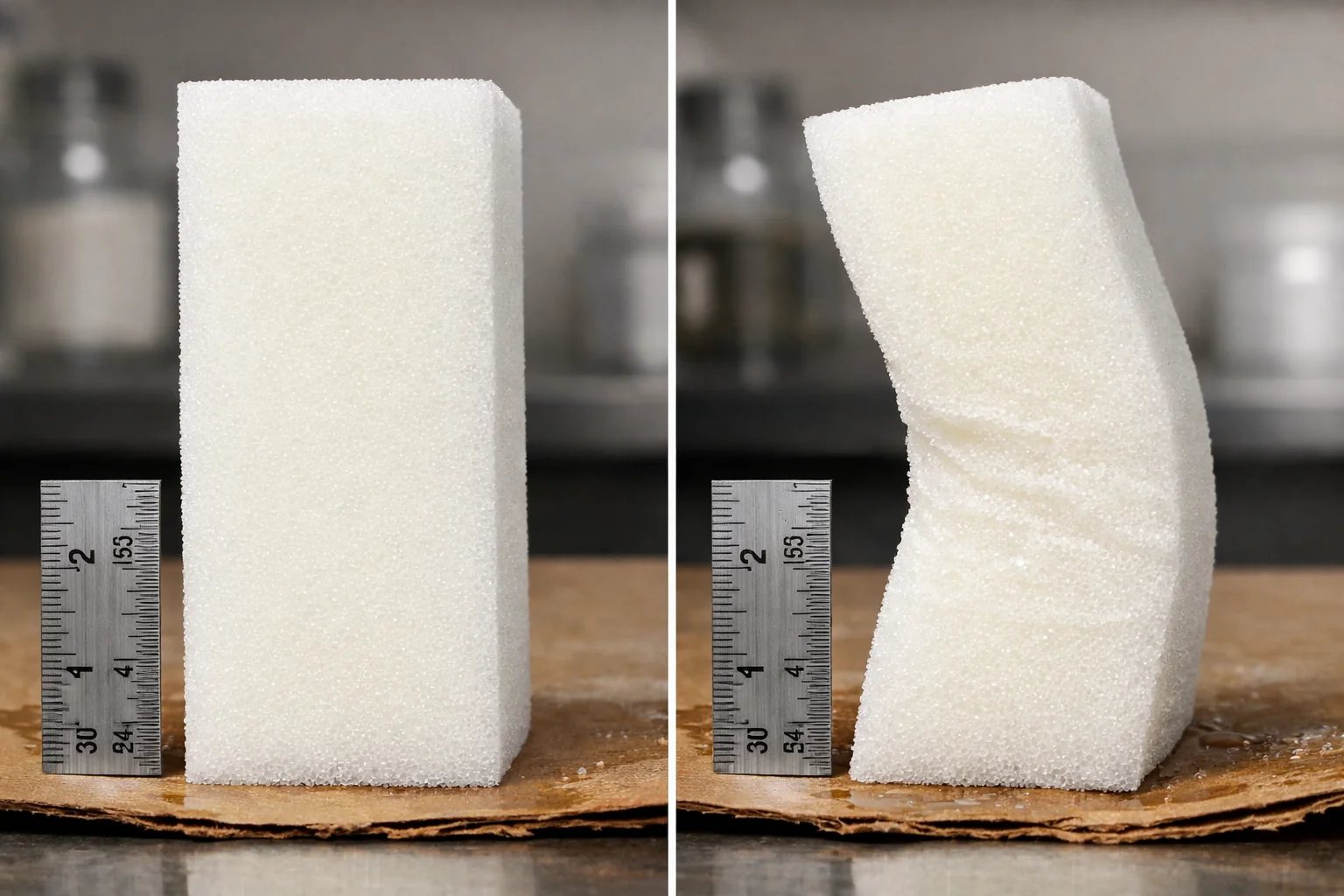
Where this tier really earns its keep is how it handles stress over time. When the sections are mechanically unified, the load gets shared across the whole footprint of the configuration instead of one piece taking the brunt and the connector hardware eating all the sideways shove, and that is how you avoid that slow loosening that turns into squeaks, gaps, and a corner that starts feeling different from the rest.
You can feel that load sharing in the showroom with a simple behavior test. I sit near the seam, lean back hard, scoot, then stand up and look at the seam again, and I want it to stay tight without needing the little nudge back together.
I also do the one piece test. I gently lift the front edge of the chaise a small amount, not high, just enough to see if the sofa side reacts, and with a good lock the other section wants to come with it because the connection is acting like a unified chassis, not two boxes kissing.
If you can peek underneath, I am looking for thick metal parts that overlap with a lot of engagement, not a tiny hook catching a lip. I also look at what the hardware is screwed into, because even the best clip is only as good as the wood holding it, and I get wary when I see it mounted into thin composite rails or a narrow strip that looks like it could split or wallow out.
When I am talking to a salesperson, I keep it very plain. I ask, “Is this a locking connector that cannot separate without lifting hard or using a release?” and then I ask, “Can you show me how it disconnects?” If they avoid demonstrating disconnection, or they say you just lift and it comes apart, I treat it like it is probably not the true professional style lock even if the brochure uses confident language.
One caution I have, even in this top tier, is that a strong lock does not automatically prevent the entire sectional from skating on slick floors. I still do that small nudge at a front leg to see if the whole configuration slides easily, because you can have a great seam and still be annoyed if the whole unit migrates across the room.
If you are choosing between two sectionals that both feel good on cushions, I personally give a lot of weight to this connector style because it is one of the few things you can physically verify in a store and it correlates with long term sanity at home. When a sectional has a real mechanical lock, it is much less likely to turn you into a person who is always pushing furniture back together.
This is what I mean when I say “mechanical lock” instead of “it kind of hooks.” An alligator clip setup is made to resist a straight pull, so when the chaise tries to drift away from the main sofa body under normal sitting and leaning, the hardware is fighting that separation with real bite, not just relying on the pieces staying heavy and polite.
When you are standing in a showroom, you cannot measure tensile strength, but you can check whether the connector is built for it. I look for thick steel parts with multiple teeth or ridges, and I look for deep overlap where the two halves engage, because shallow engagement is what pops out when the frame flexes.
Then I watch where it is mounted. If those beefy clips are screwed into something that looks like thin layered board or a narrow strip that could crack, I do not give it full credit, because strong metal in weak wood still loosens over time, it just does it more expensively.
I also pay attention to whether the connection “self tightens” when the pieces are pushed together. With the better alligator styles, you usually feel the sections draw in and settle tighter as you push, and you can often hear a little ratcheting click as it finds the next tooth. If you push the pieces together and it still feels vague, like the upholstery is what is closing the seam instead of the hardware, I assume the lock is more marketing than mechanism.
If you want one quick test that tells you if this is really doing its job, ask them to connect the sectional, then put your hands on the chaise and try to pull it straight out without lifting. If you feel nothing but the whole sofa wanting to come with it, that is the behavior you are paying for.
After that, I do the “lazy lift” test, because that is what real life does during cleaning, kid climbing, or someone dropping into the corner. I lift near the seam just enough to see if it pops free, and with a true alligator style lock it should not. If it separates with a casual little lift, that is not a lock you can trust long term, no matter how tough the metal looks in a close up photo.
One last thing I do, especially with a chaise, is look at how the seam behaves after repeated movement. I sit on the chaise near the joint, lean back hard, scoot twice like I am settling in, then I stand up and look straight down that seam. With a good mechanical anchor, the line stays tight and consistent, and you do not get that new little daylight gap that tells you the pieces just walked apart one more time.
Corner Stress concentration
Corner Stress concentration
The corner wedge is the most vulnerable structural point in a sectional, and I have learned to treat it like the stress test seat, not just “the nice wraparound spot.” That piece often has connectors on multiple sides, but it usually does not get the same straightforward, wide leg support that the long straight sections get, so it ends up acting like a hinge point that gets twisted and loaded from different directions.What I watch for in a showroom is whether the corner wedge has its own legs doing real work, not just nearby legs clustered on the neighboring pieces. Some budget designs basically hang the corner off the frames next to it to save money and parts, and that is when the connectors and screws start taking weight and side load they were never meant to carry. When that happens, the hardware can start shearing or loosening, and you end up with a corner that sags or feels collapsed surprisingly early.
If you want one practical way to catch this before you buy, do not just sit in the corner, stand up from it a few times the way you actually would at home. I put my weight down right on that inside corner, then I push off an arm or the back to stand, because that move loads the corner diagonally and tries to rack the joint.
Then I pay attention to whether the corner feels like it has a solid post under it, or whether it feels like a floating platform that flexes and then settles. A tiny bit of cushion give is normal, but a repeating little drop, a creak that sounds like hardware shifting, or a sense that the corner is “hanging” is what I take seriously.
I also get down and look at the leg placement with my own eyes, because verbal reassurance is cheap. I am not counting legs like a spec sheet, I am looking for a leg close enough to the corner that it clearly supports that seat directly, instead of forcing the connectors to carry the load between sections.
If the salesperson tells you the corner does not need its own leg because the adjacent pieces support it, I would not accept that without a demonstration. I ask them to point to what transfers the weight straight down into the floor at the corner, and if the answer is basically “the bracket,” I assume you are buying a future wobble point.
When I am comparing two similar sectionals, I will choose the one with the less glamorous but more honest support at the inside corner. In my experience, a dedicated corner leg is the difference between a sectional that stays feeling like one stable unit, and one that slowly develops that annoying soft corner where the seam starts misbehaving no matter how often you reconnect it.
Sectional Connection Audit
When I am trying to predict whether a sectional will stay “one unit” at home, I do a quick connection audit that is less about marketing terms and more about what I can actually see, touch, and stress in the showroom. I am looking for the same basic pattern every time, strong metal hardware, a connector that actually locks instead of just hanging, and a mounting method that will not loosen after months of frame flex.Connector material is the first tell. When I can see galvanized steel hardware under there, it usually means the maker expects real tension and shear at that joint. When I see plastic parts or thin, light duty zinc pieces, I assume the connector is meant for alignment, not long term resistance, and I get much more aggressive with my pull test because those parts can deform and start “finding slack” early.
Locking type is the next thing I care about, because it determines whether the connection gets stronger under load or weaker. Ratchet style or alligator style locks tend to seat positively, and they do not rely on gravity to stay put. Drop in and simple hook styles often feel fine when everything is level, but they can separate from a steady horizontal pull, and that is exactly the force you create when you lean back and the backrest pushes you forward and sideways.
Mounting is the hidden failure point most people never see. I trust connectors that are bolted through the frame more than ones that are just screwed into wood, because screws can loosen and wallow out the hole as the sectional flexes. In the showroom, if they will let you peek, I look for a bolt with a nut and washer or a machine screw into a threaded insert. If all I see is a couple of wood screws biting into a rail, I assume that rail will eventually compress and the joint will start clicking even if the connector design was decent.
Alignment matters in a way that is hard to explain until you have lived with a drifting chaise. A better connector controls both vertical alignment and horizontal alignment, meaning it keeps the tops flush and it also stops the pieces from walking away from each other. A weaker connector often only controls vertical alignment, so it prevents one side from sitting higher, but it still lets the seam slowly open with normal use.
I do not try to measure separation force, but I do try to feel the difference between “I can separate this with one casual tug” and “this refuses to separate unless I lift and deliberately disengage it.” If you can pull the chaise away with one hand while keeping it level, that is the kind of connection that will eventually lose the battle against daily living. If you pull and the whole sectional wants to come with it, that is the behavior that usually stays sane over time.
If you want a quick way to run this audit without tools, I ask you to do three things in order. First, ask them to connect it, then immediately do your straight pull test at the seam without lifting. Second, do your sit near the seam, lean back hard, scoot, then stand up and check whether the seam stayed tight. Third, ask to see the connector from underneath, and pay attention to whether it looks like thick steel that is bolted on, or a light bracket screwed into a skinny strip of wood.
When a sectional fails this audit, I do not let anyone talk me into solving it with floor grippers alone. Floor grip can stop the whole unit from skating, but it does not create a lock between the frames. If the frames can separate, the gap will show up sooner or later, and you will feel it every time you sit near that joint.