Modular Frames: The Engineering of the Box
Introduction
When I started paying attention to why some sofas feel solid for years and others start creaking and sagging, the frame kept coming up. The easiest mental shift is the one in the foundation text, stop picturing a sofa as one long piece and start picturing it as a box that has to stay square under load.
With a traditional frame, those long, continuous rails can spread forces across the whole length, which can be good. The downside is that when something flexes, loosens, or splits, you often feel it everywhere because the structure is tied together across the entire span.
A modular frame is more like a set of self contained boxes joined together. That changes what I look for in a showroom, because stress no longer travels the same way. It tends to concentrate at module corners and at the joints where modules meet, so the make or break detail is not just the wood, it is how those corners are braced and how the modules are connected.
If you take nothing else from this intro, take this. With modular construction, the connection points are the product. The comfort cushions can be replaced, but a loose module joint or a racking, out of square “box” is the kind of problem that keeps getting worse.
In the showroom, I want you to treat the sofa like a simple structure and try to make it misbehave a little. Sit hard on one seat and then shift your weight toward the seam between sections. If you feel a clunk, a pop, or a delayed wobble, that is usually the modules moving against each other, not just soft cushioning.
I also like to lift the front corner of one module a tiny bit by pressing down on the opposite back corner with my body weight. You are not trying to abuse the furniture, you are just asking whether the box stays square. A good modular frame tends to feel like it resists twisting, while a weak one will telegraph movement through the seam and you will feel the sections “talk” to each other.
Look underneath if they will let you. I am looking for real corner blocks or sturdy bracing inside the module corners, not just a thin strip of wood and a couple of staples. If the underside is fully sealed and you cannot see anything, that does not automatically mean it is bad, but it means you should lean harder on the seam test and ask more questions about what is doing the actual bracing inside the box.
When a salesperson says “it’s modular so you can replace a section,” I always redirect to the part that matters more. Ask how the modules lock together, and whether the connectors are metal to metal and adjustable, or if it is mostly relying on little hooks and gravity. Modular is not automatically better or worse, it just moves the risk to the joints and corners, so that is where you should spend your attention.
The "Single-Rail" Edge Trap
In cheap modular units, I often find a shortcut at the exact place you need strength most, the side edges where two boxes meet. Instead of building the whole perimeter of each module like a rigid picture frame, they run one thin rail along the connection edge and call it done.Here is what that means for you in real life. When you sit right on the seam between two pieces, your weight is no longer landing on a wide, stiff structure. It is landing on two skinny edges, one from each module, and each edge is free to flex on its own instead of sharing the load.
The failure looks and feels very specific. The rails bow independently, the seam opens up, and you get that sinking into the crack sensation even if the cushions seem fine. Over time you will also notice the modules stop sitting flush, because the connection hardware is fighting movement that the frame itself is allowing.
In the showroom, I want you to deliberately sit on the seam the way people actually do at home. Plant yourself with your hips centered over the joint, then shift your weight a few inches side to side. If the gap visibly widens, if you feel a little drop, or if you hear that dry wood flex sound, I treat it as a frame edge problem, not a comfort problem.
Then I do a hand check. I press down with my palm right next to the seam on one module while my other hand feels the neighboring module, and I am looking for one side moving without the other. A good seam feels like a shared platform, a bad seam feels like two diving boards placed next to each other.
If they will let you look underneath, this is where I want you to focus your eyes. On a better modular box, you will see a real dual rail edge, meaning each side of the module has a thick, continuous band of hardwood or plywood so the connection edge behaves like a beam, not a strip. I do not care if the salesperson uses the phrase, I care that you can see or credibly confirm that there is substantial material at that perimeter and not just a thin stick holding staples.
If the bottom is sealed and you cannot verify the edge build, I fall back to one blunt question that usually cuts through the sales talk. Ask what the connection edge is made of and how thick it is, and ask if there is a full perimeter rail on every side of each module or only at certain sides. If the answer gets vague, or they steer you back to fabric and cushions, assume the seam test you felt is the truth and keep shopping.

When you get a chance to look under a modular sofa, this is the kind of detail I am hoping to see, a real triangular corner block that is both glued and screwed into the frame, not just a little scrap stapled in place.
The reason I care is simple. Most of the annoying long term problems in modular seating feel like twisting, the box goes slightly out of square and then the connectors start clunking, the seam starts opening, and you start blaming the cushions when it is really the structure slowly racking.
In a showroom, I try to confirm three things with my eyes and hands. I want the corner block to be substantial and snug to both rails, I want to see screws or bolts rather than a forest of staples, and I want some sign that the joint was glued, which usually shows up as a clean glue line or squeeze out rather than dry wood to wood contact.
If the frame is plywood, I look for tight, even layers on the exposed edge, because that usually tells you they did not use the crumbly stuff. Birch plywood gets mentioned a lot because it tends to have more consistent plies, but what helps you is not the name, it is whether the edge looks dense and uniform instead of full of voids.
Then I do a quick “twist check” while I am already down there. I put one hand on the front rail near a corner and the other on the side rail, and I try to gently work the corner diagonally, like I am trying to turn a rectangle into a parallelogram. A well braced corner feels dead and unified, a weak one gives you a tiny tick of movement that later becomes a squeak.
If you cannot see any of this because the bottom is fully covered, I do not assume it is bad, but I stop accepting vague assurances. I ask whether the corners are blocked, whether the blocks are glued and screwed, and whether the frame corners rely on staples alone, because that one question usually separates real construction from marketing language.
The Agnostic Box Engineering
The big idea with a true modular is that each unit has to earn the right to exist on its own. I want you to think of every piece as a standalone chair that just happens to connect to neighbors, because that mindset makes the weak designs easier to spot.
When I hear “modular,” I immediately ask myself whether the unit is a complete box on all four sides, or if it is secretly a partial frame that only works because another piece is propping it up. In a lot of sectionals, the middle pieces can get away with missing a real side structure, because the arms at the ends stiffen the whole run. In an agnostic modular, each module should have a full perimeter so it can resist flexing whether it is placed in the middle, on the end, or sitting alone.
In the showroom, you can pressure test that idea without tools. Stand at the end of a single module, grab the top of the back near a corner, and give it a gentle side to side wiggle while you keep your other hand on the side panel. If the side feels like a real wall tied into the rest of the box, the movement will feel damped and unified. If it feels like the side is just a dressed up edge, you will feel the back and side argue with each other.
Corner blocks matter more in modular than almost anything else because modules get pushed, pulled, rotated, and re connected. That constant handling creates racking forces, the twisting that tries to turn a rectangle into a diamond. When the corners are only stapled, the sofa may feel fine at first, then it starts making noise as the joints loosen, then the seam alignment becomes a permanent fight.
When I get a look underneath, I am hunting for triangular corner blocks that are both glued and screwed, not just tacked in. The “at least three inches thick” detail is less about you carrying a ruler and more about whether it looks like a real structural part instead of a thin wedge of scrap. If the block looks chunky and it spans a meaningful area of both rails, that is a good sign it is there to prevent twist, not just to check a box on a spec sheet.
You can also learn a lot by looking at the fasteners. Staples in upholstery are normal, but staples holding the skeleton together are where I get skeptical. If you see screws going through the corner block into both rails, it usually means the maker expected the joint to take stress over time, not just survive shipping.
Material choice shows up in a practical way when you think about the connectors. Modular sofas depend on hardware that gets loosened and tightened over the years, whether you are moving, reconfiguring, or fixing a seam that drifted. This is where plywood, especially birch plywood, tends to behave better than soft pine, because the cross layered plies give the screws more consistent bite over repeated cycles.
If you are allowed to see an exposed edge of the frame, look at it like you are judging a cutting board. Dense, even layers with minimal voids are what I trust. If the edge looks fuzzy, splintery, or full of gaps, that is where connector screws can start to strip out, and once that happens the modules can never lock together tightly again.
If you cannot see the frame, I ask a very specific question that salespeople either answer clearly or dodge. I ask what material the connector brackets screw into, and whether that area is plywood or solid wood, because that one zone takes a lot of repeated stress. If they say “hardwood” but cannot name it, or they pivot to fabric, I assume the connector is biting into something soft.
The last check I do is about independence. I ask whether the exact same unit can be used as an armless chair on its own, not just “technically,” but without a special add on base or extra support. If the answer is yes and they can explain how the side and back are fully framed, it usually tracks with a more honest, four sided box build. If the answer turns into “it’s designed to be used together,” that is often code for “some sides are not really built like sides.”
Vertical Alignment Systems
Once the boxes are strong, the next thing that makes or breaks a modular is whether the modules stay vertically aligned over time. The frame is not only carrying your weight, it is also trying to keep two separate structures sitting at the same height, with the same tilt, while your floor is never as flat as you think it is.
When you hear “alignment pins,” picture a steel rod sticking out of one module that drops into a matching hole on the next module. In the showroom, I like these because they prevent the annoying step effect where one section ends up a little higher and you feel it through the cushions, especially right at the seam.
You can test for this without crawling around. Put one hand on each module right next to the seam and press down hard, alternating sides like you are gently rocking the seam. If the top surfaces feel like they stay in the same plane, that usually means there is some kind of pinning or guided alignment. If one side keeps settling lower and then popping back when you let go, the connection is probably relying on hooks and friction more than true alignment.
I also care about whether the pins are doing real work or just “locating” the pieces. If you can lift the front edge of one module slightly and it comes up without dragging the neighbor with it, that tells me the system is not really tying the vertical relationship together. A good setup tends to make the two modules behave like one thicker platform at the seam, at least in that immediate area.
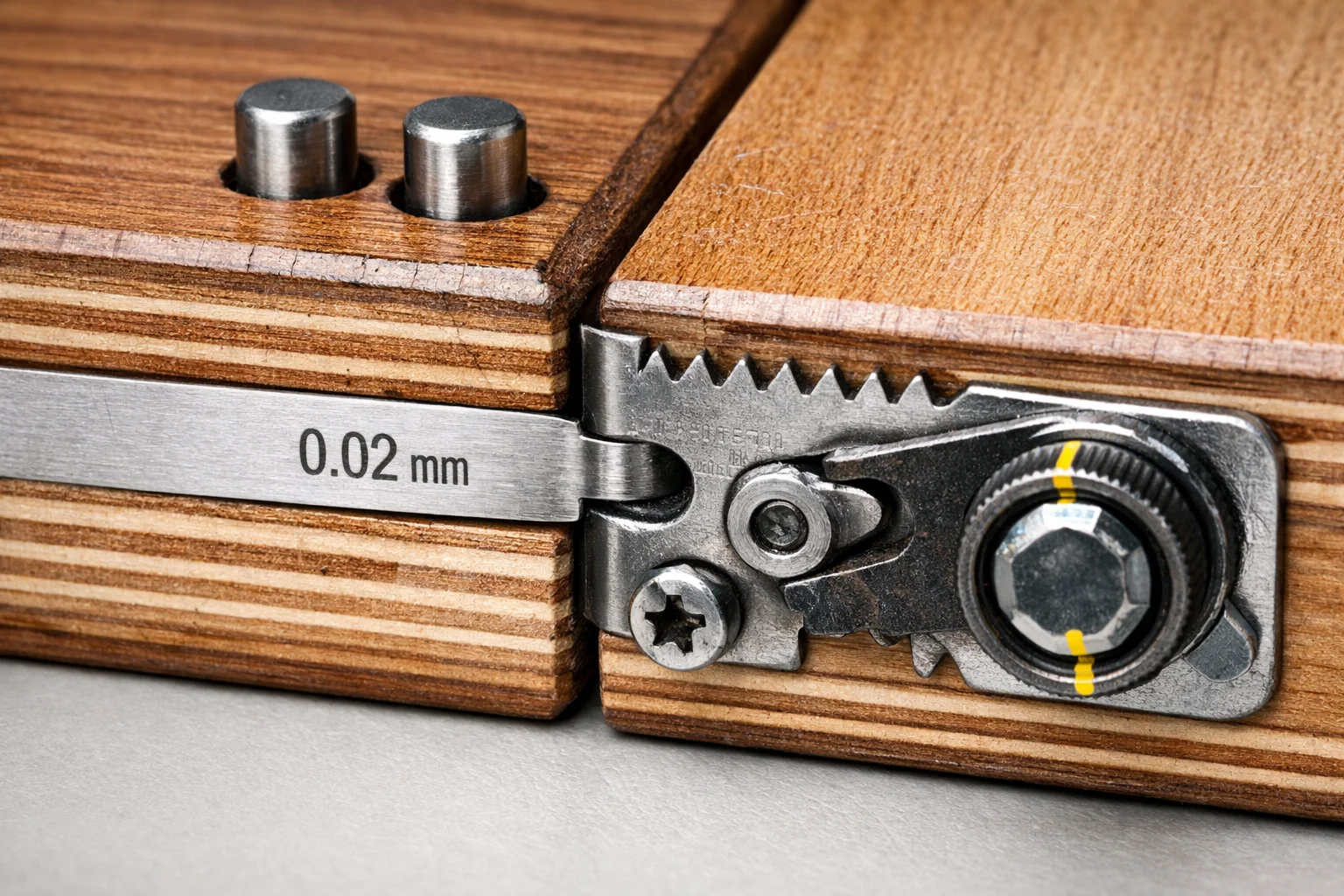
The other hardware I pay attention to is what I think of as the seam clamp, often sold as ratchet plates or a similar toothed plate system. The practical point is not the fancy name, it is that the hardware can pull the two boxes together with real force so the gap closes and stays closed.
In the showroom, look straight down at the seam from above and then sit down right on it. If the gap closes when you sit and then reopens when you stand, that tells me the modules are not being actively pulled together, they are just touching. If the gap stays tight even when you shift around, that is what I want, because it means the connector is resisting separation instead of letting the seam breathe with every movement.
I always do a quick noise and movement check right after. With your weight near the seam, do a small side to side scoot and listen for metal clicking or a dull clunk. A little upholstered rustle is normal, but a repeating click usually means the hardware has slack, and slack is what turns into a widening seam later.
If they will let you look underneath, I try to confirm two simple things. I want to see metal to metal hardware, and I want it attached to something substantial, not just a thin strip at the very edge. Strong connectors do not save a weak edge, they just concentrate stress right where the frame is most likely to crush or loosen.
When the salesperson says “it has connectors,” I like to ask one clarifying question that is hard to dance around. I ask whether the system is doing two separate jobs, one part aligning the height and another part clamping the seam tight, or if it is one little latch doing everything. In my experience, the setups that separate those jobs tend to feel more stable day to day, especially after you have moved the modules a few times or lived through a seasonal floor shift.
If you can only do one in person test, make it this. Sit with your hips centered over the seam, put your hands on the cushions on either side, and do a firm bounce and then a slow lean from one side to the other. What you are hoping to feel is boring continuity, not a hinge, not a step, and not that delayed catch up movement where one module moves and the other responds a beat later.
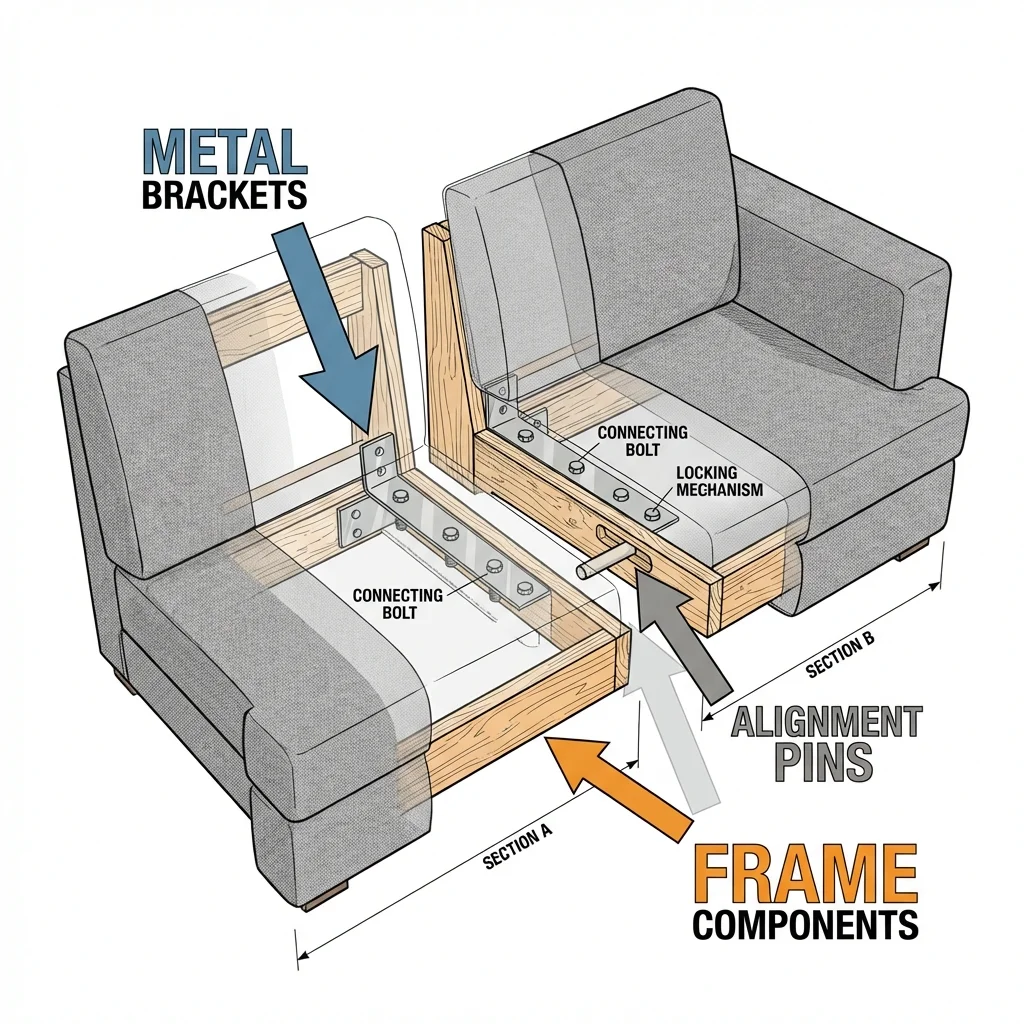
When you look at a cutaway like this, what I want you to notice is not the “insides” in a general sense, it is the fact that the module is built like it expects to be alone. In a good modular, the frame, the support under the seat, and the legs are not borrowing strength from the neighboring piece.
That “self sustaining” idea matters because it predicts what happens after real life, moving it, reconfiguring it, having one person always drop into the same spot, and dealing with a floor that is never perfectly level. If a module can only feel solid when it is locked between two others, you tend to get that familiar story where the end seats stay decent but the middle starts to wobble and complain.
In the showroom, I try to confirm independence in a way you can actually do. I sit in the very center of one module, then I sit on its outer front corner, and I pay attention to whether the module still feels like one rigid platform or if it suddenly feels springy and underbuilt once I am away from the seam.
If the modules have their own legs, I look for legs that are placed under the corners of each box, not mysteriously shared or missing at the join. When legs are skipped near a joint, the frame edge has to span farther like a shelf, and that is when you start feeling a dip at the seam even if the cushions are thick.
If you are allowed to lift a front edge slightly, I like to do a quick drag test. You lift one module just enough to take weight off the feet, and you see if the neighbor tries to come along immediately, or if the first one shifts and then the connector catches with a clack. That lag is usually the story of the next few years, because it means the modules are moving first and the hardware is reacting second.
This cutaway view is also a reminder to ask one question that sounds simple but exposes shortcuts fast. Ask whether each module has its own full seat support system, meaning its own springs or webbing, or whether some pieces rely on a shared support rail when connected. If they hesitate, or they say it is “designed as a set,” I assume you are buying something that needs perfect setup to feel okay.
If you cannot see a cutaway or the underside is sealed, you can still check the same concept with your body. I put my weight on a single module near its outside edge and I listen for any new noise that only happens when I am away from the seam, because that is often the sound of a box that is not really boxed.
The "Hollow Frame" Advantage
Because each unit is a rigid box, modular frames often have hollow cavities inside them, and that can actually be a real advantage for you instead of a cost cutting red flag.What I look for is whether the brand is using that empty space for something useful, most commonly internal storage. On some modulars, you remove the seat cushion and lift a panel, or you lift the whole seat deck on hinges, and you get a clean storage bay for blankets, kids stuff, or the avalanche of remotes and chargers that always ends up on the sofa.
The reason this can work, structurally, is that a well built modular frame is already acting like a rigid box. If the box is properly braced at the corners and the seat deck is designed as a strong lid, opening the top does not automatically weaken the frame the way it might on a flimsy, open ladder style build.
In the showroom, I want you to treat storage like a stress test. Open it and close it a few times and pay attention to whether the opening stays square. If the lid rubs, shifts sideways, or needs a little shove to latch, that is often an early sign the box is twisting, or the hardware is mounted into weak material.
Then do the simplest real life check, sit down right after you close it and see if you feel any new flex or hear a new click that you did not hear before. If the sofa suddenly sounds more mechanical or feels like the seat deck is settling into place under you, I assume the storage feature is competing with the structure instead of being integrated into it.
I also watch how the storage is kept shut. If it is relying on magnets or a loose catch, I assume it will start rattling once the sofa loosens up a little. If it uses real latches or hardware that pulls the lid down snug, it usually stays quieter and feels more solid.
One more thing I check is the edge support around the opening. I press down with my palm near the front edge of the seat, then I press near the side edge, and I am looking for a firm, beam like feel. If the edge feels hollow and springy right next to the opening, that is when the convenience starts turning into that annoying seam dip and long term squeaking.
If a salesperson pitches internal storage as a big value add, I ask a question that keeps it grounded. I ask what the hinges or latches screw into, and whether that mounting area is plywood or a reinforced block, because stripped screws are the quiet killer of storage sofas. If they cannot answer, I fall back to what my hands tell me, does the lid feel like part of the box, or does it feel like a thin panel covering a hole.
Hardware Durability Tier
The connectors under a modular sofa are not a side detail to me, they are the thing that decides whether the pieces stay tight and quiet after a year of real use. I have owned seating where the frame was decent but the hardware slowly loosened, and once that happens you stop feeling one sofa and start feeling a bunch of parts negotiating with each other.
When you are comparing connector types, I want you to think about your own behavior first. If you genuinely reconfigure often, you need hardware that tolerates repeated engagement without bending, and you need a design that still pulls the modules tight even if your floor is slightly uneven. If you set it once and mostly leave it alone, you can prioritize raw clamping strength and resistance to loosening.
Alligator clips, usually stamped steel, land in the medium tier for me because they can be convenient but they often have a little built in slack. In a showroom, I try to find the seam and do the tiny side to side scoot test while my weight is right on the joint, because clips that have any play will click or let the gap breathe. If you love the sofa but it is clip based, I would only be comfortable if the frame edges are clearly stout, the clip plates look thick and well mounted, and the modules still feel boringly unified when you shift across the seam.
U-connectors made from heavier plate steel are where I start to relax, especially for a semi permanent setup. What I like is that they tend to locate and hold with less wiggle, and they usually look like they were designed to take load instead of just keep pieces from drifting. Underneath, I look for wide mounting plates and multiple screws into solid material, because the weak point is not the steel itself, it is the screws slowly wallowing out soft wood.
Gravity brackets, often cast iron or zinc, are the low tier in my experience for anything that will see daily use, kids climbing, or frequent vacuuming shoves. The problem is not that gravity is bad, it is that you are relying on weight and perfect alignment to keep things seated, and real life is always a little off. In the showroom, I do a very simple lift and set test, where I lift the front edge of one module just a touch and set it back down, then I sit near the seam and listen, because these setups love to develop a repeating clack as the parts re-seat.
Screw-and-post systems, basically a machine bolt pulling two pieces together, are the extreme stability option when they are done right. They are not as sexy to a salesperson because they can be slower to reconfigure, but if you are trying to avoid seam drift long term, this is the category that most often behaves like one unit instead of two. The showroom check is straightforward, ask if you can see the hardware or a sample, and then ask whether you can re-tighten it with a common tool you already own, because “extreme” only matters if you can maintain it after a move.
No matter which tier you are looking at, I always bring it back to two practical questions that tell you more than the marketing name. I ask what the connector is mounted into, meaning plywood or a reinforced block versus a thin edge rail, and I ask whether the connector actively pulls the modules together or merely prevents them from separating. If they cannot answer clearly, I trust what you can feel, tight seams stay tight when you sit on them, and loose seams announce themselves with sound, movement, and gaps that change as you shift.
Explore Technical Reference
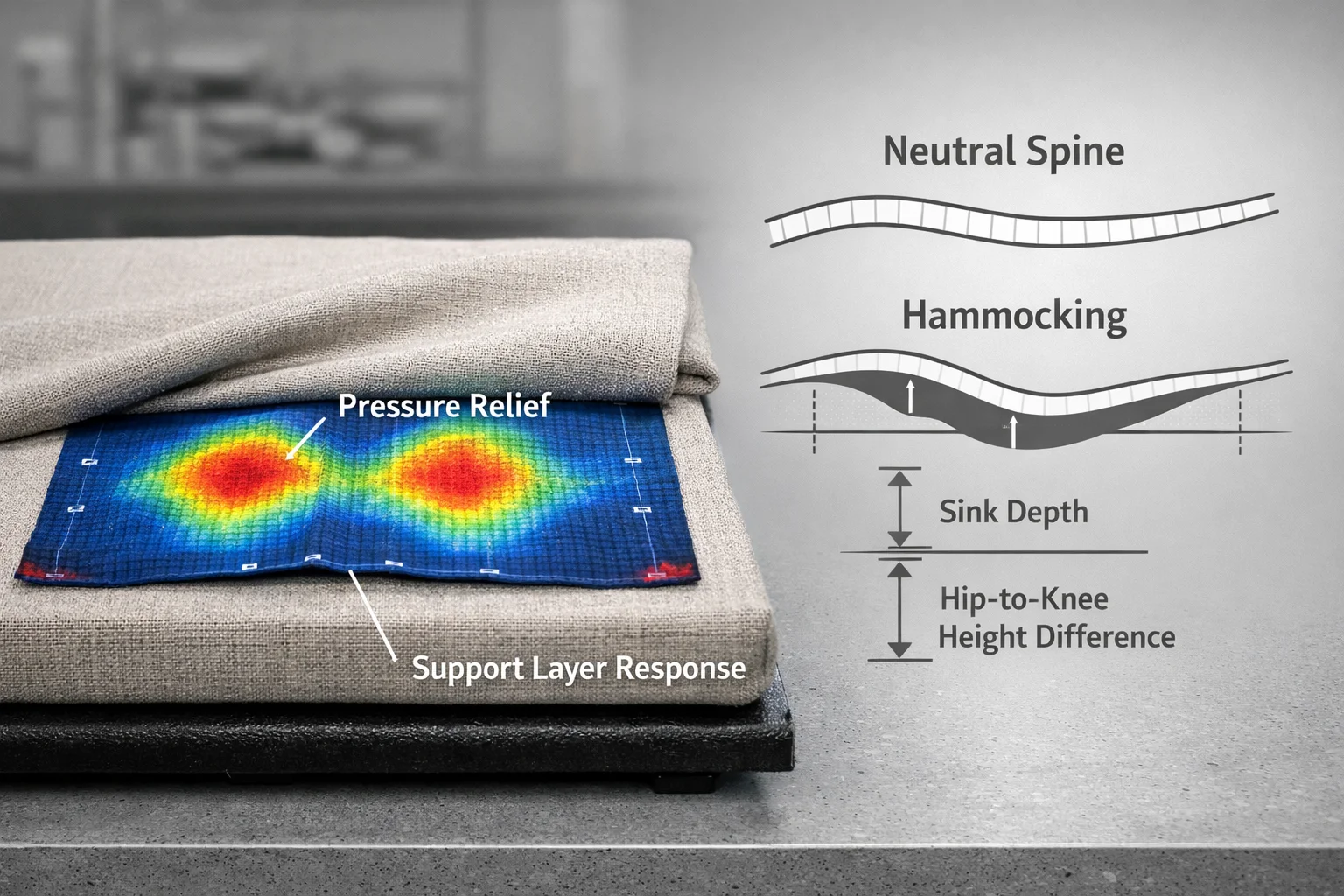
Futon Comfort: The Density/Flexibility Paradox
Why most futons feel terrible and what construction features separate comfortable futons from disappointing ones. The material and design choices that determine daily comfort.
Analyze Details →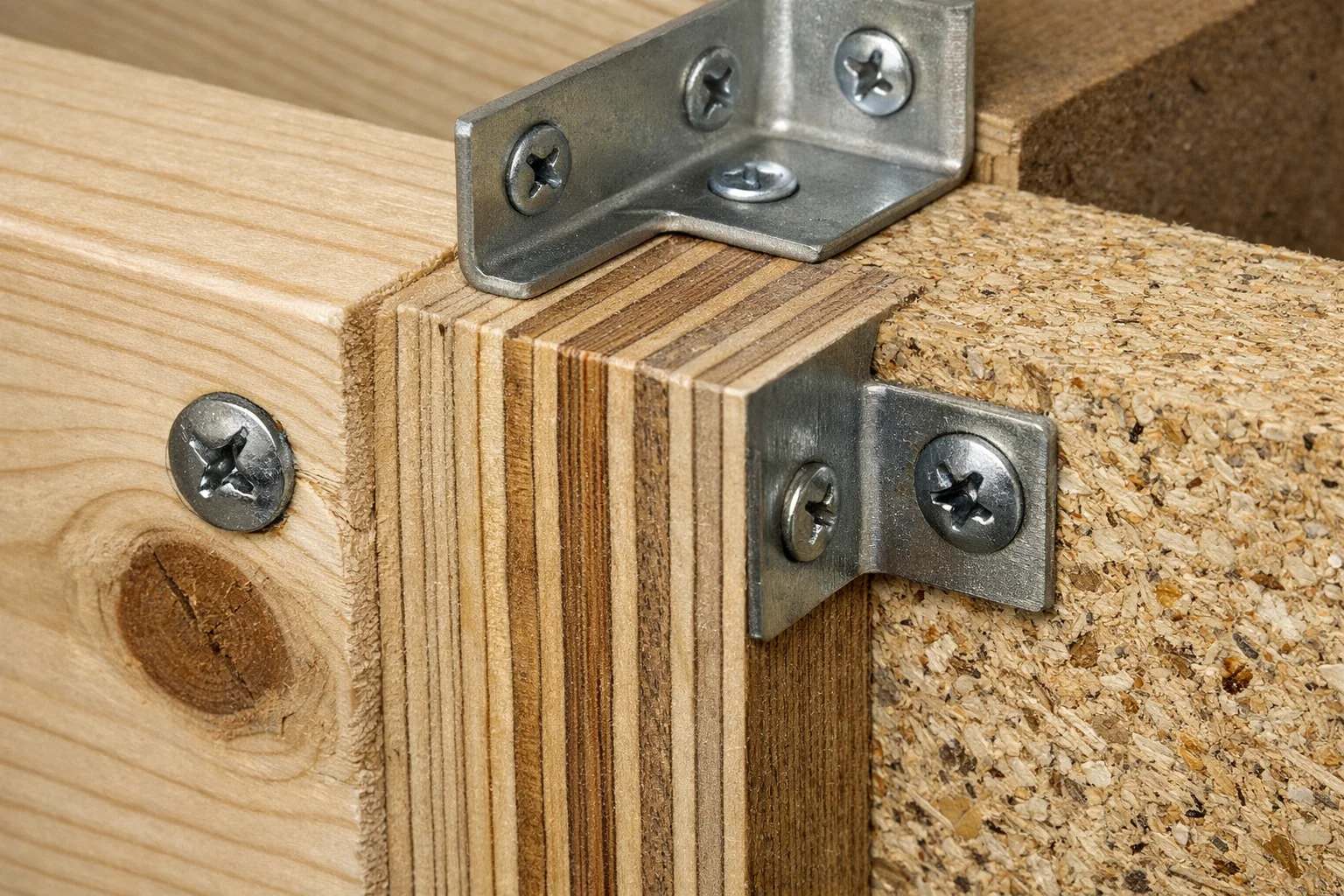
Sleeper Frames: The Torque Conflict
Understanding why sleeper sofa frames require heavy-duty construction
Analyze Details →