Modular Foam: The Break-In Mismatch
Introduction
I used to believe the promise that a modular sofa could grow with me, but the first time I tried to add a new section years later, the illusion collapsed the moment I sat down. The old seats felt relaxed and familiar, the new one felt stiff and tall, and the sofa suddenly looked and felt mismatched. That is not bad luck, it is physics and foam aging doing exactly what they always do.
Seat foam softens and compresses from day one. Your body weight, how often you sit, and even where you sit all change the shape and firmness over time. When you introduce a factory fresh module later, you are forcing brand new foam to line up with foam that has already lost height and stiffness, and they will never truly meet in the middle.
In a showroom, this matters more than salespeople admit. When you see a modular display that looks perfectly even, you are seeing pieces that are all the same age. What you are not being shown is what happens when one section is three or five years older than the rest.
If you are considering a modular sofa, I want you to treat it as a sofa you buy all at once, not a system you will easily expand later. If you think you might want a bigger sofa someday, it is safer to buy it at that size from the start or accept that future add ons may always feel firmer and sit higher.
This guide exists because I wish someone had told me this before I spent money chasing flexibility that does not really exist. As you keep reading, I will walk you through what you can physically check in a showroom to avoid this disappointment and how to decide whether a modular sofa still makes sense for you despite this limitation.
The "Step Effect"
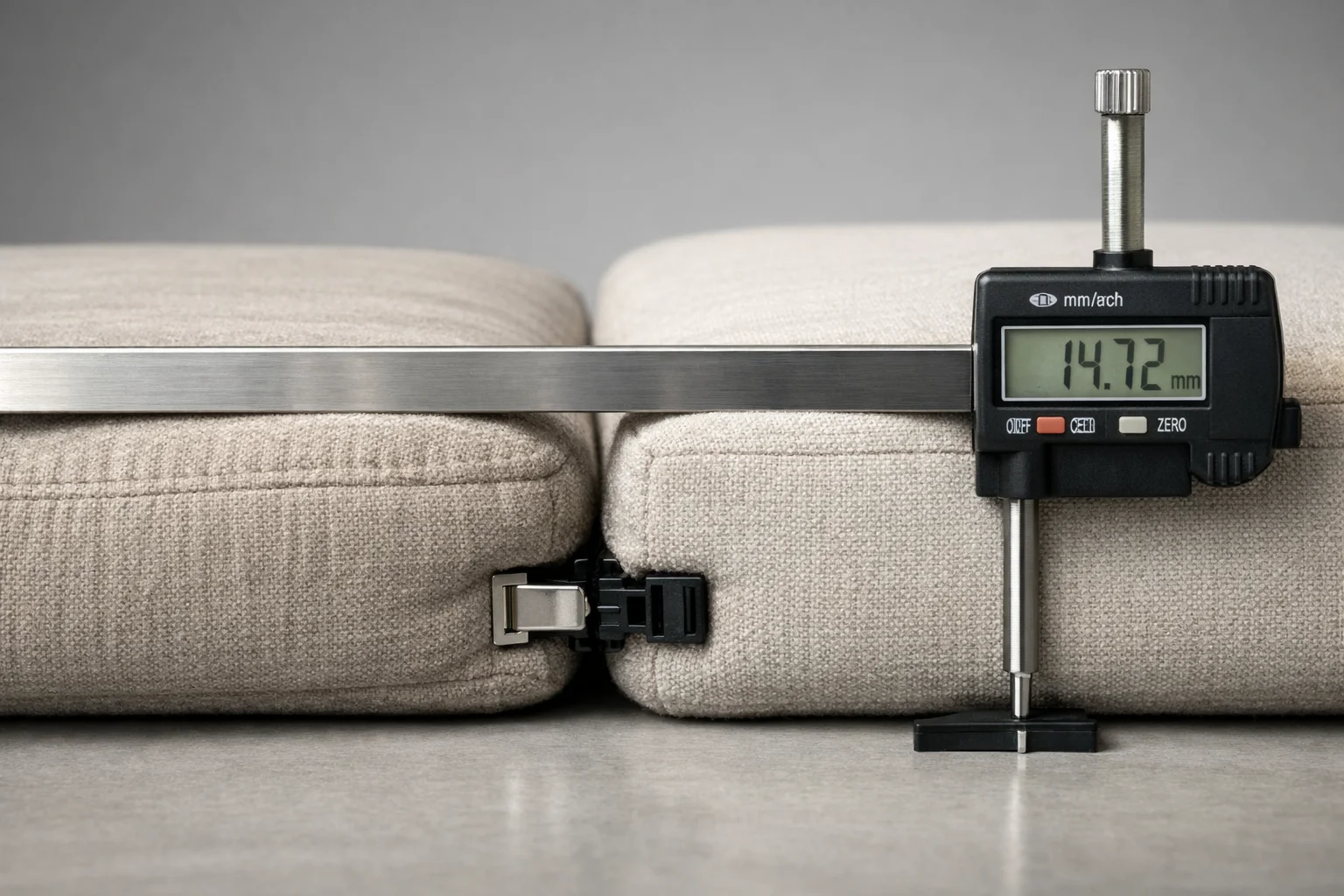
Polyurethane foam quietly changes in its first year. In normal daily use it loses about ten percent of its height and around fifteen percent of its firmness, even if nothing looks wrong on the surface.The problem shows up when a brand new unit is attached to an older one. The fresh piece usually sits half an inch to a full inch higher, which creates a visible step in the sofa line.
The result is not just cosmetic. When you slide across the sofa, your body feels the height change and the firmness change immediately, and it can be surprisingly jarring.
When I first noticed this, I assumed the floor was uneven or the connectors were misaligned. They were not. The foam itself was doing exactly what foam always does, relaxing with time while the new piece stayed tall and stiff.
In a showroom, you can protect yourself by sitting across seams instead of just testing one seat at a time. I make a point of planting myself right where two modules meet and shifting my weight back and forth. If the salesperson looks confused, that is usually a sign they have never thought about long term use either.
I also ask how old the floor model is and whether all sections arrived at the same time. If the answer is vague, I take that as a warning. A display built from mixed age pieces can hide this problem now and exaggerate it later when you add something new at home.
If you already own a modular sofa and are thinking about adding on, the safest expectation is that the new piece will feel firmer and taller for years. Sometimes people try to rotate cushions or swap covers to hide it, but the foam underneath still tells the truth when you sit down.
For buying decisions, I treat modular sofas as fixed size commitments. If you know you will want a chaise or an extra seat later, I would rather see you buy it now and live with the size than plan for a future addition that never truly blends in. That mindset alone has saved me from repeating the same mistake twice.
This problem does not stop at foam and comfort. Even if you are willing to tolerate a height and firmness mismatch, the fabric itself can quietly betray you years later.
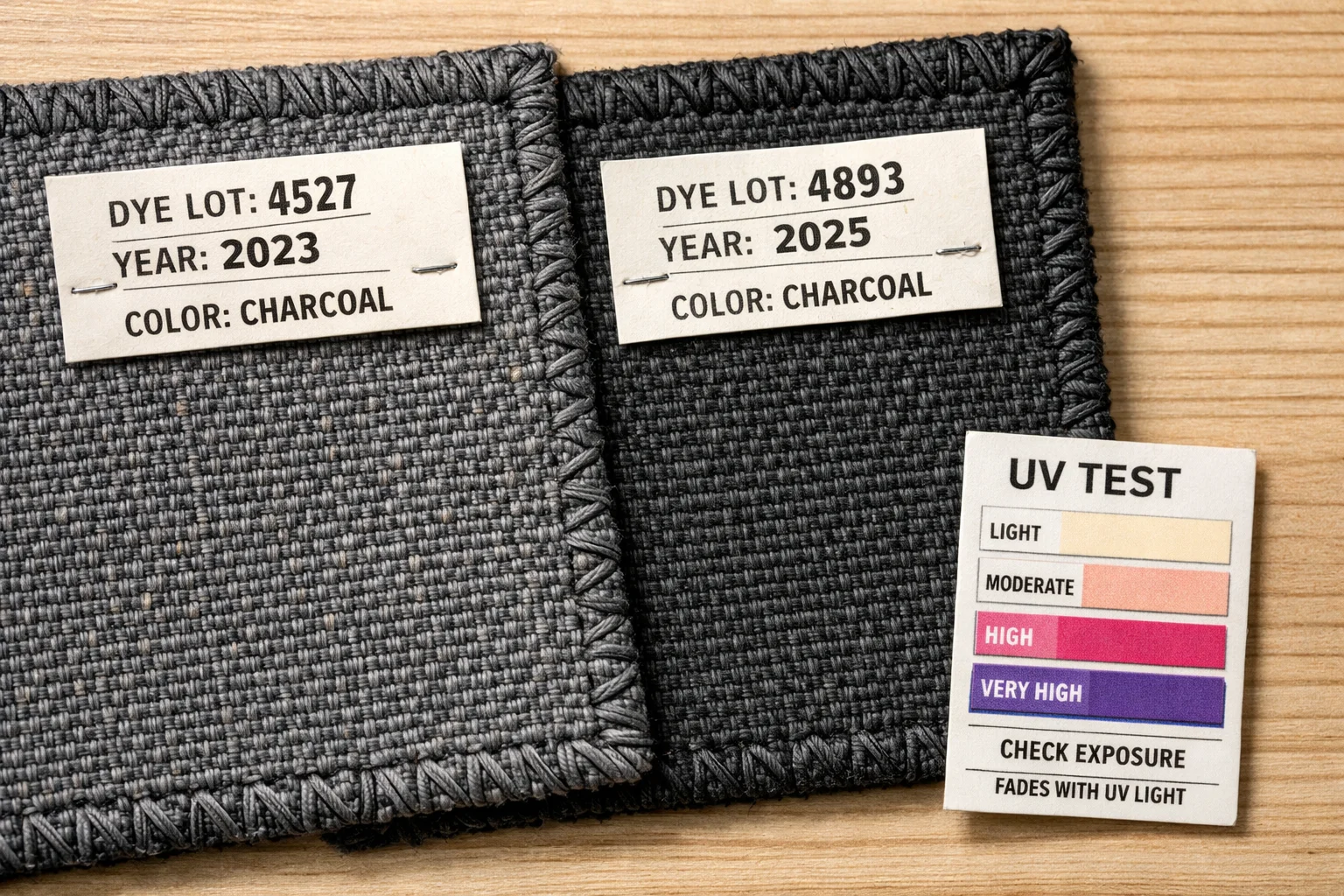
I learned this the hard way when I tried to refresh a worn section with a new cover in the same color name. Under natural light, the difference was obvious. The old fabric had mellowed with time, and the new one looked cleaner and slightly darker, even though the label said they matched.
In a showroom, I now treat color names as rough suggestions, not guarantees. If a modular brand is selling the idea of future replacements, I ask to see two swatches from different production runs if they have them. If they cannot show that, I assume a future cover will never be an exact match.
You can also protect yourself by choosing fabrics where small color shifts are harder to notice. I have found that textured weaves, mixed threads, and lighter neutrals hide variation far better than flat, solid colors. Deep charcoals, navies, and blacks tend to show the mismatch the most.
If replaceable covers are part of what you are paying for, I would seriously consider buying spare covers at the same time as the sofa and storing them. It feels excessive in the moment, but it is the only way I know to guarantee a true match years later. Fabric changes slowly with light, air, and use, and new fabric will always announce itself.
When I combine this with the foam aging issue, my rule is simple. Modular sofas only stay visually and physically consistent when all the parts age together. Once time gets involved, even honest materials start to drift apart, and no showroom promise can change that reality.
The Dye Lot Reality
Even if the foam problem did not exist, fabric would still trip you up later. Upholstery fabric is dyed in batches, and each batch is its own small experiment whether brands admit it or not.
I have learned that humidity, water chemistry, and temperature all quietly influence how dye settles into fabric. Two rolls produced months or years apart can share the same color name and still land in different places once they are stretched over cushions and exposed to daylight.
What this means for you is simple and frustrating. A charcoal cover you buy today is very unlikely to be the same charcoal you buy two years from now, even if the SKU and name match perfectly. Under store lighting it might look close, but in your living room the difference usually shows up immediately.
In a showroom, I now assume that any promise of perfect future color matching is marketing, not reality. I ask directly whether replacement covers come from the same dye lot or just the same color name. If the answer leans on reassurance instead of specifics, I take that as my answer.
If you like the idea of expanding or replacing covers later, the only real way to protect yourself is to buy everything at once. That includes any extra covers you think you might need years down the line. I know it feels excessive, but fabric is the one thing you cannot age backward to match what you already own.
When you store spare covers, I keep them sealed in a dark, climate controlled space. Light and heat slowly change fabric even when it is not in use, and I want those covers to age as little as possible until they are needed.
If buying extras upfront feels unreasonable, then I adjust my expectations instead. I choose fabrics that forgive variation. Textured weaves and mixed fibers hide small shifts far better than flat solids. Lighter neutrals also blend more easily than deep, saturated colors that show every difference.
This is where modular sofas quietly reveal their limits. The longer you own them, the more you are asking foam and fabric to stay frozen in time while new pieces arrive unchanged. In my experience, that rarely ends well.
When I combine foam aging with dye lot variation, I make one clear decision before I buy. Either I commit to the full size and full look from day one, or I accept that future additions may never truly match. Once you walk into a showroom with that mindset, it becomes much easier to spot which promises are realistic and which ones will disappoint you later.
Manufacturing Tolerances (ILD)
This is where a lot of people get confused, and I did too, because firmness sounds like something that should be precise. Foam is not cut on a CNC machine. It is a chemical reaction that expands, cures, and then gets sliced, and that process is never perfectly uniform.
When you hear a salesperson quote an ILD number, they are talking about a target, not a guarantee. ILD is simply a way of describing how much weight it takes to compress the foam to a certain depth. What matters for you is that furniture foam is commonly allowed to vary by about four pounds in either direction and still be considered correct.
In plain terms, two cushions sold as the same firmness can legitimately feel different. One can feel noticeably softer, the other noticeably firmer, and neither one is defective. They both passed inspection.
The part most people are never told is that this difference can exist even within the same sofa. Large foam slabs are poured as one piece, often called a bun, and then cut into cushions. Foam from the center of that bun often feels slightly different from foam near the edges.
That means two seats built on the same day, in the same factory, can already feel mismatched before anyone ever sits on them. Add normal use over time, and those small differences get amplified instead of disappearing.
In a showroom, I never assume identical firmness just because the cushions look the same. I sit on multiple seats of the same model, even if they are side by side. If one feels a little firmer or springs back faster, I take that seriously because it will only become more obvious with use.
I also pay attention to how the salesperson describes firmness. If they talk in absolutes, like all seats are identical or firmness is perfectly consistent, that tells me they are repeating a script, not explaining reality. Foam does not behave that neatly.
What you can do is decide how sensitive you are to these differences. Some people barely notice a few pounds of firmness change. I notice it immediately, especially when sliding across a sofa or lying down.
If you are like me, the safest move is to buy seating where all the cushions are made and assembled at the same time and will age together. That does not eliminate tolerance variation, but it prevents you from stacking brand new foam next to foam that has already relaxed.
When I look at modular or sectional displays now, I try to confirm that all the seat cushions came from the same production run. If that question cannot be answered clearly, I assume small differences are already baked in.
This is also why I am cautious with replacement cushions. Even if a brand promises the same ILD years later, the new foam is almost guaranteed to feel firmer than what you already own, and it may not even match its neighbor when it arrives.
None of this means a sofa with foam cushions is bad. It just means firmness is a range, not a fixed number. Once you understand that, you can stop chasing perfect uniformity and start choosing designs that tolerate change gracefully.
For me, that usually means fewer seams between seats, fewer promises of future add ons, and a realistic expectation that foam will never be perfectly matched forever. When you shop with that mindset, you are far less likely to be surprised by how your sofa feels six months or six years down the line.
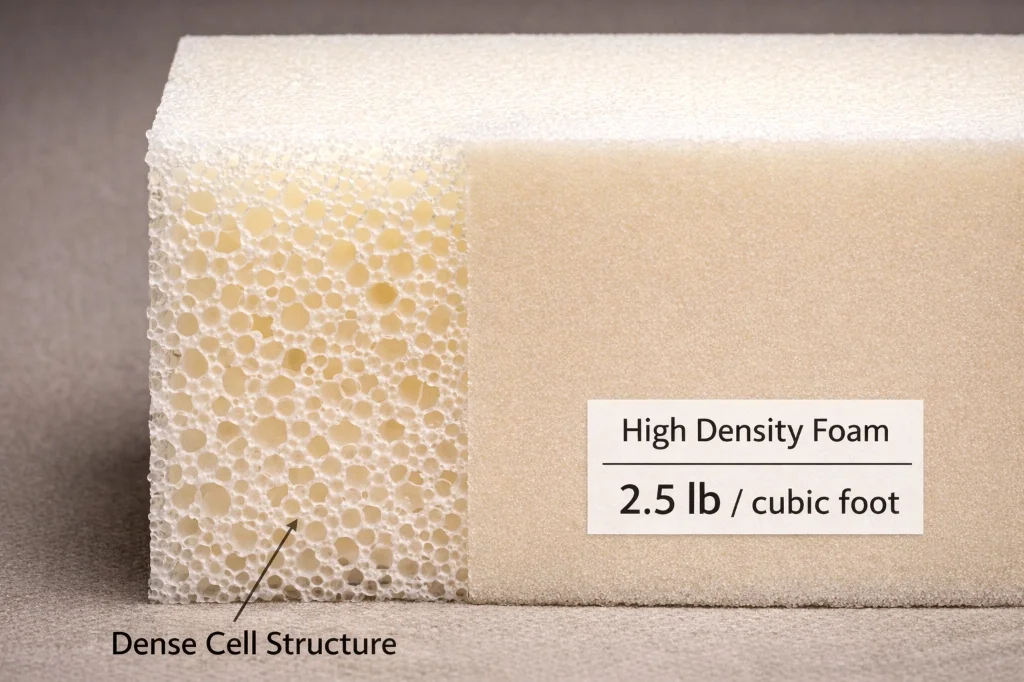
When I first saw images like this, it finally explained why a cushion can look fine but feel wrong. Foam does not just get softer in a vague way. Its internal structure actually breaks down, and once those cell walls collapse, the height never fully comes back.
What matters for you in a showroom is understanding that this damage is invisible from the outside. A seat can still look crisp, still pass a quick hand press, and still be permanently shorter than it was when new. That is why visual inspection alone is not enough.
I now test foam by standing up immediately after sitting. If the cushion takes its time rising, or never quite returns to the same height as the one next to it, that tells me the foam has already started down the left side of that image. It does not mean the sofa is bad, but it does mean future matching will be harder.
This image also explains why rotating cushions rarely fixes long term sag. Once the internal cells are damaged, flipping or swapping just moves the problem around. You are not resetting the foam, you are redistributing wear.
In a showroom, I pay attention to how tall the seat feels when I first sit down. If it feels unusually high and firm, I remind myself that this is the best it will ever feel. Everything from that point forward is a slow move toward the compressed version you see on the left.
If you are comparing two sofas, I suggest sitting on each for a full minute instead of bouncing between them. Foam that feels supportive at first but slowly sinks under you is showing early signs of that cellular fatigue. Foam that settles quickly and then stops tends to age more predictably.
This is also why I am cautious with very soft showroom seating. Foam that already feels relaxed on a sales floor often has less structural margin left. It may feel inviting now, but it can slide into bottoming out much sooner than you expect.
When you connect this image back to modular sofas, the risk becomes obvious. A brand new module is all intact cells and full height. An older one is already partially collapsed. No connector or alignment system can bridge that internal difference.
For buying decisions, I use this image as a mental filter. I ask myself whether the design will still feel acceptable once the foam inevitably looks more like the left side than the right. If the answer is no, I keep shopping.
Understanding this does not require you to memorize foam chemistry. You just need to accept that foam ages internally long before it looks worn. Once you do, you can make calmer choices in the showroom and stop believing that future replacements will ever truly feel the same as what you already own.
Rotation as Engineering
Modular sofas quietly offer one durability trick that standard sofas do not, and it only works if you actually use it. Because the seats are separate units, you can periodically move wear around instead of letting it concentrate in one place.In real life, most of us gravitate to the same spot every day. It is usually the center seat or the end closest to the view or the armrest. That favored position takes most of the load, while a corner or edge unit stays comparatively fresh.
The fix is simple but rarely mentioned. Every few months, I physically unclip the modules and swap positions so the most used seat trades places with a less used one. Over time, this forces the foam across the whole sofa to age more evenly instead of letting one unit collapse early.
This only works if the sofa is truly modular and easy to separate. In a showroom, I ask the salesperson to show me how the units disconnect and reconnect. If it requires tools, flipping the sofa, or a technician, I assume rotation will never happen at home.
I also pay attention to weight and size. If a single unit is so heavy or awkward that two people are required, rotation becomes a theory instead of a habit. I want to know if I can realistically do it myself without turning it into a project.
When you look at connectors, I check whether they tolerate being reused. Some clips and brackets bend or loosen after a few cycles, and that creates new problems like shifting or gaps. I gently push the seats sideways in the showroom to see if the system already feels tired.
Rotation only helps if the cushions move with the frame. If the seat cushions are fixed or sewn in place, swapping modules will not redistribute foam wear the way you expect. In that case, you are just moving the same compressed cushion to a new location.
I also think about how the sofa is actually used in my home. If one module is always a chaise where people stretch out, rotating it with an upright seat may not make sense. Rotation works best when the units are genuinely interchangeable in daily use.
What this tactic does not do is reverse damage. It only slows uneven aging. If one seat has already collapsed, moving it will not fix it, it will just spread that feeling elsewhere. That is why rotation needs to start early, not years after a problem shows up.
In a showroom, I ask myself a blunt question. Will I actually rotate this, or am I just liking the idea of it? If the answer is no, I stop giving the sofa credit for a feature I know I will never use.
When rotation is realistic, modular seating can age more gracefully than a fixed sofa. When it is not, modularity becomes cosmetic, not functional. I have learned to treat rotation as part of the engineering, not a lifestyle promise, and to only pay for it when I know I will follow through.
Technical Equalization Checklist
When you are adding a new unit to an older modular sofa, I have learned that you can at least reduce the shock if you actively help the pieces meet in the middle instead of hoping time will magically fix it.
The first thing I do is pre compress the new unit before it ever becomes part of daily seating. I ask the heaviest person in the household to sit on the new piece for a few hours a day over the course of a week. This does not age the foam to match the old one, but it does knock down that stiff out of the box feeling so the height and firmness contrast is not quite as aggressive.
I have also had some limited success with light steam on older cushions. I am careful here because too much heat or moisture can damage fabric, but gentle steaming can temporarily re hydrate tired foam cells and make them spring back a little. I treat this as a cosmetic soft reset, not a real repair, but it can reduce the visible height gap enough to be less annoying.
Placement matters more than most people realize. I intentionally put the newest and firmest unit in the least used position, which is usually an end seat. The most used central seats are already softer and lower, so hiding the new piece on the edge makes the contrast less obvious both visually and physically.
I want to be very clear about expectations here. None of this truly equalizes old and new foam. These steps just soften the transition so your body does not feel like it is stepping onto a different piece of furniture every time you slide across the sofa.
If you are still in the buying phase, I use this checklist as a warning rather than a solution. I ask myself whether I am comfortable doing these little rituals just to make future add ons tolerable. If that sounds exhausting now, it will feel even worse after you have already spent the money.
For me, this checklist exists because I have already lived the mismatch. If you can avoid needing it by buying everything at once, that is always the cleaner outcome. If you cannot, at least go in knowing that equalization takes effort and the results are always partial.
Thinking this way has changed how I listen to modular sofa sales pitches. When flexibility is framed as effortless, I mentally replace that word with ongoing management. That shift alone has helped me choose more honestly, and it has kept me from expecting materials to do something they simply cannot do on their own.
Explore Technical Reference
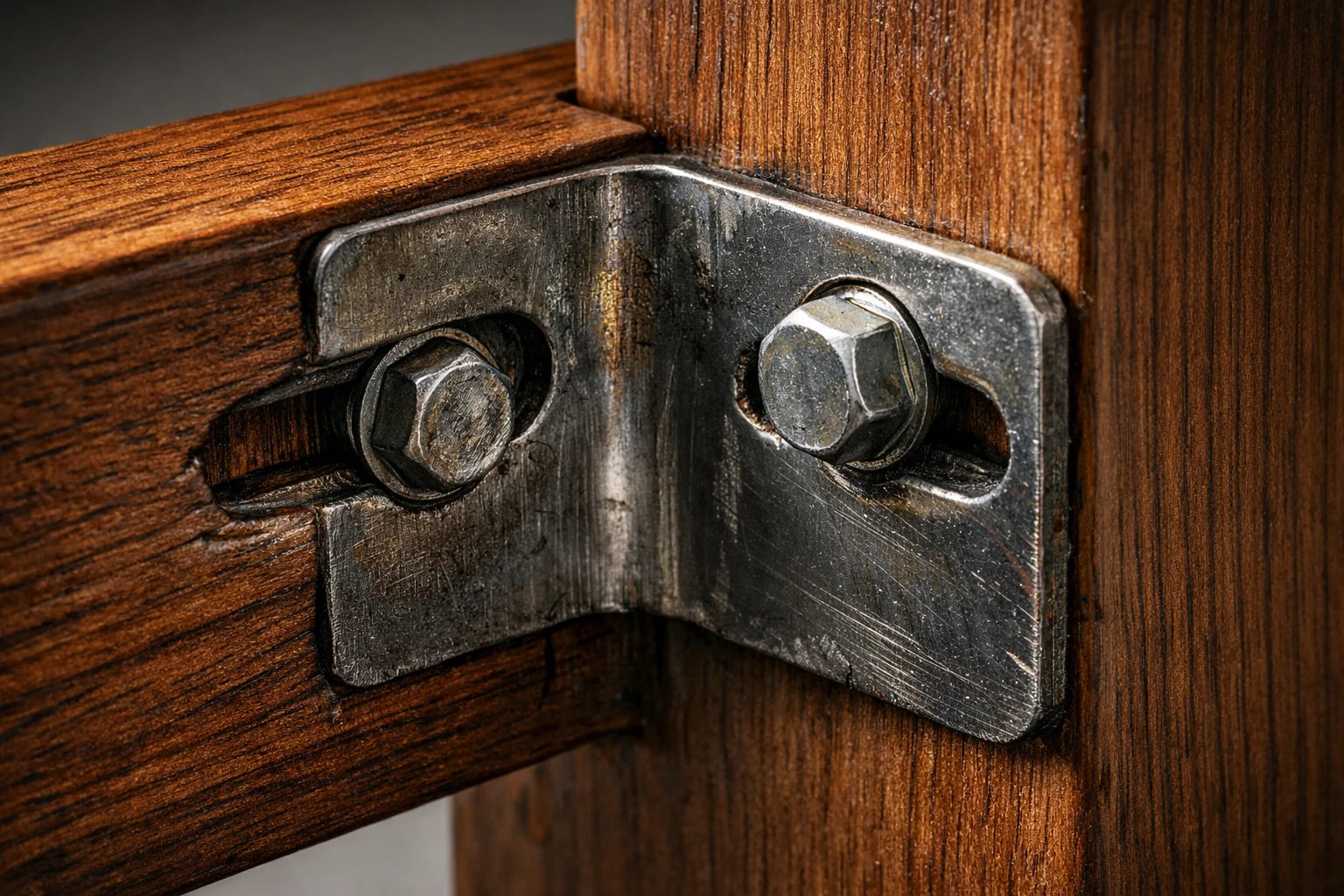
Daybed Durability: Squeaks, Cracks, and Slats
Why metal daybeds develop squeaks and wood daybeds develop cracks. Understanding slat systems, joint construction, and longevity factors.
Analyze Details →
Futons: The Engineering of Simplicity
A technical breakdown of the futon variant. Understanding bi-fold frames, cotton batting compression, and why they are the most honest convertible furniture.
Analyze Details →