Honeycomb Engineering: The 40lb Sofa that Holds 400lbs
Introduction
I get why we equate “real sofa” with a chunky wooden frame, because that is what we have all been shown, and plenty of cheap furniture still hides behind that story while loosening, cracking, and squeaking a few years in. What finally clicked for me is that “wood frame” is not a guarantee of anything, it is just one way to build a structure, and it can be done well or done terribly.
There is another approach that sounds like marketing until you think about where it comes from, and that is composite sandwich panels. The basic idea is simple: instead of relying on thick sticks of wood to resist bending, you use two stiff outer skins separated by a lightweight core, which makes the whole panel act like a deep beam.
When the core is a hexagonal honeycomb, you can get a lot of stiffness without a lot of weight. That “70 percent less mass” claim is not what I want you to memorize, but I do want you to notice the practical consequence in a showroom, because lighter does not automatically mean flimsier if the structure is doing the work efficiently.
Here is how I’d use this information as a buyer without getting lost in materials science. I stop treating “solid wood frame” as a checkbox, and I start asking, “What is the structure actually doing after years of load, twisting, and someone dropping into the corner seat?” A well designed panel structure can stay square and quiet, and a poorly built wood frame can rack, loosen at the joints, and telegraph every movement through the upholstery.
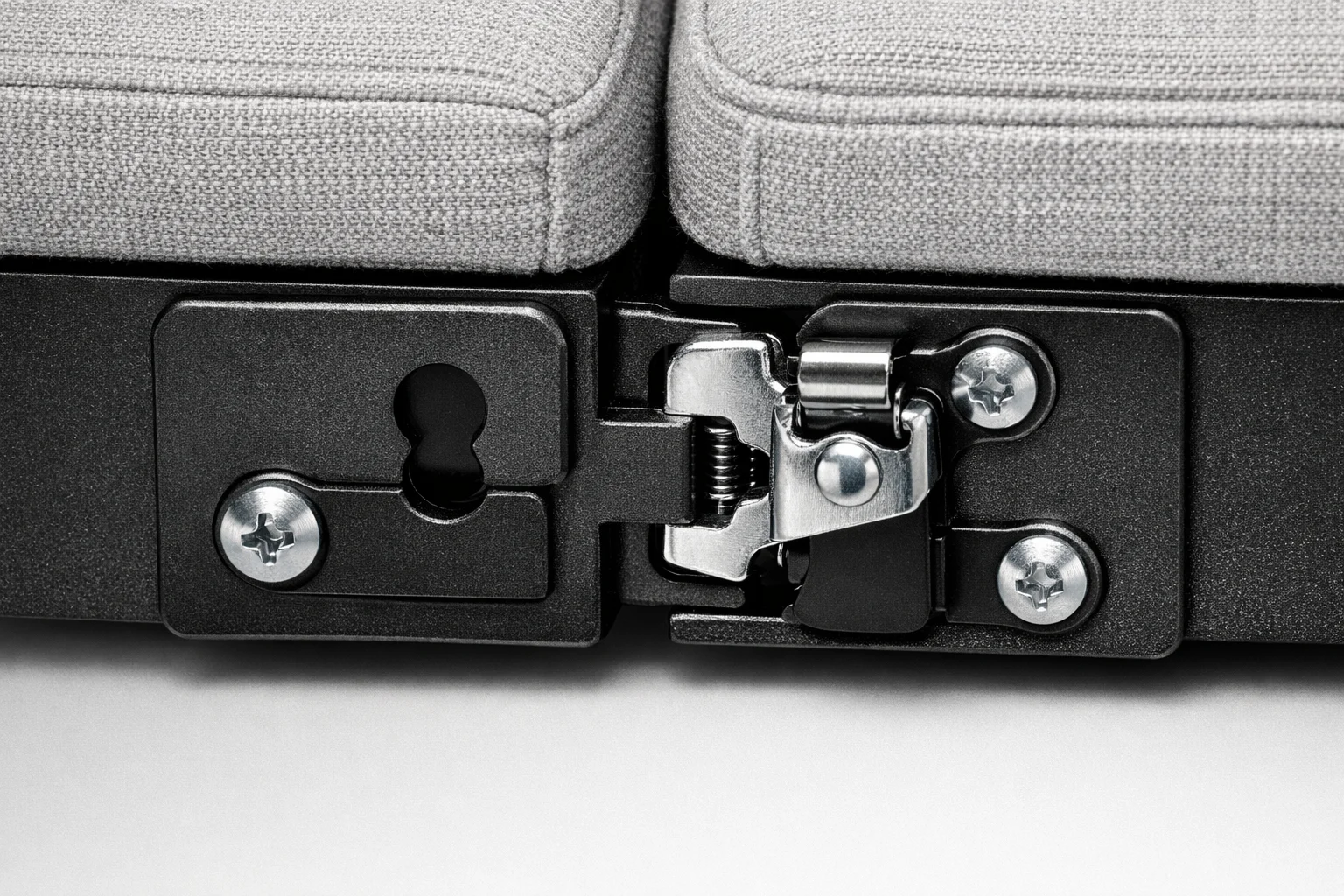
If you run into a sofa that claims a composite or honeycomb structure, do not let the salesperson rush you past the questions that matter. I ask what parts are panels and what parts are still traditional framing, because many designs mix the two, and the weak link will still be the weak link. I also ask how the panels are joined at corners and high stress areas, because a strong panel can still fail if the connections are flimsy or if fasteners are doing all the work without enough bonded surface area.
In the next sections I am going to keep translating this into things you can actually do in a showroom, like the specific push, twist, and lift checks that reveal whether the structure is staying rigid or just hiding flex under thick foam. My goal is not to convince you to buy composites, it is to keep you from overpaying for comforting words like “hardwood” when the sofa is built in a way that will still disappoint you over time.
The Physics of the Hexagon
If you have ever crushed a paper tube with your thumb, you already understand the first half of this. A single little paper cylinder is easy to buckle. The trick with a honeycomb core is that thousands of those small cells are bonded together so they cannot easily fold sideways, and the load gets shared across a big field of tiny walls.What matters to you is how that behaves when the force is straight down, like you sitting, someone plopping onto an arm, or a kid kneeling on a cushion. In that direction, the vertical walls of the hexagons work like lots of miniature columns, so the core can take a surprisingly high compressive load without turning into mush. That is why you will see big weight ratings thrown around for some honeycomb sofas, because vertically they can be extremely strong.
The other part you should pay attention to in a showroom is the weight. A core that can support serious vertical load while weighing very little is not automatically suspicious, it is just a sign that the structure is working efficiently. When a 3 seater core weighs around the same as a loaded backpack, it is telling you the stiffness is coming from geometry and bonding, not brute mass.
Here is the buyer reality check I use, because vertical strength is only one slice of the story. I press down hard on the front rail area, right where your thighs land as you sit down, and I also press down on the arm top near the outer front corner, because those spots concentrate force. I am not looking for a soft cushion feel, I am listening and feeling for the structure underneath, if it gives abruptly, crunches, or rebounds with a hollow springiness that suggests the load is not spreading.
Then I do a twist test that is hard for a salesperson to talk over. I grab the arm and the opposite front corner and apply a gentle opposing twist, not enough to damage anything, just enough to see if the body stays square. A good panel and honeycomb build often feels quiet and monolithic here, while a weak build will telegraph creaks, corner movement, or a subtle “hinge” feeling where joints are doing too much of the work.
If the sofa is light, I also do a controlled lift test, lifting just one front corner an inch or two. I am checking whether the base stays rigid as a unit or whether the lifted corner “peels” up while the rest drags behind, which can hint at weak corner connections or a structure that relies on upholstery to hide flex.
When someone sells you on a big weight rating, I treat it as a starting point, not a conclusion. You and I do not need a sofa that can hold a thousand pounds straight down once, we need one that still feels tight after years of uneven loading, people sitting on the edge, and the occasional drop onto one cushion. That is why I focus less on the headline number and more on whether the sofa distributes pressure without localized collapse, and whether the corners and arms resist racking without noise.
The Sandwich Panel Logic
A honeycomb core by itself is not the magic, and this is where I see people get misled by cutaway photos. The core is mostly there to keep two outer skins separated, because that separation is what turns a thin, light panel into something that resists bending and twisting like a much deeper beam.
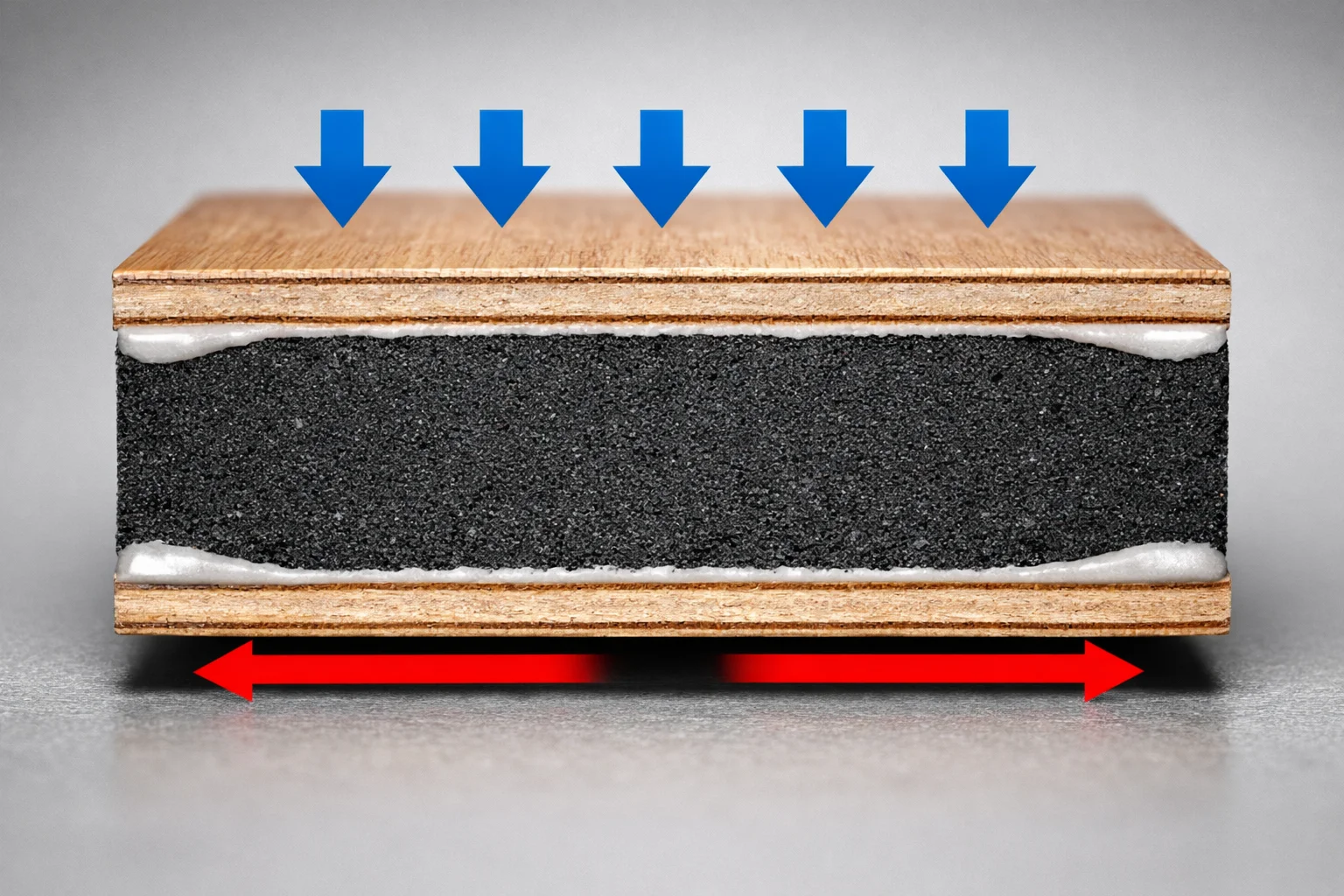
If you remember one practical idea, make it this: the skins are the real workers. When you sit, the top skin is getting squashed and the bottom skin is getting pulled, and the honeycomb just keeps them from collapsing toward each other. If the skins are weak, poorly bonded, or full of voids, the whole concept falls apart no matter how fancy the core looks.
In a showroom, I try to figure out what the “skin” actually is, because marketing will often talk about honeycomb and stay vague about the layers that matter. Sometimes it is a high tension fabric layer, sometimes it is a thin plywood skin, and sometimes it is a composite sheet, and you do not need to memorize the materials to ask the right question. I simply ask, “What are the top and bottom skins made of, and are they bonded across the whole surface or only in spots?”
Then I do a check you can do without tools. I press down hard with my palm and then with my knuckles near the front edge, and I pay attention to whether it feels like a firm platform under the upholstery or like a slightly crunchy trampoline. A good sandwich panel tends to feel like the load spreads out, while a weak skin or weak bond often feels like the pressure stays local, almost like you can “dent” the structure under one hand.
The bonding matters more than most people realize, because the whole panel only behaves like a beam if the skins and core act as one unit. When bonding is poor, you can get a subtle internal slip, and it shows up as a delayed flex, a faint crackle, or a springy rebound that feels disconnected from your push. If I feel anything like that, I stop thinking about weight ratings and start thinking about delamination risk over years of normal use.
One reason a properly made panel can be durable is that it does not have the same “grain line” failure that wood can. With a wooden rail, a knot or a run of grain can become the path where it splits when someone drops into the corner or the sofa gets dragged by one arm. With a panel, the strength is more uniform in different directions, so it is less likely to suddenly fail along one predictable line.
That said, I do not let the “equally strong in all directions” idea lull me into skipping the corner and edge checks. Even the best panel is only as good as its edges, cutouts, and joints, so I focus my hands where stresses concentrate, which is the front rail, the outside arm corner, and anywhere the sofa has a chaise, a recliner mechanism, or a storage opening. If the sofa has an opening or a big cutout under the seats, I assume the skins have been interrupted there, and I get extra picky about flex and squeaks around that area.
If the salesperson cannot explain what the skins are or how they are bonded, I treat that as missing information, not proof of quality. I have learned the hard way that “honeycomb” can be a genuinely smart structure, or it can be a label slapped onto a build where the skins and joints were the cheapest part, which is exactly the part you and I will feel after a couple of years.
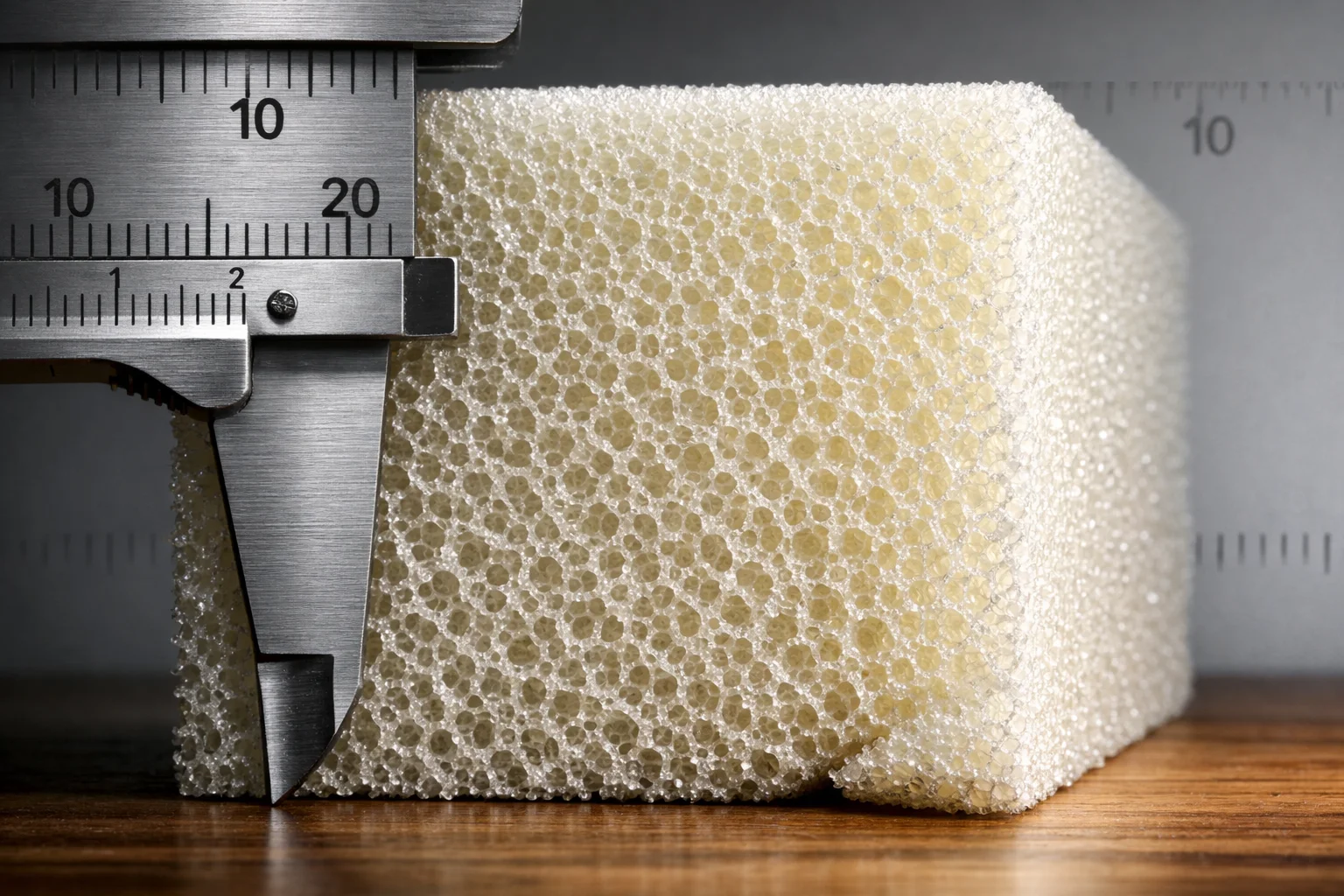
When you see a close up honeycomb photo like this, I want you to treat it as a clue about the idea, not proof that the sofa in front of you is well made. A pretty core picture does not tell you whether the skins are stout, whether the bond is continuous, or whether the corners are reinforced in the spots where real sofas actually suffer.
What I take from the hexagon grid is something you can feel for in the showroom. A good honeycomb panel tends to spread load sideways, so when you press near an edge or corner, the resistance feels more “shared” and less like you are poking a single weak spot.
So I do a simple comparison check that works even when everything is upholstered. I press down hard with one hand near the front edge of one seat, then I press down the same way nearer the middle, and I pay attention to whether the edge suddenly feels less supported than the center.
Then I move to the arm, because the arm top is where light structures often get exposed. I push down near the outside front corner of the arm, and I listen for crackling, ticking, or a hollow pop, because those sounds can be early hints of skins shifting, a core crushing locally, or a joint that is doing too much work.
If the sofa is light enough to budge, I also use the weight savings against it in a controlled way. I lift one front corner just a little and watch the opposite side, because a well tied structure rises more as a unit, while a weaker build can show a lagging, twisting base that makes the upholstery look like it is taking the strain.
The caption talks about air providing weight savings, and that is true, but the buyer risk is that air also makes it easier for brands to hide thin skins and minimal reinforcement. When I am trying to avoid that trap, I ask to see any underside access, like a zipper panel, a dust cover area, or a leg mounting zone, because those spots sometimes reveal whether there is a real panel with a solid edge frame or just a thin sheet and staples.
If you cannot see anything at all, I fall back to how it behaves under uneven force. I put my knee gently on one cushion near the front rail and lean a bit to one side, because that simulates the edge sitting that loosens a lot of sofas over time, and a good panel build usually stays quiet and composed instead of feeling like it is hinging at one corner.
The whole point of this image, for me, is to keep you from confusing “light” with “cheap” and also from confusing “honeycomb” with “durable.” You are buying the complete structure, skins, bonds, edges, and joints, and the only honest shortcut in a showroom is to make the sofa prove that it distributes load without weird localized flex, noise, or corner twist.
The "Skid" Paradox
The weird thing about a very light sofa is that it can be structurally stiff and still feel cheap in daily life, because it does not stay put. I am not trying to turn you into a physics person, but the practical version is simple, when you sit down with any speed, some of that energy has to go somewhere, and if the sofa does not have much mass to soak it up, it tries to move instead.I have felt this most on smooth floors, especially hardwood and polished concrete, where a light frame turns a normal “sit” into a little shove across the room. If you ever sat down and the whole piece skated an inch, that is not you being dramatic, it is the sofa telling you it has low resistance at the feet.
In a showroom, I check this on purpose because it is easy to miss on carpet. I stand in front of the sofa, place my hands on the arms, and give it a firm, controlled nudge as if I were shifting my seat. If it glides too easily, I stop thinking about whether the honeycomb is strong and start thinking about whether you are going to spend the next five years re-centering the sofa and hearing the legs tick against the floor.
The fix is not complicated, but it has to be there. Tool free sofas in particular really need high friction rubber pads on the feet, not hard plastic glides, and not tiny dots that barely touch the floor. I physically get down and look at the feet, because I have been burned by photos that show rubber while the actual floor contact is a slick ring or a small insert that does not do much.
I also pay attention to how the feet are shaped, because a tall, narrow foot with a small contact patch is more likely to skid and more likely to dent softer floors. If you can, ask the salesperson to show you the exact floor contact surface, not the decorative foot, and ask whether the pads are replaceable, because even good rubber can harden over time.
If you like everything else about a light sofa but it skids in the showroom, I treat that as negotiable, not fatal, as long as the leg design allows a real pad. What I do not accept is a brand that shrugs and says, “Just put a rug under it,” because that is usually a sign they built the sofa to assemble quickly, not to behave well in an actual living room.
One last thing I watch for is uneven traction. If one corner slides before the others, it can mean the feet are not all bearing evenly, or the base has a slight twist, and that can turn into rocking and fastener loosening later. I would rather have a sofa that feels planted and boring under a shove than one that feels light and clever but needs constant babysitting to stay in place.
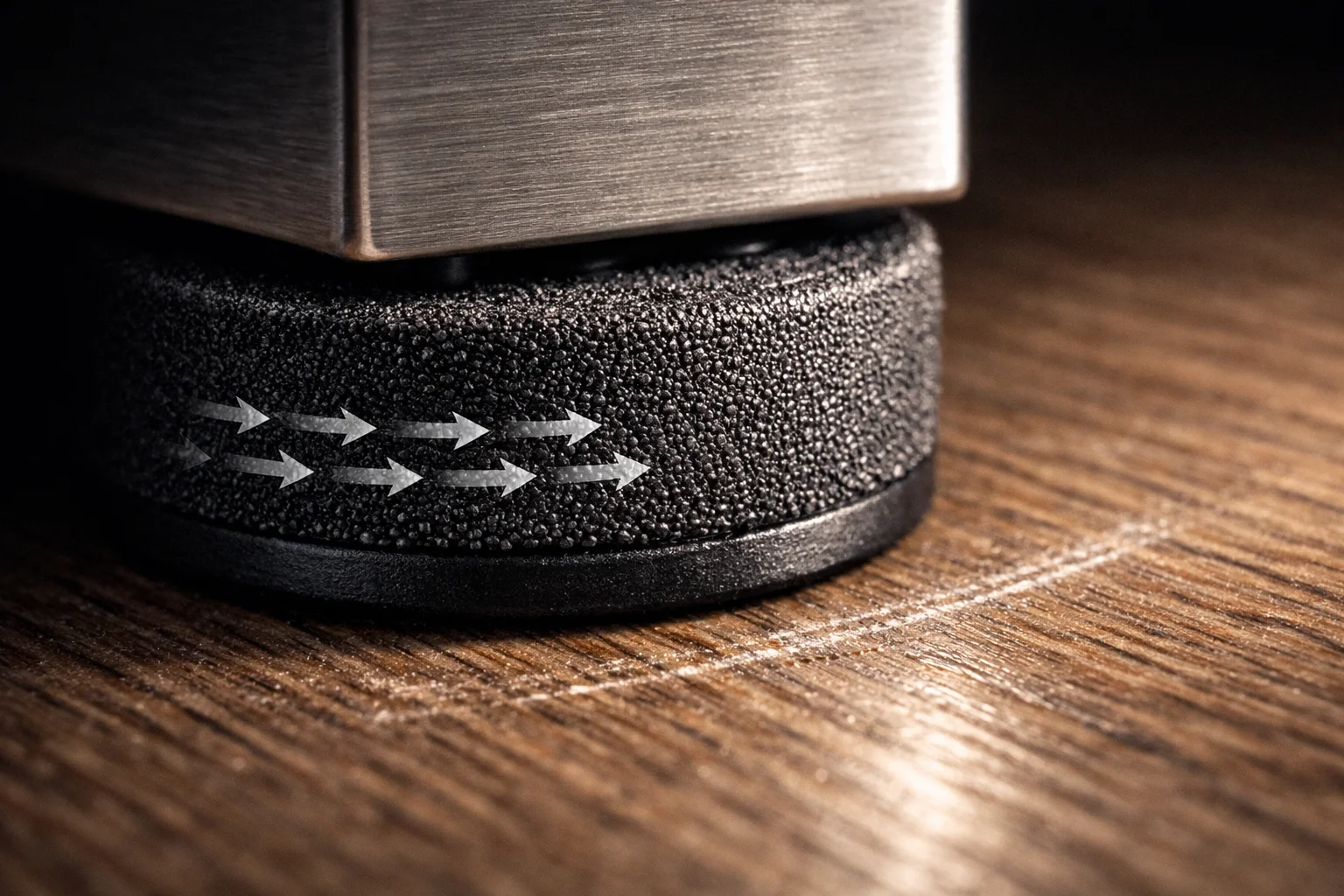
When I see a photo like this, I treat it as a prompt to check the least glamorous part of the sofa, which is the exact material that touches your floor. On a light frame, the feet are not a minor detail, they are what decides whether the sofa feels planted or whether it feels like it is trying to escape every time you sit down.
In the showroom, I do not just glance at the leg and assume it has rubber because the catalog says so. I crouch down and look for a full contact pad that is actually soft rubber, not a hard plastic ring with a “rubber looking” insert, and not a tiny dot in the middle that barely touches.
Then I do a real world shove test the way it happens at home. I put my hands on the arms and give a firm, controlled push side to side, and I watch whether it breaks loose and slides smoothly, or whether it grips and then resists in a boring, stable way.
I also pay attention to sound, because sound tells you friction is inconsistent. A tick, chirp, or little stutter as it moves can mean the pad is too hard, the contact area is too small, or one foot is not bearing evenly, and that is the kind of thing that turns into constant re-centering and floor scuffs later.
If you are on a slick showroom floor, you can learn a lot by loading one corner the way you do when you sit down on an end seat. I put one hand on the arm and press down and forward slightly, and if that corner wants to skate while the rest stays put, I assume the traction is uneven or the base is slightly twisted.
The other thing I check is whether the pad is replaceable or at least easy to upgrade. If the pad is molded into the foot with no way to change it, I assume you are stuck when it hardens with age, and I would rather buy a sofa where the foot has a flat, sensible surface that can accept a real grippy pad later.
If the salesperson tells you to just use a rug, I take that as a warning sign, not advice. I am fine with adding a rug because you like rugs, but I do not want a sofa that only behaves well if you add another product to fix a basic stability problem.
Durability: Moisture & Puncture
Moisture is where I stop being impressed by clever lightweight structure and start being cautious, because a honeycomb core is often paper based even when the outside looks tough. You will hear that the core is treated to resist water, and I do believe coatings help with humidity and minor dampness, but a real spill that gets past the upholstery and into the panel is a different event.
What I watch for as a buyer is not “Will it survive a tiny splash,” but “What happens if a drink dumps, runs to a seam, and sits there long enough to soak in.” When paper honeycomb takes on enough water, it can lose its shape and strength in a way that feels like the inside has turned to mush, and you cannot just tighten a screw later and call it fixed.
In a showroom, I ask a blunt question that usually reveals how honest the brand is about this risk. I ask what the core is made of, and I ask what the company expects you to do if a spill reaches the structure, because the right answer is not bravado, it is a clear plan like removable covers, a moisture barrier layer, or a replaceable seat deck module.
Then I look for the paths water actually takes at home, which is along seams, under piping, and down the inside of the arm where people set drinks. If the sofa has fully removable cushion covers and a removable deck cover, I treat that as real risk reduction because you can actually get in there fast, blot, dry, and keep moisture from lingering against the structure.
If everything is sealed up and non removable, I get more conservative about putting a honeycomb sofa in a high spill household. That includes kids, parties, pets, and anyone who eats on the sofa, because “I will be careful” is not a system, it is a hope.
Puncture is the other durability weak spot I take seriously, because sandwich panels rely on their skins staying continuous. A solid wood rail can take a gouge and still act like a rail, but a panel skin that gets punched through can stop behaving like a panel in that area, and the damage can spread as flex concentrates around the hole.
You can do a surprisingly useful check in the showroom by focusing on the most likely puncture zones. I press on the outside face of the arm and the front rail area with my thumb and knuckles, not to hurt the fabric, but to feel whether there is a hard, well supported layer right under the upholstery or whether it feels like a thin shell over a hollow.
If you have pets, I would not let the salesperson hand wave this away with “The fabric is scratch resistant.” Cat claws do not need to shred the fabric to be a problem, they just need to repeatedly catch and tug in the same spot until something underneath gives, especially on tight, vertical faces like outside arms.
I also pay attention to leg and hardware areas, because that is where a small puncture can turn into a bigger structural issue. I crouch down and look at how the legs mount, and I am trying to see whether there is a solid reinforcement block or plate where screws bite, because screws into thin composite without a real hard point are the kind of thing that loosens, wallows out, and starts a slow failure you cannot see until the sofa rocks.
If the brand claims the structure is “sealed” or “water resistant,” I ask what that actually means at the seams and cutouts. Any opening for storage, recliners, USB modules, or even big stapled dust cover zones can be a place where moisture and damage start, so I get extra picky about creaks and local flex around those features.
None of this means you should automatically avoid honeycomb or composite structures. It just means I treat them like a high performance system that needs its skin kept intact and its insides kept dry, and I buy accordingly by favoring removable covers, clear spill guidance, visible reinforcement at legs, and a build that does not feel hollow and fragile at the edges where real life hits first.
Technical Comparison: Composite vs. Solid
That table is useful if you translate it into what you can actually verify with your hands in a showroom, because specs can be technically true and still hide the way a sofa fails in real life.
When you see a 3 seater that weighs something like 40 to 55 pounds, I do not automatically assume it is junk. I assume it will be easier to rack, skid, and get dragged out of square if the corners and leg mounts are not overbuilt, so I get more aggressive about the twist test and the one corner lift test. When you see something more like 120 to 180 pounds, I assume it might be more planted, but I do not assume it will be quieter over time, because heavy wood frames still loosen when the joints are basic staples, weak blocks, or bolts that rely on soft wood fibers.
Assembly time is a sneaky tell. When a composite sofa advertises under five minutes and an accordion style setup, I hear “few user fasteners,” which is nice for convenience, but it also means you are trusting the factory joints and locks completely. In the showroom, I try to find the seams where modules connect and I push and pull right at those interfaces, because if there is any clack, gap change, or shifting there now, it usually gets worse after a year of sitting and re positioning. When a solid hardwood frame advertises 45 minutes of bolting, I treat it as neither good nor bad, and I focus on whether the bolts are doing real clamping into metal inserts or plates, or whether they are just biting into wood and slowly crushing it with repeated loads.
Load capacity numbers are where I slow down and get literal. A honeycomb composite claiming 1,000 pounds plus is usually about straight down compression, and that is not the same as edge sitting, arm sitting, or twisting loads. I use the number as permission to push harder on the front rail and arm corner, because those are the places where a “strong” sofa still feels weird if the load is not spreading. A solid hardwood frame listed at 800 pounds can still outlast the composite if its joints stay tight, so I care more about whether it stays square and quiet under uneven force than about which number is bigger on paper.
Repairability is the part I wish more people took seriously before buying. When the structure is internal composite, the weak points can be hidden behind upholstery and sealed panels, and if something crushes or delaminates you often cannot just tighten a corner block or sister a rail. So I ask what the brand actually does when the deck softens or a corner starts to creak, and I am looking for an answer that involves replaceable modules, a real service path, or at least a long, clearly written warranty that covers structural stiffness, not just “defects.” With solid hardwood, I have seen plenty of sofas that a local upholstery shop could stabilize, re glue, or re block, so if you are the kind of person who keeps furniture a long time, that serviceability has real value even when the initial build is not perfect.
The environmental line is easy to turn into a sales pitch, so I make it practical. Recyclable composite only matters if the company has an actual take back pathway or if your area accepts the materials, and biodegradable hardwood only matters if it is not glued and stapled into a mess of foams and fabrics that no one can separate. I do not let this be the deciding factor unless the brand can explain, in plain language, what happens at end of life and whether replacement parts exist so you can keep the sofa in service longer, because the greenest sofa is usually the one you do not replace in six years.
If you want my bottom line from this comparison, it is that composite rewards good engineering and punishes sloppy joints, and solid hardwood rewards good joinery and punishes cheap fastening. In a showroom, you can feel both, because the bad versions advertise comforting words and still fail the same way, they twist, they creak, and they slowly get loose where the structure meets the real world, which is corners, legs, and the front edge where you sit every day.