Futon Durability: Hardwood vs. Hollow Tubes

Introduction
I learned the hard way that a futon frame is not just furniture, it is a mechanism. It has to lift, fold, lock, and hold weight without flexing, rattling, or slowly bending out of shape. When any one of those jobs is underbuilt, the whole thing starts to fail in small annoying ways that add up fast.
Most people, including me at first, assume metal equals strength and wood equals weakness. In a showroom that feels logical because thin steel tubes look serious and solid, while wood can look casual or old fashioned. In the two hundred dollar range, that assumption is usually backwards.
Cheap metal frames fail quietly. The tubing is thin, the welds are minimal, and the hinge points wear down because metal on metal has no forgiveness. What you can do in a store is sit down hard, then shift your weight side to side and listen. If you hear ticking, popping, or feel the seat subtly twist, that frame is already telling you how it will age.
Wood frames at the same price point tend to use thicker material simply because thin wood snaps and thick wood survives. When you press on a wooden arm or rail, you are feeling mass, not just surface hardness. I always push down with my full weight near the hinge area and watch whether the wood flexes smoothly or stays planted.
The key thing I want you to keep in mind is that movement is the enemy of cheap construction. A futon that converts is stressed every time it opens and closes, so the material that tolerates a little flex without loosening itself usually lasts longer. In this price range, that is more often wood than metal, even if your eyes tell you otherwise at first glance.
The "Hollow Tube" Failure
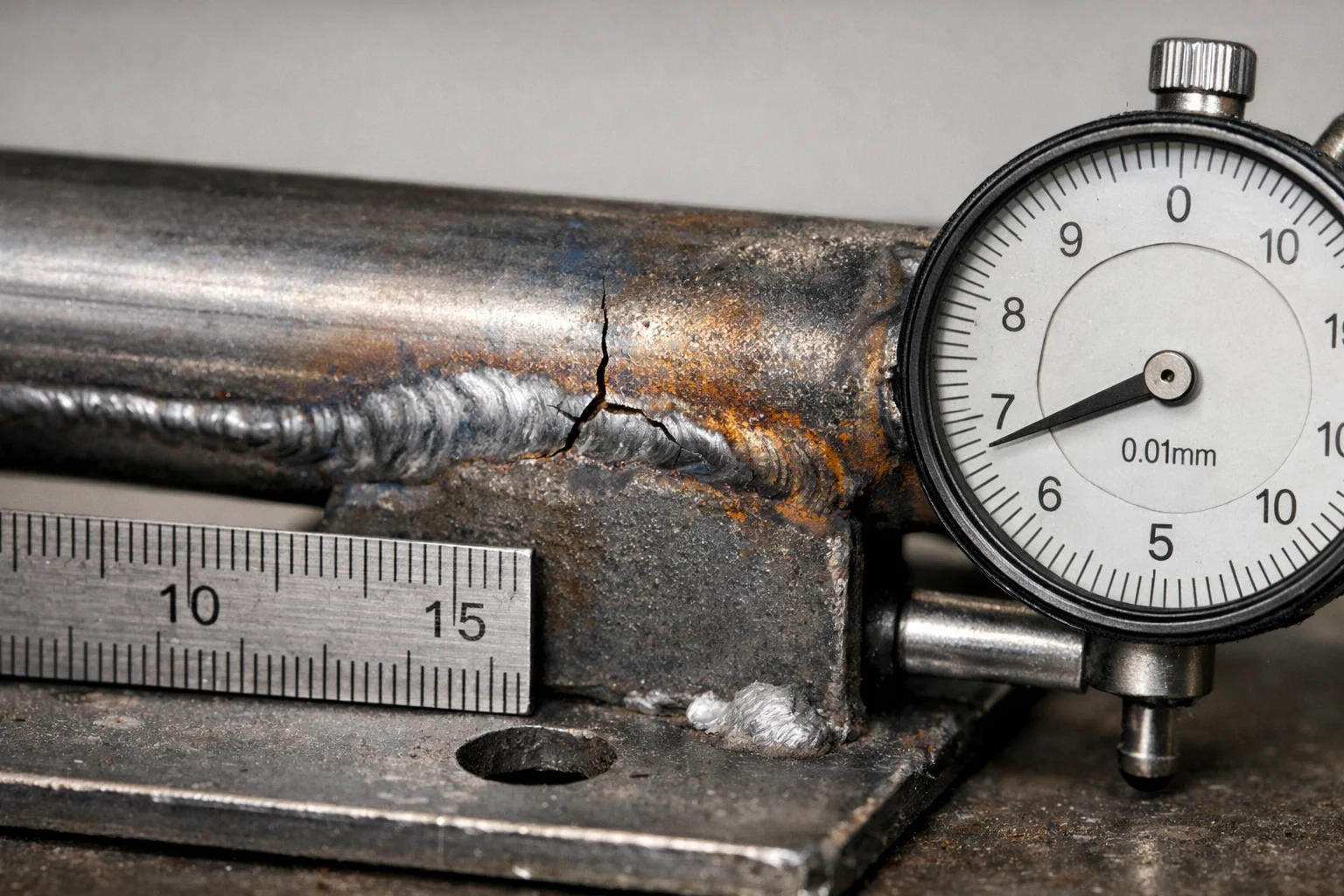
This is the most common way cheap metal futon frames die, and I have watched it happen more than once. These frames use very thin steel tubing, usually around one millimeter thick, because it looks sturdy while saving material.
When two adults sit in the middle, all that weight is carried by a single center bar. The metal usually does not snap in a dramatic way. It slowly bows downward, often so subtly that you do not notice it at first.
Once a tube bows, it is done. Steel does not spring back the way wood can. Every time you sit or sleep on it after that, the weakened bar keeps flexing until the welds at the ends start to crack.
In a showroom, you can check for this risk by standing in front of the futon and pressing straight down on the center of the seat with both hands. If you see or feel visible movement in the middle bar, walk away. That frame is already telling you it is meant for one person, not a couple.
I learned to treat hollow tube frames as single sleeper devices no matter what the sales tag claims. If you plan to share the futon, or even just sit together regularly, this kind of construction is a gamble that usually ends with a bent frame and a sinking mattress.
Frame Material Engineering
After learning to be suspicious of thin metal, I started paying attention to what kind of wood was actually being used. Sales tags love to say “solid wood” without telling you which wood, and that detail matters more than most people realize. In a showroom, I ignore the label and look at the exposed edges, especially near hinges and slats, because that is where shortcuts show.
Soft woods like pine can still work if they are thick and well joined, but they should feel dense and calm when you press on them. I put my hand on the arm or side rail and lean in with my body weight, then release. If the wood flexes and returns without a creak, that is a good sign. If it flexes and you hear fast little cracking noises, that piece is already stressed.
Hardwoods like beech or rubberwood tend to show tighter grain and more weight for their size. You can usually feel this just by lifting one corner of the frame slightly. I do not need it to be heavy like a safe, but if it feels oddly light for its size, that wood is probably doing less work than it should.
Engineered wood is where I slow down and look closely. Plywood can be excellent if it is thick and layered properly, but cheap laminated boards fail badly around fasteners. I look at screw heads and bolts and see if they are biting into solid material or if the surface looks crumbly or compressed. If a bolt looks like it is already sinking into the wood, that joint will loosen over time no matter how tight it feels today.
The way pieces are joined matters more than the material alone. I trust frames where parts overlap and are bolted through each other more than frames where everything meets at a flat butt joint. In the store, I grab the arm and gently try to rack it side to side. A good joint feels like the whole frame is moving as one piece. A bad joint lets one section shift before the rest follows.
Metal can still be a good choice if it is done honestly, but you have to look harder. I look for thicker tubing and especially for reinforcement plates around hinge points. I run my finger along welds and look for consistency. Clean, even welds suggest care. Small spot welds at major stress points suggest cost cutting.
One simple thing I always do is convert the futon myself, even if a salesperson offers to do it. I listen to the sound it makes and feel the resistance through the motion. A well engineered frame moves smoothly and quietly, without grinding or snapping into place. Noise during conversion is not charm, it is friction and wear starting early.
What I have learned is that good frame material engineering feels boring in the showroom. Nothing dramatic happens when you push, sit, lift, or fold. That calm, uneventful response is exactly what you want, because it means the materials are sharing the load instead of fighting it.
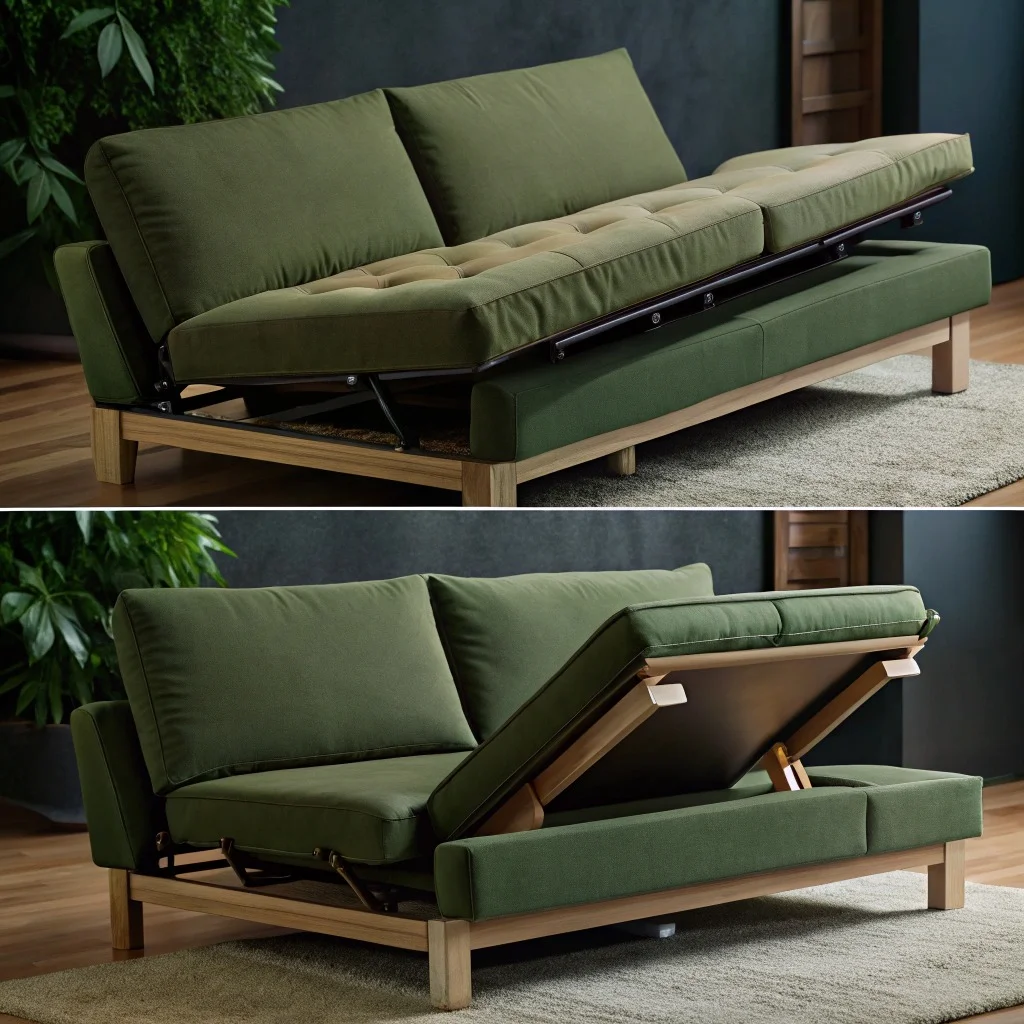
1. Hardwood bi-folds (The Gold Standard)
When I finally stopped chasing shiny metal frames, this is the construction I kept coming back to. A true hardwood bi fold frame feels less impressive at first glance, but it behaves better under real use, especially when you sit, shift, and sleep on it day after day.
Most of the better ones I have handled are made from rubberwood or oak. I do not care much about the name on the tag, but I care a lot about how thick the main rails are. When the side rails and front rail are around an inch and a half thick, the frame usually spreads weight along the grain instead of concentrating it at one stressed hinge.
In a showroom, I always focus on the long rails that run front to back. I press down hard near the middle and then near the hinges. Good hardwood flexes just a little and then stops, like it knows where its limit is. If the rail keeps moving or feels rubbery, that wood is either too thin or poorly cut.
What really separates a good hardwood frame from a mediocre one is the hardware. I look underneath and inside the joints for furniture bolts with barrel nuts. You can usually spot them as round metal ends set into the wood rather than simple screws disappearing into it.
I like these because the load is carried by metal tightening against metal, with the wood just holding everything in alignment. Over time, regular screws chew out their holes as the frame moves. When that happens, the joint gets loose no matter how often you tighten it.
If you can, grab the arm and gently rock it forward and back. On a frame with proper bolts, the whole futon wants to move together. On a screw built frame, you will feel a tiny delay as the joint shifts before the rest follows, and that delay is what turns into wobble later.
Hardwood also handles repeated motion better. Every time you convert a bi fold futon, the frame is loaded in a slightly different direction. Wood fibers spread that stress along the grain, instead of concentrating it at a thin hinge or weld.
I always convert these frames several times in the store. I pay attention to whether the hinges rotate smoothly without clunks or binding. On good hardwood frames, the movement feels damped and controlled, not loose and not stiff.
Another thing I check is how the slats are supported. On better frames, the slats rest in routed grooves or solid ledges, not just stapled strips. I press down between slats with my palm to see if they shift or pop. Stable slats mean the mattress stays supported evenly, which protects both the mattress and the frame.
Weight is a quiet clue here. A hardwood bi fold should feel substantial when you lift one end slightly. If it feels suspiciously light for its size, the wood is probably thinner than it should be, even if it looks fine from across the room.
I have learned that this type of frame ages in a way I can live with. Instead of bending or cracking suddenly, it tends to loosen slowly, and usually in ways you can fix by tightening bolts. That alone makes it more forgiving for real households where people flop down, sit sideways, or share the load.
If you want a futon that you can actually use as both a sofa and a bed without babying it, this is the construction I trust most. It does not scream strength in the showroom, but it stays quiet and stable long after the flashy options start complaining.
2. The Roller Mechanism
Once I stopped obsessing only over the frame material, I realized the conversion hardware itself was just as important. A futon can be made of decent wood or metal and still become miserable to live with if the part that lets it fold is poorly designed.
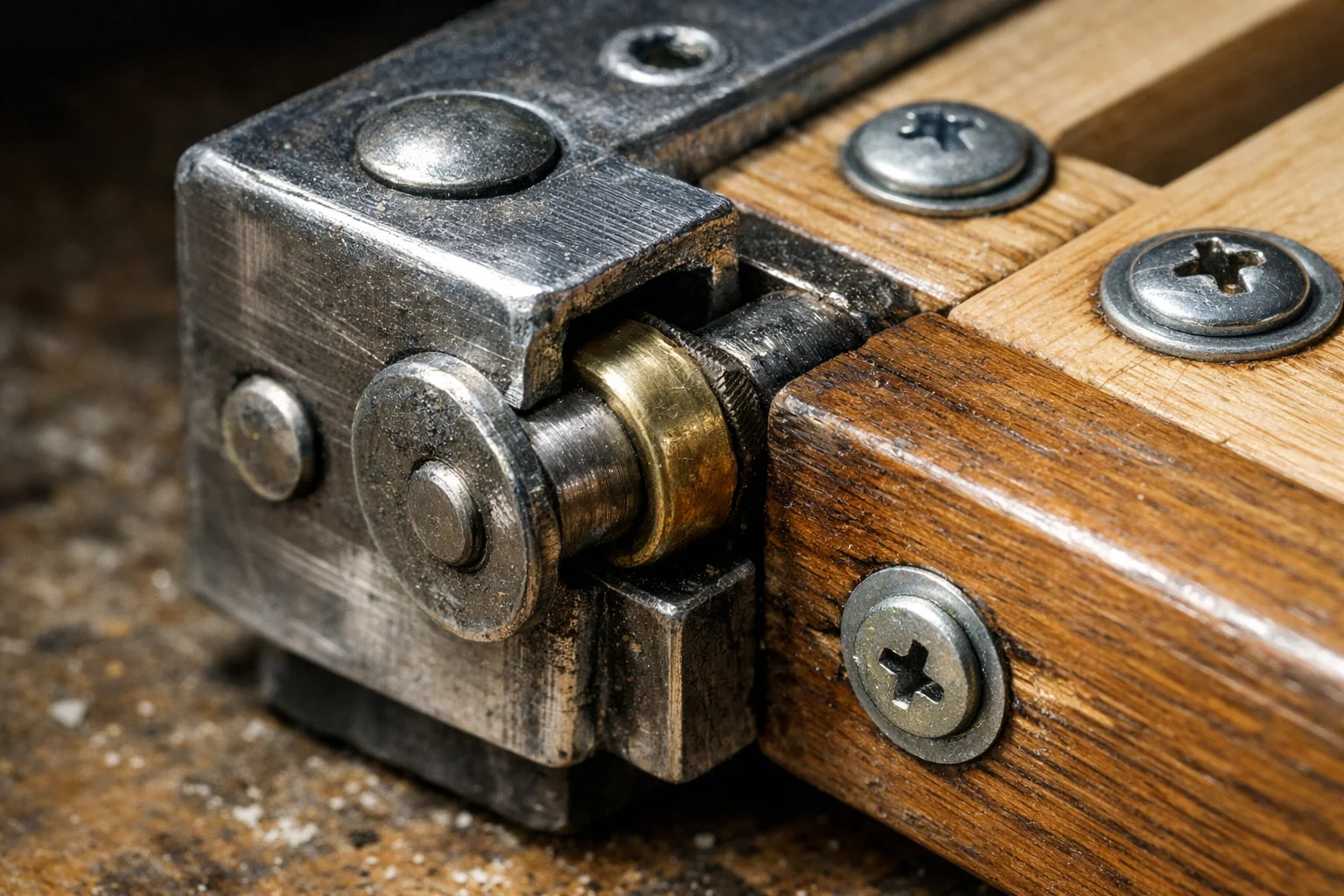
At its core, a convertible futon works because a pin moves through a curved track as you lift and lower the frame. That movement happens every single time you turn it from sofa to bed and back. If that motion is rough, the frame will age badly no matter how solid it looks standing still.
The cheapest designs use what is basically a bare metal bolt sliding directly against a groove in wood or metal. I have owned these, and they always start the same way. At first they feel stiff and a little grindy, which people often mistake for sturdiness. Then they start making scratching noises, and eventually you notice fine dust or shavings on the floor near the hinge.
Those shavings are not harmless. They mean material is being worn away every time you convert the futon. As that groove gets chewed up, the pin no longer travels cleanly, and the frame starts to bind or stick halfway through the motion. That is when people start yanking harder, which just accelerates the damage.
Better futon frames use plastic rollers or wheels around that pin. Instead of metal scraping along a track, you have a rolling surface that reduces friction and noise. The difference is obvious once you know to look for it, but sales tags rarely mention it.
In a showroom, I always get down low and look at the hinge area while converting the futon myself. I am not shy about this anymore. If I see a small wheel or rounded plastic piece moving smoothly through the track, I know that mechanism is designed to survive repeated use.
If all I see is a bare bolt head dragging along a slot, I take that as a warning sign. Even if the frame feels solid today, that friction is going to turn into wear, noise, and eventually jamming. I have never had one of those mechanisms age gracefully.
Sound is another giveaway. I convert the futon slowly and listen closely. A roller based mechanism tends to be quiet and consistent through the whole arc of motion. A friction based one usually makes a scraping or ticking sound that changes as the angle changes.
Feel matters just as much as sound. When I lift the seat, I pay attention to whether the resistance feels smooth and even. With rollers, the effort feels predictable, like the frame wants to move where you are guiding it. With friction pins, the motion often feels uneven, light in one spot and suddenly heavy in another.
One trick I use is to stop halfway through the conversion and then reverse direction. Good roller mechanisms reverse smoothly without a jerk. Cheap friction systems often catch or hesitate when you change direction, which tells me the pin is already fighting the groove.
I also check for play once the futon is locked into sofa position. I gently wiggle the seat and back near the hinge area. A worn or poorly designed mechanism often lets you feel a tiny clunk before the frame settles. That clunk is clearance created by wear, and it only gets worse over time.
This is one of those details that does not photograph well and rarely gets mentioned in online descriptions. That is why I think it is worth your time to physically operate the futon in person if you can. Ten seconds of listening and feeling can save you years of annoyance.
If you remember nothing else from this section, remember this. Rolling beats scraping every time. A futon that converts quietly and smoothly in the store is far more likely to stay usable after hundreds of open and close cycles in your home.
When I look at an image like this, I stop thinking about materials in abstract terms and start thinking about where my weight actually goes. That is the mindset I want you to have in a showroom, even if you never see a cutaway diagram in person.
The hollow metal tube on the left looks strong because steel feels strong. The problem is that almost all the strength is concentrated in that thin outer wall. Once that wall flexes even a little, there is nothing underneath it to help share the load.
I have pressed on enough of these frames to know the feeling. At first they resist, then there is a soft give that does not come back. You might not notice it immediately, but that is the moment the tube has started to deform.
The solid wood rail on the right works differently. Your weight is not being carried by a skin, it is being carried by the entire thickness of the wood. When you push down, the fibers compress together and spread the force along the grain instead of concentrating it at one weak point.
In a store, you cannot see a cross section, but you can feel it. When you press down on a wooden rail and it pushes back evenly, that is density doing its job. When you press on a metal bar and feel a sudden springy dip, that is a thin wall taking all the stress.
I always run my hand along the underside of the seat if I can. With hollow metal frames, the center support often feels narrow and sharp edged, like it is trying to do too much with too little material. With solid wood frames, the supports feel wide and substantial, even before you sit down.
This image also explains why metal frames tend to fail permanently while wood often fails gradually. Once a hollow tube bends, it stays bent. Once solid wood is stressed, it often just loosens a joint or compresses slightly, which you might be able to correct.
When you are comparing frames side by side, stop looking at finish and color for a moment. Look at how thick the main rails are and imagine them cut in half. Ask yourself whether your body weight would be riding on a thin shell or a solid block.
That mental picture has saved me from more bad purchases than any spec sheet. If a frame depends on thin material looking tough rather than thick material doing real work, I assume it is going to disappoint me later.
This is why I no longer let the word steel impress me on its own. Density and volume matter more than shine. If you train your hands to feel that difference in the showroom, you will start spotting the better frames almost immediately.
Maintenance: The 12-Month Torque Test
This is the one bit of maintenance I actually do, and it is the reason my last futon frame outlived the one before it by years. Convertible frames work themselves loose because every open and close racks the joints slightly, even on good construction.
About once a year, I grab an Allen wrench and go around the frame, tightening every visible bolt just a little. I am not cranking them down hard. I am just giving each one roughly a quarter turn, enough to snug things back up without stressing the wood.
The reason this matters is not obvious until you have seen a frame fail. When a bolt loosens, the weight of someone sitting is no longer carried cleanly by the wood members pressing together. Instead, the bolt starts shoving sideways against the edge of its hole.
That sideways pressure slowly chews the hole into an oval shape. Once that happens, tightening the bolt later does not really fix the problem, because the wood around it has already been damaged. The joint will keep loosening faster and faster.
I learned this after ignoring a small wobble for too long. By the time I noticed real movement, the holes were already wallowed out and no amount of tightening made the frame feel solid again. The damage had already been done quietly.
You can use this knowledge when you are shopping too. In the showroom, look for frames where you can actually see bolts and barrel nuts instead of hidden screws. Those are the frames that expect to be retightened and can survive it.
If a futon frame has no visible hardware and everything looks glued or stapled together, there is nothing for you to maintain later. When it loosens, and it will, you are out of options.
I treat this torque check like changing batteries in a smoke detector. It takes five minutes once a year, and it prevents the kind of slow structural damage that ruins a frame long before it looks broken.
If you are the kind of person who knows you will never do this, be honest with yourself. In that case, prioritize frames that feel overbuilt and stiff even before tightening. If you are willing to spend five minutes a year with a wrench, you can safely choose designs that are meant to be serviced instead of thrown away.
This simple habit changed how I think about futon durability. A frame that can be retightened is a frame that expects to move and survive it. That expectation alone tells you a lot about how it was built.
Durability by Type (Projected Lifespan)
I used to ignore lifespan estimates because they sounded like marketing guesses. After owning and watching enough frames fail, I now see them as rough honesty about how different constructions age under normal use, not careful use.
Budget metal frames with thin steel tubing and welded joints are the fastest to disappoint me. In real life, that six to eighteen month window usually shows up as sagging, noise, or misalignment long before anything actually breaks. In a showroom, these frames often feel fine until you load the center, which is why I always assume they are borrowing time rather than built to last.
Budget wood frames made from pine or other softwoods and held together mostly with screws tend to land in the one to three year range. That sounds short, but I have found they often fail more gracefully than cheap metal. You usually get warning in the form of looseness or squeaks, and if you catch it early you might stretch their life a bit by retightening, but the screws will eventually chew up the wood they are biting into.
Quality wood frames are where I start feeling comfortable. Rubberwood or oak with proper bolt and barrel nut construction consistently live in the seven to twelve year range in my experience. These are the frames that still feel like furniture after the novelty wears off, and they tolerate normal human behavior like flopping down or sharing the seat without slowly deforming.
Premium metal frames made from heavy gauge steel and assembled with bolted joints rather than welded stress points are in a different category entirely. Fifteen years or more sounds optimistic until you handle one and realize how little they flex. In a showroom, these feel almost boringly rigid, and that lack of drama is exactly why they last.
What I want you to take from this is not the exact numbers, but the pattern. Thin material plus permanent joints equals a short and unpredictable life. Thicker material plus serviceable joints equals something that can survive being used instead of admired.
When you are standing in front of a futon and trying to decide if the price makes sense, ask yourself how the frame would age if you did absolutely nothing special to care for it. If the answer depends on luck or gentle treatment, that expected lifespan is probably on the short end. If the frame feels like it expects to be sat on hard and occasionally retightened, it is likely aiming for the long end.
I no longer buy based on how long I hope to keep a futon. I buy based on how long the frame looks willing to tolerate me being a normal person. These lifespan ranges are just another way of translating that gut feeling into something concrete.
If a salesperson promises longevity without being able to point to thicker rails, better joints, or heavier hardware, I assume they are selling optimism. When the construction lines up with these durability categories, the frame usually tells the truth about how long it plans to stick around.
Explore Technical Reference
Futons: The Engineering of Simplicity
A technical breakdown of the futon variant. Understanding bi-fold frames, cotton batting compression, and why they are the most honest convertible furniture.
Analyze Details →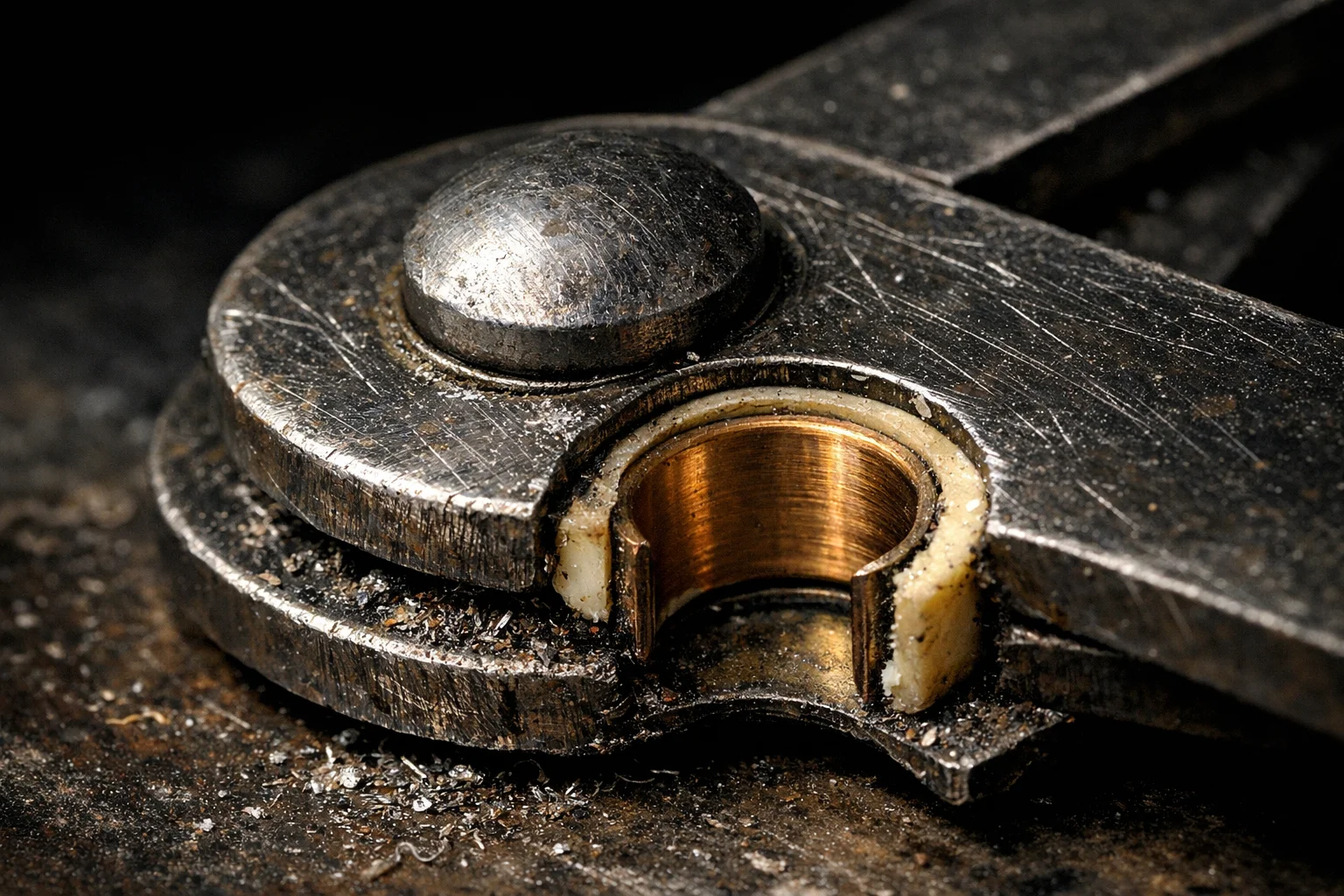
Mechanism Maintenance: The Physics of Friction
Why your recliner is squeaking and how to fix it. The rule of Silicone
Analyze Details →