Mechanism Maintenance: The Physics of Friction
Introduction
I learned the hard way that a recliner is not just a soft chair. It is a mechanical device that works under real load every time you lean back, shift your weight, or get up. When it fails, it usually fails slowly and expensively, long after the return window is gone.
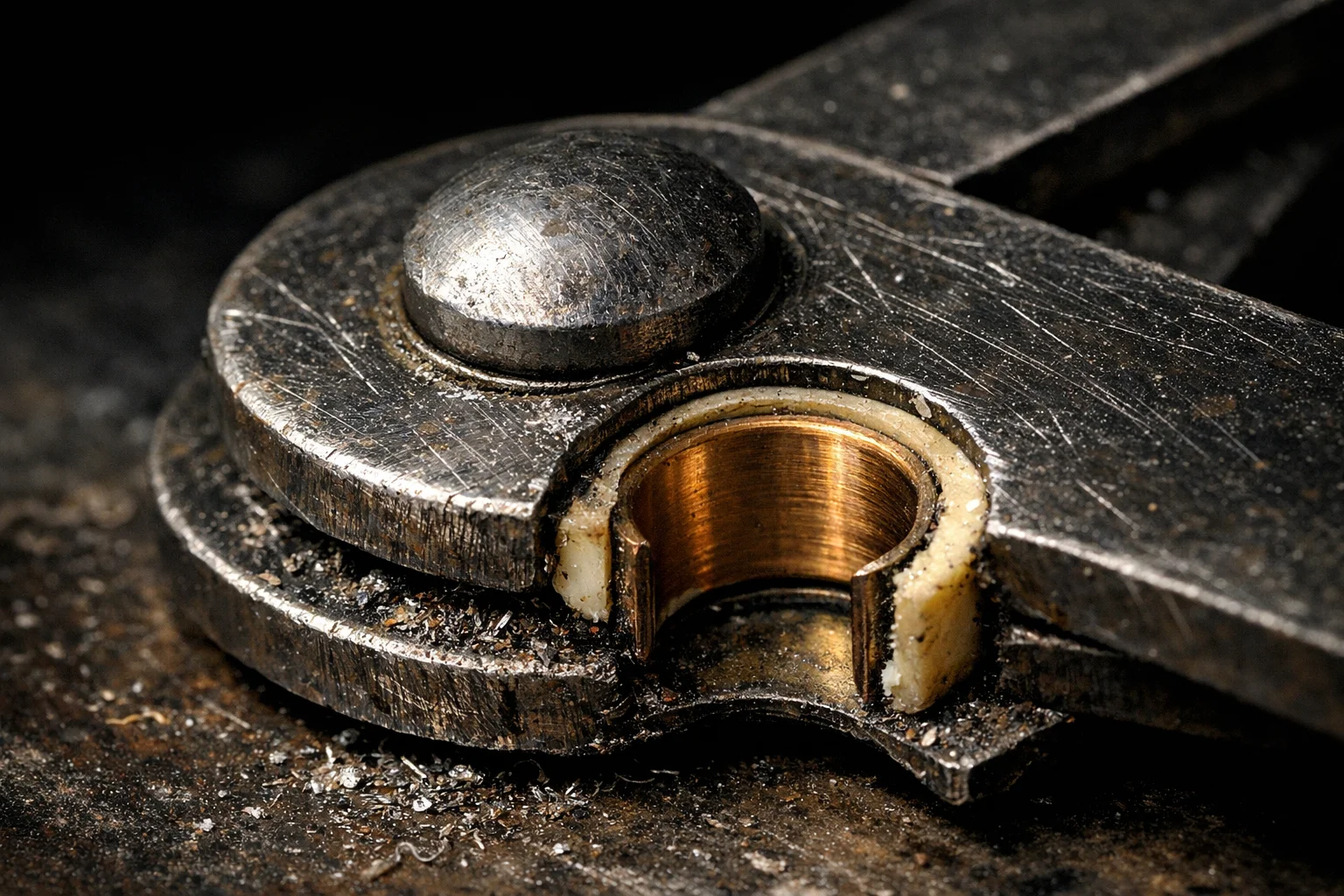
Inside almost every recliner, steel scissor arms pivot on steel pins or rivets. When you move, those parts grind against each other under high torque. If they are dry, poorly aligned, or lightly built, they shed tiny metal shavings that you will never see until the chair starts popping, sagging, or locking up.
What matters for you as a buyer is not the upholstery or how far it reclines in the showroom. What matters is whether the mechanism is built to survive thousands of movements without eating itself. I am not asking you to become a mechanic, but I want you to treat a recliner like any other machine you would trust with your body.
When you sit in one at the store, move it slowly and deliberately. Lean back, return upright, then do it again while listening closely. A healthy mechanism sounds dull and solid, not scratchy or clicky. If it already makes noise on a carpeted showroom floor, it will be worse in your living room.
I also pay attention to how much force it takes to move. If you have to jerk your body to get it to recline or slam it shut with your legs, the joints are under stress every time you use it. Smooth motion is not a luxury feature. It is a sign that the metal parts are properly fitted and not fighting each other.
I have stopped assuming that a higher price guarantees better mechanics. I have seen expensive recliners with flimsy linkages and cheap ones with surprisingly robust hardware. The rest of this guide is about how I learned to tell the difference before handing over my money, using checks you can actually do in a showroom without tools or technical training.
The WD-40 Solvent Error
I need to stop you from making a mistake I made early on. Never use standard WD 40 on a recliner mechanism, even if a salesperson or a well meaning friend suggests it.WD 40 is not a real lubricant in the way most people think. It is a water displacer and solvent that flashes off quickly. When you spray it on a recliner, it feels smoother for a short time because it washes away existing friction, not because it protects anything long term.
What it leaves behind is the real problem. After it evaporates, there is a tacky film on the metal. That film grabs dust, pet hair, carpet fuzz, and whatever else floats around your living room. Over time, that dirty film turns into a grinding paste that chews through the pivot points and bushings every time you recline.
This matters to you as a buyer because a chair that already feels dry or scratchy in the showroom is a warning sign. If the only way to make it feel decent is to hose it down with a solvent, the underlying metal fit is probably not great. A well built mechanism should feel smooth without needing a chemical crutch.
If you already own a recliner and it needs lubrication, the correct approach is different. I only use a dry silicone spray or a PTFE lubricant, sometimes called Teflon. These go on wet but dry into a slippery film that does not stay sticky. They reduce friction without turning the mechanism into a dirt magnet.
In a store, you obviously cannot spray anything. What you can do is ask how the mechanism is meant to be maintained and listen to the answer. If the response is vague or they casually recommend WD 40, I take that as a signal that long term wear was not a priority in the design. A chair that is built right does not depend on the wrong chemical to survive.
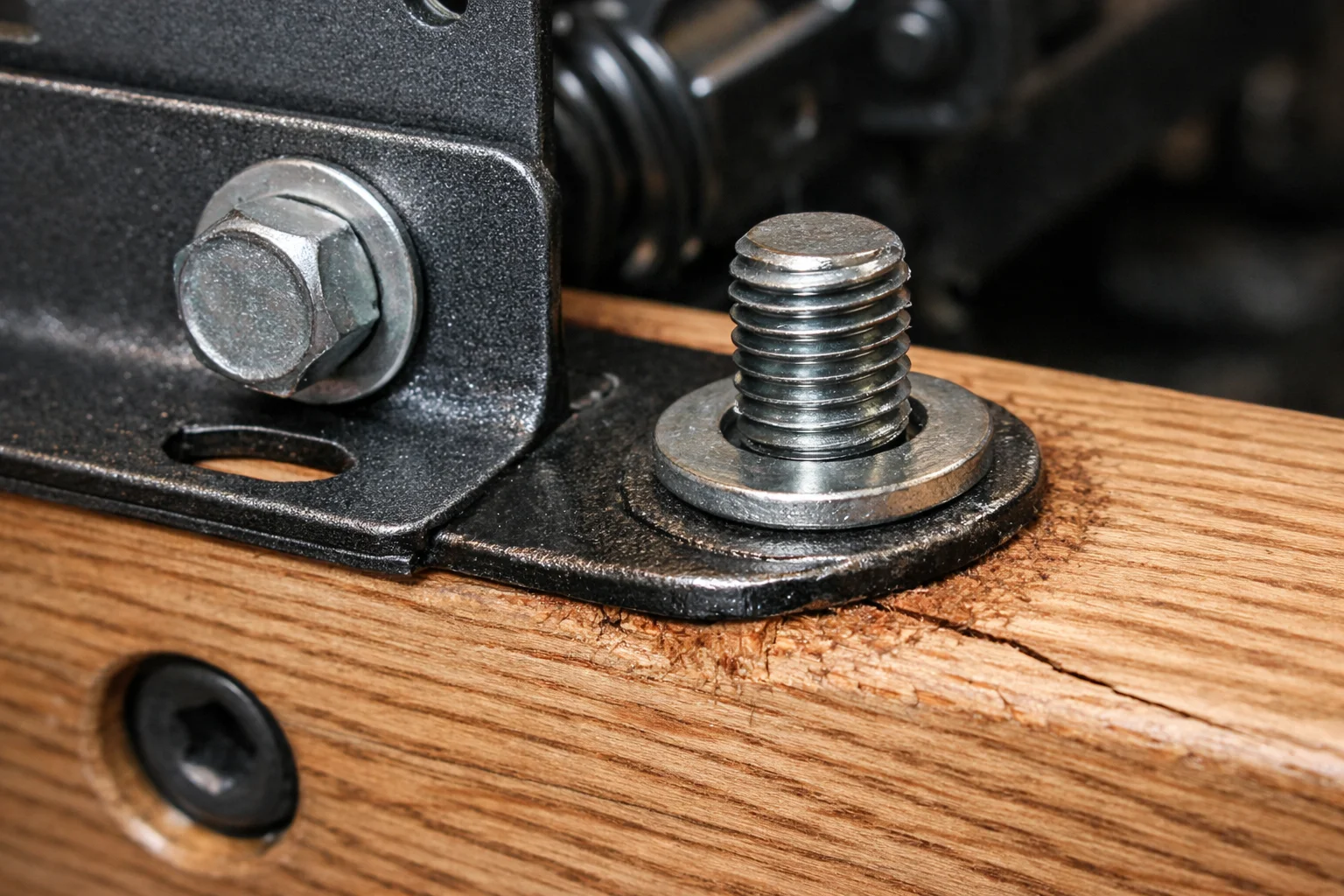
When I first saw a recliner mechanism exposed like this, it finally clicked why so many chairs fail in the same boring, predictable way. The steel mechanism is not floating in space. It is bolted directly into wood, and wood is the weakest link in that relationship.
Every time you recline, the mechanism twists slightly. If the bolts loosen even a little, that twisting turns into racking, where the steel frame shifts side to side instead of moving cleanly. That movement pushes sideways into the wood grain, which wood is terrible at resisting.
In a showroom, you cannot see this bolt, but you can feel the early signs. I put my hands on the arms and gently rock my upper body side to side while seated upright. I am not trying to break anything, just feeling for flex. A solid chair feels like one piece. A chair with a stressed mounting system feels vague, like the seat and arms are arguing with each other.
I also pay attention to sound during this test. A faint creak from upholstery is normal. A dull knock or clunk from inside the base is not. That noise often means the mechanism is already shifting against its mounts, which only gets worse as the wood fibers compress over time.
This is where weight ratings matter in a practical way. A chair designed close to its limit will loosen itself even if you are well under the posted capacity. I always assume real life use is harsher than the lab. If a recliner feels barely adequate under my weight in a calm showroom, it will feel sloppy after a year of getting in and out, kids climbing on it, or using it while tired.
If the salesperson allows it, I kneel down and look under the chair. I am not inspecting engineering drawings. I am checking whether the mechanism is attached with thick bolts and metal brackets, or with thin screws biting straight into raw wood. More metal between the mechanism and the wood usually means the designer expected long term stress and planned for it.
What I want you to take from this image is simple. Recliners fail at connections, not cushions. If the connection between steel and wood is already marginal, no fabric or foam upgrade will save it. Your job in the store is to feel for early looseness and listen for early noise, because those are the only clues you will get before the slow damage starts.
The Annual Service Ritual
I used to think maintenance was a repair shop problem. After owning a few recliners, I realized a simple yearly ritual is the difference between a chair that ages quietly and one that starts complaining every time you move.
If you already own a recliner, once a year I flip it onto its back and look for every place where two pieces of metal meet and pivot. These are the joints that carry your weight, and they dry out even if you never hear a squeak. I give each joint a very short burst of dry silicone spray right into the seam where the metal plates touch, then I immediately recline and close the chair several times to pull that lubricant into the bushing inside. If you skip the movement, the spray just sits on the surface and does not help much.
If your recliner is powered, there is one extra place I treat differently. The long screw that drives the motion, the one that looks like a threaded rod, is under constant pressure. For that part I use white lithium grease, applied sparingly, because a light spray will not survive the load. I learned this after a motor kept working fine while the dry screw slowly chewed itself louder and rougher.
This matters to you even if you are still shopping. In a showroom, I ask how the chair is meant to be maintained and whether these points are accessible without dismantling the base. If the underside is sealed shut or the answer sounds confused, I assume the manufacturer did not expect the mechanism to be cared for. A chair that cannot be easily serviced is a chair that is meant to be disposable.
I also pay attention to how the mechanism looks from below if I am allowed to peek. I am not counting parts, just checking whether the joints look exposed enough to reach with a spray straw. When everything is buried or shielded by thin fabric panels stapled in place, future maintenance becomes annoying, and annoying maintenance usually gets skipped.
What I want you to understand is that smoothness in year one does not guarantee smoothness in year five. A recliner that is designed with service in mind tells me the builder expects it to last. One that hides its joints and offers no clear guidance is quietly betting that you will replace it before wear catches up.
I now treat this annual ritual like changing oil in a car. It does not make a bad design good, but it keeps a decent mechanism from destroying itself. When you are buying, look for signs that this kind of care was anticipated, because that mindset shows up everywhere else in the chair.
Torque Management (Structural Integrity)
Torque is the quiet force that destroys recliners from the inside out. Every time you drop into the seat, the steel mechanism tries to twist against the wooden frame that holds it.
Wood and steel do not age the same way. Steel stays rigid, while wood compresses, dries, and gives a little every year. That difference is why bolts that felt tight at the factory slowly lose their grip after thousands of small impacts.
When those bolts loosen even slightly, the mechanism stops moving straight. It starts to rack side to side, and that sideways motion pushes across the wood grain instead of along it. Wood is weak in that direction, so tiny cracks form long before anything looks broken.
You cannot see shear stress in a showroom, but you can feel the conditions that create it. When you sit down, pay attention to whether the base feels planted or if there is a delayed wobble after you settle. A good chair absorbs your weight and stops moving immediately.
I also test torque by reclining halfway and pausing. If the chair feels like it wants to twist or shift before it settles, that tells me the mechanism is not being held squarely. That kind of movement only gets worse as bolts loosen and holes in the wood elongate.
Sound matters here too. A sharp thunk when the chair takes your weight is often a bolt shifting in its hole. That noise is not upholstery and it is not normal break in. It is the sound of metal moving against wood.
If I am allowed to look underneath, I focus on how the steel frame is attached. Thick bolts passing through metal brackets tell me the load is being spread out. Thin screws driven straight into wood tell me the frame is relying on friction and hope.
This is where weight ratings become misleading. A chair can be rated for your weight and still beat itself apart if the mounting system is light. I assume real life use includes flopping down, twisting to grab a drink, and pushing off one arm to stand up.
Once a year at home, I put a socket wrench on the main mounting bolts and make sure they are snug. I am not cranking them down harder than before, just taking up the slack that vibration creates. It takes a few minutes and it prevents years of damage.
As a buyer, you cannot do that yet, but you can ask whether the bolts are meant to be checked. If the salesperson looks confused or says nobody ever does that, I take it as a warning. Designs that depend on perfect factory torque forever do not survive real homes.
What I want you to remember is that cushions hide failure and frames do not forgive it. Torque management is about whether the chair stays square under load year after year. If it feels solid, quiet, and unified in the store, it has a chance. If it already feels loose or noisy, no amount of care will reverse what is coming.
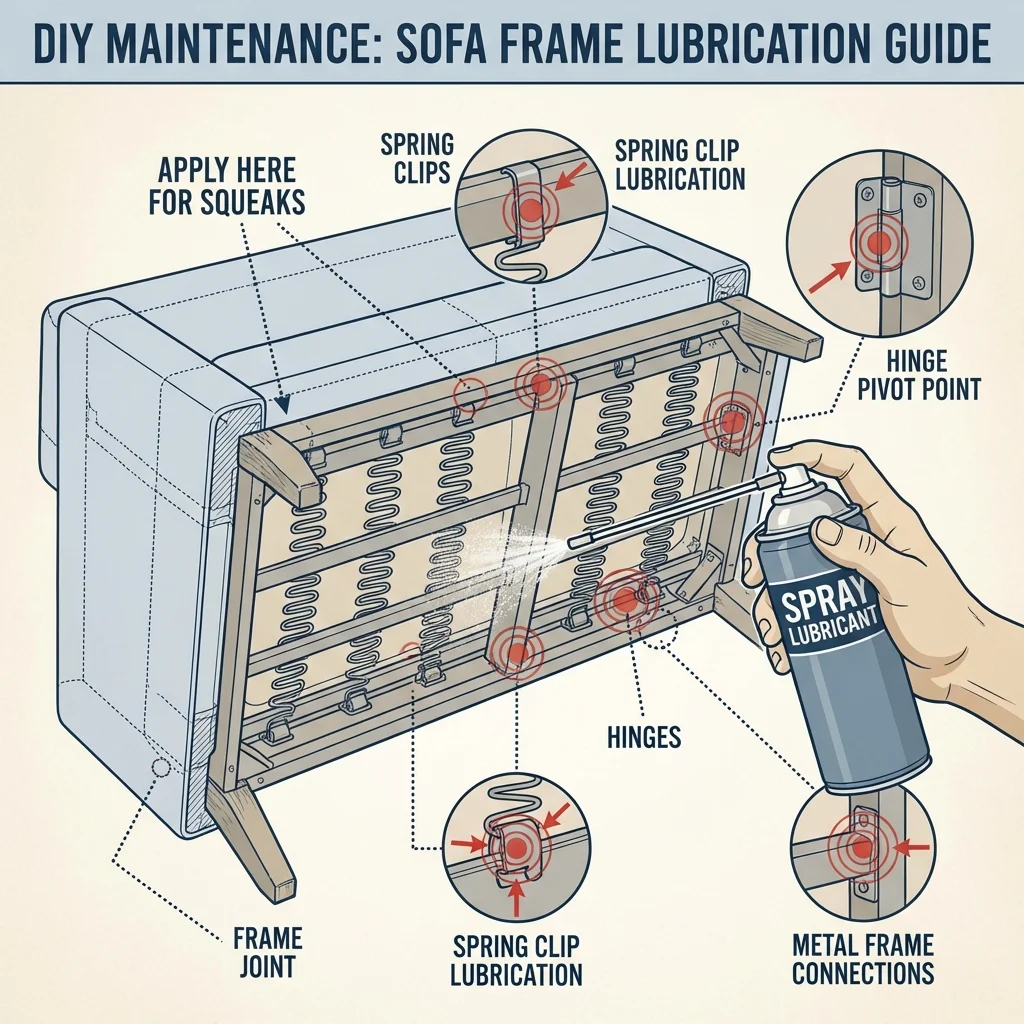
When I first saw a service map like this, it changed how I evaluated recliners in a store. I stopped thinking of the mechanism as one moving thing and started seeing it as clusters of joints that all have to work together.
Each of those pivot clusters carries load in a slightly different way depending on where you are in the recline cycle. When one joint runs dry or binds, the force does not disappear. It gets pushed into the neighboring joints, which then feel stiff or jerky even if they are fine.
You cannot see lubrication points in a showroom, but you can feel whether they are doing their job. When you recline slowly, the resistance should feel even from start to finish. If it moves easily at first and then suddenly gets heavy halfway back, that usually means one pivot cluster is fighting the rest.
I also pay attention to how the chair behaves when returning upright. A healthy mechanism comes back smoothly under control. If it hesitates, then drops the last few inches, that is often a dry or poorly fitted joint letting go all at once.
This matters because lubrication is not just about silence. It is about load sharing. A dry joint forces other joints to take more stress than they were designed for, which accelerates wear everywhere else.
As a buyer, I ask a very simple question. I ask whether the mechanism is pre lubricated for life or meant to be serviced. I am not fishing for a perfect answer. I am listening for whether the manufacturer even acknowledges these pivot points exist.
If the answer is that it never needs lubrication, I become skeptical. Metal moving under load always wears, and wear needs management. When a brand pretends otherwise, it usually means the mechanism is built light enough that long term survival was not the goal.
If the answer is that occasional lubrication is recommended, I ask where it would be applied. A confident explanation tells me the design anticipated maintenance. A vague shrug tells me nobody expects you to keep it running smoothly for long.
I also look underneath if I can and check whether these pivot clusters are reachable without removing half the chair. If the joints are visible and not buried behind layers of fabric and staples, that is a quiet sign of respect for the owner.
What I want you to take from this image is not a memorization exercise. You do not need to identify every joint. You need to recognize that smoothness depends on many small contact points working together.
In the store, your job is to feel for uneven effort, sudden stiffness, or delayed motion. Those sensations are early warnings that one part of the cluster is already struggling. Once that happens, the rest of the mechanism will follow.
A recliner that moves evenly, quietly, and predictably is telling you its pivot clusters are sharing the load. That is the kind of chair that can be kept alive with simple care instead of fighting you until it gives up.
Cable Pre-Tensioning
Cable Pre-Tensioning
Manual recliners rely on a steel Bowden cable to release the latch, very similar to a bicycle brake cable. Every time you pull the handle, that cable stretches a tiny amount, and over thousands of uses the slack adds up.You can feel this stretch without tools. When you pull the handle, pay attention to whether there is a long dead zone before anything happens. If the handle moves an inch or so with no resistance and then suddenly engages, that cable is already stretched.
This matters because slack changes how force is applied. Instead of a smooth pull that releases the latch cleanly, you end up yanking harder at the end of the motion. That extra force does not go into reclining the chair. It goes into the handle, the cable end, and the latch itself, which is how handles snap and cables fray.
If you are allowed to look underneath the chair, follow the cable from the handle to where it meets the latch. Many mechanisms use a simple multi slot bracket at that connection point. Sliding the cable end into a tighter slot takes up slack and restores the original leverage the handle was designed for.
As a buyer, you are not there to adjust anything, but you are absolutely there to judge whether adjustment is possible. I gently pull the handle and release it a few times. A good setup feels immediate and firm, not mushy. When I let go, the handle should snap back decisively, not drift.
I also recline the chair and return it upright while watching how much handle movement is needed. If the salesperson has to pull the handle all the way to the stop every time, that is a red flag. A properly tensioned cable usually releases the latch well before the handle reaches the end of its travel.
If I see a visible adjustment bracket and a cable that looks replaceable rather than permanently crimped into the mechanism, that tells me the designer expected stretch and planned for it. If everything looks sealed, riveted, or inaccessible, I assume that once the cable stretches, the only real fix is a service call or a replacement chair.
What I want you to remember is that cable stretch is not a defect. It is normal wear. The question is whether the chair acknowledges that reality. A recliner that feels crisp at the handle and has a clear way to take up slack is one that can age gracefully instead of slowly tearing its own controls apart.
In the showroom, trust your hand. If the handle already feels vague, delayed, or requires a hard yank, that problem will not improve with time. It will only train you to pull harder until something gives.
Technical Maintenance Checklist
I want to translate this checklist into something you can actually use, both as an owner and as a buyer standing in a showroom. You are not expected to perform these actions in the store. You are expected to judge whether the chair was built in a way that makes them possible without a fight.
Pivot rivets are the small steel pins where scissor arms and links rotate against each other. Once a year at home, these benefit from a light spray of a dry silicone or PTFE lubricant. In a showroom, what I check is whether those rivet points are visible and reachable from below. If they are buried behind wood panels or sealed fabric, annual care becomes annoying and usually gets skipped.
The worm gear, which is the threaded drive screw on powered recliners, needs a different kind of attention. Every couple of years, it should be wiped clean and given a thin coat of white lithium grease so it can carry load without chattering. As a buyer, I look to see whether that screw is exposed enough to even touch. If it is hidden inside a plastic housing with no access, I assume it was designed to run until it wears out, not to be maintained.
Frame bolts are the fasteners that hold the steel mechanism to the wooden frame, and they loosen gradually from vibration. Once a year, a simple torque check with a socket wrench keeps the mechanism square. In the store, I cannot tighten anything, but I can look for thick bolts passing through metal brackets instead of thin screws biting straight into wood. That tells me whether annual tightening was expected or ignored.
Linkage links are the flat steel arms that connect one moving part to another. Every six months at home, I visually scan them for bends or distortion using nothing more than a flashlight. In the showroom, I crouch and look for symmetry. If the left and right sides already look mismatched or twisted on a brand new chair, that is a warning sign that the steel is light and easily stressed.
The release cable on a manual recliner needs occasional tension adjustment as it stretches. This is done by hand or with simple pliers when slack develops. As a buyer, I test for this by feel. If the handle engages immediately and snaps back cleanly, adjustment headroom still exists. If the handle already pulls long and soft, the cable is near the end of its useful range.
What this checklist really represents is mindset. Every one of these components assumes normal wear and plans for it with access and adjustment. When I am shopping, I mentally walk through this list and ask a simple question. Could a normal owner realistically do this without disassembling the chair or calling a technician?
If the answer feels like yes, the chair was designed to be lived with. If the answer feels like no, the chair was designed to be replaced.
You do not need to memorize products or frequencies. You need to recognize whether the mechanism looks serviceable, reachable, and honest about wear. A recliner that expects a little care usually rewards you with quiet, predictable motion for years. A recliner that pretends it will never need attention usually starts asking for forgiveness long before it should.
When you are standing in the store, this checklist becomes a filter. You are not buying a maintenance schedule. You are buying evidence that someone thought about what happens after the first year.
Explore Technical Reference
Sofa Beds: The Dual-Function Compromise
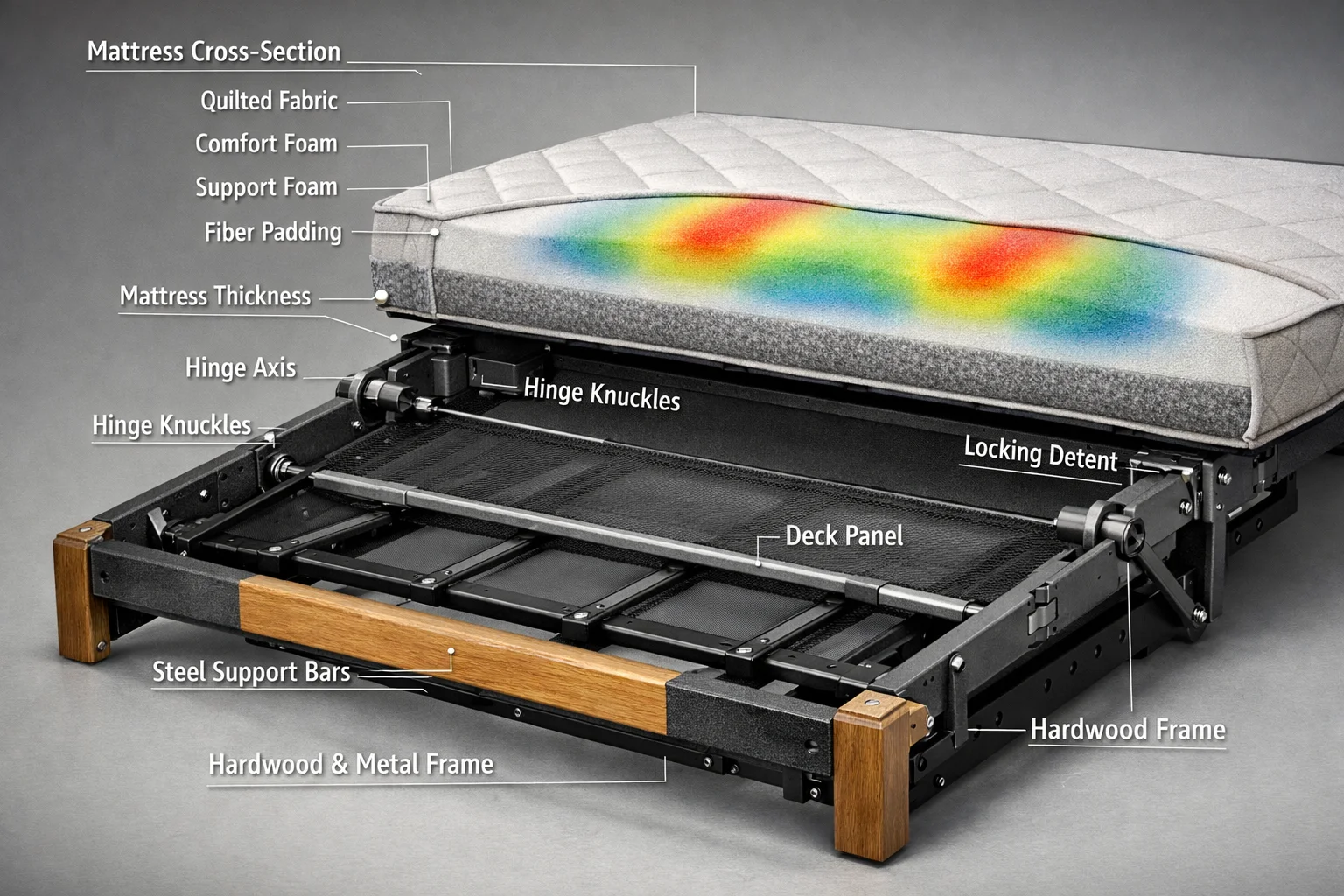
How sofa bed mechanisms balance sitting and sleeping functions. Understanding pull-out systems, click-clacks, and why engineering has improved but compromise remains inevitable.
Analyze Details →
Recliner Mechanisms: The Arc of Motion
Why your recliner is hitting the wall. A guide to the geometry of motion,
Analyze Details →