Recliner Mechanisms: The Arc of Motion
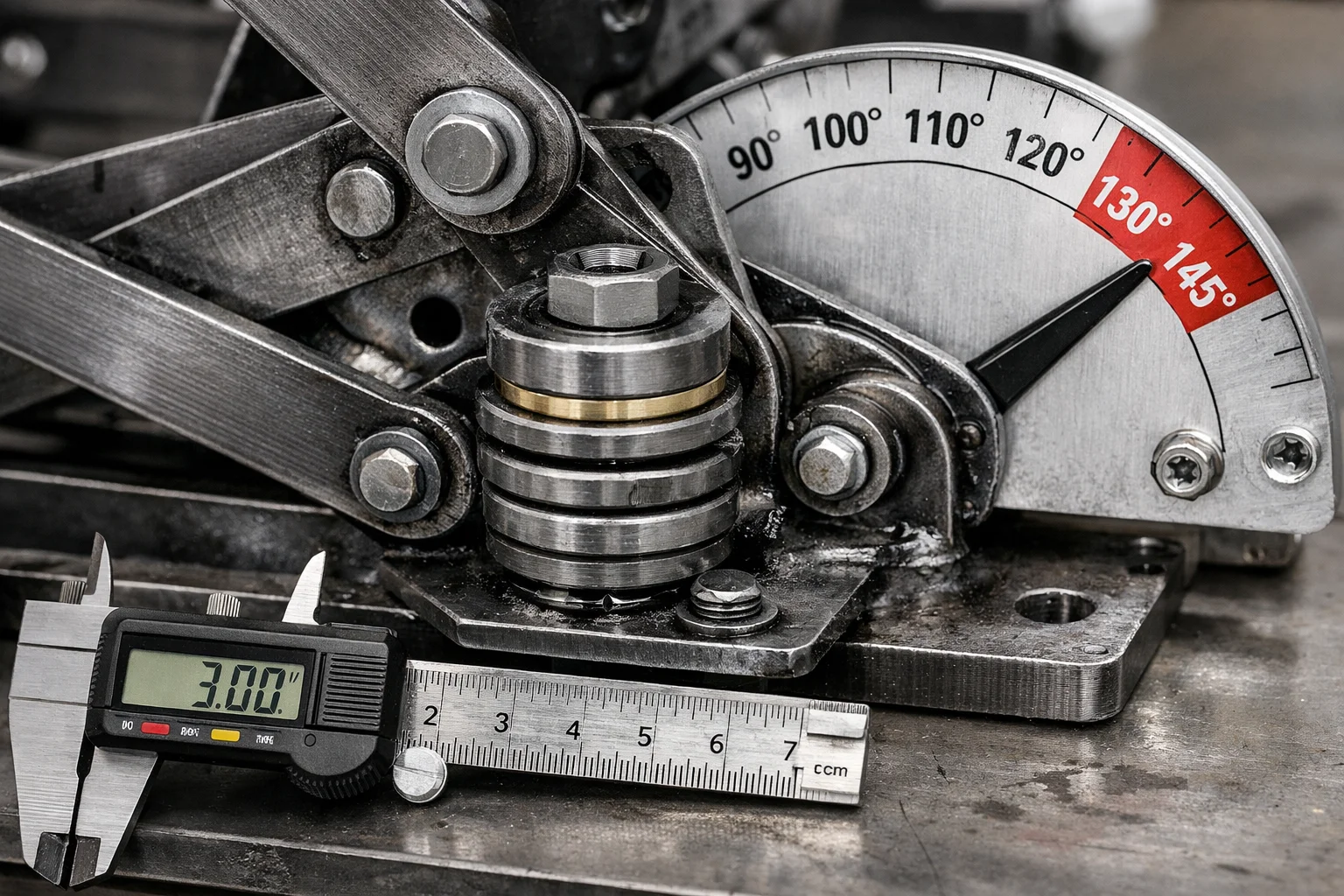
Introduction
When you go recliner shopping, I want you to ignore the salesperson who keeps steering you back to width, “wall clearance,” or how many cupholders it has. The spec that actually decides whether a recliner works in your room is the arc of motion, meaning the path the chair takes as it reclines.
Different mechanisms don’t just tip back, they travel. Some slide forward first, some push the backrest deep into the space behind them, and some do a bit of both, which is why two recliners that look the same in the showroom can behave completely differently at home.
If you don’t match that motion path to your layout, you get one of two bad outcomes. You either end up with the chair smacking drywall and baseboards until something loosens or cracks, or you end up leaving a useless empty “no furniture can go here” zone behind the chair that you paid for in square footage.
In the showroom, I treat arc of motion like a fit test, not a spec sheet. I physically recline it all the way, then I watch what parts move and where they end up, especially the top of the backrest and the bottom rear of the frame because those are the bits that tend to collide with walls and trim.
I also ask them to let me do it more than once, slowly. A recliner that needs a lot of effort to start moving, or one that suddenly lurches backward at the end of the travel, is the kind of mechanism that turns “I’ll just be careful” into “why is there a dent in the wall.”
The goal of this guide is to help you spot these motion differences quickly, then translate them into a simple yes or no for your room. Once you understand arc of motion, you stop shopping blind and you stop paying for a chair that only works if you rearrange your life around it.
The "Space-Time" Calculation
The problem with most traditional recliners is that they are pivot based, meaning the chair does not just lean back, it swings. As the footrest comes up, the backrest travels backward into the space behind the chair, and that is the part people forget to budget for.In real rooms, the requirement is simple and annoying. A standard rocker recliner usually needs about 12 to 14 inches of clearance from the wall to hit a full recline, around that 145 degree “nap” position, without rubbing or thumping the drywall.
The result is what I think of as space time, because you are paying for floor area you cannot use. In a 10 by 12 room, leaving a one foot dead zone behind a chair is about ten percent of your usable floor area, and it usually lands right where you wish you could put a side table, a lamp, or just have walking space.
Here is how I make that real in a showroom so I do not get fooled by a staged display. I stand the chair where it would actually live in my room, then I pretend the wall is directly behind it by lining it up with a seam in the flooring, the edge of a rug, or even a straight line between two display tags on the floor.
Then I recline it all the way and watch the top of the backrest like it is the “wall hitter.” If that top edge travels backward a lot, I know I am either going to park the chair in the middle of the room forever, or I am going to listen to it bump the wall until something gives.
If you want a quick pass fail test, bring a tape measure and take one measurement that actually matters. With the chair upright, measure from the back of the chair to your imaginary wall line, then recline it and measure again, because that difference is the clearance it truly demands, not what the tag claims under “wall clearance.”
When you do this, also pay attention to the base. Some rocker recliners do not just push the backrest rearward, they also scoot or rock in a way that makes the bottom rear edge drift, which is how baseboards get chewed up even when the fabric never touches the wall.
If your room is tight, I would rather you find that out in the store than after delivery. The time to be picky is before you own the chair, because once you discover it needs that extra foot, the only fixes are living with the wasted space or replacing the recliner with a different mechanism.
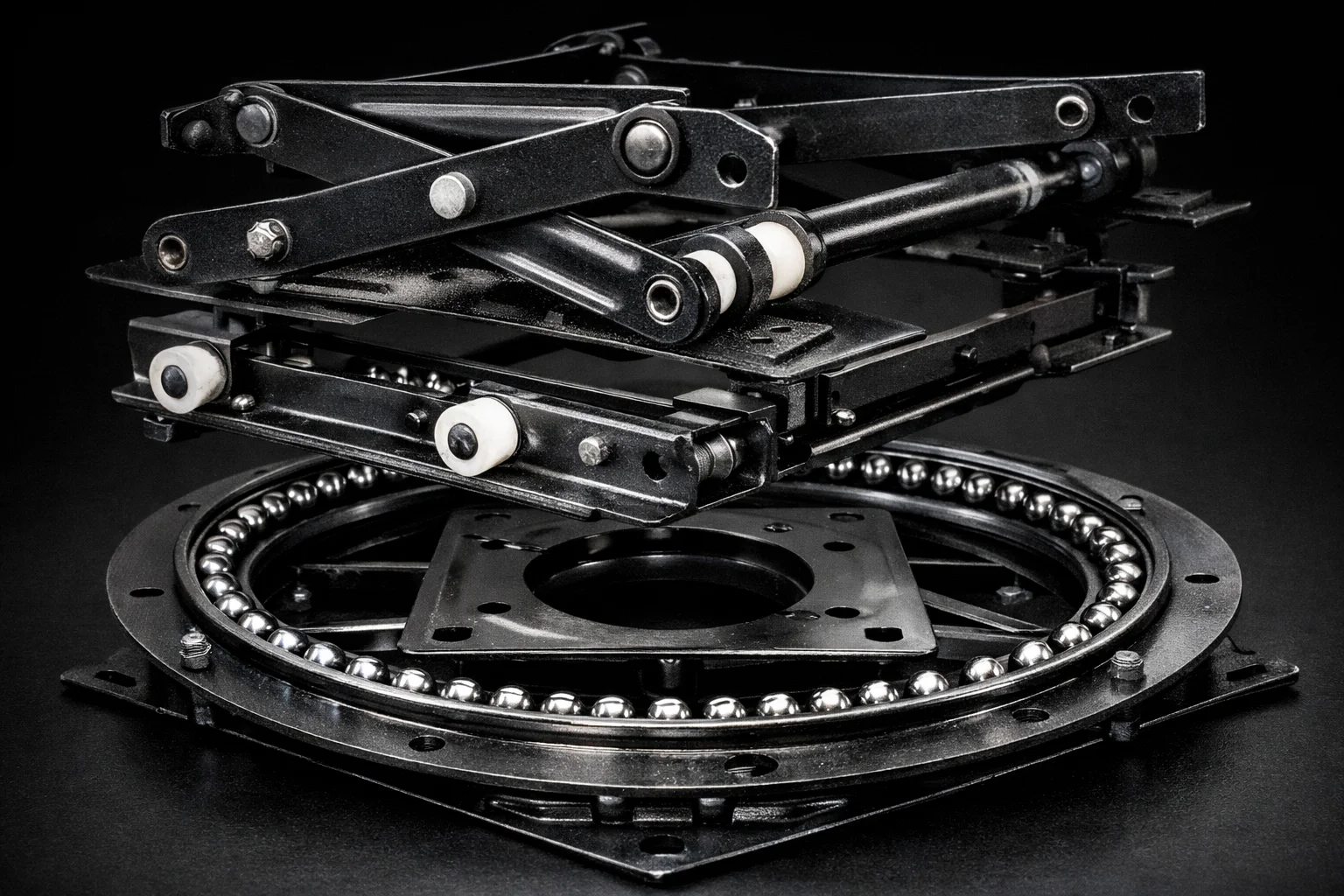
When you see a chair that swivels and glides and reclines, I want you to picture what that photo is really saying. You are not buying one mechanism, you are buying a stack of mechanisms, and every layer is more joints, more fasteners, and more places for motion to turn into noise and play over time.
In a showroom, I treat “swivel glider recliner” as a durability question, not a feature upgrade. I sit down, plant my feet, and I deliberately do a slow swivel, then a slow glide, then I recline, and then I reverse it all back to upright, because the squeaks usually show up during the change of direction, not during the smooth middle part.
I also do a simple feel test for slop. With the chair upright, I hold the arm and gently twist my torso left and right, just enough to see if the seat and base feel like one solid unit or if there is a tiny lag where something shifts and then catches up.
If you feel that delayed movement now, it rarely gets better at home. It usually turns into a regular creak, or a click you cannot unhear, especially if the chair ends up on a slightly uneven floor where the base gets stressed.
Pay attention to where the motion is coming from. A swivel bearing that feels gritty or inconsistent, a glider track that “ticks” at the ends of travel, or a recline linkage that makes a metallic chirp are all different problems, but they share the same result, you are going to live with it or fight warranty claims later.
I ask the salesperson to let me try the floor model that has been sat in the most, not the brand new one. A mechanism that still feels tight and quiet after it has taken some abuse is the one I trust more, and if they will not tell you which one that is, look for the chair with slightly rumpled fabric on the seat and arms.
If you are shopping for quiet, do not be shy about using your ears. I literally stop talking, move the chair slowly, and listen, because music, chatter, and the general showroom noise can hide the little squeaks that become obvious in a quiet living room at night.
This is also where arc of motion and mechanism stacking meet. Swivel gliders can tempt you into placing the chair closer to a side table or a wall because the base looks compact, but the swivel means the back corners can sweep into things when you turn, even if the recline clearance is fine. Before you commit, swivel it to the angles you will actually use, then recline it a bit and make sure the chair does not “claim” extra space in a direction you were not budgeting for.
The Three Primary Geometries
When I watch a recliner move, I’m really trying to sort it into one of three geometries. Once you know which geometry you are dealing with, you can predict where it will steal space, what it will hit first, and whether “wall clearance” marketing is even relevant.
The first geometry is the classic pivot swing, which is what most people picture as a recliner. The chair acts like it’s hinging somewhere low in the frame, so as you recline, the top of the backrest sweeps backward into the room behind it.
In the showroom, I stand to the side and track the top back corner with my eyes, because that is usually the drywall offender. If that corner travels a lot, I assume the chair wants a real buffer zone behind it, even if the tag claims it is fine near a wall.
To make it practical, I do a knuckle test. I put my fist behind the chair when it is upright, then I recline it slowly and see how quickly my knuckles would get pinned. If my hand would be crushed early in the motion, your wall is going to take that same treatment at home.
The second geometry is forward translation, which is what true wall hugger designs are trying to do. Instead of throwing the backrest deep behind the chair, the whole sitting package slides forward as you recline, so the back can stay relatively “in place” relative to the wall.
Here is the catch I look for. That forward travel has to go somewhere, and it usually shows up as the footrest and seat moving out into your walking path, toward your coffee table, or into the space where your feet already live.
In a showroom, I treat a wall hugger as a knee clearance test, not a wall clearance test. I recline it to the position I actually use, then I stand up and walk past the front edge like I’m heading to the kitchen, because that is where you discover you just created a shin banger in a narrow room.
I also check the floor contact points. Some forward sliding designs feel great on carpet but can “creep” on smooth floors if the feet are small or the base is a rocker shape, which is how chairs slowly migrate away from where you placed them.
The third geometry is compound motion, which is the hybrid category that can surprise you. The chair slides and it swings, and sometimes it changes its behavior mid travel, meaning the first half of the recline looks wall friendly, then the last part suddenly pushes the backrest rearward.
I catch this by doing the recline in two stages. I stop at the first comfortable TV position and note where the backrest is, then I go all the way to the nap angle and watch for that late “reach” backward that turns a safe placement into a wall tapper.
Compound motion is also where trim gets damaged even when you think you left enough space. The back fabric might clear the wall, but the lower rear frame, the scissor linkage area, or the rocking base can drift and touch the baseboard first, which you will not notice until you hear it or see paint rubbed off.
If you only remember one showroom move from this section, make it this. I want you to recline all the way, then return to upright, and do it again while watching a different reference point each time, first the top of the backrest, then the bottom rear edge near the floor, then the front edge of the footrest.
Once you identify which geometry you are looking at, you can stop arguing about vague specs and start matching behavior to your room. Pivot swing means you budget space behind the chair. Forward translation means you budget space in front of it and along your traffic lanes. Compound motion means you budget for both, and you get extra picky about anything that can drift into walls, tables, or baseboards.
1. The Rocker (Pivot-Pivot)
This is the mechanism I see most often, and it is the one I trust the most when I want simple, predictable motion. When it is closed, it rocks on a curved base, and when you recline, the whole chair mostly behaves like one solid piece swinging around a pivot.
What that means for you in a showroom is that the “feel” is usually soothing and stable because the chair’s weight stays fairly centered as it moves. I can usually tell within one recline whether it is the good kind of stable or the bad kind that is just stiff, because a good rocker will start moving smoothly without me having to shove my shoulders into the backrest.
The practical downside is space, because this geometry wants a buffer behind it. When I test a rocker recliner, I assume it will need real clearance until it proves otherwise, and I watch the top of the backrest and the lower rear edge at the same time because either one can be the first thing to hit a wall or a baseboard.
Here is the showroom check I actually use. I put the chair in the most wall like position I can fake, then I recline it slowly while standing to the side, and I look for any moment where the backrest suddenly “reaches” rearward near the end of travel. If I see that late push, I know I will hear thumps at home unless I leave more room than I want to.
This mechanism is also one of the easiest to judge for long term tightness, because it has fewer complicated tracks and fewer stacked motions to hide wear. I put my hands on the arms and gently rock my weight side to side while it is upright, not enough to be rude, just enough to feel whether the base and seat stay locked together or if there is a tiny clunk of play starting to develop.
If you feel looseness in a pivot pivot rocker on a floor model, I treat it as a warning, because this design is supposed to be straightforward. A little creak can just be a dry joint, but a click you can feel through the arms often means something is already wearing or shifting, and that is the kind of “one tiny noise” that becomes your nightly soundtrack later.
I also pay attention to how it behaves on the floor surface in the store, because the curved base can creep on smooth flooring. If the chair inches backward while I rock or recline, I assume it will do the same on hardwood or vinyl at home unless you plan to anchor it with a rug or grippy pads, and that matters because creeping is how a chair that started with safe clearance ends up kissing the wall a week later.
Maintenance is not the fun part, but this is where rocker recliners earn their keep. Since there are fewer tracks and gears, there are fewer mystery failures, and when something does need attention it is often a fastener that wants tightening or a joint that wants a little lubrication, rather than a complicated carriage that is going out of alignment.
The catch is that it demands space discipline. If your room is tight and you know you will keep nudging it back toward the wall to “make it look nicer,” I would rather you choose a different geometry, because this is the kind of chair that will punish wishful thinking by rubbing trim, scuffing paint, and eventually loosening up from repeated little impacts.
If you do have the space, this is the mechanism where I most often leave the showroom feeling like I bought motion that will still feel like motion in a few years. I just make myself prove it with the slow recline test, the side to side tightness check, and a quick look at whether the base wants to migrate on the kind of floor you actually have.
2. The Wall-Hugger (Forward-Track)
A true wall hugger is built around horizontal glide tracks, and the whole point is that the chair does not “throw its back” into the space behind it. When you recline, the seat and back move as a package and that package slides forward into the room.
In the showroom, I verify this by standing at the side and picking a reference point on the back, like the top seam or a tag near the headrest. If that point stays almost in the same place relative to the floor while the seat creeps forward, you are looking at real forward track behavior, not just marketing.
The win is obvious if your chair has to live near a wall. You can often place this style just a few inches off the wall and still reach a usable recline because the back is not trying to occupy the wall space behind it.
The trade off is that the chair steals space from the front of the room instead. I have seen plenty of wall huggers that behave nicely at the wall but become a traffic lane problem once you are reclined, because the whole sitting position shifts forward and the footrest ends up exactly where your shins, your coffee table, or your walkway used to be.
So I do not “test it to the wall,” I test it to the room. I recline it to the position I would actually use, then I get up and walk past the front edge the way I do at home, with my feet close to the chair like I am squeezing by to grab something off a table.
Pay attention to where your knees end up when you stand up from a reclined position. If you have to do that little sideways twist to escape the footrest, you are going to hate it in a narrow space even if the chair technically fits.
I also check the fully reclined footprint, because this is where wall huggers can surprise you. A chair that sits neatly when upright can occupy a lot of depth when fully open, and if you are pairing it with a coffee table, ottoman, or a tight TV console distance, you can end up with a recline you never use because it blocks the room.
There is another practical check I always do with forward track designs, I watch the feet and the floor. If the chair is on a slick showroom surface and it looks like the base wants to “creep” or the front wants to skid as the track moves, I assume it will be worse on hardwood or vinyl at home unless you use a rug or grippy pads.
Finally, I cycle it a few times and listen right at the start of motion. Tracks that are going to annoy you later often announce themselves with a faint tick, a gritty slide, or a little lurch as the rollers load up, and that is the kind of thing that gets more noticeable, not less, once the chair is in a quiet living room.
If your main problem is wall clearance, this mechanism can be a lifesaver, but I only buy it after it passes a simple reality check. I want to know you can still walk past it when it is reclined, and I want the forward slide to feel controlled, not like the chair is trying to wander into your room.
3. The Swivel-Glider (Triple-Axis)
This is the most complex mechanical stack I run into in mainstream seating, and I treat it like a “three systems in one” purchase. You are asking one chair to swivel 360 degrees on a bearing, glide back and forth on a track, and recline on a scissor linkage, all while staying quiet and tight for years.
In the showroom, I do not let the feature list distract me. I assume every added motion layer is another set of joints that can loosen, another place for metal to rub, and another spot where a tiny bit of wear turns into a squeak you cannot locate.
The first layer I pay attention to is the swivel, because a 360 base is basically a big bearing doing a hard job. I do a slow full circle rotation with my feet off the floor, then I do it again with my feet lightly planted, because that second test is closer to how people actually swivel at home and it loads the bearing differently.
What I want is a smooth, consistent resistance all the way around. If it feels notchy, gritty, or like it “drops” into certain angles, I assume it is either already stressed, already poorly aligned, or simply built to a cost, and none of those age well.
Then I focus on the glider track, because that back and forth motion is where a lot of chairs start to talk. I glide to the forward limit and the rear limit very slowly, and I listen for a tick at the ends of travel, because that is often where parts kiss, stop, and re load, which is exactly when future squeaks show up.
I also put my hands on the arms and do a gentle side to side wiggle while I am gliding, not to be rough, just to see if the seat carriage stays square on the track. If I feel the seat yaw slightly, like it wants to rack diagonally instead of moving straight, I take it as a warning that the track has play that will only grow.
Only after those two checks do I recline it, because the recline scissor linkage adds its own set of pivots and fasteners. I recline in slow motion and I pause halfway, then continue, because a lot of mechanisms stay quiet in the middle but chirp when the linkage transitions and the load shifts.
When you do this, pay attention to effort and timing. If it takes a hard shove to get it started, then it suddenly lurches, that is the kind of movement that makes people “help” the chair with their body weight, and that is how joints get hammered loose over time.
The biggest practical gotcha with a swivel glider recliner is that it can demand space in weird directions. A wall hugger mostly steals space forward, and a rocker mostly steals it behind, but a swivel can sweep a back corner into a wall or a side table at an angle you did not test.
So I do an angle test on purpose. I swivel the chair about 30 to 45 degrees like I am actually watching TV or talking to someone, then I recline to my real position, and I look at the back corner and the lower rear edge near the floor, because those are the points that clip baseboards, outlets, and table legs.
If you have a side table with a lamp, this is where I get extra picky. I make sure the arm does not drift under the table edge when I glide, and I make sure the back corner does not swing into the lamp cord when I swivel, because cords and recliners are a bad mix once the chair starts moving on its own momentum.
This mechanism also has the highest chance of developing “mystery noise” later, meaning you hear it but you cannot pin down which layer is responsible. In the store I try to isolate it by doing one motion at a time, swivel only, glide only, recline only, and then combining them, because a squeak that only happens when two layers are loaded together is a sign you are already near the tolerance limits.
If you are serious about buying one, I would rather you test the most used floor model than the prettiest one. A triple axis chair that still feels tight after weeks of strangers swiveling and dropping into it is the one that has a chance of staying pleasant in your living room.
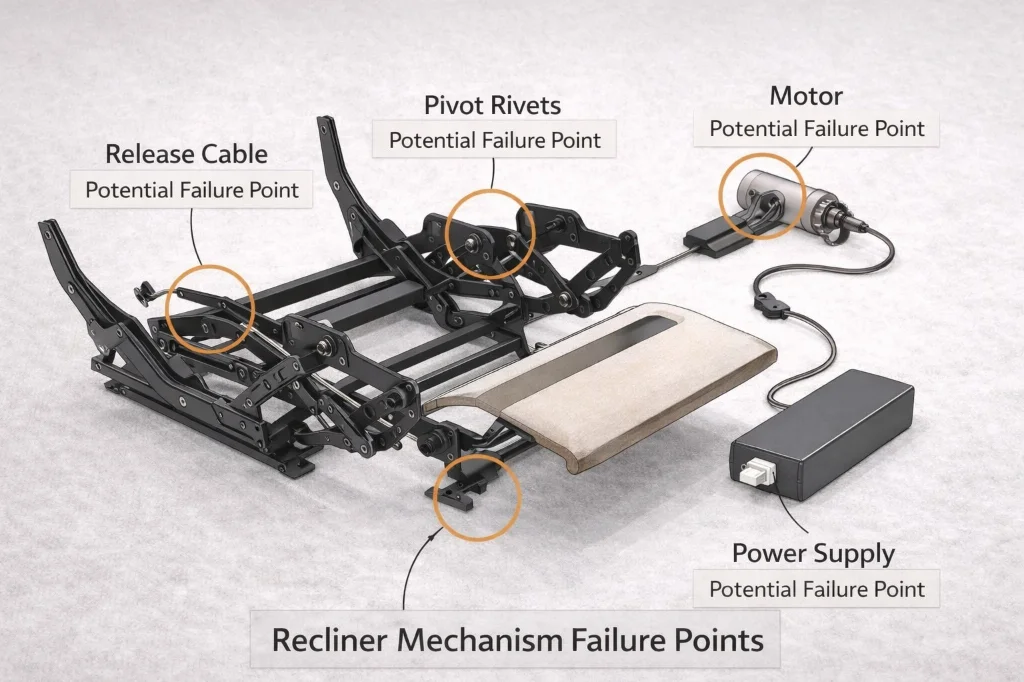
I also look under the skirt if they will let me. I am not trying to diagnose it like a technician, I just want to see whether it looks like a clean, solid assembly or a busy cluster of thin parts and wobbly looking rivet points, because those are the places that usually end up as squeaks and clicks.
My bottom line is simple. I only buy a swivel glider recliner if I truly need all three motions, and it passes the slow, quiet, no slop tests in the showroom. If you only want recline and you do not really glide, or you think swivel is just a fun extra, I would rather you keep the mechanism simpler, because simpler is usually what stays tight and quiet the longest.
When you look at that diagram, I want you to stop thinking “which one is better” and start thinking “which direction can my room afford to give up.” The rocker arc steals space behind the chair, the wall hugger track steals space in front of it, and your layout usually makes one of those options much more painful than the other.
In the showroom, I use this picture as a prompt to run two quick reality checks with my body, not a spec sheet. First I stand behind the chair and picture the wall, then I recline and watch how aggressively the top back corner tries to occupy that wall space, because that is the moment your paint and baseboards will pay for later.
Then I immediately switch perspectives and treat the front of the chair like it is your coffee table and walkway. I recline again and look at where the front edge of the footrest ends up, because even a “wall friendly” recliner is a bad buy if it turns your normal pass by path into a shin bashing obstacle course.
This is also how I catch the common shopping mistake where people test only one side of the problem. If you only test wall clearance, you can accidentally buy a wall hugger that blocks your room when open, and if you only test the open footprint, you can accidentally buy a rocker that will quietly migrate back until it taps the wall every time you recline.
If your room is tight, I also want you to pay attention to what happens when you do a normal sit and stand cycle. A forward tracking wall hugger can pull the seat forward in a way that changes where your feet land when you stand up, and in a narrow space that can be the difference between “easy to get out of” and “why do I keep bumping the table.”
When I am torn between the two, I make the decision based on what I can control at home. I can usually protect the floor and manage forward space with furniture placement, but I cannot make a wall more forgiving, and I do not want to live with a chair that needs me to be perfect about leaving clearance every single day.
If you do one thing before you buy, do this. Recline it fully, return it fully upright, then do it again while you watch a different point each time, first the top of the backrest, then the bottom rear edge near the floor, then the front edge of the footrest. If any of those points are trying to claim space you do not actually have, I would walk away even if the chair feels amazing for ten seconds in a showroom.
The “Lay-Flat” Fallacy
The "Lay-Flat" Fallacy
When I see “Lay-Flat” or “Zero-Gravity” on a tag, I treat it as marketing first and comfort second, because most of these chairs are not built for actual medical recovery. In a normal living room, a full 180 degree position often turns into a feature you try once, then never use for the thing you bought the chair for, which is watching TV.The geometry is the part nobody says out loud. At 180 degrees your eyes naturally point at the ceiling, so to see a TV you end up jutting your head forward or propping your neck at an awkward angle. That is where the neck strain comes from, and it can feel fine for five minutes in a showroom but show up as “why does my neck hurt” an hour into a movie at home.
What I look for instead is adjustability that matches how people actually lounge. If you like to recline far back but still watch TV, I want you to try a recliner that has dual motors, or at least an independently adjustable headrest, so you can keep your head and eyes aimed forward while the back goes down. In the store, I do not trust the brochure, I recline, then I keep my shoulders relaxed and see whether I can get my chin to a neutral position without having to tense my neck or stack pillows behind my head.
Here is the showroom test I use to avoid getting seduced by the idea of “flat.” I recline to the deepest position, then I pick a spot on the wall roughly where a TV would be and I see if my eyes land there naturally, without me lifting my head off the headrest or crunching my neck forward.
If I have to strain to “find the screen,” I assume you will either watch TV in a less reclined position anyway or you will start improvising with pillows. Either way, you are paying for a mechanism range you will not comfortably use.
I also pay attention to what happens to the seat when it goes near flat. Some lay flat designs drop you into a slight scoop that feels cozy at first, but after a while it locks your hips and makes it harder to shift positions, which is exactly when people start perching on the edge of the seat and wearing out the front faster.
When you try one, do not just recline and smile. Stay there for a full minute, then do a small fidget like you are reaching for a drink or adjusting a blanket, and notice whether the chair helps you settle or fights you and makes you tense up.
If you really want that deep recline for naps, I would rather you buy it for naps honestly, not because someone promised “circulation” and “zero gravity.” The question I ask myself is simple, do I have a comfortable TV position and a comfortable rest position, and can I move between them without the chair forcing my head into a bad angle.
The easiest way to make this practical with a salesperson nearby is to ask for one specific thing. You want to know whether the head support is independent of the back angle, and you want to feel it yourself by changing only the headrest while keeping the back in the same place.
If the chair cannot do that, then the “lay flat” end of the range is mostly a party trick for a TV room. I am not saying never buy it, I am saying buy it with your eyes open, because a recliner that nails your everyday viewing posture will make you happier than one that technically goes to 180 degrees but makes you crane your neck to use it.
Mechanical Selection Matrix
When you are stuck choosing between a rocker, a wall hugger, and a swivel glider, I use a simple mental matrix that is less about “best” and more about what problem you are trying to solve in your room without creating a new one.A rocker usually needs real space behind it, roughly a foot or a bit more if you want a deep recline without wall contact, and I treat that as non negotiable until I personally measure the travel in the store. The motion is a curved arc, so the top of the backrest is the part that claims the wall space, and the curved base also means it can slide and scuff if you have smooth floors and you do not anchor it.
A wall hugger usually only wants a few inches behind it, but it pays you back by stealing depth from the room in front of it. The motion is a straight, track like slide, which is why it feels more planted and tends to stay put better, but I make you prove you can still walk past it when open because the “clearance” problem just moved from the wall to your knees.
A swivel glider is the one I treat as a luxury decision, not because it cannot be good, but because it stacks motions and asks you for space in more directions. It often wants similar or even more clearance than a rocker once you account for swiveling at an angle, and the floor friction is effectively high again because the base rotates and can telegraph little shifts and squeaks over time if anything loosens.
Complexity matters because complexity is what turns a tiny tolerance issue into noise you live with. If you want the best odds of long term quiet, I bias you toward simpler mechanisms, and I only let you “earn” the complex ones by doing the slow swivel, slow glide, slow recline tests on the most used floor model, not the brand new one that has not been stressed yet.
When people ask me what each one is best for, I translate it into real life. I see rockers do well in nurseries because the rocking motion is calming and predictable, but you need to accept the wall buffer. I see wall huggers win in small apartments because you can park them near a wall and keep the room feeling open when the chair is upright, but you need to check that open footprint does not block your walkway. I see swivel gliders make sense in home theater setups where you truly use the swivel to aim at a screen and the glide to stay comfortable, but only if you have the extra clearance and you are willing to be picky about noise and slop from day one.
If you want my quick way to use this matrix in a showroom, I decide which space you can spare, behind the chair or in front of it, and then I audition only the mechanisms that spend space in the direction you can afford. Once you do that, the decision gets a lot less emotional, because you stop buying a feature and start buying a behavior that your room can actually live with.
Explore Technical Reference

Sectionals: The Architecture of the Corner
Before purchasing a large sectional, understand the corner seat problem, connection hardware, and why 'Right Arm Facing' confuses nearly everyone ordering furniture.
Analyze Details →
The Daybed: Engineering the Hybrid
A technical breakdown of the daybed category. Why it uses standard twin mattresses and the engineering challenges of seating depth.
Analyze Details →