Foldable Durability: The 1.8 lb Threshold
Introduction
In a foldable floor sofa, there is no frame to hide behind. The foam must be the structural member. This means the durability of the piece is 100% tied to a single metric: polyurethane density.
What I wish someone had told me earlier is that “comfort” in the showroom can be a trap with these. Soft foam can feel amazing for ten minutes, then turn into a sad pancake after a few months because it cannot resist compression day after day.
When you are shopping, I would treat polyurethane density as the first gatekeeper question, because it is one of the few specs that actually predicts how the sofa will hold up. You are not trying to buy “the thickest” foam, you are trying to buy foam that can spring back instead of taking a permanent set.
Here is the part you can actually do in a showroom. Ask the salesperson to show you the foam density in writing, either on the spec sheet, the law tag, or the manufacturer’s product page. If they cannot produce it, I assume they are hiding it, and I move on.
If they only talk about “high resilience,” “premium,” “supportive,” or “memory foam feel,” I do not let that substitute for a density number. Those words are marketing, and on floor sofas the marketing words tend to stay while the foam disappears.
You can also do a quick reality check with your body weight. I press my palm down hard in the main sitting spot and pay attention to whether I hit the floor fast, and whether the foam creeps lower as I hold pressure for a few seconds. Then I sit in it the way I actually will at home, not perched politely, and I notice if my hips feel like they are sinking into a ditch.
If you are buying online, I would not guess. I would message the seller and ask, “What is the polyurethane foam density for the seat and for the back section, in writing?” If they reply with anything except a clear density spec, I treat that as a no.
In the next section I am going to translate density into plain language, and show you the minimums I personally look for so you can avoid the common floor sofa problem, which is a comfy week followed by a long, uncomfortable year.
The "Wet Cardboard" Test
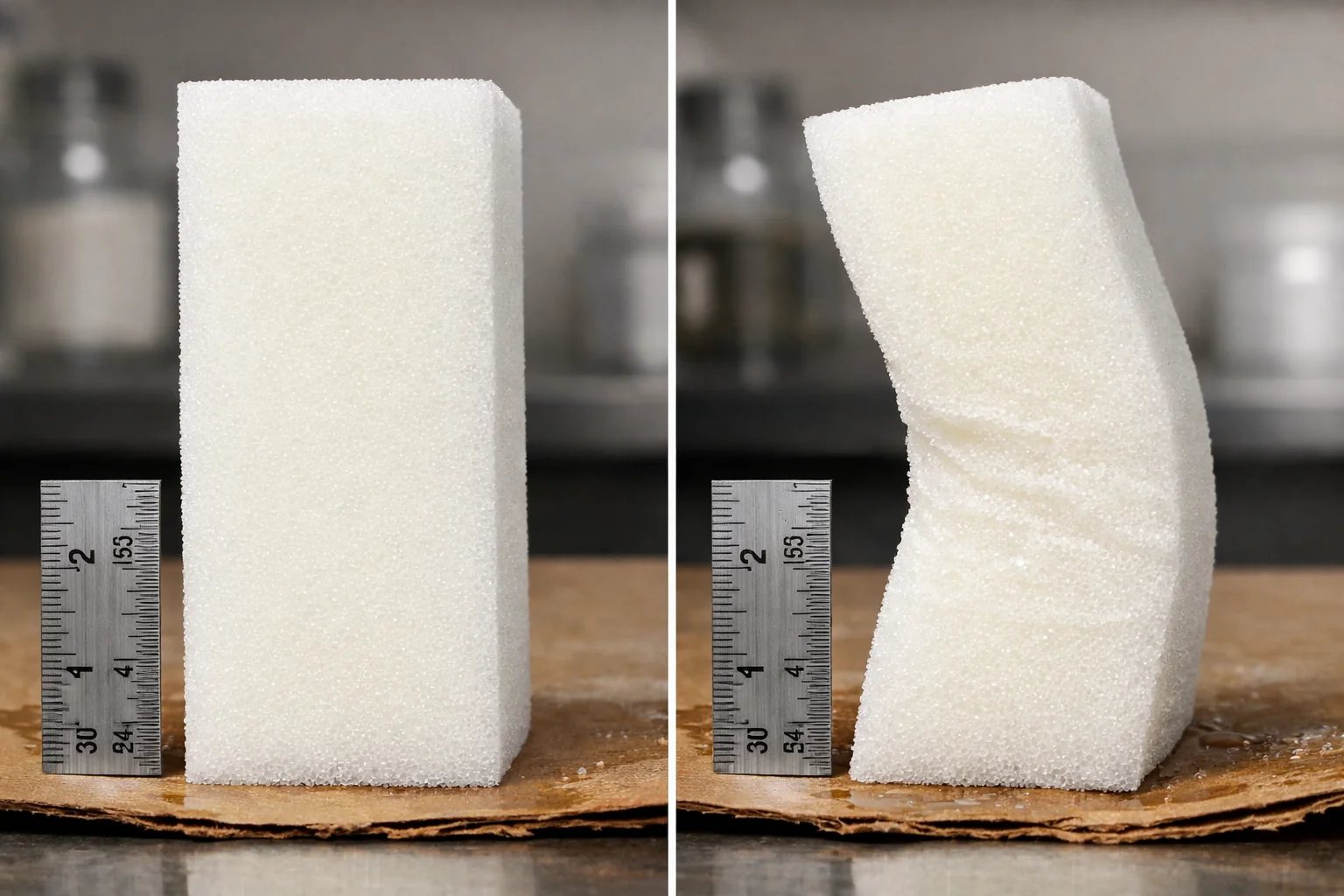
If you can get access to the actual foam insert in the store, this is the fastest, most honest little test I know, because it does not depend on how the cover is sewn or how thick the foam looks. Lower density foam often cannot even hold its own shape under gravity, and that is a bad sign for something that is supposed to hold you up every day.I ask to unzip the cover and pull out the main seat foam block, or at least have the salesperson do it. Then I take that foam block and stand it on its edge vertically, like I am trying to make a little foam wall, and I let go.
If the block immediately starts to droop, arc, or fold over on itself, I treat that as the “wet cardboard” moment. In my experience that behavior usually lines up with low density foam, the kind that feels plush at first and then loses its fight quickly once an adult body starts sitting in the same spot.
What that droop is really telling you, in plain language, is that the foam is already giving up before you even sit on it. When foam does that, it tends to take a permanent set, meaning you get the classic butt crater that never fully rebounds. I have seen this show up fast, and if you sit there nightly, it can feel like it happens in a season rather than in years.
When the foam is decent structural foam, the same test looks boring. The block stands straight and stays straight, more like a firm panel than a floppy pad. That is what I want, because a floor sofa has no hidden frame to bail you out once the foam starts collapsing.
If you cannot access the foam, I still use the idea of this test as a conversation tool. I will literally ask, “Is the seat foam dense enough to be structural, or is it the low density kind that would droop if I stood it on edge?” If the salesperson cannot answer, or they try to change the subject to fabric or stitching, I take that as another sign the inside is not the selling point.
The “Hinge Crease” Phenomenon
A foldable floor sofa has a special failure mode that regular sofas mostly avoid, because you are repeatedly bending the same chunks of foam to sharp angles. Every fold is basically you asking the foam to behave like a hinge, even though it is not built like a hinge.
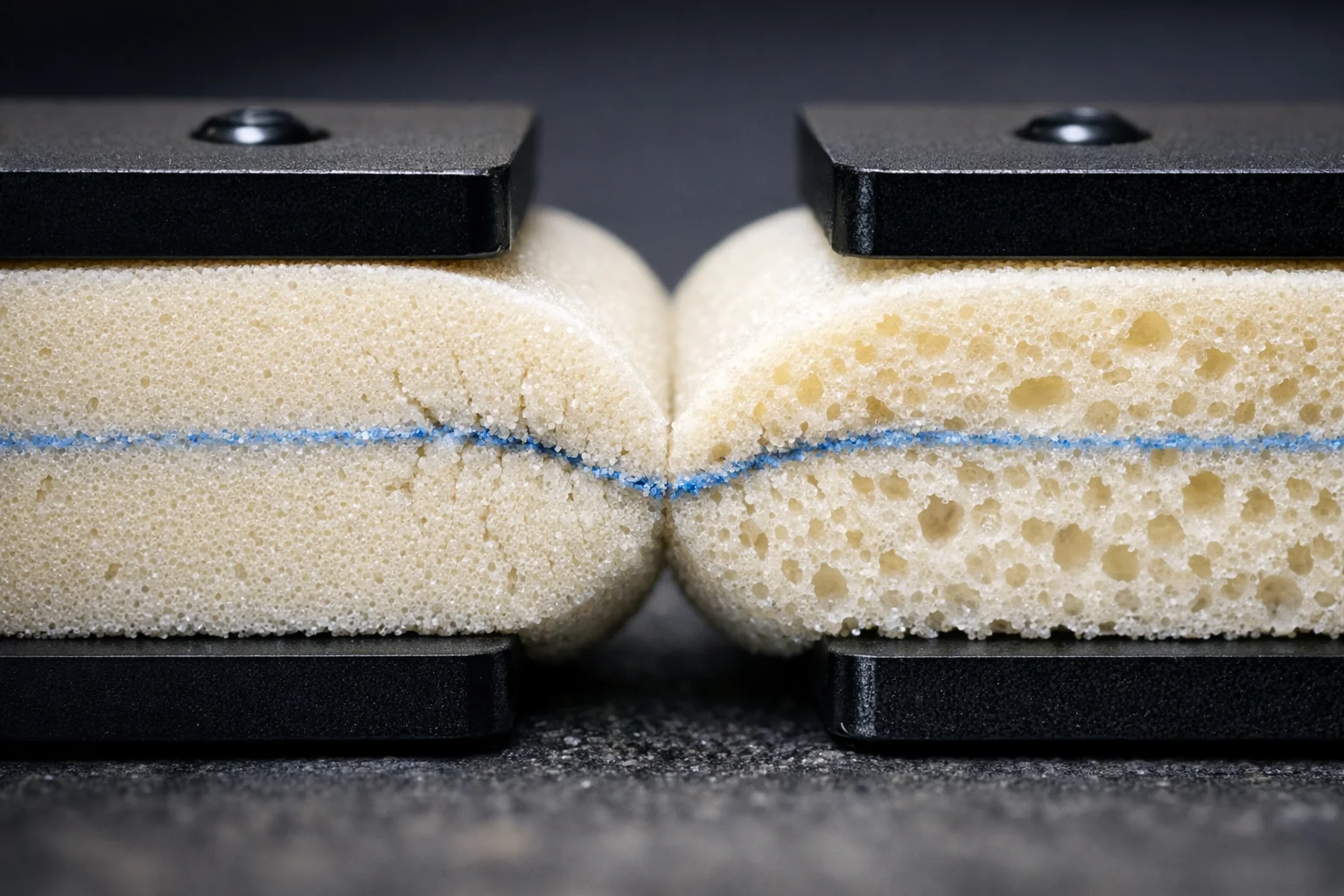
What happens inside the foam is simple enough to picture. On the outside of the bend, the foam cells are getting stretched, and on the inside of the bend they are getting crushed. Do that over and over and cheap foam starts to fatigue, meaning it stops acting like a springy structure and starts acting like something that wants to stay creased.
When it fails, you usually see it as a permanent line right where the sofa folds, and you feel it as a valley across the bed surface. I have had this happen where the sofa still looks “fine” from across the room, but the moment you lie down you can feel your spine wanting to settle into that dip, and it only gets more obvious with time.
In a showroom, I do two very specific things to hunt for this before I buy. First, I fold and unfold it several times myself, even if it feels a little awkward, and I watch the hinge area like a hawk. If I can already see a tendency for a crease to print into the foam through the cover, or if the fold line looks sharper and sharper after a few cycles, I take that as an early warning.
Second, I run my hand flat across the “bed” surface after it is laid out. I am not just checking softness, I am checking for a change in height right at the fold line. If my palm drops into a shallow trench at the hinge, or if the surface feels like two higher pads with a lower channel between them, I assume that channel will become your permanent valley once the foam gets tired.
This is where the foam type matters, not just the density number. If you want to reduce hinge creasing, I personally look for HR, which is high resiliency foam, because it behaves less like a uniform sponge and more like a messy network of little springs. The practical payoff for you is that it resists forming one dominant crease line, so the hinge area is less likely to turn into a single sharp break that you can feel through a sheet.
You do not have to take anyone’s word for it, but you do have to ask the right question, because “high resilience” is also a phrase people toss around loosely. I ask, “Is the core foam HR, and is that written on the spec sheet or tag?” If they cannot show it in writing, I assume it is conventional foam and I shop accordingly.
If you are forced to choose based on feel alone, I treat a too-easy fold as a bad sign. If the sofa flops into its folded position with almost no resistance, that often means the foam is compliant in the exact way that makes hinge creases show up fast. A better one usually has a little fight in the hinge, not in a clunky way, just enough that it feels like it wants to return to flat rather than live in the bent shape.
The last thing I do is imagine my real routine and test that spot accordingly. If you will use it as a bed, lie down so your hips and lower back cross the hinge line, because that is where the valley will annoy you most. If you already feel a hint of a dip on a brand new floor model, I would not bet on it improving at home.
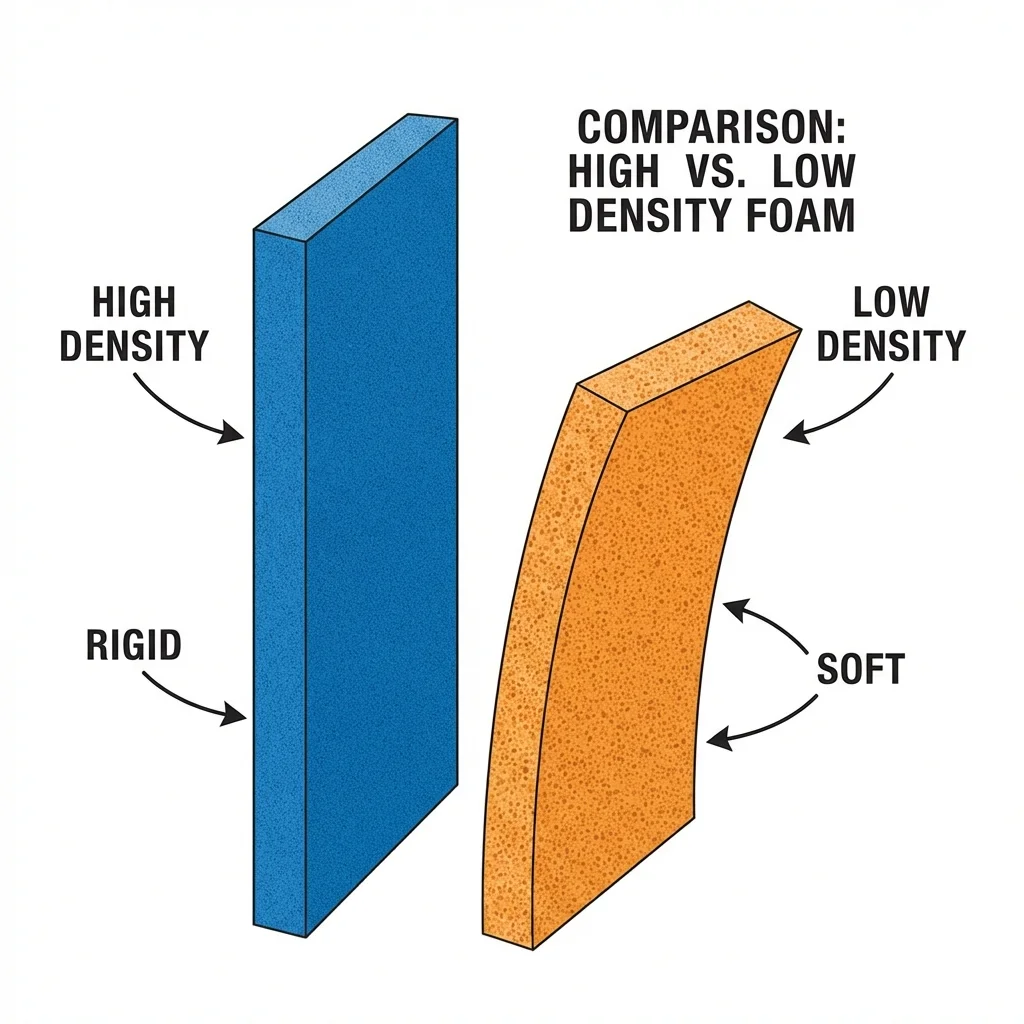
When you look at that diagram, what I want you to take away is that foam has a memory, just not the kind marketing means. If the foam cells get crushed and they cannot spring back, the sofa does not “wear in,” it just gets lower in the exact spot you use most.
This is what people mean by compression set, and it is the root of the butt crater problem. The foam is not just softer, it is permanently shorter, so you end up sitting in a dip even if the cover still looks tidy.
In a showroom, I try to force this behavior to show itself while I am standing there. I press down hard with my palm, hold it for ten full seconds, then let go and watch the recovery. If it pops back quickly and cleanly, that is a good sign, but if it comes back slowly, or it looks like it never quite returns to level, I assume that same “never quite returns” becomes your permanent sag at home.
Then I do the same test with my knee because it concentrates force in a smaller area, which is closer to what hips do. I put my knee into the main sitting zone near the hinge line, hold for a moment, then get off and run my hand over the spot. If I can feel a little dish right away, even a subtle one, I treat that as the foam telling me who it is.
The trick is to separate initial plushness from long term support. Low density foam can feel welcoming on the first sit because it collapses easily, but that easy collapse is often the same mechanism that leaves the cells flattened and tired.
I also pay attention to whether the dip I create “prints” through the upholstery. If the cover shows a temporary dent that lingers, especially on a brand new floor model, it usually means the foam underneath is doing the lingering too.
If you are comparing two models side by side, this is one of the few times I actually like a slightly boring feel. The one that feels a bit more resilient and “pushes back” tends to be the one that stays closer to its original shape, which matters a lot when there is no frame and no springs to pick up the slack.
If the salesperson tells you it is normal for foam to soften, I agree, but I follow up with the question that matters. I ask whether it is expected to soften evenly or to take a set in the main sitting area, because even softening can be fine, but a set becomes a permanent geometry problem you feel every day.
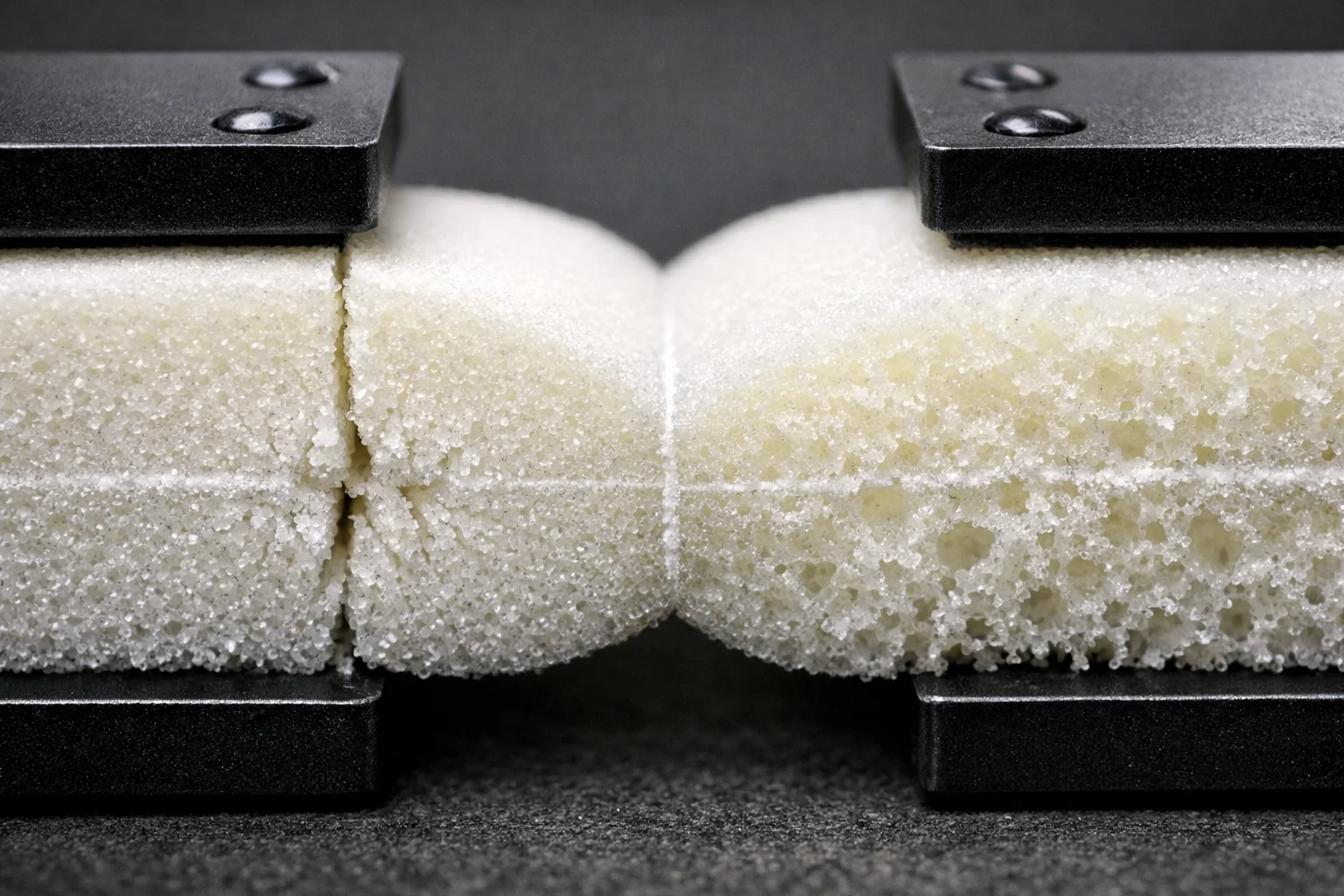
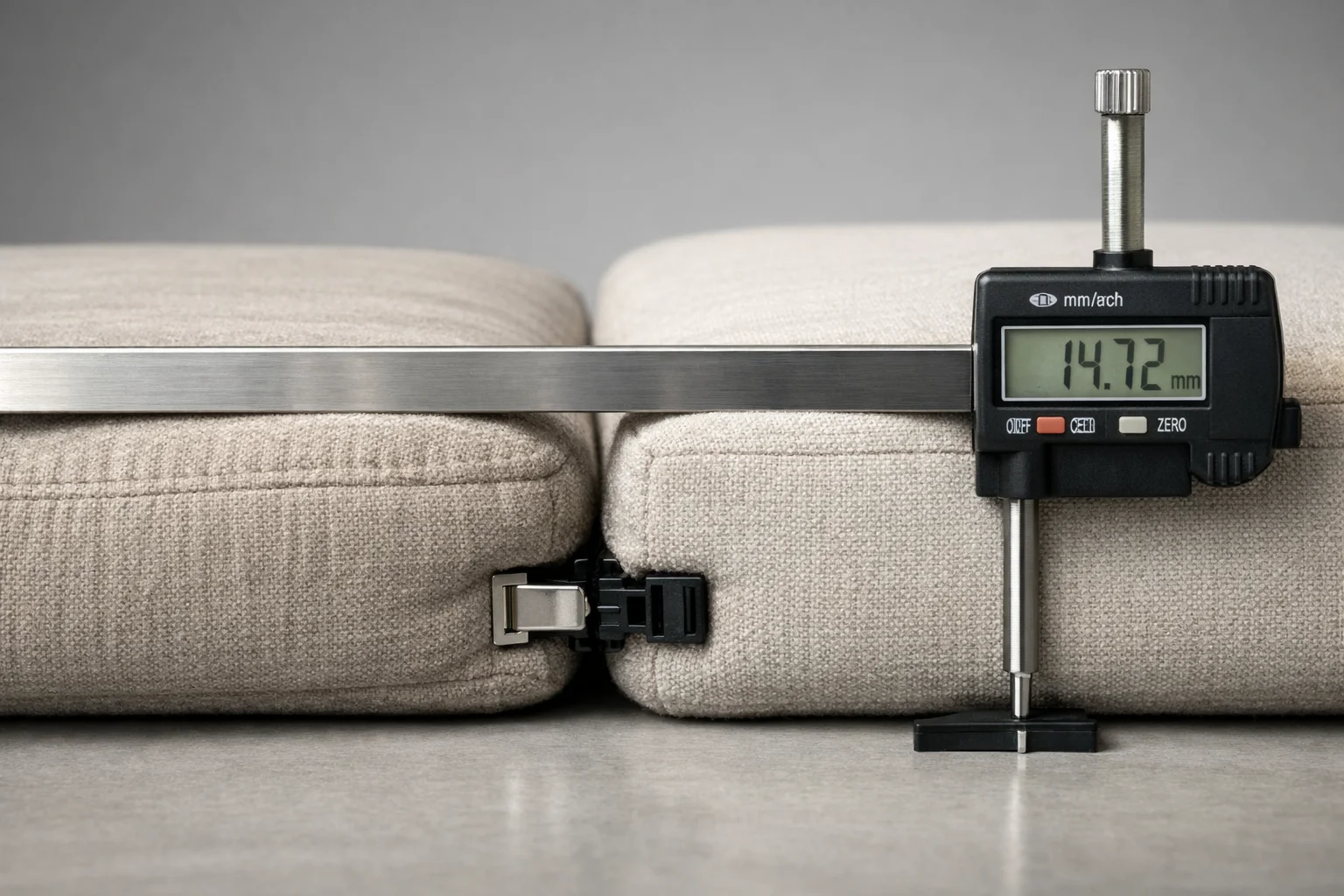
That close up is basically the whole floor sofa story in one picture. Standard foam likes to fold along one neat line, and once it learns that line it keeps it, which is how you end up with a permanent valley exactly where you do not want one.
When I am in a store, I try to make the hinge “confess” early. I fold the sofa into its seated position, then I press right on the hinge line with my palm and roll my hand across it, like I am trying to smooth out a crease in fabric, and I pay attention to whether the fold wants to stay sharp. If it feels like it is developing a definite edge that does not want to relax back into a broad curve, I assume that edge becomes your long term dip.
Then I do something that feels a little silly but has saved me from bad buys. With it laid flat, I place one hand on each side of the hinge line and gently tug the surface in opposite directions through the cover, almost like I am trying to “open” the foam at the fold. Better foam will feel like it is resisting evenly across a wider band, while cheaper foam often feels like everything is happening on one narrow line, which is the line that later becomes the trench.
If the model has multiple fold segments, I check every hinge, not just the main one. A lot of these look fine when new because the cover is pulling everything into a clean shape, but the weak hinge will show up as the first spot that goes slightly low, and once one section goes low you start compensating with your posture without realizing it.
This is also where HR foam, when it is real HR foam, tends to earn its keep. In plain language, it bends less like a sheet of sponge and more like a thicker, springier web, so the strain spreads out instead of concentrating into one crease. In the showroom that often shows up as a hinge area that stays rounded after you fold and unfold it, rather than snapping into a single fold line.
If you cannot get any internal details, I fall back to a simple decision rule: I avoid any floor sofa where I can already feel a “gutter” at the hinge when it is brand new and laid flat. Even if the rest of it feels comfortable, that one geometry problem is the one you will feel every time you sleep on it, and in my experience it gets worse, not better.
If the salesperson tries to reassure you by saying the cover will “hold it together,” I ask them to let me see the sofa laid flat with no throw blanket and no extra topper. Fabric can hide a lot, but your hand sliding across the hinge line usually finds the truth in about two seconds.
Use a “Sacrificial” Layer
Use a "Sacrificial" Layer
If you are going to use a foldable floor sofa for daily sleeping, I would plan on adding a 2 inch memory foam topper from day one. I treat it like a replaceable wear part, not a luxury add on.The logic is simple. Your hips create a sharp, concentrated load, especially when you sleep on your side, and that point load is what beats up the structural foam fastest, right where the hinges and valleys are already trying to form. A topper takes the first hit and spreads that pressure out, so the core foam underneath does less “cell crushing” night after night.
The economics matter more than people like to admit. If a cheap topper gets gross, loses its bounce, or starts to feel hammocked, I would rather replace that than discover that the sofa itself has taken a permanent set. In my own experience, replacing a relatively inexpensive topper on a schedule is far less painful than trying to “fix” a floor sofa once the main foam has collapsed, because you cannot rotate away a hinge valley.
In a showroom, I actually test with this in mind. I lie down and ask myself, “Does this feel like it needs a topper to be tolerable, or does it feel structurally supportive already?” If it only feels good because it is soft, and I can already sense my hips sinking lower than the rest of me, I assume the topper will not be a magic shield, it will just delay an inevitable crater. If it feels supportive but a bit firm or hinge noticeable, that is the situation where a topper makes the most sense, because you are improving pressure relief without asking the topper to do the structure’s job.
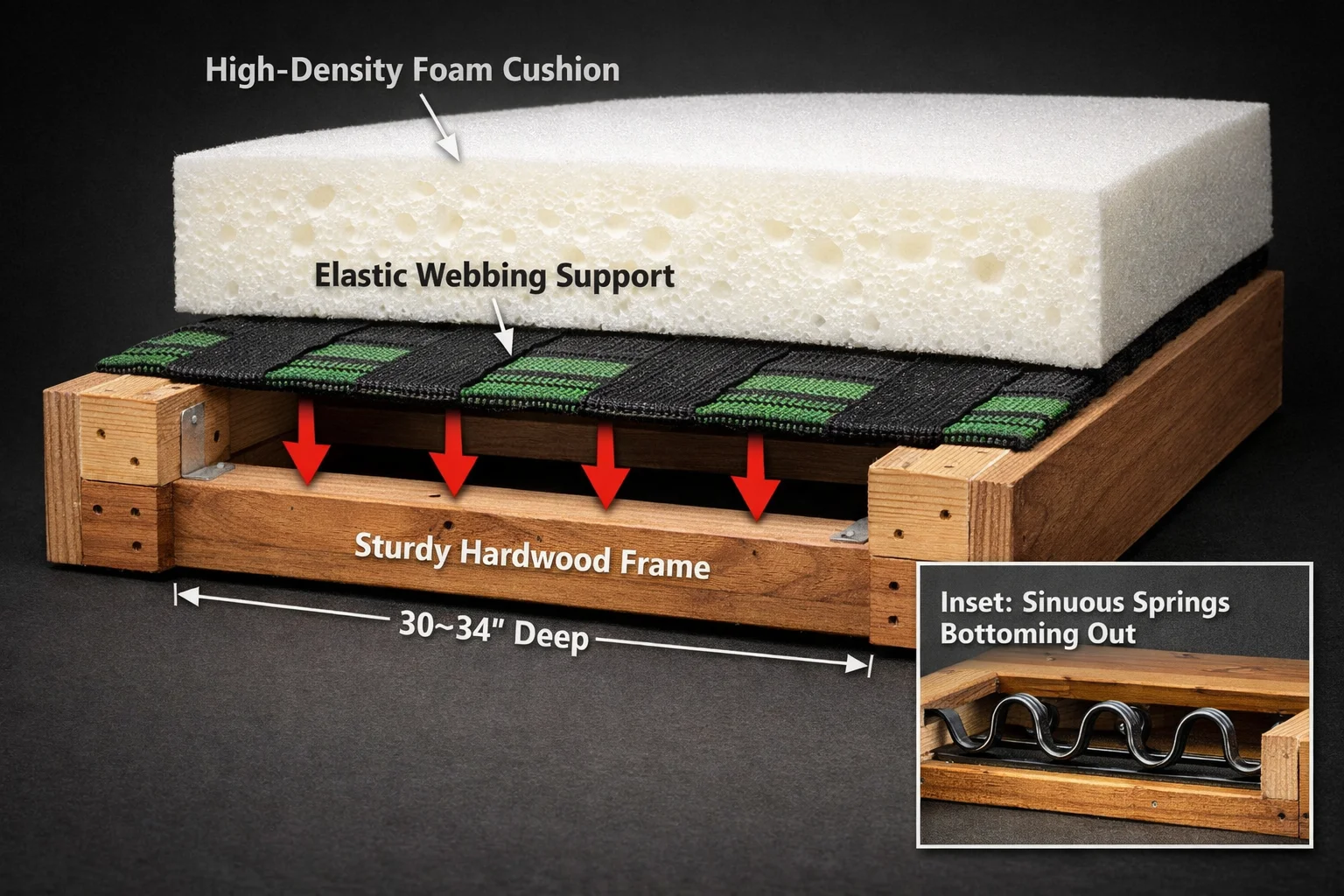
Even though this article is mostly about floor sofas, I want you to recognize this failure pattern because you will run into it the second you look at any sofa that has a wood base, a wedge corner block, or legs that are not directly under the load points. This picture is what “it looked sturdy in the showroom” turns into, because the joint hardware ends up doing a job it was never meant to do.
The plain language version is that the corner of a sofa wants to push downward and sideways at the same time when you sit near an arm, flop into a corner, or use the arm to stand up. If there is no real leg directly under that corner, the screws, staples, or little metal brackets become the thing resisting that sideways force, and over time they loosen, shear, or wallow out the wood.
When you are in a showroom, I stop thinking about pretty legs and start thinking about where the weight actually goes. I kneel down and look under the front corners, and I am looking for a leg or a solid support point that is truly under the corner area, not a leg that is pulled inward for style while the corner is hanging out in space.
Then I do a test that tells me more than a sales pitch ever will. I sit on the very front corner of the seat, close to the arm, and I gently rock my weight a little, not violently, just like real life. If I feel any clunk, click, or shifting, or if the arm and seat feel like they are twisting relative to each other, I assume the corner joint is taking shear load and it is going to get worse.
I also pay attention to how the sofa lifts. If you can easily lift one front corner off the floor with one hand, that can be a sign the base is light and flexible, which makes those corner joints work harder every time someone drops into it. A heavier, more rigid base usually feels boring in the store, but it tends to stay square longer.
If the store will let you, I like to do a quick “leg alignment” sanity check by placing my fingers around the leg where it meets the frame and pushing sideways very lightly. I am not trying to break anything, I am trying to see if the leg feels like part of a rigid structure or like a post screwed into something that can flex.
What I do not let myself be talked into is “corner blocks” as a magic phrase. Corner blocks are fine when the load path makes sense, but if the design asks the fasteners to resist sideways force because the corner is not supported from below, that is exactly when corner blocks still loosen and you get the familiar sag and wobble that makes a sofa feel old long before the fabric looks worn.
If you are trying to decide quickly, here is the decision rule I actually use. If the front corner feels like a stable column straight down into the floor, I relax a bit. If the front corner feels like a lever that is trying to twist the whole frame, I walk away, because that kind of looseness rarely stays “minor” once it has a year of normal sitting on it.
Lifespan by Usage Profile
This is the part I use to match the sofa to your real life, because foam wear is not about what you hope you will do with it. It is about how often the same spot gets loaded, and how long it stays loaded, especially when you sleep on it.
If you are truly an occasional guest user, meaning it comes out a few weekends a year and otherwise sits there looking tidy, even lower density foam around 1.8 lb can sometimes limp along for five to seven years before it feels obviously sad. With better 2.5 lb foam, this is the rare scenario where you can realistically see a decade or more, because you are not grinding the foam down with repetition.
If your reality is weekly movie night, where one or two people sink into the same seat zones for a few hours every week, I mentally shorten the timeline a lot. This is where 1.8 lb foam often feels “fine” at first, then you hit that two to three year mark and the main sitting spot starts to feel lower, softer, and more ditch shaped than the rest. With 2.5 lb foam I still do not assume it is forever, but five to six years is a much more believable window before you start noticing the geometry changing.
If you are thinking daily sleep as your primary bed, I want you to go into it with your eyes open because this is brutal on foam, especially in foldable designs with hinge lines. In that use case, 1.8 lb foam commonly falls into the eight to twelve month range before you start feeling the hinge valley and the hip crater as a nightly problem. Even 2.5 lb foam is usually more like one and a half to two years before it starts losing the “flat bed” feeling, unless you are small, you rotate how you lie, and you use a topper consistently.
When you are standing in a showroom, the practical way to use these numbers is to force the salesperson into the usage conversation. I will literally say, “I am going to use this for weekly lounging,” or “I am going to sleep on this every night,” then I ask what foam density it uses and whether the warranty treats sleeping as normal use. If they get vague, or if they act like daily sleep is the same as occasional sitting, I assume you are about to pay for a short lifespan with a long set of excuses.
I also try to listen to how the sofa is being sold to you. If the pitch leans hard on softness, cloud feel, and “plush,” and you are planning daily sleep, I take that as a mismatch unless they can back it up with higher density and ideally HR foam in writing. Plush can be fine for occasional use, but plush without structure is usually the fastest path to a permanent dip.
The last thing I do is decide what kind of failure I am willing to live with. If this is a guest piece, a little softening is not the end of the world. If this is your bed, a small permanent valley becomes back pain and bad sleep, so I would rather buy firmer and denser than I think I want on day one, then use that sacrificial topper to tune comfort while protecting the core.
Technical Maintenance: The "Recovery" Protocol
If you want the foam to last, you have to give it time to recover in the shape you actually want it to keep. I treat recovery like a habit, because once the foam gets trained into a bent or crushed position, it is very hard to convince it to unlearn that.The first rule I follow is I do not leave it folded when it is not actively being used in that folded shape. If I know I am done watching a movie and I will not be sitting on it again until tomorrow, I store it flat. When a floor sofa sits folded for weeks, especially in a warm room, the foam slowly adapts to that compressed geometry and the hinge area becomes the path of least resistance, which is exactly how you end up with the permanent valley later.
If storing it flat is inconvenient in your space, I at least avoid the tightest fold. I will leave it in the most open position I can manage, because that reduces how sharply the foam is being crushed at the hinge while it is “resting.”
The second habit is rotation, and I mean real rotation, not just fluffing the cover. About once a month, I flip the big blocks end to end so the spot your hips always find gets a break and a different zone takes the load for a while. No one sits perfectly centered every time, and floor sofas do not magically wear evenly, so if you never rotate you are basically choosing to dig one crater faster.
When you do this at home, pay attention to how the cover is cut. Some covers make rotation feel like you are fighting the seams, so I check before I buy whether the design will let me rotate the blocks without turning it into a 20 minute wrestling match. If the sofa is clearly designed so the inserts cannot be rearranged, I assume I will get uneven wear sooner and I factor that into what I am willing to pay.
The third habit is vacuuming, and I know that sounds fussy, but dust is not harmless inside foam. Over time it works its way in, and then every sit is like rubbing tiny grit through the cells, which speeds up that tired, crushed feeling. If the cover unzips and you can access the foam, I vacuum the foam surface lightly and I also vacuum the inside of the cover, especially around the hinge zones where debris collects.
If you are in a showroom and you are trying to predict whether this maintenance is realistic, I would literally check for a zipper and ask whether the foam is intended to be removable. If it is sealed shut and they expect you to treat it like a giant pillow you never open, I assume you will not be able to keep grit out of the parts that matter, and that pushes me toward buying higher quality foam up front.