Daybed Seating: The Edge Support Equation
Introduction
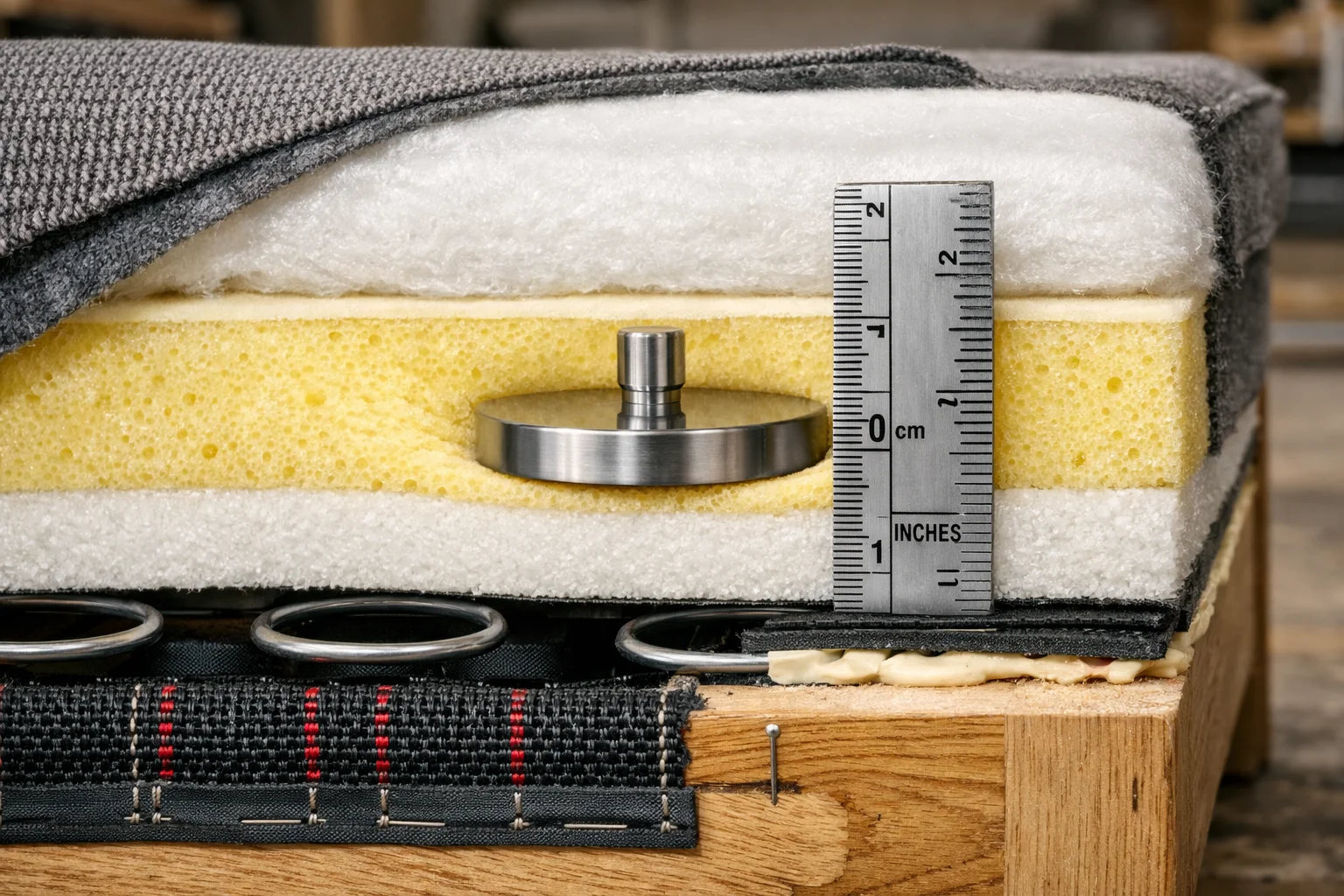
The biggest mistake I see in daybeds is when the whole thing is treated like a sofa with a mattress thrown on top, or a bed that is expected to behave like a sofa. A mattress and a sofa cushion can look similar in a showroom, but they are built for different jobs, and that mismatch is where a lot of disappointment starts.
When you lie down, your weight spreads out across a wide area, and the support system has time to “average out” pressure across your shoulders, hips, and legs. That is the job a mattress is designed around, horizontal weight distribution, with a big surface and a support core that keeps your spine from sagging.
When you sit, almost all your weight concentrates in two small spots, and it hits the seat in a more abrupt, focused way. That is what cushions and seating frames are designed to survive, point load resistance, with foams, springs, webbing, and frames meant to handle repeated localized stress without collapsing into a dip.
Here is the practical buying takeaway I want you to keep in your head while you shop. If the daybed is mainly for sitting, you should judge it like a sofa first, meaning you sit on it the way you actually will, for a few minutes, and you pay attention to whether the edge support holds you up and whether the seat “bottoms out” when you shift your weight.
If the daybed is mainly for sleeping, you should judge it like a bed first, meaning you lie on it in your normal position long enough to feel if your hips sink lower than your ribs, and you check whether the surface feels uniformly supportive or if you can feel the base through it.
If you want it to do both jobs well, I would not trust a quick sit test and a quick lie down. You need to notice whether the comfort you feel comes from thickness alone, or from actual support underneath, because thickness can hide problems for five minutes and then punish you after a month.
In the sections that follow, I am going to walk you through what I physically check in a showroom, using simple tests you can do without tools. The goal is not to become a materials expert, it is to spot the common shortcuts that turn a daybed into a saggy couch, or a hard, awkward bed that nobody wants to use.
The Physics of Point-Loading
The Physics of Point-Loading
When you sleep, your body weight is spread out over a big area, so the pressure on any one spot is surprisingly low. When you sit, that same weight concentrates into a much smaller area, mostly under your sit bones, and the pressure spikes dramatically.The result is that something soft enough to feel comfy for sleeping can still collapse when you sit, because it was never meant to take repeated, focused hits in the same two spots. In a daybed, that is when you start “bottoming out,” meaning the cushion or mattress compresses to almost nothing and you begin to feel hard frame rails or a stiff platform under you.
In a showroom, I treat point loading like a pass or fail test, because it predicts the exact complaint people make later, which is that the daybed felt fine at first, then quickly started feeling hard, lumpy, or like I was sitting on the frame.
When you test it, do not just perch politely in the center. Sit how you actually sit at home, then scoot forward a bit, shift your hips side to side, and take a minute to let the materials settle.
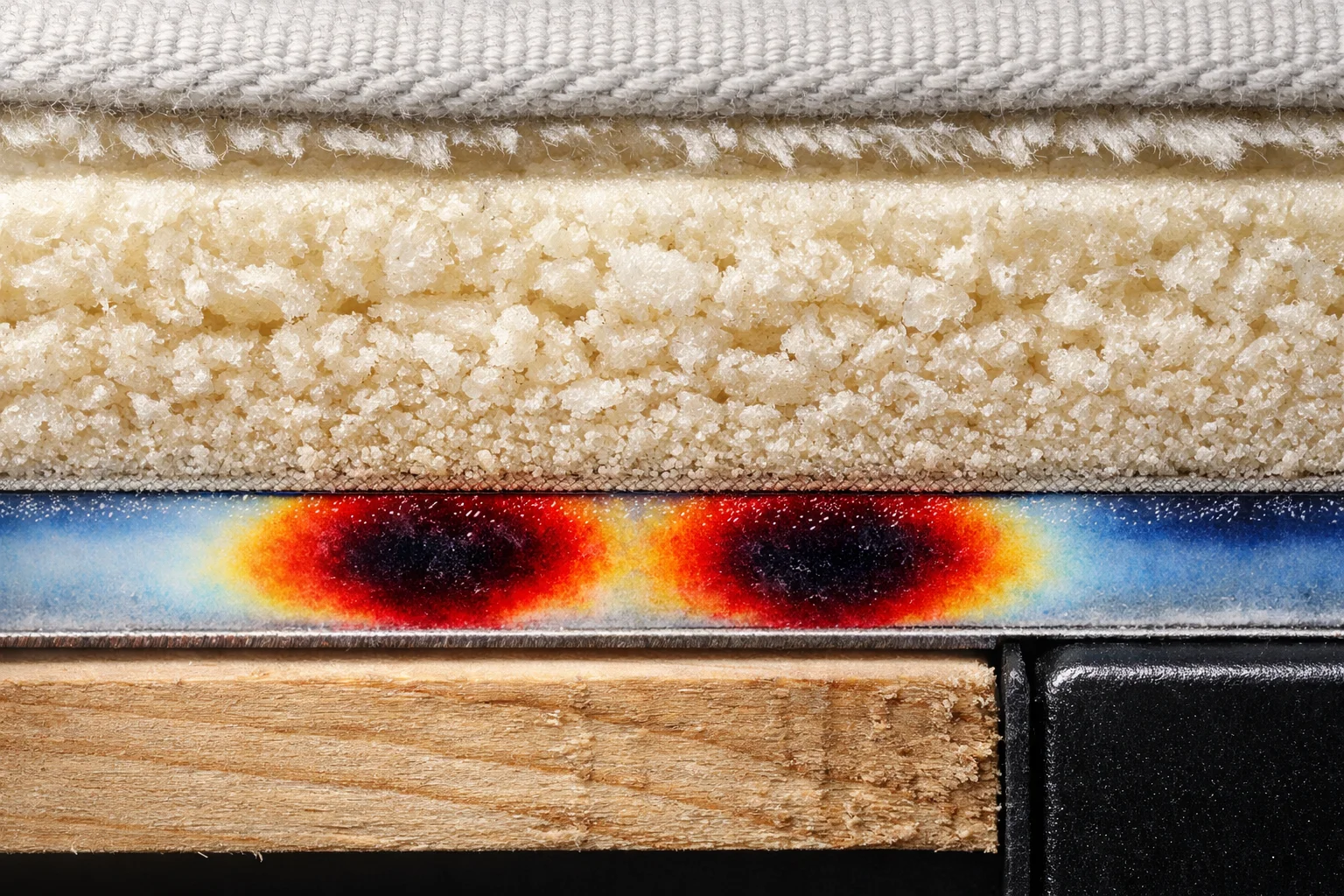
What I am paying attention to is whether the support “catches” you before you hit something hard. If you feel a sudden stop, a bar, a ridge, or a sharp change in firmness under one butt cheek, that is bottoming out, even if the top layer feels plush at first touch.
Then I do a very simple check with my hand. I press straight down with my palm where my sit bone was, not near the middle of an empty cushion, and I see if I can easily compress through to something firm and unforgiving. If my hand finds a hard layer quickly, your body will find it even faster.
Edge seating is another point loading trap. I sit near the front edge like I am putting on shoes, and I notice whether the edge holds me up or dumps me forward. If the edge collapses, it is not just annoying, it is telling you the structure and support are weak right where daybeds get used the most.
If the daybed uses an actual mattress, this is where I get extra suspicious of “it’s thick so it must be comfortable.” Thickness can mask a weak support core, especially when you are sitting, because the top compresses and you still end up interacting with the base. A mattress can be great for sleeping and still be a poor seat, and point loading is why.
If you feel that bottoming out sensation, you can sometimes solve it with a different setup, like adding a real seat cushion system on top, or using a daybed design that was built around sitting first. But if you are trying to buy one piece that works for both, I would not ignore this, because it usually gets worse with time, not better.
The “Edge Collapse” Problem
Most mattresses are built with the assumption that you will be lying near the middle, not sitting on the edge day after day. A lot of them use the same softness right out to the sides, which feels fine when you sprawl out, but it is a weak spot the moment you use it like a seat.
In a showroom, I do not just sit on the edge for a second and stand up. I sit near the front edge the way you do when you are putting on shoes, tying a lace, or perching to chat, and I stay there long enough for the foam or coils to finish compressing.
What I am looking for is that rolling, tipping sensation where the edge squishes outward and down, and my hips start sliding off the mattress. If that happens in the store, it usually gets more pronounced at home once the materials loosen up, and it makes the whole daybed feel smaller than it actually is because you stop trusting the perimeter.
You can also feel edge collapse with your hands. I press down with one palm about a hand’s width in from the edge, then I press right on the edge, and I compare how quickly I hit something firm. If the edge feels dramatically weaker than the area just inside it, that is the classic setup where the middle is comfortable but the perimeter behaves like a drooping lip.
If you are shopping a daybed that uses a real mattress, I would ask directly what the edge support is, because the marketing tags vary and the feel test is not always enough in a bright showroom. What you want to hear is that there is some kind of perimeter reinforcement, usually described as high density foam rails around the outside, or a coil system that uses reinforced edge coils to create a sturdier ring.
The reason I care about that wording is simple. A reinforced perimeter acts like a stiff box around a softer center, so when you sit near the edge your weight gets held up instead of spilling outward, and you stay level rather than feeling pitched forward.
If the salesperson cannot tell you anything beyond “it’s all foam” or “it’s the same all the way across,” I treat that as a warning sign for daybed use. A uniform, soft edge is not automatically a bad mattress for sleeping, but it is a common reason a daybed feels insecure and sloppy as a seat.
One more thing I check is whether the edge support stays stable when I shift my weight. I lean slightly left, then right, and if the edge folds and rebounds like a trampoline border, that usually means the perimeter is not doing much structural work, it is just more comfort foam pretending to be support.
If you find a daybed you like but the edge feels questionable, I would rather you find a different mattress option with real edge reinforcement than try to “fix it” later with a topper. A topper can make the surface softer, but it cannot create that firm perimeter that keeps you from sliding off when you sit.
ILD: The Secret Number
If you are trying to make one daybed do double duty, ILD is one of the only foam numbers that actually helps you shop smarter. ILD is basically how hard you have to push to compress the foam a set amount, so higher ILD usually means a firmer, more supportive feel, and lower ILD usually means softer and easier to squash.
What I have learned the hard way is that “soft and comfy” in the showroom often means “collapses into a dip” after a few months of sitting in the same spot. A very soft, standard mattress type foam is often in the rough range where it feels great for sleeping at first touch, but it is the kind of foam that can bottom out fast when you use it like a seat every day.
For a daybed that is going to be sat on like a couch, I start getting interested once the foam is in a more supportive seating range. That is the neighborhood where you are less likely to feel the platform, slats, or frame rails through the cushion, and where the seat is more likely to keep its shape instead of forming that permanent “butt crater.”
If you are trying to split the difference so it is still friendly for side sleeping but does not fold up under you when you perch and chat, I look for the compromise zone in the mid range. In plain terms, I want it firm enough that your hips do not punch through when you sit, but not so firm that your shoulder and hip feel jammed when you lie on your side.
Here is how I actually use ILD in a showroom without turning it into a homework assignment. I ask one direct question, which is what ILD the foam is, and I then ask whether that ILD applies to the main support core or just a thin top layer. If they cannot tell you, I treat any “plush” description as marketing, and I go back to your sit test and your hand press test, because the foam is not going to get firmer after you buy it.
If they do give you a number, I mentally sort it into three buckets. If it is down in the very soft mattress zone, I assume it will be nicer to lie on than to sit on, and I become extra picky about bottoming out and edge collapse. If it is up in the supportive seat cushion zone, I assume it will behave better for sitting, and I pay more attention to whether it feels too firm for your sleeping position. If it lands in the middle compromise zone, I treat it as a good sign for a true daybed setup, then I still test it, because ILD alone does not guarantee durability.
One important catch that salespeople sometimes gloss over is that ILD is not the same thing as quality. I have sat on foams that felt firm enough on day one, then got mushy and lumpy because the foam was low density or cheaply made. So if you hear an ILD number, use it as a clue about feel and support, not a promise about how long it will last.
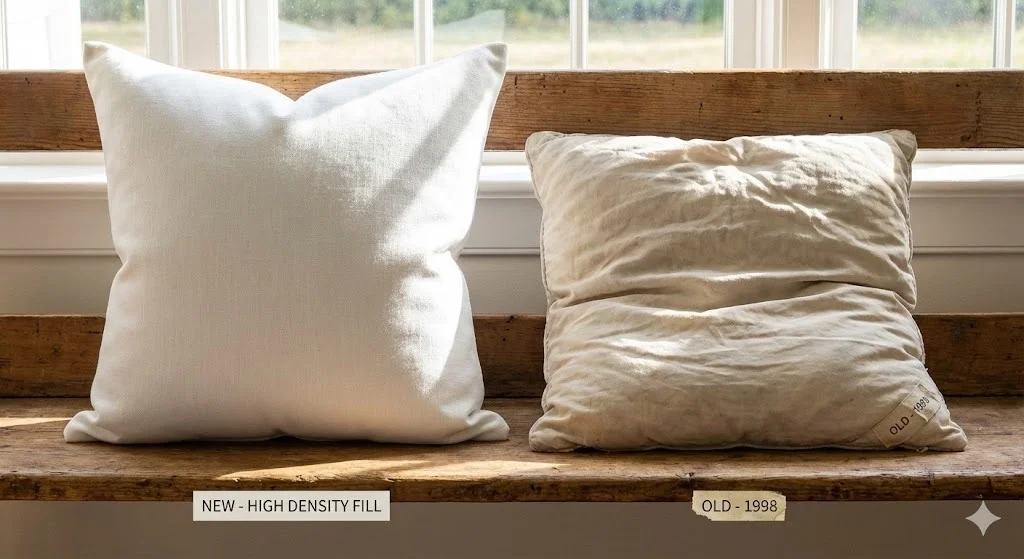
That edge diagram is the exact reason I tie ILD back to how the perimeter behaves when you sit. A soft foam that is fine in the middle can still fold on the edge because the edge is taking a concentrated load, and without reinforcement it has nothing to brace against.
If you can get an ILD number but you cannot get a straight answer about edge reinforcement, I do one more real world test. I sit near the edge, then I stand up and immediately sit in the exact same spot again, and I notice whether the second sit drops farther than the first. If it does, that tells me the foam is quick to fatigue under repeated point loads, which is exactly what daybed seating is.
If all of this feels like a lot, keep it simple when you are deciding. If your daybed will be used like a sofa most days, do not let a very soft foam talk you into it just because it feels plush for thirty seconds. If your daybed will be used like a bed most nights, do not let a very firm seat foam talk you into it just because it feels “supportive,” because your shoulder will be the one arguing with you at 2 a.m.
The "Knee-High" Height Calculation
This sounds almost too basic, but seat height is one of the fastest ways a daybed setup turns into something you avoid using. In most seating, that “normal” target is around 18 inches from the floor to the top of what you actually sit on.In the store, I do the simple math in my head before I even sit down. If the daybed frame is about 12 inches off the floor and you put a 6 inch mattress on it, you might think you have nailed that 18 inch target.
The trap is that you are not sitting on a 6 inch mattress, you are sitting on whatever thickness is left after it compresses under your hips. A soft 6 inch mattress can squish down to more like 3 inches when you sit, which effectively drops your seat height to around 15 inches, and that is the “knees in your chest” feeling people complain about.
The way I check this in a showroom is practical and a little blunt. I sit all the way back like I would to watch TV, then I look at where my knees land relative to my hips. If my knees are clearly higher than my hips and I feel my pelvis rolling backward, I assume the seat height is too low for real daily sitting, even if it felt cozy for ten seconds.
You can also feel the low seat problem in your thighs. If the front edge is not supporting much of your thigh and most of your weight feels jammed into your sit bones, that is often a height and compression issue, not just a firmness issue.
If you are building the setup with a mattress, I plan for compression from the start. That usually means I would rather see an 8 to 10 inch mattress than a thin 6 inch one, because you are buying enough material to lose a few inches to sitting without falling into that low, slumped posture.
One more nuance I wish someone had told me earlier is that “thicker” only helps if the thickness includes real support, not just extra soft top feel. When you sit, the top comfort layer disappears first, so I care less about a pillow top look and more about whether the mattress still holds you up at a reasonable height after a full minute of sitting.
Technical Buying Specs for Daybeds
When I am trying to sanity check a daybed build quickly, the first technical spec I care about is foam density, not just “firm” or “soft.” If the daybed has a foam core that is doing real work, I want the foam core to be at least 1.8 lb per cubic foot, because below that is where I have personally seen foam start to feel tired and dish out faster under daily sitting. In the store, I ask for the density of the support core specifically, and if they only know the density of a thin top layer, I treat that as a non answer because the core is what gets punished by point loading.If they cannot give you a density number at all, I fall back to a durability style test you can do with no tools. I press down hard with my palm where you would actually sit, then I release and press again, and I pay attention to whether the foam rebounds cleanly or if it feels a little lazier on the second press. That slower rebound, especially right under the sitting zone, is not a lab result, but it often matches the kind of foam that starts feeling packed down after a few months.
The next spec I look for is edge support, and I mean real perimeter reinforcement, not just “it’s comfy all the way to the edge.” For a daybed, I want to hear that the perimeter is either foam encased, meaning there are firmer foam rails around the outside, or that the coil unit uses a reinforced edge, which is usually described as a higher gauge wire or firmer edge coils. If you cannot get a clear description of what is holding up the perimeter, I assume the edge is just more of the same comfort material, and that is when you get that sliding off feeling once you live with it.
In the showroom, I confirm edge support with one very specific sit. I sit on the front edge with most of my weight on the outer third, then I shift forward like I am about to stand up. If the edge squashes outward and I feel like I have to brace with my feet to keep from scooting off, that is not a small comfort issue, it is telling you the daybed is going to feel smaller and less usable over time.
Finally, if you are choosing a mattress type for a daybed that will be used for sitting, I generally trust hybrids more than all foam. The springs provide the push back that makes a seat feel lively instead of swallowed, and they tend to keep you from feeling like you are sitting in a crater after the materials warm up. In plain terms, a hybrid is more likely to feel like a seat after ten minutes, not just like a soft rectangle you sink into.
That does not mean every hybrid is automatically good, because you can still get a weak edge or too much squishy foam on top. But if you are stuck between an all foam option that feels nice for sleeping and a hybrid that feels slightly firmer when you perch, I usually side with the hybrid for a real daybed, because that “push back” is what keeps the piece from turning into a saggy hangout spot that nobody chooses first.
Explore Technical Reference

Futons: The Engineering of Simplicity
A technical breakdown of the futon variant. Understanding bi-fold frames, cotton batting compression, and why they are the most honest convertible furniture.
Analyze Details →
Mechanism Maintenance: The Physics of Friction
Why your recliner is squeaking and how to fix it. The rule of Silicone
Analyze Details →