Futon vs. Sofa: The $300 Student Choice
Introduction
I have been burned by cheap seating more times than I want to admit, and it always started the same way. I stood in a bright showroom, sat down for ten seconds, and told myself it felt fine. A year later the cushions were dead, the frame was groaning, and I was shopping again.
When you have about three hundred dollars, the choice usually looks simple. You can buy a brand new sofa that looks grown up, or you can buy a plain metal futon that looks like a compromise. What I learned the hard way is that one of these is usually built to survive abuse, and the other is built to survive the sales floor.
I am not here to tell you what looks best in your room. I am here to help you avoid buying something that collapses into a sagging mess once real life starts. Real life means sitting in the same spot every night, friends plopping down hard, and nobody flipping cushions or treating it gently.
This guide is about learning how to see past fabric and price tags. I want you to know what to touch, what to lift, and what to ignore when you are standing in a store. If you do that, you can walk out with something that is boring but solid instead of stylish but disposable.
I wish someone had explained this to me before I spent money I did not have on seating I had to replace almost immediately. If you are furnishing a dorm or a first apartment, durability matters more than almost anything else. Comfort that lasts is not an accident, and you can spot it if you know where to look.
The "Cardboard" Sofa
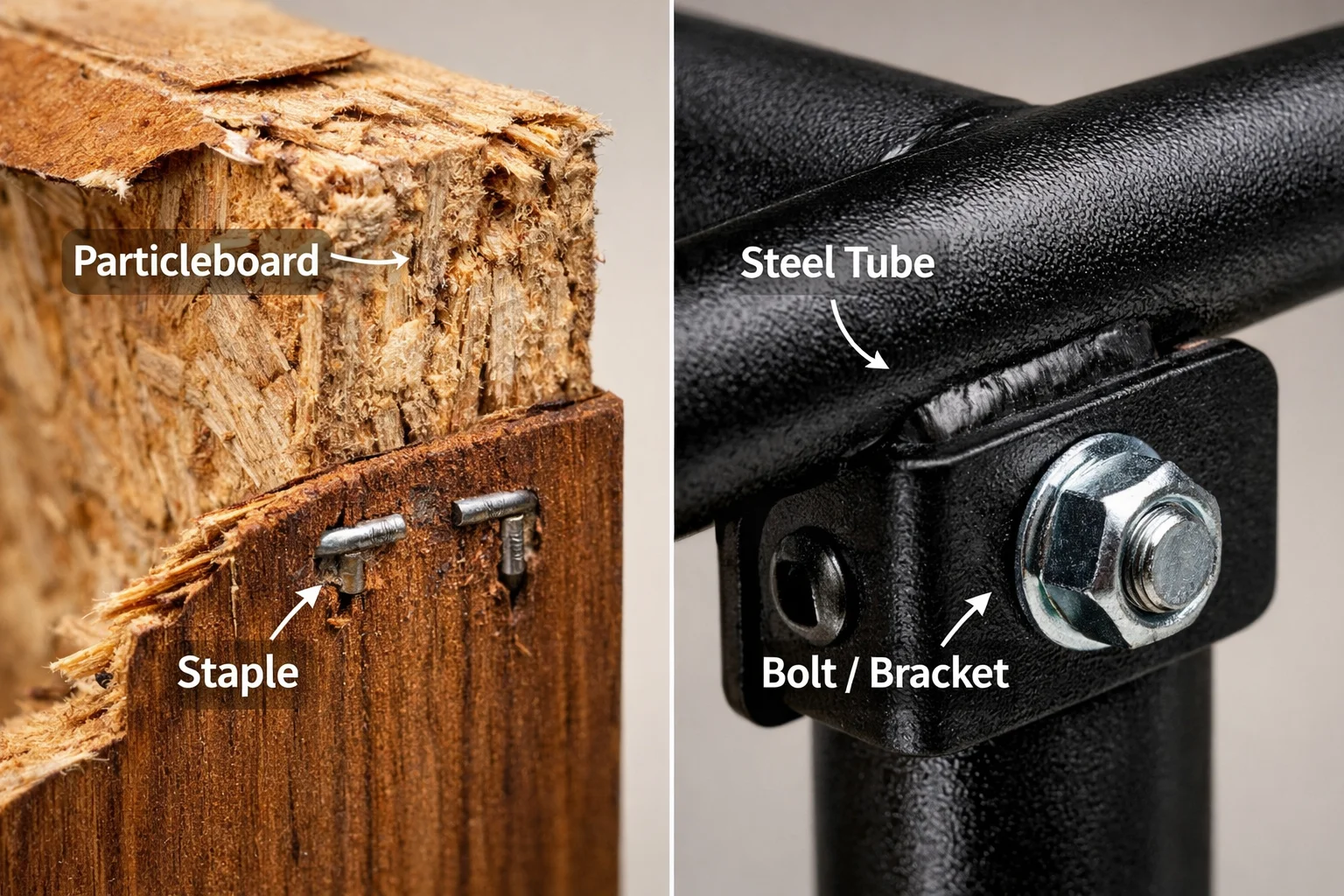
I call this the cardboard sofa because once you understand how it is built, the name sticks. When you see a brand new sofa priced around three hundred dollars, I want you to assume it is not designed to survive real use by real people.The frame is usually made from thin particleboard panels that are about as strong as compressed sawdust. They are held together with staples instead of screws or bolts, which means the joints rely on friction and hope rather than structure. You cannot see this from the outside, and the fabric is often chosen specifically to distract you from it.
The failure is sudden and final. Two people sit down at the same time, or someone drops into the seat instead of easing down, and you hear a crack that makes your stomach sink. Once the particleboard splits, there is nothing solid left to attach a repair to, so even a skilled repair would cost more than the sofa.
The reality is that these sofas are disposable by design. They are made to look acceptable on a showroom floor and to survive delivery, not to survive a semester of movie nights and friends. I have owned one, and it did not even make it to the end of a lease.
When you are in a store, you can spot this kind of sofa if you know what to do. I always lift one corner of the sofa a few inches off the ground. If the whole thing twists easily or feels suspiciously light, that is a bad sign. I also reach under the front edge and feel for solid wood rails. If my fingers meet thin panels or sharp staple ends, I walk away.
If the salesperson tells you it is perfect for students or a starter apartment at this price, translate that in your head. What they usually mean is that it is cheap enough that you will not complain too loudly when it fails. I learned to stop arguing with that logic and simply not buy into it.
If your budget is tight, I would rather you buy something honest and simple than something pretending to be a real sofa. A cardboard sofa costs you more in the long run because you pay for it twice, once at the register and once when you replace it.
Why the Futon Wins (Physics edition)
When I stopped judging furniture by how it looked and started judging it by how forces move through it, the futon finally made sense. This is not about style or nostalgia. It is about reducing the number of ways a piece of furniture can fail in your apartment.
Structural simplicity
A cheap sofa is complicated in all the wrong ways. Inside it are springs tied together, webbing stretched tight, thin wood rails stapled at odd angles, and foam glued to foam. Every connection is a place where stress concentrates when you sit down in the same spot every night.
A basic futon frame is almost boring by comparison. It is usually a metal tube connected to another metal tube with a bolt. When you sit on it, the load travels straight down through the frame into the floor instead of twisting through a maze of parts.
When you are in a store, grab the futon frame and shake it a little. You are not testing for silence or elegance. You are checking that the frame moves as one unit and does not rack diagonally. If it feels stiff and heavy for its size, that simplicity is doing its job.
Disassembly and moving reality
I have lost more money to moves than to daily wear. A sofa that cannot come apart is a gamble every time you change apartments, because stairwells and door frames do not care how much you paid.
Most sofas are built as a single rigid box. If it does not fit, you are stuck selling it cheap or abandoning it on the curb. I have been there, staring at a sofa wedged halfway up a stair turn.
A futon breaks down into flat, awkward but manageable pieces. You can carry them yourself, load them into a small car, or even split the cost of a ride with a friend. In a showroom, ask how it comes apart and watch how fast the salesperson can explain it. If disassembly sounds simple, it usually is.
Mattress hygiene and replaceability
This is the part nobody talks about until it is too late. Spills, sweat, and general life soak into upholstered sofas and stay there. Once liquid gets into the foam core, you cannot really clean it. You can only cover the smell and hope.
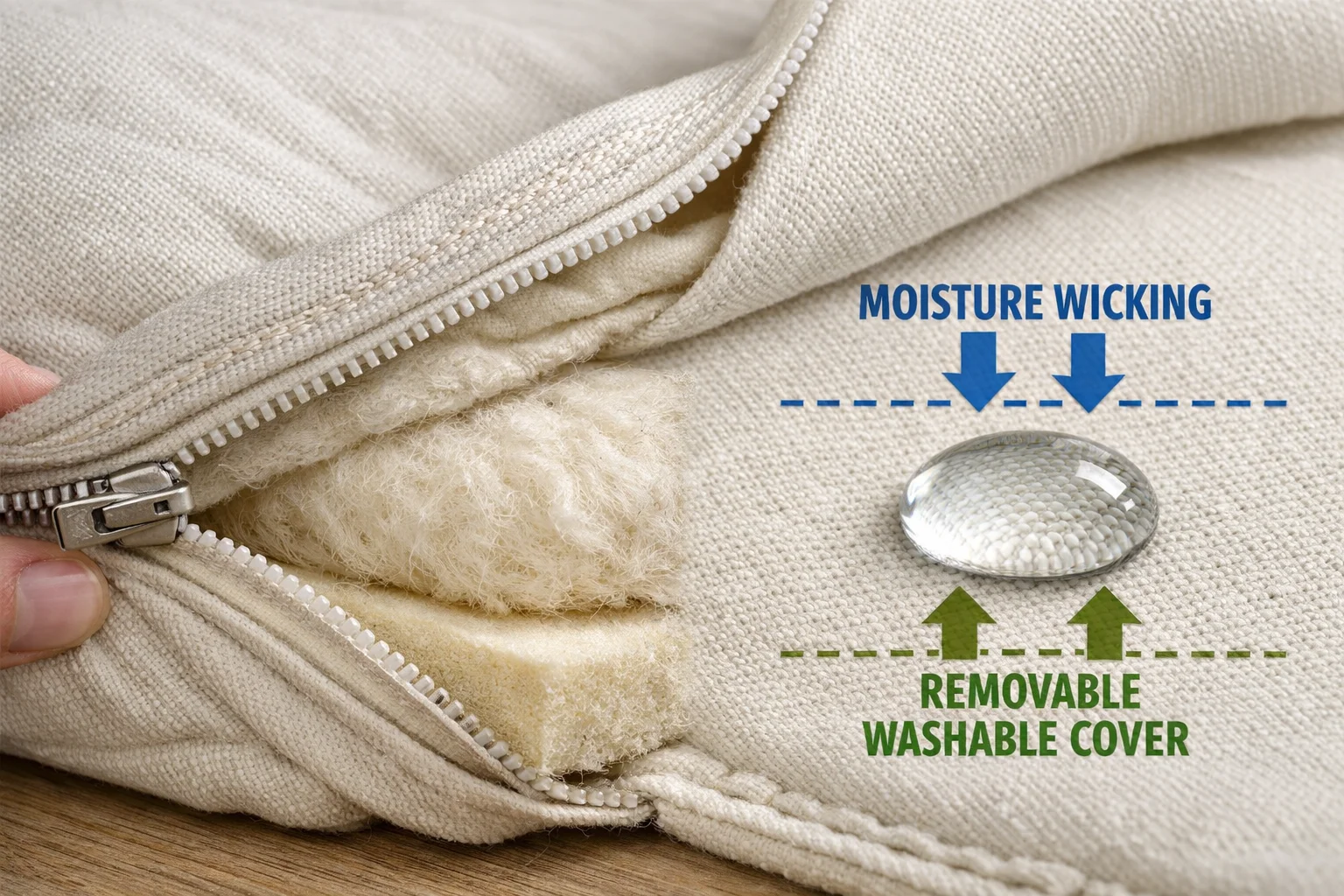
A futon mattress is honest about being a mattress. You can take it off the frame, unzip the cover, and wash it. If something truly awful happens, you can replace just the mattress without buying a whole new piece of furniture.
When you are shopping, check that the futon mattress has a removable cover with a real zipper. Touch the fabric and imagine cleaning it at home. That small detail is the difference between owning something you can maintain and something you will eventually throw away.
I am not saying a futon is perfect. I am saying it fails slowly and predictably instead of all at once. When you are on a tight budget, that difference is everything.
The Performance Comparison
When I put these two side by side in my head, the differences stop being abstract very quickly. A three hundred dollar sofa and a three hundred dollar metal futon might cost the same at checkout, but they behave very differently once you start living on them.
The first thing I think about is what each one is actually made of. The cheap sofa usually hides particleboard and staples under fabric and foam. That matters because particleboard does not forgive stress, moisture, or time. Once it cracks or loosens, the structure is gone.
A basic futon frame is almost always tubular steel. You can see it, touch it, and understand it. Steel bends before it snaps, and bolts loosen before they fail. That gives you warning instead of surprise.
Lifespan is where the gap really hurts. I have never had a three hundred dollar sofa make it past a year without sagging or creaking in a way that changed how I sat on it. I started avoiding the middle seat without even thinking about it.
A metal futon does not feel amazing on day one, but it feels roughly the same on day one thousand. Four years later, it might look scuffed, but it still holds your weight the way it always did. That consistency is worth more than initial softness.
Moving is another reality check. A sofa at this price point is usually a single awkward box that demands a truck and at least one favor you feel bad asking for. If it does not fit through the door, you are out of options fast.
A futon frame breaks down into pieces that fit in a car. I have moved one by myself more than once, and while it was not fun, it was possible. When you are standing in a showroom, imagine carrying it up a narrow staircase. If you cannot picture how it comes apart, that should worry you.
Repair is the final divider. When a cheap sofa starts to fail, there is nothing you can realistically do. Staples pull out of particleboard, and foam collapses unevenly, leaving you with a permanent dip.
When a futon starts to feel loose, you grab a wrench and tighten a bolt. When the mattress wears out, you replace just that part. That ability to intervene is what stretches its life from months into years.
I do not enjoy recommending something that looks like a compromise. I just trust the furniture that gives me fewer ways to lose my money. When you compare these two honestly, one is fragile but pretty, and the other is plain but resilient. On a tight budget, resilience wins every time.
Technical Summary: The Student Buy-In
If you are an undergrad, I think it helps to be brutally honest about what this phase of life does to furniture. You are going to move more than you expect, your friends are not going to sit gently, and you are not going to baby a sofa after a long day. Once I accepted that, the decision got much clearer.The best value I have ever seen for a student is a used leather sofa from a decent brand, even if it looks a little tired. Leather hides wear better than fabric, and older mid range sofas were often built with real wood frames instead of particleboard. When you check one out, sit hard in the middle, grab the arms and shake them, and listen for creaks. If it feels solid and the leather is not cracking through, fifty dollars here can easily beat three hundred dollars new.
If you want something new and predictable, the metal futon is the safest choice I know. It is not pretending to be luxury, and that honesty matters. In a store, focus on the frame first and the mattress second. If the frame feels heavy, does not twist when you lift one corner, and uses bolts instead of rivets, it is doing its job. You can always upgrade the mattress later when money is less tight.
What I cannot recommend, ever, is the brand new cheap sofa aimed at students. I know it looks like the grown up option, and I know it is tempting to believe you got lucky. I have tried that path more than once, and it always ended with sagging seats, cracked frames, and wasted money. That three hundred dollars does not buy durability, it buys the illusion of it.
When you are standing in a showroom with a limited budget, I want you to ask yourself one simple question. Am I buying something that can survive being used badly, or am I buying something that needs to be treated carefully to last at all. As a student, you do not need perfection or style points. You need furniture that forgives you.
If you follow that mindset, you stop feeling like you are settling. You are choosing the option that matches how you actually live. I learned this after paying for the same mistake twice. You do not have to.
Explore Technical Reference

The 3 Phases of Kid Furniture (0-18 Years)
Understanding how children's furniture needs change across developmental stages. Why buying one sofa for the entire journey from infancy to empty nest rarely makes sense.
Analyze Details →
The "Goldilocks" Paradox: Furniture For Couples
Understanding how to select furniture when two people have significantly different body weights or comfort preferences. Why compromise foam often fails everyone.
Analyze Details →