The 3 Phases of Kid Furniture (0-18 Years)
Introduction
I have watched a lot of “good” sofas turn into saggy, stained regrets, and the pattern is almost always the same. People buy for the life they hope to have, not the life they actually have in the next two years.
If you are a parent, the idea of buying one “Good Sofa” that carries you from newborn chaos to college move in day sounds responsible. In practice, it is usually a mistake, because different ages don’t just create different messes, they create different kinds of damage.
A toddler is a blunt force and stain machine. Sticky hands, milk spills, climbing on arms, jumping on cushions, and toy impacts punish fabric, seams, cushion covers, and the top layers of foam in ways that have nothing to do with “gentle wear.”
A teenager is heavier, taller, and tends to sit in the same spot for longer, often slouched. That punishes the seat suspension, the frame joints, and the cushion cores, and it is where you see the classic single seat crater and the slow loosening that makes a sofa feel cheap even if the fabric still looks fine.
So I want you to shop with a phase strategy instead of a fantasy. If you are in the sticky, climbing years, I would prioritize cleanability and replaceable parts over bragging rights materials. If you are in the heavier, daily lounging years, I would prioritize structure and support even if the upholstery is simpler.
This guide is going to help you separate “looks nice on the floor today” from “still feels good after years of normal life.” When you are in a showroom, I want you to know what to touch, what to lift, what to ask, and what to ignore, so you are paying for the parts that actually keep a sofa comfortable over time.
The "Don't Spend Up" Rule
I do not care how “investment” the sales pitch sounds, I would not buy a $5,000 sofa while your kids are under six. The problem is not just stains, it is the kind of mess that gets into seams, under cushions, and down into the padding where you cannot truly clean it.What people underestimate is that even when a fabric looks like it cleaned up fine, the smell can live inside the foam. Once liquid gets past the cover and into the cushion core, you are no longer cleaning a surface, you are trying to wash a sponge that is wrapped in upholstery, and it rarely goes back to neutral.
So my strategy is simple: during the potty training and random illness years, I would spend less and treat the sofa as semi disposable, or I would only buy something that is genuinely protected by a real slipcover system. If you want “nice” in this phase, I would rather see you buy a modest sofa with replaceable cushion inserts and a washable outer layer than an expensive one with fancy fabric glued to absorbent foam.
When you are in a showroom, I would make you do two quick reality checks before you let yourself fall in love. First, ask to see how the seat cushions are built and whether the foam core can be replaced later without reupholstering the whole piece, because cushion replacement is how a cheap sofa can have a second life. Second, ask what happens if a cushion gets soaked, specifically whether the cover comes off easily and whether the foam is sold as a part, because “we recommend professional cleaning” is not a plan when your kid throws up at 2 a.m.
If you are trying to bridge the gap without buying junk, I would push you toward heavily slipcovered sofas where the slipcover is meant to be removed and washed, not “technically removable” but terrifying to take off. I also like setups where you can keep a spare cover or at least order one later, because the real win is being able to reset the outside after a rough year without replacing the whole sofa.
I know it feels backward to buy cheaper when you need durability most, but I have learned that the most expensive upholstery does not protect you from biology. Save the big spend for the stage when spills are mostly drinks, bodies are mostly predictable, and the sofa’s job is comfort and support, not surviving the weirdest mess of your life.
Phase 1: The Bio-Hazard Years (Ages 0-6)
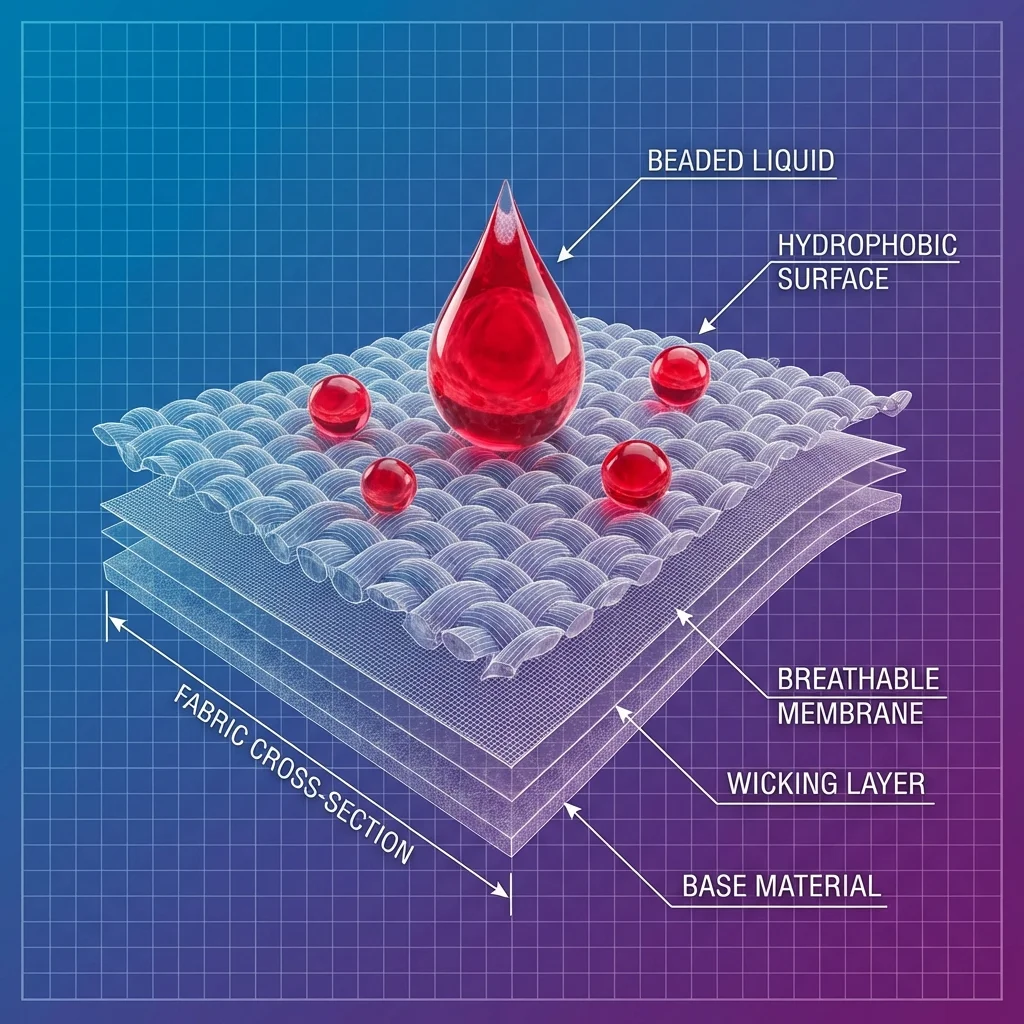
In this phase, I assume your sofa is going to meet milk, juice, vomit, and marker, and it is going to happen fast. Your main job as a buyer is not “durability” in the heroic sense, it is cleanability in the boring, practical sense.
When you are standing in a showroom, I want you to choose upholstery the way you would choose a kitchen counter. If it cannot handle frequent wipe downs and the occasional panic clean, it is not the right material for you right now.
Color matters more than people want to admit. I would steer you toward darker colors, or at least a mottled, textured weave that hides the little daily marks between real cleanings, because the constant visual stress of a light solid fabric will make you hate the sofa long before it wears out.
If you want the easiest day to day life, I have had the best luck with leather for this age range, because you can wipe it clean quickly and you are not pushing liquids down into a fuzzy surface. In the store, I would literally do a “wipe test” with your hand, then ask what they recommend you clean it with at home, because if the answer is complicated or precious, it is going to be annoying when you need to act fast.
If you do not want leather, I would prioritize a real slipcover setup, meaning the sofa is designed to be lived in with the covers coming on and off regularly. You want covers that unzip off the seat and back cushions easily, and you want to feel confident you could put them back on without it becoming a sweaty wrestling match.
Do not just accept “removable covers” as a feature. I always ask the salesperson to show me one cover coming off and going back on, because some “removable” covers are technically removable in the same way a car engine is technically removable.
I also like performance fabrics in this phase, but only if you can get straight answers about how to clean them and what voids any warranty. In the showroom, ask what happens with marker, and listen carefully to whether they say “it should come out” or they give you a specific, confident method you can actually do.

There are materials I would personally avoid in the bio-hazard years even if they look amazing on the floor. Velvet tends to grab stains and show pressure marks, linen and other absorbent natural fabrics tend to drink spills and hold onto odor, and anything that feels delicate in your hand will feel even more delicate when it meets sticky fingers.
I would also skip upholstery with lots of deep tufting or buttons, and not just because it is harder to clean. In a house with little kids, those details become crumb traps and gunk reservoirs, and if anything is loose enough to worry you, I would treat it as a safety problem you do not need.
Now I want you to do a quick “kid damage scan” with your eyes and hands. Look for sharp wood corners on the arms, the base, or any exposed trim, and if you see crisp edges at toddler head height, I would move on unless there is a clear plan to pad or block that area in your room.
Even if you love the look of squared off arms, I would favor softer shapes and rounded corners in this stage, because children fall into furniture, not around it. In the store, I actually run my hand along every edge I can reach, since photos rarely reveal the one sharp corner that will become your daily annoyance.
Finally, do not ignore the stuff you cannot see. I would lift the seat cushions and look for a barrier between you and the cushion core, like an inner liner, because it buys you time when a spill happens and you are trying to get the cover off before everything soaks in.
If you take nothing else from this phase, take this: you are not shopping for a sofa that stays pristine, you are shopping for a sofa that you can reset. If you can wipe it, wash it, or replace a cover and a cushion insert without replacing the whole piece, you are buying yourself sanity for the next few years.
Phase 2: The Trampoline Years (Ages 7-12)
This is the stage where your sofa stops being a spill target and starts being a gym. If you have kids in this range, I assume there will be jumping, wrestling, and ambitious “fort engineering,” and the damage you are fighting is not stains, it is looseness, racking, and snapped parts.
When I shop for this phase, I stop obsessing over fabric first and I start obsessing over structure. The goal is structural integrity, meaning the sofa still feels tight and square after years of being used in ways the catalog photo never imagined.
In a showroom, I want you to put your hands on the arms and physically try to twist the sofa, gently but honestly. I grab one arm and push forward while pulling back on the other, then I reverse it, because kids create that exact kind of torque when they climb, flop, and launch off the side.
If the whole thing creaks, shudders, or feels like it is “giving” at the corners, I treat that as a warning. A solid sofa will feel boring in this test, like one piece, not a collection of parts negotiating with each other.
I also want you to lift one front corner of the sofa just an inch or two off the floor, enough to see how it reacts. If it flexes a lot or feels oddly light for its size, I start asking what the frame is made from and how the corners are reinforced, because a lighter, weaker frame is what turns into wobble later.
For this age range, I personally look for a heavier frame and a more substantial base under the cushions. If the salesperson can show you that the seat deck is plywood, that is a good sign, and if you hear particleboard or MDF anywhere in the load bearing parts, I would be cautious because repeated bouncing and hard landings tend to make those materials fail in ugly ways.
You can also do a quick check without tools by removing the seat cushions and pressing down hard on the platform you see underneath. If it feels thin, springy in a bad way, or you can feel uneven support, I assume it will get worse once kids have been treating it like a trampoline for a few years.
Suspension matters a lot in this phase, and it is one of the easiest places for a sofa to cheap out while still feeling fine on the floor. I ask what’s under the seats, and I listen for clear, confident answers, because low quality springs and weak attachments are what snap or sag when the sofa is being jumped on, not just sat on.
If the store lets you, I like you to do a deep seat drop test with your own body. You sit down a little harder than you normally would, not in a reckless way, but enough to feel whether the support rebounds cleanly or whether you get a metallic clank, a hollow thunk, or a sense that something is bottoming out.
Legs are another sneaky failure point when kids are rough on furniture. I avoid delicate legs in this stage, especially thin, tall styles that look airy, because they tend to loosen or snap when someone lands on the edge of the seat and loads one corner.
In the showroom, I look at the legs the way I would look at a chair for a busy kitchen. If they look spindly, if they angle out dramatically, or if they attach with a single small bolt that seems like it belongs on a lamp, I move on.
Fort building is the other reality of ages seven to twelve, and it changes what I want from the back cushions. If the back cushions are loose and easily removable, your sofa becomes a daily construction site, and it also means the cushions get sat on on the floor, stepped on, and tossed around until the seams soften and the filling migrates.
So in this phase I actually like attached back cushions, or at least backs that are difficult to turn into floor pillows. It is not a style preference, it is me trying to remove the temptation and reduce how much the cushions get abused in ways they were not built for.
If you still want loose back cushions for the look, I would at least do a “kid reality” test in the store by pulling one out and imagining doing that ten times a day. If it already feels floppy, underfilled, or hard to seat back into place neatly, it is going to turn into a permanent sloppy look at home.
One last thing I do in this phase is check the underside, even if I feel awkward about it. If you can see a thin dust cover fabric sagging with gaps, or you can feel sharp staples and flimsy components, I take that as a clue that the hidden structure is not where the money went, and that matters more now than it did when your main problem was juice.
If you shop for ages seven to twelve like you are buying a piece of playground equipment, you will make better choices. I want you to leave the showroom with a sofa that stays tight at the corners, has a solid platform under you, and is not perched on fragile legs that will eventually lose the argument with gravity and kids.
Phase 3: The Lounge Years (Ages 13-18)
This is where the enemy changes. It is not jumping and forts as much anymore, it is sprawling, pizza grease, energy drinks, and friends treating your living room like a crash pad.
The goal in this phase is size, but not just “big.” You are trying to buy enough usable, horizontal real estate that the sofa does not get destroyed by everyone fighting over the one comfortable spot.
When I shop for teen years, I stop caring about formal posture. If a sofa is upright, shallow, and “proper,” teens will avoid it, or they will perch in weird ways that grind down the front edge of the seat and create that permanent slope that feels cheap.
In the showroom, I want you to measure depth with your body, not your eyes. Sit back, then slide into the slouch position you know is coming, and see if your thighs are still supported or if you are hanging off the front edge.
If you are looking at sectionals, I would lean toward a deeper seat depth than you think you need on day one, because teens get taller fast and lounging spreads out. The practical test is whether you can curl your legs up without your knees pointing at the ceiling, and whether someone else can still sit without getting shoved into the corner.
I also want you to check how the back cushions behave when you really sink in. If the back collapses into a lump, or the cushions shove upward and leave you with a gap behind your lower back, that is the feeling that turns into nightly cushion punching and constant re fluffing.
This is also where the “one seat crater” problem shows up, because teens and their friends tend to claim a spot and live there. I press my hand into the center of each seat cushion and then the front edge, and I compare them, because a cushion that already feels soft or uneven on the floor is going to lose the argument fast once a heavier body parks there for hours.
If the seat cushions are reversible, I consider that a real advantage in this phase, because rotating and flipping cushions is how you keep the wear from becoming a permanent dip. If the cushions are not reversible, I want them at least to be easy to rotate left to right, and I want the store to confirm you can buy replacement inserts later.
Spills are less random than toddler years, but they are greasier and they sit longer. I would still avoid fabrics that feel absorbent or precious, because pizza oil and late night snacks create stains that do not respect “spot clean only.”
In a showroom, I rub the fabric with my fingers and ask myself one simple question. Does this feel like something I could wipe at 1 a.m. without making it worse, or does it feel like it wants a special ceremony and a prayer.
Sectionals can be fantastic here, but I would only buy one if it feels locked together. I put my hand on the seam where the pieces meet and shove side to side a little, because if the modules drift on the floor in the store, you will be constantly re aligning them at home.
If your teen space is going to be the hangout house, I would also be picky about the arms. Narrow, delicate arms get sat on, leaned on, and used as headrests, so I like arms that feel wide enough to take abuse without loosening, and padded enough that people actually use them instead of grinding into the side panel.
Finally, I would not pay extra for “formal details” that make lounging worse. Tufting can trap crumbs and grease, hard decorative trim gets uncomfortable fast, and anything that demands perfect posture is basically inviting your teen to ignore the sofa you bought and sprawl on the floor instead.
If you buy for this phase honestly, you are buying a comfortable landing zone that can handle long sits, sideways naps, and a rotating cast of bodies. When the sofa is deep enough to lounge and solid enough to stay supportive, you stop fighting your furniture, and that is the whole point of ages thirteen to eighteen.
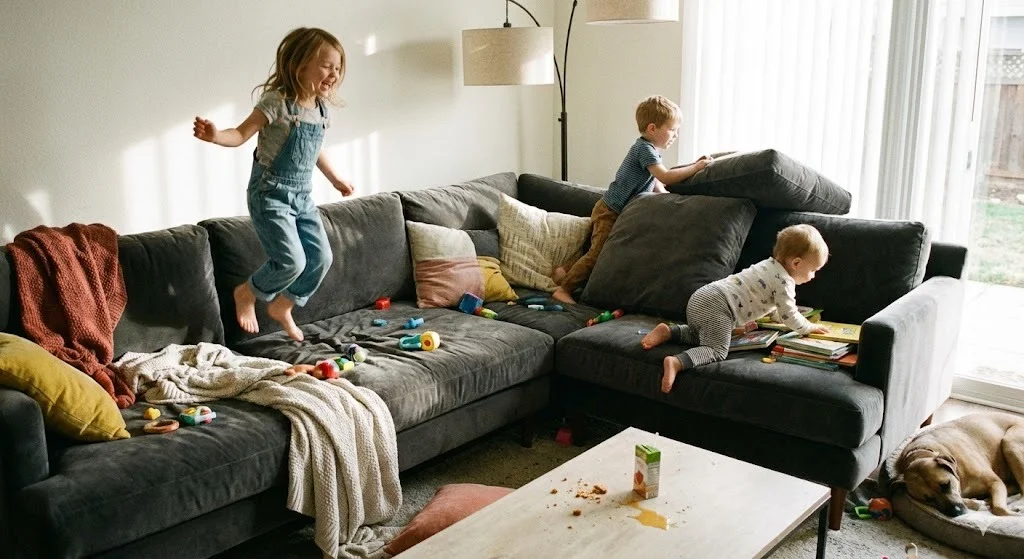
When I look at this “survival curve” idea, I read it as permission to stop searching for one perfect sofa and start matching the sofa to what your house is actually going to do to it next.
In Phase 1, “stain resistance” is not a vibe, it is a system. In the showroom, I would translate that caption into one practical check: can you remove the cushion covers easily, and does the sofa have a realistic path to recovery after a deep spill, either by washing a slipcover or replacing the cushion insert.
In Phase 2, “impact resistance” is the part most people skip because the sofa still feels fine under gentle sitting. When you are shopping, treat that caption as a reminder to do the twist test on the arms, the corner lift, and the hard press on the seat deck with the cushions off, because that is what tells you if it will stay tight when it gets climbed on and landed on.
In Phase 3, “volume” is not about buying the biggest thing that fits, it is about buying enough usable lounging space that you do not get one overloaded seat and one permanent crater. In the store, I would sit in the exact slouch you know is coming, check that your thighs are supported, then look at whether the cushions can be rotated or replaced later, because that is how you keep comfort from collapsing in the most used spot.
If you want one simple way to use this chart while you shop, I would pick your current phase and let it veto sofas that fight it. If you are in Phase 1 and the fabric feels precious or the covers are a pain, I do not care how good the frame is, you will resent it. If you are in Phase 2 and the frame feels twisty or the legs look fragile, the cleanable fabric will not save you. If you are in Phase 3 and the sofa is shallow, upright, or skimpy on seating real estate, you will watch everyone pile into one spot and wear it out early.
This is how I keep myself from getting seduced by the floor model. I decide which phase problem I am actually solving first, then I only compare sofas that pass that phase’s reality test.
The Empty Nest Reward
Once the last kid leaves for college, the biggest change is not that your living room gets quieter. It is that the sofa finally stops being a piece of shared infrastructure and starts being yours again.
This is the stage where I stop arguing with myself about “practical.” If you have wanted the white linen sofa, this is the first time I think it can make sense, because you are no longer buying for sticky hands, wrestling matches, and mystery stains that sit overnight.
I still want you to shop like an adult who has been burned, though. If you are going to buy a light, absorbent fabric, you need a plan for maintenance that you will actually do, not a fantasy of never spilling anything again.
In the showroom, I would do the honesty test: I would rub the linen with my hand and imagine a coffee ring that dries before you notice it. Then I would ask exactly what you do at home when that happens, and I would only accept an answer that is specific enough to follow without special tools.
If the salesperson says “blot with water” and “professional cleaning for anything else,” I treat that as a warning that the fabric is going to own you. If they can tell you a straightforward method, and you can picture yourself doing it on a Sunday morning without panic, that is when white starts to feel like a reward instead of a trap.
The other empty nest splurge people dream about is velvet, especially a tufted Chesterfield. I love the look, but I have also learned that the look is not the same thing as daily comfort, so I want you to sit in it longer than feels polite.
In the store, I sit back the way I watch TV, not the way I pose, and I check two things. I check whether the tufting creates hard spots that I will feel in my shoulder blades or lower back, and I check whether the arms are at a height I can actually lean on without my neck doing extra work.
Velvet itself is not fragile if it is a good velvet, but it is honest about pressure and direction. I would run my hand across it in both directions and look for shading changes, because if that visual variation is going to make you feel like it looks “bruised” after someone naps on it, you will never relax around it.
This is also the moment when I finally care a lot about the feel of the seat cushion, because you are not buying it to survive childhood anymore. I want you to find out what the seat core is, and I want you to favor a construction that can be refreshed later, because even a luxury sofa gets tired.
In the showroom, I ask whether the seat cushions have zippered covers and whether the inserts can be replaced without reupholstering the whole sofa. If the answer is yes, you have permission to buy a more demanding fabric, because you have a path to making the sofa feel new again in a few years instead of living with a slow sag.
I also want you to treat this stage as your chance to buy the shape you actually like. If you have spent a decade avoiding delicate legs, light fabrics, and tailored silhouettes, this is where you can choose them on purpose, but only if you confirm the sofa is still built to stay square.
So I still do my basic structural checks even when I am shopping with my heart. I still do the arm twist test, I still lift a corner slightly, and I still sit in the same spot twice to see if I feel the frame shift or hear anything complain.
The best part of the empty nest reward is that you can finally buy something for pleasure. The practical part is making sure the pleasure is not just the first six months, and that comes from choosing a fabric you can maintain, a seat you can refresh, and a frame that stays quiet and tight when real life happens anyway.
Technical Summary: The "Fort" Defense
If you are trying to stop your living room from becoming a daily pillow fort, I look for a sofa that quietly removes the opportunity. The first feature that actually changes behavior is a semi attached back, meaning the back cushions are sewn to the top rail so they cannot be yanked out and dragged across the room. In the showroom, I put both hands on the top of the back cushion and try to pull it forward and up the way a kid would, and I am looking for it to stop quickly and feel securely anchored, not like it is slowly tearing at a seam.The second feature I like is some kind of seat cushion anchoring, most commonly Velcro strips. This is not a luxury detail, it is what keeps the seat cushions from creeping forward and turning into a lumpy mess after a weekend of hard sitting and jumping. In the store, I slide a seat cushion forward with my hands and then push it back into place, and I want to feel it catch and settle, not just float around on a slick deck.
The third feature is simply weight, because weight is a form of defense. If the seat cushions have inner springs or a heavier core, they are harder for kids to move, flip, and throw, which cuts down on floor use and seam stress. In the showroom, I lift one seat cushion with one hand, and if it feels annoyingly heavy in a good way, I treat that as a practical advantage for this stage of life, even if it makes cushion rotating a little more work for you.
Explore Technical Reference
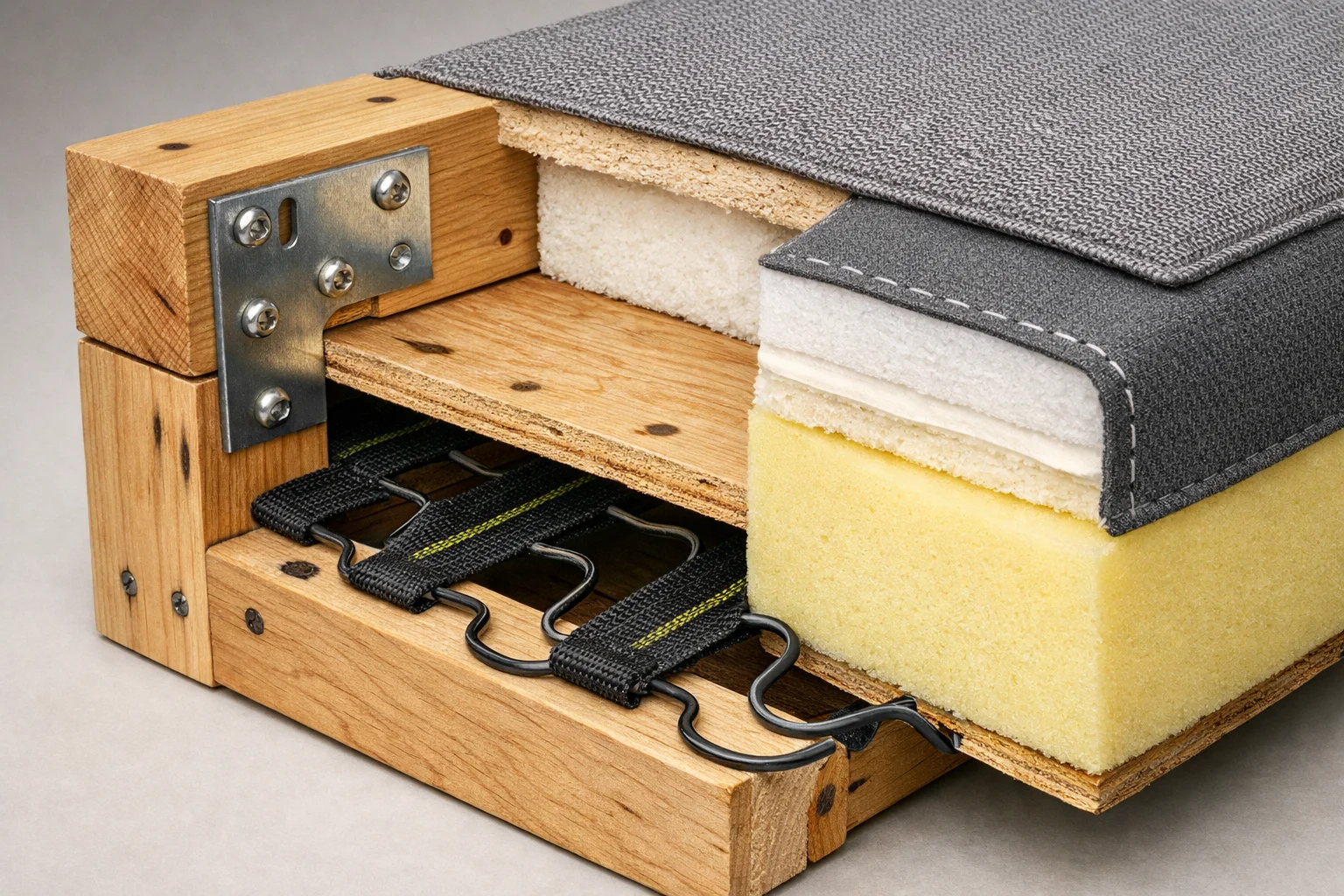
Commercial Grade: Why Hotel Sofas Last Forever
Why commercial sofas feel harder and last longer than residential alternatives. Understanding fire codes, abrasion testing, and high-density construction requirements.
Analyze Details →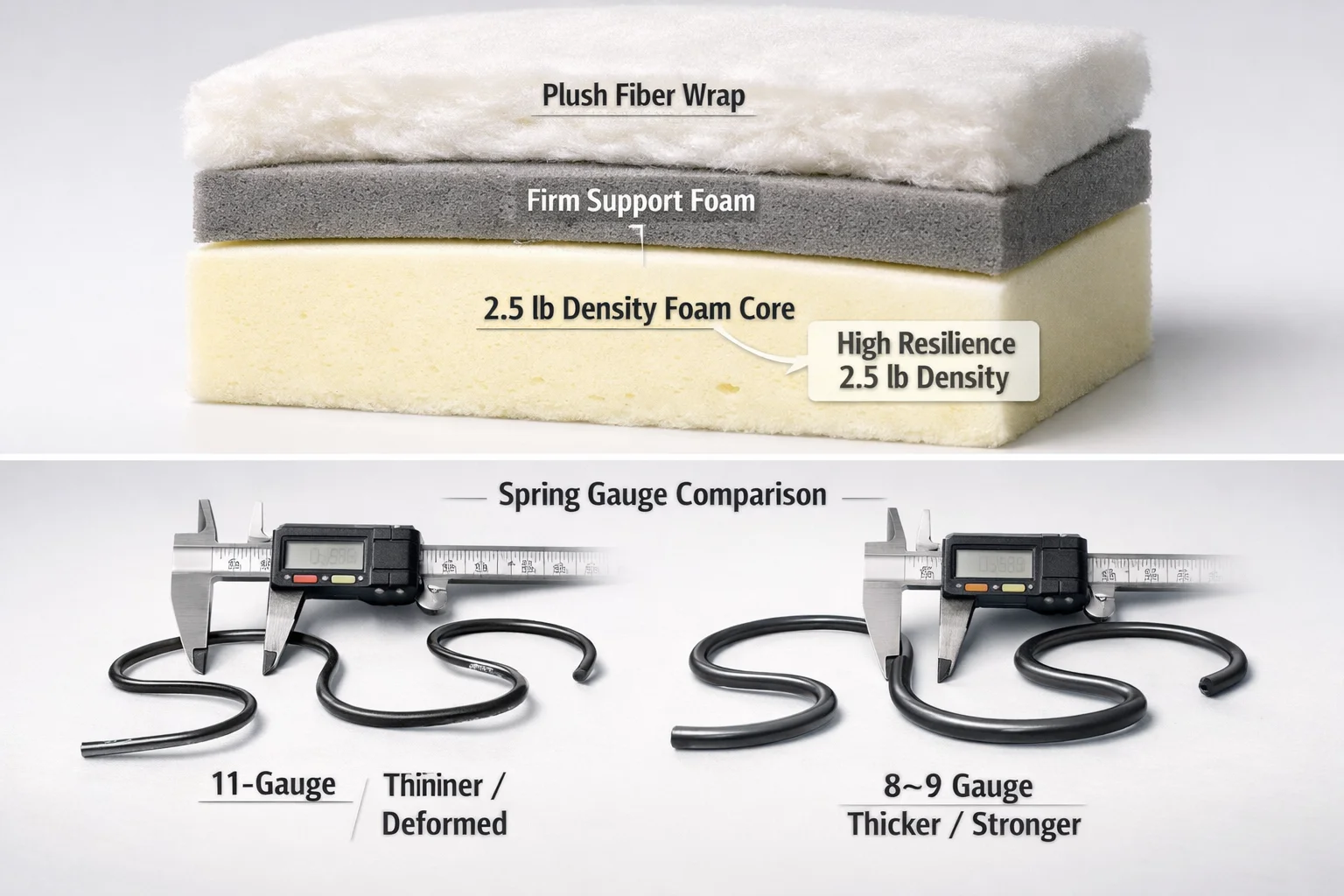
Heavy Duty Seating: Furniture for Big & Tall
Understanding why standard sofas fail under above-average body weight. The specific construction requirements for durable seating that supports all users.
Analyze Details →