The Weight Paradox: Stability vs. Mobility
Introduction
I rent, and I have moved more sofas than I care to remember. Every time, I notice the same problem. The couch that felt solid and impressive in the showroom turns into a back breaking nightmare on moving day, while the one that was easy to carry ends up sagging and squeaking after a year.
This is not bad luck. It is basic physics mixed with cost cutting. Weight in a sofa usually comes from wood, steel, and dense cushioning, which feel reassuring when you sit down. But too much weight often means oversized frames, cheap heavy fillers, or designs that ignore the reality of doorways, stairs, and future moves.
What I learned the hard way is that you are not choosing between good and bad. You are looking for a narrow middle ground. I call it the Goldilocks zone, where a sofa feels grounded and stable, but not like a permanent fixture of the building.
In this guide, I will walk you through how I judge that balance when I am standing in a showroom. I will focus on what you can touch, lift, and feel in a few minutes, because that is all you really get before you hand over your money. My goal is to help you buy a sofa that survives daily use and your next move without wrecking your body or your bank account.
The "Quality Weight" Myth
When I hear someone say a sofa feels high quality because it is heavy, I get nervous. Weight can mean strength, but it can also mean corners were cut in ways you cannot see.Some weight is genuinely good. Solid hardwood frames and dense seat foam have real mass, and when you lift one end of a well built 84 inch sofa it usually lands somewhere around 120 to 150 pounds. That kind of weight feels concentrated and confident, not bloated.
The problem is that bad materials are often heavy too. Particleboard is dense but weak, and cheap pine can soak up moisture and add pounds without adding durability. I have owned sofas that felt impressive to lift, then started creaking because the internal wood was basically compressed sawdust.
When you are in the showroom, I want you to focus on where the weight feels like it is coming from. Try lifting one front corner a few inches. If the whole piece rises smoothly and evenly, that usually means a solid frame. If it feels dead, awkward, or uneven, the weight may be coming from filler materials instead of structure.
What I am always looking for is structural weight, not filler weight. The sofa should feel grounded when you sit, but not like it was designed to never leave the room. If it already feels like a punishment to move in a showroom with open space, imagine it in a narrow hallway with a turn.
My rule of thumb is simple. I want a sofa that resists movement when I sit down, but cooperates when I need to lift one end and walk. If it passes that test, the weight is probably working for you, not against you.
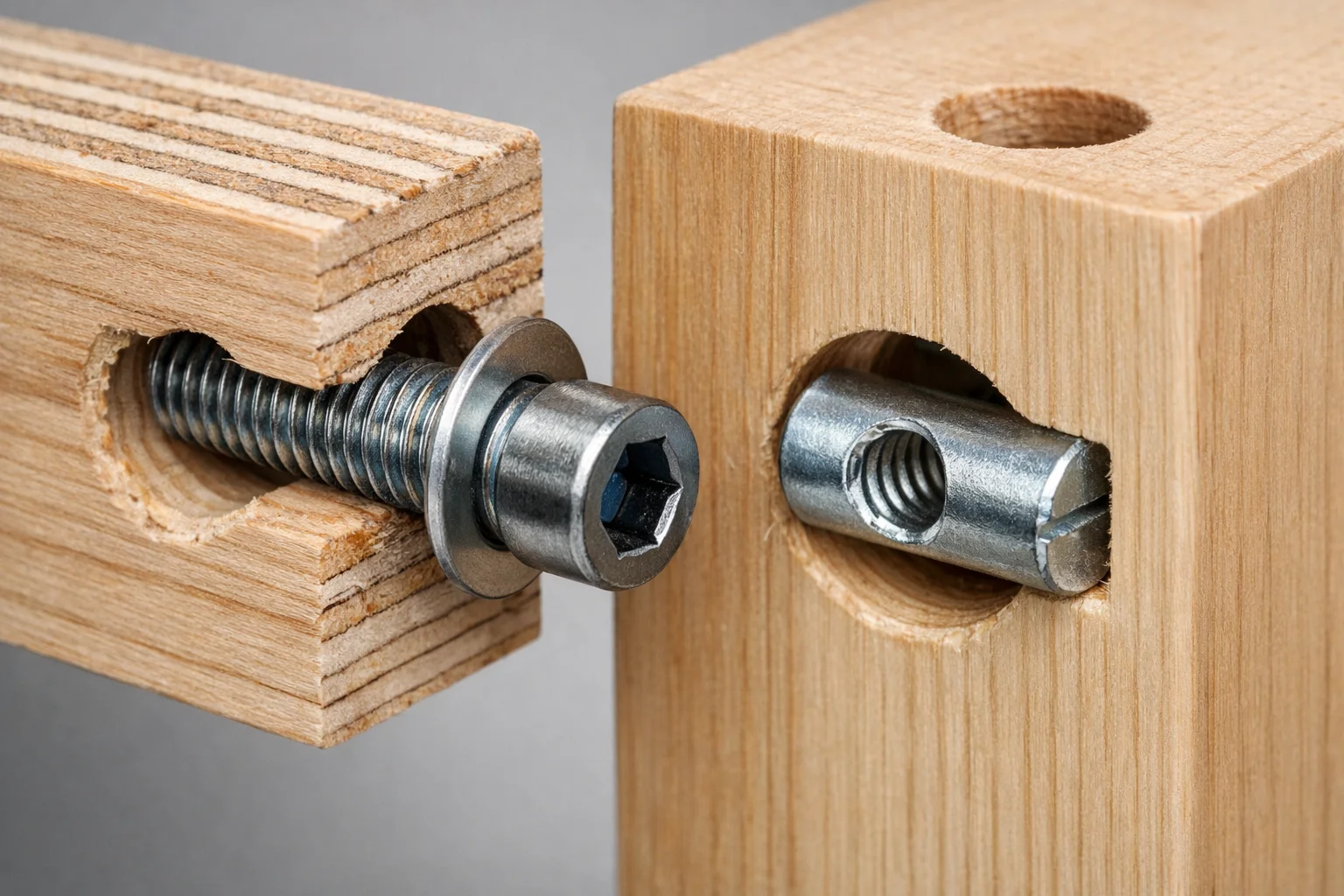
When I see a sofa that comes apart with proper hardware like this, I slow down and pay attention. This is one of the few ways a sofa can be both sturdy in daily use and realistic to move later.
What I look for is metal doing the work, not glue or staples pretending to be structure. A bolted corner joint pulls the frame together under tension, which is why it feels tight when you sit and stays tight after a move.
In the showroom, you can usually check this without tools. I reach under the sofa or lift the seat cushions and look for access holes or visible bolts at the corners. If I see clean metal hardware instead of a mess of staples, that is a good sign.
I also grab one arm and gently twist, not hard enough to be rude, just enough to feel resistance. A sofa with decent KD joints will resist and then spring back quietly. If I feel flex or hear a dry clicking sound, the joints are probably doing too much work with too little support.
Salespeople sometimes warn that sofas like this can loosen over time. That has not been my experience when the hardware is real. Even if a bolt loosens slightly, you can tighten it in five minutes, which beats living with a creak you can never fix.
The bigger point is control. A sofa built this way gives you control over assembly, disassembly, and long term stiffness. I would rather own something I can retighten than something that depends on hidden glue joints I can never see or repair.
When weight is coming from a smart frame and proper joints, it feels honest. The sofa feels planted when you use it, but it does not punish you for moving apartments or rearranging a room. For me, that balance is exactly what I am trying to buy.
The Moving Day Reality Check
This is the part most showrooms never talk about. I learned to think about moving day while I am still sitting on the sales floor, because that is when you still have leverage.
Weight tells you a lot, but only when you picture that sofa halfway up a stairwell with a tight turn.
The Heavyweight (150+ lbs)
When I sit on a very heavy sofa, I get why people like them. They do not budge when you drop into them, and they signal expense in a very immediate way.
The problem shows up later. Anything in this range usually needs two strong movers or three average ones, and even then it is awkward. If you try to drag it, you will scar hardwood or tear up vinyl, and lifting it cleanly often means removing doors or railings.
I have also seen friends abandon sofas like this because they simply would not make the turn into a new place. Once that happens, all that quality weight becomes sunk cost. As a renter, I give this category a failing grade because it assumes you will never move or never have stairs.
The Featherweight (50 to 80 lbs)
At the other extreme are sofas that feel almost shockingly light when you tip them. I understand the appeal the first time you move one by yourself and load it into a rideshare.
Living with them is another story. These pieces tend to slide every time you sit down, especially on smooth floors. If you plop into one corner, the whole thing can shift or lift, which never feels relaxing.
The bigger issue is the hollow feeling. Lightness here usually means minimal frame material and a lot of empty space. I have owned sofas like this that were easy to move but started feeling tired and noisy within a year. For renters, this earns a passing grade for logistics but not for daily comfort.
The Middleweight (90 to 120 lbs)
This is the range where things finally make sense. When I encounter a sofa here, it usually feels planted enough that it stays put, but not so massive that it intimidates me.
Two reasonably fit friends can lift and pivot it on a stair landing without drama. You still need to be careful, but you are not planning the move like a military operation.
What I often find inside these sofas is a plywood based frame with sinuous springs. I am not naming that to be technical, but because it explains the feel. The weight comes from structure spread evenly through the piece, not from bulky arms or overbuilt panels.
As a renter, this is the sweet spot. It respects the reality that you will live with the sofa every day, and that you will probably move again. When a sofa lands here, I relax a little because it usually means the designer thought about real life, not just the showroom floor.
When you are shopping, you can approximate this without a scale. I put one hand under the front rail and lift just enough to feel resistance. If it takes effort but does not strain me, and the sofa rises as a whole instead of twisting, I know I am close to that middle ground.
That simple test has saved me more regret than any spec sheet ever has.
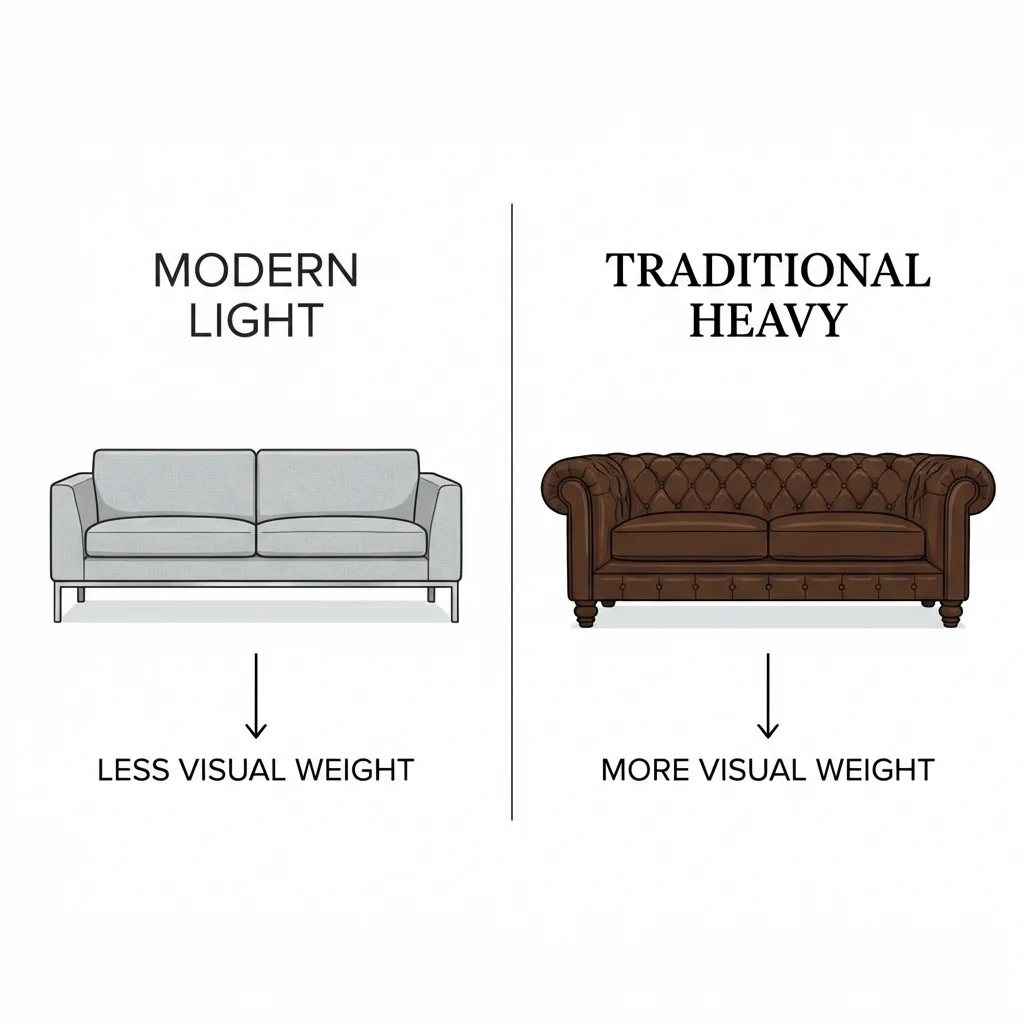
This image is how I reset my instincts when I am tempted by a sofa that feels impressive just because it is heavy. Not all weight behaves the same, and where it comes from matters more than the number itself.
When a salesperson mentions solid oak, I slow down. Oak is strong, but in sofas it is often used in thick, overbuilt rails that add weight fast. That weight does not always translate into a better sit, and it definitely shows up on moving day.
Pine and particleboard are trickier. I have been burned by both. Pine can be fine in the right places, but it dents easily and can loosen over time. Particleboard is dense and heavy, which fools your hands, but it fails quietly and permanently once screws start to pull out.
This is why I keep coming back to plywood. In the showroom, I ask what the frame is made from, then I listen for plywood in the answer. Good plywood spreads strength across layers, so you get stiffness without bulk. That usually lands the sofa in that middleweight zone that actually works in real life.
You can often confirm this visually. I look underneath the sofa or behind the dust cover for layered edges instead of crumbly cores. Plywood edges look striped and intentional. Particleboard looks like compressed oatmeal once you know what to look for.
I also pay attention to where the mass is concentrated. If the arms feel absurdly heavy but the center feels hollow, that tells me the weight is cosmetic. When the whole frame feels evenly dense as I lift a corner, that usually points to plywood doing its job.
The caption says plywood is the renter’s best friend, and I agree. It is not glamorous, but it is honest. It gives you a sofa that feels stable every day and does not turn into a liability the next time your lease ends.
When you stand back and look at a sofa after doing these checks, ask yourself a simple question. Does this weight feel like structure, or does it feel like baggage. I have learned to walk away from anything that feels like the latter, no matter how good it looks under showroom lights.
How to Fake Solidity
Sometimes I actually want a lighter sofa because I know I will be moving again. The trick is making that lighter piece feel calm and expensive in daily use, instead of skittery and cheap. I have learned that you can do this without modifying the sofa itself.
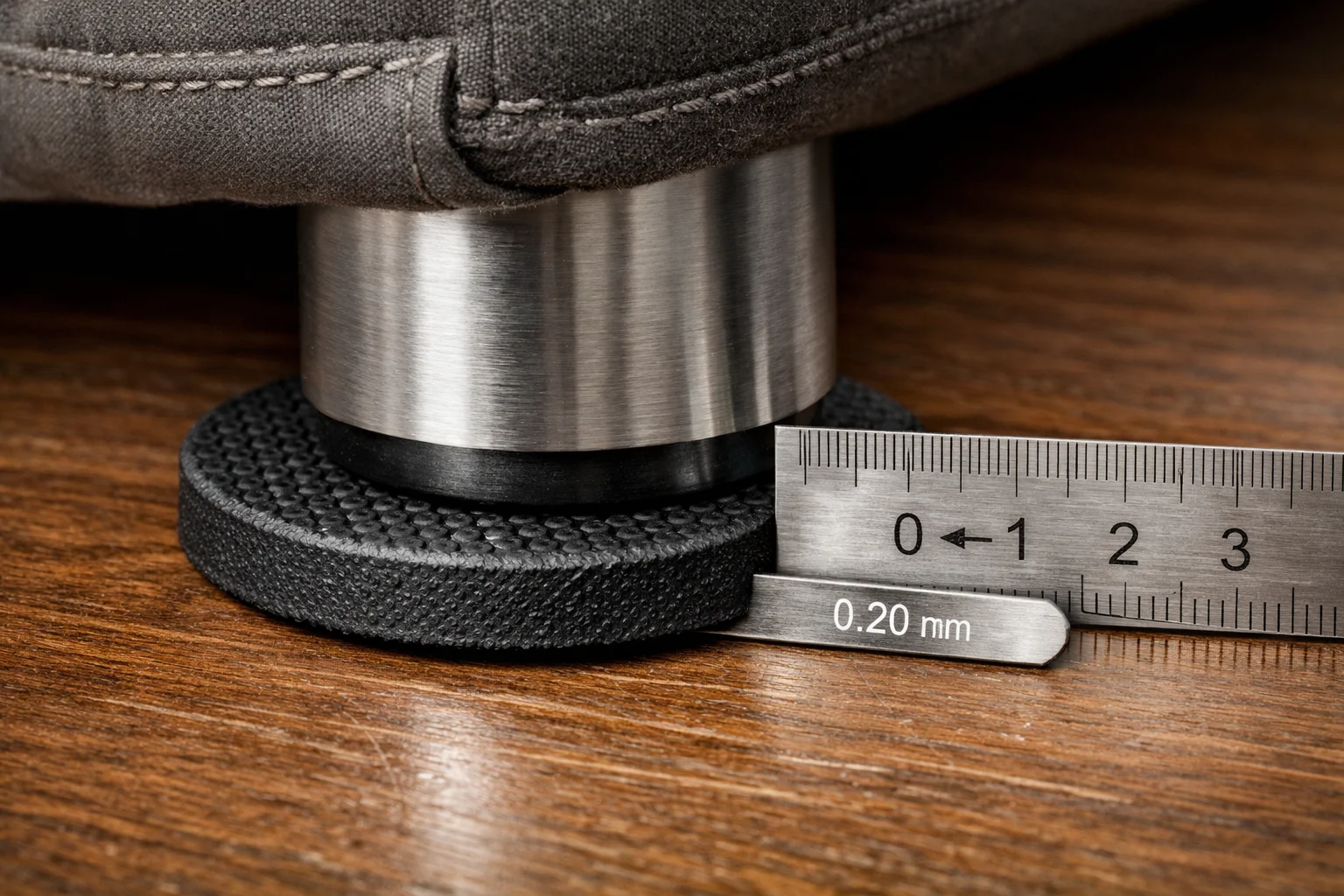
The first thing I do is deal with sliding. If a sofa moves even a little when you sit, your brain reads that as flimsy. I put thick rubber pads under each foot, the kind meant for furniture not felt dots. When you press down and the sofa stays put, it suddenly feels more substantial even though nothing about the frame changed.
Next, I add quiet weight where it matters. I drape a dense wool throw over the back and use heavier seat pillows instead of airy ones. This extra mass soaks up vibration when you sit or shift, which reduces that hollow bounce lighter sofas often have. It sounds cosmetic, but ten pounds of dense textiles can completely change how a sofa feels when you live with it.
Finally, I let the room help me. I place the front legs on an area rug so the sofa bites into something instead of skating on wood or tile. That friction makes the whole piece feel anchored, and it also protects the floor when you stand up quickly or flop down at the end of the day.
None of this turns a bad sofa into a good one. What it does is let a decent, move friendly sofa behave like a heavier, more expensive piece in everyday use. If you start with a solid middleweight frame, these small adjustments can push it the rest of the way into feeling settled and confident without locking you into something you will regret carrying later.
Technical Summary: The "Knock-Down" Advantage
After all of this, the cleanest solution I have found is knock down furniture done properly. I do not mean flat pack in the disposable sense. I mean a real sofa with a real frame that happens to bolt together.
The concept is simple when you see it in person. The frame is built from solid sections that lock together with metal hardware, so when it is assembled it behaves like a single, rigid piece. When it is time to move, those same joints come apart cleanly instead of fighting you.
The trick, and this is what matters to you in a showroom, is how it feels before you ever take it apart. A good KD sofa still feels heavy and calm when you sit on it because the mass is coming from wood and proper joinery, not from glued panels. The difference is that the weight is modular. Instead of one impossible object, you end up with manageable boxes that a normal person can lift without injury.
When I ask about this on the sales floor, I am very specific. I ask if the sofa bolts together, not if the legs come off. I ask how many boxes it ships in, and I listen for answers that sound confident instead of vague. If they can tell me that each section stays under a reasonable carry weight, that tells me the design was intentional.
This is where I draw a hard line between quality KD and the kind most people picture. Cheap flat pack furniture relies on cams and soft fasteners that never feel tight after the first assembly. Good KD relies on real bolts pulling real wood together. When it is done right, you forget it is knock down until the day you need it to be.
My verdict, after too many moves, is that this approach is the future if you rent or expect your life to change. You get the daily feel of a serious sofa without the long term penalty. If you are choosing between a one piece monster and a well built knock down frame, I would take the latter every time.
The key is not the label. It is the execution. Buy quality knock down furniture, not the flimsy kind you are meant to replace in a few years. When you find one that feels solid, tight, and calm in the showroom, and you know it can come apart later, you have found about as close to a no regret sofa as I think exists.
Explore Technical Reference
Disposable vs. Investment: The "Cost of Ownership" Math
Understanding the actual cost of ownership when comparing cheap disposable
Analyze Details →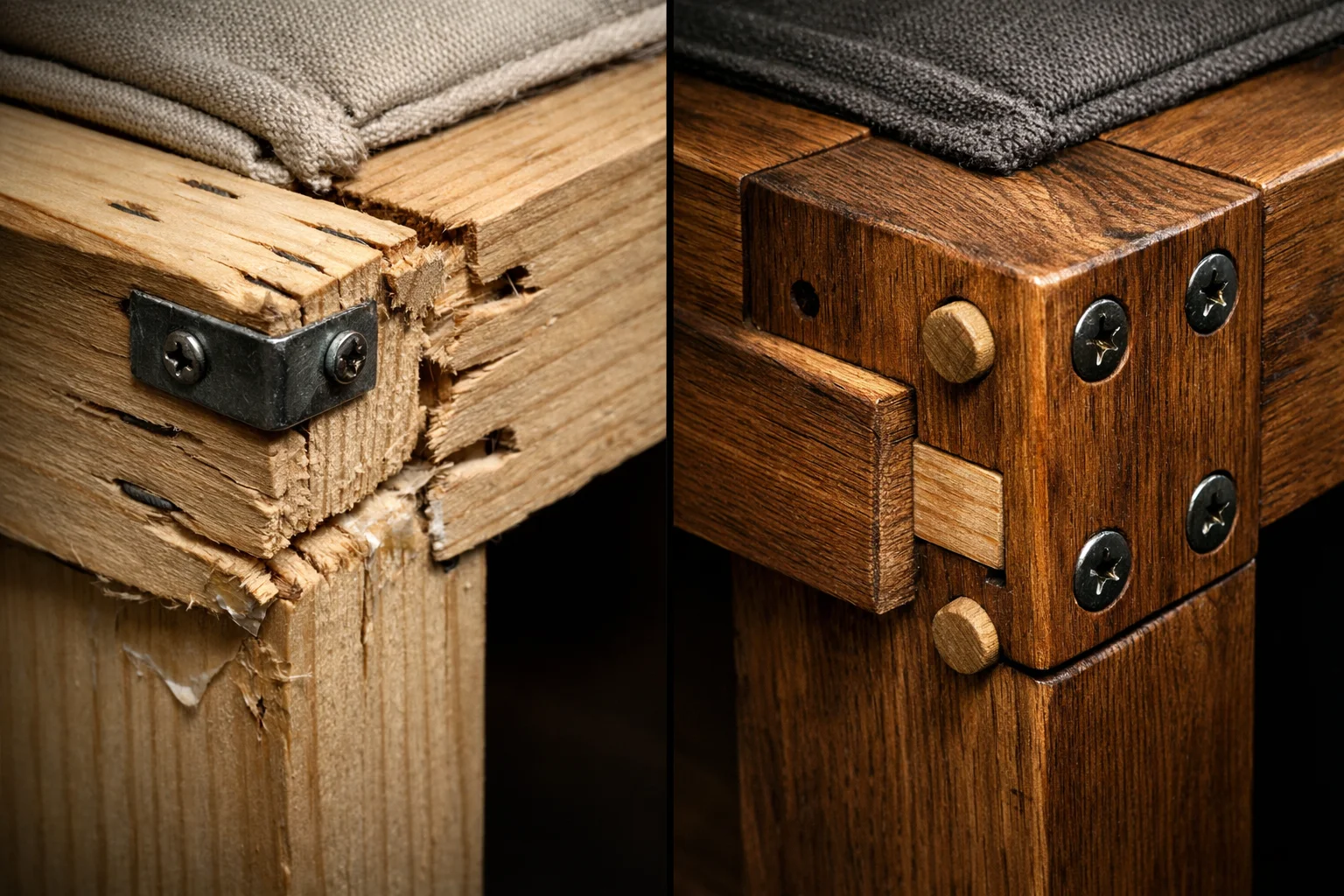
Residential vs. Commercial: The Safety Gap
Understanding why furniture warranties void when residential products are used commercially. The structural, safety, and legal differences between categories.
Analyze Details →