Residential vs. Commercial: The Safety Gap
Introduction
I once put a West Elm sofa in my office waiting room. Six months later, the arm broke when a large client leaned on it. I called for a warranty repair. They asked for the address. When they saw “Suite 200,” they voided the warranty instantly.
The difference is not just paperwork, it is liability. A lot of brands quietly treat any non residential address as commercial use, and commercial use is where they assume heavier wear, bigger people sitting harder, and more people using the same seat every day.
I am telling you this up front because it changes how you should shop, even if the sofa is for your living room. The way a company writes its warranty and the way a sofa is built usually line up, and both tell you whether you are buying something meant to hold up, or something meant to look good long enough to get past the return window.
When you are in a showroom, I want you thinking like an insurance adjuster, not like an interior designer. Ask to see the warranty before you talk yourself into the fabric, and read the parts about where it can be used, what counts as abuse, and what parts are excluded.
If the warranty language feels slippery, it often is. If it says things like “normal wear and tear” without defining it, or it excludes “softening of cushions,” “loss of resiliency,” “fabric pilling,” or “frame noises,” you should assume those are the exact problems you will have, and that you will be on your own when they show up.
You can also protect yourself with one simple habit. When a salesperson tells you “it is covered,” ask them to point to the exact sentence in the warranty that makes it covered, then take a photo of that page and the model tag before you buy.
I am not trying to make you paranoid. I am trying to keep you from paying premium prices for a sofa that is treated like a disposable item the moment something goes wrong.
In the rest of this guide, I am going to focus on checks you can actually do in a showroom. You will learn how to read the frame and suspension cues you can see or feel, how to judge cushions in a way that predicts sagging, and which “features” are mostly marketing that do not help durability.
The Liability Trap
Using residential furniture in a commercial space is a legal risk.Here is how it plays out in real life. A client sits down in your waiting room, a leg snaps or a joint gives, they fall, and now it is not a comfort complaint, it is an injury claim.
Then the lawyer asks a boring sounding question that suddenly matters a lot, which is what the furniture was rated for and where you used it. If what you bought is labeled residential grade and you put it in a public facing space, the argument becomes that you chose a product not intended for that use.
I learned the hard way that warranties are only part of it. The bigger issue is that in a commercial setting you are expected to use furniture built and tested for higher duty cycles, and the shorthand you will hear is BIFMA.
When you are shopping for anything that will be used by the public, a waiting room, a lobby, a studio, a short term rental you manage like a business, I want you to ask one direct question before you talk about color. Ask whether the exact model is BIFMA compliant or BIFMA certified, and ask them to show you where that is documented for that specific line, not “our products in general.”
If they cannot produce anything concrete and they just reassure you verbally, treat that as a no. If they say “it is basically the same as commercial” or “it is built like a tank,” I take that as marketing, not protection.
Also watch for the quiet address trap. Some brands treat any delivery to a business address as commercial use, even if you are buying one sofa, and that can void the warranty instantly. If your purchase is for home use but you are shipping it to an office for convenience, or you are buying for a home office in a building with a suite number, I would get an email from the company confirming that the warranty still applies.
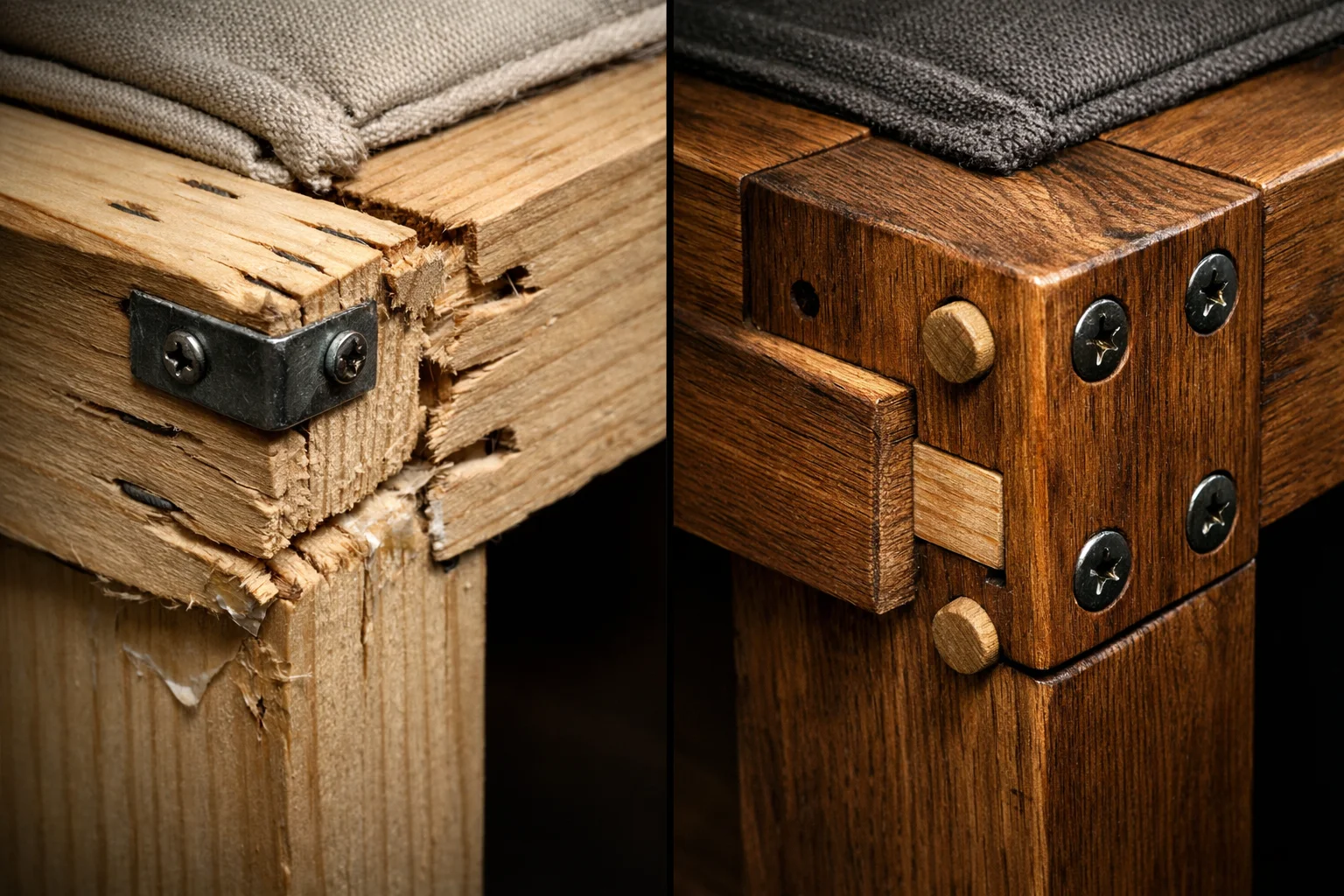
If you actually need commercial grade seating, do not try to cheat the system with a residential sofa that “feels sturdy” in the showroom. The failure mode that injures people is usually a joint, a leg mount, or the way the frame is stapled and blocked, and those are the exact details you cannot reliably judge from a quick sit test.
If you want to understand what BIFMA is in plain language, the industry group explains it here: BIFMA. The point is not to memorize standards, it is to make the salesperson stop and prove what the product is rated to do.
The “Void” Clause
When you read warranties from brands like Crate and Barrel, Pottery Barn, or Wayfair, there is one sentence I now look for before I even care about the fabric. It usually reads something like, “Warranty is void if used for non residential purposes.”
In plain English, that clause is a trap door. It means the minute the company can argue the sofa was used as part of a business, they can deny coverage even if the failure is clearly a build issue.
What counts as “non residential” is broader than most people think. Airbnb use is the obvious one, but offices, lobbies, studios, and any space with regular client traffic often qualify, even if it feels like a normal room with a sofa in it.
I also want you to notice how easy it is for them to infer “commercial” without you ever saying the word. A delivery address with a suite number, a company name on the order, or delivery to a coworking building can be enough for a brand to decide you crossed that line.
If you are buying for your actual home, you might still get caught by this if you ship to work because it is convenient, or if you live in a building where your address format looks like a business. I would not assume the warranty will be interpreted in your favor just because you personally plan to sit on it at home.
In the showroom, ask the salesperson to show you the exact warranty language for that specific model, not a generic “limited warranty” page. Then ask one uncomfortable question while you are standing there, which is how they define “non residential use” and what proof they require to deny a claim.
If they tell you “that is only for hotels” or “nobody enforces that,” I treat that as noise. The only thing that matters is what is written, because when something breaks the person reading your claim is not the person who sold you the sofa.
Before you buy, I would take a photo of the clause on the warranty page and a photo of the model tag, then email the store or customer service a simple scenario and make them answer in writing. I keep it blunt, like, “If this sofa is delivered to an office address but used in a private home later, is the warranty void,” or “If this is used in a home office with client visits, is that considered non residential.”
If you are furnishing an Airbnb or any space that functions like a business, I would stop trying to make a residential warranty fit. The right move is to buy something explicitly rated for that use, or accept that you are self insuring and price the sofa accordingly, because you are probably going to be the warranty.
The reason I take this clause seriously is that it often predicts the whole attitude of the brand. A company that writes an easy exit into the warranty is telling you up front that once the sofa is under real wear, you are largely on your own.
Structural Differences
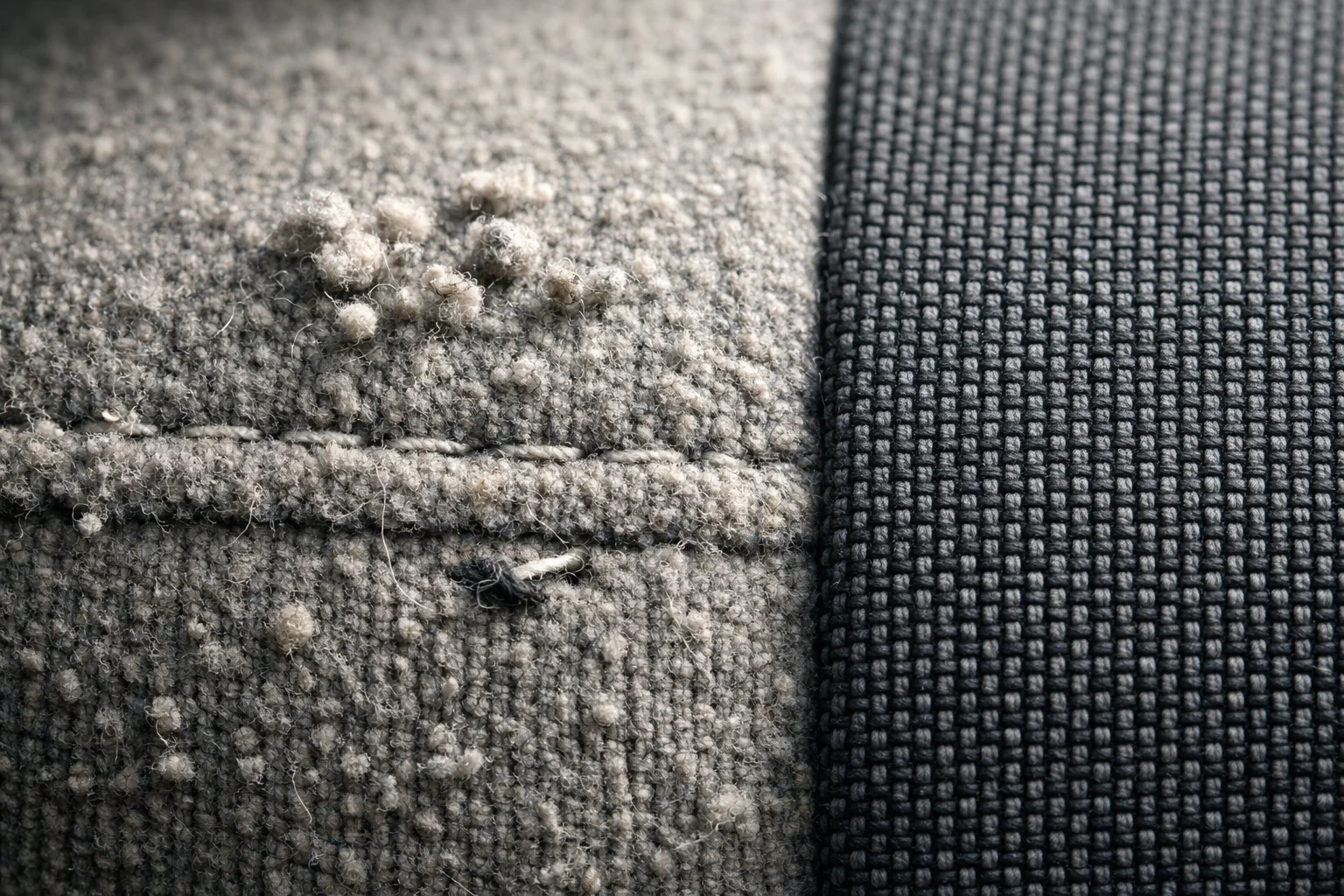
A lot of the “residential versus commercial” difference is hidden in two boring places that predict almost everything you will feel later, which are the foam and the fabric. In a showroom both can feel great on day one, so I try to focus on what the materials are expected to survive, not what they feel like under perfect conditions.
The Foam (Cycle Testing)
Foam is where most sofas quietly fail first, because you do not need a broken frame to hate a couch. You just need the seat to go soft, stay dented, and make you feel like you are sliding into a hole.
The way the industry talks about this is “cycle testing,” which is basically how many repeated sits and get ups the cushion is expected to handle before it is considered worn out. Residential foam is often tested around a couple thousand cycles a year, which is closer to normal family use, while commercial foam is tested at a wildly higher level, more like what happens in a lobby where the same spot gets hit all day.
Here is the practical takeaway I want you to use in a showroom. When a salesperson says “high density foam” or “firm foam,” I ask what the cushion is actually rated for, and whether they have any documentation that the foam is intended for heavy daily use. If they cannot answer beyond vague comfort talk, I assume it is residential grade foam, and I shop the price and the warranty like it will flatten sooner than I want.
Then I do a simple sit test that is not about comfort, it is about recovery. I sit in the same spot for a full minute, stand up, and look at how fast the cushion rebounds and whether it leaves a clear dish shape. I also press down with my hand near the front edge, because that is where foam collapses first when people perch.
If the cushion is reversible, I flip it and check whether both sides feel equally supportive. If it is not reversible, I treat that as a durability tradeoff, because you are stuck wearing one face of foam until you replace the whole insert.
If you are buying for anything even semi public, like a studio, office, or short term rental, I would not let “it feels supportive” be your deciding factor. Standard foam can feel fantastic for a few weeks, then look flat shockingly fast under high traffic, and once that happens you are usually outside what the brand calls a defect.
The Fabric (Fire Code)
Fabric is another place where residential and commercial can be built to totally different expectations, and the difference is not just how it wears. It is also how it behaves around ignition sources.
Residential upholstery is commonly tested to a smolder standard, the classic example being a cigarette. Commercial upholstery is often expected to handle open flame resistance, which is more like what happens with matches or lighters, and that is a much tougher bar.
If you are shopping for your living room, you probably do not need to turn this into a fire code project. What I do want you to do is notice when a salesperson uses “performance fabric” as a blanket claim, because stain resistance and flame behavior are not the same thing, and “performance” is not a code.
If you are furnishing a business space, or anything where an insurer might care, I would ask one blunt question while you are still in the showroom. I ask what flammability standard the exact fabric on the floor model meets, and whether they can provide the spec sheet that shows it. If they cannot show you anything and they just reassure you, I assume it is not rated the way a commercial setting expects, and I do not rely on it in a space where liability is real.
This matters because if a fire happens and the furniture is found to have accelerated it, you do not want to be arguing after the fact that you thought “it should be fine.” I have learned to treat documentation like part of what I am buying, right alongside the sofa itself.
Diagram showing warranty void conditions

When you look at this diagram, I want you to stop thinking in terms of “how many people live in my house” and start thinking in terms of “how many hours per day does a seat get used, and how consistently does it get hit in the same spots.” Residential use is spiky, you sit for a while, you get up, and the sofa rests. Commercial use is a long, flat grind, the sofa is loaded for hours, and the foam and joints do not get recovery time.
This matters because a lot of warranty language is written as if the only difference is location, home versus business, but the real difference is duty cycle. The brand is protecting itself from exactly what the red curve shows, continuous use that accelerates cushion softening, fabric wear, and frame loosening in ways they will call “normal” even when it feels like failure to you.
In a showroom, I use this diagram as a prompt to ask questions that force clarity. I ask how the manufacturer expects the sofa to perform if someone sits on it for several hours a day, and I watch whether the salesperson answers with specifics or with vibes. If all I get is “it is great quality” and “we sell a lot of them,” I assume the warranty will also be vague when it is time to file a claim.
Then I look for the parts of the warranty that quietly align with the blue curve. If it excludes cushion softening, impressions, fabric pilling, seam slippage, or stretching, that is basically the company admitting that high use wear is not their problem. You can still buy it, I do sometimes, but you should price it like you are buying looks and comfort for a period of time, not long term performance.
If you are buying for your home but your lifestyle looks more like the red curve, big family, lots of guests, kids who flop, people who nap on the sofa daily, I want you to treat “residential warranty” as a lower ceiling than you think. I would ask whether the seat cushions are replaceable by ordering inserts later, what that costs, and whether the covers can be removed and cleaned without destroying the seams, because those are the parts you are most likely to need to refresh.
If you are buying for any kind of business use, I treat this diagram as a go or no go filter. A sofa that is truly meant for the red curve will usually come with clearer documentation, clearer cleaning instructions, and fewer squishy exclusions about what counts as normal wear. If the paperwork is thin and the warranty is full of escape hatches, I take that as the product telling you it belongs on the blue curve no matter how “sturdy” it feels on the floor.
When to Buy Commercial Grade (For Your Home)
You do not need any special status to buy commercial furniture, you just have to be willing to ask for it and pay for what it is. The trick is knowing when it actually makes sense in a normal house, because commercial grade is not automatically “better” in every way, it is just built for higher abuse and longer duty cycles.
The first place I see it pay off at home is dining chairs, especially if you have kids or anyone who rocks back on two legs. Residential dining chairs often fail at the joints and stretchers because they are built light to look elegant, and that constant tipping load finds every weak staple and screw.
When you are in a showroom, I would grab the backrest and try to gently rack the chair side to side, then lift it an inch and set it down to listen for any click or creak. If it already talks on a showroom floor, it is not going to get quieter in your kitchen, and a commercial chair usually feels boringly solid in this exact test.
I also like commercial dining chairs if you host a lot and people drag chairs across the floor all the time. The finish and the corner protection tend to be more forgiving, which matters more than you think once you see the first year of scuffs.
The second place commercial grade is worth it is your home office chair, if you actually sit in it for a workday. If you are in that seat for hours, I stop caring whether the chair is cute and start caring whether it is rated and tested for repetitive use, because cheap mechanisms develop play, then they squeak, then they fail.
In a showroom, I focus on the parts that break first. I raise and lower the chair several times, I lean back and forward repeatedly, I twist side to side, and I pay attention to whether the motion stays smooth and centered or starts to feel sloppy. If the salesperson can tell you the chair is BIFMA rated and can point you to documentation for the exact model, I treat that as a real signal that it is built for daily use, not occasional “desk styling.”
The third place I would strongly consider commercial grade at home is anything you rent out, even part time. Renters use furniture like a tool, they plop, they eat on it, they sit on arms, and they do not baby fabrics or cushions because it is not theirs.
If you furnish a short term rental with residential seating, I want you to assume the red curve from the diagram is your real life and that the warranty is basically decoration. In that situation, commercial grade is not about luxury, it is about reducing how often you have to replace a sofa or pay for emergency repairs between guests.
Even if you are not renting, I still push you toward commercial grade when your household behaves like a small public space. If you have a big family, teens with friends rotating through, a partner who naps on the sofa daily, or a dog that launches off the same cushion every time, you are putting commercial style repetition into a residential product.
Here is how I decide, standing in a showroom. If I can honestly say one seat is going to get used hard every day and I would be angry to replace cushions in two years, I start asking to see their contract or commercial line, or I look for a manufacturer that sells replaceable seat inserts and actually makes it easy to order them later.
If the store does not carry commercial options, I do not force it. I just change how I buy, I choose simpler shapes that are easier to reupholster, I prioritize removable covers when possible, and I treat the purchase like a high wear item with a planned refresh, not a forever sofa.
Technical Summary: The BIFMA Standard
When I am trying to cut through showroom talk, I look for one phrase that is actually checkable, which is BIFMA X5.4 for lounge seating. If you see that standard tied to the exact model you are considering, it usually means somebody tested the chair as a chair, not just described it as “commercial inspired.”In plain language, BIFMA X5.4 includes abuse style tests that mimic what real people do when they drop into a seat and lean on the back repeatedly. One of the big signals is that the seat is drop tested with a heavy weight, and another is that the backrest is pulled over and over again for a very high number of repetitions, because back failures are a common injury style failure, not just an annoyance.
What you can do with this in a showroom is simple. Ask the salesperson to show you the spec sheet, cut sheet, or certification statement that names BIFMA X5.4 and matches the exact product line and configuration you are buying, not “similar models” and not the brand at large. If they cannot produce that document, I assume the product is not BIFMA certified, even if it feels solid when you sit on it for two minutes.
I also treat “BIFMA compliant” differently than “BIFMA certified.” Compliant can mean they built it with the standard in mind, certified usually means a third party test happened and it passed. If you are buying for a space where liability matters, I would push for certified, or I would at least get the compliance claim in writing with a document attached, not just a verbal “yes.”
One more thing I wish someone had told me early is that BIFMA is not a magic shield for every situation, and I do not rely on it to make something truly “sue proof.” It is a meaningful durability and safety signal, and it can help show you did not buy something flimsy for public use, but you still need the right warranty, the right use case, and basic common sense about how people will treat the furniture.
If you are buying for your home, I still like seeing BIFMA because it often correlates with sturdier frames and mechanisms, especially on chairs. I just do not pay extra for the letters unless the rest of the package makes sense, which means a warranty that does not wriggle out of cushion performance, and a brand that will actually sell you replacement parts when something wears out.
Explore Technical Reference

The Renter's Survival Kit: Furniture That Moves
Buying furniture for a space you don't own. Strategies for moving, scale, and landlord-friendly designs.
Analyze Details →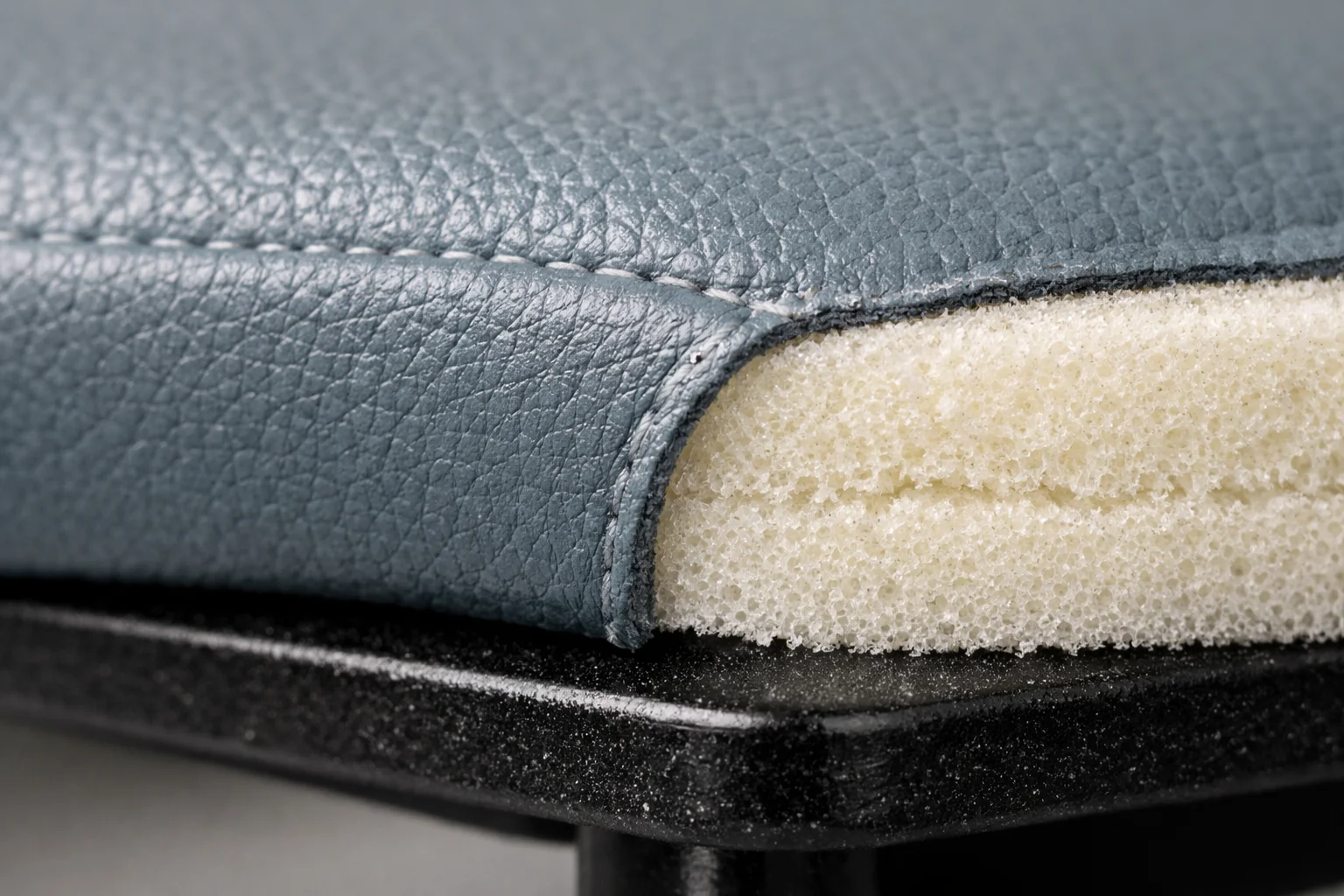
Waiting Rooms: The Psychology of "Anonymous" Furniture
Why healthcare and professional waiting areas face unique furniture challenges.
Analyze Details →