The Renter's Survival Kit: Furniture That Moves

Introduction
I learned this lesson the expensive way. I bought a beautiful 96 inch tuxedo sofa that felt like a grown up purchase, and it was perfect until the day I had to move it. The new building had a seven foot elevator, and my eight foot sofa became a problem I could not solve.
I panicked and sold a two thousand dollar sofa for four hundred dollars because there was no alternative. That moment taught me something I wish I had understood earlier, especially as a renter. If you rent, you do not own your space, so your furniture has to be liquid, not solid.
When I say liquid, I mean furniture that can flow through real life constraints like elevators, stairwells, narrow doors, and future apartments you have not seen yet. In a showroom everything fits because the room is huge and empty. In your life, things are tighter and less predictable.
As you read this guide, I want you to keep that image in your head. You are not just buying a sofa for the room you live in today. You are buying something you may have to carry, tilt, rotate, disassemble, and resell under pressure later. Every choice you make should reduce the chance that you end up stuck, stressed, and taking a massive loss.
The "Pivot" Rule (84 Inches)
There is a magic number in logistics, and it is eighty four inches, or seven feet.Most elevators are built around eight feet of interior height, but that is only in a perfect vertical. Once you angle a sofa to get it through the door and past the ceiling, the usable diagonal drops fast. Apartment hallways are also narrow, usually around thirty six to forty inches, which limits how much you can rotate a long piece.
The problem shows up the moment a sofa is longer than eighty four inches. You cannot stand it up vertically in most elevators, and you cannot pivot it in a hallway without hitting a wall or ceiling. At that point, the building decides whether you keep the sofa or not.
My personal rule is simple. If you rent, I never buy a single solid piece longer than eighty four inches unless it genuinely comes apart.
When you are in a showroom, this rule is easy to miss because everything is laid out flat and friendly. Salespeople will talk about how great a ninety inch sofa looks in a living room, but they rarely talk about how it moves. That silence is expensive.
What I do instead is ask one very specific question before I sit down. I ask if the longest rigid piece is under eighty four inches, and I ask them to show me where it separates if it is longer. If they hesitate, guess, or say movers figure it out all the time, I walk away.
You should also physically look underneath the sofa. I look for bolts, brackets, or clear seam lines that indicate real separation, not just removable legs or cushions. Legs do not solve the pivot problem, and cushions never matter.
If you love a longer sofa, the only safe version as a renter is one that breaks into two or more solid sections. Each section needs to be short enough on its own, not just theoretically lighter or easier to carry. If the longest section is still over eighty four inches, you are gambling with your future move.
I know this sounds overly cautious, but I promise it is not. Buildings change, elevators break, and you will not always have access to a freight lift. Designing your purchase around that reality is how you keep your money instead of handing it to the next buyer at a discount.
The 3 Features That Save Your Security Deposit
When I say security deposit, I am not being dramatic. The fastest way to lose money as a renter is damaged walls, bent door frames, scratched floors, or a sofa that has to be abandoned because it cannot get out. These three features are the ones I now actively look for because they directly reduce those risks.
The first feature is true modular separation, not marketing modular. I am talking about a sofa that breaks into distinct structural sections, each with its own frame, not just loose cushions or removable legs. In the showroom, I ask them to actually separate it in front of me. If they say it can be done but do not want to demonstrate, I treat that as a no.
When a sofa genuinely comes apart, each piece can move through a tight hallway without scraping paint or levering against a door frame. That alone can be the difference between a normal move and a repair bill that eats your deposit. I have watched movers force a one piece sofa around a corner, and the wall always loses.
The second feature is legs that fully and easily come off without tools or with a simple hand twist. This sounds minor, but it matters more than people think. Fixed legs add height and change angles, which makes pivoting harder in elevators and stairwells.
I now crouch down and physically check how the legs attach. If I see glued wood blocks or legs that feel like part of the frame, I pass. Removable legs let the sofa ride lower and flatter, which reduces ceiling contact and floor gouges during a move.
The third feature is fabric that forgives friction. Moves are rough even when everyone is careful, and tight spaces mean fabric will rub against walls, rails, and door edges. I avoid delicate weaves, loose boucle, and anything that snags if you drag a fingernail across it.
In the showroom, I lightly rub the fabric with my palm and then with the edge of my fingernail in an unseen spot. If it pills, fuzzes, or catches immediately, imagine what a stairwell will do to it. Durable fabric does not just look better over time, it keeps you from being charged for damage you did not even notice until move out day.
None of these features make a sofa prettier in a staged living room. They make it survivable in real buildings with bad angles and thin walls. Every time I have ignored one of them, I have paid for it later in stress, money, or both.
If you remember nothing else from this section, remember this. Your security deposit is not protected by how careful you are. It is protected by how forgiving your furniture is when things inevitably get tight.
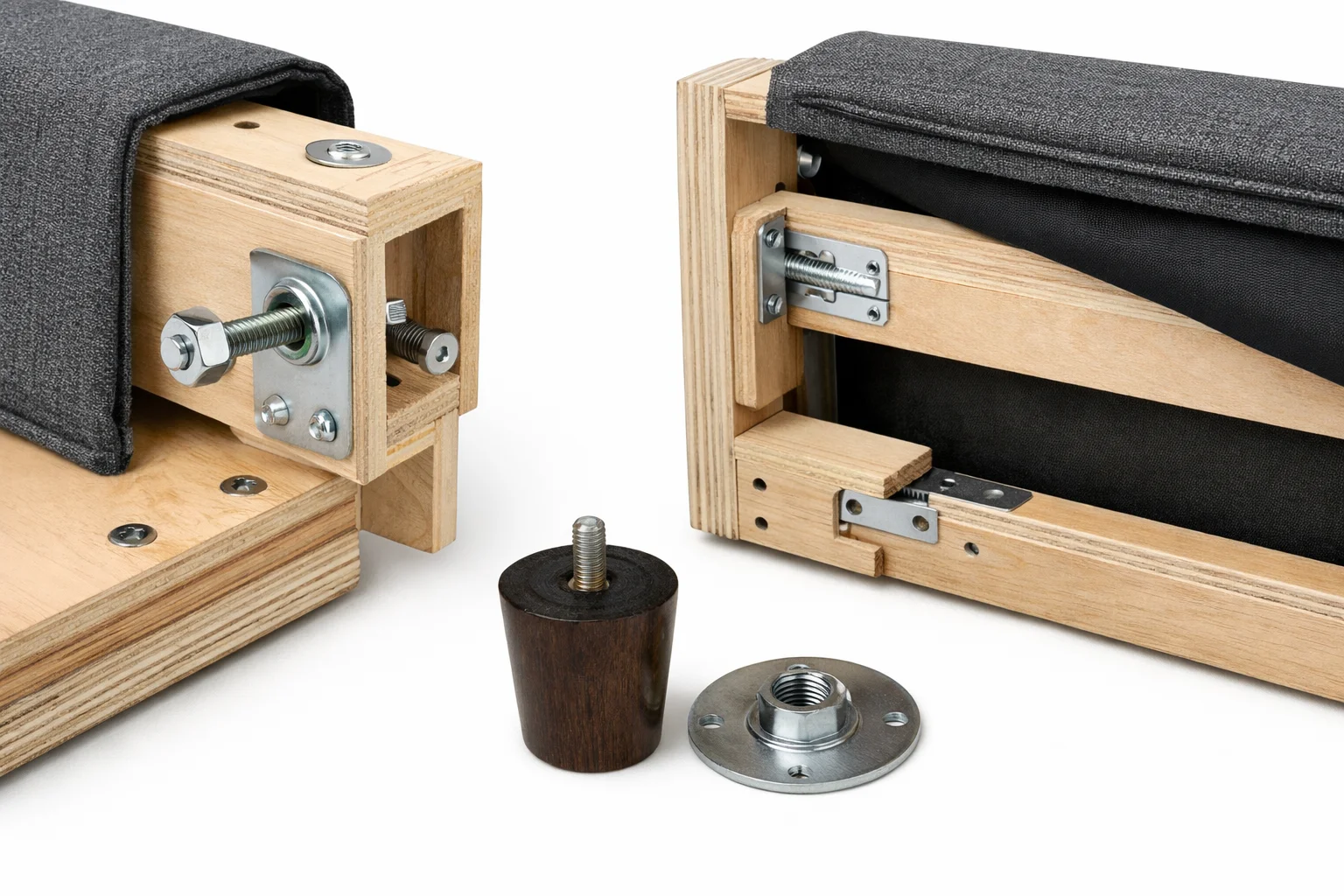
1. Removable Legs (The Doorway Hack)
This is the simplest check in the showroom, and it has saved me more grief than almost anything else. I have stood in more than one apartment doorway staring at a sofa that was only a few inches too tall to go through.
The classic scenario looks harmless on paper. Your door opening is around thirty inches wide, which is extremely common. The sofa stands about thirty three inches tall at the back, which feels normal until it is upright and blocking your path.
What actually fixes this most of the time is removing the legs. When the legs come off cleanly, the overall height usually drops three to five inches, which is often just enough to clear a tight door or let you tilt the piece without scraping the frame.
The problem is that not all legs are truly removable, even when they look like it from across the room. I have seen plenty of expensive sofas where the legs are carved as part of the frame or glued into a decorative base. Once you own it, the only way to remove them is with a saw, and that is not a real option if you ever want to resell it.
When I am in a showroom, I do not take anyone’s word for this. I kneel down and look underneath the sofa myself. I am looking for a visible bolt, threaded insert, or plate that clearly shows the leg unscrews from the frame.
If I cannot see how the leg comes off, I assume it does not. If the salesperson says the movers usually handle it, that is my cue to walk away because movers do not perform miracles. They just force things until either the sofa or the building gives up.
You should also pay attention to how much structure sits below the frame once the legs are gone. Some sofas technically have removable legs, but the base underneath is still thick and boxy. That extra bulk can cancel out the height savings you thought you were getting.
I always ask them to remove one leg on the floor model if possible. If they resist or say it is not allowed, I take that as information. A sofa that cannot be demonstrated is a sofa I do not want to discover under pressure later.
This check takes less than a minute, and it directly affects whether you can get the sofa into your current place and out of your next one. Fancy legs and sculptural bases look great in photos, but they do not help you when you are wedged in a hallway sweating and watching the door trim bend.
If you remember one thing from this section, remember this. A sofa without truly removable legs is taller, harder to angle, and far more likely to get stuck. That risk belongs to you, not the showroom, so you need to verify it before you pay.
2. “Apartment Size” Depth
Depth is the dimension most people ignore, and it is the one that quietly wrecks small apartments. In a showroom, a deep sofa feels luxurious because there is space all around it. In a real apartment, that extra depth eats your walking path every single day.
When I say apartment size depth, I am talking about sofas that land roughly in the mid thirties for total depth. Once you get into the low forties, which is common for house scale sofas, you are no longer buying seating. You are buying an obstacle.
I learned to visualize this before I ever sit down. I picture my room as a simple rectangle and imagine the sofa pushed fully back against the wall. Then I imagine the distance from the front edge of the seat to the opposite wall or to the edge of the rug where I actually walk.
In a typical ten foot wide room, which is very common in apartments, a forty inch deep sofa can easily steal half your usable floor. That does not show up in a staged photo, but it shows up when you are sidestepping around the coffee table every morning.
In the showroom, I physically measure depth myself instead of trusting the tag. I bring a tape measure or use my phone and measure from the very back of the frame to the very front edge of the seat cushions. Decorative pillows do not count, but thick front rails absolutely do.
If the number starts creeping past thirty eight inches, I pause and ask myself how I actually live. If you like to stretch out, that depth feels great. If you like to move through your space without turning sideways, it becomes annoying fast.
There is also a comfort trap here that salespeople rarely mention. Deep sofas often require you to either slouch or pile pillows behind your back to sit upright. In a large house that can be fine. In an apartment where the sofa already dominates the room, it is frustrating to give up space and still not sit comfortably.
What I do is sit all the way back and plant my feet flat on the floor. If my feet barely touch or my knees stick straight up, the sofa is too deep for everyday sitting. That usually means it is too deep for my room as well.
You should also watch how the depth affects circulation. I stand up, walk past the sofa, and notice if I instinctively turn my shoulders or hug the edge. That instinct is your body telling you the scale is wrong, even if the sofa looks beautiful.
Apartment size depth is not about deprivation or settling. It is about buying something that respects the fact that every inch matters when walls are close. A slightly shallower sofa often makes the entire room feel calmer and easier to live in, even if you cannot explain why.
If you are torn between two models, and one is several inches shallower, I almost always choose the shallower one. I have never once wished my sofa blocked more of the room. I have many times wished I had left myself more space to move.
3. Modular Construction (The Tetris Master)
This is the feature that finally made me stop losing money on sofas. Modular construction means you are not buying one giant object, you are buying several smaller ones that lock together and pretend to be one sofa.
The difference does not feel important until the day you move. Instead of wrestling a single awkward frame that wants to wedge itself into every corner, you are carrying individual sections that one person can actually manage.
I learned to think of a modular sofa like furniture Tetris. Each piece is its own block, and blocks are easy to rotate, stack, and fit through strange gaps. A single rigid sofa is just a long stick that only fits one way.
In a showroom, modular sofas often look boring or overly simple, and salespeople sometimes downplay them as less substantial. That framing is misleading. What matters is whether each unit has its own real frame, not whether it looks dramatic as one piece.
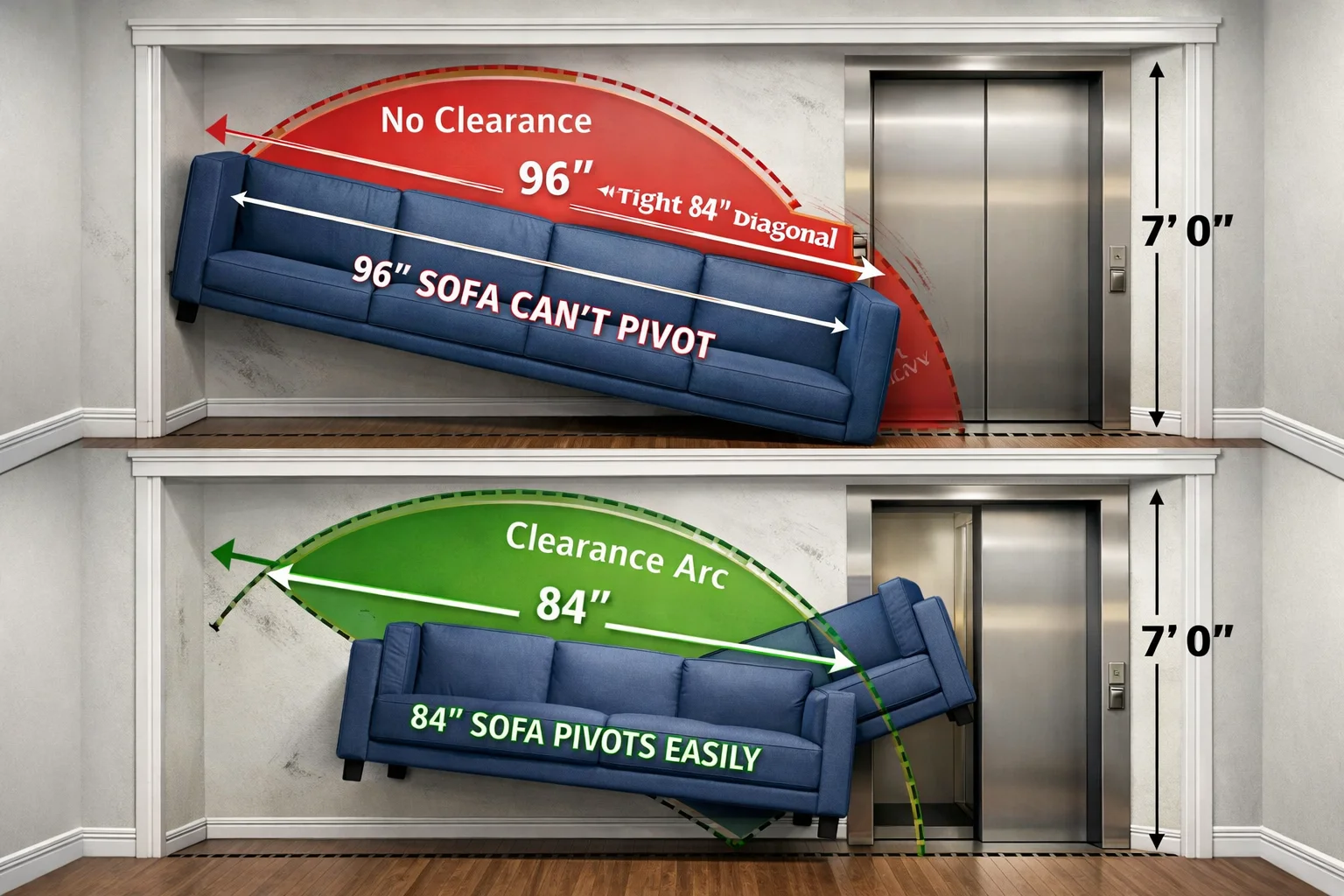
When I am shopping, I ask them to physically separate the sofa into its individual sections. I want to see a corner unit, an armless unit, or an ottoman standing alone, not just cushions pulled off.
If the pieces clip together with metal brackets or slide locks, that is fine. What I am checking is whether each section is structurally complete on its own and short enough to move without gymnastics.
This matters because modular is not just about moving day. It is also about your next apartment, which you cannot predict. I have lived in places where a long sofa worked perfectly, and then moved to a smaller layout where it suddenly felt oppressive.
With modular seating, you are not forced to sell or store furniture just because the room changed. You can run it as a long sofa in one place, then break it into a loveseat and a separate chair in the next.
That flexibility is real value, even if it does not show up on a price tag. I have kept the same modular sofa through multiple apartments simply by reconfiguring it, while friends had to start over.
There is a practical showroom test I always do. I look at the longest single module and ask myself if I could carry it alone through a hallway. If the answer is yes, I am interested. If the answer is no, the modular label does not matter.
You should also check how the modules connect. I give them a light push from the side. If everything slides apart easily, that will be annoying in daily use. If it locks together firmly but still separates with intention, that is the sweet spot.
One thing I am careful about is hidden dependence between modules. Some sofas claim to be modular, but only look complete when all pieces are present. If removing one section leaves exposed fabric, unfinished arms, or awkward gaps, the flexibility is mostly theoretical.
I want modules that look intentional on their own. An armless unit should still look finished. A corner should not rely on another piece to hide raw edges.
Modular construction also makes repairs and replacements less painful. If one section gets damaged, you are not automatically replacing the entire sofa. That alone can save you hundreds or thousands over time.
I know modular sofas are not always the most visually exciting option on the floor. What they are is forgiving, adaptable, and realistic about how people actually live and move.
After being burned more than once, I now see modular construction as insurance. You are paying a little attention upfront so you do not pay a lot of money later when life forces a change you did not plan for.
If you rent, or think you might move again, I would rather compromise slightly on style than lock myself into a single rigid shape. Sofas should adapt to your life, not trap you inside one version of it.
This image is the mental shortcut I wish I had internalized earlier. Two apartments, same square footage, completely different problems once you drop a sofa into them.
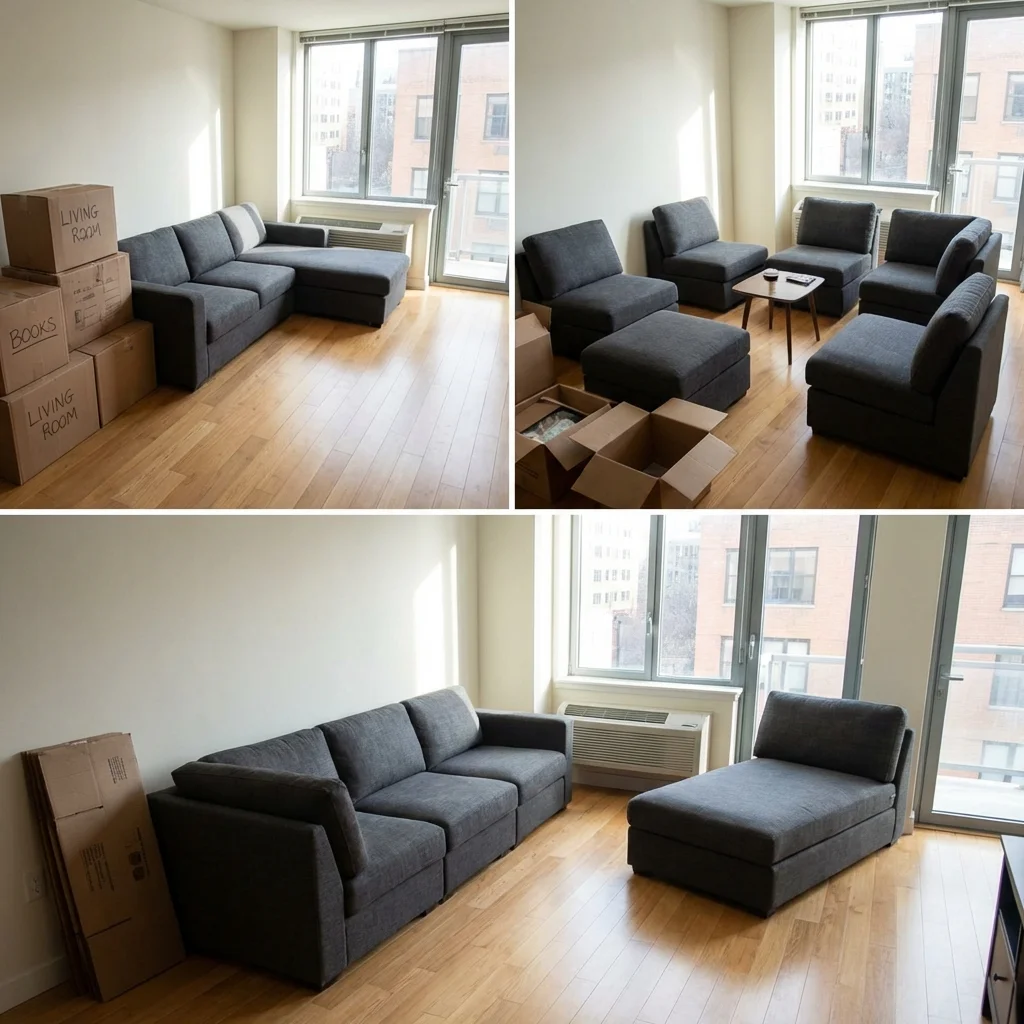
When I look at this, I do not see a design diagram. I see two moves I have actually lived through, and one sofa that would have failed in at least one of them.
In the long, narrow apartment, a straight run of seating makes sense. It keeps the walking path open and lets the room breathe. In the square apartment, that same rigid sofa suddenly wastes corners and crowds the center of the space.
This is where modular earns its keep. You are not committing to one geometry forever. You are buying pieces that can respond when the room changes shape, which it almost always does when you move.
In a showroom, I now try to imagine both versions at once. I picture the sofa as a long line against a wall, then I picture it broken into an L, or split into two smaller seating zones. If I cannot visualize more than one workable layout, I know I am buying something fragile.
You can do this too without any drawings or apps. Stand back from the floor model and mentally remove a section. Ask yourself if what is left still makes sense. If the answer is no, that sofa is only happy in one kind of room.
Solid one piece sofas look confident on a sales floor because the space never argues with them. Real apartments argue all the time. Corners intrude, doors swing, radiators exist, and suddenly the perfect sofa is the wrong shape.
What I want you to take from this image is not that modular is trendy. It is that adaptability is protection. When your furniture can change shape, you keep control instead of letting the room dictate expensive decisions.
Every time I have ignored this and bought a single fixed form, I eventually paid for it with a rushed resale or a layout I hated but felt stuck with. Every time I chose something that could reconfigure, I bought myself options.
Options are what renters need most. You cannot change the walls, but you can choose furniture that does not fight them.
Color Strategy: The Neutral Core
This is the mistake I see people make right after they solve size and layout. They finally buy a sofa that fits, and then they lock it to one specific apartment by choosing a color that only works in that moment.
If you rent, you are not choosing a color for your current walls. You are choosing a color for walls you have not seen yet, under lighting you cannot predict, next to floors you did not choose.
I learned this after moving from a bright white loft into a place with warm beige walls and yellow toned carpet. The bold teal sofa I loved suddenly looked dirty and wrong, and there was nothing I could do about it.
The risk with strong colors is not that they look bad on day one. It is that they only look good under very specific conditions. Change the wall color, the floor tone, or the light temperature, and the sofa becomes the problem piece in the room.
In a showroom, saturated colors are seductive because the space is controlled. Neutral walls, even lighting, no competing textures. Your apartment will not be that kind.
What finally worked for me was committing to what I call a neutral core. I buy the largest, most expensive piece in a color that does not argue with anything. Then I add personality on top of it.
When I say neutral, I do not mean boring beige by default. I mean colors that behave well across environments. Mid grey, warm tan, soft charcoal, and even navy fall into this category because they adapt instead of dominate.
Grey in particular has saved me more than once. It does not care if the walls are cool or warm. It does not fight wood tones, carpet, or tile. It just sits there and lets everything else do its thing.
Navy works similarly if it is truly dark and not overly saturated. In daylight it reads rich. At night it reads neutral. It feels intentional without being loud.
The key is that the sofa itself stays calm. That calmness gives you room to adjust when the apartment changes around it.
Color does not disappear when you choose a neutral sofa. It just moves to places that are cheaper and easier to swap. Throws, pillows, and even a rug can carry all the personality without locking you in.
I now think of these as consumable layers. If I move into a place with warmer walls, I change the pillows. If the next place is cooler or darker, I swap the throw. The sofa stays put.
This strategy also protects your resale value. Neutral sofas sell faster and for more money because more people can imagine them working in their space. A teal or mustard sofa needs a very specific buyer at a very specific moment.
In a showroom, you can test this mentally. Stand in front of the sofa and imagine it against three different wall colors. One light and cool, one warm and beige, one darker and moody. If it works in all three in your head, you are on the right track.
If you have to justify it with phrases like it would be perfect if the walls were white, that is a warning sign. You do not control the walls.
I also pay attention to undertones. Some greys lean blue, some lean brown, some lean purple. I hold a white tag or paper next to the fabric and see what shows up. If the undertone feels strong, I know it will clash somewhere down the line.
What you want is a fabric that feels balanced and slightly boring up close. That boredom is what gives you flexibility later.
This does not mean you can never buy color. It means you should not marry it at sofa scale. Commitment is expensive when it weighs two hundred pounds.
If you love bold color, use it where it can leave with you in a bag. Pillows, throws, even art can change apartments easily. A sofa cannot.
I know neutral cores are less exciting on the sales floor. They do not scream for attention. What they do is quietly survive move after move without becoming the reason you feel trapped or disappointed.
After enough moves, I realized the goal is not to buy the most exciting sofa. The goal is to buy the one that keeps working when everything else changes.
If you rent, that kind of reliability is worth more than any statement color ever was.
Technical Summary: The Moving Day Checklist
Before you sign anything or hand over a deposit, I pause and run a quick mental rehearsal of moving day. This takes five minutes in a showroom and can save you thousands later.
The first thing I check is the elevator diagonal. I imagine the sofa tilted, not flat, because that is how it actually moves. I measure from the top rear corner down to the bottom front corner and compare that length to seven feet. If that diagonal is longer than the elevator can handle, the sofa is already on thin ice no matter how good it looks.
Next, I think about turns, not just doors. I picture carrying a seven foot object through my actual hallway, past corners, light fixtures, and low ceilings. If I cannot clearly imagine rotating it without scraping or forcing it, I assume it will fight me later. Hallways decide more sofa fates than elevators do.
The last thing I plan for is the floor. I buy felt pads before the sofa ever arrives and put them on the legs the same day. This is not optional for me anymore. Even careful movers drag and pivot, and bare legs leave marks that show up during move out inspections when it is too late to argue.
I treat this checklist as a gate, not a suggestion. If a sofa fails one part of it, I do not try to negotiate with reality or trust that it will probably be fine. I have learned that probably is how you lose a security deposit or panic sell furniture you loved.
If you do this once, every time, you stop buying sofas based on hope. You start buying them based on whether they can survive the least convenient version of your future move. That mindset is the difference between owning furniture and being owned by it.
Explore Technical Reference

The 3 Phases of Kid Furniture (0-18 Years)
Understanding how children's furniture needs change across developmental stages. Why buying one sofa for the entire journey from infancy to empty nest rarely makes sense.
Analyze Details →
Cafe Economics: Why That Velvet Sofa Hurts
Why cafe sofas are designed for turnover rather than comfort, and what
Analyze Details →