The Claw Test: Why Velvet Defeats Cats
Introduction
When I see a sofa marketed as “pet proof,” I translate that as “we hope you won’t test it.” I have watched a determined dog turn tough looking furniture into confetti, and I have watched a cat quietly sandpaper an armrest over a few months, so I do not buy the fantasy that any fabric is invincible.
What I do believe in is pet resistant, because that is just materials and construction choices that fail slower. Your job in the showroom is not to find a miracle fabric, it is to figure out what your pet is actually going to do to the sofa, then pick the fabric that specifically resists that kind of damage.
If your dog is a chewer, you are dealing with teeth, slobber, and repeated edge attacks on the same spots. In that case, the fabric choice matters, but the bigger tell is whether the sofa has exposed, tempting edges and loose welting, and whether the cushions and arms have any floppy, grabby seams that invite the first bite.
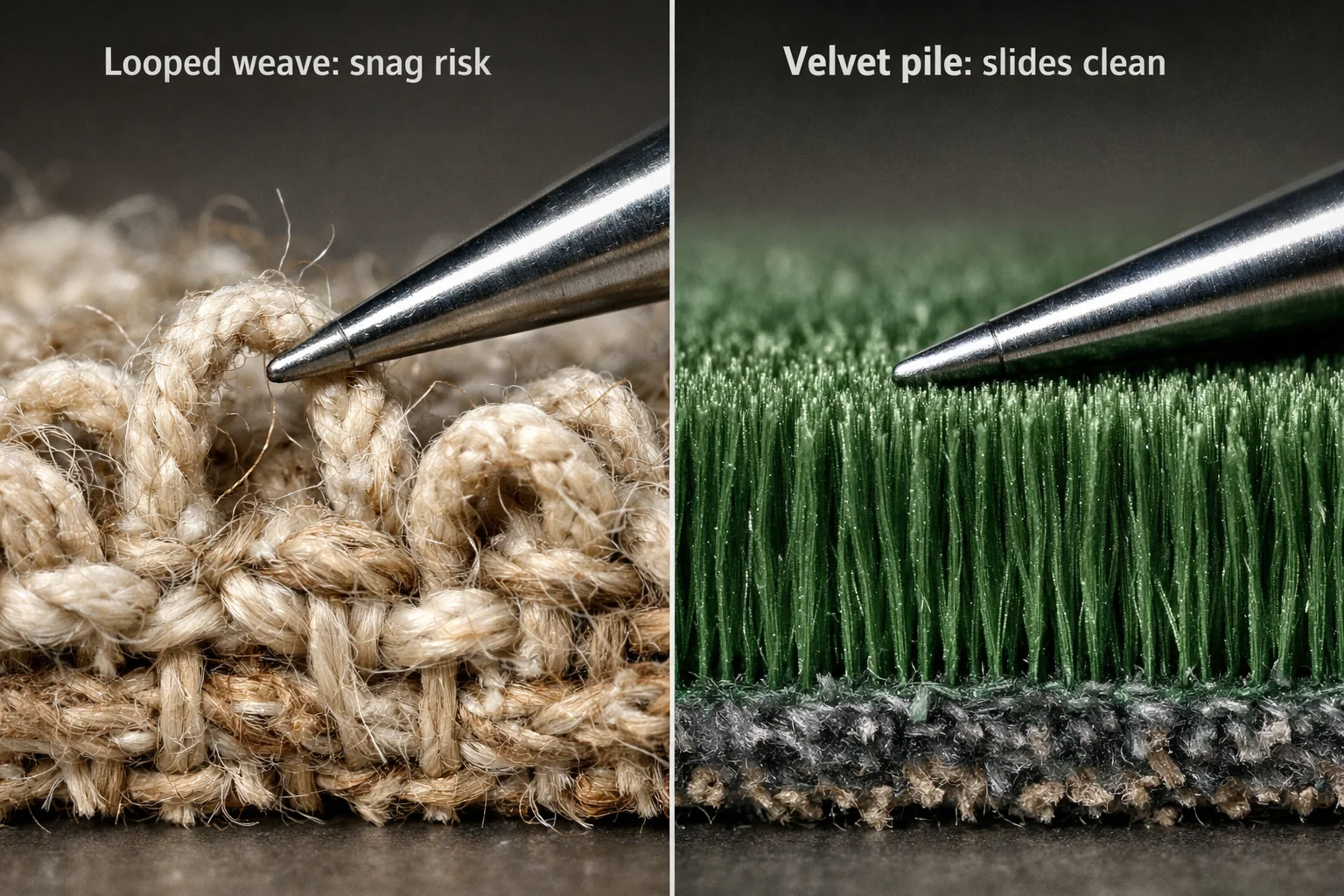
If your dog is a digger or your cat is a scratcher, you are dealing with claws catching and pulling loops. I ignore vague “durable” claims and I look at the surface structure, because a fabric that offers a loop or a snag point is basically a handle for a claw.
If your pet mostly sheds and tracks in dirt, the fight is hair, oils, and grit grinding into the weave. That is less about toughness and more about whether you can clean it without turning your weekends into stain control, and whether the fabric hides hair or spotlights it.
So when you evaluate a sofa, I want you to think like your pet for a minute and identify the “weapon.” Teeth destroy edges, claws hook loops, and grime slowly abrades and stains. Once you name the weapon, the shopping gets simpler, because you can stop paying for marketing and start paying for the specific engineering that resists the damage you actually live with.
The "Hook" Mechanic (Cats)
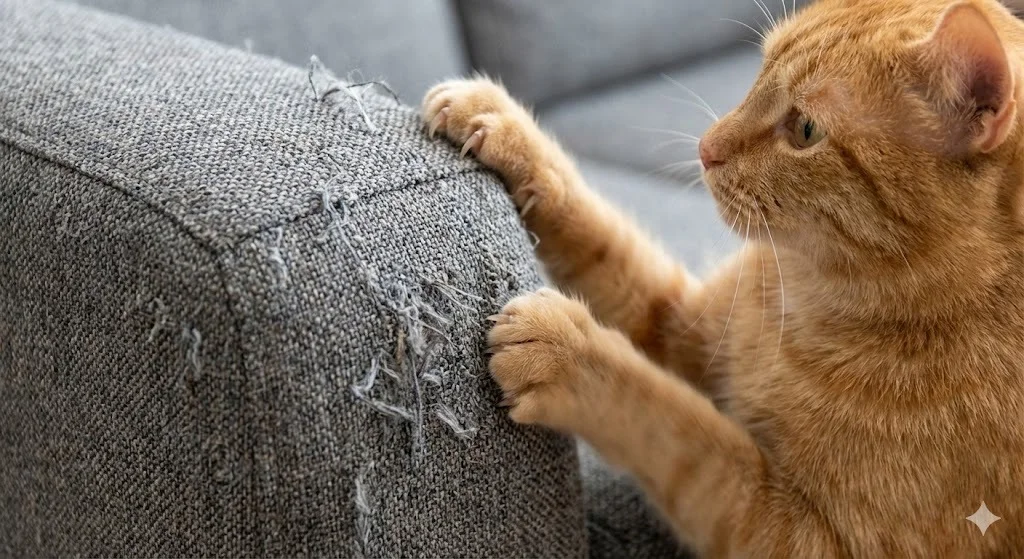
Cats are not trying to ruin your sofa, they are trying to maintain their claws. Scratching is how they shed the outer sheath, and they keep going when the surface gives them resistance and feedback.In a showroom, the main thing I look for is whether the fabric is made of loops. Looped weaves like linen, tweed, and bouclé can look tough and textured, but those little loops are exactly what a claw wants to grab.
Here is what happens in real life: the claw slips into a loop, the cat pulls, and the loop either stretches into a visible snag or it breaks and the fabric starts to tear and run. Once you get that first pulled loop, the spot becomes even easier to catch next time, so the damage accelerates.
My practical rule is simple: if you can catch the fabric with your own fingernail, your cat can definitely hook it. I lightly drag a fingernail across the arm front and the outside arm panel, because those are the zones cats seem to love, and I pay attention to whether my nail glides or grabs.
The best defense is choosing surfaces without loops, where a claw has nothing to enter and pull. When I run my hand over velvet, microfiber, and leather, I want that slick, sliding feeling, because if the claw slides off instead of setting in, many cats get bored and move on to something more satisfying.
If you are stuck choosing between two sofas and one is a nubby, “textured” weave, I assume it will show cat damage sooner even if the salesperson calls it durable. I would rather have a smoother fabric that looks slightly less interesting up close than a looped fabric that turns into a snag map after a few months.
The “Dig” Mechanic (Dogs)
When a dog “digs” at a sofa, I treat it like sandpaper, not like a puncture. They are trying to nest and get comfortable, and the damage comes from lots of fast, repetitive scraping in the same spot, usually on the seat cushions and the front edge where they plant their paws.
In a showroom, I assume any delicate fiber is going to lose this fight early. Silk and rayon can fuzz and shred fast, and even cotton can rough up and look tired because the surface fibers get abraded and broken. You might not see a clean tear, you will see a worn patch that gets lighter, frizzier, and uglier week by week.
What is actually happening is not that the claws are razor sharp, it is that even blunt claws can beat up the surface of the yarn. The fabric might technically still be “intact,” but the top layer starts to look scuffed, then the pile or nap gets mangled, and the spot becomes permanently different from the rest of the sofa.
When I am buying with a digging dog in mind, my priority is high abrasion resistance, because I want the fabric to fail slowly. If the tag or spec sheet lists a double rub rating, I look for something that is clearly in heavy duty territory, and I personally get more comfortable when I see numbers above 50,000 rather than a vague “durable” claim.
If the salesperson cannot show you a double rub number, I ask what the fabric is used for in their line. If they say it is mostly used on dining chairs, bar stools, or in a contract grade collection, that is a better sign than “it is popular” or “it wears well.”
I also pay attention to the kind of surface that handles abrasion without looking wrecked. Synthetic velvet and good microfiber can take a lot of rubbing because there are no big loops to catch and the surface can get brushed back into place. I rub my palm hard across the seat fabric in two directions and look for immediate whitening, fuzzing, or a permanent rough patch, because that is a preview of what your dog is going to do nightly.
Do not get distracted by thickness alone. I have felt thick, nubby fabrics that seem bombproof, but the first thing that happens with digging is that the texture pills, the high spots get abraded, and it starts to look old even if it is not torn. I would rather have a smoother, tighter surface that does not give the claws a lot of purchase.
Finally, I look at where your dog will dig and I test those exact zones. I press down on the front edge of the seat cushion and rub it, because that is where the fabric gets stretched over the cushion and takes the most abuse. If that edge already looks like it is going to shine, fuzz, or go bald in the showroom, it is not going to improve at home.
When you look closely at a woven fabric, especially anything that reads “textured” from across the room, you are basically looking at a field of tiny places a claw can grab. I have learned the hard way that a fabric can feel thick and sturdy and still snag easily, because snagging is not about strength, it is about whether the claw can get a purchase.
In a showroom, I do a simple snag reality check before I let myself fall in love with the color. I drag a fingernail lightly across the fabric, then I pinch the surface and give it a tiny twist like a claw would when a cat sets in and pulls. If anything lifts, catches, or raises a little loop that was not there a second ago, I treat that as a warning sign, because at home that one little lift turns into the spot your cat targets again and again.
This is also where velvet earns its reputation with cats. A true velvet or a good synthetic velvet does not present those little loop handles, so claws tend to slide and you usually get less of that classic snag or run. The tradeoff is that velvet can show pressure marks and direction changes in the pile, so I always rub my palm across it in two directions and decide if I can live with that look, because some people read it as “shiny” or “brushed” even when it is not damaged.
If you are comparing a woven fabric to a velvet in the same price range, I want you to stop thinking about which one feels tougher and start thinking about which one offers fewer entry points. If your cat is a habitual scratcher, fewer entry points usually wins, even if the woven option is labeled “heavy duty.”
One more thing I watch for is the difference between a snag and a pull. On some weaves, a snag is not just a cosmetic loop, it can start a run that keeps spreading as the yarn shifts. I look at the fabric on the outside arm and front rail, because those areas are stretched tight over padding, and fabrics that are going to run tend to show it there first when you press, rub, and lightly catch with a nail.
If the salesperson pushes you toward a nubby weave because it is “for pets,” ask to see a larger swatch and do the nail test right on it under good light. I have had fabrics that looked fine on a tiny sample and then looked like a snag board on a full panel, simply because the scale of the texture gave claws more to grab once you saw the real thing.
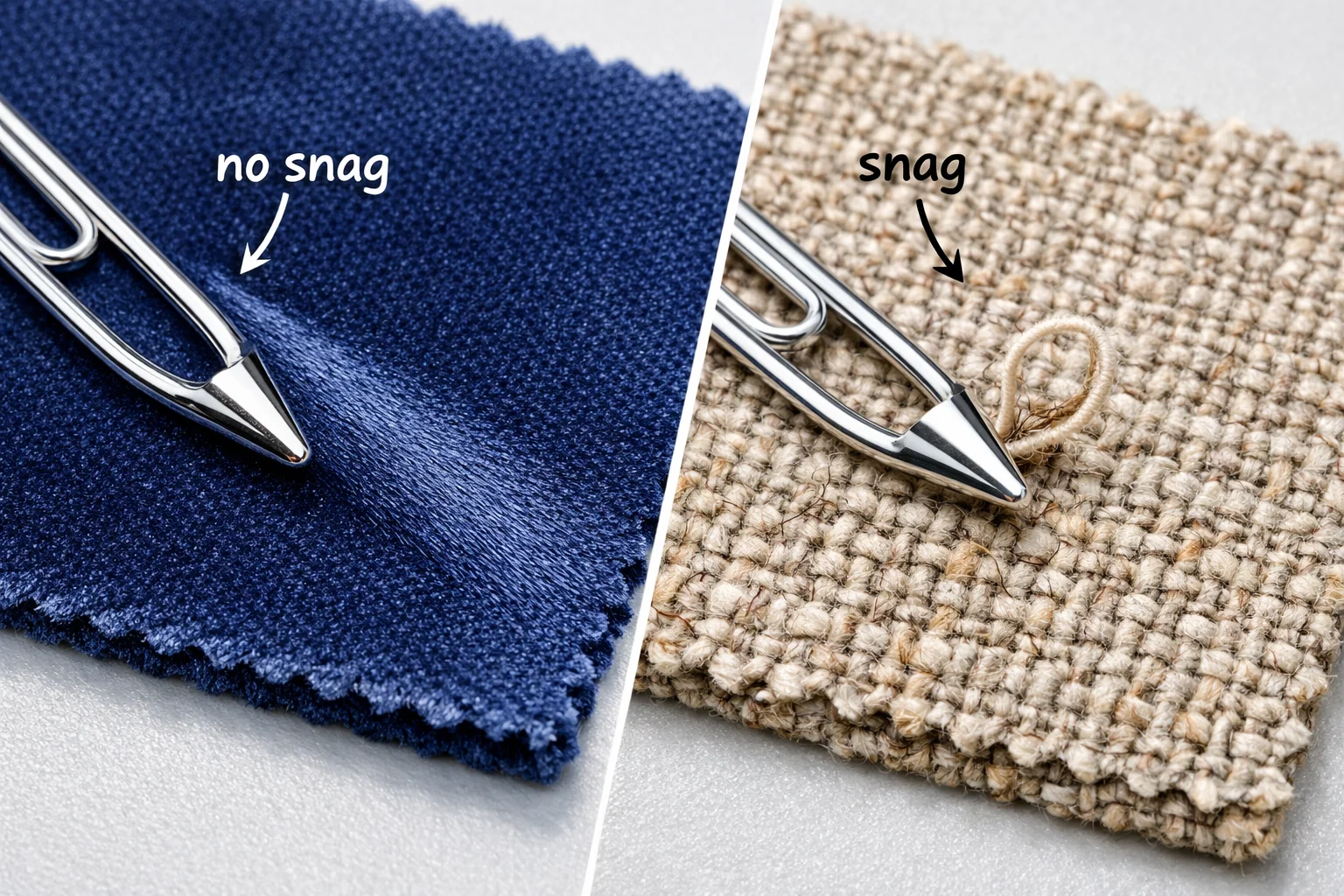
When I am not allowed to abuse a floor model with a fingernail, I do a version of the paperclip test using something harmless I already have, like the edge of a zipper pull on my jacket, a key, or the corner of a phone case. I lightly drag it across the fabric on the outside arm and the front edge of a seat cushion, because those are the spots that get the most contact and the most stretching.
What I am watching for is the difference between a surface that just gets ruffled and a surface that actually catches a thread. On velvet and many microfibers, you will often see the nap flip direction and look “brushed” for a moment, then it smooths back out when you swipe your hand over it.
On looped weaves, the same light drag can lift a tiny loop or pull a filament that stays up like a little flag. If I can create that with a gentle pass, I assume a cat claw can do it in one swipe, and I assume a digging dog will turn it into a permanent fuzzy patch.
If you want a quick reality check in the showroom, ask for a larger swatch of the exact upholstery, not a “similar” fabric, then do the same drag test on the swatch and on the sofa body. I have seen fabrics that behave fine in your hands but snag more easily once they are stretched tight over padding, which is exactly how they live on the arms and front rail.
If the fabric does show a nap change, I do not automatically reject it, I just decide if I can live with the look. I rub the area in two directions and step back a few feet, because if the shading difference bugs you under store lighting, it will bug you at home too, even though it is not real damage.
If the fabric actually pulls a thread or raises a loop, I treat that as a hard warning and I move on unless you are willing to use throws or accept visible snags as normal wear. Salespeople will sometimes call it “character,” but I have learned that the first snag is rarely the last snag, it is the first weak spot your pet will find again.
The Fabric Tier List
I think of fabrics in tiers because it keeps me honest in the showroom. When I start falling for a color or a silhouette, a simple tier lens pulls me back to what is going to look decent after real life has had a turn.
Tier 1: The Fortress (Performance Velvet)
If you have a cat who scratches, performance velvet is the closest thing I have found to a cheat code, because it gives claws very little to grab. The big reason is structural, not magical, there are no obvious loops sitting up like handles, so claws tend to slide instead of hook, and the damage that would become a snag on a woven fabric often just becomes a temporary nap disturbance you can brush back.
In the showroom, I rub the velvet hard with my palm, then I “draw” a line with my fingertip and see if the mark stays visible from across the aisle. Some velvets look perfectly fine after you smooth them, and some keep that crushed, tracked look that will drive you crazy if you are picky.
If you deal with shedding, this tier also wins in a very boring but important way. On many performance velvets, hair does not thread itself into the weave as much, so you can often wipe it off with a slightly damp cloth or a rubbery lint tool instead of vacuuming like you are doing detail work.
You still need to ask what “performance” means, because it is not a regulated promise. I ask the salesperson what the fabric is made of, and I usually prefer a synthetic performance velvet for pets because it tends to handle abrasion and spot cleaning better than delicate natural fibers pretending to be tough.
Tier 2: The Self-Healer (Full Grain Leather)
When you want something that can take daily contact without looking fuzzy or snagged, full grain leather is a strong option, and I say that as someone who used to assume leather was just for aesthetics. Scratches happen, but many small ones blend in over time, and with the right conditioner you can often rub out that fresh, light scratch look so it stops screaming at you.
In a showroom, I do not just “touch leather,” I try to slightly drag a fingernail across a hidden spot like the back corner of an arm panel and watch what happens. If the mark looks chalky at first but then darkens and blends when I rub it with my thumb, that is the self healing behavior I want, because it means day to day scuffs have a chance of calming down instead of staying bright forever.
This is the part where wording matters, because a lot of leathers sold as family friendly are basically coated. I personally avoid leather described as painted, protected, or heavily pigmented when pets are in the picture, because the coating can take a scratch like a car clear coat, and once it is cut you are staring at a permanent line that does not “mellow.”
If you are shopping leather, I would rather you ask directly for aniline or pull up leather, then confirm what that means with a real sample in your hand. Pull up in particular tends to show color change when you press it, and that same quality often helps minor scuffs blend in with normal handling.
Leather is not a free pass, though. If your dog is a committed chewer, leather gives them an edge to start, and once they break the surface you are not “cleaning” your way out of it, you are repairing or replacing a panel.
Tier 3: The Trap (Linen and Tweed)
I know linen and tweed can look gorgeous, but around claws they behave like a trap because the texture that makes them charming is the texture that gives a claw purchase. Even when they are thick and expensive, many of these fabrics are basically a high end scratching post, and the first pulled thread tends to become the spot that keeps getting hit.
In the showroom, I do not let myself get hypnotized by the weave. I do the same nail drag and snag test you already read about, but I also look at the fabric from a few angles under strong light, because these textiles can hide early damage until you see the surface catching light differently where loops have been lifted.
If you are set on this look anyway, I treat it like buying white shoes. I assume it will show wear, I plan for throws or a scratch deterrent strategy, and I only proceed if you will not resent the sofa for doing exactly what this kind of fabric tends to do under claws.
If you want one simple rule from my own mistakes, it is this. If you have cats who scratch, I try hard to keep you out of looped, nubby weaves, no matter how “durable” the tag claims they are, because durability does not help if the claw can hook the structure in the first place.
Technical Summary: The "Paperclip" Engineering Check
I do not guess about snag resistance in a showroom, I test it, because claws do not care about marketing words. If you can snag the fabric with something gentler than a claw, you are looking at a sofa that is going to start showing pulls the first time your cat really commits.I take a plain paperclip and unbend just the very tip so it has a tiny hooked point, nothing sharp, just enough to mimic the way a claw finds an entry point. Then I drag that tip lightly across the fabric sample, and I do it in the same places your pet will actually attack, like the outside arm, the front rail, and the front edge of a seat cushion where the fabric is stretched tight.
What I am looking for is not “does it survive abuse,” it is “does it catch even once.” If it glides and only changes the nap direction on something like velvet, that is usually a good sign. If it snags a thread, lifts a loop, or creates a little raised filament that stays up, I treat that as a structural warning, not a fluke.
Here is the decision rule I use at the store, and it has saved me from a lot of regret. If the paperclip snags even one time, I do not put that fabric in a house with a cat, because that first snag is exactly the kind of weak spot a cat will find again and again until it turns into a messy patch you cannot unsee.
Explore Technical Reference
The 3 Phases of Kid Furniture (0-18 Years)
Understanding how children's furniture needs change across developmental stages. Why buying one sofa for the entire journey from infancy to empty nest rarely makes sense.
Analyze Details →
Living Alone: Stop Buying "Future" Furniture
Why the sectional that looks cozy often wastes space for single occupants. Strategies for furniture that serves actual solo living patterns.
Analyze Details →