Living Alone: Stop Buying "Future" Furniture
Introduction
When I lived alone, I bought a huge sectional because I imagined I would host game nights every weekend. In reality, I hosted zero game nights. I watched Netflix alone, and my laundry piled up on the chaise. I bought furniture for a fantasy life, not my real life.
That one purchase taught me the first rule I now use when I shop for a sofa, I start with how I actually spend my evenings, not how I hope I will. If you usually sit in one spot, you need that spot to feel good and hold up, even if the rest of the sofa is just “nice to have.”
Before you step into a showroom, I want you to decide what your sofa is for on an average Tuesday. Are you upright and chatting, half reclined with a laptop, napping, hosting people, or trying to keep a pet from destroying the cushions.
Then I want you to decide what you cannot tolerate. If you hate sinking in and struggling to get up, you should be suspicious of anything that feels like a deep beanbag. If you hate perching with your feet on the floor, you should be suspicious of anything that forces your knees up like you are sitting on a bar stool.
The rest of this guide is built around the stuff I wish someone had told me while I was still impressed by big shapes and cute fabrics. I am not trying to help you find “the perfect sofa,” I am trying to help you avoid the common traps that make a sofa feel great for five minutes in a showroom and miserable after six months at home.
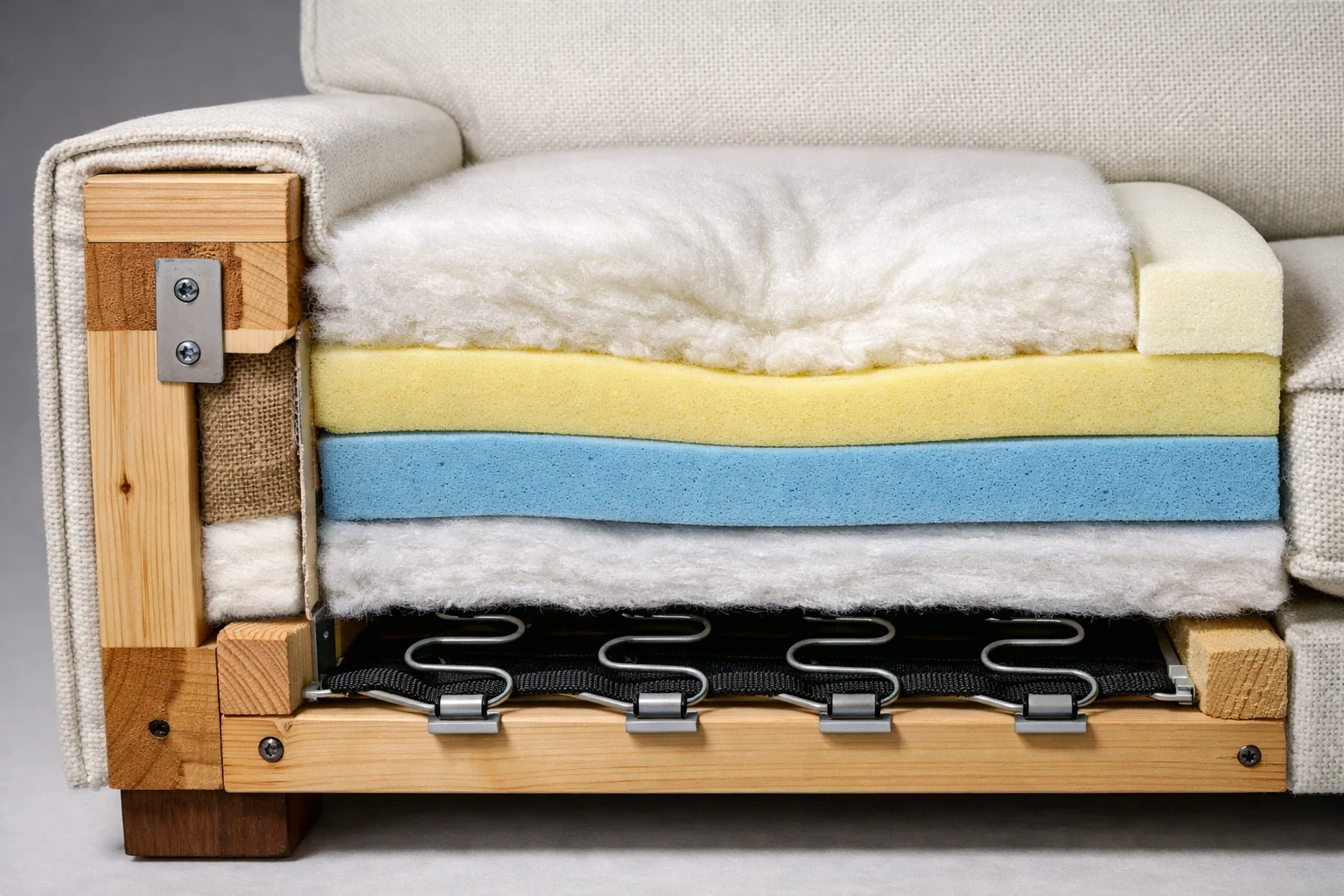
If you only take one mindset into the store, take this, you are not buying a look, you are buying a support system. The frame, suspension, and cushions are what you live with, the fabric is just the part you see first.
The "Sectional" Trap
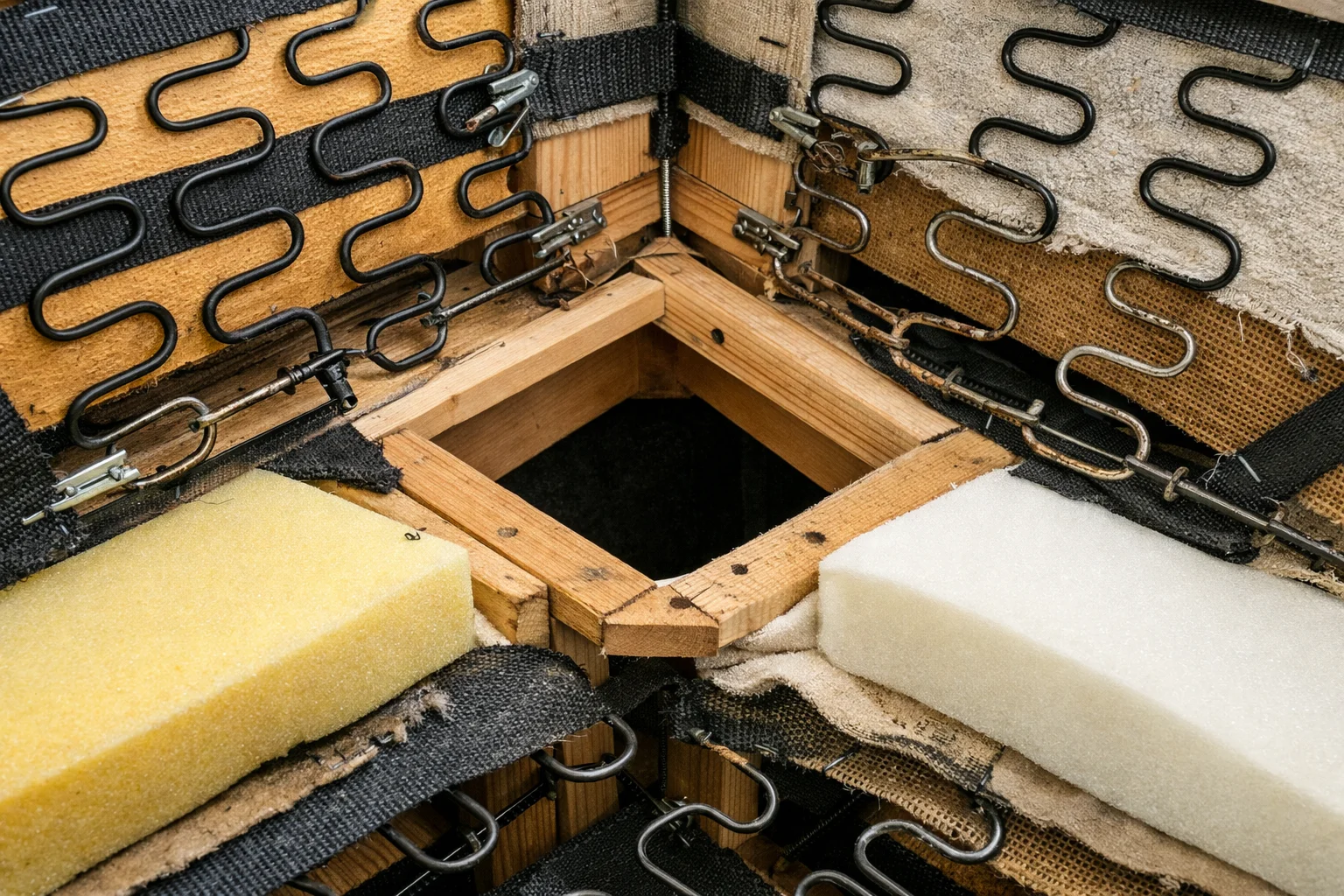
L shaped sectionals look like the grown up answer to “I need more seating,” and they photograph well. The trap is that they often waste the exact space you are paying for, especially if you live alone or you do not host a lot.The corner seat is the biggest lie. In most sectionals, that corner is either oddly deep or oddly shallow, and the back support usually hits you in the wrong place. In a showroom, I sit in that corner on purpose and I stay there for a full minute, because your body will tell you fast if it is a real seat or just a connector. If you cannot sit upright without twisting, or you feel like you need two throw pillows just to be comfortable, you are looking at dead space you will never use.
The footprint is the next problem, and it is not just about length. An L shape tends to eat the walking paths in a small room, and it turns the middle of the room into a narrow corridor. In the store, I ask them for the overall width and depth, then I do a quick reality check by holding my arms out and imagining the chase path from my door to my kitchen, or from the couch to the bathroom. If the sectional forces you to slide sideways past it in your imagination, it will feel worse once you add a coffee table, a lamp, and the normal clutter of life.
The last trap is being locked into one layout. A lot of sectionals are “left arm facing” or “right arm facing,” which means your room has to obey the sofa, not the other way around. If you might move, or you like to rearrange, you should treat that like a red flag. In a showroom I literally point to a different wall and ask, “If I flip this layout, what happens,” and I watch how they answer. If it requires buying a whole new piece, or if the chaise cannot switch sides, you are buying a commitment, not just a couch.
If you still want the lounge feeling, I have had better luck aiming for flexibility instead of one huge shape. A standard sofa plus an ottoman you can drag around gets you most of the “chaise” comfort without trapping your room. If you do go sectional, I would only do it if the corner seat is genuinely comfortable, the chaise can be swapped left to right, and the store can tell you the exact overall dimensions in writing, because guessing is how people end up with a beautiful sofa that makes their home feel smaller.
The Superior Strategy: Sofa + Ottoman
If you want that lounge, nap, feet up life but you do not want an L shaped piece permanently squatting in your room, this is the approach that has disappointed me the least. I stop thinking “chaise” and I start thinking “deep enough sofa plus something I can move.”
A chaise feels efficient in a showroom because it looks like it solves everything in one move. At home it often solves one thing and creates two more, mainly the giant footprint and the fact that you cannot reclaim that space when your life changes for the day.
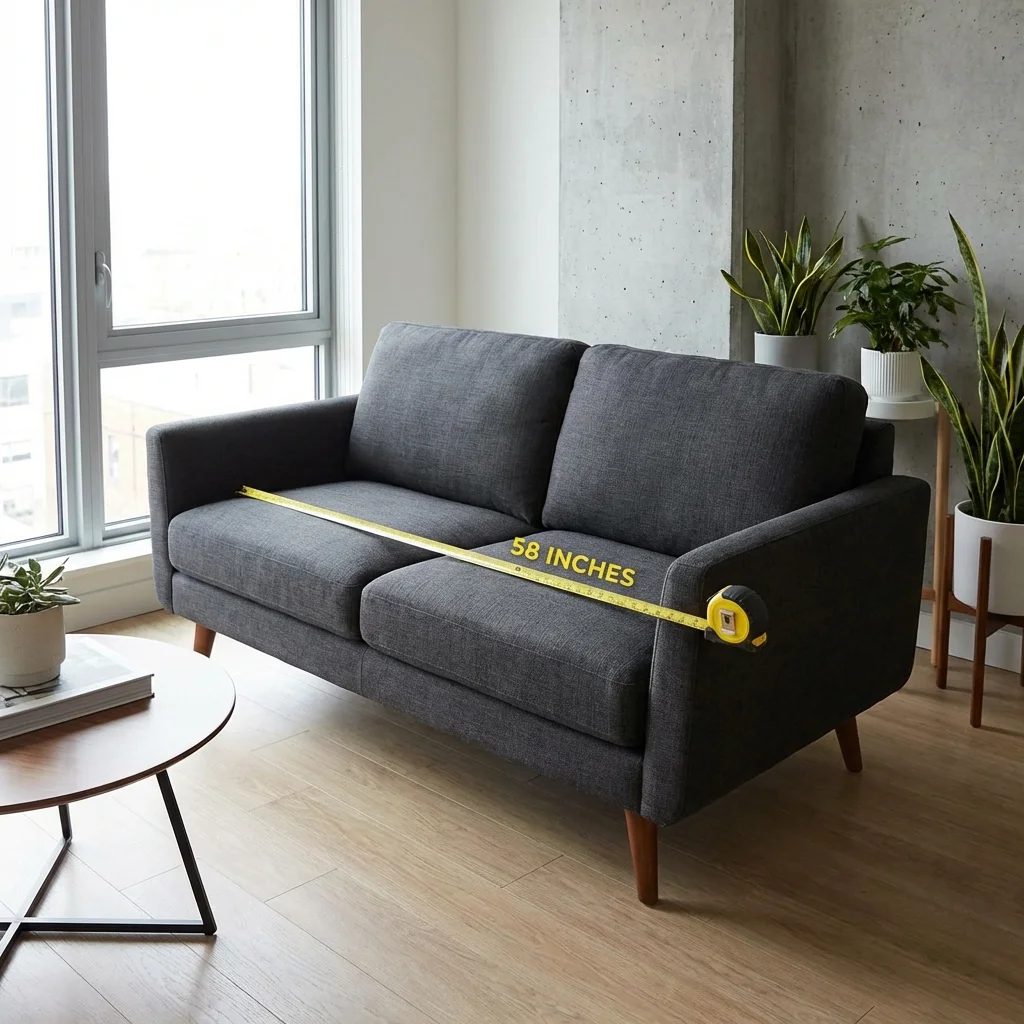
The first half of the strategy is choosing a sofa that is deep enough to actually lie on. I look for a depth in the 40 to 44 inch range because that is where I can curl up without my feet hanging off and without needing a separate chaise sticking out into the room like a dock.
In a showroom, I do not just sit, I try to “nap test” it in a non awkward way. I take my shoes off if the store vibe allows it, I slide my hips a little sideways, and I see if my shoulders can relax against the back without my neck craning forward. If you feel like you have to brace your core to keep from slumping, the sofa might be deep on paper but not usable in the way you want.
Depth also interacts with back height and cushion firmness, and this is where people get tricked. A deep sofa with very soft cushions can feel like luxury for thirty seconds, then you realize your lower back has no plan. I ask myself one simple question while I am sitting, can I comfortably look straight ahead for a full minute without adding a throw pillow, because if the answer is no, you are going to live in a constant pillow arranging loop at home.
If you are shorter, a deep sofa can still work, but only if the back cushions are supportive enough that you are not forced to scoot forward all the time. I watch for that behavior in myself, because scooting forward is your body admitting it cannot find support, and it usually means you will stop using the sofa the way you imagined.
The second half of the strategy is the floating ottoman. I like an ottoman because it lets you build a chaise when you want it, then delete it when you do not.
In the store, I physically push the ottoman up against the sofa and check whether the height matches closely enough to feel like one surface. If the ottoman is noticeably lower, your legs sink and your hips tilt, and if it is higher, it can cut into your calves in a way that feels fine at first and annoying later. I also check the gap, because if there is a big crack between the seat and ottoman, you will constantly lose remotes and feel like you are balancing across a trench.
The real win is that an ottoman can do other jobs without pretending to be a permanent architectural feature. I pull it away and imagine it as a coffee table with a tray, because that is how most people actually eat on the couch, and a tray test tells you whether the top is stable enough and large enough to be useful. If the ottoman top is very squishy, you can still use it, but you will want a rigid tray with a lip so your drink is not doing that slow motion wobble all night.
I also look for how easy it is to move, because “floating” only counts if you will actually float it. If it is heavy enough that you have to deadlift it or it has delicate little legs that scrape the floor, you will stop moving it and it will become clutter with good intentions. I like to quietly drag it a few inches in the showroom, not to be rude, but to see if it grabs the floor or glides.
This is the part most people forget, a sofa plus ottoman is also a small space strategy. When you need the floor for yoga, kids, projects, or just cleaning, you can shove the ottoman into a corner and get your room back in a way a sectional will never let you.
If you take only one action into the showroom, make it this, treat the ottoman like a tool and verify it behaves like one. I try it tight to the sofa, I try it pulled out like a table, and I make sure I can move it without turning it into a whole production, because flexibility is what you are buying here, not a particular silhouette.
Optimizing for “Solo” Wear
If you live alone, you are going to sit in the same spot, on the same cushion, at the same angle, night after night. I have done this enough times to know what happens next, the rest of the sofa stays “new” and your spot turns into a soft dip that makes the whole piece look tired.
In a showroom, I try to predict my future crater. I sit where I know I will actually land at home, usually the same end every time, and I pay attention to whether the cushion bounces back when I stand up or whether it keeps my shape for a while. If it already looks a little rumpled after a minute, it is not going to magically get better after six months of being your one daily seat.
The most practical fix is not exotic materials, it is rotation, and you should only buy a sofa that makes rotation realistic for you. That means the seat cushions are loose enough to move, and ideally similar enough in shape that swapping left and right does not look weird or feel wrong.
I ask a very simple question in the store, “Are these seat cushions reversible, and are they all the same size.” If the salesperson hesitates, or if the cushions are attached, or if one cushion is a different shape because of the chaise or a corner, I assume my favorite spot will wear faster and I will have fewer ways to hide it.
At home, I treat cushion rotation like changing a toothbrush head, not like a deep cleaning project I will never do. About once a month, I swap the left seat cushion with the right seat cushion so the wear spreads out instead of digging one hole. If the cushions are reversible, I also flip them, because that doubles your chances of keeping the top surface from getting permanently compressed.
Back pillows are the same story, just sneakier. If you lean in one place every night, the fill migrates and the pillow starts looking thin and slumpy right where your shoulder goes. I flip and swap the back pillows regularly, and I will also do a quick “refluff” by grabbing the corners and shaking them out, because it takes ten seconds and it keeps you from having to live with a lopsided back line.
If you are shopping and you know you will not rotate anything, which is honest and totally normal, then you should buy accordingly. I would lean toward a sofa with fewer separate pieces to manage, or at least cushions that feel resilient and spring back fast, because you are essentially admitting one cushion will be the daily driver and it needs to be able to take it.
The main thing I want you to remember is that solo wear is not a quality flaw, it is a usage pattern. If the sofa cannot be rotated, flipped, or swapped in some way, it is going to advertise exactly where you sit, and it will do it sooner than you think.
Technical Summary: The "Bachelors" Buying Guide
I learned the hard way not to buy for the party version of my life. If you are like me, you host occasionally, but you decompress on your sofa almost every single day, so I want you to optimize for the nights you are actually going to live on it. In the showroom, I picture an average weekday, dinner, screen time, scrolling, maybe a nap, and I only get excited about a sofa if it supports that routine without needing constant pillow hacks.
For me, “deep enough” is the difference between a sofa I use and a sofa I just own, and I treat about 40 inches of overall depth as the point where napping starts to feel natural instead of improvised. When you are checking depth in a store, do not just look at the spec card, sit back like you would at home and see whether your shoulders can relax while your lower back still feels supported. If you instantly feel yourself scooting forward to find support, the sofa can be deep on paper but wrong in practice, especially once the cushions soften.
I also keep coming back to the ottoman because it is the most reliable way I have found to get “chaise comfort” without buying a chaise shaped problem. In the showroom, I push it flush to the sofa and notice whether my legs feel level and whether the seam between the two surfaces feels like a nuisance. Then I pull it away and ask myself if the room instantly feels easier to move through, because that flexibility is what you will appreciate the most the first time you vacuum, rearrange, or realize you want the floor space back for a night.
If you want a simple buying filter to carry with you, this is mine, I buy for the 95 percent, I insist on real nap depth that works with my body, and I use a movable ottoman to fake a chaise instead of locking my room into one big shape.
Explore Technical Reference
Residential vs. Commercial: The Safety Gap
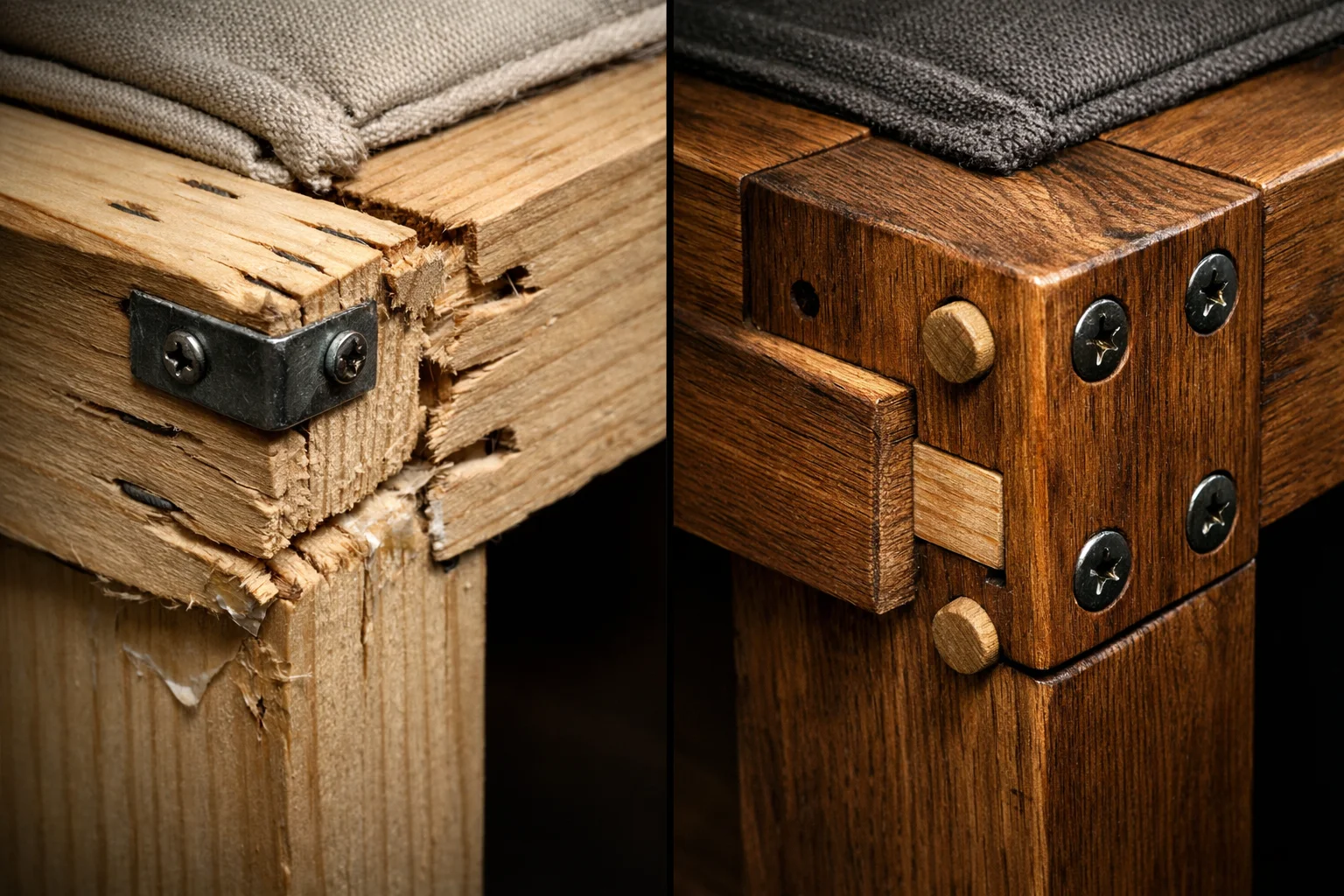
Understanding why furniture warranties void when residential products are used commercially. The structural, safety, and legal differences between categories.
Analyze Details →
Waiting Rooms: The Psychology of "Anonymous" Furniture
Why healthcare and professional waiting areas face unique furniture challenges.
Analyze Details →