Pet Proofing: How to Outsmart Claws and Fur
Introduction
Once I understood that, I stopped blaming the cat and started blaming my buying decision. I had focused on how the sofa looked and felt for five minutes in a showroom, not how it would behave after months of real use. That mistake cost me a lot more than the scratching post ever did.
This guide exists because most sofas fail in predictable ways, and nobody tells you that while you are standing under warm lights with a salesperson rushing you. I am not here to teach you furniture theory. I am here to help you avoid the specific traps that make a sofa look great on day one and miserable by year two.
Everything I share comes from owning sofas that sagged, pilled, creaked, flattened, or got destroyed by normal life. I learned by sitting, lifting cushions, crawling under frames, and asking annoying questions. You can do the same things in a showroom if you know what to look for.
As you read on, imagine yourself standing in front of a sofa you like. I want you to know exactly where to press, what to grab, what to ignore, and what should make you walk away. If you do that, you will not need luck. You will need about ten minutes and a willingness to feel a little awkward.
The Paperclip Test (Crucial)
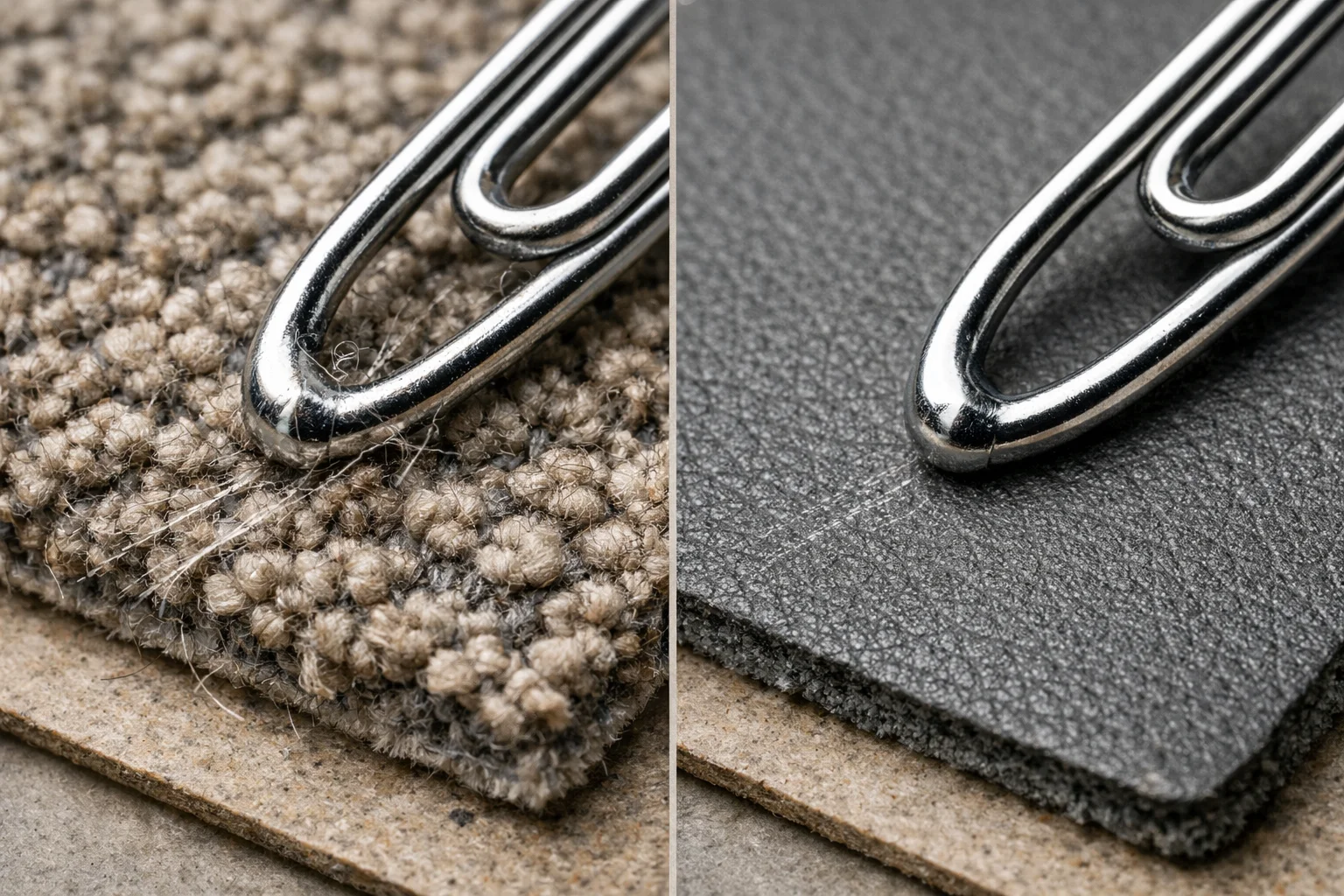
Before you buy fabric, take a paperclip and drag it across the sample.I know this sounds silly, but this single move has saved me from the worst fabric mistakes I ever made. You can usually grab a paperclip from your bag or ask the salesperson. If they look confused, that already tells you something about how much real life testing they expect.
If the paperclip catches or chatters as you pull it, walk away if you have a cat. I have learned this the hard way with tweed, bouclé, and most linens. Those fabrics feel cozy and textured to your hand, but that texture is exactly what a claw is looking for.
If the paperclip slides smoothly with almost no resistance, you are in much safer territory. Velvet, microfiber, and leather tend to pass this test because there is nothing for a claw to grab. My current sofa survived years of daily cat use simply because the fabric offered no reward.
Here is the part no one explains in the showroom. Cats are not scratching to be mean or to ruin your furniture. They scratch to shed the outer layer of their claws. They need resistance for that to work. When the surface does not fight back, they lose interest fast.
Do this test on every fabric swatch, even if you think you already know the answer. I have seen two sofas that looked identical behave very differently once a cat moved in. Ten seconds with a paperclip is easier than years of regret.
The 3 Best Fabrics for Pets
1. Performance Velvet (The Cat Shield)
This is the fabric that finally ended my war with the cat. What matters here is not the luxury label but the surface structure, and true performance velvet has a cut pile with no loops for claws to catch.
When you run your hand across it, it should feel smooth in every direction. In a showroom, I always drag my fingernails lightly across the swatch and watch what happens, because if my nails cannot grab, a cat’s claws will not either.
The other surprise benefit is hair. Pet hair tends to sit on top instead of weaving in, which means you can wipe it away with your hand or a cloth instead of fighting it with a vacuum. If you live with a cat and want fabric, this is the safest choice I have found.
2. Top Grain Leather (The Dog Tank)
For dogs, I have learned that leather is hard to beat. Mud, drool, and whatever mystery substance they tracked in from outside can usually be wiped off in seconds without soaking in.
In the showroom, I always ask to see the leather tag and confirm it is top grain, not bonded or faux. Then I press my fingernail into it gently and see if it springs back, because good leather should recover instead of holding dents.
There is a real catch if you have cats. A cat that kneads will eventually leave pinholes, even if they never scratch aggressively. My personal rule now is simple. If you have dogs, leather makes life easier. If you have cats, I keep walking unless I am willing to accept cosmetic damage.
3. Microfiber (The Budget Savior)
Microfiber does not get enough respect, mostly because people confuse it with cheap feeling fabric. What actually matters is the weave, and microfiber is woven so tightly that claws usually cannot penetrate it.
When you touch it, it should feel smooth and slightly suede like, not fuzzy or loose. I always pinch the fabric between my fingers in the showroom and rub it together, because loose fibers are a warning sign.
This is often the least expensive option that still holds up to pets. If you are trying to stay on budget and want something forgiving, microfiber has saved me more than once from buying a sofa that would have looked ruined within a year.
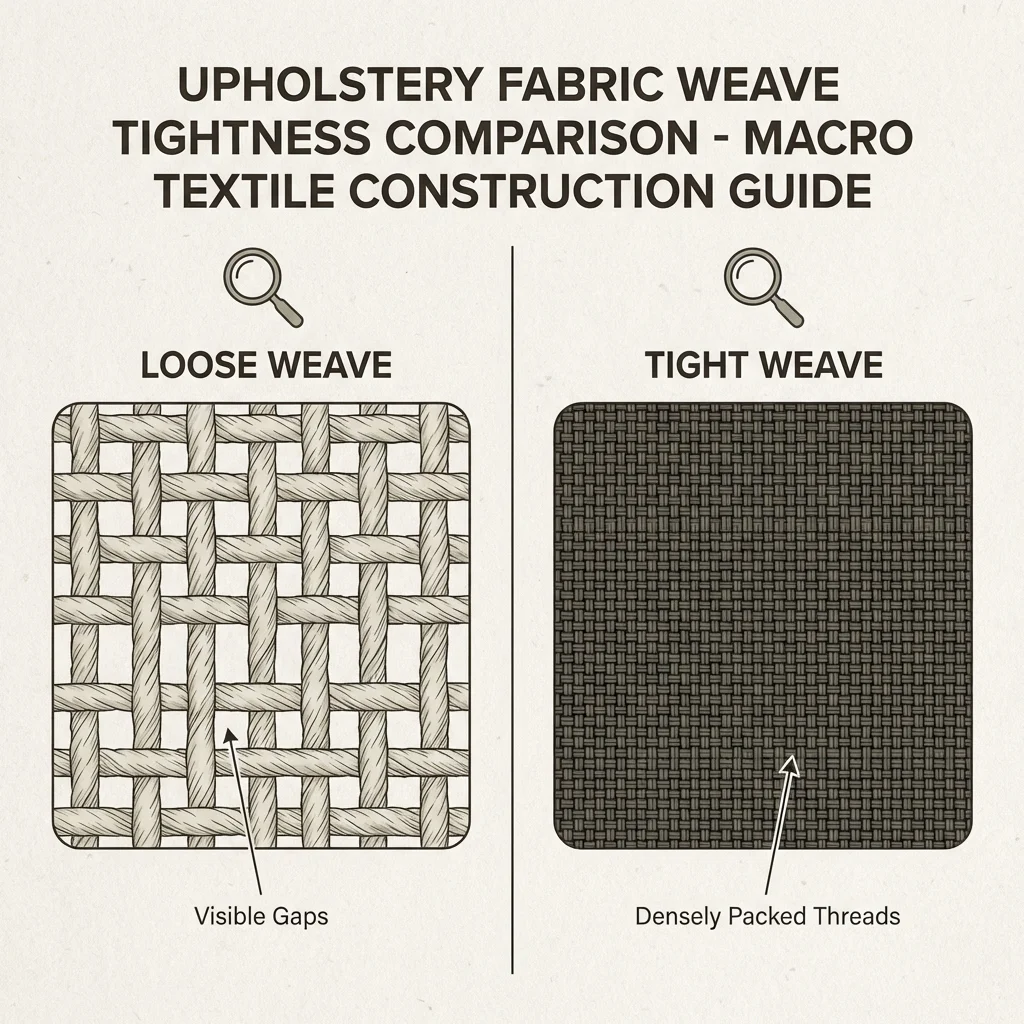
This image shows the single thing I wish someone had explained to me before I ever bought my first “pet friendly” sofa. It is not about the fiber name on the tag. It is about whether the surface gives a claw something to hook into.
On the left, the loops act like tiny handles. A claw does not need to be sharp or aggressive to grab them. Even casual walking, kneading, or stretching will catch and pull, and once one loop goes, the damage spreads fast.
On the right, the cut pile has no handles. When a claw touches it, there is nothing to grab, so it slides off. That sliding is what you want, even if the fabric feels soft or plush to your hand.
When I am in a showroom, I stop thinking about fabric categories and start thinking about this picture. I lean in close, tilt the swatch under the light, and look for visible loops or texture that stands up on its own. If I can see little rings or bumps, I know exactly how that story ends at home.
You can test this without tools. Drag your fingernail slowly across the surface and pay attention to the sound and resistance. If it rasps, chatters, or stops, that fabric is already telling you it will lose the fight.
Salespeople will often say a fabric is durable because it is thick or heavy. I have learned that thickness does not protect you from claws. Structure does. A thin fabric with a tight, flat surface will often outlast a chunky, cozy looking weave by years.
If you remember nothing else from this section, remember this. Loops invite damage. Flat surfaces discourage it. Once you train your eye to see that difference, a lot of sofas quietly eliminate themselves before you ever sit down.
Color Theory for Pet Owners
This is the advice I wish someone had given me before I bought a beautiful sofa that looked filthy all the time. Do not buy a color that matches your decor. Buy a color that matches your pet.
If you live with a white or light colored dog, I have learned to stop fighting it and lean in. Cream, off white, and light grey sofas hide shedding far better than dark colors ever will. The hair blends in enough that you buy yourself several extra days before the sofa looks embarrassing.
If you live with a black cat or a dark shedding pet, the logic flips. Charcoal, navy, and deep grey work with you instead of against you. I know black seems like the obvious answer, but black shows dust and lint immediately, while slightly lighter dark tones are more forgiving in real light.
Here is why this matters more than people admit. You will never get all the hair off, no matter how good your vacuum is. What you are really choosing is how often the sofa looks dirty between cleanings, not whether it ever gets dirty at all.
When I am in a showroom, I do a simple mental test. I imagine my pet shaking, stretching, or jumping off the sofa, and I picture where that hair would land visually. If the contrast is high, I know I will notice it every single day.
Salespeople will often push bold colors or trendy neutrals because they look striking under showroom lights. I have learned to step back and squint at the sofa from a distance, because that is how it will look across your living room when hair starts to accumulate.
There is also a fabric illusion to watch out for. Textured fabrics in mid tones can look forgiving at first, but once hair gets caught in the texture, the color stops mattering. This is another reason I pair color choice with the fabric tests you already learned, because the right color on the wrong texture still loses.
If you care about your sanity, match the mess, not the mood board. You can always change pillows, throws, and rugs later. The sofa color is what decides whether you feel relaxed or annoyed every time you walk into the room.
Technical Summary: The "Redirection" Strategy
This is where I finally stopped trying to make the sofa do all the work. Protecting furniture is not just about what you buy, it is about what you place next to it.
When I bring a new sofa home, I put a scratching post immediately next to the arm that looks most tempting. Not across the room and not after the damage starts. It needs to be close enough that the cat does not have to choose between destinations.
I also make sure the scratching post feels better than the sofa. Sisal rope has real resistance and gives a claw something satisfying to dig into, while the right sofa fabric offers no reward. When the post wins on texture, the decision gets made for the cat without any training.
What actually happens is simple. The cat tries both surfaces, learns which one works, and keeps going back to the one that delivers. I am not correcting behavior or spraying anything, I am just redirecting it to the better option.
In a showroom, this changes how I think about risk. I no longer ask myself whether a sofa is scratch proof, because none of them truly are. I ask whether I am willing to pair it with the right decoy at home.
If you already own a sofa you love, this strategy can save it. If you are buying a new one, plan the redirection before the sofa ever arrives. The cost of a good scratching post placed correctly is nothing compared to replacing an arm panel or living with shredded fabric.
Once I accepted that furniture protection is a system and not a single purchase, my stress level dropped fast. The cat stopped being the enemy, and the sofa finally got to be just a sofa.
Explore Technical Reference

The Renter's Survival Kit: Furniture That Moves
Buying furniture for a space you don't own. Strategies for moving, scale, and landlord-friendly designs.
Analyze Details →
Residential vs. Commercial: The Safety Gap
Understanding why furniture warranties void when residential products are used commercially. The structural, safety, and legal differences between categories.
Analyze Details →