Commercial Grade: Why Hotel Sofas Last Forever
Introduction
I learned the hard way that the sofa that feels amazing for five minutes in a showroom can turn into a mess once real people start using it. I put a plush cloud style sofa in my office reception area, and within three months it looked tired, dirty, and worn out. Denim rubbed the fabric into pills, hands darkened the arms, and the whole thing started to look embarrassing.
I replaced it with something labeled commercial grade, and I hated it at first. It felt firm and almost stiff, nothing like the cozy showroom couches people fall in love with. Three years later, it still looks almost new, and that experience completely changed how I shop for seating.
I am not a designer or a furniture expert. I am just someone who has paid for sofas that failed and tried to understand why. What I want to give you here is the stuff I wish someone had told me before I spent the money.
If you are standing in a showroom right now, this guide is meant to help you look past the sales pitch and test the things that actually matter. Comfort on day one is easy to sell. Durability over years is what you have to actively check for yourself.
The "Fire Code" Reality
This is the part no one explains clearly in a showroom, and it is a huge reason prices and comfort feel so different between sofas that look similar.
Residential furniture is usually built to meet a basic fire rule that assumes a small flame source, like a cigarette. That standard is often called CAL 117, and in practice it allows very soft, very open foam because the test is mild. This is why residential sofas can feel instantly plush and sinky when you sit down.
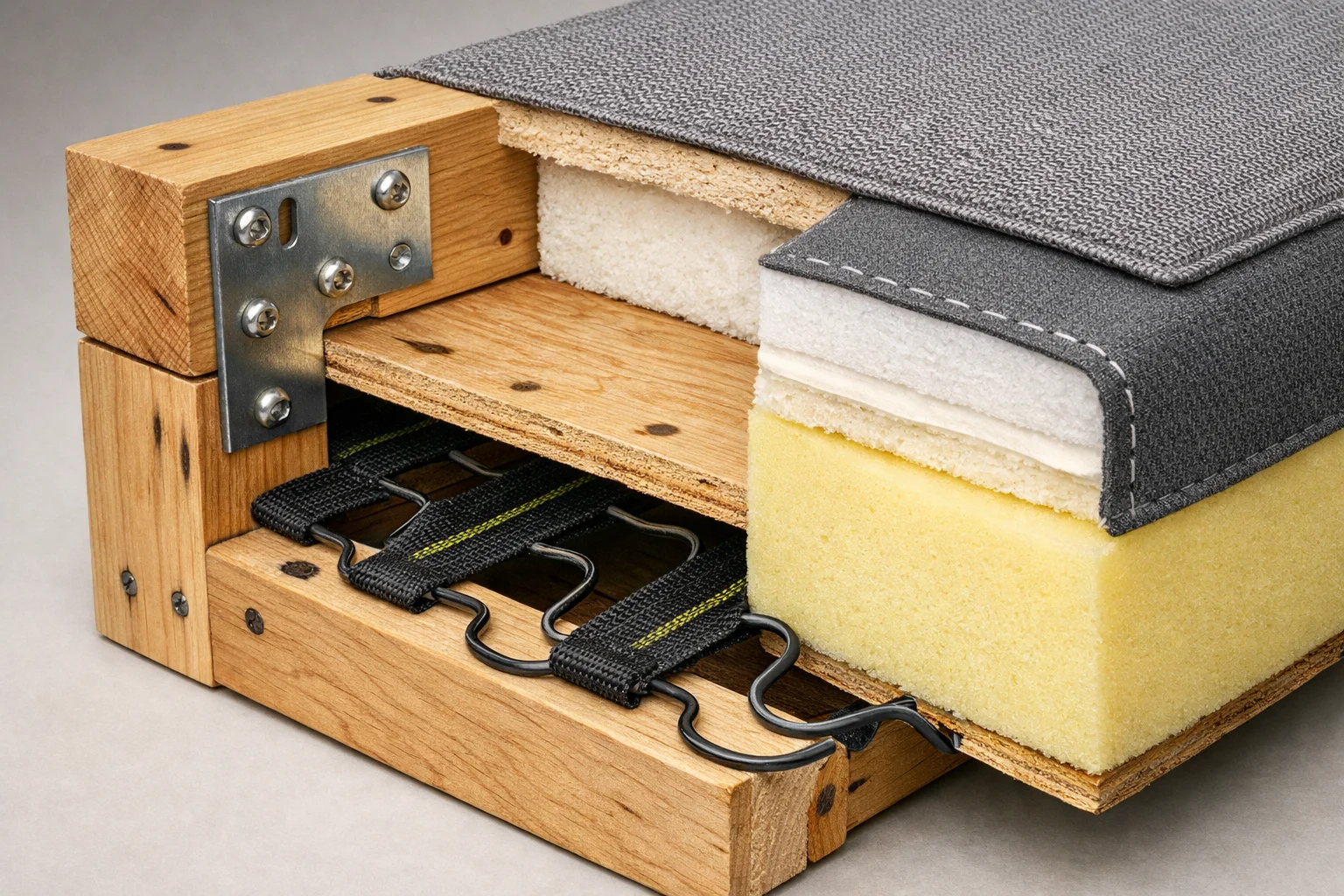
Commercial furniture is built to a much harster rule, often called CAL 133. Instead of a small flame, the test simulates sustained, intense heat. To survive that, the foam core is wrapped in fire blocking layers made from materials like fiberglass or aramid fibers. When you press on those cushions, you are feeling that barrier, not just the foam.
In a showroom, this is where people get confused and disappointed. That fire barrier makes the cushion feel firmer and sometimes slightly crunchy, especially at the edges. It is not a defect and it does not mean the foam is low quality. It means the sofa is designed to not become fuel in a real fire.
Here is the part you can actually use when shopping. If a salesperson tells you a sofa is commercial grade but it feels just as soft and collapsible as a residential couch, ask directly what fire standard it meets. If they cannot answer, or they deflect with vague language, assume it is built like residential furniture with a tougher fabric slapped on.
I also pay attention to how the cushion recovers after I stand up. Commercial cushions with fire barriers tend to spring back cleanly, even if they feel firm. Residential cushions often feel amazing at first but show hand prints and seat impressions immediately, which is a preview of how they will look in a year.
If you are buying for a home, this does not mean you must choose the stiffest sofa in the store. It means you should understand the tradeoff you are making. Ultra soft comfort usually comes from skipping serious fire barriers and using foam that breaks down faster.
When I buy now, I decide where the sofa will live. For heavy daily use, kids, pets, or guests, I accept a firmer feel on day one because I know it will still look decent years later. For a low use room, I might tolerate softer construction, but I go in knowing it is a short term relationship.
The price jump between residential and commercial furniture often feels outrageous. Once you understand that you are paying for materials designed to survive extreme conditions, not just better styling, the difference makes a lot more sense.
The 3 Pillars of Commercial Durability
When I finally started comparing furniture that actually held up, I noticed the same three factors coming up over and over again. These are not marketing terms, they are measurable standards, and you can ask about them in a showroom without sounding like an expert.
The Wyzenbeek Test and Why Fabric Fails First
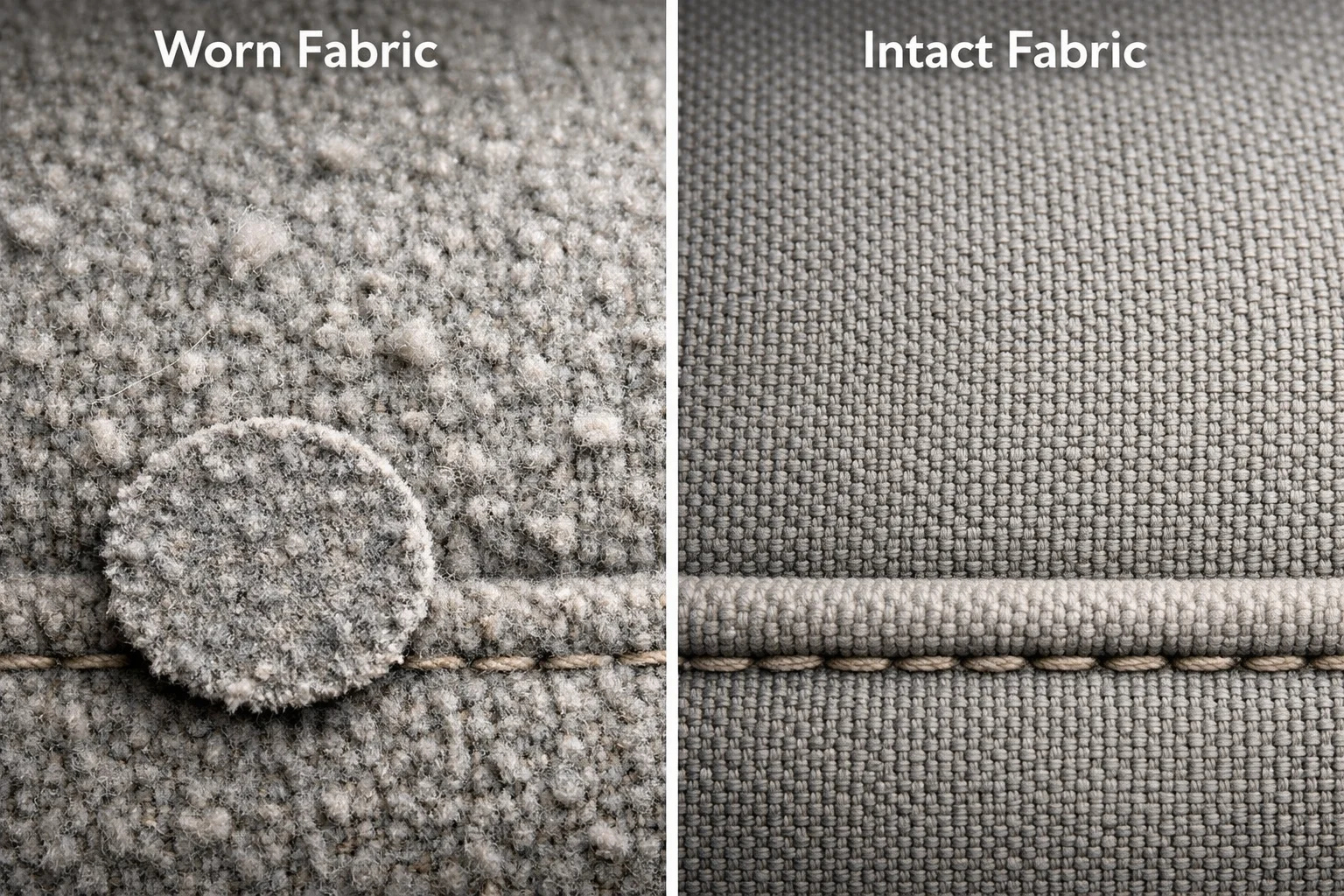
This is the test that tells you how quickly fabric will wear from rubbing. A machine drags a piece of cloth back and forth across the fabric until it breaks down, and the count is measured in double rubs.
Most residential sofas are rated around fifteen thousand double rubs, which sounds like a lot until you remember that jeans, belts, keys, and zippers are basically sandpaper over time. Commercial fabric is usually rated at one hundred thousand double rubs or more, because it is built for constant abuse.
Here is what I actually do in a showroom. I run my hand across the fabric and then pinch it between my fingers. If it feels loose, fuzzy, or delicate, I assume it will pill and thin out fast. Commercial fabric usually feels tighter and a little tougher, sometimes closer to canvas or even plastic, and that is the point.
If a salesperson tells you a fabric is durable but cannot tell you the double rub rating, I take that as a warning. If they say it is fine for residential use, that usually means it will look tired sooner than you expect in a busy home.
Foam Density and the Lie of Softness
Foam density is the part no one wants to talk about because it directly conflicts with what feels good in a quick sit test. Residential cushions are often made with low density foam that feels soft and welcoming, usually around one point eight pounds.
Commercial seating uses much denser foam, often closer to two point eight pounds, because it resists collapsing when many different people sit in the same spot every day. This is what stops cushions from turning into pancakes.
When I test this, I sit down and then stand back up immediately. I watch how fast the cushion recovers and whether it keeps its shape. If I can see a deep impression that lingers or if the cushion feels mushy around the edges, I know it is trading long term durability for instant comfort.
I also press down hard with my hand and feel for resistance. Firm does not mean uncomfortable forever, it means the foam has structure. Soft foam almost always breaks down, no matter how good the fabric is on top of it.
Cleanability Is About Real Life, Not Accidents
This is the pillar most people ignore until it is too late. Residential upholstery is often labeled spot clean only, usually with water. That sounds fine until you deal with coffee, ink, greasy hands, pets, or kids.
Commercial furniture is designed to be cleaned aggressively. The fabrics are often rated for water and solvent cleaning, and sometimes even diluted bleach. That is not because they expect abuse, it is because they expect reality.
I always ask how the fabric can be cleaned and I pay attention to the code. If it can only handle gentle water cleaning, I assume stains will accumulate and darken over time. If it can handle stronger cleaners, I know I can reset it when life happens.
Even if you never plan to use harsh cleaners, knowing the fabric can survive them tells you a lot about how it is built. Tough fibers that tolerate cleaning also tend to resist wear and fading better.
When I look at these three pillars together, fabric durability, foam density, and cleanability, I get a much clearer picture of how a sofa will age. None of this tells you if you will love the style or the color, but it tells you if the sofa will still deserve a place in your home a few years from now.
If you keep these in mind while you are sitting in a showroom, you stop buying based on the first five minutes and start buying for the next five years.
Diagram

When you look at this diagram, I want you to stop thinking about comfort for a second and think about layers. What you are really buying is not just fabric and foam, but everything sandwiched between them.
On the residential cushion shown on the left, the fabric sits almost directly on the foam. That is why it feels soft and welcoming right away, and it is also why oils, dirt, and pressure get straight into the foam over time.
On the commercial cushion shown on the right, there is a stiff fire blocking layer wrapped around the foam core. When you sit, your weight has to compress that barrier before you ever reach the foam, which is why it feels firmer and sometimes less forgiving.
Here is how I use this information in a showroom. I unzip the cushion if I am allowed, or I gently squeeze the cushion edge where the zipper usually is. If I feel a distinct inner sleeve that resists bending, I know there is a barrier in there doing real work.
If the cushion just squishes like a pillow with no resistance, I assume there is little or no barrier and that the foam will take the abuse directly. That tells me the sofa is designed to feel good fast, not last long.
I also pay attention to how the edges feel when I sit near the arm or the corner. Commercial cushions often feel firmer at the perimeter because that fire liner does not like to fold. Residential cushions collapse at the edges, which feels cozy but leads to sagging and misshapen seats.
This is where you decide what kind of owner you want to be. If you want a sofa that feels like a hug every time you sit down, you are probably accepting less internal protection and more wear. If you want a sofa that still looks respectable after years of use, that inner barrier starts to matter more than first impressions.
I wish someone had shown me this diagram before I bought my first expensive sofa. Once you understand what is happening inside the cushion, the difference in comfort, price, and longevity stops feeling mysterious and starts feeling like a clear tradeoff you can choose intentionally.
When to Buy Commercial (For Your Home)
People ask me all the time if it makes sense to put a hotel or office sofa in a living room. The honest answer is yes sometimes, and absolutely not other times, and the difference has nothing to do with style.
I choose commercial furniture for a home when the sofa is going to be abused in ways showrooms never simulate. If you have large dogs that launch themselves onto the cushions, kids who treat the arms like climbing equipment, or a steady rotation of guests like an Airbnb, commercial construction can save you from replacing a sofa every few years.
In those situations, I care more about how the sofa looks after three years than how it feels in the first three minutes. Commercial frames, foams, and fabrics are built for strangers who do not treat furniture gently, and that is surprisingly similar to real life in a busy household.
I also lean commercial when the sofa is in a public facing room. Entry rooms, media rooms with lots of friends, or anywhere people sit upright and get up frequently tend to chew through residential cushions fast. Commercial seating handles that constant in and out much better.
Where I do not buy commercial is anywhere I expect to truly lounge. If you love curling up, napping, or sinking in for hours, most commercial sofas will frustrate you. They are designed for upright alertness, the kind you find in waiting rooms and hotel lobbies, not the kind where your body fully relaxes.
You can test this in a showroom easily. Sit back and try to slouch. If the sofa keeps pushing you forward or you feel pressure behind your thighs or lower back, that is commercial ergonomics doing its job. It is not wrong, it is just not meant for naps.
Another place I avoid commercial is small apartments where the sofa has to do everything. If one piece needs to be your bed, your lounge, and your hangout spot, the firmness and limited give of commercial cushions can feel punishing over time.
There is also a middle ground that salespeople rarely explain well. Some manufacturers sell sofas that use commercial grade fabric and decent foam but skip the full fire barrier system. These can be a good compromise if you want durability without the waiting room feel, but you need to ask direct questions to confirm what is actually inside.
When I am deciding, I picture the worst day, not the best day. I imagine muddy paws, spilled drinks, heavy use, and zero babying. If that picture stresses me out, I lean commercial. If the room is calm and lightly used, I give myself permission to choose comfort first.
The biggest mistake I see is people buying commercial because they think it automatically means higher quality. It really means different priorities. You are trading softness and sink for resilience and recovery, and that trade only makes sense if your life demands it.
If you walk into a showroom knowing which rooms need armor and which rooms need comfort, the choice gets much easier. Commercial furniture is a tool, not a status upgrade. Used in the right place, it is a relief. Used in the wrong place, it feels like a punishment you paid for.
Technical Summary: The Trade-Off
After all the details, this is the simple truth I carry with me into every showroom. Commercial furniture prioritizes durability and safety, and it gives up some comfort to get there. Residential furniture prioritizes comfort and softness, and it gives up lifespan to feel good right away.
Once I understood that, shopping got much easier. I stopped asking which sofa was better and started asking which trade I was willing to live with in that specific room. A sofa cannot maximize everything at once, no matter what the price tag says.
Here is how I apply this in real life. In high traffic zones like an entryway, a dining banquette, or a room where people sit briefly and get up often, I lean toward commercial construction. I want something that stays upright, keeps its shape, and does not look wrecked by constant use.
In comfort zones like a TV room or a bedroom, I usually choose residential furniture on purpose. Those are the places where I want to relax, sprawl, and stay put for hours, and I accept that the sofa may not look perfect forever.
If you remember nothing else, remember this rule of thumb. Use tougher, more structured furniture where people pass through and softer furniture where people settle in. When the furniture matches how the room is actually used, disappointment drops fast.
This is not about right or wrong. It is about choosing the compromise you can live with, instead of discovering it after the return window closes.
Explore Technical Reference
Living Alone: Stop Buying "Future" Furniture
Why the sectional that looks cozy often wastes space for single occupants. Strategies for furniture that serves actual solo living patterns.
Analyze Details →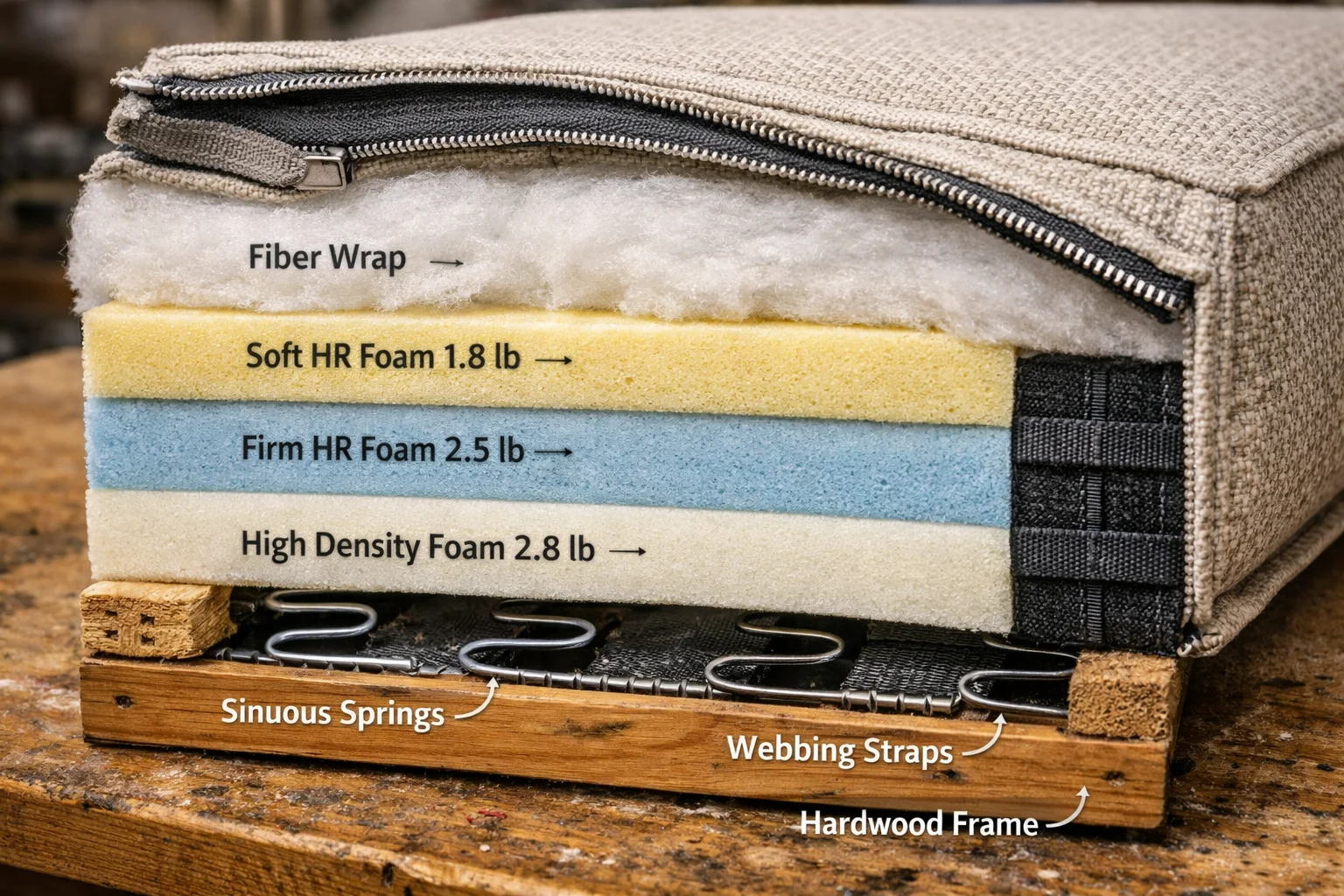
The War Zone: Buying a Sofa That Survives Kids
Why clean lines don't survive toddlers. The importance of rounded corners and washable fabrics.
Analyze Details →