The War Zone: Buying a Sofa That Survives Kids
Introduction
I bought a beige linen sofa 6 months before my twins were born. It was beautiful. 8 months later, the “Belgian Linen” was stained with puree, and the sharp “Track Arm” had bruised my daughter’s forehead twice. I didn’t need a sofa, I needed a tank.
If you are shopping for a sofa, I want you to walk in with a different goal than “the nicest looking one.” I now assume every sofa will be sat on hard, spilled on, climbed on, and slept on, even if you swear your house is calm. The question I try to answer in the showroom is not “do I love it,” it is “will it still work for me after the honeymoon period is over.”
Most people get ripped off on sofas in a quiet way. The sofa does not fall apart immediately, it just gets a little saggy, a little lumpy, a little harder to clean, and a little more annoying every month until you realize you are avoiding your own living room. If you have ever had a seat that developed a permanent butt dent, cushions that never looked right again after you fluffed them, or fabric that held onto every stain like it was sentimental, you already know what I mean.
This guide is me translating my hard lessons into checks you can actually do while standing in a showroom. I am not going to ask you to trust marketing phrases like “performance,” “artisan,” or “luxury.” I am going to keep bringing you back to what you can touch, lift, sit on, and ask about, then I will tell you how I interpret the answers.
I also want to be honest about tradeoffs, because sofas are basically compromises wrapped in fabric. Some shapes look crisp but feel sharp when a kid launches themselves into the arm. Some fabrics feel incredible in the store and then punish you for owning a cup of coffee. My aim is not perfection, it is helping you spend money once, then stop thinking about your sofa for the next several years.
If you only take one mindset into the store, take this one. You are not buying a photo, you are buying a piece of equipment, and you are allowed to interrogate it like one.
The "Dynamic Load" Problem
When I test a sofa in a store, I try to remember that adults mostly sit, but kids and pets turn sitting into impact. That difference matters because a sofa that feels perfectly supportive under a calm, seated adult can still get wrecked by repeated bouncing, flopping, and jumping.The simple version of the physics is that a light body dropping from even a small height hits like a much heavier weight for an instant. That is why a forty pound kid jumping off an arm or dropping onto a cushion can smack the seat like a couple hundred pounds. It is not about one dramatic incident, it is about thousands of little impacts over time.
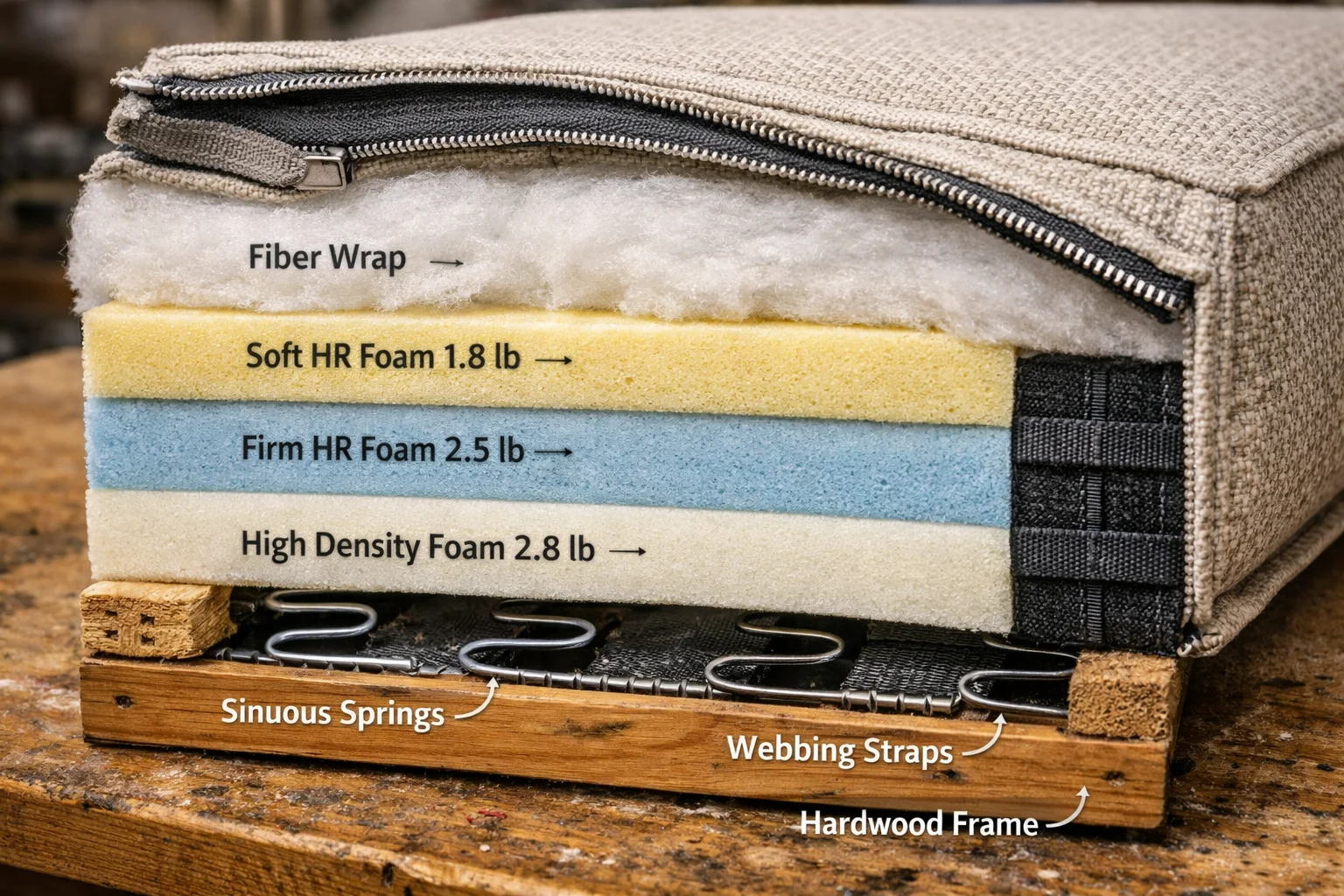
This is where “fine in the showroom” turns into sag at home. Standard thinner sinuous springs can stretch and lose their snap, and once they do, you cannot fluff your way out of it. On the other end, a too stiff, too simple platform like basic plywood can crack or loosen at fasteners when it keeps getting shock loaded, especially if the frame underneath is built to a price.
If you want the sofa to tolerate real life, I personally look for a suspension built for dynamic load. In plain English, that means heavier sinuous springs, typically marketed as eight gauge, or a drop in coil unit. You do not have to become an engineer, you just need to push past vague language and get the store to tell you what the seat is actually sitting on.
In the showroom, I ask one specific question and then I stay quiet: what is the seat suspension system, and what gauge are the sinuous springs if it uses them. If they cannot answer, or they try to redirect you to the fabric story, I treat that as a warning that the build details are not a selling point. If they can answer, you can write it down and compare it across models instead of guessing.
Then I do a quick physical check. I sit down hard once, not gently, and I listen for any twang, ping, or crunchy sound. I shift my weight side to side and see if the seat feels like a trampoline, which often means you are feeling springs that are too lively and not well supported, or if it feels dead and flat, which can mean a thin foam pad over a hard deck.
If the store will let you, I also like to lift the front edge of a seat cushion and press down on the deck with my palm. I am trying to feel whether there is a real springy suspension under there, or just a hard panel doing all the work. I am not saying every platform seat is doomed, but if it is just plywood and a bit of padding, I assume it will be less forgiving when your house stops acting like a catalog.
If you have kids, big dogs, or a habit of dropping into the sofa at the end of the day, I would rather you overbuy the suspension than overbuy the fabric. A tough suspension is what keeps the sofa feeling “new” in a way you can feel every day, and it is one of the hardest things to fix later without basically rebuilding the whole seat.
The 3 Features That Save Sanity
These are not “luxury upgrades.” These are the little design choices that keep a normal living room from turning into a daily irritation factory, especially if you have kids, pets, or just a tendency to move fast and live like a human.
Rounded Arms (The “Concussion” Check)
I used to think square track arms looked clean and modern, and they do. The issue is that a lot of track arms are basically a crisp wood corner with a thin layer of padding and fabric trying to disguise it.
In a showroom, I walk right up to the arm and do something slightly embarrassing on purpose. I make a fist and punch the outside front corner of the arm, not hard enough to damage anything, just hard enough to feel what is underneath.
If it stings my knuckles, I assume it will hurt a head, a hip, or a shin when someone misjudges a turn. If it feels like hitting a dense pillow with no sharp edge, I relax.
What I look for is a real radius, not just a tiny bevel. An English roll arm is the obvious version, but you can also find arms that look fairly tailored and still have a generous round-over and thick padding.
If you love the look of a track arm and you are determined, I would at least run your hand along the edge and squeeze the padding at the very front corner. That corner is where the hidden wood tends to announce itself.
Attached Back Cushions (The “Fort” Factor)
Loose back pillows seem harmless in the store. In a real house they become building material, and they spend more time on the floor than on the sofa unless you are constantly resetting them.
I have learned to treat fully loose back cushions as a lifestyle decision, because you are signing up to put the room back together over and over. It is not only visual mess, it is the constant little friction of finding the right pillow, flipping it, and shoving it back into place.
What saves my patience is a semi-attached back. That usually means the cushion is still soft and looks like a cushion, but it is tethered to the frame with a fabric tab, a zipper, or another attachment that keeps it from migrating.
In the showroom, I test this by grabbing the top of the back cushion and pulling it forward like someone is trying to make a pillow fort. If it immediately detaches or falls into my lap, I know how this story ends at home. If it stops short and snaps back into place, that is the behavior I want.
You can still get a casual, sink-in look with a semi-attached back. You just get a sofa that looks reasonably tidy even when the rest of your day is not.
Skirts (The Toy Jail)
If you have ever fished a Lego out from under a sofa with a ruler, you already understand why I care about this. The space under most modern sofas is the perfect height for toys, dog balls, socks, and crumbs to roll into a hidden little storage unit you did not ask for.
A floor-length fabric skirt fixes it in the dumbest, most satisfying way. The toy hits the skirt and stops, and you do not have to get down on your knees to retrieve it.
In the showroom, I crouch and look at the clearance under the front rail. If I can clearly see daylight and it looks like a robot vacuum’s dream highway, I assume your stuff will live under there. If there is a skirt that actually reaches the floor, or close enough that a toy cannot easily roll under, that is a quiet quality-of-life win.
There is one tradeoff I want you to notice. A skirt can hide the legs and make a sofa feel visually heavier, and it can make under-sofa cleaning harder if you were planning to vacuum under there regularly. For me, if you have small kids, the “toy jail” benefit usually outweighs the cleaning fantasy, because the reality is you will be retrieving objects constantly either way.
If you do not want a skirt, at least pay attention to leg height. Very low sofas trap junk and make it harder to retrieve, and very high sofas invite everything to roll underneath and spread out. I try to pick a side intentionally instead of accidentally living with the worst middle ground.
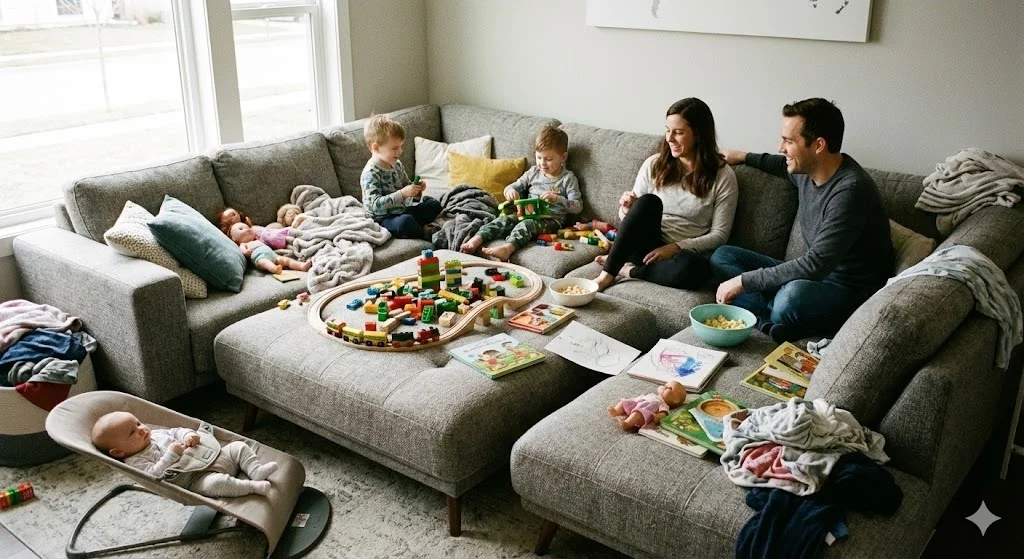
When you look at the photo, I want you to ignore style labels and focus on one thing, what happens when a body meets that front corner at speed. In real life, the arm is not just an armrest, it is a handle, a launch point, a tightrope, and a place someone flops into sideways.
In the showroom, I stand next to the sofa and picture a kid stepping on a cushion and reaching for the arm to steady themselves. If the arm ends in a crisp, squared off point, that corner is exactly where a forehead or cheekbone finds it.
What I do is run my hand from the top of the arm down the outside face and around the front, like I am tracing the path a falling head would take. If my palm “catches” on a sharp edge, or I can feel a hard corner hiding under thin padding, I treat that as a no, even if I like the look.
Then I squeeze the very front corner between my fingers and thumb. A safer arm usually has enough padding thickness that you cannot easily pinch your way to a hard edge, and the shape stays rounded instead of collapsing to reveal a corner.
The difference you are trying to spot is whether the curve is structural or cosmetic. A roll arm is rounded because the arm itself is built like a rounded form, while some track arms are basically a square frame with a little foam trying to fake softness.
If you still want a track arm, I would not automatically reject it, but I would demand proof with touch. I try to find one track arm in the store that feels genuinely forgiving, then I compare every other “similar” one to it, because tiny differences in padding and radius change the whole safety story.
I also look at the height and width of the arm while I am there. A low, wide arm invites sitting and climbing, so it needs to be even more forgiving, while a tall, narrow arm gets used more like a boundary, so the front corner becomes the main risk point.
This is one of those checks where you do not need specs or a salesperson. Your hand can tell you almost everything in ten seconds, and your future self will thank you the first time someone trips, slides, or launches into the side of the sofa and it ends with laughter instead of ice packs.
Fabric: The “Fluid” Reality
If you have kids, you are not buying fabric, you are buying a cleaning situation. I assume liquids will hit the sofa, often, and not politely, and the sofa will either forgive you or slowly turn into a stained, smelly reminder of optimism.
I learned the hard way that beige linen is basically a timed challenge. It looks amazing in a showroom, then one week of real life turns it into a map of every snack and every sticky hand that ever existed, and the stains do not just sit on top, they sink in and become permanent.
In the store, I stop caring about how a fabric looks from six feet away and start caring about what it does when it gets wet. I ask the salesperson to tell me the exact fabric name and the exact cleaning code, and then I ask the question that matters, what happens when juice sits on it for ten minutes, and what happens when someone cleans it wrong once.
Performance velvet has surprised me in a good way, because a lot of it sheds liquid instead of instantly drinking it. When it is a good performance velvet, you will often see beading, and that buys you time to blot before the spill becomes a seat cushion problem.
What I do in the showroom is rub it like a kid would. I run my palm over the seat area with some pressure and then I look for immediate shading, crushing, or weird directional marks that make it look worn after ten seconds of touch. If it looks “tired” from a quick rub in the store, it will look tired all the time at home.
If you want the most forgiving fabric category I have encountered for truly gross stuff, it is the fabrics that have an actual moisture barrier system, and Crypton is the name that comes up most often. The practical point is not the brand, it is the barrier, because the nightmare is when liquid gets through the fabric and into the cushion foam, where smells and stains become a long term relationship.
When a store claims “performance fabric,” I try to make them prove what that means. I ask if the performance comes from a topical treatment that can wear off, or if it is built into the fabric, and I ask whether there is a backing or barrier that keeps liquid from reaching the cushion insert.
If you are the kind of person who wants the simplest daily routine, leather is still the wipe down king. The big tradeoff is that leather shows life, and you have to be emotionally okay with that, because scratches happen and the sales pitch will call it patina.
In the showroom, I do a quiet little fingernail test on leather, not enough to damage it, just a light drag in an inconspicuous spot like the underside of a cushion flap if I can. If it marks instantly from a gentle nail, I assume toys, pet nails, and jean rivets are going to leave their signature, and you should only buy it if that look will not bother you.
No matter what fabric you pick, I want you to treat removable cushion covers like a real feature, not a nice to have. I unzip one in the store and check whether it looks like a cover that can come off and go back on without a fight, because some “removable” covers are technically removable but realistically miserable.
Then I ask one blunt question that has saved me from a lot of regret, what is the official spot cleaning method, and is water safe on this fabric. If they hesitate, or they say something like “just blot it,” I assume you will eventually clean it wrong in a moment of panic, and the fabric should be robust enough to survive normal human cleaning, not only perfect cleaning.
If you are shopping with kids in mind, my bias is simple. I would rather you choose a fabric that gives you time, blocks moisture from reaching the foam, and does not punish you for owning liquids, even if that means the sofa is less airy and less “linen pretty” than the one you first fell for.
The “20,000 Sit” Math
I used to think “normal use” meant a sofa should last because nobody is taking a sledgehammer to it. What changed my perspective was doing the sit math, because wear is not one dramatic event, it is repetition.
If you live alone and you sit on your sofa twice a day, that is roughly seven hundred sits a year. That is not nothing, but it is also not the kind of pounding that reveals cheap seat materials quickly.
Now picture a family sofa. If you have four people in the house and each person drops into the sofa about five times a day, sitting, flopping, perching, climbing, that is about seven thousand three hundred sits a year. When you look at it that way, a family can put what feels like a decade of use on a sofa in a single year, just through normal life.
This is why I do not let “it feels comfy” in a showroom talk me into a soft seat with weak foam. Comfort in the first five minutes is easy to buy, long term shape and support is what costs money.
Here is the practical buying move. You need to find out what the seat cushion foam actually is, not what the sofa is called, not what the fabric is, and not how thick the cushion looks. I ask, very directly, what is the foam density in the seat cushions, and is it high resilience foam.
If the answer is vague, like “high density” with no number, I assume it is not a number they are proud of. If they tell you it is 1.8 pound foam, I personally treat that as a high risk choice for a main family sofa, because that is the zone where I have seen cushions go flat fast and stay flat.
What I try to buy instead is 2.5 pound high resilience foam in the seat cushions, because it is one of the few spec level things that correlates with the sofa still feeling like itself after a lot of sits. If you hear “HR foam,” I ask them to confirm the density, because “HR” gets used loosely and I want it tied to an actual number.
You can also do a quick reality check with your body. I sit in the same spot, then I stand up and look at how quickly the cushion recovers. If I can still see and feel a dent that lingers, that cushion is already telling you what it will look like after thousands of repeats.
The other check I do is the edge test, because foam quality shows up there early. I sit right on the front edge like I am putting on shoes, and I pay attention to whether it collapses to the frame or stays supportive. A sofa that feels nice in the middle but dumps you off the edge is often a sofa that will feel older sooner.
If you only have the budget to “upgrade” one hidden thing, I would rather you spend it on better seat foam than on a fancier fabric name. Fabric can be cleaned, replaced, or lived with. A flattened seat is something you feel every day, and it turns a sofa into a regret you cannot unsee.
Technical Summary: The Family Checklist
When I am tired and overstimulated in a showroom, this is the short checklist I come back to so I do not get distracted by color names and throw pillows. I am trying to buy four boring, durable choices that survive family life: a frame that does not rack when someone jumps, foam that does not take a permanent set, fabric that does not absorb liquids into the cushions, and legs that do not get destroyed by daily cleaning.
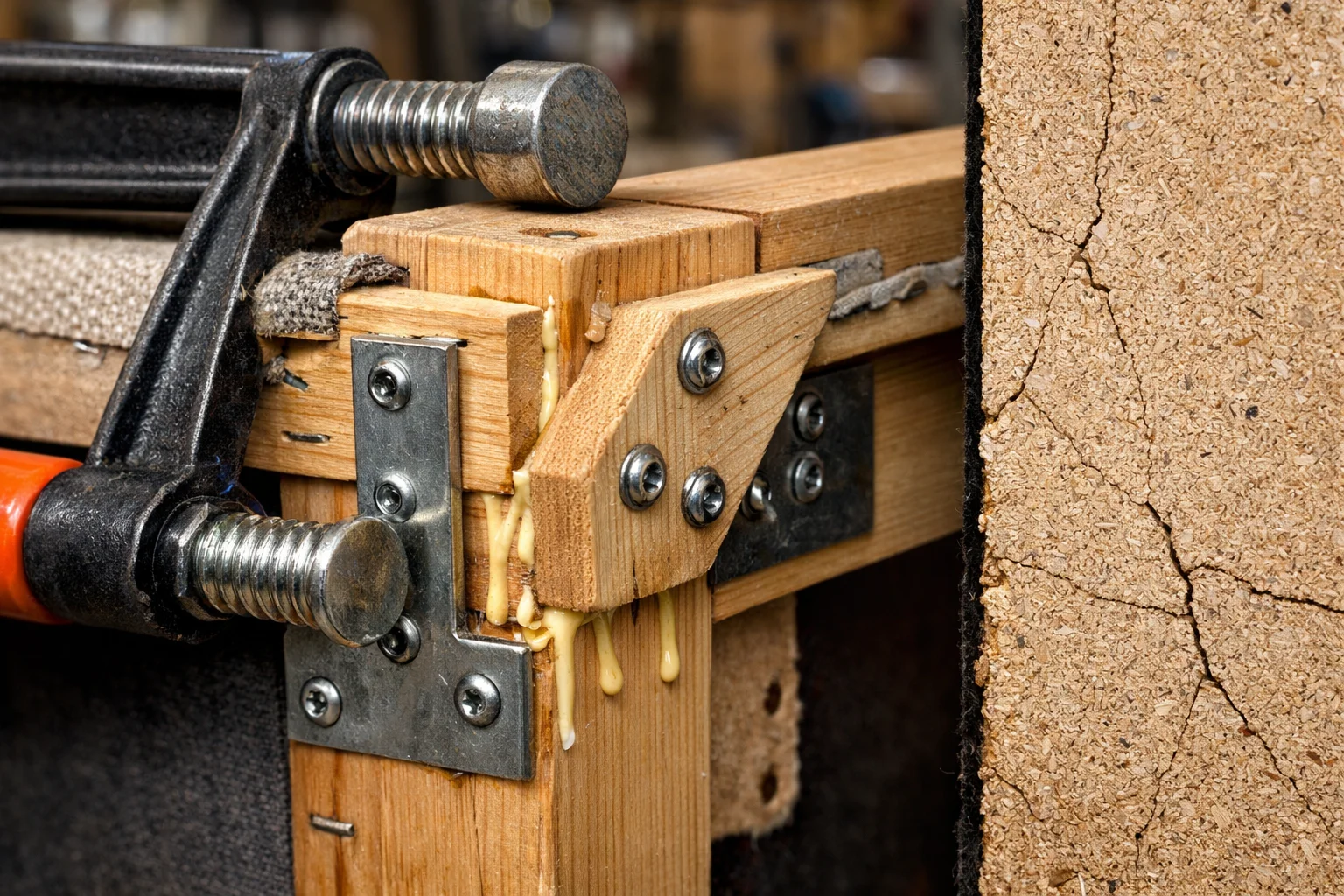
On the frame, I look for heavy plywood or real hardwood in the parts that matter, not just “hardwood solids” somewhere in the description. In the store I lift one front corner a few inches, then I watch whether the other front corner tries to come up with it, because a stiffer frame moves more as a single piece instead of twisting. I also grab the arm and give it a firm shake, and if I feel flex or hear clicking, I assume the joints are already telling you what repeated jumping will do over time.
On the seat foam, the spec I personally anchor to is 2.5 pound high resilience foam for the main seat cushions, because it is one of the few numbers that tends to show up later as “still supportive” instead of “permanent butt crater.” In the showroom I do two quick checks: I sit, stand, and look for slow recovery, then I sit on the front edge and see whether I bottom out onto something hard. If the salesperson cannot tell you the foam density, I treat that like buying a mattress without knowing what is inside it, because you are gambling on the exact part you feel every day.
On fabric, I aim for something that can survive fluids without letting them become a cushion problem, which usually means a real barrier backed fabric such as Crypton, or leather if you are comfortable with the way it will scratch and age. In the store I stop accepting the phrase “performance fabric” by itself and instead ask whether there is a moisture barrier that prevents liquid from reaching the foam insert. If you can unzip a cushion, I also like to look at the back side of the fabric, because barrier systems often feel different from a plain woven backing, and that little peek can tell you whether “performance” is a coating you will wear off or a construction choice.
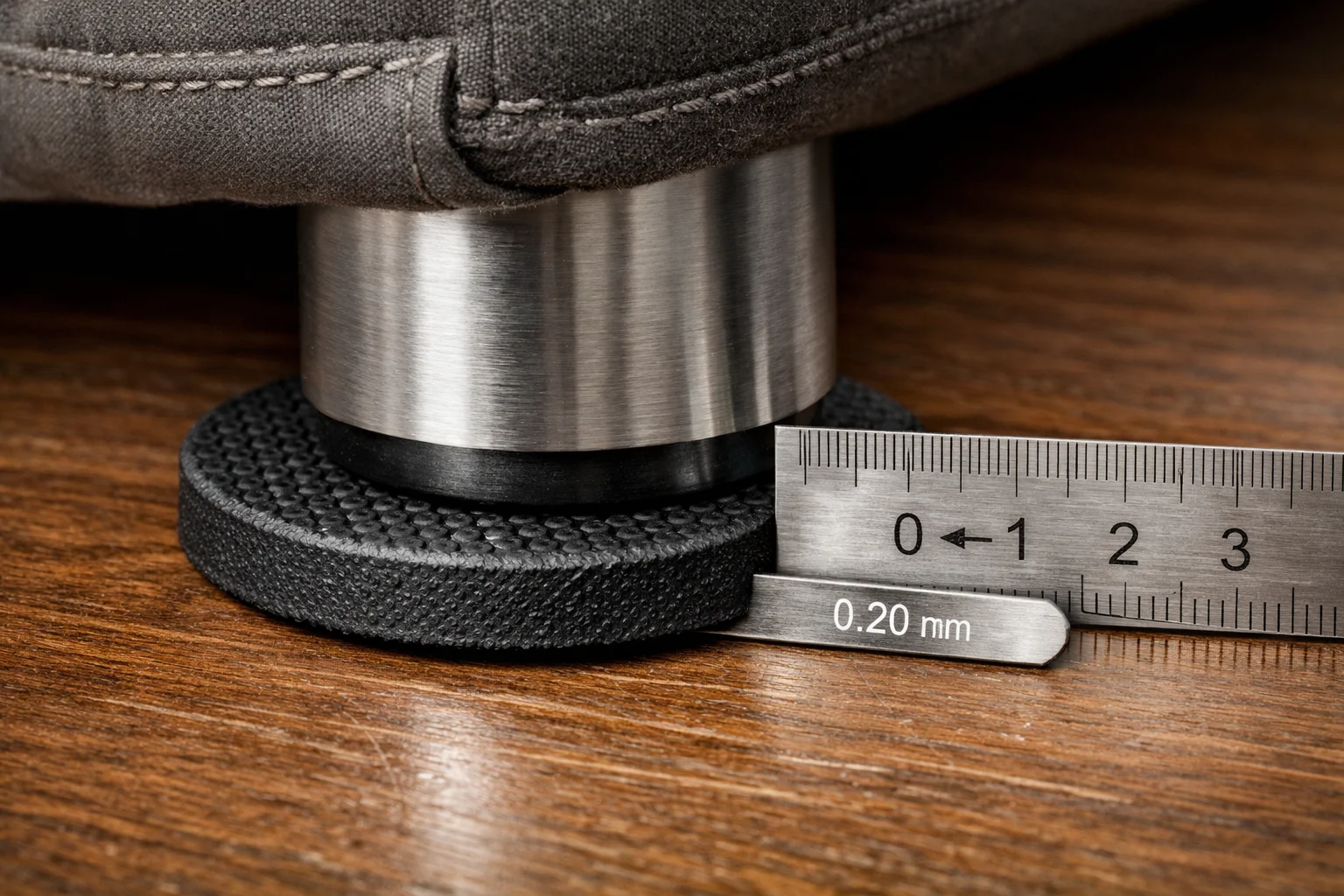
On legs, I have learned to stop treating them like decoration, because they take daily hits from vacuums, mops, and toes. If the sofa has exposed legs, I crouch and look at how far they stick out past the front rail, since proud legs become shin magnets and get chewed up by cleaning. If you have kids, I generally prefer recessed legs or a skirted base, because it protects the legs and also reduces the under sofa junk zone, which means fewer toys and crumbs getting smashed into the corners where you cannot reach.
If you want to use this checklist in a real conversation with a salesperson, I keep it simple and slightly stubborn. I ask what the frame is made of and how it is joined, what the seat foam density is and whether it is high resilience, what the fabric system does with spills and whether it has a barrier, and whether the legs are recessed or protected. If the answers are clear and specific, that is usually a good sign. If the answers are vibes and adjectives, I assume the sofa is being sold on looks because the build will not hold up to the way you actually live.
Explore Technical Reference
The Weight Paradox: Stability vs. Mobility
Understanding the trade-off between furniture weight that provides sitting
Analyze Details →
Agnostic Furniture: Buying for Your NEXT Apartment
Understanding how to select furniture when you do not know what your next space will look like. Strategies for versatility, portability, and avoiding costly mistakes.
Analyze Details →