The Pro Line: When DIY Become Dangerous

Introduction
My uncle once tried to fix a broken coil spring with a pair of pliers. Two hours later he had a bleeding knuckle and a sofa that listed to the left, and an upholsterer fixed it in about 30 minutes. That stuck with me because it showed how easy it is to misunderstand what actually makes a sofa work.
I am not a furniture designer or a repair pro, just someone who has owned enough sagging, squeaking, uncomfortable seating to get frustrated and start paying attention. Over time I realized most sofas do not fail suddenly, they fail slowly, and the warning signs are often visible right there in the showroom if you know where to look.
This guide is about those signs. I am going to walk you through what I now check every single time before I sit down, hand over a deposit, or believe a sales pitch. You do not need tools, technical training, or insider connections, just a willingness to touch the furniture and trust your own senses.
If you want a sofa that still feels decent years from now, not just on delivery day, this is the mindset that changed how I buy.
The ‘Kinetic Energy’ Warning
The "Kinetic Energy" Warning
A sofa spring stores enough energy to break a finger. In real terms, many seat springs are under eighty to one hundred pounds of tension, which is far more force than your hands can safely control if something slips. If a clip, tie, or fastener gives way while tension is on the spring, it can snap loose like a steel whip. My personal rule is simple and it has saved me pain and money. If a problem involves springs or structural ties, I walk away or I plan on hiring a professional.I am not telling you this so you can learn how to repair a sofa. I am telling you this so you know what not to mess with and what to be cautious about when you are buying.
In a showroom, I never try to lift a seat, unhook fabric, or reach under to grab anything that looks like a spring. That urge to poke and prod is exactly how people get hurt. What I do instead is use safe pressure and observation.
I sit down hard, not recklessly, but decisively. If the sofa responds with a sharp snap, a metallic twang, or a delayed rebound that feels uneven, I treat that as a warning. Springs should compress and return smoothly, not fight back or lag behind.
I also shift my weight from one side of the cushion to the other while seated. If one side feels stronger and the other feels like it is giving up, that often means uneven spring tension or poor anchoring. That is not something you will ever fix with a cushion swap.
When I hear a salesperson say a sofa just needs to be broken in, I think about stored energy. Springs do not gently break in when they are badly tied or overstressed. They slowly damage the frame, loosen their clips, or fail suddenly later.
The practical takeaway for you is this. If a sofa already feels aggressive, noisy, or uneven when it is brand new and untouched, that energy has nowhere good to go over time. You cannot see it, but you can feel it, and your body is the best diagnostic tool you have in a showroom.
I learned to respect that invisible force the hard way. Now, if something about the seat feels like it wants to fight me instead of support me, I move on. There are plenty of sofas that feel calm, controlled, and predictable when you sit, and those are the ones that tend to stay livable long after the warranty is forgotten.
The Toolkit You Don’t Have
What finally made things click for me was realizing that professionals do not just know more, they can physically do things you cannot replicate at home or in a showroom. That matters because many comfort and durability problems only show up once materials are under real tension.
A webbing stretcher is a good example. It is basically a spiked lever that lets one person pull enormous tension on a fabric strap and lock it in place. When webbing is installed this way, it stays tight for years. When it is pulled by hand and stapled because it is faster or cheaper, it feels fine for a while and then slowly turns into a hammock.
You can use this knowledge in a showroom without seeing the tool. I press down hard on the front edge of the seat and then lean back. If the seat sinks easily and keeps sinking instead of pushing back, that usually means loose webbing underneath. No cushion upgrade will fix that because the problem is structural.
Stapling is another place where tools matter more than skill. Industrial pneumatic staplers drive fasteners deep and straight into hardwood. Lighter guns often leave staples shallow or angled, which can loosen over time. When I hear creaking from the frame itself rather than the cushions, I assume something underneath is moving that should not be.
What I do is lift one front leg of the sofa just an inch off the floor and gently twist. A well fastened frame feels solid and moves as one unit. A poorly fastened one complains immediately with squeaks or clicks. That noise is telling you the staples or joints are already working loose.
The last tool most buyers never think about is a regulator, which is a long steel needle used to redistribute stuffing inside a sealed cushion. This matters because many showroom cushions are adjusted by hand to look perfect for display. Once you live with them, the filling migrates and stays there.
I now check cushions by pressing down in the center and then along the edges. If the edges feel empty or collapse while the middle stays firm, the cushion is relying on careful shaping rather than good internal structure. That usually means it will look sloppy fast, and you will have no way to fix it yourself.
The reason I am telling you all this is not to make you suspicious of every sofa. It is to help you accept a simple limit. There are problems you cannot correct after the fact without tools you do not own and will never buy.
So when you are in a showroom, your job is not to imagine how a sofa could be fixed. Your job is to decide whether it already behaves like it was built with proper tension, secure fastening, and stable cushions. If it does not, the smartest move is to walk away before you are the one trying to solve a professional problem with bare hands.

When I first saw this tool, it explained years of disappointing sofas in one moment. This is how proper tension is created, not by strength, not by care, but by leverage that locks fabric in place under real load.
You will never see this tool in a showroom, but you can feel whether it was used. When I sit, I pay attention to whether the seat meets me with resistance right away or whether it sinks first and then catches. A properly tensioned deck pushes back immediately and evenly.
I also run my hand across the seat without sitting. If the surface feels taut like a drum and does not ripple or dip near the front edge, that is a good sign. If it feels soft before any cushion compresses, the support underneath is already giving up.
Salespeople sometimes tell me sag comes from use and time. I do not buy that anymore. Loose webbing does not start tight and then magically fail, it starts marginal and slowly gets worse until you notice.
This image matters because it shows you a line you cannot cross as a buyer. If a sofa needs this kind of force to be built correctly, then anything that already feels slack in the showroom is telling you the work was rushed or skipped.
When I walk away from a sofa that feels hammock like, I remind myself I am not being picky. I am refusing to take on a problem that required a specialized tool from the start.
If you remember nothing else from this section, remember this. You are not testing comfort, you are testing tension. Comfort can be adjusted with cushions and pillows. Tension cannot be fixed without tools you do not have.
That realization changed how I shop. I stopped asking how a sofa feels and started asking how it behaves when I lean, shift, and press. The ones that behave with quiet resistance are the ones that age with dignity.
The 5 Levels of Repair (Know Your Limits)
Over time I stopped thinking of sofa problems as good or bad and started thinking of them as fixable by me or not fixable by me. That mental shift saved me from buying things that looked fine on the floor but were guaranteed headaches later.
Level one problems are the only ones I am completely relaxed about. If a back pillow looks a little flat, if a decorative cushion needs more stuffing, or if a screw on leg needs tightening, I do not worry. These are cosmetic or surface issues that do not involve tension, structure, or force. In a showroom, this means I do not panic if pillows look imperfect, because that is not where sofas usually fail.
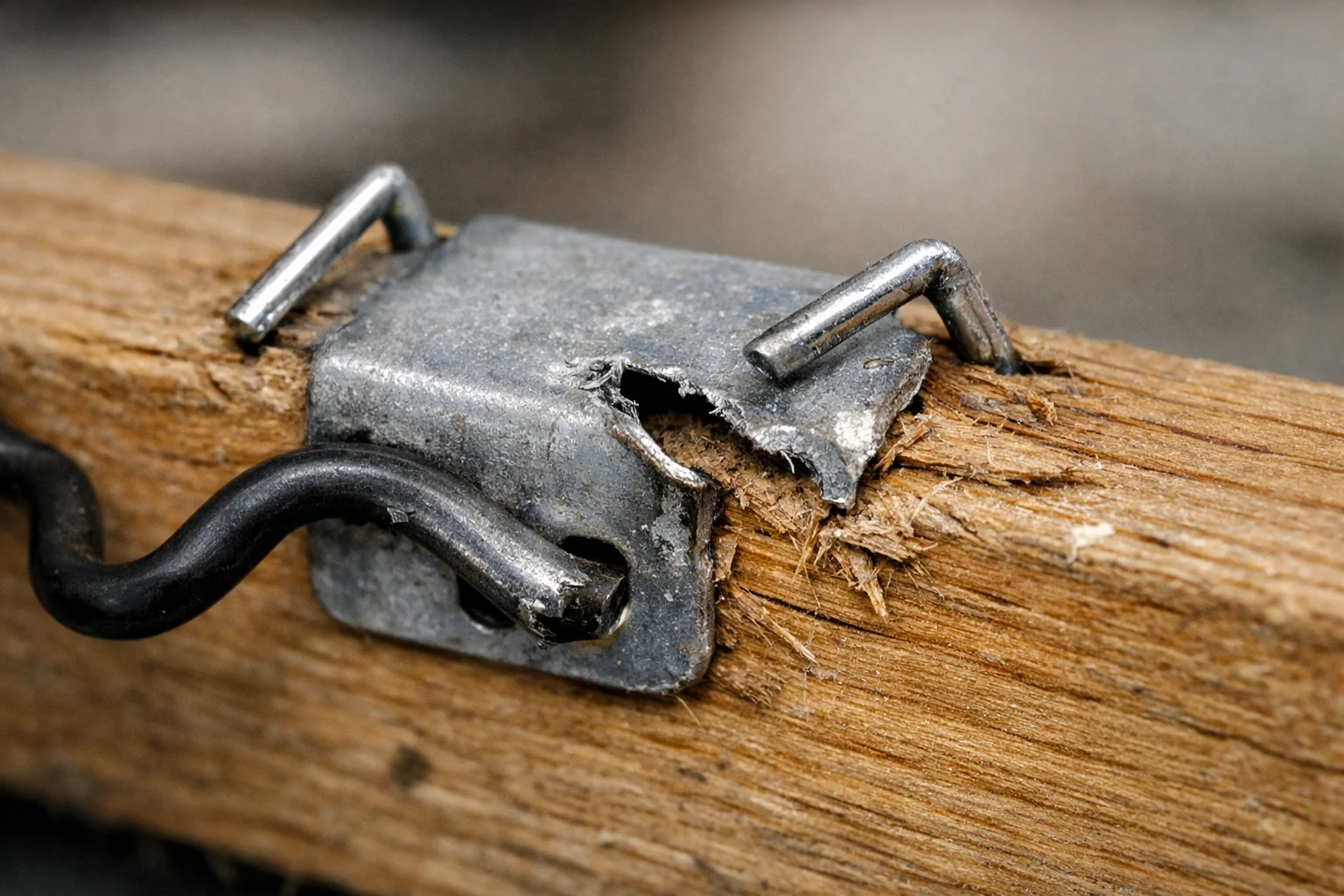
Level two problems are things I will accept only if the price reflects it and everything underneath feels solid. Replacing cushion foam is a good example. If the cushion has a zipper and the seat deck underneath feels firm and even, I know I can fix comfort later. Small fabric patches also fall here, but only in low stress areas like the back or arm side, never on the seat where weight and friction live. When I test a sofa with these issues, I focus on the frame and support, not the soft parts.
Level three is where I draw a hard line and this is the danger zone. Anything involving webbing, springs, or wood touch ups makes me nervous because the tools and force involved are not forgiving. Loose webbing means the seat will sag no matter what cushion you put on top. A spring that feels out of place is storing energy that can hurt you or damage the frame. Wood touch ups sound minor, but mismatched stain or filler usually means someone already tried to hide damage. In a showroom, if I sense any of this, I do not think about repair, I think about walking away.
Level four is simple for me because it is not negotiable. Hand tied springs, structural frame repairs, and tufting are professional territory. If any of these are compromised, the sofa is not a bargain, it is a project. I learned the hard way that you cannot YouTube your way into proper spring tying or square frame repair. When I see deep button tufting that already looks uneven or a frame that twists when lifted, I treat that as a final answer.
I am telling you this so you stop asking yourself whether something could be fixed and start asking whether you would ever actually fix it. Be honest about your patience, your tools, and your tolerance for risk. Most of us do not want a weekend project with stored energy and sharp metal.
In the showroom, this framework keeps me calm. If a problem lives in the cushions or surface details, I stay curious. If it lives in the bones of the sofa, I am done evaluating and I move on. There is no discount big enough to turn a structural problem into a good purchase for an average home.
Once you accept these limits, buying gets easier. You stop being seduced by how something looks today and start paying attention to what you would be stuck with tomorrow. That is how you avoid getting ripped off without needing to become an expert or a repair tech.
Technical Summary: The Cost of a Pro
At some point I had to face the money side honestly, because good intentions do not make professional work cheap. When a spring system needs repair, I expect a bill in the low hundreds, usually somewhere between two and four hundred dollars, and that is for a focused fix, not a full rebuild. That cost exists because springs require time, control, and experience, not just effort.
Full reupholstery is a different reality altogether. When someone strips a sofa down to the frame, rebuilds padding, reties or resets support, and then covers it again, the labor alone can easily land well over a thousand dollars and often closer to two or three thousand. That price usually does not include fabric, which can add a painful amount on top. I learned to treat this number as a gut check, not a bargain opportunity.
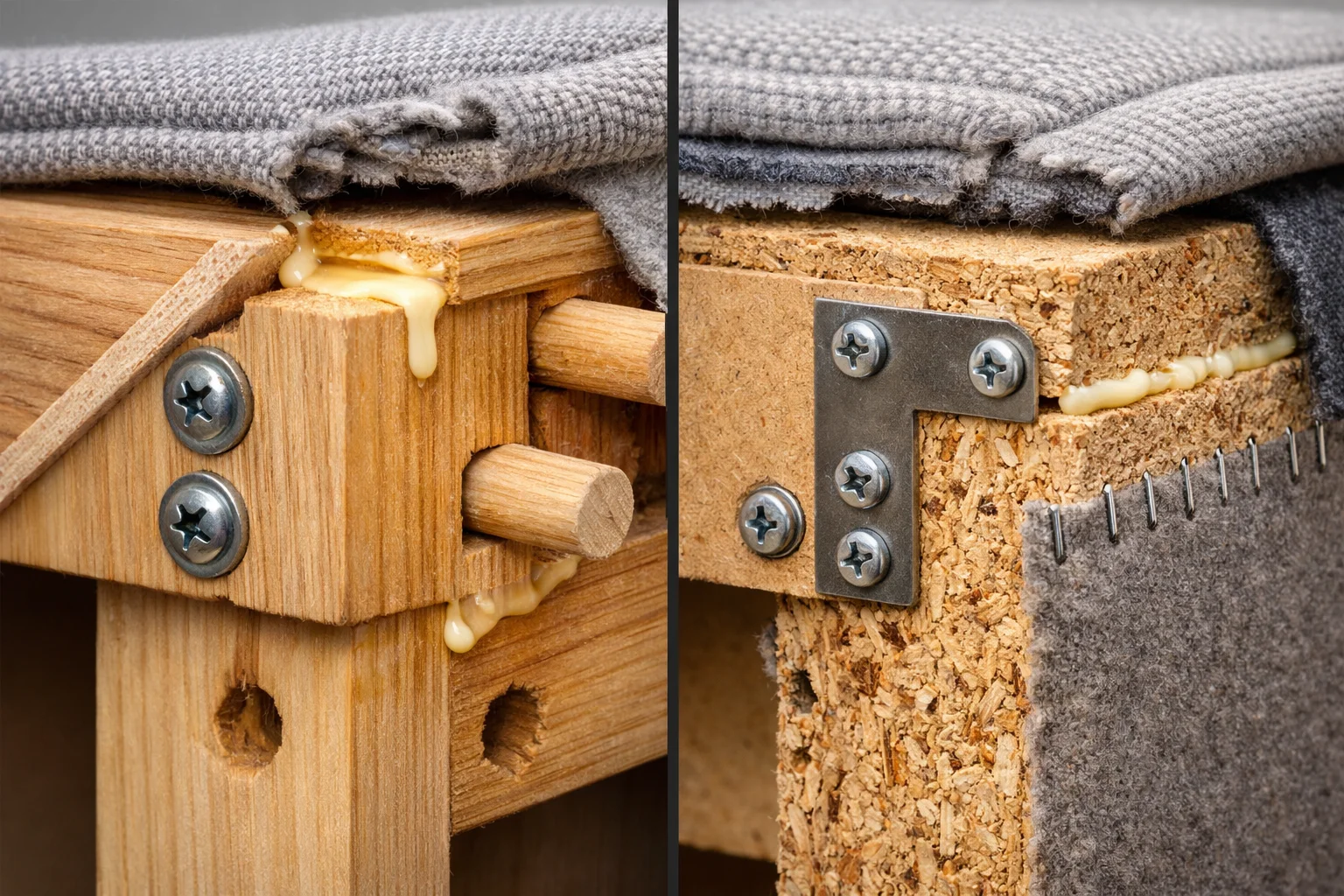
This is where the logic finally clicked for me. I only consider paying for that level of professional work if the frame underneath is kiln dried hardwood and still solid. Hardwood frames age slowly and predictably, so money spent repairing springs or upholstery has a chance of paying off over time. If the frame is plywood, particle board, or some mystery composite, I stop the math right there and I buy new instead.
You can use this in a showroom without seeing the frame. I ask directly what the frame is made of and I listen carefully to how the answer is delivered. Clear mention of kiln dried hardwood usually comes quickly and confidently. Vague phrases like engineered wood or mixed materials tell me the structure is not worth investing in later.
What this section is really about is permission. I give myself permission to walk away from a sofa that would require professional level repair unless the bones are genuinely worth saving. That mindset keeps me from falling into the trap of thinking a future repair will rescue a bad purchase.
If you remember one thing here, remember this. Expensive repairs only make sense on expensive bones. If the structure is cheap, the smartest financial move is not fixing it, it is replacing it.
Explore Technical Reference
The Math: Is a $400 Repair Worth It?
Understanding when foam replacement costs justify the investment over purchasing new furniture. The math of repair versus replacement quality comparisons.
Analyze Details →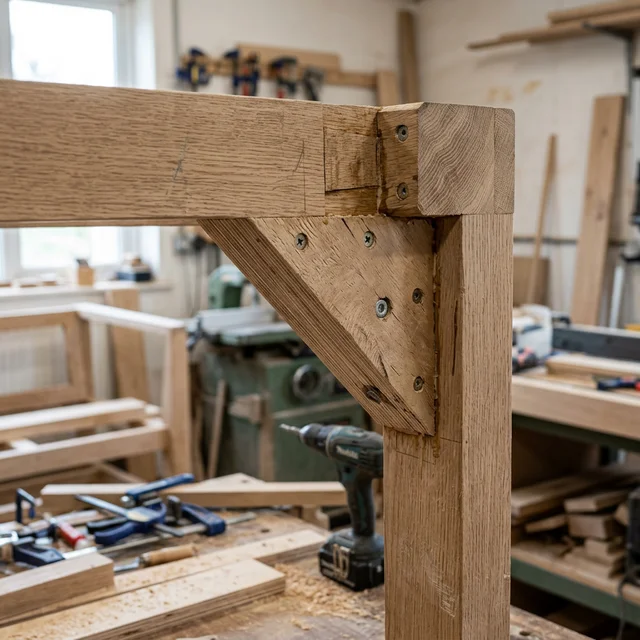
Lifespan By Tier: What You Get For Your Money
How construction methods determine furniture lifespan. Understanding why material and joinery choices create predictable expiration dates regardless of care.
Analyze Details →