Lifespan By Tier: What You Get For Your Money
Introduction
I lifted the corner of a $400 sofa in the showroom. The frame twisted, and I heard a staple pop. I knew its lifespan, about two years at best. That was not pessimism, it was physics.
I am not a furniture designer or a repair tech. I am just someone who got tired of buying seating that looked fine on day one and felt awful by year three. After enough sagging cushions and wobbly frames, I started paying attention to what actually fails first.
This guide is for you if you want a sofa that still feels solid after years of normal use. I am going to focus on things you can check with your hands and eyes in a store, without special tools or insider access.
Most people shop by price, size, and fabric. I did that too, and I paid for it later. The real differences that matter are usually hidden under the cushions and behind the dust cover, and salespeople rarely point them out.
I will walk you through how I evaluate a sofa in five minutes on a showroom floor. If you do these checks, you will avoid the most common traps and dramatically improve your odds of buying something that lasts.
The “Price Per Year” Formula
This is the mental trick that finally broke my habit of buying cheap sofas. I stopped asking what it costs today and started asking what it costs me every year I own it.
The "Price Per Year" Formula
I look at the sticker price and divide it by how long the sofa will realistically last in my home. A five hundred dollar sofa that starts sagging after about two years ends up costing roughly two hundred and fifty dollars per year. A fifteen hundred dollar sofa that stays comfortable for around seven years works out to a little over two hundred dollars per year. A four thousand dollar sofa that holds up for twenty five years costs closer to one hundred and sixty dollars per year. When you do the math this way, the more expensive sofa can actually be the cheapest one to live with.The hard part is estimating the years, and this is where your hands matter more than the price tag. When I feel a rigid frame, dense cushions that bounce back, and a seat that does not flex when I drop my weight into it, I know I am not looking at a two year sofa.
You do not need to be exact. You are just sorting sofas into short life, medium life, and long life buckets based on what you can see and feel right now.
If a sofa already feels tired on the showroom floor, assume it will age fast in your living room. If it feels stubbornly solid and almost boringly firm, that is usually the one that quietly saves you money over time.
Tier 1: The Disposable (0-3 Years)
When I see a sofa priced in the few hundred dollar range, I assume it is built to be used lightly and replaced quickly. These are the sofas you see at big online retailers, discount chains, and the entry level lines at flat pack stores. They look fine under bright lights, but they are designed to hit a price, not to age well.
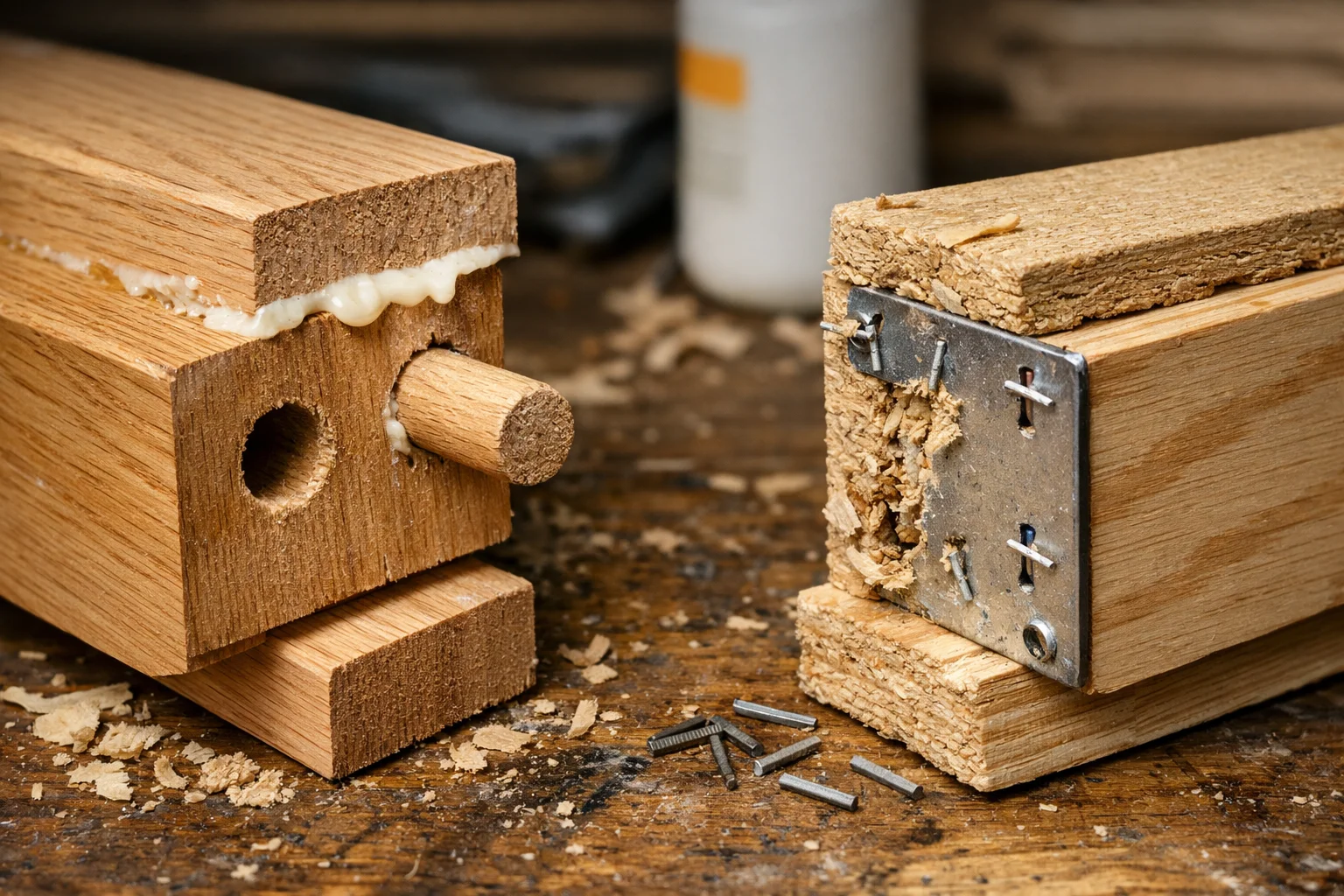
The fastest way I spot one is by lifting a corner or pushing sideways on the arm. If the frame twists or creaks, it is usually made from particleboard or thin engineered panels held together with staples. In the showroom, do not be gentle. A solid sofa resists you, a disposable one complains immediately.
Then I sit down hard and pay attention to the cushion. If it feels soft and cozy right away but does not push back, that comfort is borrowed from the future. Low density foam feels great for a few months, then it collapses and never truly recovers. If you stand up and see a clear dent where you were sitting, that is your warning sign.
I also run my hand along the front edge of the seat and underneath if I can reach. If I feel thin fabric stretched tight over something sharp or uneven, that usually means shortcuts inside. These sofas often skip proper support and rely on fabric tension to hold everything together.
I am not saying you should never buy this tier. I have bought it myself when I knew I was moving soon or furnishing a short term place. If you treat it like rental furniture and price it as something you will replace in a couple of years, it can make sense.
What I would not do is expect it to survive a move or a household that actually uses it every day. If you are buying this tier, do it with open eyes, keep the receipt, and never confuse a low sticker price with long term value.
Tier 2: The Economy (3 to 5 Years)
This is the tier most people end up buying, usually somewhere between eight hundred and fifteen hundred dollars. You see it at places like Ashley, Rooms To Go, Macy’s, and the nicer end of IKEA. On the floor, these sofas often look like a real upgrade from the cheap stuff.
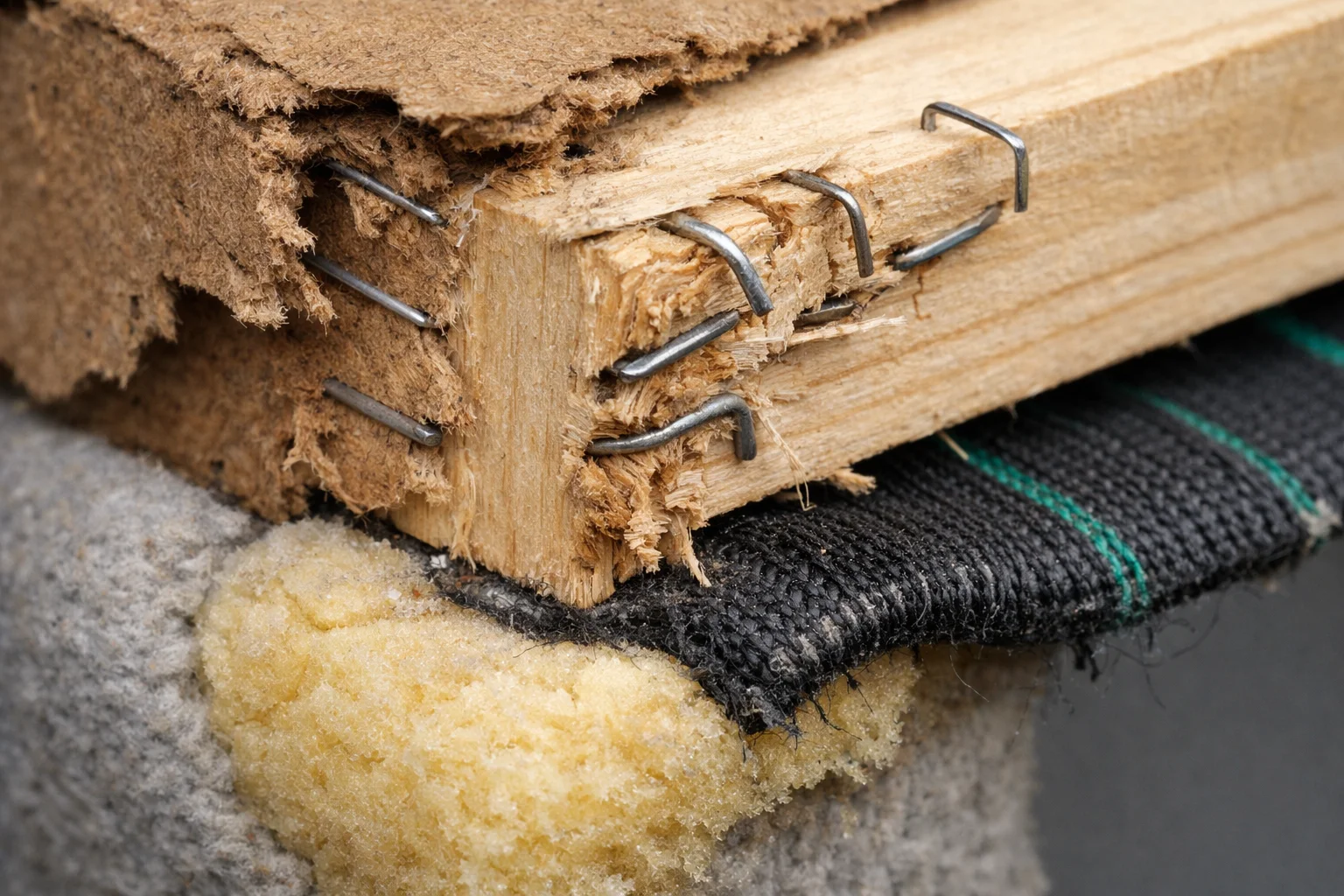
The frames here are usually plywood or pine, held together with glue and a lot of staples. That is not automatically terrible, but it means the strength depends on how thick the wood is and how well everything is aligned. In the showroom, I still lift a corner and push on the arms, but I expect less drama than Tier 1, not total silence.
When I sit down, the foam is the giveaway. Most of these sofas use standard density foam that feels supportive at first but starts losing its spring after a couple of years. I press my hand into the cushion and hold it for a second, then let go and watch how fast it recovers. If it comes back slowly or looks a little wrinkled right away, I assume year three will not be kind.
I also pay attention to how the seat feels across its width. If the middle feels softer than the edges even though no one is sitting there, that tells me the foam is already relaxing under store use. That softness will spread, and the sofa will slowly turn into everyone’s least favorite seat.
This tier is often sold as a long term purchase, but I treat it as solid first apartment furniture. It can look good and feel fine for a while, especially if you rotate cushions and do not abuse it. What it will not do is hold that new, supportive feel for a decade.
If you are considering this tier, I ask you to be honest about how you live. If the sofa will see daily use, lounging, and guests, I mentally budget for replacing it in about four years. If it is in a quieter room and used gently, you might stretch it to five.
The biggest mistake I see people make here is assuming they are buying durability just because the price jumped. You are mostly buying better styling and a short term comfort upgrade. That is not wrong, but it should be a conscious choice, not a surprise later.
If the sofa feels great but not especially firm, and the frame feels okay but not rock solid, you are probably standing in this tier. I buy it only when the price per year still makes sense to me and I do not expect it to age gracefully.
Tier 3: The Standard (7-15 Years)
This is the tier where I finally stopped feeling like I was gambling. These sofas usually land between two and four thousand dollars, and you see them at places like Pottery Barn, Crate and Barrel, Room and Board, and La Z Boy. When people ask me what a good sofa actually is, this is the range I point to.
The first thing I notice here is the frame, even before I sit down. When I lift a corner, the sofa feels heavy and reluctant to move, not floppy or hollow. When I push on the arm, the whole piece pushes back instead of flexing in my hands.
In the showroom, I sit down harder than feels polite and pay attention to the sound and the feel. A standard tier sofa stays quiet, no creaks or clicks, and the seat feels firm without being stiff. It does not give me that immediate sink that feels cozy but suspicious.
The cushions are where this tier really separates itself. When I press my hand into the seat and let go, the foam snaps back quickly and evenly. I do not see a lingering handprint or wrinkling in the fabric, which tells me the foam still has a future.
I also stand up and look at the seat line across the sofa. On a good standard tier piece, the cushions stay level and the front edge does not collapse where I was sitting. That is the kind of detail that keeps a sofa looking presentable years down the road.
If the cushions are loose, I pick one up. It feels dense and a little heavier than I expect, which is a good sign. Lightweight cushions are usually cheap foam in disguise, no matter how nice the fabric looks.
I pay attention to how the sofa feels after a full minute, not just the first five seconds. Standard tier sofas often feel slightly firm at first, then comfortable as your weight settles in. That firmness is what keeps them from turning into hammocks later.
This is also the tier where I stop excusing small flaws. If something already feels a little uneven or under supported on the floor, I assume it will bother me more, not less, in five years. At this price, I expect consistency across every seat.
When I run the price per year math in my head, this tier usually makes sense. A three thousand dollar sofa that still feels good after ten years costs less to live with than replacing a cheaper one twice. More importantly, I do not have to think about it or baby it.
If you want one sofa to anchor your living room through moves, lifestyle changes, and years of daily use, this is the safest place to spend your money. It may not feel exciting in the showroom, but boring and solid is exactly what you want here.
This is why I call it the benchmark. Anything below this tier needs compromises and lowered expectations. Anything above it needs a clear reason, not just a higher price tag.
Tier 4: The Heirloom (25+ Years)
This is the tier most people never plan to buy, and the one I respect the most when I encounter it. These sofas usually start around five thousand dollars and climb quickly, and you see them from brands like Sherrill, Hancock and Moore, Baker, and Century. When you touch them, the price stops feeling abstract.
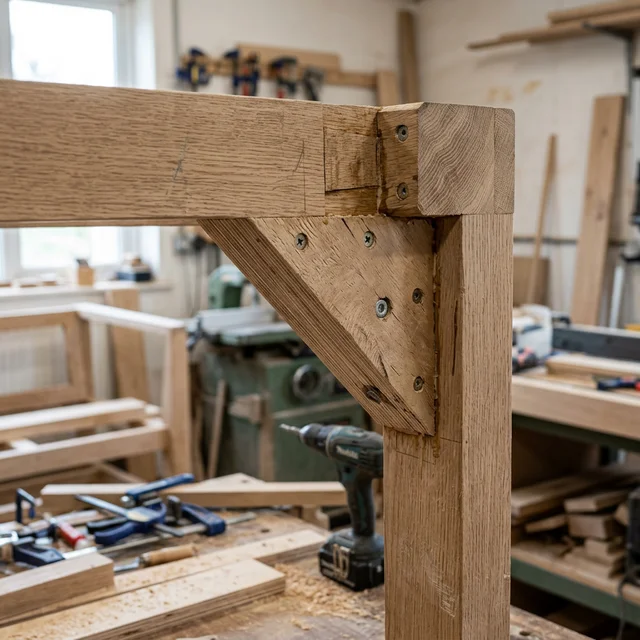
The frame is the first giveaway. When I lift a corner, the sofa barely acknowledges me, like I am lifting a solid object instead of furniture. There is no twist, no creak, and no sense that parts are working independently from each other.
In the showroom, I push hard on the arm and then the back. The whole sofa responds as one piece, not as a collection of panels. That tells me the joints are doing real work, not relying on staples to hold things together.
When I sit down, the seat feels different from anything below it. It does not collapse, but it also does not fight me. The support feels deep and layered, like there is something substantial underneath the cushion instead of just foam on a platform.
I always stand up and sit back down a second time. On an heirloom sofa, the seat feels exactly the same the second time as the first. There is no settling sound, no softening, and no visible change in the cushion shape.
If the cushions are loose, I pick one up. They are heavier than I expect, and they feel resilient when I squeeze them. When I let go, they recover fully and evenly, not just on the surface.
I also check the edges of the seat. I sit right on the front edge and notice whether it holds me up or lets me slide forward. A true heirloom piece supports you even where cheaper sofas quietly give up.
This is also the tier where details stop being cosmetic and start being structural. When I run my hand underneath, I feel real support components, not fabric stretched over air. Nothing feels sharp, flimsy, or improvised.
Comfort here is subtle. These sofas rarely feel instantly cozy in a way that makes you sink and sigh. Instead, they feel composed and neutral, and that is exactly why they age so well.
I think about ownership differently at this level. I am not buying a sofa so much as buying a frame that will outlive multiple fabrics and cushion refills. The upholstery is temporary, the structure is the asset.
If you are in a showroom and wondering whether a sofa is truly in this tier, ask yourself a simple question. Does it feel like something you would ever throw away, or does it feel like something you would pay to fix?
When I do the price per year math here, it stops being hypothetical. A sofa that lasts twenty five or thirty years ends up cheaper than replacing a standard tier sofa twice, and it spares you the frustration of starting over.
I do not recommend this tier to everyone. If your style changes often, if you move frequently, or if a large upfront cost makes you anxious, this is probably not your lane.
But if you want one sofa that quietly survives kids, pets, moves, and decades of daily use, this is what that actually looks like. You will not be impressed every day, but you will never be disappointed.
This is the sofa your kids argue about when you try to get rid of it. That is how you know it was worth it.
Chart comparing construction materials across price tiers
When I look at a chart like this, I am not reading it as engineering data. I am translating it into what my hands and body should notice in a showroom within a few minutes.
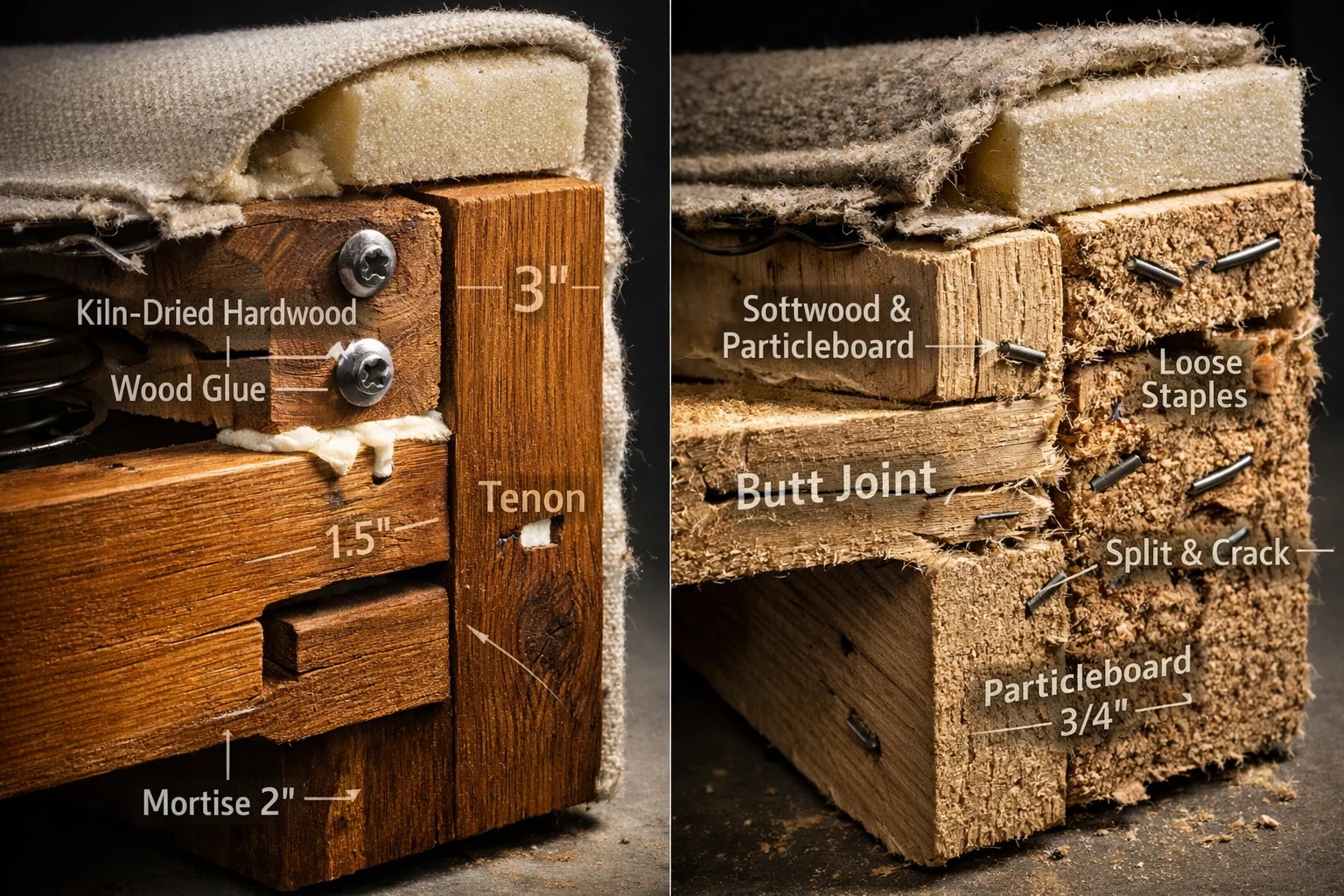
At the low end of the chart, you see materials like particleboard, MDF, and thin engineered panels. In real life, that shows up as light weight, flexing frames, and furniture that feels hollow when you knock on it with your knuckles. If you lift one corner and the opposite corner lifts easily too, the chart is already telling you how this sofa will age.
As you move up the price tiers, the chart shifts toward thicker plywood and solid softwoods. In the showroom, this is where the sofa starts resisting you. It feels heavier than it looks, and when you push on the arm, the energy goes into the whole piece instead of bending one section.
By the time you get to solid hardwoods like maple or oak, the chart stops being theoretical. You feel it immediately when you try to move the sofa or twist it even a little. The mass is not there for show, it is there because stiffness and longevity come from material that does not want to bend.
The same logic applies to what is under the cushions. Low tier charts show webbing and light springs that save money and weight. On the floor, that translates to seats that feel fine at first but soften fast, especially in the middle.
As the chart climbs, you see heavier spring systems and denser support layers. In the showroom, this is the difference between a seat that holds you up evenly and one that slowly funnels everyone into the same sagging spot. I always sit in the exact center because that is where weak support reveals itself first.
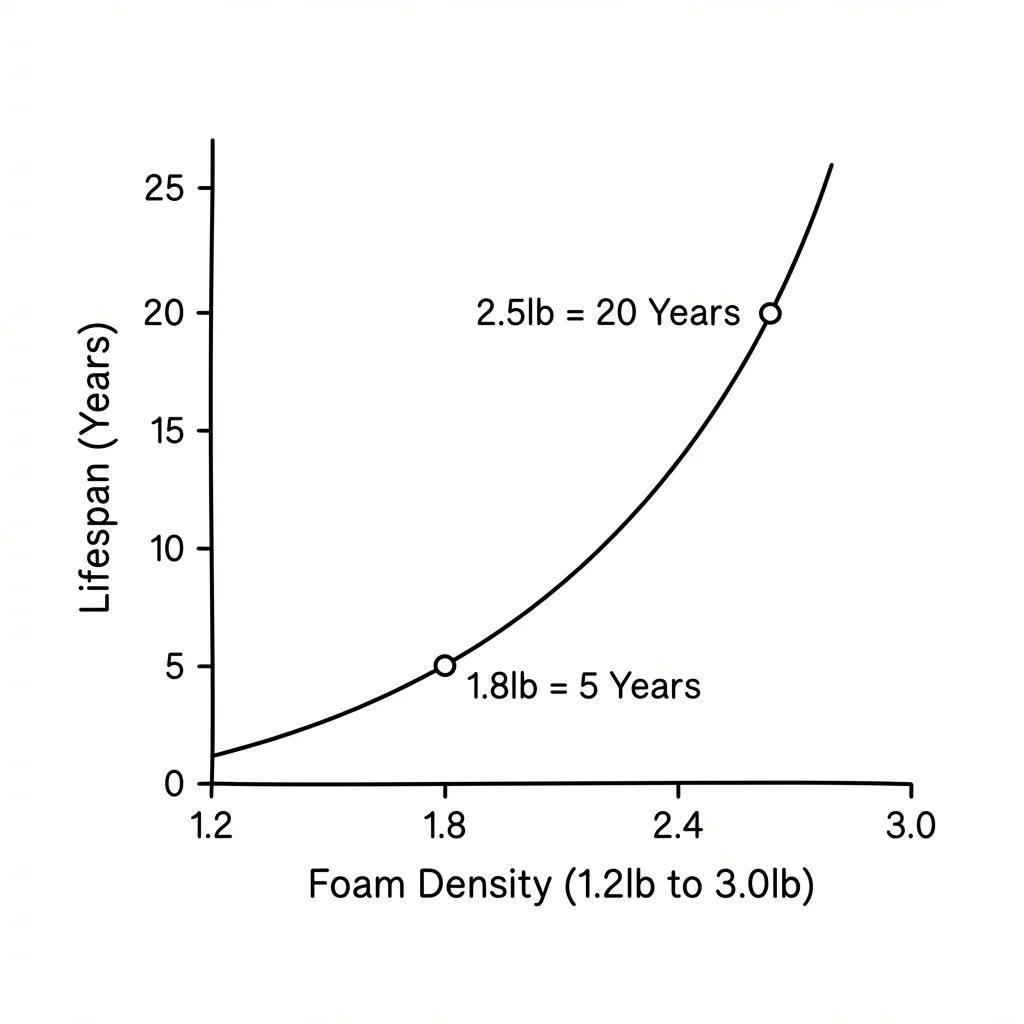
Foam density is another place where the chart matches real life. Lower tiers rely on foam that feels plush right away but does not have much recovery. When I press my hand in and watch it rise slowly or unevenly, I know I am looking at the bottom half of the chart.
Higher tiers show denser foam and layered fills. In the store, that means the cushion feels a little firmer than you expect, and it snaps back without hesitation. I trust that behavior far more than initial softness.
What this chart really teaches me is that you cannot upholster your way out of cheap structure. Nice fabric, tufting, and trendy shapes can sit on top of very weak bones, and the price tag does not always make that obvious.
When you are in a showroom, use the chart as permission to be skeptical. If the price suggests a higher tier but the sofa feels light, flexible, or overly soft, trust your hands more than the marketing. Materials do not lie, and they do not improve with age.
I also use this chart to set expectations. If I am shopping in a lower tier on purpose, I stop looking for miracles. I focus on getting acceptable comfort for a known lifespan, not on convincing myself it will somehow last like a heavier build.
If you want one simple takeaway, it is this. The higher you go on the chart, the more the sofa behaves like a single, stubborn object instead of a collection of parts. That stubbornness is what keeps it comfortable and intact years after the showroom glow is gone.
I cannot see inside the frame without a saw, but I do not need to. The chart tells me what should be there, and my hands tell me whether it probably is. If those two things do not line up, I keep walking.
Technical Summary: How to Spot the Tier
When I am unsure where a sofa really sits, I ignore the price tag and pay attention to its mass. Weight is hard to fake, and it tells you more in ten seconds than a spec sheet ever will.
I start with a simple lift. I grab one front corner and raise it about six inches off the floor. If the sofa feels heavy and the rest of the frame stays square, I am almost certainly dealing with a Tier 3 or Tier 4 build. If it feels light and the opposite corner wants to come along for the ride, that twisting is your clue that you are in Tier 1 or Tier 2 territory.
I am not trying to show off or stress the furniture, I am just checking whether the frame behaves like a single object. A good sofa resists being picked up from one point. A weak one reveals itself immediately by flexing and complaining.
Next, I use what I call the thump test. I knock firmly on the side panel or the outside of the arm with my knuckles and listen. A dull, solid sound usually means thicker wood or solid components behind the fabric. A hollow, drum like sound often means thin plywood, composite panels, or even cardboard forms doing structural work they should not be doing.
I always do this with my expectations set by the tier I am shopping. If I am looking at a budget sofa, a bit of hollowness does not shock me. If the price is pushing into standard or heirloom territory and it still sounds empty, I know something does not line up.
Finally, I combine what I felt and heard with how the sofa reacted when I sat down earlier. Heavy and rigid almost always matches firm, supportive seating that snaps back. Light and twisty almost always matches cushions that feel good for a moment and then give up.
This summary is not about being precise or technical. It is about sorting quickly and honestly. In a crowded showroom with a persuasive salesperson, these checks keep me grounded.
If you remember nothing else, remember this. When a sofa has real structure, it acts stubborn. It does not like being lifted from one corner, it does not echo when you knock on it, and it does not change shape just because you sat down.
When it feels light, hollow, and eager to flex, it is telling you exactly how it plans to age. I have learned to believe it the first time.