The Crossroads: Repair, Restore, or Replace?
Introduction
I thought “New” meant “Better.” I was wrong. In the furniture industry, a sofa built in 2005 is likely structurally superior to a sofa built in 2025.
I am not saying every older sofa was great, and I am not saying every new one is junk. What I am saying is that a lot of today’s “new” sofas are engineered to look good on a sales floor and survive a delivery truck, not to stay tight, quiet, and supportive after years of real sitting.
The hard part is that most of the quality you care about is hidden. In a showroom you see a nice fabric, tidy seams, and a price tag with a story attached to it, but the stuff that decides whether it sags, creaks, or leans lives under the cushions and behind the dust cover.
I learned this the annoying way, by owning seats that felt fine at first and then got weird fast. The arms loosened, the seat developed a dip where I always sat, the cushions started sliding forward, and little noises appeared every time I shifted my weight. None of that was obvious when it was new.
So this guide is me trying to help you buy with your eyes and your hands, not just with hope. When you are standing in a store, you should be able to do a few quick checks that tell you whether the frame is serious, whether the support system is likely to hold up, and whether the cushions are built for everyday life instead of a staged photo.
I am also going to be blunt about what sales talk usually does not mean. Words like “hardwood,” “premium,” “performance,” and “luxury” can be true, but they are often used in ways that are so vague they are basically decoration. If you do not ask a couple of specific questions and do a couple of simple tests, you are mostly trusting marketing.
My goal is not to turn you into a furniture engineer. My goal is to help you avoid the common traps: the sofa that looks tailored but has a weak skeleton, the deep plush seat that feels amazing for five minutes but bottoms out later, and the “lifetime” frame that is technically covered while everything you actually touch wears out.
If you only take one idea from this introduction, take this: you are allowed to be picky and physical in the showroom. Sit hard, lift things, press on parts that are not meant for photos, and ask for the exact materials in writing. A good sofa can handle a curious buyer, and a bad one relies on you being polite.
The “Quality Inflation” Trap
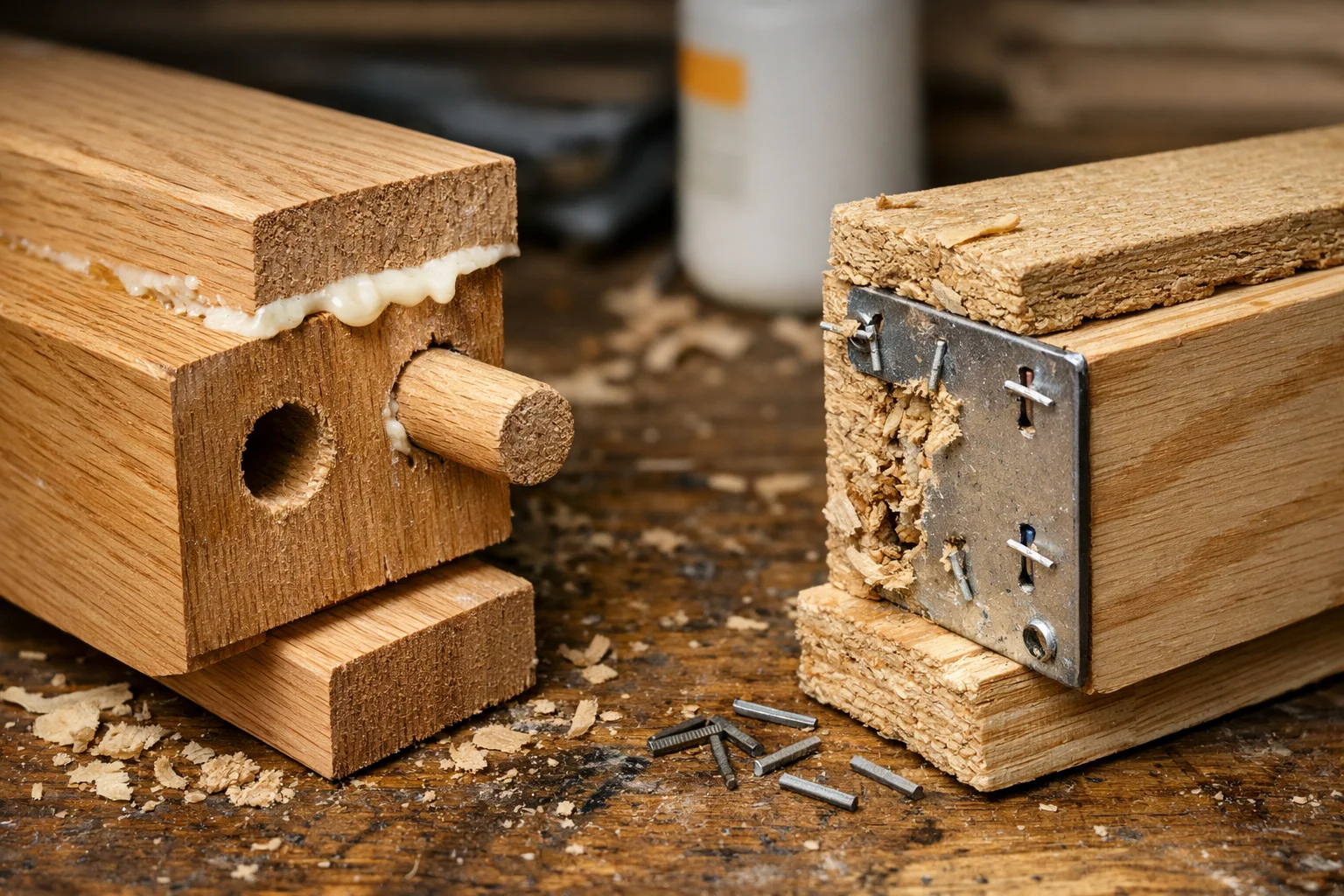
Why is your repair quote so high? It often feels high because you are comparing it to an old price tag, not to today’s replacement cost for the same underlying build.Back in 2005, a thousand dollars could realistically buy you a sofa with a genuinely sturdy hardwood frame. Today, that same level of frame quality can land closer to three thousand, once you account for material costs, labor, and the fact that fewer brands even bother building that way at entry level.
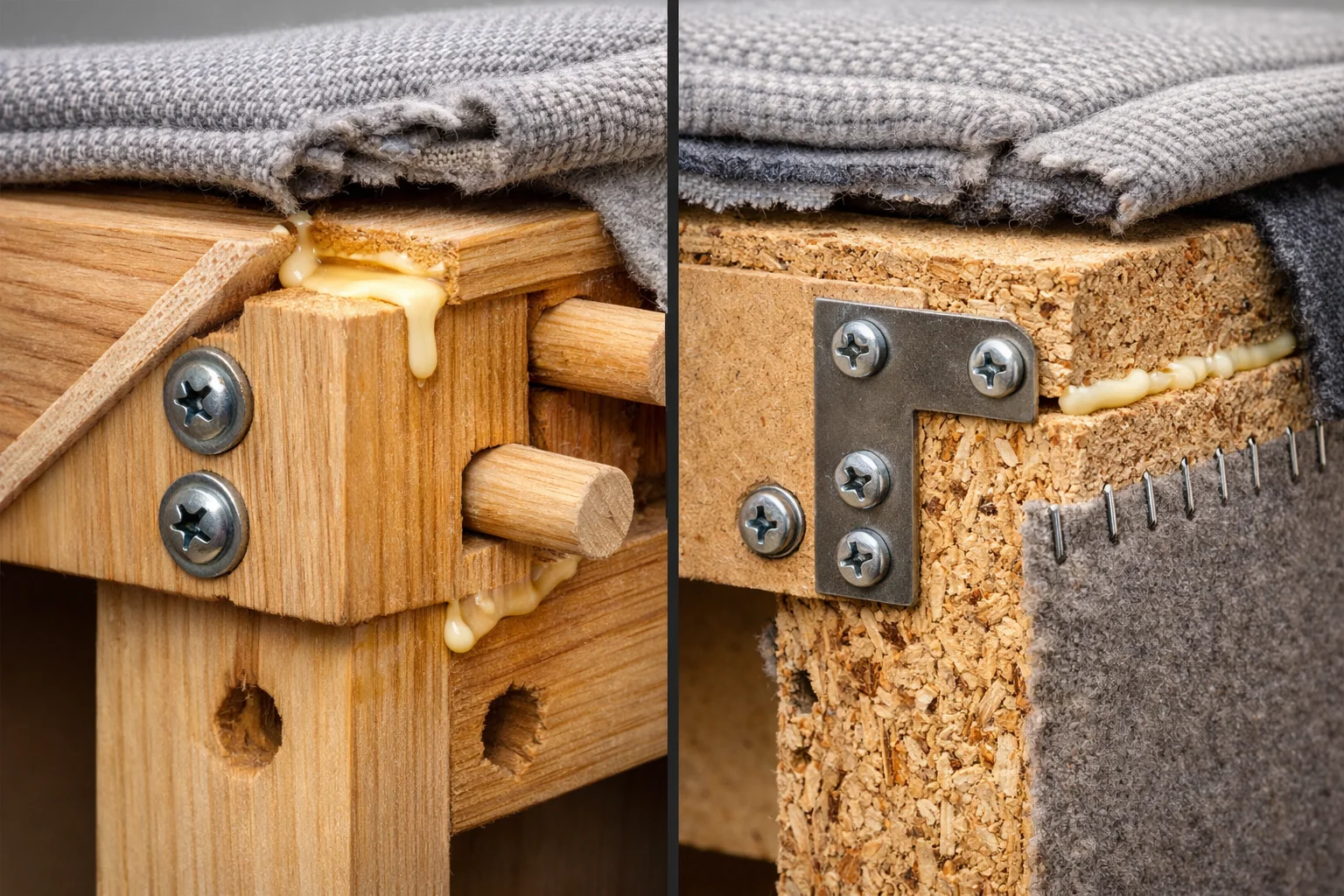
This is why an eight hundred dollar repair on an older, better built sofa can be the cheaper, smarter move than “starting fresh.” The uncomfortable math is that if you spend around a thousand on a new sofa today, you are often not buying the modern version of your old sofa. You are usually buying a downgrade, commonly a plywood or mixed wood frame dressed up with nice fabric and showroom friendly cushions.
When I am standing in a store, I try to keep this one idea in my head: I am not comparing sofas by price, I am comparing them by structure. If you treat a low price as a bargain without confirming what is under the upholstery, you can accidentally trade a repairable, long lasting frame for something that is basically disposable once it loosens up.
If you are deciding between repairing what you have and replacing it, I would ask the repair shop one blunt question: what exactly are you fixing, and what will still be original when you are done. If the frame is solid and the springs or webbing can be re tied or replaced, you might be paying to get back to a known good foundation.
If you are shopping new because you have to, you can use “quality inflation” as a filter during the sales conversation. When someone says “hardwood frame,” I ask what wood, where it is used, and what the joinery is, because a sofa can technically include hardwood and still rely on stapled plywood where it counts. If they cannot or will not answer in plain language, I assume the price is buying looks and logistics, not longevity.
I also stop myself from anchoring on what my last sofa cost, because that is where the trap snaps shut. Your goal is not to recreate the old receipt, it is to recreate the old sturdiness, and that usually means either repairing a good older piece or paying more than you want to for a new one that is actually built to take years of sitting.
Repair Calculator
Before you decide “repair” or “replace,” I want you to do a quick, boring bit of math. Not because math is fun, but because it keeps you from comparing the wrong things, like a repair quote today versus what you paid years ago, or a repair quote versus a new sofa that is not built anywhere near as well.
1. Sofa Details
2. Repair Costs
Analyzing Value...
Enter details to see if repair makes financial sense.
When I use a repair calculator, I am not trying to predict the exact bill. I am trying to answer one practical question: if you spend this money, what do you actually get back, and how long is that likely to last in your house with your habits.
The first input I care about is the “foundation,” meaning the frame and the seat support underneath the cushions. If your frame is tight and square and your support system can be rebuilt, repair money tends to buy real time. If the frame is already racking, twisting, or popping at joints, a reupholstery quote can be a trap because you are paying to wrap a weak skeleton in new fabric.
If you are not sure what you have, I treat a repair estimate like a diagnostic appointment. I ask the upholsterer to tell me, in plain words, whether the frame is worth saving, whether the support will be replaced or just patched, and what parts of the job are cosmetic versus structural. If they will not say “this frame is solid” out loud, I slow down.
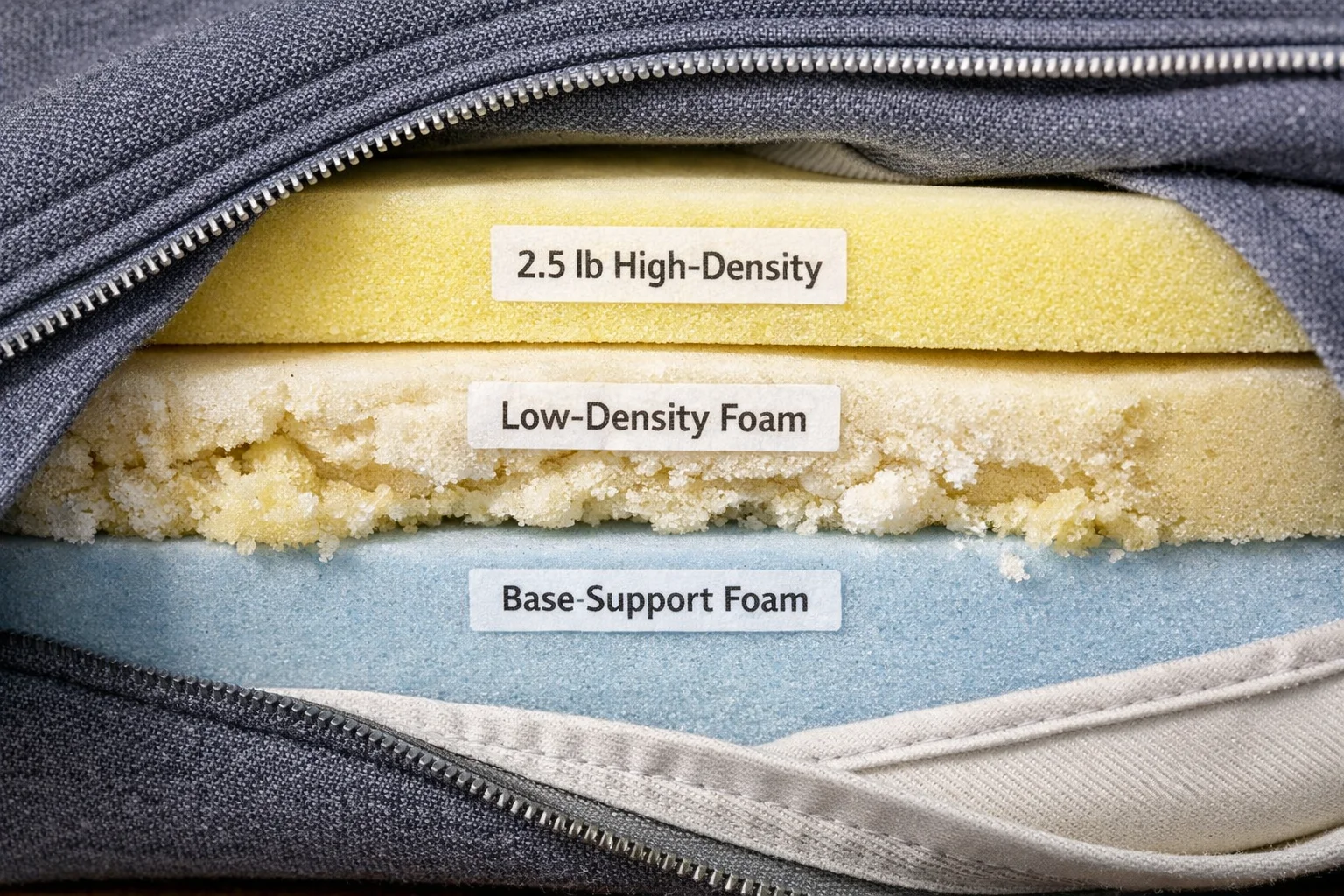
The second input I take seriously is cushions, because cushions are where a lot of people accidentally waste money. If your seat foam is the real problem and the frame is fine, you do not necessarily need full reupholstery. In a showroom, this is the same logic I use to judge a new sofa, because I have learned the hard way that a pretty cover over cheap foam is a short relationship.
To make the calculator useful, I also force myself to estimate how you actually sit. If you always sit in one spot, if you have a household that flops down hard, if you nap on the sofa, or if you have pets that turn cushions into a racetrack, you should assume faster wear. That does not mean you need “the toughest thing on earth,” it just means you should not pay for a delicate, showroom-soft build and expect it to behave like a workhorse.
When you compare repair to replacement, I want you to compare like with like. If your repaired sofa would have a solid frame plus fresh support plus new foam, the replacement you compare it to should be a new sofa with a similarly serious frame, a similarly serious support system, and cushions that will not collapse in a year. If the only new sofas in your budget are vague on frame materials, stapled together in a way the salesperson cannot describe, and feel great only because the top layer is fluffy, then the “cheaper new sofa” is not actually the same product.
I also build delivery and disposal into the decision because those costs are real, and they always show up at the worst time. A repair that happens in your home, or a reupholstery job that includes pickup and return, can end up competing surprisingly well with a new sofa once you add delivery fees, stair fees, haul-away, and the risk of having to do it again sooner than you expected.
The output I look for is not just “repair costs less.” I look for “repair buys more usable years per dollar,” and it buys years with the kind of sitting you do. If repair is close in price to a replacement that is genuinely well built, I lean toward whichever option gives me a clearer answer about what is inside, because uncertainty is what usually burns you.
If you are using the calculator and you keep landing in a gray area, I fall back on one showroom reality check. I would rather put money into a known good frame, even if it is older, than gamble on a new frame that nobody will describe and nobody will show you, because the frame is the part you cannot cheaply upgrade later. Fabric and cushions can be renewed. A bad skeleton stays bad.
The Decision Matrix (The 4 Stages of Failure)
When a sofa disappoints you, it almost always fails in one of four layers, and each layer has a very different “what now” answer. I use this as my mental shortcut in a showroom and when I am staring at my own worn out sofa at home, because it keeps me from throwing good money after bad, or replacing the wrong thing.
The key is to separate “ugly,” “uncomfortable,” “unsupported,” and “unsafe.” Those sound similar when you are annoyed, but the fixes range from cheap maintenance to a total reset.
Stage 1: Cosmetic (Fabric)
This is when the sofa still feels basically fine, but it looks rough. The usual culprits are pet scratches, sun fading on the arm or back, and the kind of stain that never really leaves, like red wine or oily food.
If you are thinking reupholstery just for fabric, I want you to pause, because this is where people overspend. Paying a thousand dollars or more to reupholster a mediocre frame is how you end up with an expensive sofa that still develops a wobble or a sag later.
The only time I think that expense makes sense is when you genuinely love the shape and scale of the frame, and you have reason to believe the structure underneath is worth dressing up again. In a showroom, this translates to a simple question you can ask yourself: if this exact sofa came in an ugly fabric today, would you still want it, or are you mostly attracted to the cover.
If you do not love the frame, I would treat fabric damage as a slipcover problem, not an upholstery problem. A decent slipcover can buy you time and keep you from panic buying a replacement that is weaker than what you already own.
Stage 2: Comfort (Cushions)
This is the “butt prints” stage, where the sofa looks and feels tired even though nothing is actually broken. You sit down and sink too far, the front edge feels crushed, or you always end up in the same shallow dip.
I have learned to see this as maintenance, not failure. Cushions wear out faster than frames, and they are one of the few parts you can actually refresh without rebuilding the whole sofa.
If your sofa is otherwise stable, replacing seat foam or rebuilding the seat cushions is usually the cheapest way to get your comfort back. In a store, you can protect yourself by doing a simple honesty test: if the seat only feels good because the top layer is fluffy, and you can feel the firm base right underneath within a few seconds, you are buying the beginning of this stage.
When I sit on a showroom model, I try to stay seated long enough for the cushion to “settle,” and then I shift my weight forward like I am getting up. If I feel myself climbing out of a hole, or if the cushion seems to shove me toward the front, I assume that feeling will get worse at home.
Stage 3: Suspension (Springs)
This is when the support under the cushions gives up, and you start rolling into a low spot even if the cushions are not totally dead. It can feel like the sofa is subtly tilted, or like there is a trench where everyone sits.
The repair cost here is usually in the middle, and the decision comes down to what the suspension is attached to. I would repair suspension when the frame is the real deal, meaning it is solid hardwood where the springs or webbing are anchored, not a thin stapled assembly that is already working loose.
In a showroom, you usually cannot see the springs, but you can still gather clues. I press down near the front edge of the seat, then I press again closer to the back, and I pay attention to whether the resistance feels even. If the front edge collapses easily, or if one side feels softer than the other on a brand new floor model, I treat that as an early warning that the support system is light duty.
If you are evaluating your own sofa at home, I also listen. A little fabric noise is normal, but a repeated metallic ping, grinding, or a crunchy squeak when you shift can be a sign the suspension is failing or tearing at its attachments.
Stage 4: Structural (Frame)
This is the stage I do not negotiate with. If the arms wobble, if the back feels loose when you push on it, or if you hear cracking noises that seem to come from the wood itself, you are looking at a frame problem.
Frame repair gets expensive fast, and even when someone can tighten it up, you are often paying for a partial rescue, not a full reset. Unless the sofa is an heirloom antique that you would keep for emotional reasons, I personally replace at this stage, because a compromised frame tends to keep finding new ways to complain.
In a showroom, I do a quick, slightly embarrassing test that has saved me from bad purchases. I grab the arm and gently try to wiggle it side to side, then I put my weight down on one front corner of the seat and see if the whole piece twists or racks. A good frame feels boring and solid, and it stays quiet when you shift around.
If a salesperson acts like you are being unreasonable for doing that, I take it as information. A sofa that is built to last can handle you checking it like you mean it.
The “Lemon” Risk
This is the part nobody likes to admit out loud. When you replace a sofa, you are not just paying for a new object, you are also paying a hidden manufacturing tax in the form of uncertainty.
With your old sofa, you already have real data. You know it fits your room, you know the arms clear the doorway, you know where the seat height lands on your legs, and you know the frame survived ten years of your actual life, not a brand’s marketing copy.
With a new sofa, you are gambling on things you cannot fully see in a showroom. You are gambling on whether the fabric will pill after three months of jeans and blankets, whether the seat will develop a permanent dip where you always sit, and whether that quiet little creak you did not notice on day one turns into a daily soundtrack by month twelve.
When I say “lemon,” I do not mean a sofa that is obviously cheap the second you touch it. I mean a sofa that looks great, feels great for five minutes, and then starts failing in ways that are hard to prove and annoying to live with.
If you want to lower that risk, I treat the showroom like a test drive, not a date. I sit in my real posture, I slouch, I lean on one arm like I do at home, and I stay there long enough for the cushions to stop “introducing themselves” and start acting like a seat.
Then I get physical in a way that feels slightly rude, because it is cheaper to be rude now than disappointed later. I push on the arms, I push on the back, and I press down along the front edge of the seat in a few spots to see if the resistance changes, because uneven resistance on a new sofa is a bad sign.
I also ask for the boring specifics in writing, because “trust me” is how lemons happen. I ask what the frame is actually made of, how the corners are joined, what the seat support system is, and what the seat cushions are built from, meaning the core material, not just the wrap that makes it feel plush on the floor.
If they cannot answer, or if every answer is a vague adjective, I assume I am looking at a mystery box. In that moment I remind myself of the logic that has saved me money: be wary of trading a known asset for an unknown one, especially when the unknown one is wrapped in a pretty fabric and a limited time discount.
Warranties do not calm me down as much as they should, because most of what bothers you is not a clean, obvious “defect,” it is gradual disappointment. Before you buy, I ask you to read the warranty exclusions with your phone in the store, especially the parts about normal softening, compression, stretching, and seams, because those words often cover the exact things people complain about later.
If you are stuck between keeping an older sofa and buying new, I use one simple gut check. If your current sofa has already proven it can live through your household and still feel basically stable, I treat that stability as valuable, and I only trade it away when the replacement has passed enough hands on testing and answered enough specific questions that it stops feeling like a gamble.

When you look at that chart, I do not want you to walk away thinking “old is always better” or “new is always worse.” I want you to see the word gamble, because that is the part that matters when you are spending real money.
A repaired older sofa can be boring in the best way, because you are starting from a frame and seat platform that already proved it can survive years of sitting. When you repair, you are often paying to restore the parts that naturally wear out, like foam and webbing, while keeping the expensive part, which is the solid structure.
A brand new sofa can be fantastic, but the spread is wider now. In the same showroom you can sit on something that will stay tight for a decade, and something that will feel “fine” for a year and then slowly turn into a dip, a lean, and a soundtrack of little creaks, all while still technically being “within normal softening.”
So here is how I use this comparison when you are choosing between repair and replace. If your current sofa is structurally quiet and square, meaning it does not rack when you lift a front corner, the arms do not wiggle, and the back does not flex, I treat that as a valuable asset and I get a repair quote before I fall in love with anything new.
If you are leaning toward new anyway, I want you to force the new sofa to earn that decision by reducing uncertainty. I sit on the exact model I am buying, not a similar one, and I try to make it misbehave by shifting my weight, leaning hard on one arm, and pressing down along the front edge in several spots. If anything feels uneven on day one, I assume it will not get better at home.
Then I ask one question that cuts through a lot of marketing: “What will be different inside this sofa after five years of daily use, and what will still be the same.” A good salesperson can answer that in plain language, because a good build has a straightforward story, like a rigid frame, a real spring system, and cushions with enough substance that they do not depend on fluff to feel comfortable.
If you are looking at repairing, I ask you to do the same five year thought experiment, just in reverse. Ask the upholsterer what will be replaced versus reused, and ask whether the repair returns the support to something close to original firmness, or whether it is a cosmetic refresh on top of tired structure.
The practical takeaway I want you to keep in your pocket is this. If you can identify a proven older frame that is worth rebuilding, repair often turns your money into usable years with fewer surprises. If you cannot verify what is inside a new sofa, or the store will not clearly explain the frame, the seat support, and the cushion core, you are not buying “new,” you are buying risk wrapped in nice fabric.
Technical Summary: The Final Check
Before you throw it out, or before you commit to buying something “new,” I do one last, fast reality check that cuts through a lot of stories. I lift it, I shake it, and I check the cushions.When I say lift it, I mean you should try to pick up one front corner of the sofa by the frame, not by a loose cushion. I am not chasing some magic weight number, I am looking for whether it feels like a dense, serious object or like a light shell. If it is surprisingly light for its size, I assume there is less wood, thinner wood, or more empty space than I want in the parts that matter.
When I say shake it, I am checking for racking and looseness. You can grab the arm and give a firm, controlled wiggle, then do the same at the top of the back. What I want is boring rigidity, where the whole piece moves as one unit without a delayed wobble, flex, or clicking. If it feels like the arm moves a beat after the rest of the sofa, or the back twists when you push on one side, I treat that as the kind of looseness that tends to grow, not the kind that mysteriously fixes itself.
When I say check it, I mean the cushions, and specifically whether they are loose and removable instead of sewn in. Loose cushions are not automatically “high end,” but they are practical because you can rotate them, flip them if they are double sided, and replace the inserts later without doing surgery on the whole sofa. If the cushions are sewn in, you are stuck living with whatever sag pattern develops, right where it develops, and you usually have fewer affordable options when the foam gives up.
If you can honestly say yes to all three, meaning it feels heavy, it feels rigid, and the cushions are loose, I usually treat that as a keep it signal. It does not mean it is perfect, and it does not mean you should ignore stains or tired foam, but it usually means you have something with a decent skeleton that is worth maintaining instead of trading away for a mystery box.
Explore Technical Reference
The Math: Is a $400 Repair Worth It?
Understanding when foam replacement costs justify the investment over purchasing new furniture. The math of repair versus replacement quality comparisons.
Analyze Details →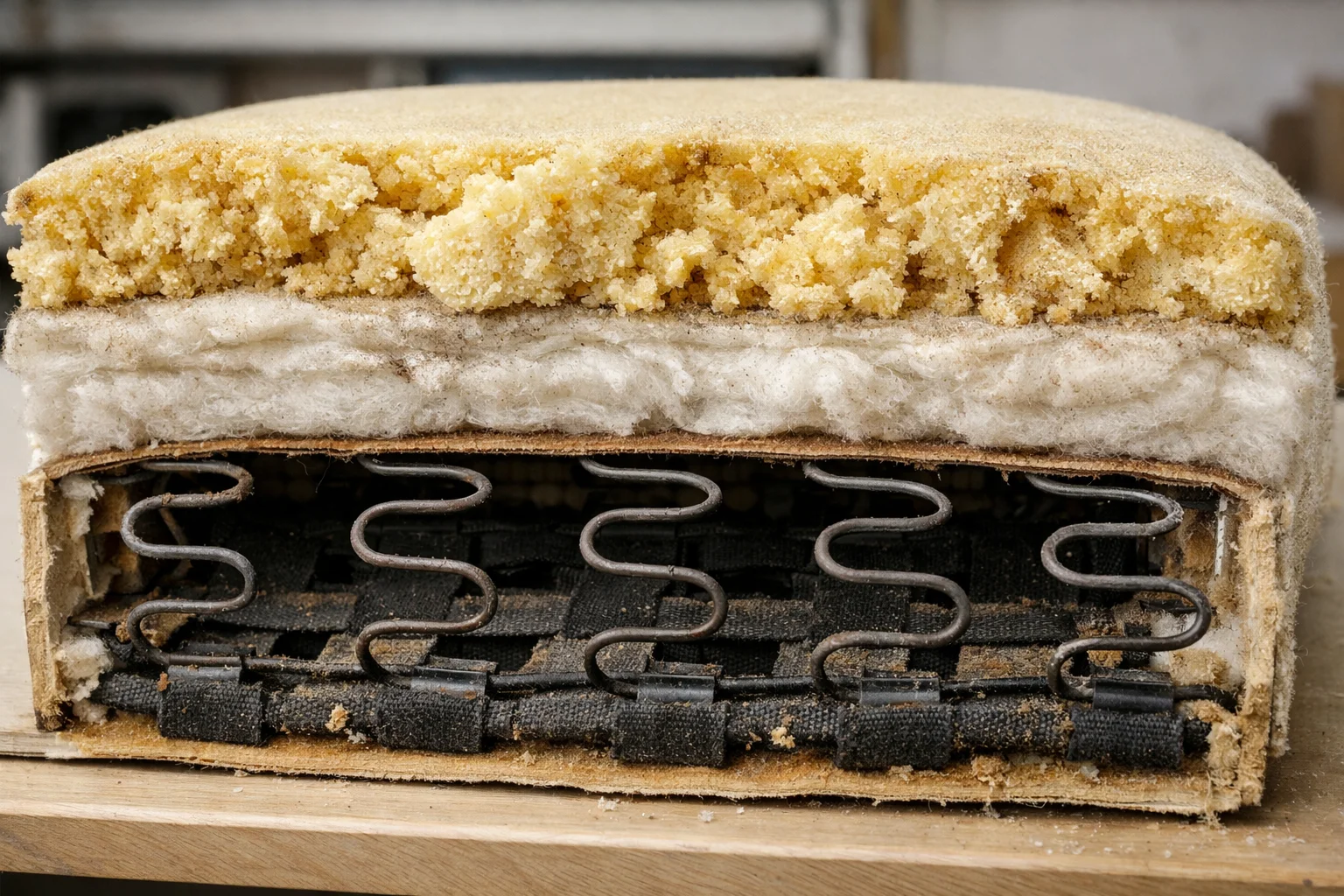
The Exit Strategy: 3 Signs Your Sofa is Dead
The three definitive signs of death. Wood noise, smell, and fabric disintegration.
Analyze Details →