The Math: Is a $400 Repair Worth It?
Introduction
My local upholsterer quoted me $400 to restuff my sofa cushions. I choked. “I can buy a brand new sofa for $800!” I told him. He laughed and said, “Go look at the $800 sofa.” I did. It was trash.
That little exchange is why I stopped treating sofas like disposable purchases and started treating them like machines that either hold up or don’t. I am not trying to turn you into a furniture expert, I just want you to walk into a showroom with a few simple checks so you can tell the difference between “looks good today” and “still feels good three years from now.”
The reason the $800 sofa felt like trash was not mysterious. It was light, wobbly, and full of cheap shortcuts that you can actually notice if you know where to put your hands and what to pay attention to for twenty seconds.
This guide is the stuff I wish someone had told me before I wasted money on sofas that sagged early, got lumpy cushions, or developed a permanent “favorite seat” dip that never recovered. I am going to focus on what you can check in a store, even if the salesperson is hovering and even if you are not allowed to unzip anything.
When I say “don’t get ripped off,” I mean two things. I mean not overpaying for a name or a trend when the inside is mediocre, and I mean not paying a low price for something that is going to cost you more later in discomfort, repairs, or replacement.
If you take only one mindset into the showroom, make it this. You are buying the parts you do not see, and the fabric and styling are just the wrapper.
I am also going to be honest about tradeoffs. Some people want a super soft sink in feel, some people want upright support, and some people need pet friendly fabric more than anything else, so there is no single “right” sofa. There is, however, a very real difference between a sofa that is built to survive normal life and one that is built to look good long enough to get it out the door.
As you read, picture yourself doing quick, polite tests. You will sit the way you actually sit at home, you will lift a corner, you will grab the arm and give it a firm shake, and you will pay attention to what your body tells you instead of the showroom lighting.
If you are shopping with a budget, I am on your side. The goal is not to spend more, it is to spend once.
The "New Furniture" Trap
Inflation has quietly changed what “a thousand dollar sofa” even means. Ten or fifteen years ago, that price often bought you a frame with real wood and plywood where it mattered, and cushions that had enough density to bounce back for a long time. Today, that same sticker price can buy you a sofa that looks fine on the floor but relies on lightweight panel material, lots of staples, and foam that feels plush for a month and then starts taking a set.What tricks people, including me, is that the showroom comparison in your head is outdated. You remember what a $1,000 sofa used to feel like, you see $999 on a tag now, and your brain assumes you are looking at the same class of product. You are not. If you are trying to buy something equal to the decent couch you bought a decade ago, you may need to shop like you are in a higher price tier now, even if that feels ridiculous.
So here is how I keep from getting trapped by the “new furniture” price illusion. I stop using the price tag as my main signal and I make the sofa prove itself with quick, physical checks. I lift one front corner a few inches off the floor and pay attention to whether the rest of the frame follows as a solid unit or whether it twists and racks. I grab the arm and give it a firm shake because a weak arm is a loud clue about weak joinery and cost cutting elsewhere.
Then I sit in the middle and in the corners, and I do not do the polite showroom perch. I sit like I will at home, and I stay there long enough to notice if the seat feels supportive or if I am already sinking toward the frame. If I stand up and the cushion stays compressed, or if I can feel a hard edge or a bar through the seat, I treat that as the sofa telling me the truth while it is still new and on its best behavior.
I also ask one blunt question that salespeople rarely volunteer: “What is the seat foam density, and is the core wrapped?” If they cannot answer at all, I assume it is on the cheaper end and I make the sofa earn my trust in other ways. If they do answer, I am not hunting for perfection, I am listening for confidence and clarity versus vague phrases like “high quality foam” that mean nothing.
The practical takeaway is this. If you walk in expecting that a mid price sofa automatically buys mid level guts, you are the easy customer. If you walk in expecting the inside to be cheaper than it looks, and you make the piece pass a few simple tests, you are much harder to rip off.
The Cost Breakdown (DIY vs. Pro)
When my cushions started collapsing, I learned a painful lesson. The cheapest part of a sofa is often the foam, and the most expensive part is paying someone else to make it look effortless.
Option A: Professional Restuffing ($400 - $600)
If you pay a pro, what you are really buying is accurate sizing, clean fit, and labor that you do not have to think about. A good upholsterer will cut high resilience foam to match your cushion covers, add a Dacron wrap so the edges look rounded instead of boxy, and get everything back inside without you fighting it.
The practical upside is that it comes back looking factory neat, and you are not gambling on whether you measured wrong or ordered the wrong firmness. The practical downside is that you can spend half the cost of a new budget sofa just to rebuild the part you sit on, even though the raw materials are not that expensive.
This option makes the most sense to me when the sofa itself is worth saving, meaning the frame feels solid, the arms do not wobble, and the fabric is in good shape. If the sofa is already twisting, squeaking, or sagging in the frame, new foam can still leave you sitting on a slowly failing structure.
Option B: DIY Replacement ($150 - $250)
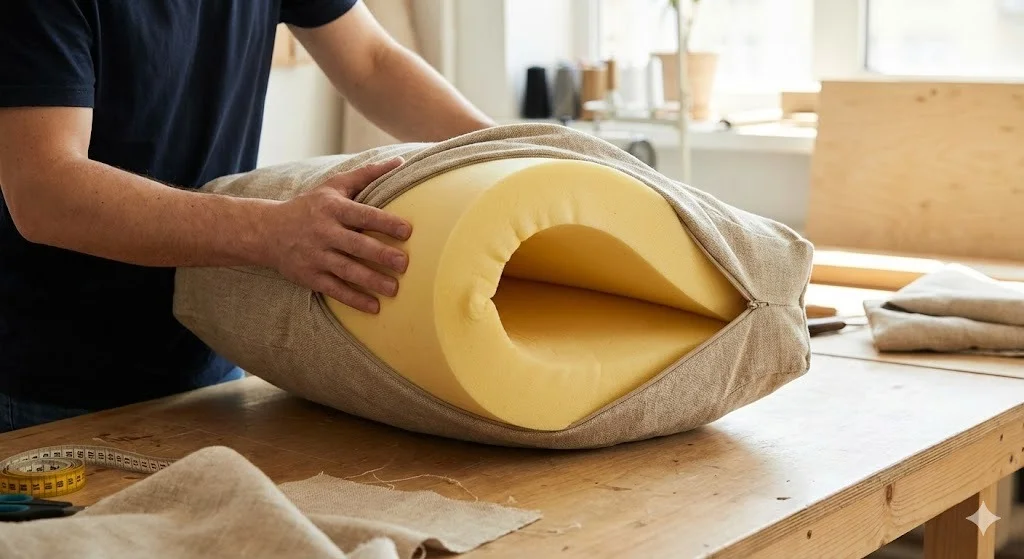
DIY is the same basic idea, but you are doing the annoying part yourself. You can order the foam online, and in many cases you really can get comparable high resilience foam for a fraction of the upholsterer quote, because you are removing the measuring, cutting, wrapping, and stuffing labor from the bill.
Where people get burned is not the foam itself, it is the fit. If you order something even slightly off, you can end up with a cushion that looks underfilled and wrinkly, or overfilled and stressed at the seams, and either one can make a decent foam upgrade feel like a mistake.
The other thing I wish I had known up front is that getting foam into a snug cushion cover is not about strength, it is about friction. You usually need a vacuum cleaner to compress the foam in a bag long enough to slide it in, and you need enough patience to keep adjusting it until the corners fill out evenly instead of bunching. If you can set aside about an hour and you are not afraid of a mildly ridiculous wrestling match in your living room, DIY can be worth it.
If you are reading this because you are sofa shopping, here is how I translate these numbers into buying behavior in a showroom. I treat cushion replacement cost like a lie detector. If the sofa is not built to let you replace or upgrade the cushions later, then the initial price matters a lot more, because you are stuck with whatever cheap foam they used.
So when you are sitting on a floor model, I want you to ask yourself one simple question: does this feel like something I could refresh in a few years, or does it feel like the whole sofa is disposable? If the salesperson says the seat cushions are “attached” and cannot be replaced, or they dodge basic questions about what is inside them, I assume you are buying the cushion quality for life, and I get a lot pickier about how that seat feels right now.
If the cushions are loose, have a zipper, and the brand can tell you what the seat core is, I feel safer buying the frame and the shape, because I know I have an exit ramp later. Even if you never plan to do DIY, just knowing that a professional could restuff them without rebuilding the whole sofa changes the math in your favor.
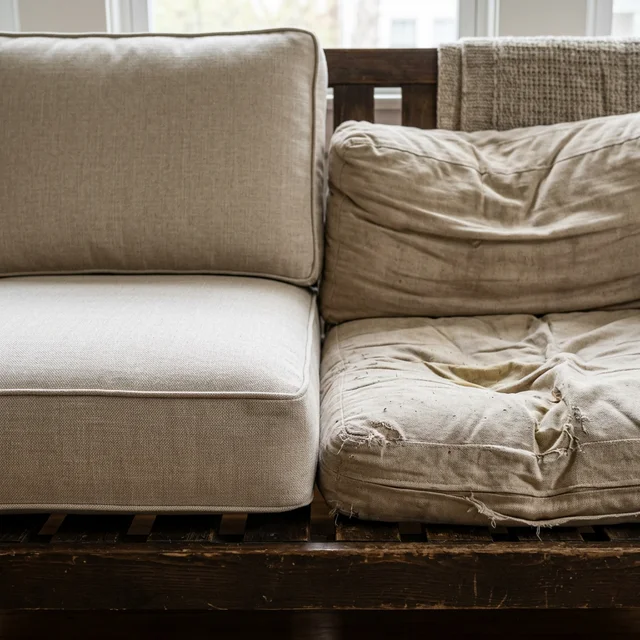
When I look at that chart, what I actually see is a mistake I made more than once. I used to compare “old sofa plus repair cost” against “new sofa sticker price,” and I ignored the part that matters most, which is what you end up sitting on day after day.
If your old sofa has a solid frame, spending a few hundred on new foam can buy you a seat that feels better than a lot of brand new budget sofas, because the frame and suspension are doing the heavy lifting. Good foam on a decent frame feels like a reset button, and it often buys you several more years without the slow sag that makes you hate the couch.
A cheap new sofa can be the opposite deal. You get fresh fabric and clean lines, but the seat often starts off “puffy” and then quickly turns into a dip, because the foam is low quality or the support under it is weak, and you cannot easily fix either one later.
So here is how I want you to use this idea while you are shopping in person. When you sit down, try to separate “soft” from “supported.” Soft is the first ten seconds, supported is how it feels when your weight has settled and you can tell whether the seat is pushing back evenly or letting you sink into a low spot.
After you stand up, look back at the cushion and be a little judgey. If you see a clear imprint that lingers, or the cushion looks like it took a nap and does not want to wake up, I treat that as a preview of what your “favorite seat” will look like in six months.
Then do one quick reality check with your hand. Press down near the front edge of the seat and near the inside corner where people actually sit, and pay attention to whether you feel a firm, even resistance or whether you can bottom out and feel something hard underneath. If you can find the hard layer easily on a brand new floor model, it usually gets worse, not better.
This is also where I quietly prefer loose seat cushions, even if attached ones look tidier in a showroom. Loose cushions give you two escape hatches, you can rotate them to spread wear, and you can replace the foam later without throwing out the whole sofa.
If you are trying to decide between refoaming an older sofa and buying a new one, I would stop thinking in terms of “new versus old” and start thinking “frame versus foam.” If the frame is solid and the only thing you hate is the sit, paying for foam is often the smarter spend.
If the frame is already failing, new foam is just makeup. In that case, I would rather you put your money toward a better built new sofa, even if it means buying something simpler looking so you can afford the structure that actually lasts.
The “Quality Upgrade” Opportunity
Here is the part that surprised me once I got over the sticker shock of cushion work. Replacing foam is not just a repair, it is a chance to quietly make the sofa better than it ever was.
A lot of mainstream sofas ship with what is basically standard seat foam, often around the 1.8 lb density range, because it hits a price point and feels pleasantly squishy on a showroom sit. The problem is that this kind of foam is the first thing to give up, and when it does, you start blaming the whole sofa even if the frame and support underneath are still fine.
When you restuff, you can choose a higher grade core, like 2.8 lb high resilience foam, and that one change can completely rewrite how the couch behaves day to day. What you feel is less of that initial puff and more of that steady, even pushback that keeps you from sinking into a personal crater.
If you are in a showroom, I want you to keep this mental trick in your pocket. If you like the size, shape, and back support of a sofa but the seat feels like it is already flirting with a dip, do not automatically walk away. Instead, ask yourself whether the structure feels worth owning, because foam is the part you can upgrade later, but a weak frame or mushy support system usually stays weak.
This is also why I care so much about whether the seat cushions come off and whether there is a zipper. I am not trying to be nosy, I am checking whether you have an exit ramp. A sofa with removable, serviceable cushions lets you buy the frame and the style now, then buy yourself a better sit later, on your terms.
When you talk to a salesperson, I would keep it plain and practical. I ask what the seat foam density is, and whether it is described as high resilience, and I pay attention to whether they can answer like it is a normal question. If they cannot tell you anything beyond “premium” or “high quality,” I assume the foam is average and I treat the seat feel test as the truth.
If you end up buying a sofa that is almost right, you can plan for a future upgrade instead of feeling stuck. I like knowing that in a couple of years, I could spend money on better foam and keep the frame I already trust, rather than rolling the dice on another brand new sofa that looks great but ages fast.
When Is It a Waste of Money?
I stop myself from spending real money on new foam the moment the frame tells me it is done. In a showroom, I do a quick wobble check by grabbing the arm and giving it a firm shake, then lifting one front corner just a few inches. If the whole sofa does not move as one solid box, or if it racks and twists, that is not a cushion problem. That is the skeleton failing, and fresh foam will only make the collapse feel nicer for a short time.
At home, the same rule applies if you can make the frame creak by shifting your weight, or if the arms feel loose like they are slowly peeling away from the body. I have learned to treat that as a point of no return, because even a great upholsterer cannot turn a loose frame into a tight one without getting into real structural repair costs, and those add up fast.
I also do not “save” a sofa I actively dislike living with. If you hate the fabric, hate the color, hate the texture, or it has an odor that makes you wrinkle your nose every time you sit down, putting new foam in it is just locking yourself into a piece you already resent. I have talked myself into repairs before because I wanted to be practical, and then I still wanted the sofa gone, which is the worst outcome because you paid twice and still ended up unhappy.
Smell is a big one that people try to ignore in a showroom because everything is perfumed and staged. If you are buying used or you are repairing something that has absorbed pet urine, smoke, or persistent mildew, I would be very cautious about spending money on cushions unless you have a clear plan to solve the odor at the source, not just cover it. If the smell is in the padding, the deck, or the fabric itself, new seat foam can be a very expensive way to keep being annoyed.
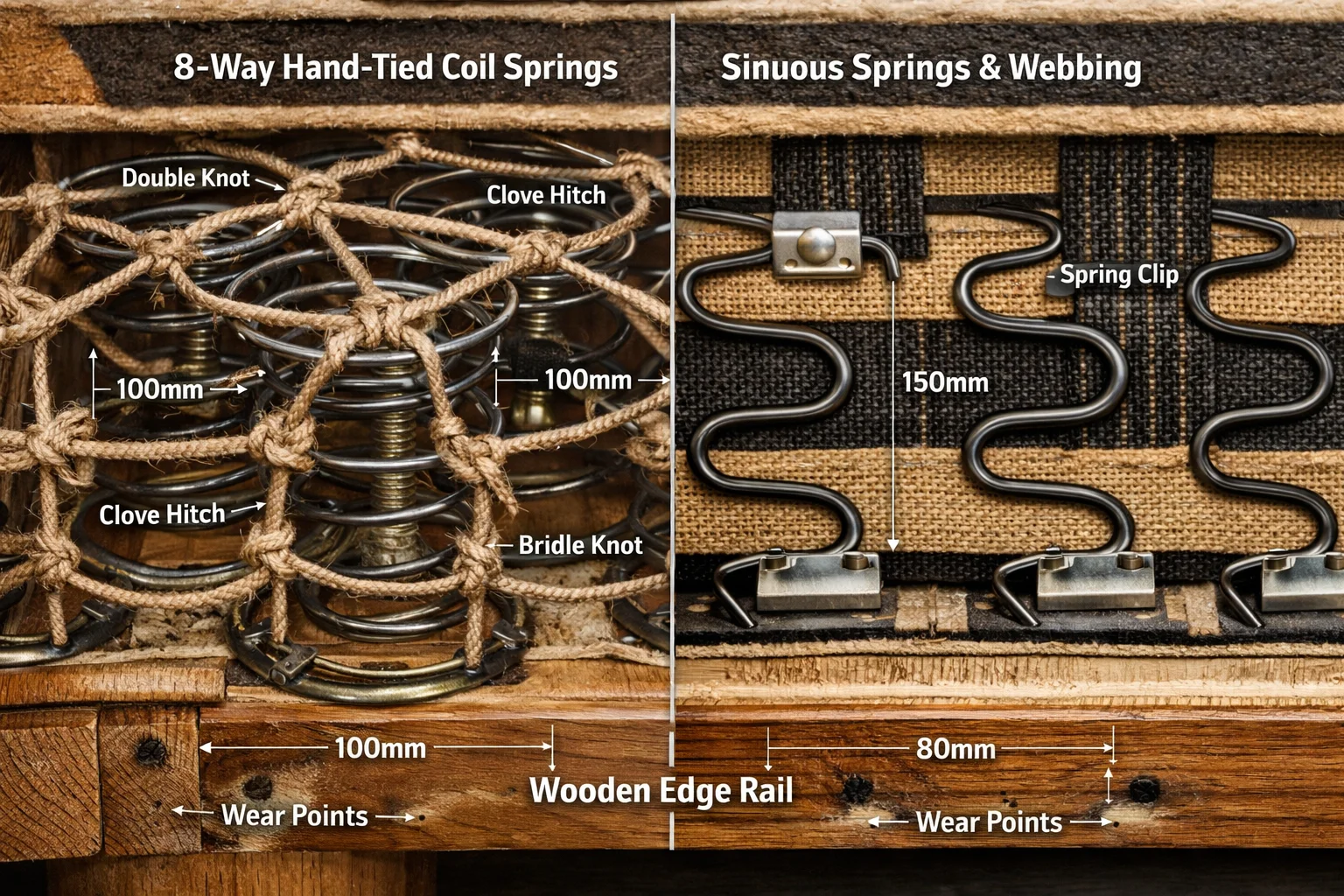
The last time I call it a waste is the sunk cost situation, when the original sofa was built as a budget disposable piece. If it was a very cheap sofa to begin with, the odds are high that the frame and the support system under the cushions were also built to a price, and you are about to put premium tires on a car with a failing suspension.
Here is how I decide that quickly without needing to know the brand history. I look underneath the front edge and I feel for whether the support seems substantial or flimsy, and I pay attention to weight when I lift a corner. A very light sofa that flexes easily is usually not the kind of platform I want to invest in, even if it looks decent from across the room.
When you are shopping new, I use the same logic in reverse to protect you from overpaying. If a salesperson tries to sell you on “upgraded foam” as the main reason a sofa costs more, I want you to make the frame and overall build prove it first, because foam is the part that can be swapped later, while a weak structure is what makes the whole purchase disposable.
If you are on the fence, I fall back on one simple question that saves me from emotional spending. If I spent that cushion money and nothing else changed, would I genuinely want to keep this sofa for several more years, or am I just trying to avoid the hassle of shopping. If the honest answer is that you would still want it gone, I would not sink another dollar into it.
Technical Summary: The Verdict
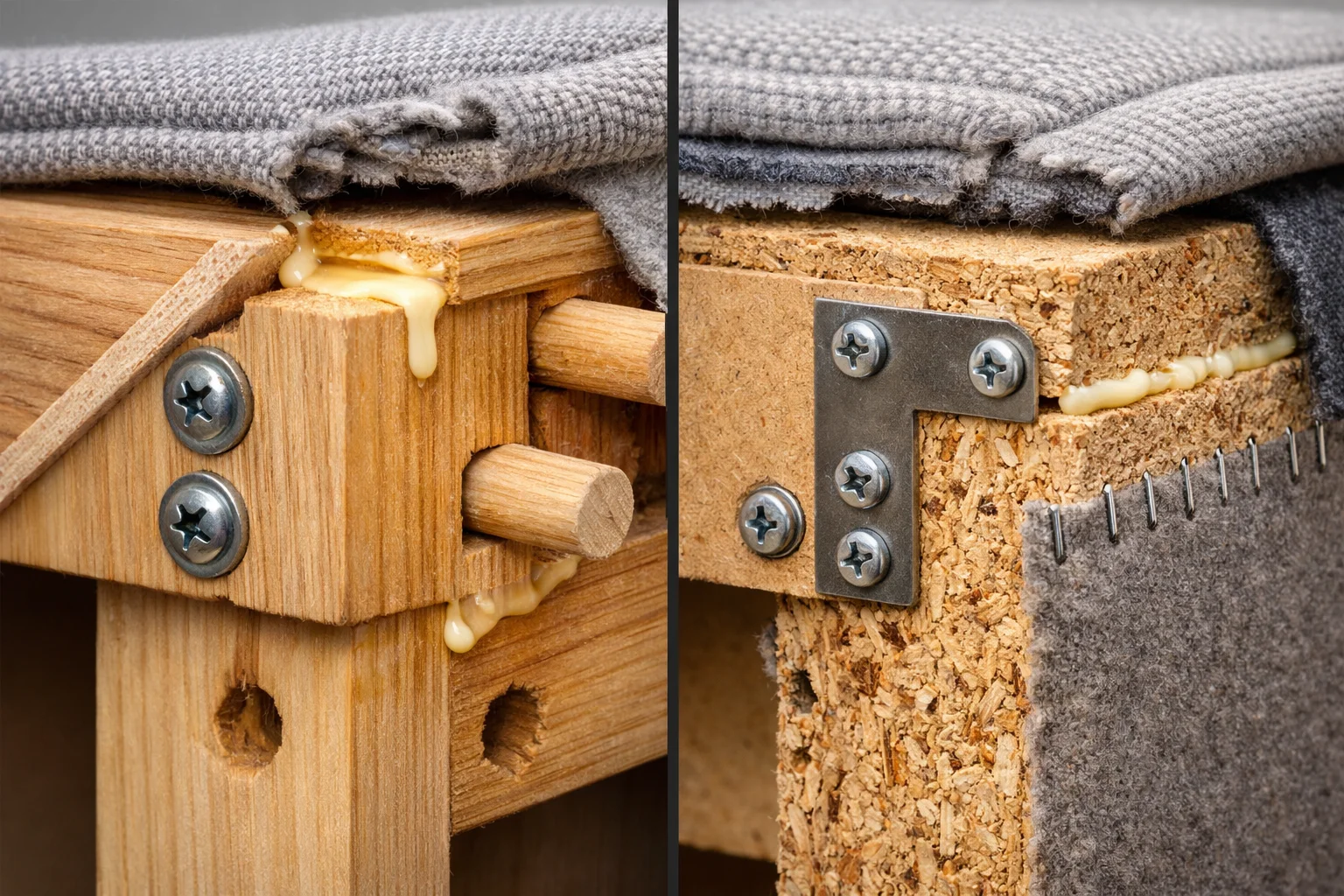
If your sofa has a real hardwood and plywood frame and it still feels like one solid box when you lift a front corner, I would repair it. In my head, spending around $400 to bring back the sit is a bargain when the underlying frame is the expensive part and would cost a lot to replace with something equally solid today.If your sofa has a particleboard frame, or it feels light, twisty, and loose at the arms, I would replace it. I have learned the hard way that new cushions on a weak, crumbly structure just buy you a short honeymoon, and then you are right back to sagging and wobble, except now you are more financially invested in a piece that was never built to last.
DIY Foam Replacement — What to Order
- High resilience foam (2.5 lb+) — the upgrade that makes a solid frame feel better than new, and lasts far longer than factory foam.
- Dacron batting wrap — adds the rounded finish that separates a professional-looking cushion from a DIY-looking one.
Explore Technical Reference
Can Cushions Be Replaced? (The 20% Rule)
Why foam fails before other components and how cushion replacement restores furniture at a fraction of replacement cost. Understanding component lifespan and restuffing economics.
Analyze Details →
DIY Fixes: What Works vs. What's a Waste of Time
Separating realistic home repairs from internet myths. Understanding which sofa problems respond to DIY intervention and which require professional help or replacement.
Analyze Details →