Can Cushions Be Replaced? (The 20% Rule)
Introduction
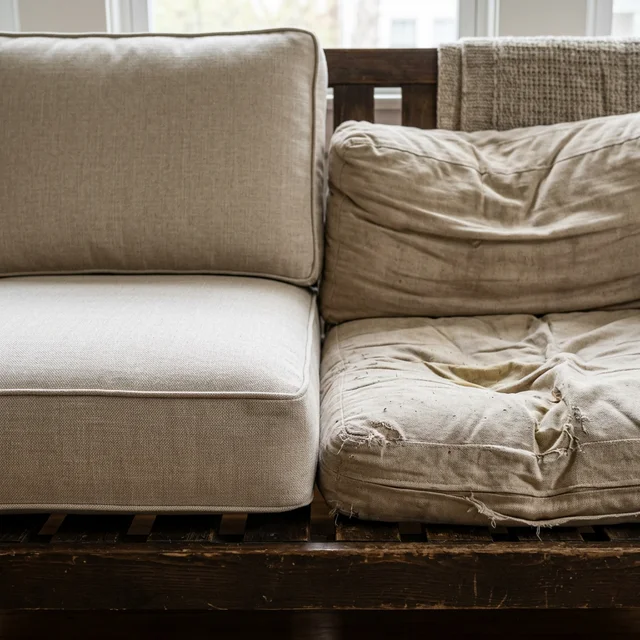
My navy velvet sofa looked perfect in my living room, but sitting on it felt like dropping into a bucket. The cushions sank straight down and never pushed back, and after half an hour my lower back ached. I was already mentally preparing to spend about $3,000 on a replacement.
Instead, I got curious and opened the seat cushions. What I found was cheap foam that had collapsed long before the fabric showed any wear. I spent about $150 replacing the foam, and the sofa suddenly felt supportive and comfortable again, like it had been new all along.
That experience changed how I shop for seating furniture. I realized most sofas fail in ways you cannot see in a showroom unless you know what to look for and what to physically test with your own body.
This guide is what I wish I had before I bought that sofa. I am not here to help you find a trendy shape or the perfect color, I am here to help you avoid paying premium money for a couch that feels good for five minutes and miserable for five years.
The “Battery” Analogy
The "Battery" Analogy
I think about a sofa the same way I think about a car with a dead battery. The car is not broken, one part has simply worn out faster than the rest.The frame is the skeleton, and if it is built well it can last for decades without any attention. The fabric usually wears out next, but even that often has a long usable life if you are not rough on it.
The foam is different. Foam is a consumable material, and in most sofas it is the first thing to fail. In many homes it gives up years before anything else looks worn.
When a sofa feels bad, it is usually not because the whole thing is junk. It is usually because the foam has reached the end of its life.
Once I understood this, shopping got much less emotional and much more practical. Instead of asking myself if a sofa felt amazing for the ten seconds I sat on it, I started asking which parts I was actually paying for and which parts I might need to deal with later.
When you are in a showroom, I want you to assume that the foam will eventually wear out no matter what the salesperson says. Your real job is to decide whether the rest of the sofa is worth keeping when that happens.
I press down hard on the seat cushion with my hand and hold it there for a moment. If it collapses easily and my hand hits something firm right away, I know the foam is doing most of the work and there is not much structure underneath to help later.
Then I sit down and pay attention to how the sofa pushes back. I am not looking for softness, I am looking for resistance that slowly meets me instead of giving up all at once.
Finally, I ask myself a simple question that saved me a lot of money. If this sofa felt terrible in five years but still looked great, would I want to fix it or throw it away. If the answer is fix it, then it is worth considering.
The Paradox of Durability
This is the part that confused me for years. Sofas are sold as durable objects, but the part that wears out fastest is the part doing the most work every single day.
When you sit down, your body is not testing the frame. The frame mostly holds still and carries weight quietly in the background. What takes the hit is the foam, because it absorbs all the motion when you drop into the seat, shift around, or plop down at the end of a long day.
That constant movement is why foam dies before anything else. It gets compressed, released, twisted, and crushed thousands of times, while the wood underneath barely notices. No matter how good the frame is, cheap foam will still collapse early.
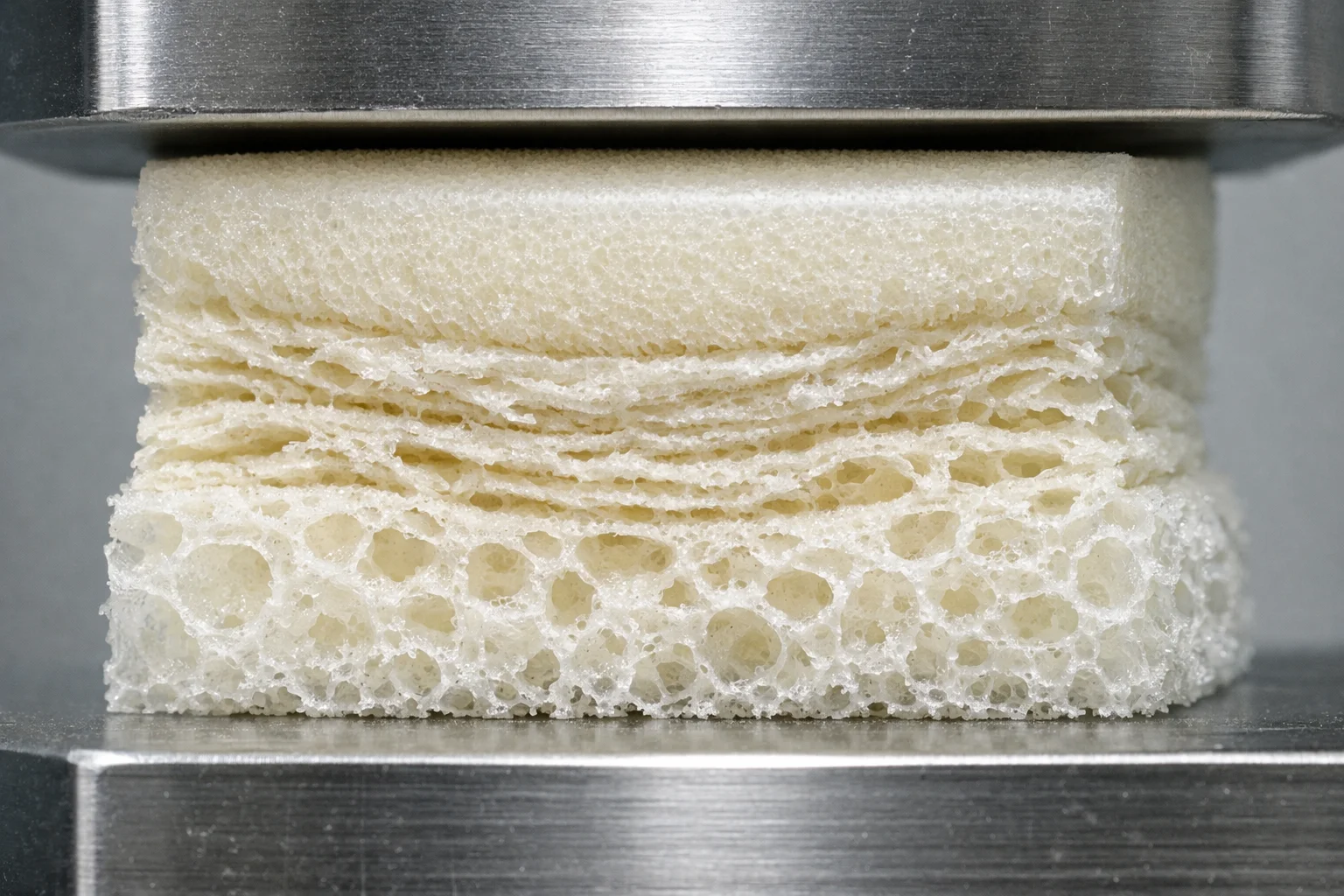
What made me angry once I understood this is how predictable it is. Manufacturers know the foam will fail first, and they also know you cannot see it or easily compare it in a showroom.
So they spend money where your eyes go. You get thick fabric, stylish stitching, and heavy arms that make the sofa feel substantial when you grab it. Then they quietly save money inside the cushions, because that is where corners can be cut without killing the sale.
This is why a sofa can feel great for a few minutes on the showroom floor and feel awful at home a few years later. The fabric and frame were never the problem. The foam was always on borrowed time.
When I am shopping now, I accept this instead of fighting it. I assume the foam is the weakest link and I judge the sofa on how badly that will matter to me later.
I unzip cushions if I am allowed and feel the foam directly. If it feels light, airy, and easy to squeeze into nothing with one hand, I know it will not age well no matter how nice the rest looks.
If I cannot unzip anything, I use my body. I sit in one spot for a few minutes, stand up, and watch how fast the cushion recovers. If it stays dented or comes back slowly and unevenly, that is not a good sign for long term comfort.
The paradox is that a truly durable sofa is not the one with the most impressive fabric or the firmest showroom feel. It is the one that still makes sense after the foam inevitably wears out.
If the frame feels solid, the cushions are removable, and the shape is something you would still like in ten years, replacing foam later is an annoyance, not a disaster. If the sofa depends entirely on perfect foam to feel usable, then its lifespan is shorter than the price tag suggests.
Once I started thinking this way, I stopped asking whether a sofa felt luxurious today. I started asking whether it would still be worth owning after its most fragile part had failed.
Is It Worth It? (The Economics)
This is the part where my thinking really flipped, because the numbers are not subtle once you actually look at them.
When my sofa started hurting my back, I assumed replacement was the responsible choice. In my head that meant spending somewhere between two and four thousand dollars, plus the time and stress of shopping, delivery, and getting rid of the old one.
Replacing the foam in my existing cushions cost me about one to three hundred dollars, depending on how fancy you get and whether you do it yourself. Even at the high end, it was a fraction of the price of a new sofa.
What mattered more than the raw cost was what I was actually buying. With new foam, I got to choose exactly what went inside my cushions. I upgraded to higher quality foam than what came with the sofa originally, which meant the finished result felt better than it ever had when it was new.
When you buy a new sofa, you are usually doing the opposite. You are paying a premium price while accepting unknown materials inside, and in many cases that means cheaper foam than you would ever choose if you saw it by itself.
There is also the effort side that no one talks about. Replacing foam took me an afternoon and a bit of measuring. Replacing a sofa took weeks of showroom visits, second guessing, waiting for delivery, and then dealing with the old one once the truck showed up.
The outcome surprised me the most. New foam gave me predictable results. The sofa felt supportive, even, and comfortable in a way I could immediately tell would last. A new sofa would have been a gamble, because comfort on a showroom floor does not tell you much about comfort after a few years of daily use.
This is why I now do a simple mental calculation when I am tempted by a new sofa. If the frame is solid, the cushions come off, and the shape still makes sense in my space, replacing foam later is almost always the smarter economic move.
The only time the math breaks the other way is when the structure itself is bad. If the frame flexes, the seat sags without cushions, or everything is glued shut so nothing can be serviced, then cheap foam is just one of many problems.
What I want you to take from this is not that you should never buy a new sofa. It is that you should stop assuming replacement is the default solution when comfort disappears.
Most sofas do not fail all at once. They fail in one predictable, replaceable way. If you learn to recognize when that is happening, you can save a lot of money and end up with better comfort than most brand new furniture provides.
Once I understood the economics, I stopped feeling trapped by my purchases. A sofa stopped being a disposable object and started being something I could maintain, improve, and keep using on my own terms.
How to Do It (The 3-Step Process)
This part sounds more intimidating than it is. I am not handy, and I still managed it with basic tools and some patience. What matters is doing a few small things correctly so the finished cushion actually feels good instead of lumpy or loose.
Step 1: Measure
The first mistake I almost made was measuring the old foam. Old foam lies to you because it has been crushed and deformed over time. If you copy its size, you will bake that sag into the replacement.
What you want to measure instead is the cushion cover itself. I unzip it fully and measure from seam to seam, both length and width, while the cover is lying flat and relaxed. That gives you the true size the cushion is supposed to be.
Then I deliberately order the foam about an inch larger in both directions. This feels wrong when you do it, but it is what creates that slightly rounded, full look instead of a flat pancake. Foam compresses easily, and that extra inch gives you tension and support once it is inside the fabric.
Step 2: The Vacuum Hack
The moment most people panic is when they realize the new foam is much bigger than the zipper opening. I did too, until I learned this trick.
I slide the foam into a large garbage bag and tuck the open end loosely around a vacuum hose. When I turn the vacuum on, the air gets pulled out and the foam shrinks dramatically, to a fraction of its original size. It looks almost ridiculous, but it works.
While the foam is compressed, I guide it into the cushion cover. Once it is fully inside, I turn the vacuum off and pull the bag out. The foam slowly expands and fills every corner of the cover, which is deeply satisfying to watch.
Step 3: The Dacron Wrap
This is the step I would never skip again. Raw foam inside a cover feels oddly stiff and square, even if the foam itself is good quality.
Before inserting the foam, I wrap it in a layer of polyester batting, often sold as Dacron. I use a light spray adhesive just to keep it from shifting, not to glue it into a solid block. The batting softens the edges, rounds the corners, and helps the fabric slide instead of gripping the foam.
When you sit down, this layer is the difference between a cushion that feels inviting and one that feels like a gym mat. It also helps the cushion keep its shape over time, because the fabric is not rubbing directly against the foam with every movement.
Once everything is zipped up, I give the cushion a few firm pats and let it sit for a day. Foam relaxes slightly after being compressed, and by the next evening the seat usually feels settled and even.
If you take nothing else from this section, remember that fit matters more than brand names or fancy descriptions. Measuring the cover, slightly oversizing the foam, compressing it properly, and adding a soft wrap will get you 90 percent of the way to a cushion that feels better than what most sofas come with new.
When I show people this comparison, it usually clicks instantly. Both cushions can use the same foam, but they look and feel completely different once one small detail changes.
The raw foam on the left is what many sofas effectively give you, even if you never see it. The fabric is pulled tight over bare foam, so the edges look sharp and the surface feels stiff when you sit down.
The wrapped foam on the right is what I look for or plan to create. That thin layer of batting softens the edges, fills out the corners, and makes the cushion feel welcoming instead of rigid.
In a showroom, you obviously cannot open cushions like this. What you can do is look for the same visual clues. I step back and look at the seats from the side and from an angle, not straight on.
If the cushions look boxy, flat on top, and sharply edged, that often means there is no wrap or a very thin one. Those cushions tend to feel firm at first touch but unforgiving over time.
If the cushions look slightly rounded, with gentle curves at the edges and a bit of loft, that usually means there is some kind of batting doing its job. Those are the sofas that feel comfortable without needing to be overly soft.
I also pay attention to how the fabric behaves when I sit down and stand up. On a well wrapped cushion, the fabric slides and settles back smoothly. On raw foam, the fabric often grabs, wrinkles sharply, or stays pulled where you were sitting.
You can even test this with your hand. Press down near the edge of a cushion and watch how the corner responds. If it collapses into a hard angle, it is probably bare foam. If it compresses gently and springs back into a rounded shape, there is likely a wrap involved.
This matters because wrapping is cheap compared to foam, but it is often skipped to save time and money. It is one of those invisible decisions that separates a sofa that feels decent from one that feels finished.
I do not need a salesperson to confirm this for me. Sales descriptions are unreliable here, because many will say the cushions are wrapped even when it is minimal. I trust my eyes and hands more than the tag.
When I am deciding whether a sofa is worth buying or worth fixing later, this visual difference weighs heavily for me. If the shape already looks harsh and overstuffed in the showroom, it will only look worse once the foam starts to soften.
If it already has that slightly plush, relaxed look without sagging, I know I have more room to work with. Even if the foam wears out, the cushion design itself is on my side.
This image is not about aesthetics for me. It is a shortcut to understanding how much care went into the part of the sofa that actually touches your body every day.
Technical Summary: When NOT to Replace
As much as I believe foam replacement saves sofas, there are times when I would not do it and I would not recommend you do it either. This is about avoiding good money after bad.
If the fabric itself is torn, threadbare, or visibly failing, new cushions will not rescue the sofa. You will still be staring at rips, fraying seams, or worn through spots every day, and no amount of comfort fixes the feeling that the sofa is on its last legs. In that situation, replacing foam just highlights how bad the exterior has become.
I also walk away if the frame makes noise or feels unstable. A little creak from springs is one thing, but persistent squeaking, shifting, or a sense that the seat is flexing unevenly usually means something structural is wrong. If the wood underneath is cracked or loose, new foam is like putting new tires on a car with a bent chassis. The comfort might improve briefly, but the problem you feel is not actually coming from the cushion.
The last reason is simple cost logic, and this one surprised me when I first accepted it. If the sofa was very cheap to begin with, it usually does not make sense to invest heavily in upgrades. When a sofa cost a few hundred dollars new, spending close to that amount on foam rarely feels satisfying in the long run. Even if the seat improves, the rest of the build quality often shows its limits quickly, and you end up replacing the whole thing anyway.
This is the mental filter I use now. If the outside looks decent, the frame feels solid and quiet, and the original price suggests there was some real material cost in it, I seriously consider foam replacement. If any one of those fails, I stop trying to be clever and accept that replacement is the cleaner choice.
Knowing when not to fix is just as important as knowing how. It keeps you from turning a worn out sofa into a money sink, and it makes the wins feel much more predictable when you do choose to repair.
Replace the Foam, Keep the Sofa
- High resiliency replacement foam — order by thickness and density to match your cushion covers; aim for 2.5 lb or above.
- Dacron batting wrap — the finishing layer that rounds foam edges and prevents fabric abrasion over time.
Explore Technical Reference
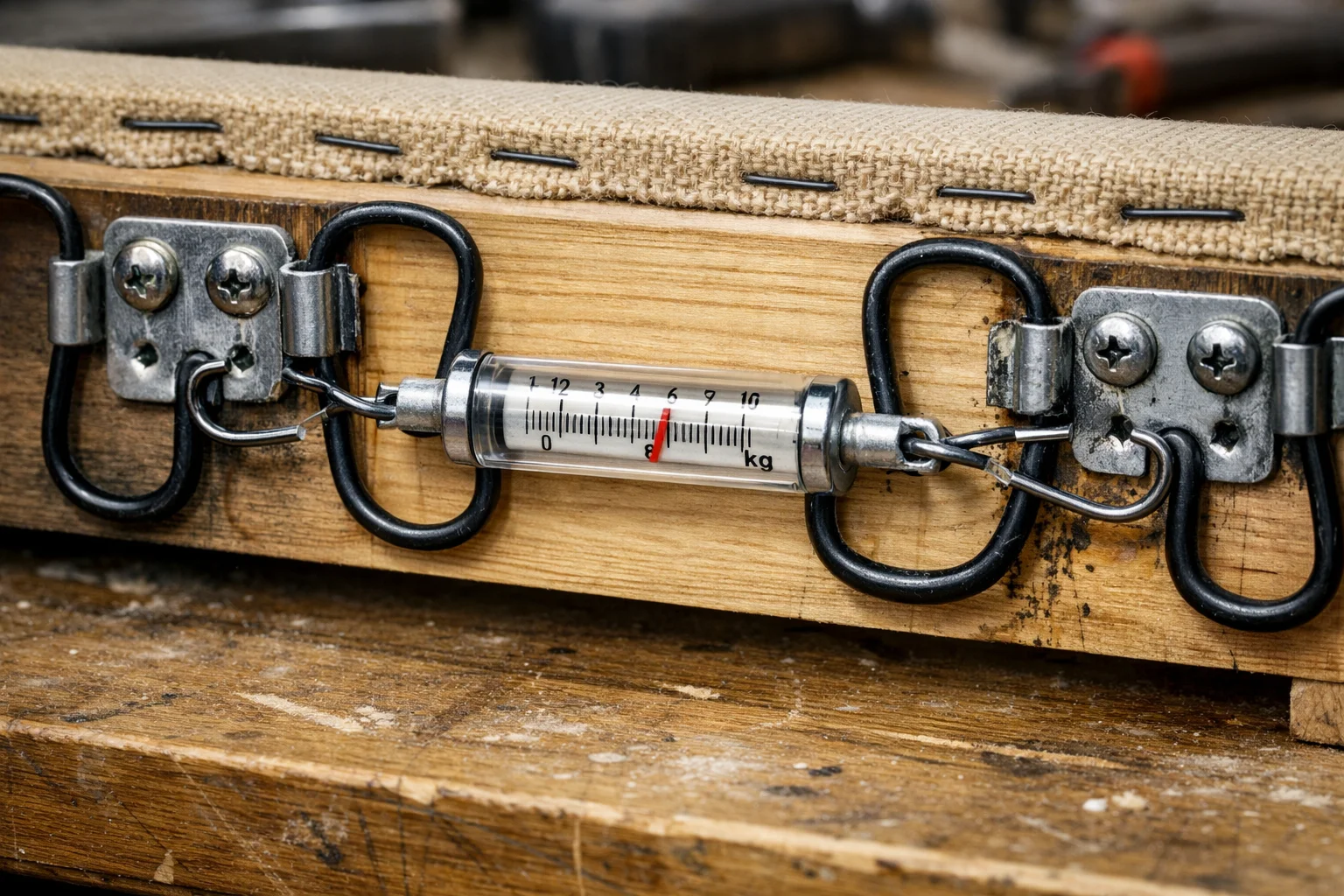
The Pro Line: When DIY Become Dangerous
Why some furniture repairs require professional skills and specialized tools. Understanding the boundary between accessibleDIY work and dangerous or complex professional territory.
Analyze Details →
DIY Fixes: What Works vs. What's a Waste of Time
Separating realistic home repairs from internet myths. Understanding which sofa problems respond to DIY intervention and which require professional help or replacement.
Analyze Details →