Uneven Seats: Why Sectional Pieces Don't Match
Introduction
The salesperson told me the half-inch height difference between my sectional pieces was “Handmade Character.” I asked him, “If a table leg was short, would you call that character?” He didn’t answer.
That moment is why I’m writing this. I’ve bought enough seating to learn that a lot of what gets sold as charm, comfort, or craftsmanship is sometimes just sloppy work, weak materials, or a design that will look fine on day one and feel awful on day three hundred.
I’m not a furniture designer and I’m not here to teach theory. I’m a regular owner who has lived with sagging cushions, loosening frames, and that slow creep where one seat becomes the seat nobody wants, and I’ve tried to figure out what I should have checked before I paid.
When you’re in a showroom, almost everything is optimized to get you to picture your living room, not to evaluate what you’re actually buying. The lighting is flattering, the pillows are staged, and the sofa has not spent two years being sat on in the same two spots.
So my goal is simple. I want you to walk into a store with a few practical ways to test a sofa in minutes, ask the right questions without getting steamrolled, and spot the most common “character” excuses before you end up hauling home a problem.
I’m also going to be blunt about tradeoffs. Some sofas are comfortable but will look tired fast, some are built better but feel firm at first, and some are genuinely a bad deal no matter how good the fabric looks.
As you read, assume you’re allowed to touch things. You’re allowed to lift the corner slightly, press on the arms, open the cushions if they unzip, and sit the way you actually sit at home, including slouching a little and putting your feet up.
If a salesperson tries to make you feel weird for doing basic checks, that’s information. A decent product can handle a careful inspection, and a decent store knows you’re about to live with this thing every day.
One last thing before we get into specifics. Don’t let small flaws get rebranded as artisan charm unless you would accept the same flaw in something that has to function precisely, like a door that won’t close or a drawer that scrapes. Comfort and durability are the whole job of a sofa, and “character” is not a warranty.
The "Tolerance Stack" Problem
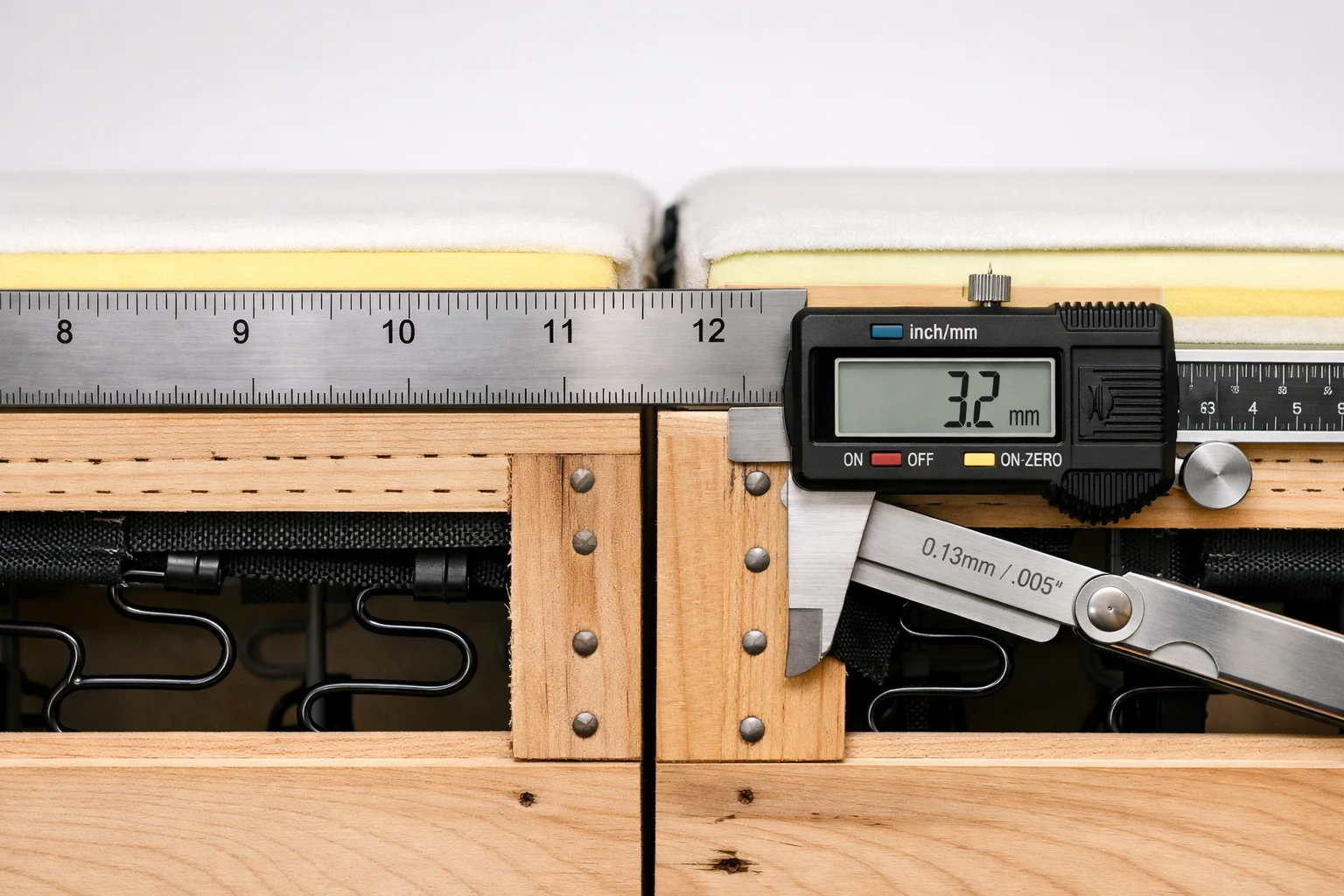
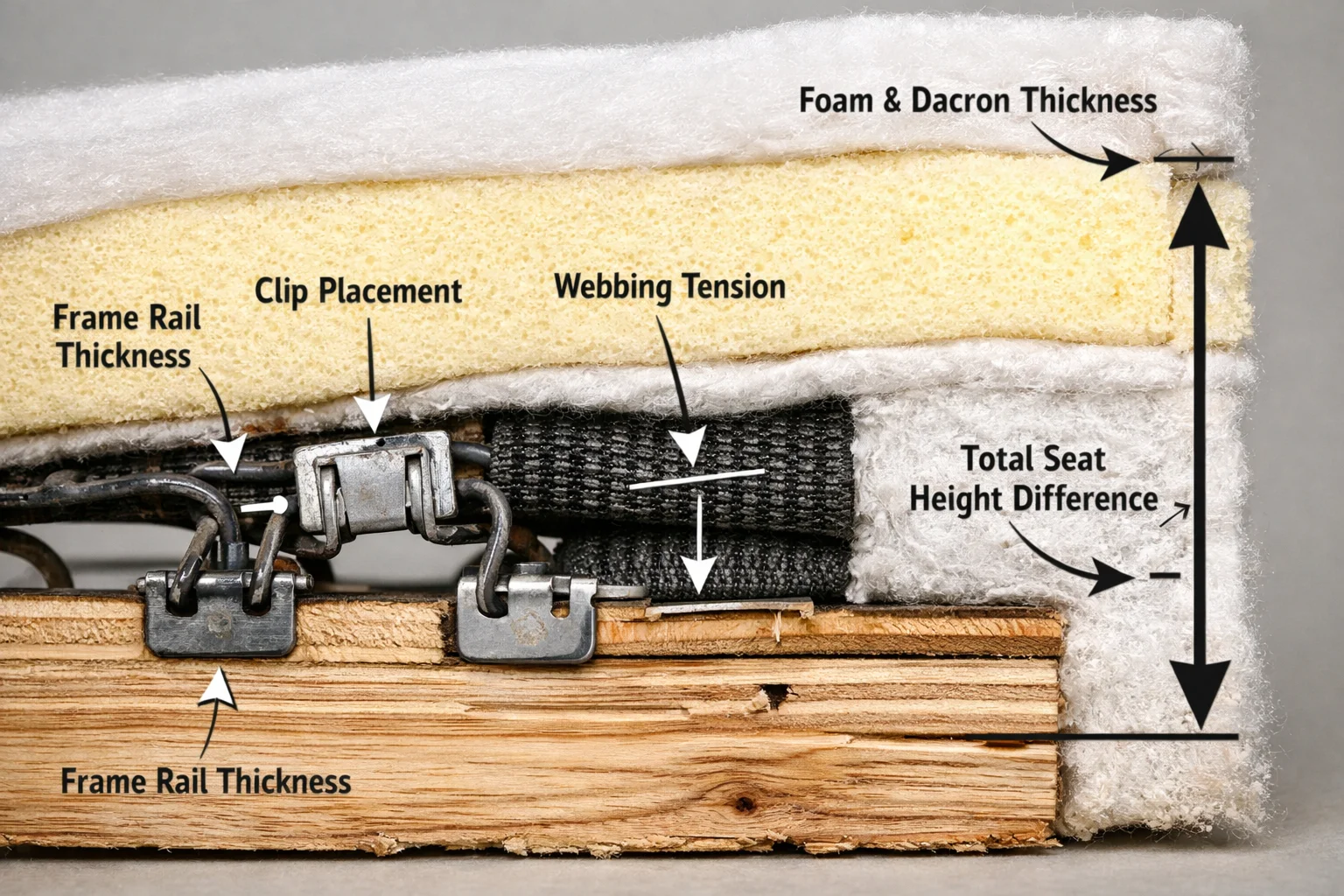
Why do sectionals rarely align perfectly?What you are seeing when two sectional pieces do not line up is often not one big mistake, it is a pileup of small allowed errors. The factory might let a frame rail be off by about an eighth of an inch, a spring clip mount be off by another eighth, and a foam cut be off by another eighth.
If one piece lands on the high side of all those allowances, and the piece next to it lands on the low side, you can end up with a mismatch around three eighths of an inch. That can be “within tolerance” on paper, and still look crooked in your living room every single day.
In the showroom, I treat a sectional seam like a test, not a style detail. I stand at the corner where two pieces meet and I look at the top lines first, meaning the seat height and the cushion tops, then I look at the front edge where your eye catches a step or a gap.
Then I put my hand right on the join and press down on each side, one at a time. If the height difference changes a lot depending on where I press, that tells me the mismatch is not just a cosmetic cover issue, it is coming from how the support and foam are landing under load.
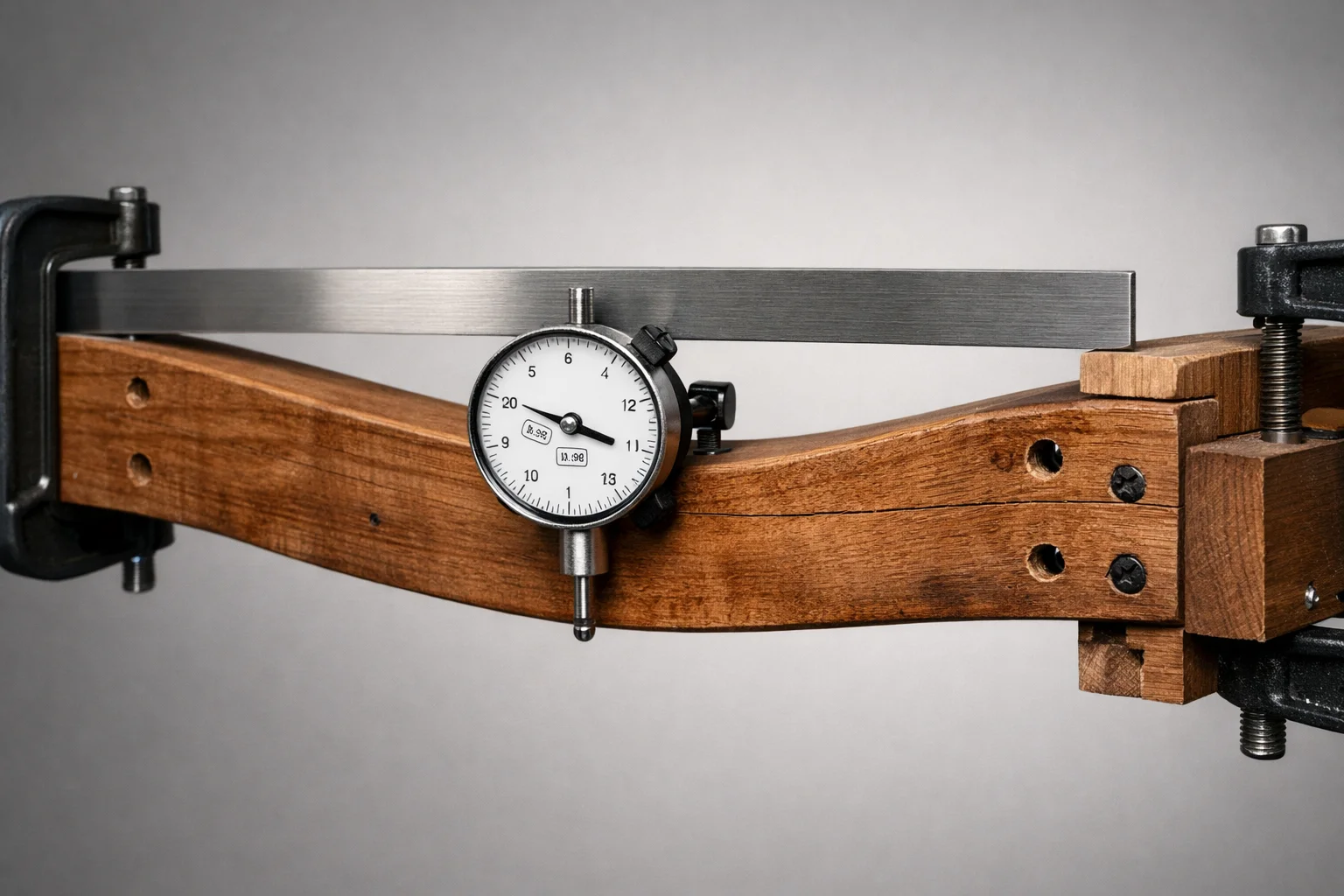
You can also do a simple “shuffle” check. You gently push one piece toward the other with your hip or both hands, then pull it back, and watch whether the seam returns to the same spot or wanders. If it wanders, you are going to be re-squaring that sectional constantly, and the connectors are not doing enough to keep things registered.
If the salesperson tells you this is normal, I ask one calm follow up question: “If I get this delivered and the pieces sit unevenly, what is the actual fix?” You are listening for something concrete like swapping a unit, adjusting connectors, or sending a tech with parts, not a shrug about floors and “handmade.”
Floors do matter, but I do not let that become the universal excuse. If you are on tile or hardwood at home, ask them to show you the sectional on a hard surface in the store, or at least ask for glides that can be adjusted. If they cannot offer any practical leveling method, you are basically gambling that the stack of small tolerances happens to land in your favor.
The biggest thing I want you to take away is this. A visible step between sectional pieces is often not something that “breaks in” and disappears, it is usually something you will notice more once the cushions soften and your favorite seat settles. If it bothers you in a bright showroom, it will bother you twice as much when it is the backdrop to your whole room.
Causes of Misalignment
When two sectional pieces do not line up, I assume there is a physical reason before I accept any “that’s just how sectionals are” explanation. In practice, I keep coming back to three causes that show up again and again, and you can screen for all of them in a showroom if you know what to look for.
Connector Hardware (Installation Error)
A lot of sectionals rely on simple metal connectors, often those alligator style clips, and the dirty secret is that they are frequently installed by hand. That means one worker can mount a clip a little high or a little low, and that small mistake becomes a permanent tilt once the pieces are joined.
What I do in the store is get my eyes down near the seam and look for whether the two sections are actually being pulled into the same plane, or whether they are just “hooked” together while one piece is subtly hanging. If the store will let you, separate the pieces slightly and reconnect them, then watch the seam as it engages. If you feel like you have to lift one section to get the clip to catch, or you hear a harsh scrape and then the tops still do not land even, I treat that as a warning that the connector placement is fighting the geometry instead of guiding it.
I also put one hand on each side of the seam and try a gentle lift, not yanking, just enough to see if one side can rise a bit before the other follows. If one module feels like it is dangling from the connector while the other feels planted, that is the kind of misalignment that tends to come back even after a delivery team “fixes it” by shoving the pieces harder together.
If you want to be direct with a salesperson without getting technical, ask whether the connectors are adjustable in the field or if a tech can re mount them if they are off. If the answer is basically “no, that’s factory,” then what you see is what you are signing up to live with.
Foam Variation (Chemical)
Even when the frames are fine, the cushions can create the illusion that the whole sofa is crooked. Foam is poured in large batches and cut down, and those cuts can vary in feel and height even when the label says they are the same spec.
In the showroom, I test this by swapping cushions side to side if they are loose. If the “low” spot follows the cushion, that is not a frame problem, it is a cushion problem, and you should assume it will stay a cushion problem until the store replaces that exact insert. If the cushions are attached, I do a simpler version by pressing down on the higher side and the lower side with the same pressure and paying attention to how quickly each side pushes back. When one side feels springy and the other feels a little dead, your eye is not imagining the height difference.
I also look at the cushion tops from a few steps back and check the loft line, not just the seat rail. If one cushion crowns higher out of the box, it can make the whole sectional look misbuilt even if the join is fine. If that bugs you now, you should ask how cushion replacements work, because “it will break in” often turns into “it will all get softer,” which is not the same as “it will match.”
The Floor Factor (Often Overlooked)
Sometimes the sectional is innocent and the floor is the culprit. A small slope can twist a long sectional enough that the seam telegraphs as a step in the top lines.
You do not need special tools to sanity check this in a store, but if you have a phone level, I use one right on the floor where the sectional seam sits. If the floor is clearly out of level and the sectional is long, I mentally downgrade how much I trust what I am seeing, because the twist might not be the sofa. If the floor reads level and the pieces still do not line up, then I stop letting anyone blame your home for it.
At home, I care less about whether the floor is perfect and more about whether the sofa gives you a way to compensate. If the feet are fixed and there is no practical leveling option, a slightly uneven floor can become your permanent daily annoyance. If the brand or store offers glides, shims, or any kind of adjustable foot, that is not a nice extra, it is the difference between “we can correct this” and “you will be stuffing felt pads under one corner forever.”
The key is not to argue about which factor is to blame. It is to figure out whether the misalignment you are seeing is correctable with a real fix, or whether it is the kind of mismatch that will keep reappearing every time someone sits down, stands up, or nudges the sectional during cleaning.

When I’m trying to decide whether a crooked seam is a sofa problem or a floor problem, I do a quick “grid audit” like the diagram shows. The point is to stop guessing and isolate one variable at a time, because salespeople love to blur the cause until you give up.
I start by looking at the sofa, then I immediately look at the floor under it, because floors are the easiest scapegoat and also a real issue sometimes. If the store has the sofa sitting on thick carpet or a rug pad, I ask to see it on bare floor, or I at least ask them to slide a corner off the rug so one or two feet are clearly on the hard surface.
Then I pick a reference that does not depend on cushions, because cushions lie. I look at the hard lines first, like the bottom rail at the front, the base trim if there is any, and the arm heights, since those should be consistent even if cushions vary.
After that, I check the “soft lines,” meaning the cushion tops, because those are where foam variation shows up. If the bases and arms look level but the cushion tops step, I stop blaming the frame and I focus on cushion swap or cushion replacement terms.
If the store will let you touch the legs, a simple reality check is to press down near each foot, one at a time, and watch the seam while you do it. If the seam height changes when you load one corner, that often means the sofa is rocking on the floor, which is usually a leveling issue, not a cushion issue.
If it does not change much when you load corners, but the seam still steps, I treat that as the sofa telling you it is built that way. That is where I get very literal with the salesperson and ask what they will physically do if it arrives like this in my house, because “we can look at it” is not the same as “we will replace the low unit” or “we will bring adjustable glides.”
The reason I like this audit is that it keeps you from chasing the wrong fix. If you walk out thinking you need a new cushion when the real issue is a twisted base, you lose weeks in warranty emails, and the sofa still looks crooked.
If you want one personal rule I use, it’s this. I do not accept “it’s your floor” unless I can see a believable path to leveling, and I do not accept “it will break in” unless they can explain why breaking in would make two different pieces become more similar instead of more different.
How to Fix It (The Tricks)
Sometimes the best buying move is not arguing about whether a seam “should” be perfect, it’s figuring out whether you can correct it cleanly at home without turning your new sofa into a project. I’m fine with small adjustments if they are predictable and reversible, and I’m not fine with anything that requires drilling into a brand new frame unless the store is clearly on the hook for it.
Leg Adjustment (The Easy Way)
A lot of modern sofas and sectionals have legs with threaded levelers, even if the salesperson never mentions it. If one piece sits lower, I check whether the lower piece has a foot that can be unscrewed a little to gain height, because that is the simplest fix that does not change the sofa permanently.
If you’re doing this at home, I do it slowly and evenly. I lift that corner just enough to take weight off the leg, then I turn the leveler a little, set it down, and recheck the seam, because it’s easy to overcorrect and create a new wobble.
If the legs are solid wood with no adjuster, I use felt furniture pads as a controlled shim. I prefer stacking a couple of thin felt pads under the short leg rather than one thick squishy pad, because thin layers let you fine tune the height, and the leg feels more planted instead of spongy.
The showroom version of this is simple. I ask, “Do these legs have adjustable levelers, or are they fixed,” and I watch how fast they can answer, because if they don’t know, you’re the one who will be improvising later.
Connector Reset (The Hard Way)
If the pieces lock together unevenly, the misalignment is sometimes coming from the connector hardware being mounted slightly too high or too low on one module. This is the situation where shimming a leg can hide the symptom but the seam still wants to sit wrong, especially after you disconnect and reconnect the pieces for cleaning or moving.
The real correction is to reset the connector position. That usually means removing the screws holding the metal connector to the frame, shifting it up or down a little so the two modules register at the same height, then fastening it back down.
I only treat this as a reasonable “fix” if you are comfortable using a drill and you can see solid wood where the connector mounts. If it’s crumbly particleboard, or the connector is already sitting in stripped holes, moving it is how you turn an annoyance into a recurring failure where the sections won’t stay tight.
This is also where I push you to get clarity before you buy. If you notice a seam step in the store and the salesperson says a tech can adjust it, I ask what that actually means, because “adjust” sometimes just means “shim it and leave,” and sometimes it means they will remount connectors or swap the offending module.
If you’re not willing to drill into a new sofa, that’s not you being picky, that’s you being realistic. The cleanest outcome is that the store replaces the misbuilt piece, or the brand sends a tech with the right parts and they do the invasive work under warranty, not you on a Saturday with a bit that’s slipping.
Technical Summary: The Batting Fix
If the cushions are uneven but the frames are straight, this is the cleanest little "cheat" I've found that doesn't change how the sofa feels. I buy bonded Dacron batting, the same kind of polyester wrap used to smooth and round cushion edges, and I treat it like a very thin puffer jacket for the foam.The way I use it is simple. I wrap an extra layer around the foam core of the lower cushion only, then put the cover back on and let the cushion sit for a day so the wrap relaxes into place. You are not trying to make the cushion pillowy, you are trying to lift the visual line just enough that your eye stops catching the step at the seam.
Done right, the result is about a half inch of added loft without making the seat noticeably firmer. You’re basically filling the “empty air” between the cover and the foam, so the cushion looks taller and more even, but the foam underneath still does the same work when you sit.
I treat this as a finishing fix, not a structural repair. If the mismatch changes a lot when you press on the seam, or if one module feels like it sits lower even with the cushions removed, batting is not the right answer and you should push for a swap, a connector correction, or leveling at the feet instead.
Products That Help With Uneven Seats
- Adjustable furniture leg levelers — screw-in feet that let you fine-tune height on uneven floors without shimming.
- Polyester Dacron batting — the exact material used to add loft to a lower cushion and even out the sight line.
Explore Technical Reference
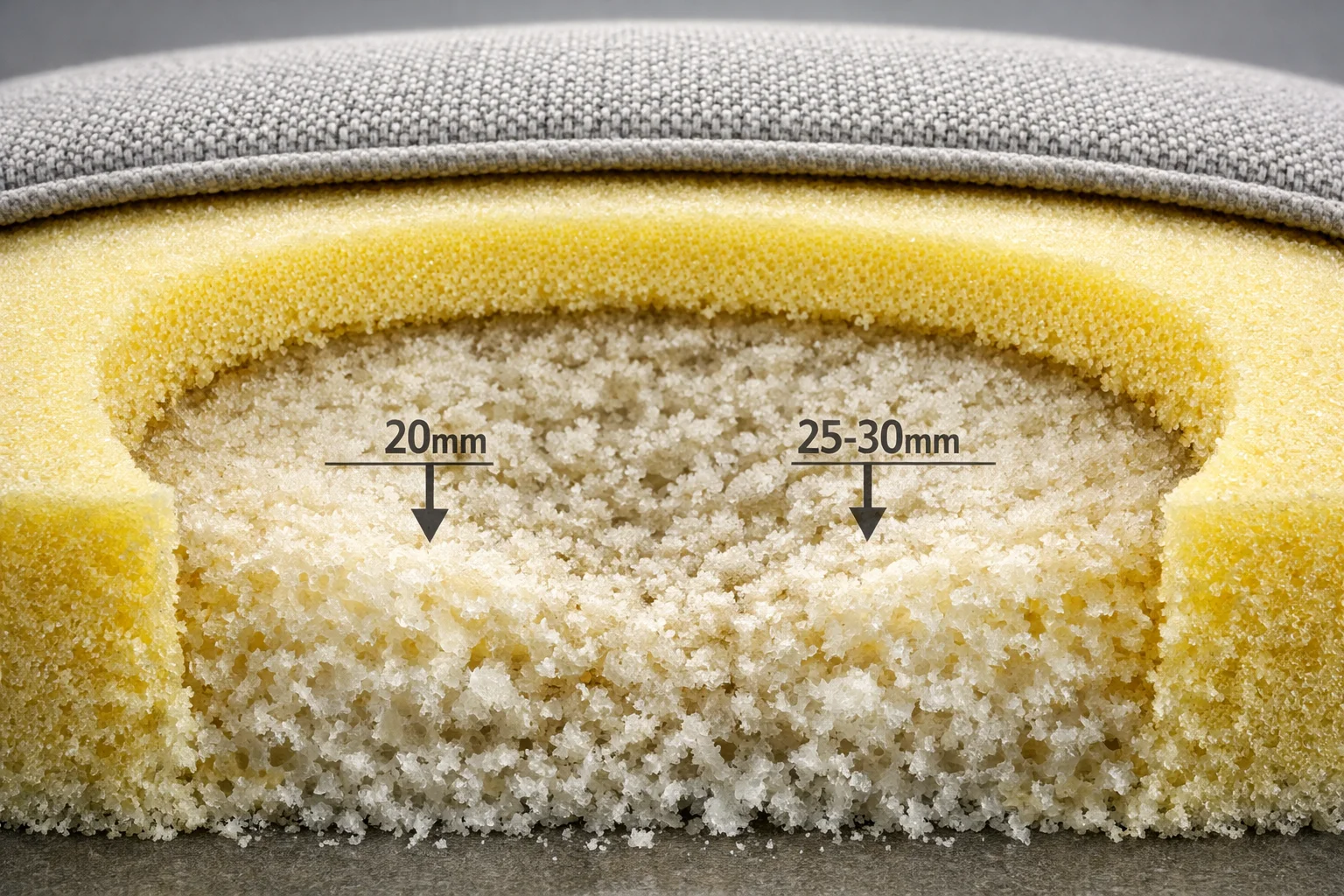
Cushion Collapse: Why the Center Fails First
Why the front of your cushion looks fine but the center is a crater. The mechanics of point-load failure.
Analyze Details →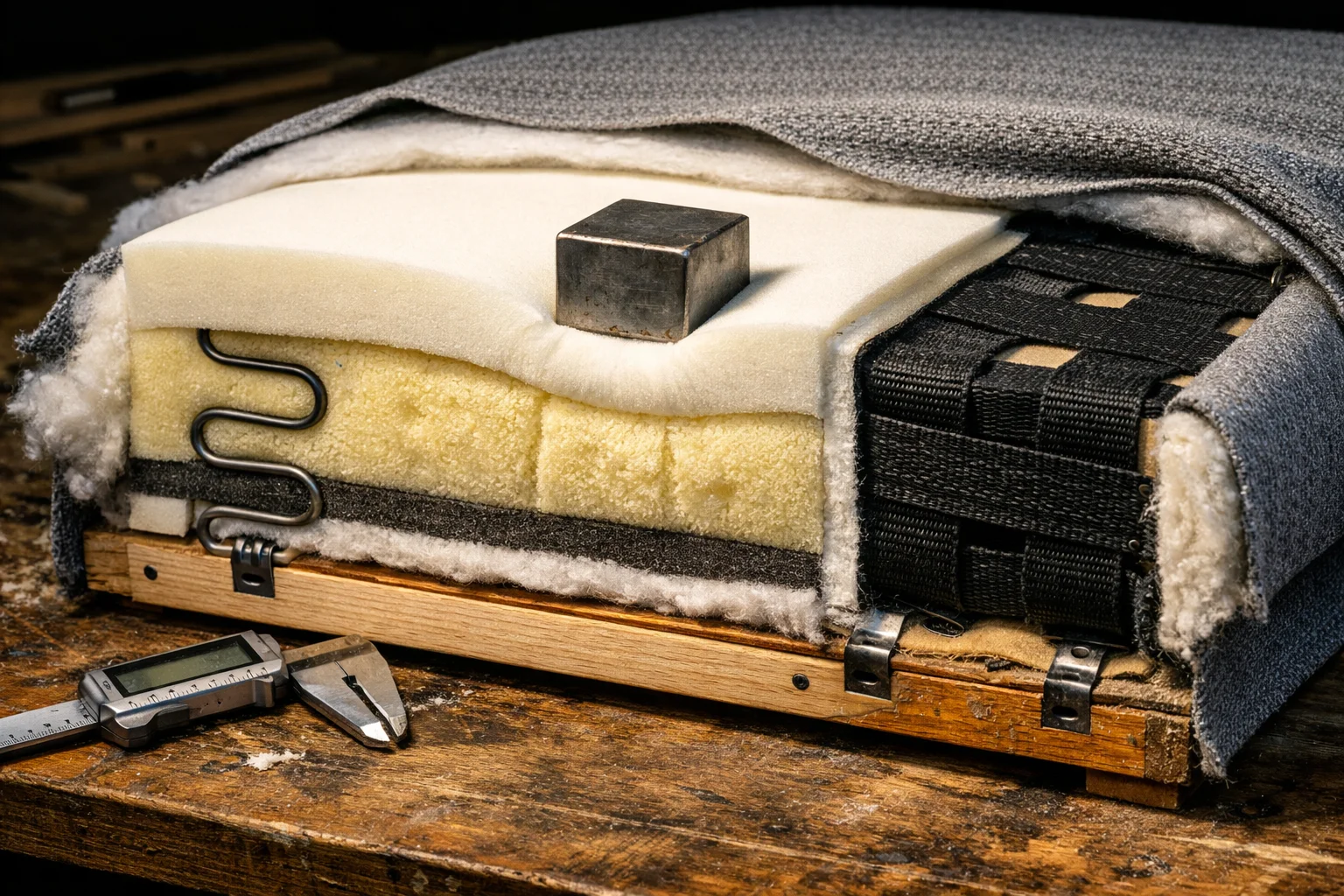
The Architecture of Failure: Why Sofas Die
Why your sofa is dying. A guide to distinguishing normal wear from structural catastrophe, and the physics behind why comfort fades.
Analyze Details →