The Quicksand Effect: Why You Sink & Can't Get Up
Introduction
That couch taught me something important. What feels soft in a showroom can feel punishing after real time has passed. When a seat lets you drop too far, your body has to work to escape it, and that strain shows up in your lower back, hips, and knees.
I started paying attention to how seating actually behaves instead of how it feels for the first few minutes. I noticed how some sofas make you perch while others swallow you. Neither extreme is comfortable for long, and neither is a good sign for durability.
If you are shopping for a sofa, I want you to slow down and test it like you would use it at home. Sit back, stay put, and notice what your body is doing without effort. If you feel stuck, if you have to rock forward to stand, or if your spine collapses into a curve, that is the furniture telling you what the next few years will feel like.
This guide is not about chasing luxury or brand names. I am writing it so you can spot red flags with your own body and hands while you are still in the store. My goal is to help you walk away with something that stays supportive after the novelty wears off, instead of another sofa that quietly works against you every evening.
The "Hip Drop" Danger
Ergonomics sounds academic, but this part shows up fast when you sit. In a healthy neutral posture, your hips sit a little higher than your knees, which lets your pelvis stay upright instead of rolling backward.When a sofa is too soft or too deep, your hips sink below your knees. I call this the hip drop, and it quietly forces your pelvis to tilt back, which rounds your spine into a C shape without you noticing at first.
That curved posture loads the lower spine hard, especially around the discs between L4 to L5. You feel it later as stiffness, aching, or the urge to constantly shift because your body is trying to escape the position.
When I test a sofa now, this is the first thing I check. I sit all the way back, put my feet flat on the floor, and notice where my hips land compared to my knees without adjusting anything.
If my knees are higher than my hips, I already know the seat is going to punish me over time. It might feel cozy for five minutes, but that drop means my lower back will be doing extra work every single evening.
I also pay attention to how hard it is to stand up. If I have to rock forward, brace my hands, or think about the movement, the seat has dropped me too low. A good sofa lets you stand up in one smooth motion, not a small workout.
You can test this right in the showroom without feeling awkward. Sit, relax for a full minute, then stand up normally. Do not use your hands unless you always do at home.
If the salesperson tells you it will break in, be careful. Foam that lets your hips sink on day one almost always sinks more later. Breaking in rarely raises you up, it only lets you drop farther.
I have learned to trust this test more than any fabric, color, or brand promise. If a sofa keeps your hips above your knees without effort, your spine stays happier, and the rest of the seat usually holds up better too.
Why Softness = Pain
I used to chase the softest seat in the room because it felt welcoming. What I learned the hard way is that softness is not the same thing as support, and the wrong kind of soft is what creates pain over time.
Very plush foam collapses the moment you sit on it. Instead of pushing back and holding you up, it gives way and keeps giving. Your body keeps sinking until something solid stops it, which is usually the frame underneath.
When that happens, your muscles take over the job the cushion should be doing. Your lower back and hips tense to keep you upright, and you start shifting without realizing why. That restless feeling is not comfort, it is your body looking for support that never arrives.
Down filled seats create a different version of the same problem. Feathers move away from pressure, so when you sit, they slide outward and leave a hollow where you are. You feel cradled for a moment, then you hit bottom and stay there.
In the showroom, I press my hand straight down into the seat cushion and pay attention to what happens. If my hand sinks easily and meets something hard within a second, I know my body will do the same thing every night. A good cushion slows your hand down and never lets you feel the frame.
I also sit still and wait. The first ten seconds mean nothing. After a full minute, a bad seat keeps dropping as the foam gives up and the fill migrates away. A better seat settles quickly and then holds me in place.
Salespeople often describe these sofas as cloud like or lounge worthy. What they usually mean is that the materials are not resisting your weight. Resistance is not a flaw in seating, it is what keeps your skeleton aligned and your joints relaxed.
If you love the look of a very soft sofa, you can still test whether it is working against you. Sit down and notice if your thighs are being supported or if all the pressure is concentrated under your hips. If your legs feel abandoned and your pelvis feels trapped, that softness will turn into soreness.
I no longer ask myself if a sofa feels cozy. I ask if it is holding me up. If the answer is no, I know the pain will show up later, long after the return window is gone.
Diagram
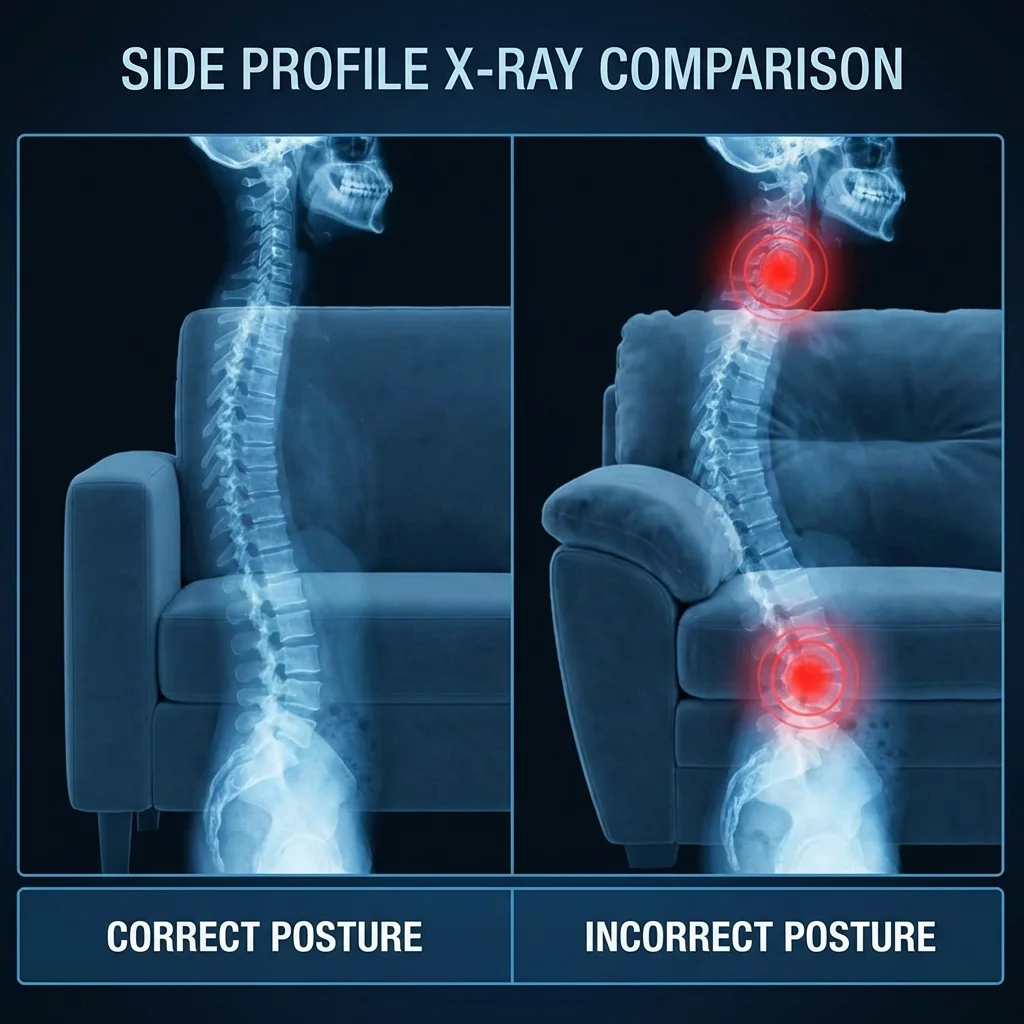
This diagram is the simplest way I know to explain why some sofas feel fine at first and then wreck you later. The picture on the left is what I want my body doing without thinking. The picture on the right is what happens when the seat collapses under me.
When you sit on a supportive sofa, you are sitting on top of the cushion, not inside it. Your pelvis stays upright, your lower back keeps its natural curve, and your spine stacks itself without effort. You do not feel like you are holding yourself together.
When a seat is too soft, you sink in and your pelvis rolls backward. That one change turns your spine into a C shape, even if the back cushions look tall and plush. No lumbar pillow can fix this because the problem starts under your hips.
I use this mental image when I am in a showroom. I ask myself if I feel lifted and balanced, or if I feel folded. If my lower back rounds the moment I relax, I already know which side of the diagram I am on.
You can check this without knowing anything about anatomy. Sit back and see if your chest naturally stays open or if it caves forward. If you feel like you need to arch or brace to sit upright, the seat is putting you in the painful position shown on the right.
I also notice where the pressure is. In a good seat, I feel contact along my thighs and under my sit bones evenly. In a bad one, all the pressure is jammed under my hips, like I am sitting in a hole.
This is why I do not trust back cushion thickness or headrest height. A sofa can look supportive from the outside and still force your spine into that curved shape. The seat does most of the damage or most of the good.
If you remember nothing else from this section, remember this image. You want a sofa that lets you sit on it and keeps your spine tall without effort. If it makes you sit in it, you are paying for future discomfort whether you realize it in the store or not.
The Exit Strategy (Why it’s hard to stand)
This is the moment that finally made everything click for me. Standing up from a sofa is not about strength or age, it is about whether the seat gives you anything back.
When you stand, you push down with your legs and hips. A good sofa pushes back up, and that reaction helps lift you. You barely think about it because it feels natural.
On a sinking sofa, that push disappears. The cushion absorbs your effort instead of returning it, and your body has to invent momentum by rocking forward or bracing with your hands.
I used to blame myself when I had to lean forward and heave a little to get up. What I eventually realized is that the seat had stolen my leverage by letting me sink too far below where my legs can work efficiently.
In the showroom, I now treat standing up as a serious test, not an afterthought. I sit back, let the cushion fully settle for a minute, then stand up like I would at home after dinner.
If I have to scoot forward first, if my knees struggle to get under me, or if my body instinctively pitches forward, I know the seat is too soft or too low. That effort will get worse as the cushions relax over time.
A firm sofa does something very different. When I push down through my feet, I feel the seat respond immediately. My hips rise as one unit and I am upright in a single smooth motion.
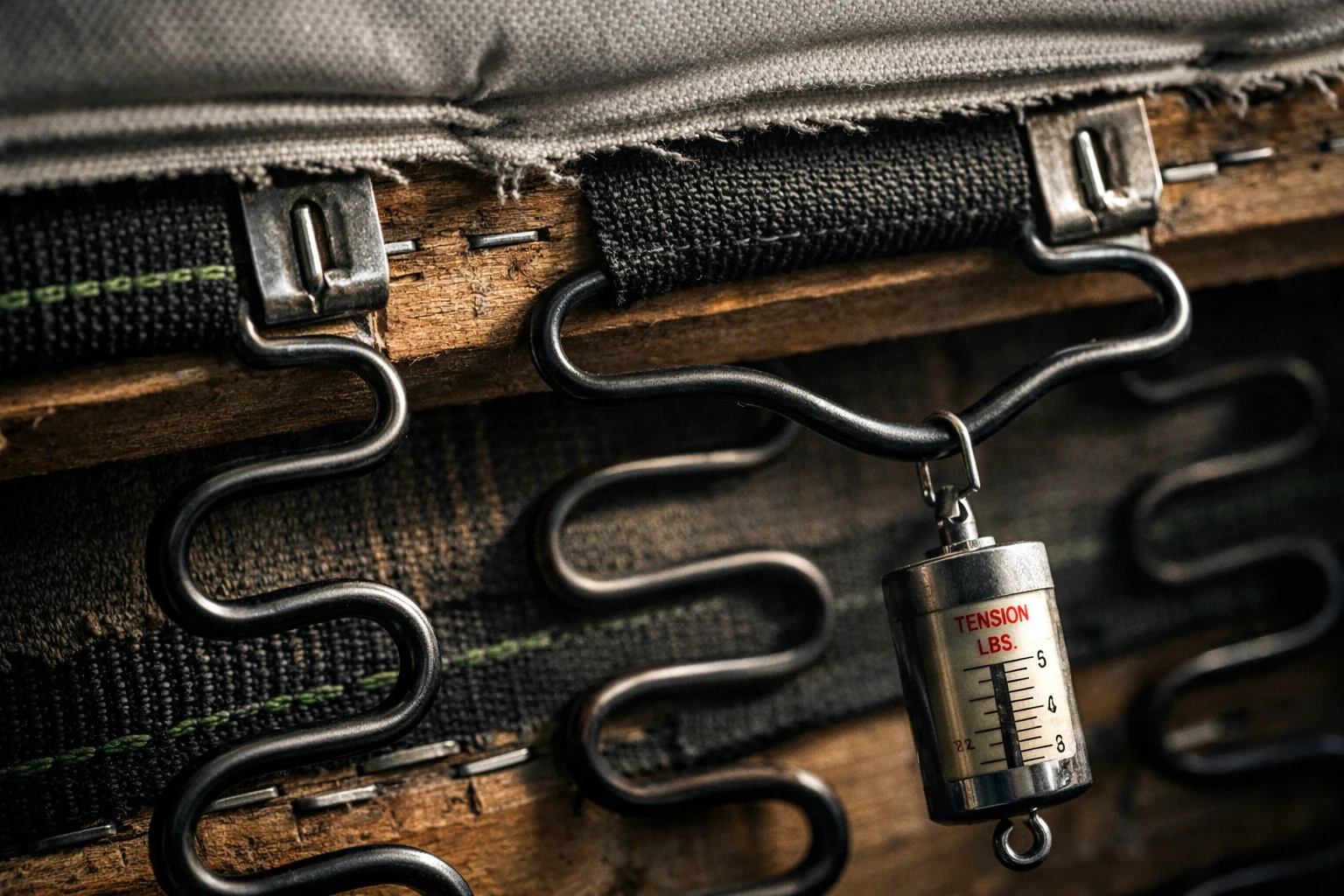
This is not about a hard plank of a seat. It is about resistance. The cushion should compress a little, then stop, and give that energy back when you change direction.
You can also feel this with your hands. Place your palms on the seat beside your thighs and press down. If the cushion collapses without pushing back, it will do the same thing when you try to stand.
Salespeople sometimes frame this struggle as a deep lounge feel or a relaxed posture. I have learned that this is just a polite way of saying the sofa eats your momentum.
If you live with anyone older, taller, heavier, or with knee or back issues, this test matters even more. A sofa that is hard to exit quietly limits who can use it comfortably.
I no longer imagine how a sofa will look in my room. I imagine myself standing up from it every night for the next five years. If that movement feels easy and unremarkable in the store, it usually stays that way at home.
If standing up feels like a small challenge now, it will become an annoyance, then a pain point, and eventually a reason you avoid using the sofa you paid good money for. I have learned to walk away before that story repeats itself.
Technical Summary: The Verdict
After all of this testing and sitting and standing, I eventually realized the problem was not mysterious at all. The cure for most disappointing sofas is foam that actually resists your weight instead of collapsing under it.
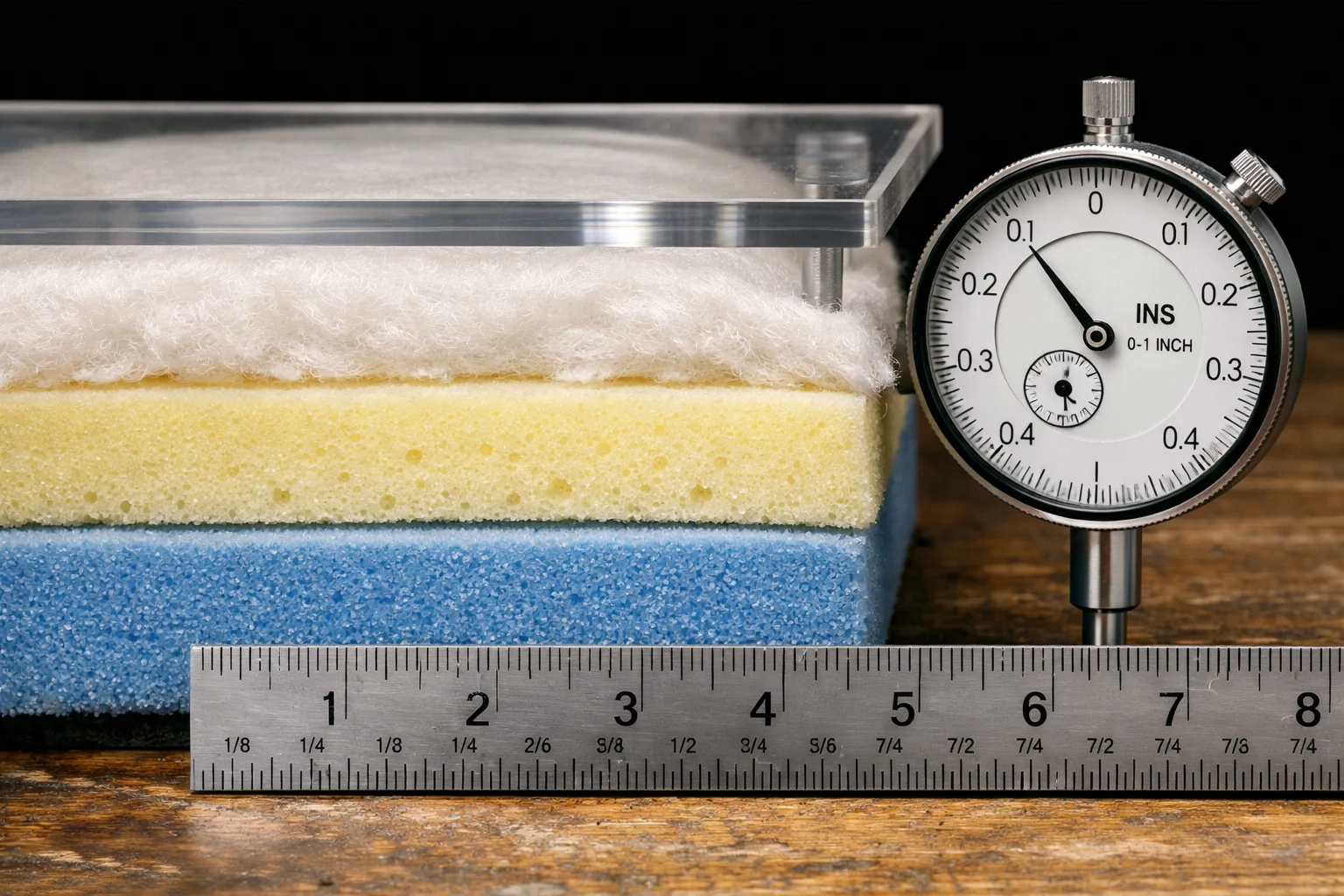
In practical terms, that means high ILD foam. You do not need to memorize acronyms, but you should know that ILD is a firmness rating, and higher numbers mean the cushion pushes back more instead of letting you sink.
When I ask about specs now, I look for an ILD of at least 35 in the main seat cushions. That level is where I consistently stop feeling the hip drop and start feeling real support that lasts past the showroom glow.
This is not about buying the hardest sofa you can find. It is about finding one that lets you sit on the cushion instead of disappearing into it. The moment you feel held up rather than cradled, your body relaxes in a completely different way.
I keep a simple mantra in my head while shopping. I want to sit on the sofa, not in the sofa. When a seat lifts me, supports my thighs, and makes standing up boring and easy, I know the foam is doing its job.
If a salesperson focuses only on softness, plushness, or how cozy it feels, I redirect the conversation to support and resistance. If they cannot tell me anything about the seat foam firmness, I assume the comfort will fade fast.
You do not need to argue or get technical in the store. You can feel this with your own body in under two minutes. Sit, wait, stand, and notice whether the sofa gives something back.
Every sofa that has treated me well over time shared this one trait. It respected gravity instead of surrendering to it. Once I learned to recognize that feeling, buying became much simpler and a lot less disappointing.
Explore Technical Reference
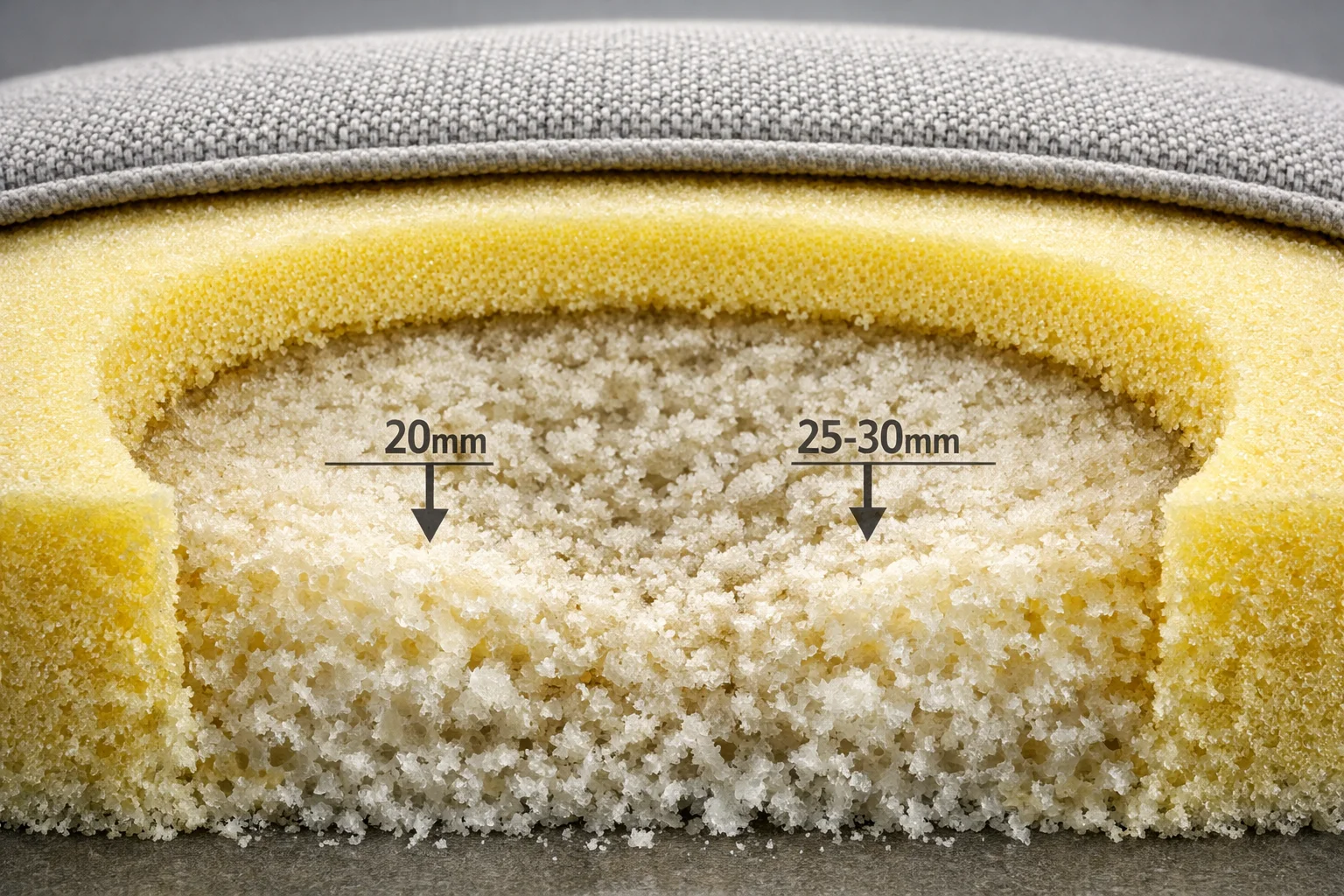
Cushion Collapse: Why the Center Fails First
Why the front of your cushion looks fine but the center is a crater. The mechanics of point-load failure.
Analyze Details →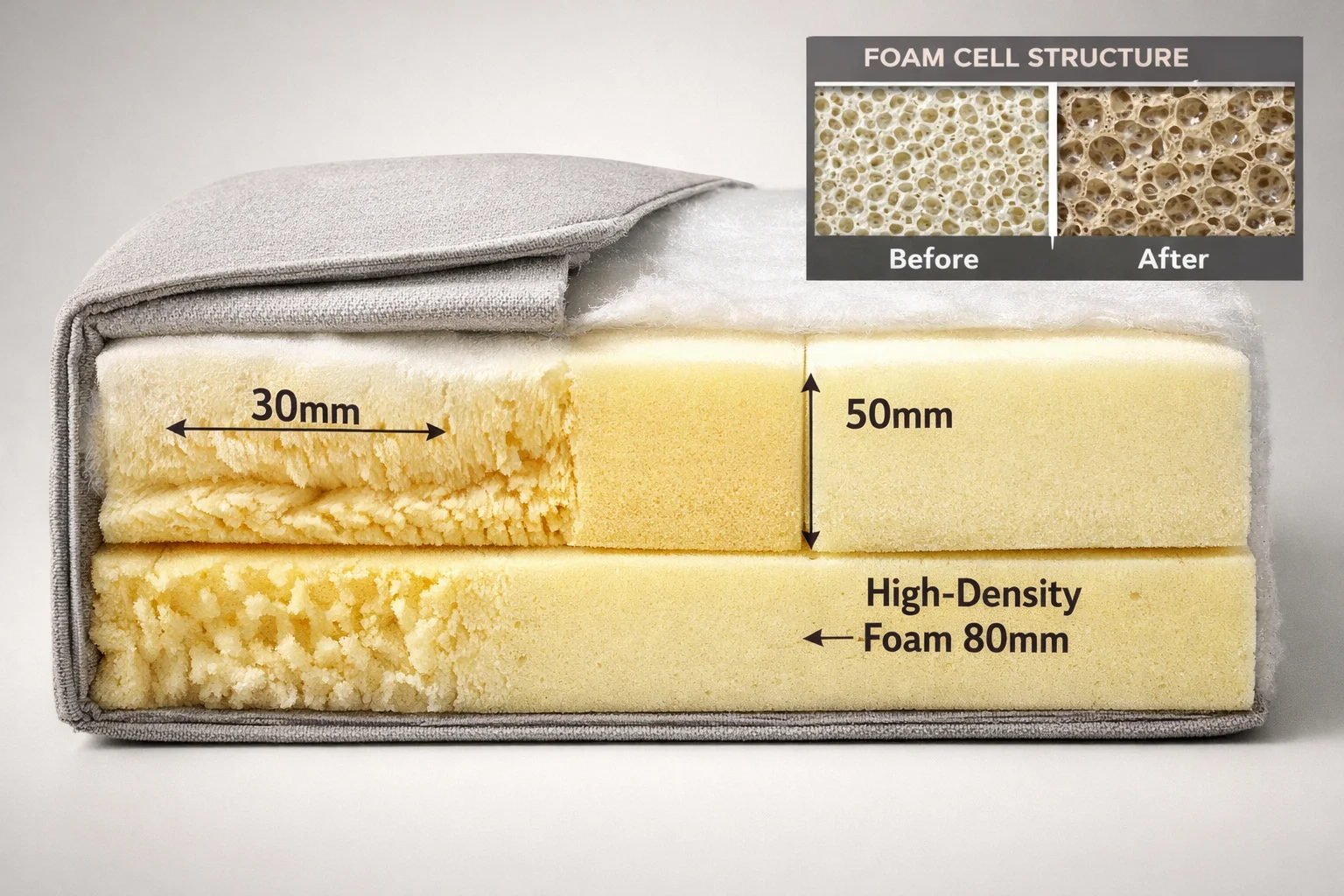
The "Favorite Spot" Syndrome: Why One Seat Dies First
Understanding why concentrated use creates dramatic wear differences across sofa seats. The physics of differential wear and why cushion rotation matters.
Analyze Details →