Lost Support: When "Healthy" Sofas Hurt
Introduction
I used to assume that if a sofa looked fine, it was fine. When my back started hurting, I blamed everything except the furniture. I bought expensive lumbar pillows, I did core exercises, and I told myself my posture was the problem.
What finally clicked was uncomfortable to admit. The sofa was the issue, even though it looked perfect. It was no longer holding me up, and I had no idea how to recognize that failure when I bought it.
This guide exists because most sofas do not fail in obvious ways, and showrooms are very good at hiding that. I want to help you spot the problems that only show up after months of daily sitting, while you still have the chance to walk away.
The "Invisible" Failure
Unlike a sagging sofa that you can see across the room, lost support is a mechanical failure that hides in plain sight. Visually, the cushions still look square and the fabric still looks tight and well tailored. When you sit, the experience is very different. You feel tired instead of relaxed, you keep shifting your weight, crossing your legs, or tucking your feet under you because nothing feels stable. The underlying cause is usually the suspension system. The springs or webbing still move, but they no longer push back with enough strength to hold your body in a neutral position.Once I understood this, shopping for a sofa stopped being about color and softness and started being about resistance. The rest of this guide is about how you can test that resistance in a showroom, using your own body, without tools, jargon, or trusting a sales pitch.
The Mechanics of Fatigue
When I say a sofa gets tired, I am not being poetic. I am talking about parts that slowly stop pushing back with the same strength they had on day one, even though they still look intact.
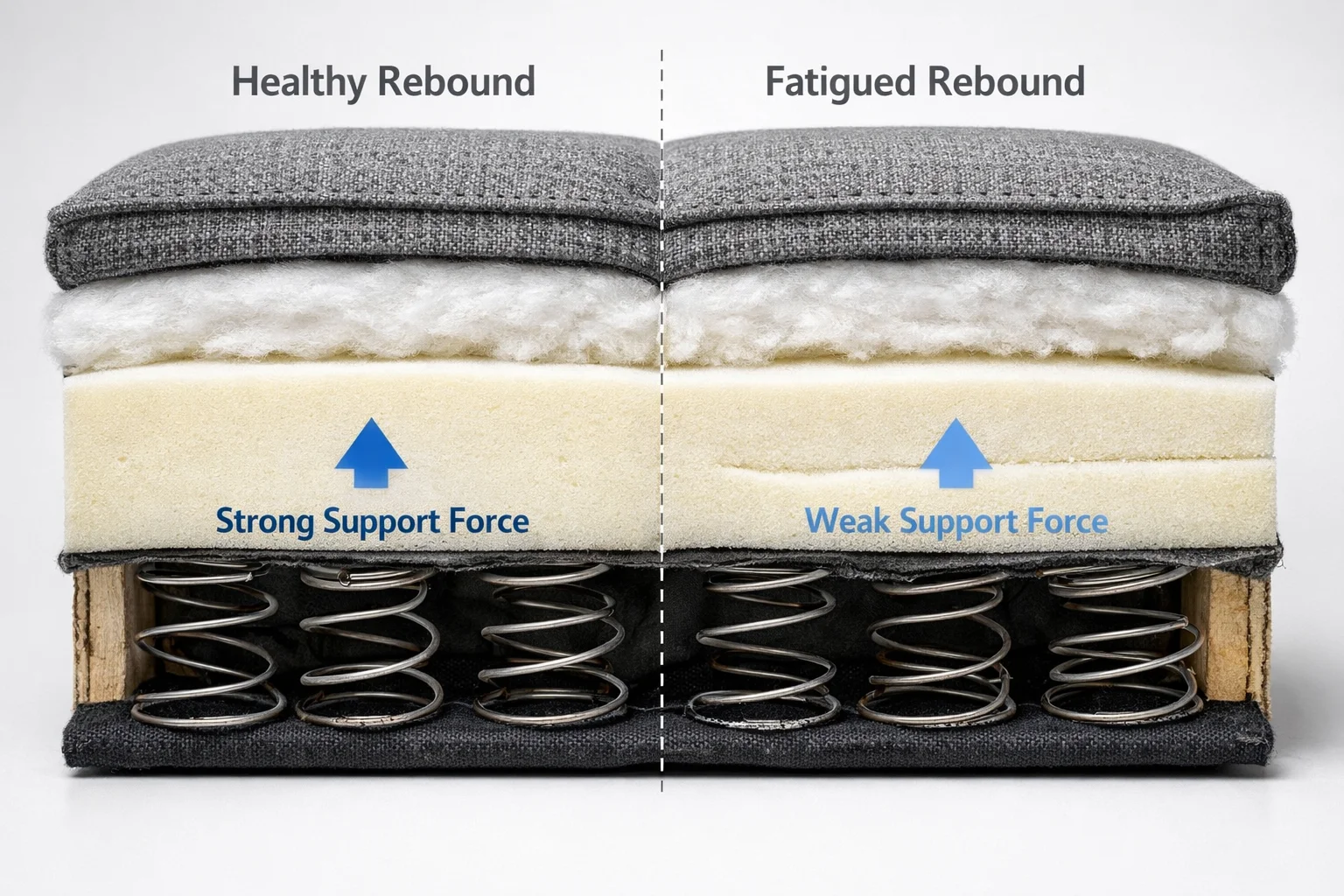
The first failure I learned to recognize is spring fatigue. Every time you sit down, the steel wire in the springs bends and then tries to return to its original shape. When the springs are new, the push back matches your weight closely, so when you press down with your body, the seat meets you with equal resistance.
As time passes, that steel loses some of its memory. You can still feel movement, which fools a lot of people into thinking the sofa is supportive, but the force coming back up is weaker. When you sit, your body sinks a little deeper than it should, and your muscles quietly take over the job the springs used to do.
In a showroom, I test this by sitting down slowly and then stopping halfway. I pay attention to whether the seat pushes me back up or just gives up and lets me fall through the rest of the way. If I feel like I have to control the descent with my legs or core, I know the springs are not doing enough work.
The second failure is webbing creep, which is even harder to spot. Elastic webbing is made with rubber, and rubber slowly breaks down when exposed to oxygen, heat, and light. This happens even in a climate controlled living room, and it accelerates if the sofa sits near a radiator or a sunny window.
What this looks like over time is simple stretching. A strap that was once tight gradually lengthens, creating slack under the seat. That slack lets your hips sink lower than your knees, which tilts your pelvis and pulls your spine into a curve that feels wrong even if you cannot explain why.
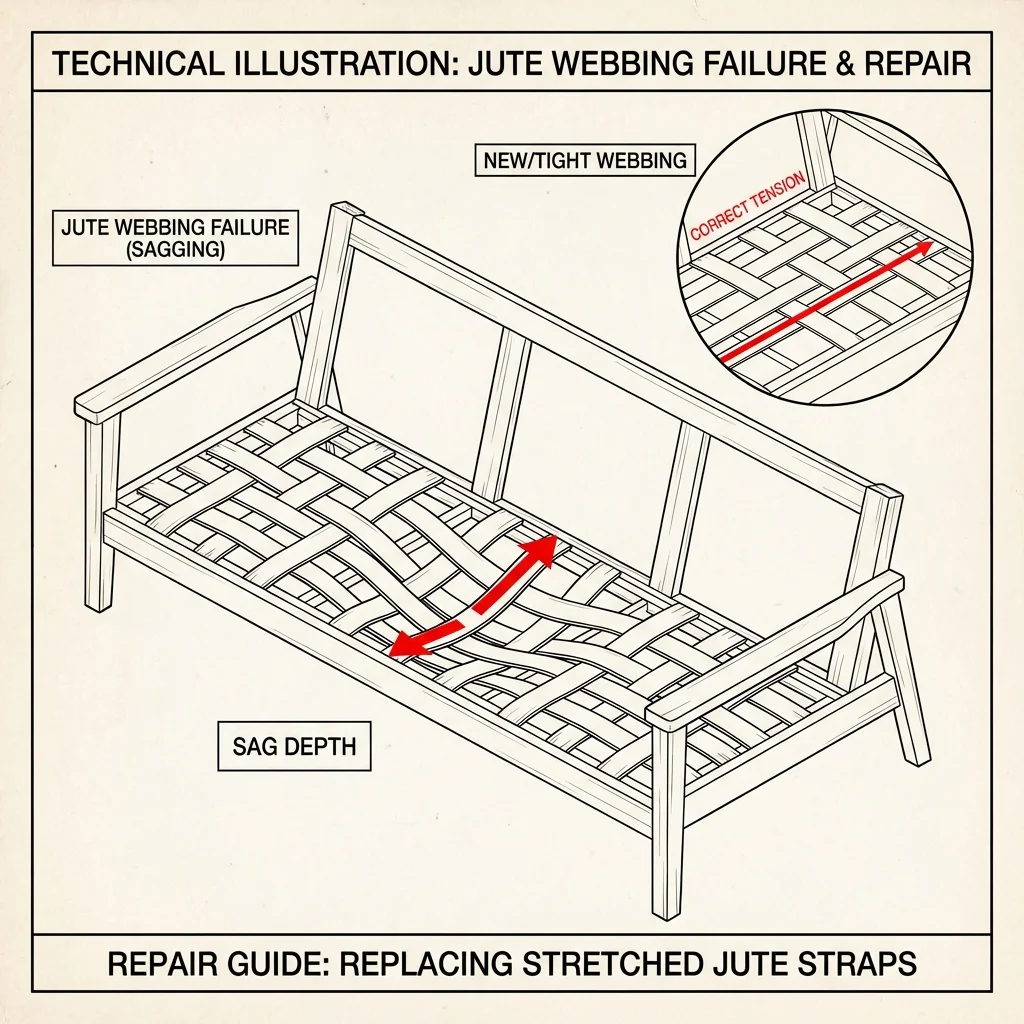
When I am testing for this, I plant my feet flat on the floor and sit all the way back. If my knees end up noticeably higher than my hips, I take that as a warning sign. A supportive seat should keep your thighs close to level without you having to tense your legs or perch on the edge.
I also do a simple bounce test. I lift my weight slightly and let myself drop an inch or two. A healthy suspension rebounds cleanly and stops. A fatigued one feels mushy, like it absorbs the motion and never quite returns to center.
None of this requires tools or technical knowledge. I am just paying attention to whether the sofa is carrying my weight or quietly asking my body to do the work instead. Once you feel the difference, it is hard to unfeel it, and it makes walking away from a pretty but tired seat much easier.
Internal Foam Softening (The “Ghost” Softness)
The third failure took me the longest to understand because it feels like a trick. The cushion looks full, square, and healthy, yet the moment you sit, it offers almost no resistance.
What is happening is not sagging you can see. The foam still holds its shape when nobody is on it, so your eyes tell you everything is fine.
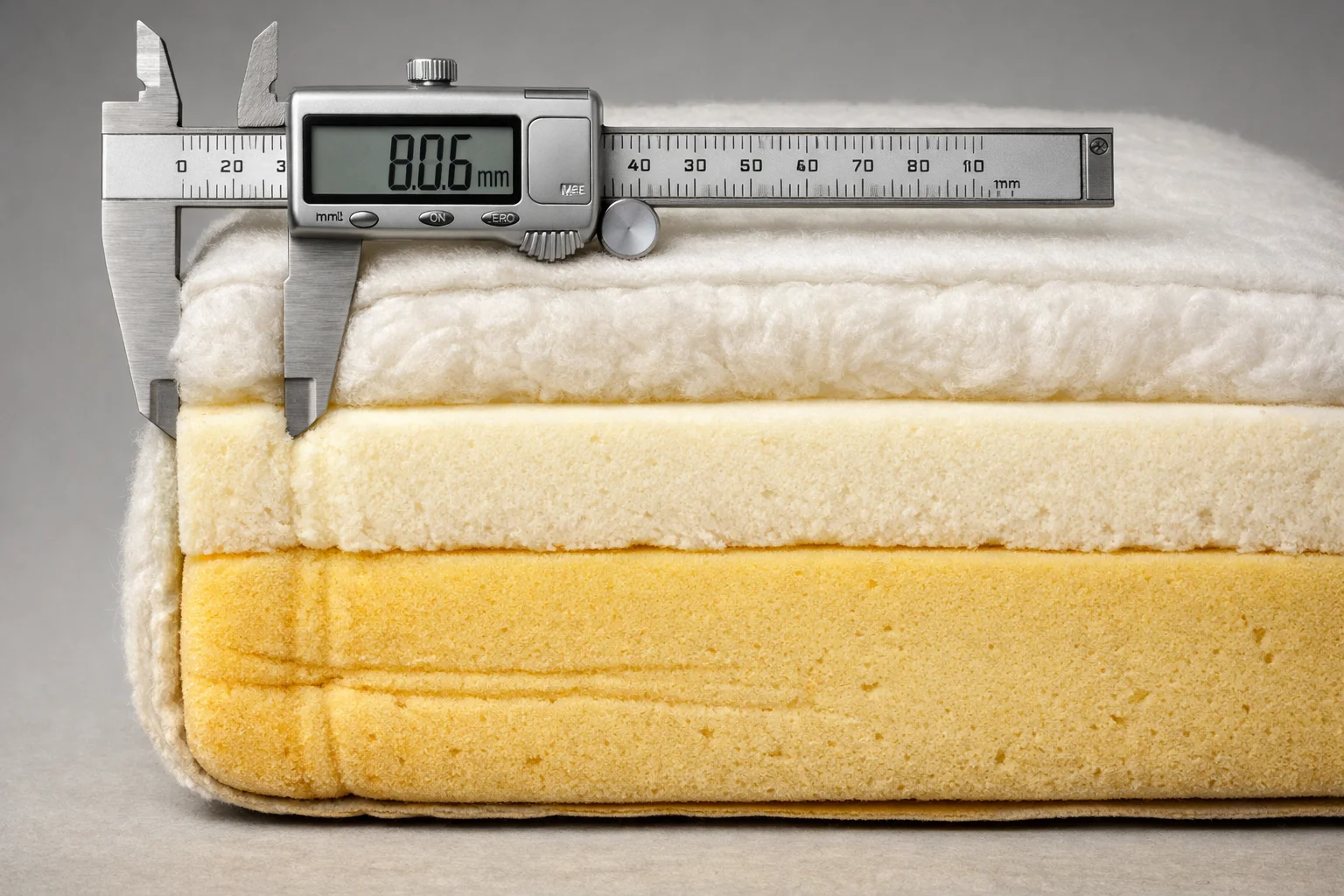
Inside, the foam has lost its strength. The tiny internal walls that once pushed back have weakened, so they collapse instantly under your weight and stay collapsed until you stand up.
This creates what I call ghost softness. You sink straight through the cushion, even though it still looks like a thick block from across the room.
In a showroom, I always pick up the seat cushion and squeeze it with both hands. I am not testing comfort, I am testing strength.
If I can easily pinch the top fabric and the bottom fabric together with very little effort, I treat that foam as finished. Good foam resists that squeeze and pushes my fingers apart.
I also press down with one hand and release. Healthy foam rises back immediately and fully. Dead foam rises slowly or stops short, even though it still looks plump.
This matters because foam sits on top of the springs or webbing. If the foam collapses instantly, your body drops deeper into the seat before the suspension even gets involved. That extra drop is what makes a sofa feel tiring instead of supportive.
When I sit on a sofa with ghost softness, I notice that my hips sink first and my lower back feels unsupported right away. I start shifting, crossing my legs, or leaning to one side without realizing why.
If you want to catch this before buying, sit down and then stand back up immediately. If the cushion feels dramatically different between those two moments, soft and collapsing when you sit but fine when you look at it, that is internal foam softening.
I have walked away from many good looking sofas because of this one test. Fabric and tailoring can hide weak foam better than almost any other failure.
The Helper Spring Hack
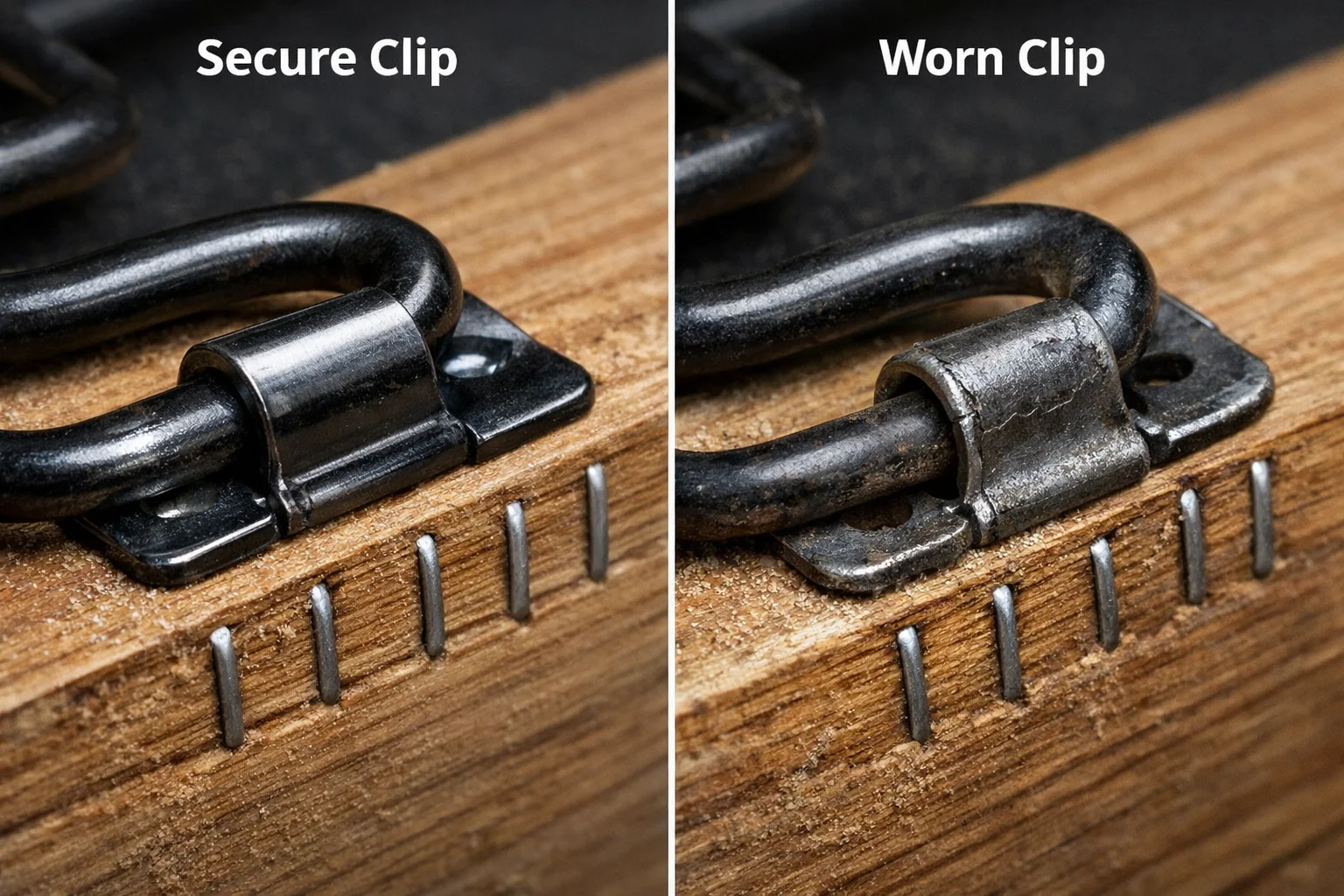
If the zigzag springs under a sofa are tired but not broken, there is a simple trick I have used at home. Small clip on helper springs can be attached directly to the existing wires to add tension back into the system.They are inexpensive, usually around twenty dollars, and they noticeably tighten the ride. This does not fix dead foam, but it can bring a sagging seat back into a usable range if the main structure is still sound.
What I want you to remember is that support is not about how a sofa looks when nobody is sitting on it. It is about how much it pushes back the moment your weight hits it. Once you train yourself to feel that, ghost softness stops being invisible, and it becomes very easy to say no.
Technical Summary: The Diagnosis
If you are sitting on a sofa that looks good but leaves your back sore, I stop guessing and go straight to the structure. The first thing I do is remove the seat cushions completely. I want to see and feel what is actually carrying my weight, not what is hiding it.With the cushions off, I press down firmly on the deck where the springs or webbing live. I am not poking gently. I use real pressure from my palm and lean into it. A healthy suspension fights back and feels stubborn, almost hard to compress. A failed one sinks easily and feels springy in a loose, trampoline like way. If it drops without much resistance, that support system is already done.
Once I confirm that, I think in terms of fixes, even when I am still standing in a showroom. Replacing the springs or webbing is possible but it is real work and rarely worth doing on a new purchase. The simple workaround, which I have used myself, is adding a thin plywood board under the cushions to spread the load and stop the drop. That solution makes the seat feel stiffer and less forgiving, but it immediately takes the strain off your back.
The reason I summarize it this way is so you do not overthink it. If the deck feels strong, most other comfort issues can be managed with cushions. If the deck feels weak, no amount of pillow fluff or fabric quality will save it. I have learned to make that call in under a minute, and it has saved me from bringing home sofas that would have quietly worn me down.
Explore Technical Reference
The Flattened Cushion: Why All Sofas Eventually Shrink
Why some cushions lose 30% of their height in a year. The physics of air loss and fiber compression.
Analyze Details →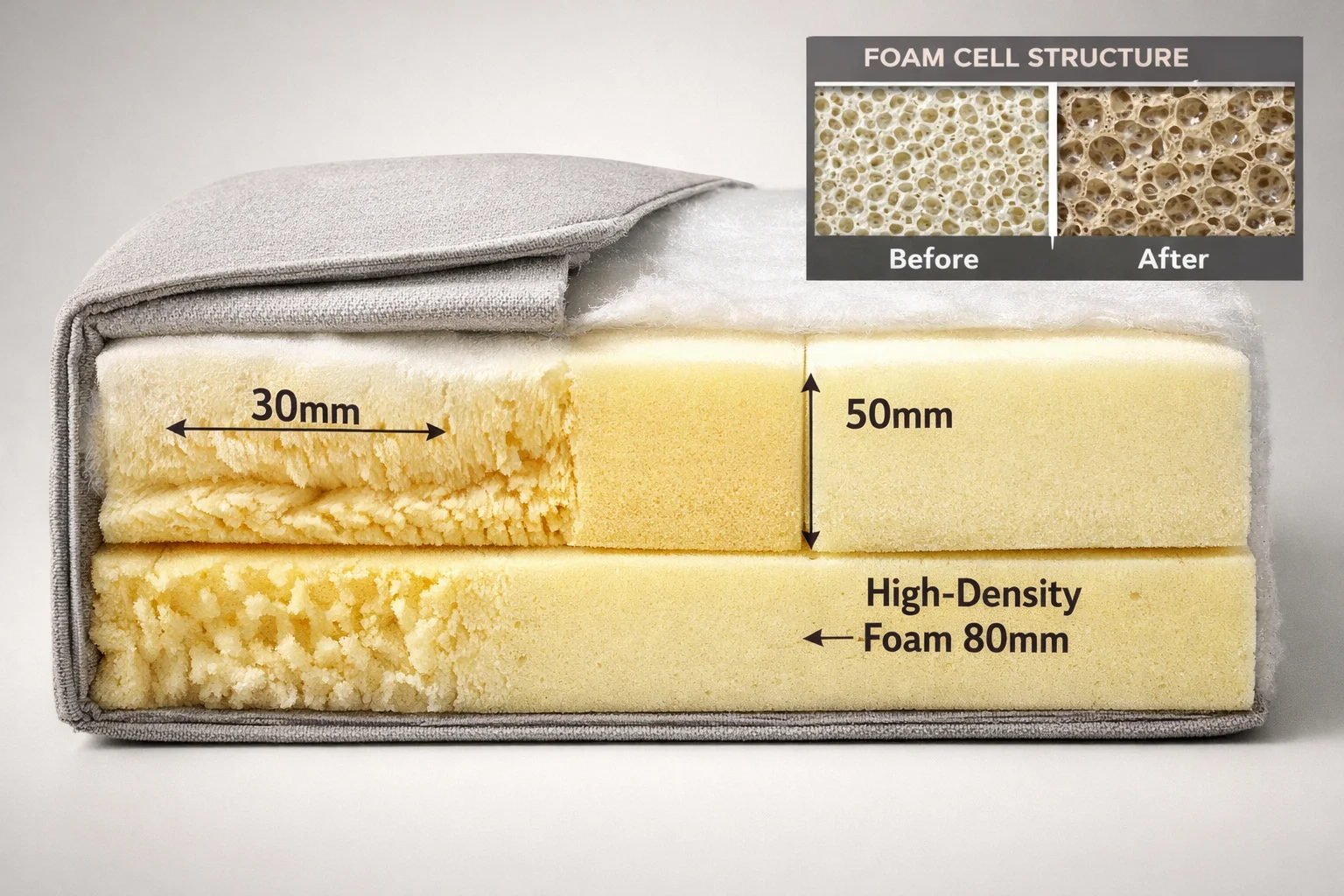
The "Favorite Spot" Syndrome: Why One Seat Dies First
Understanding why concentrated use creates dramatic wear differences across sofa seats. The physics of differential wear and why cushion rotation matters.
Analyze Details →