The Flattened Cushion: Why All Sofas Eventually Shrink
Introduction
That was the moment I stopped blaming myself for not fluffing enough and started blaming the sofa. What failed was not care, it was construction. Once I saw that, every sagging seat I encountered made a lot more sense.
I am not writing this as someone who builds furniture or sells it. I am writing as someone who paid for seating that promised comfort and delivered disappointment. I have sat on enough showroom sofas and lived with enough of them to notice patterns that repeat over and over.
Most sofas fail in quiet ways that you only notice after the return window closes. The cushions lose shape, the seat tilts forward, the arms soften, and the frame starts to feel vague instead of solid. None of this is obvious under bright lights with perfect throw pillows.
The good news is that you can spot many of these problems before you buy if you know where to look and what to feel for. You do not need technical specs or insider connections. You need to slow down, touch the right parts, and ask a few very specific questions.
This guide is about those moments in the showroom. I will walk you through what I now check every single time, and what I wish I had checked before hauling yet another sofa up the stairs.
Flattening vs. Collapsing
Flattening vs. Collapsing
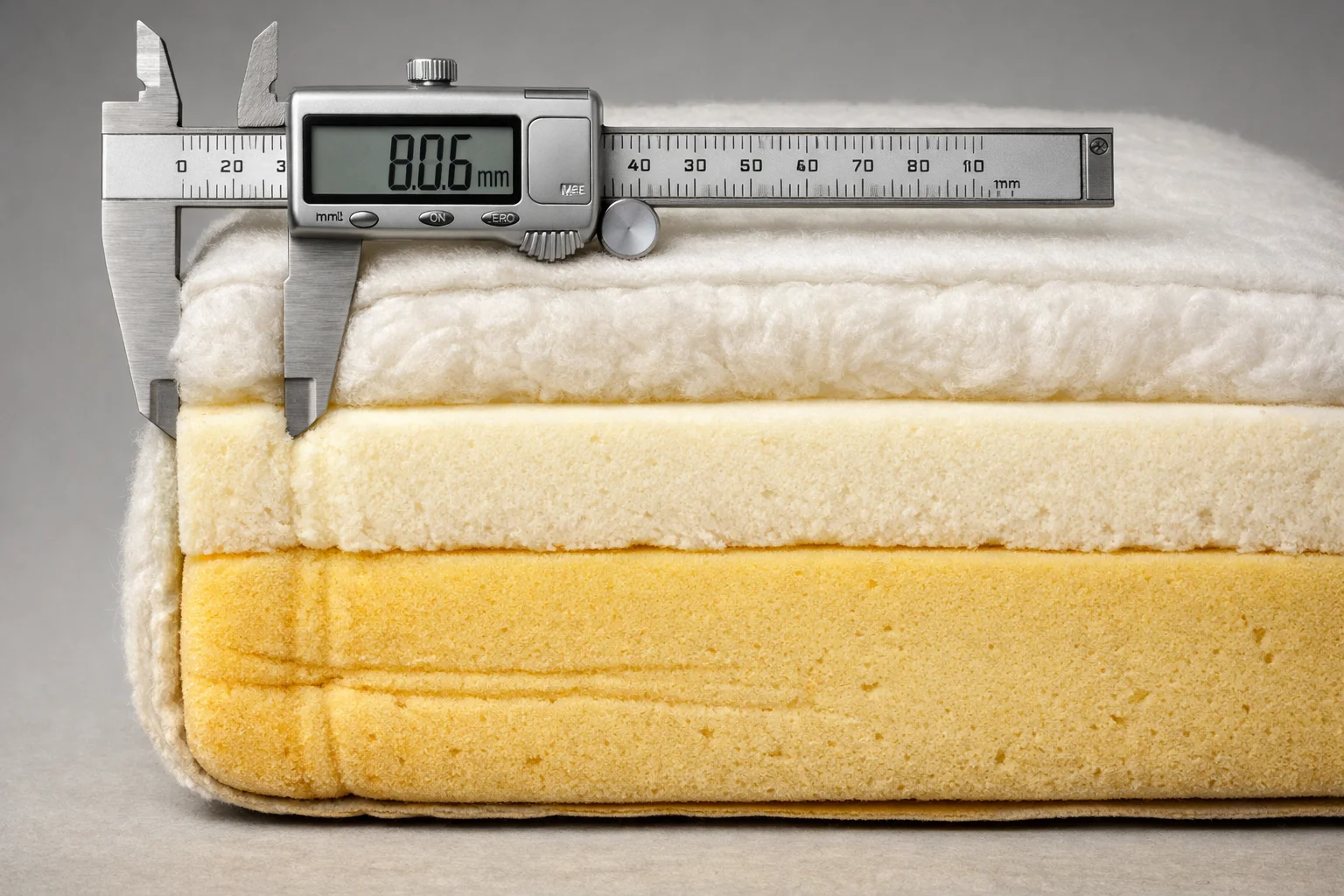
Collapsing is when the center of the cushion fails and you get a crater where you sit. Flattening is when the entire cushion loses height evenly, like a six inch cushion quietly becoming four inches over time. Flattening is usually an air loss problem rather than a structural tear.These two failures feel different when you sit, and they tell you different things about what went wrong. I pay close attention to which one a sofa is trying to do even in the showroom, because the fix and the lifespan are not the same.
Collapsing shows up as a dip that pulls you toward the middle. When I feel that, even slightly, I assume the foam or inner core cannot support weight consistently. I press down with one hand in the center and then near the edge, and if the center sinks faster or deeper, I walk away.
Flattening is sneakier and more common. The cushion still feels even, but it feels low and dead, like the springiness has leaked out. In a store, I check this by standing up and looking at the cushion from the side, not the front, and asking myself if it already looks tired.
Here is what matters for you as a buyer. Collapsing often means a defect or underbuilt cushion that will feel bad fast and unevenly. Flattening means the materials are slowly giving up, which means the sofa may look fine but stop being comfortable long before it looks worn.
When I test for flattening, I sit down and then stand up immediately and watch how fast the cushion recovers. If it comes back slowly or not all the way, I assume it will only get worse at home. I do not care how plush it felt for those ten seconds.
If a salesperson tells you flattening is normal and you just need to fluff, I treat that as a warning. Fluffing helps with loose fill, not with lost air or tired foam. Once the height is gone, you cannot fluff it back.
The safest cushions I have owned were the ones that felt a little firmer than I expected on day one. They did not impress me instantly, but they stayed comfortable year after year. I now remind myself that showroom comfort is easy to fake, but long term support is not.
When you are deciding between two sofas and one feels softer while the other feels slightly more resistant, I lean toward resistance. I am not chasing luxury anymore. I am trying to avoid that quiet moment six months in when I realize the seat height has disappeared and it is not coming back.
The “Cotton Candy” Effect (Fiber Fill)
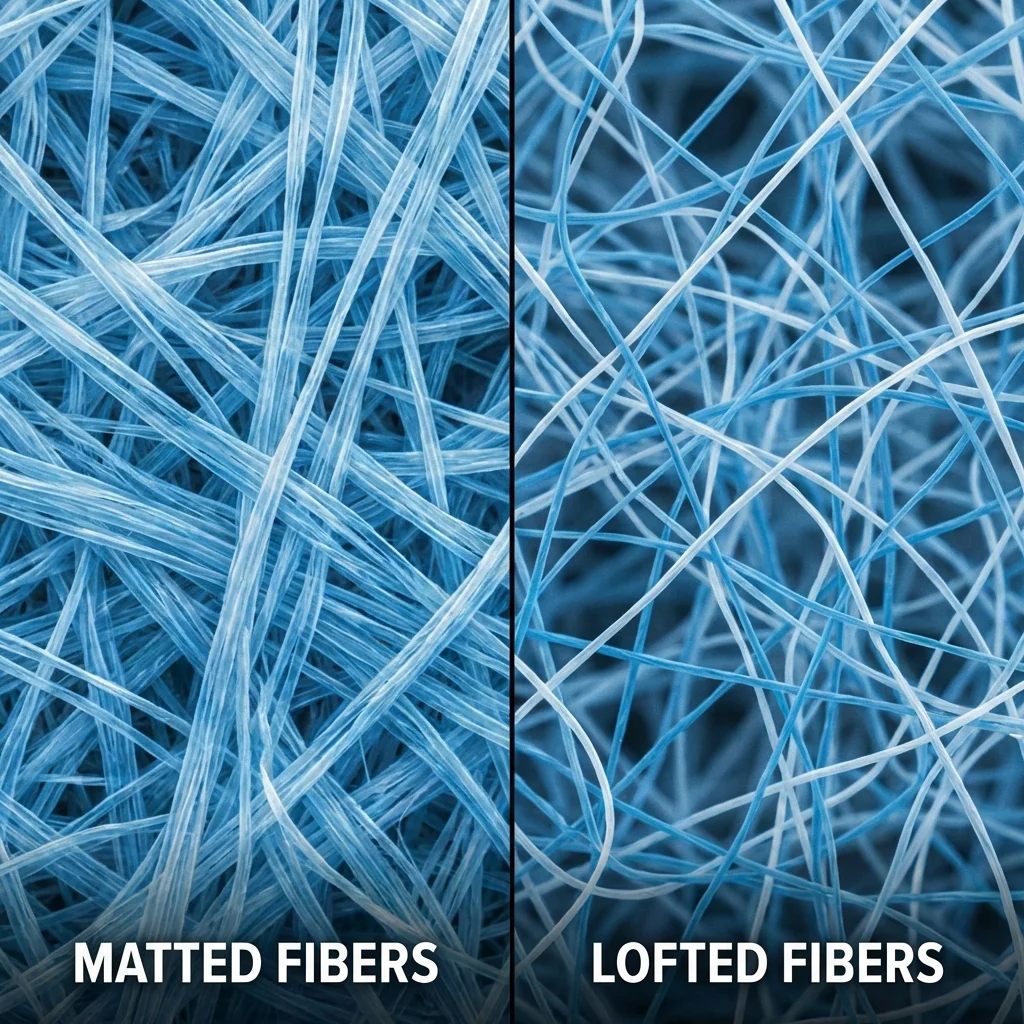
Most cheap plush cushions I have owned or tested were filled with blown fiber, which is basically loose polyester strands stuffed into a fabric shell. When the sofa is new, those fibers sit in random directions and trap a lot of air, very much like cotton candy fresh out of the machine.
That trapped air is what you feel as softness in the showroom. It feels inviting because you sink in easily and nothing pushes back yet. The problem shows up once real body weight hits the cushion day after day.
As you sit, those loose fibers crush together and start locking into each other. Instead of springing back, they form a dense felt like mat. Once that happens, the air is gone and it does not come back no matter how much you fluff.
This is where a lot of disappointment comes from. Polyester fiber has no real structural memory, so once it mats down, the cushion loses height permanently. The sofa does not look broken, it just quietly becomes lower and less supportive.
In a showroom, I try to figure out if I am sitting on trapped air or actual support. I press straight down with my palm and then let go. If the cushion feels hollow and collapses easily without much resistance, I assume it is mostly fiber doing the work.
I also pinch the cushion at the front edge and feel what is inside. If it feels like a bag of loose stuffing with no core pushing back, that is a red flag for me. Fiber on its own is comfort theater, not long term structure.
If you want to be subtle, sit down and shift your weight forward and back a few times. Fiber filled seats tend to feel great for the first few seconds and then suddenly feel lower, like the floor is closer than expected. That drop is the air leaving under your weight.
Salespeople often describe these cushions as soft, plush, or cloud like. I have learned to translate that language into a very specific question, which is whether the cushion relies on fiber for most of its height. If the answer is yes, I assume the height is temporary.
Fiber is not automatically bad when it is used in thin layers on top of something that actually supports weight. The problem is when it is doing the main job of holding you up. In that case, you are buying a feeling, not a structure.
If you like a softer seat, I get it, I do too. I just want that softness to come from something that can survive being sat on every day. When the softness comes from air trapped between loose fibers, I know exactly how that story ends, because I have lived with it more than once.
When I stand up from a fiber heavy cushion and it already looks a little tired under showroom lighting, I walk away. At home, with real use, it will only get flatter. I remind myself that cotton candy is delightful, but it was never meant to hold weight.
The Foam Fatigue Factor
Foam cushions do not fail because you did something wrong. They fail because the tiny plastic cells inside them get tired and stop behaving like springs.
Every time you sit and stand, the foam compresses and then tries to pull air back in. When the foam is new, those cells rebound quickly and the cushion pops back up.
After enough cycles of real use, the walls of those cells lose elasticity. They still exist, but they no longer suck air back in with the same strength. The cushion settles at a lower height and stays there.
What this means for you is simple and frustrating. A foam cushion can feel supportive and even firm in the showroom, then quietly lose a third of its height over time without ever tearing or looking damaged.
I have learned to assume that foam height loss is permanent. Once the cushion finds its new lower resting point, that is the sofa you own from then on.
In a showroom, I test foam fatigue by sitting down, standing up, and watching the cushion from the side. I am not looking for speed alone. I am looking for whether it fully returns to its original height.
If it comes back most of the way but not all the way, I treat that as a preview of the future. That missing half inch is telling you where the cushion is headed.
I also press my thumb into the foam and hold it there for a second before releasing. Healthy foam pushes back and fills in the space decisively. Tired foam feels polite and slow, like it is thinking about it.
Salespeople often describe foam as high density or long lasting. I do not argue with that. I just trust my hands more than the tag.
If the foam already feels a little subdued under bright lights and careful staging, it will not magically improve at home. Real life use only accelerates what you are already feeling.
The "Down" Reality
Feathers sound luxurious, but they are extremely fragile in seating. Each feather is a tiny curved quill that acts like a spring when it is intact.When you sit, those quills bend and many of them snap. Over time the cushion starts to make a faint crunching sound when you squeeze it, which is the sound of broken quills turning into dust.
Once that happens, the feathers cannot hold air anymore. No amount of fluffing will bring back the loft, because the structure that trapped the air is gone.
I used to think down cushions failed because people did not maintain them. After owning one, I realized they failed because the material was never meant to survive daily compression.
In a store, I gently squeeze a down filled cushion near my ear. If I hear even a hint of crunch, I assume the breakdown has already started.
I also check how much the cushion relies on down for height. If it feels like most of the lift is coming from feathers rather than a firm core underneath, I walk away.
Down can work as a thin comfort layer on top of something supportive. As a primary seat cushion, it is a gamble that usually loses.
The pattern I have seen over and over is this. Foam and down do not suddenly collapse in a dramatic way. They just stop doing their job one small failure at a time.
When I buy a sofa now, I am not chasing that initial wow feeling. I am looking for materials that still want to push back after thousands of sits.
If a cushion feels slightly firmer than you expected, take that as a good sign. That resistance is future comfort, not a flaw.
I remind myself that the goal is not to impress me for five minutes in a showroom. The goal is to still feel like a seat years later, not a memory of one.
Can You Fix It?
This is the part I wish someone had been honest with me about earlier. Most seat cushions cannot truly be fixed once the material has given up, but there are a couple of things you can do to slow the decline or squeeze a bit more life out of what you already own.
The first thing I still do, even though I know its limits, is what I call the Sunday flip. Gravity always pulls filling downward, and your body weight pushes it there faster, so the cushion slowly learns a single resting direction.
When I flip both the seat and back cushions every week, I am forcing the filling to settle in the opposite direction. This does not restore lost height, but it can delay uneven wear and buy you time before one spot becomes noticeably worse than the rest.
If a cushion looks dramatically better right after a flip and then sags again within a day or two, I take that as confirmation that the material itself is already tired. The flip did not fix anything, it just redistributed the damage.
The other trick I use is vacuuming the cushions without their covers. I know it sounds odd, but gentle suction with an upholstery attachment can pull air back through foam cells and loosen compacted fiber a little.
I am careful here. I do not press hard or use high suction. I let the vacuum hover and do the work, moving slowly across the surface and then along the sides.
What this really does is remove dust and grit that act like sandpaper inside the cushion. That abrasive dirt speeds up breakdown, so getting it out can slightly slow future wear.
Sometimes you will see the cushion puff up a bit afterward, which feels encouraging. I treat that as temporary. If the cushion was already flattening badly, the vacuum just gave it a short breath, not a cure.
Here is the honest bottom line I use for myself. If maintenance tricks make a dramatic difference, even briefly, the cushion is already on borrowed time.
When I am shopping, this section informs how I judge sales promises. If a salesperson leans heavily on maintenance advice to explain away softness or sagging, I assume the sofa needs care to survive, not to age well.
Good cushions do not require constant intervention to feel like seats. They tolerate neglect reasonably well and still hold their shape.
If you are standing in a showroom wondering whether a problem can be fixed later, I have learned to assume the answer is no. Maintenance can slow decline, but it cannot reverse material fatigue.
I now buy as if I will never successfully fix it. That mindset has saved me far more money and frustration than any flipping or vacuuming ever did.
Technical Summary: The Verdict
When I strip away all the showroom language and promises, I end up with three very blunt conclusions that guide my buying decisions.
If the seat cushion relies mainly on loose fiber for its height, there is nothing meaningful to fix later. Once that fiber mats down, the only real solution is adding more stuffing, which means opening the cushion and changing what you paid for. In a store, that tells me the comfort I am feeling is temporary by design.
If the cushion is mostly down, I assume softness will turn into collapse. Broken feathers cannot be stiffened or revived. The only way people successfully live with these cushions long term is by adding a foam core inside, which again means rebuilding the seat after the fact. When I realize a sofa would need surgery to age well, I pass.
If the cushion is foam and it fails, the only fix that actually works is replacement with High Density foam around 2.5 lb. Anything less dense will repeat the same slow height loss. When I ask myself whether a sofa would be worth re foaming later, the answer tells me whether the initial price makes sense.
Here is how I use this in a showroom. I am not asking whether a cushion can be fixed. I am asking whether I would accept the fix that would be required. If the honest answer is no, then the sofa is not a good buy no matter how nice it feels today.
This is why I now focus so much on what is doing the actual work under me. Decorative softness is easy to add and easy to lose. Structural support is the part you either buy up front or regret later.
When I stand up from a sofa and think, I could live with this seat exactly as it is for years, that is usually a foam core doing its job. When I think, this feels amazing but I hope it stays this way, that is usually fiber or down borrowing time.
My final rule for myself is simple. I buy the cushion I will own later, not the one I am borrowing in the showroom. Once I started doing that, the disappointment stopped showing up six months after delivery and started disappearing entirely.
Explore Technical Reference
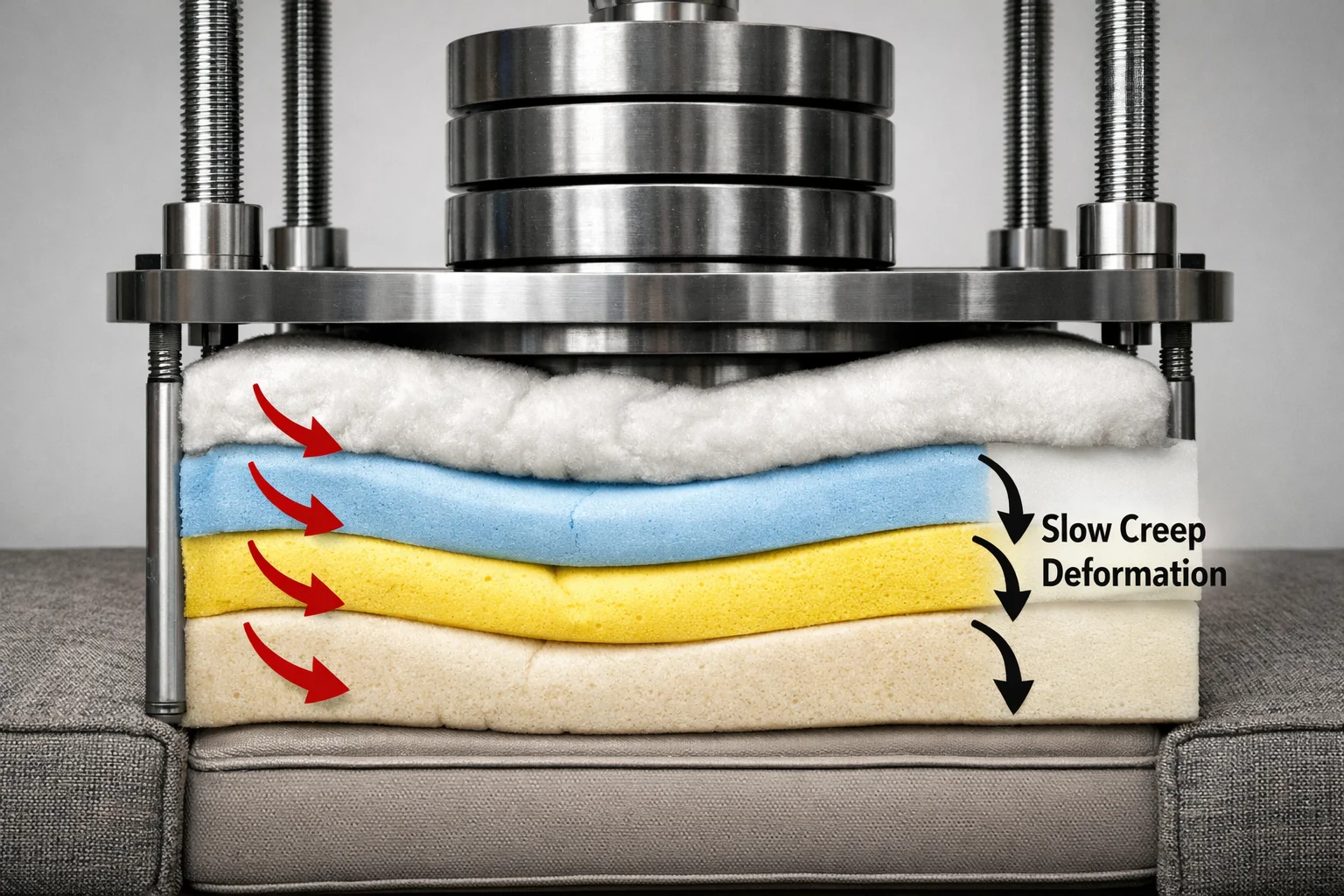
The Paradox: Why Hard Cushions SINK
Understanding the paradox of surfaces that resist touch but fail to support weight over time. The physics of visco-elastic creep and chemically stiffened foam.
Analyze Details →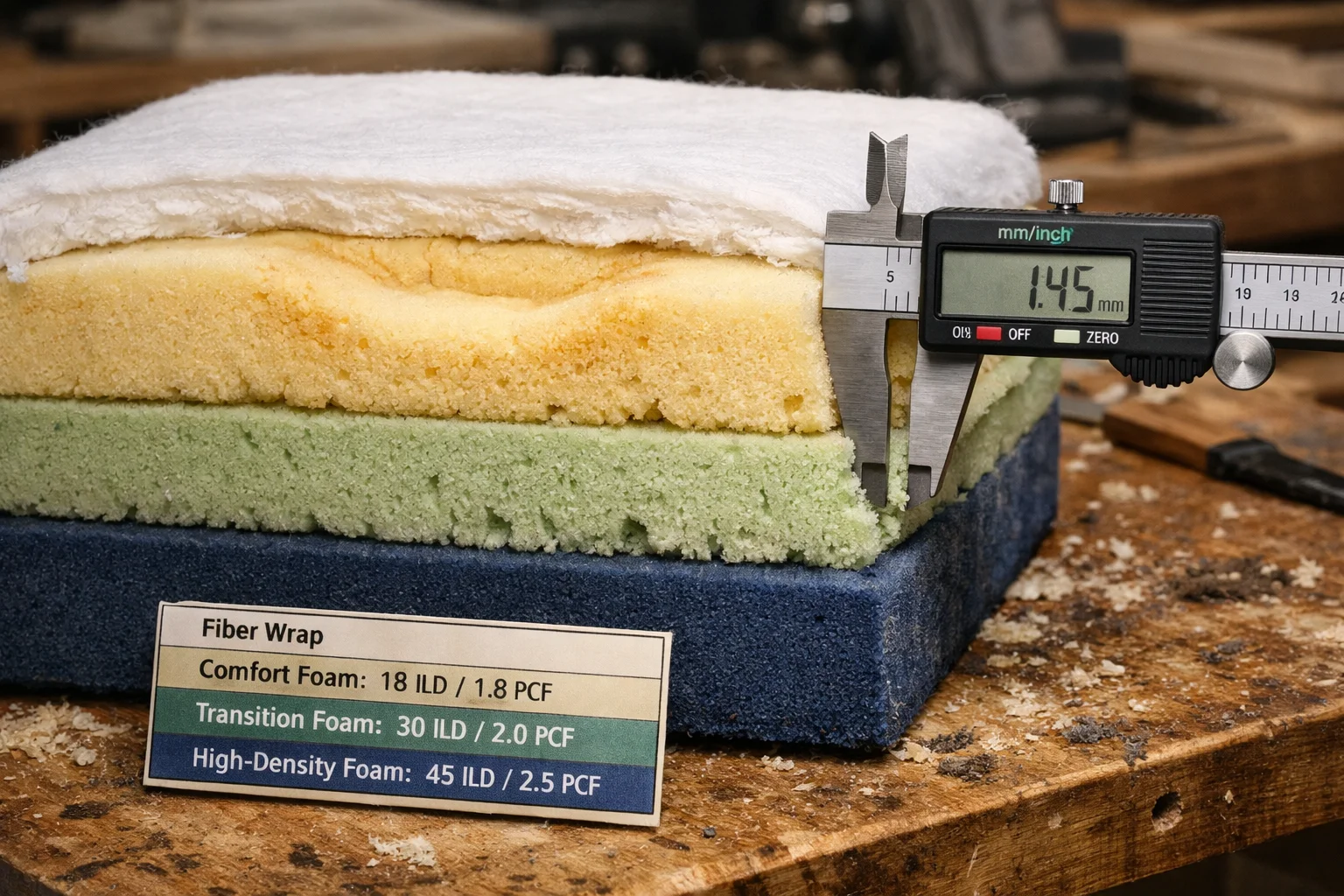
The "Waiting Room" Effect: Why Your Sofa Hurts
Why modern 'ergonomic' sofas often feel worse than the saggy monster you threw away. The role of pitch and depth.
Analyze Details →