The Paradox: Why Hard Cushions SINK
Introduction
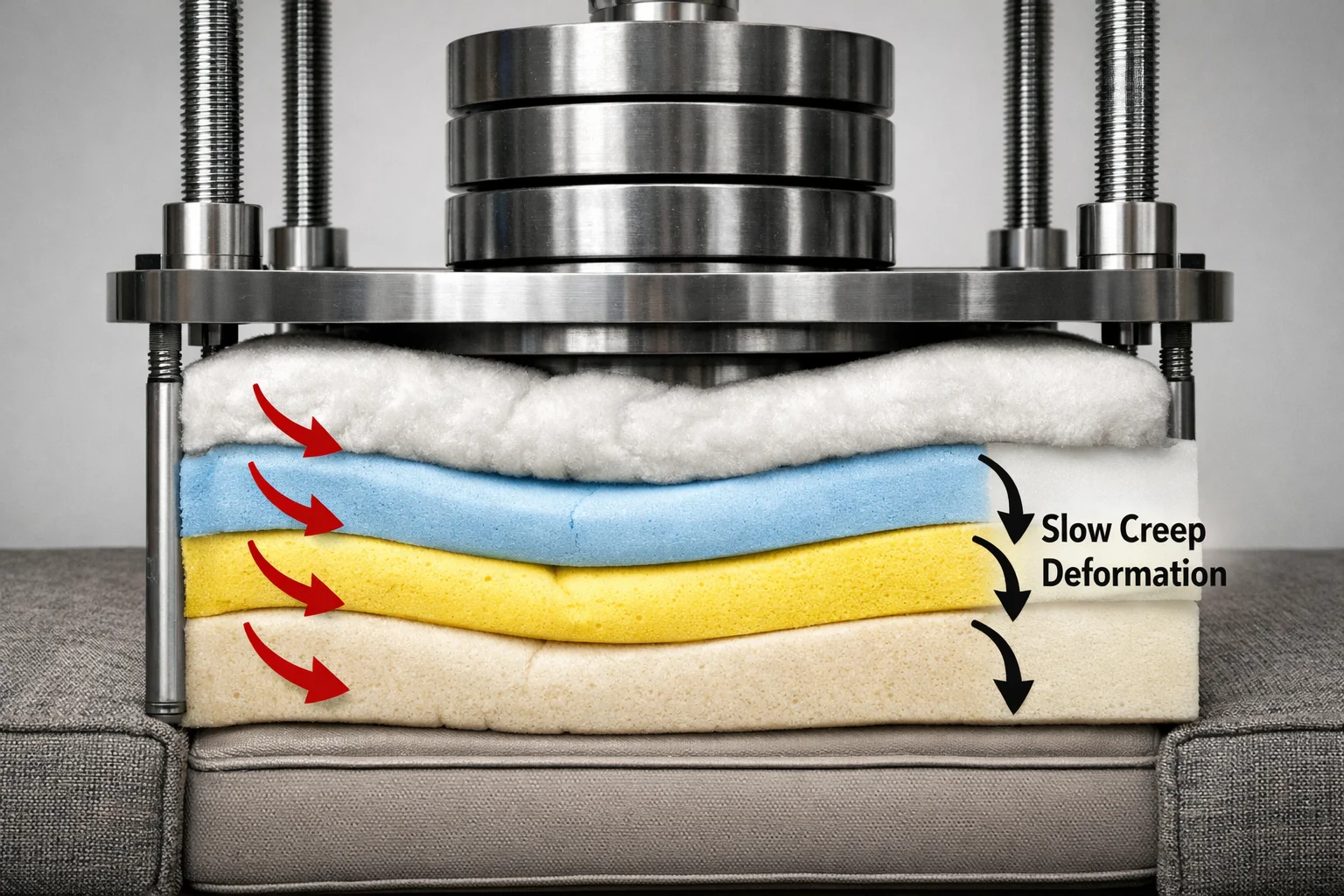
I learned the hard way that how a sofa feels for five minutes in a showroom has almost nothing to do with how it behaves after an hour at home. That memory foam sofa felt impressively firm under a quick sit, which I took as a sign of quality. What I did not realize was that firmness at first contact can hide a slow collapse underneath you.
The Crust Effect is what happens when the top layer feels stiff and supportive, but the material below it gives way over time. Your body heat and weight soften the inner foam, and your hips start sinking while your knees stay higher. Once that happens, your lower back is stuck fighting the seat instead of being supported by it.
I am starting with this because it explains why so many people feel disappointed months after buying a sofa they thought they tested properly. The problem is not that memory foam is always bad, it is that it can fool you during a short sit. If you only press down with your hand or perch on the edge, you never trigger the failure mode.
As you read the rest of this guide, I want you to keep one idea in your head. You are not testing how a sofa feels when it is new and untouched. You are trying to predict how it will hold your body after heat, time, and gravity have their say. Everything I share from here on is about spotting that future sag before you pay for it.
The ‘Creep’ Sensation
The "Creep" Sensation
You know you have this problem when the sofa feels stiff and supportive during the first minute. After about half an hour you notice you have sunk a couple of inches deeper without realizing it. By the one hour mark your back starts to ache because your spine is curved, even though the foam pressing against your skin still feels oddly hard.This is the failure mode that fooled me the most, because it feels like comfort turning into discomfort without any clear moment when something went wrong. The seat does not suddenly collapse. It slowly relaxes under your body heat and weight, and you only notice once your posture is already compromised.
When I test for this now, I ignore my first impression completely. I sit all the way back, put my feet on the floor like I would at home, and stay there longer than feels polite. If a salesperson hovers, I tell them I am checking long term comfort and keep sitting.
Pay attention to what your hips are doing relative to your knees as time passes. If your hips keep dropping lower while the front edge of the seat stays put, that foam is creeping. Your lower back will eventually pay for that slope.
I also shift slightly side to side after a few minutes and notice how the seat responds. A creeping foam will feel sluggish and slow to rebound, like it is tired. A more stable seat will push back right away and stop you from sinking further.
If you cannot sit for at least fifteen minutes in the showroom, you should assume the risk is high. This problem does not show up in a quick perch or a hand press. If a sofa only feels good when you are rushing, that is not a good sign for nights spent watching a movie or reading.
I am not saying you need a rock hard seat. I am saying you need a seat that stops changing under you. Comfort that keeps drifting is what turns into regret later.
Reason 1: The Memory Foam Trap (Visco-Elasticity)
Memory foam is heat sensitive, and this is where the trap starts. At room temperature it feels stiff, which is exactly what you notice when you first sit down in a showroom. As your body heat moves into the foam, it softens and relaxes, and the material under your heaviest parts starts to give way.
This is not a defect in one brand. It is how memory foam is designed to work. The problem is that in a sofa seat, this softening happens slowly and invisibly, until you realize you are much lower than where you started.
What is happening underneath you is that the foam absorbs your weight instead of pushing back against it. It takes your energy and keeps it, rather than returning it to help hold you up. That is why you sink but never quite bounce back to where you began.
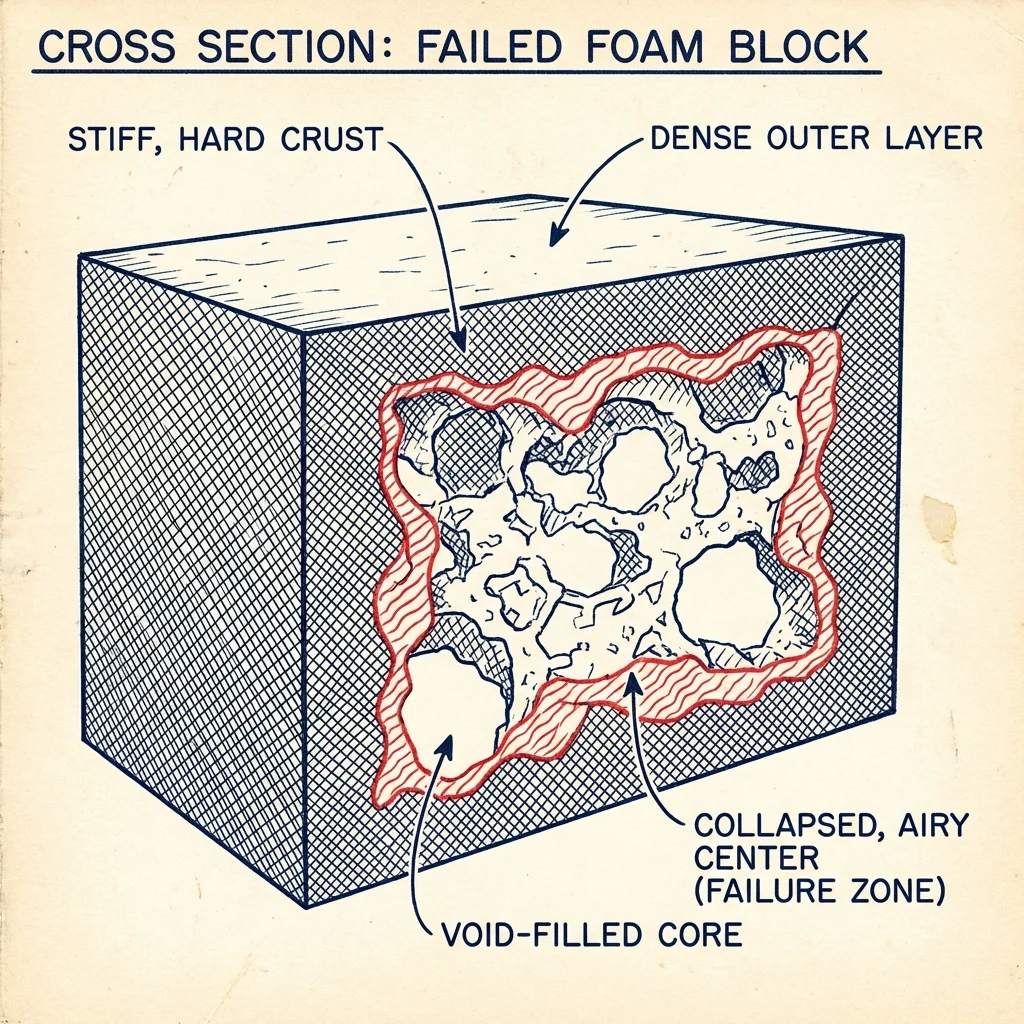
This creates what I think of as a false firmness. The surface and the edges stay cooler and stiffer, so your thighs and the sides of the seat feel supportive. Meanwhile the foam directly under your hips warms up and collapses, which drops your pelvis into a pocket.
In the showroom, this often feels reassuring at first. You press down with your hand and think the seat is dense. You sit for a minute and think it is supportive. The failure only shows up once heat and time are involved.
When I suspect memory foam in a seat, I do something very specific. I sit down and stay perfectly still for a few minutes instead of shifting around. If the seat is memory foam heavy, I can feel myself slowly settling even though I am not moving.
After that, I stand up and immediately sit back down in the exact same spot. If the foam takes a long time to recover and I drop straight back into a hollow, that is a clear warning sign. A good seat should meet you closer to the same height each time.
I also pay attention to how hard it feels to get out of the sofa. If I have to lean forward and push with my hands because my hips are buried, that is memory foam doing what it does best and what I do not want in a primary seat.
If you like the initial feel but notice even a small amount of sinking over time, assume it will be worse at home. Your living room will be warmer, your sitting sessions will be longer, and the foam will only get more compliant with use.
I am not telling you to avoid memory foam entirely. I am telling you not to let it be the main support layer in a sofa seat. In a showroom, ask what is doing the actual lifting under the foam. If the answer is vague or the salesperson just repeats the word comfort, I take that as a reason to sit longer or walk away.
Memory foam can feel impressive for five minutes. Your job is to find out what it feels like after your body has had its way with it.
Reason 2: Chemically Stiffened Foam (The Fake Firm)
This one fooled me because it feels even more convincing than memory foam at first touch. Some cheap foams are made to feel extremely firm by adding chemicals that stiffen the cell walls. When you sit down, the resistance feels impressive, like you are pressing into something strong and dense.
The problem is that this firmness is brittle, not resilient. Instead of flexing and pushing back, those stiffened cell walls slowly give up under steady weight. They do not snap right away, they fold and stay folded.
When you first sit, the seat feels like a brick. After a while, it feels like that brick is quietly turning into cardboard under you. You still feel pressure against your skin, but your body is sinking lower than it should.
I learned to recognize this by paying attention to time instead of pressure. If a seat feels extremely firm in the first few seconds, I do not get excited anymore. I stay seated and wait to see if that firmness holds its shape or just its attitude.
What I watch for is a delayed drop. With chemically stiffened foam, nothing seems to happen at first. Then after several minutes, my hips start to descend without the foam ever feeling soft. That is the giveaway. Real support resists you and stops. Fake firm just slows the fall.
I also test this by gently rocking my weight forward and back after sitting still. A brittle foam feels dead. It does not spring back with energy, it just grudgingly reshapes itself. When I return to neutral, I often end up a little lower than before.
Another thing I do is stand up and look at the seat surface right away. If I see a shallow dish where I was sitting that lingers longer than a few seconds, I know those cell walls did not rebound. A good foam should look bored that you were ever there.
This type of foam is dangerous because it passes the quick test so well. A hand press feels solid. A short sit feels supportive. Even a salesperson telling you it will break in sounds reassuring, until you realize breaking in is actually breaking down.
If a seat feels unusually hard but still lets you sink over time, trust the sinking, not the hardness. Hardness without lift is not support. It is just resistance before surrender.
When I encounter this now, I either sit much longer than planned or I walk away. A sofa should not need chemicals to pretend it is strong. If it cannot hold you up honestly, it will not start doing so after you bring it home.
The ‘HR’ Solution
The "HR" Solution
High Resiliency foam, usually shortened to HR foam, is made with a different chemistry that behaves less like clay and more like a field of tiny springs. When you press into it, it pushes back immediately instead of waiting for heat or time. If you push it down, it pushes you up right away, and that push is what keeps your body supported over the long haul.This is the first material I look for when I want a sofa that still feels the same an hour later. HR foam does not rely on stiffness to feel supportive. It relies on rebound, which is a much better predictor of how your back will feel at the end of the night.
In a showroom, HR foam often feels less dramatic at first sit. It might not wow you with instant firmness, and it usually does not hug you. What it does is meet your weight and then stop you, without continuing to drift downward as minutes pass.
When I sit on a seat with real HR foam underneath, I notice that my height stays consistent. My hips do not slowly sink, and the relationship between my hips and knees stays the same even after sitting still. That stability is what you want to feel.
You can test this without any tools. Sit down fully and stay still for a few minutes, then gently bounce your weight once or twice. A seat with HR foam will respond immediately and return you to the same position. It feels alert, not sleepy.
I also do the stand up and sit back down test. With HR foam, I land at nearly the same height as before instead of dropping into a memory hollow. The seat feels ready for me, not worn out by my presence.
Another small but telling sign is how easy it is to get out of the sofa. When HR foam is doing the support work, I can stand up without bracing myself with my hands. The seat helps me leave instead of trapping me.
You do not need to memorize specifications to use this idea. In the showroom, I simply ask what the main support foam in the seat is. If I hear the words high resiliency, or HR foam, I lean in and test more seriously. If the answer circles back to softness, luxury, or pressure relief without mentioning resilience, I assume the support is coming from something else.
Be careful with blended answers. Some sofas use a thin layer of HR foam on top of a thicker layer of memory foam or cheap stiff foam. That can feel good for a short sit but still creep over time. I always ask what is doing most of the lifting under my hips, not what is on the surface.
If a sofa holds you at a steady height, pushes back when you move, and looks unchanged seconds after you stand up, that is the behavior you are paying for. HR foam is not magic, but it solves the exact problems that cause regret later.
I would rather have a seat that feels slightly plain at first and stays honest over time than one that impresses me for five minutes and quietly collapses. When it comes to sofa seats, resilience beats drama every single day.
How to Test for This in the Store
I want to be very clear about this, you cannot test for this problem by patting the cushion with your hand. Your hand does not have body heat, it does not stay put, and it does not load the seat the way your hips do. Every bad seat I have owned passed the hand test.
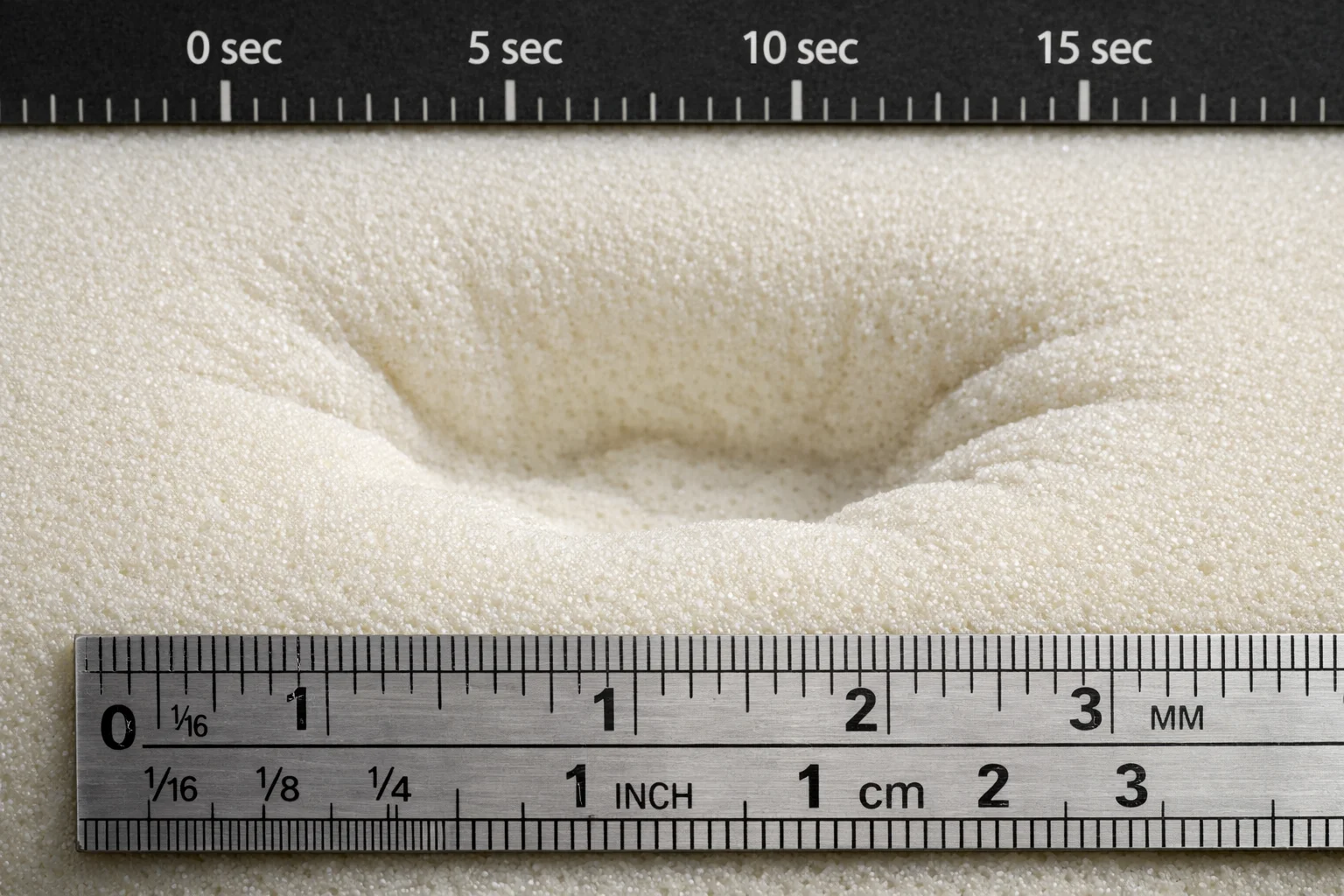
When I am in a showroom, I commit to what I call the five minute sit. I choose one exact spot on the sofa and sit there without shifting around. I sit the way I would at home, all the way back, feet on the floor, weight relaxed instead of perched.
The key is time. During those five minutes, I pay attention to whether anything keeps changing under me. Good foam settles almost immediately and then stops. Bad foam keeps negotiating with gravity long after you think it should be done.
What I am watching for is continuous sinking. If I feel myself drifting lower bit by bit as the minutes pass, I do not care how firm it felt at the start. That slow movement is the warning sign, and it does not get better with ownership.
I use my body as a gauge instead of my hands. I notice my eye level relative to the room when I first sit down, and then again a few minutes later. If the room looks slightly higher than it did before, I know my hips have dropped.
I also check in with my lower back. If I start feeling like I need to brace or subtly adjust to stay upright, that means the seat height and support are changing. A good seat lets you forget about it because nothing is shifting.
At the end of the sit, I stand up and immediately sit back down in the same place. If I sink faster or deeper the second time, that tells me the foam did not recover. I treat that as a preview of what nightly use will look like.
If a salesperson seems uncomfortable with you sitting that long, that is useful information. A sofa that can only be tested politely is not designed for real life. I would rather feel awkward in the store than sore at home.
If you do nothing else when buying a sofa, do this. Sit longer than feels necessary and trust the passage of time more than your first impression. A seat that stops changing is the one that will still feel good when the novelty wears off.
Technical Summary: The Fix
If you already own what I would call a hard sinker, I want to save you some wasted effort. Adding a topper will not solve this problem. I tried it, and all it does is sink right along with you because the weak core underneath is still doing the failing.What actually fixes the issue is replacing the seat core with high resiliency foam at around 2.8 pound density. That density level is high enough to provide real lift and rebound instead of slow collapse, and it changes the behavior of the entire seat. When the core pushes back properly, the sinking stops being gradual and starts being controlled.
If you love the surface feel of memory foam, there is a way to keep that without sacrificing support. I have had good results gluing a one inch layer of memory foam on top of an HR foam core. This keeps the initial softness and pressure relief on the surface, but all the real work is done by the resilient foam underneath.
I am sharing this so you understand what you are actually looking for when you shop. In a showroom, you are not shopping for firmness, and you are not shopping for softness. You are shopping for a support core that does not change its mind after twenty minutes.
When you talk to a salesperson, this gives you a simple way to cut through vague language. You can ask what the main seat core is made of, not the comfort layer, not the quilting, but the part doing the lifting. If they cannot clearly explain that, I treat it as a warning sign.
You do not need to become a foam expert to avoid getting burned. You just need to remember that toppers and surface layers cannot fix a weak foundation. If the core holds you steady over time, everything on top of it becomes a preference instead of a problem.
I wish I had known this before buying my first disappointing sofa. It would have saved me money, frustration, and a lot of sore evenings. My goal here is to help you feel that support problem in the store instead of discovering it the hard way at home.
Explore Technical Reference
Cushion Collapse: Why the Center Fails First
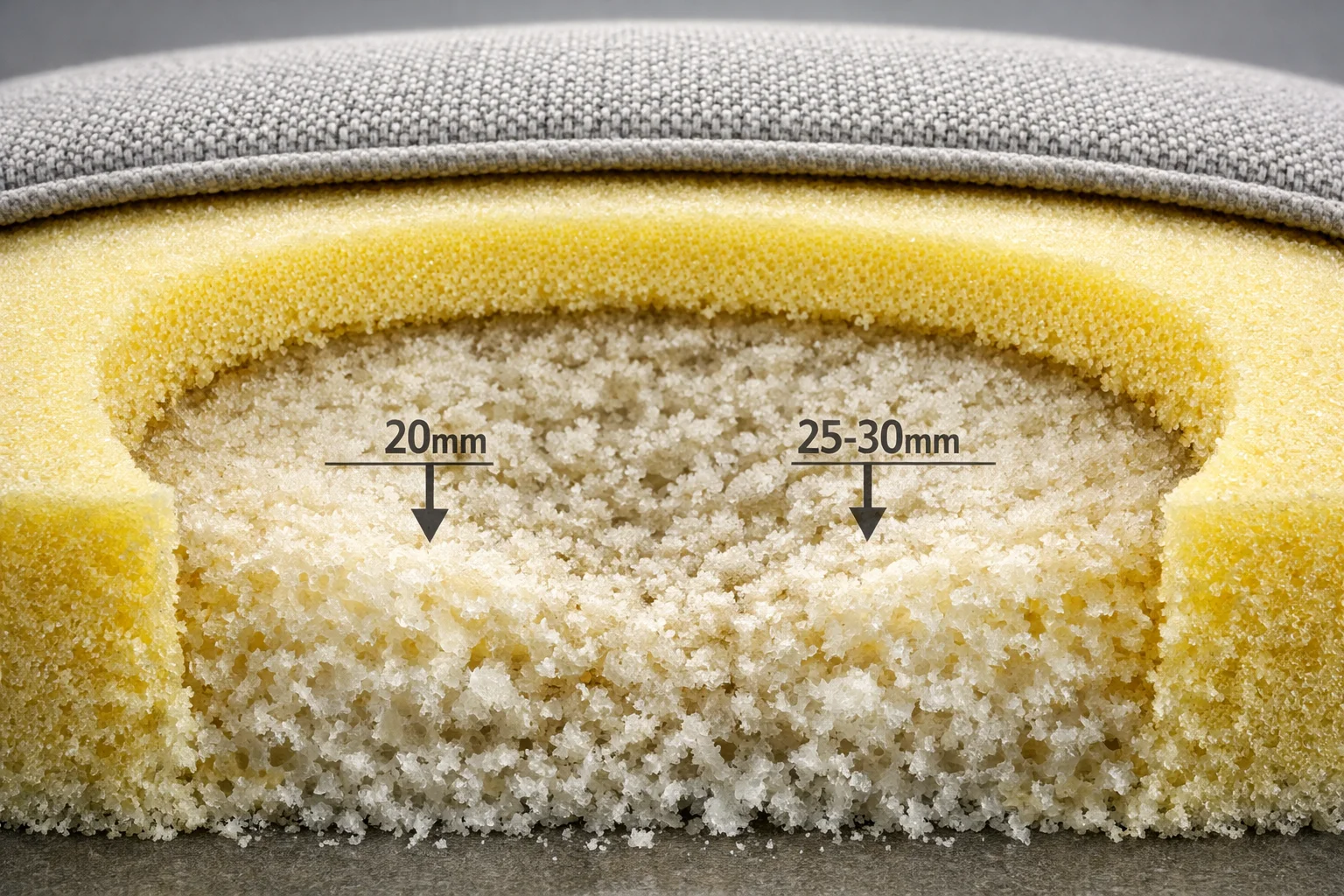
Why the front of your cushion looks fine but the center is a crater. The mechanics of point-load failure.
Analyze Details →
The Smile Effect: Why You Roll to the Middle
Why long sofas bow in the center. The physics of span limits and the importance of the fifth leg.
Analyze Details →