Bottoming Out: Why You Feel the Frame
Introduction
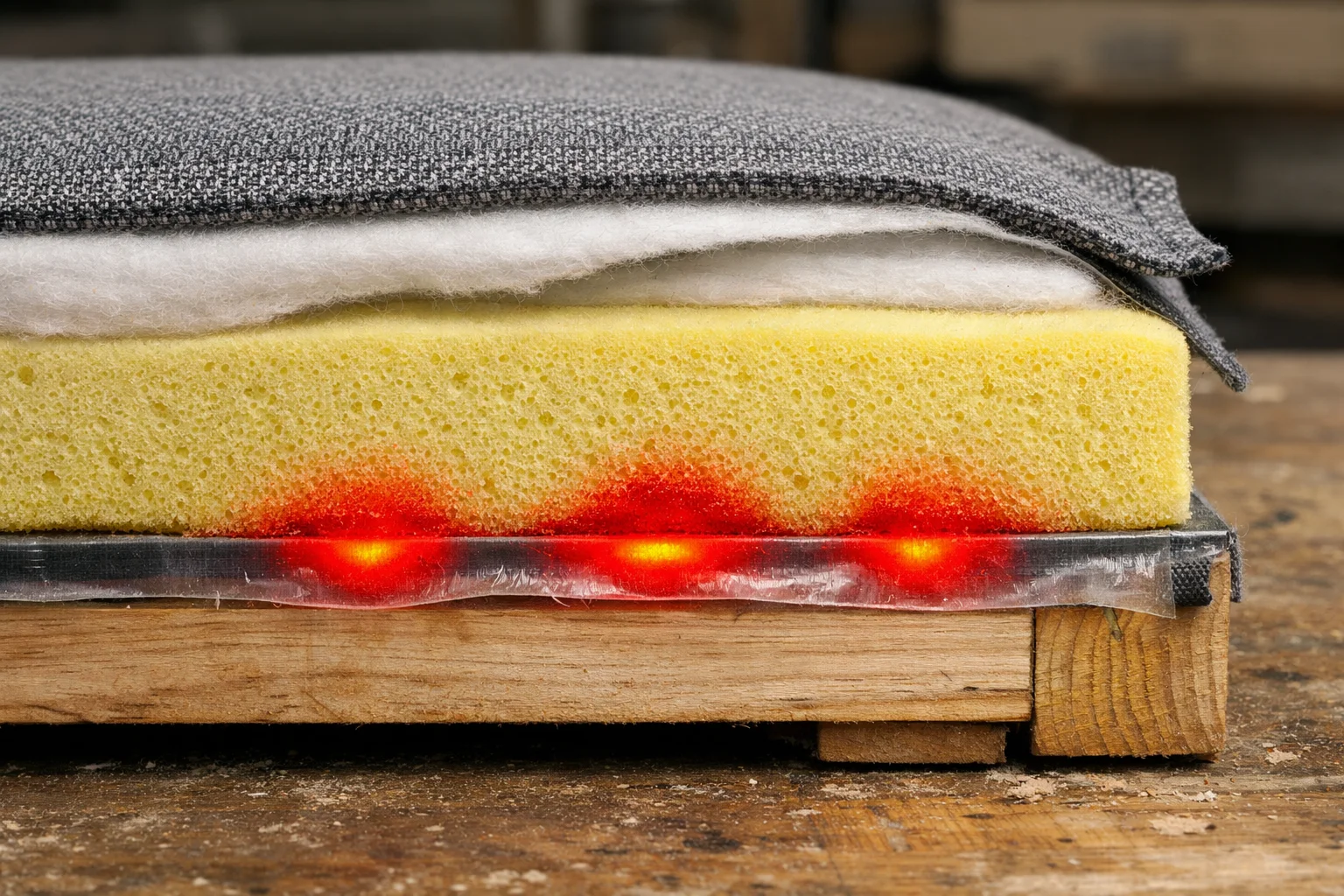
Bottoming out is the sudden, jarring feeling of hitting the wooden frame or metal springs when you sit down. It feels like the cushion has vanished. It is the furniture equivalent of a car with no shock absorbers hitting a pothole.
I learned the hard way that this is not something that only happens to old sofas. It can happen within months if the cushion and support underneath are cheaply built or mismatched. When it happens, the sofa stops feeling like a place to relax and starts feeling like something you brace yourself for.
What matters to you as a buyer is that bottoming out is often predictable if you know what to look for. You do not need technical specs or a sales pitch. You need to pay attention to how the seat responds when your full weight settles, not just how it feels for the first second.
When you test a sofa in a showroom, I want you to sit down normally and then stay there for a moment. If you feel a hard stop, a sudden firmness, or pressure points under your thighs or hips, that is the early warning sign. A good seat should slow you down gently and hold you up evenly, not let you crash through the cushion and meet the frame.
The ‘Hollow’ Sensation
The "Hollow" Sensation
You know you have this problem when you sit down expecting the cushion to catch you, but instead you keep dropping lower than your body expects. The seat does not slow you down, it just gives way.A moment later, your tailbone or the backs of your thighs meet something hard underneath. It might be wood or metal, but you feel it immediately and it is not subtle.
What makes this confusing is that when you stand up, the cushion still looks thick and puffy. It creates the illusion of comfort even though it offered almost no resistance while you were sitting.
When I feel that hollow sensation, I stop thinking about the cushion cover or the fabric and start thinking about what is missing underneath. This problem almost always means there is not enough real material doing the work, either in the foam, the support below it, or both.
In a showroom, the easiest way to catch this is to ignore the first impression and focus on the second. Sit down normally, then gently rock your weight forward and back. If the cushion collapses and rebounds like empty packaging foam, that is the hollow feel revealing itself.
I also pay attention to whether the seat firms up gradually or suddenly. A good sofa feels like it is meeting you halfway and holding you there. A hollow one feels like nothing, nothing, and then a hard stop.
You can test this without looking strange by placing one hand beside your thigh and pressing straight down into the cushion. If your hand sinks easily and then hits something unyielding, that is the same experience your body will have every day at home.
When a salesperson says the cushion will break in or soften over time, I get cautious. A hollow seat does not usually improve, it usually gets worse. Once the foam and support give up that easily, they rarely recover enough to protect you later.
If you notice this sensation, my advice is simple. Stand up, thank them, and move on. No amount of fabric quality or visual style makes up for a seat that already feels empty on day one.
The Physics of Failure (Why Softness is Dangerous)
When I say a good cushion works like a progressive brake, I mean it should resist you more the deeper you sink. Your body slows down gradually, then stops in a supported position. That gradual resistance is what keeps your joints from feeling shock.
A bad cushion feels soft at first because it offers almost no resistance at the top. You sink fast, your body accelerates, and then all that force has to stop somewhere. That somewhere is usually the frame or the springs, and your body feels the impact.
This is why extreme softness is not a luxury. It is often a warning sign. If a cushion lets you fall too easily, it has already used up most of its ability to protect you before you are even seated.
In a showroom, I test this by paying attention to speed. I sit down at a normal pace and notice whether the cushion slows me immediately or lets me drop quickly. If I feel a fast descent followed by a sudden catch, I know the cushion is acting like air instead of support.
I also stay seated for a full minute. Bad cushions often feel fine for the first few seconds, then continue to sink as the foam warms and compresses. If I feel myself slowly settling lower without any pushback, that tells me the material is not doing real work.
Another thing I do is shift my weight side to side. A good cushion pushes back evenly and predictably. A bad one feels unstable, like I am moving on a soft mound that offers no structure underneath.
Salespeople often describe these seats as plush or cloud-like. I have learned that those words usually mean the cushion is optimized for the first impression, not long-term use. Comfort that disappears after ten seconds is not comfort.
If you prefer a softer seat, that is fine. What you want is controlled softness, not collapse. The cushion should feel welcoming at first touch but noticeably resist you as you settle in.
If you ever feel surprised by how low you end up sitting, trust that reaction. Your body is very good at detecting when support is missing. When softness feels dramatic instead of reassuring, I take it as a clear signal to walk away.
1. Low Density Foam (The “Ghost” Cushion)
This is the most common reason a sofa bottoms out early, and it is also the hardest one to spot if you only rely on how it feels for the first few seconds. I call it the ghost cushion because it looks substantial but disappears the moment you actually sit on it.
Cheap foam is mostly air with very thin plastic walls holding that air in place. When your weight hits it, those walls fold almost instantly and there is nothing left to slow you down. The cushion might be six inches thick on paper, but your body experiences almost none of that thickness.
In a showroom, this foam feels impressively soft at first touch. You sit down and think, this is comfortable, this is plush. What is really happening is that the foam offers no resistance at the top, so your body drops quickly before you have time to notice what is missing.
I test for this by paying attention to whether the cushion fights back at all in the first second. A good cushion greets you gently and then firms up as you settle. A ghost cushion feels like falling onto a pillow that never pushes back.
One simple thing I always do is sit all the way back and then relax completely. If I feel my hips sink until my spine starts to curve and my knees rise above my hips, that tells me the foam has collapsed under my core weight. That position might feel cozy for a moment, but it means the cushion is not supporting you.
I also press my hand straight down into the seat near the center. If my palm goes down easily and I can feel something hard underneath with very little effort, I know the foam is acting like air. Dense foam resists your hand and never gives you that sudden hard contact.
What makes low density foam especially misleading is that it often springs back when you stand up. The cushion looks fine again, which makes you doubt your own experience. I have learned to trust how it felt under my body, not how it looks afterward.
If a salesperson tells you this foam will soften or break in, that is usually the opposite of what will happen. Foam that collapses easily on day one has already shown you its limits. With use, it only loses what little resistance it had.
If you want a softer seat, you should still feel some pushback as you settle. Softness should feel controlled, not like the floor suddenly dropped away. When the cushion feels dramatic instead of supportive, I treat that as a clear warning.
When I encounter a ghost cushion, I do not negotiate, and I do not plan to add throw pillows to fix it. I simply move on to the next sofa. A seat that vanishes under you in a showroom will not magically start supporting you at home.
2. The “False Loft” Trap (Down & Fiber)
This is the trap that fooled me the longest because it feels luxurious at first touch. Cushions filled entirely with down feathers or polyester fiber look tall, fluffy, and inviting, but they have almost no ability to hold you up.
These materials are designed to move out of the way. When you sit, the air escapes, the fill shifts, and your body keeps sinking until something solid underneath stops you.
In a showroom, this often feels like comfort for the first second and disappointment right after. You sit down, enjoy the softness, then realize you are far lower than you expected to be.
I call this false loft because the height you see is not the height you get. The cushion looks thick, but none of that thickness is doing any real work once your weight is on it.
The easiest way to spot this is to sit down and then slightly lift yourself and sit again without fully standing up. If the cushion keeps feeling flatter each time and never pushes back, you are sitting on fill that only displaces.
Another test I use is to slide my hand under my thigh while seated. If I can feel the seat deck or springs through the cushion with very little pressure, that fill is not supporting you.
Salespeople often describe these cushions as sink in or cloud-like. What they usually mean is that the cushion has no internal structure and relies entirely on loft for its appeal.
There is nothing wrong with down or fiber on top. The problem is when there is nothing firm underneath to stop your descent.
A quality down seat always has a foam core hidden in the center. You do not need to see it, but you should feel it catching you before you bottom out.
When I test for this, I pay attention to the moment after I settle. If I feel a gentle stop and then steady support, that tells me there is foam doing the real work under the soft layer.
If instead I feel myself searching for the bottom and never quite finding a stable place to rest, I know the cushion is relying on fill alone. That kind of seat will need constant fluffing and still leave you sore.
You can also press straight down into the cushion with both hands. If your hands slide inward and down with no resistance, that is pure displacement. If you feel a firmer center pushing back, that is the foam core you want.
Many people accept these seats because they think regular fluffing is normal. I used to think that too. Fluffing fixes appearance, not support.
If a cushion needs to be punched back into shape to look decent, it is already telling you it does not have the structure to hold you up. Over time, the fill migrates and the problem gets worse.
If you love the look of a down seat, my advice is to be picky. Sit longer than you normally would, and notice whether your body feels held or just cradled until it drops.
When softness comes without a clear stopping point, I walk away. A sofa should welcome you, then catch you. If it only collapses and hopes the frame saves you, that is not comfort, it is a future problem.
Diagram comparing Progressive Resistance (Good) vs Linear Collapse (Bad)
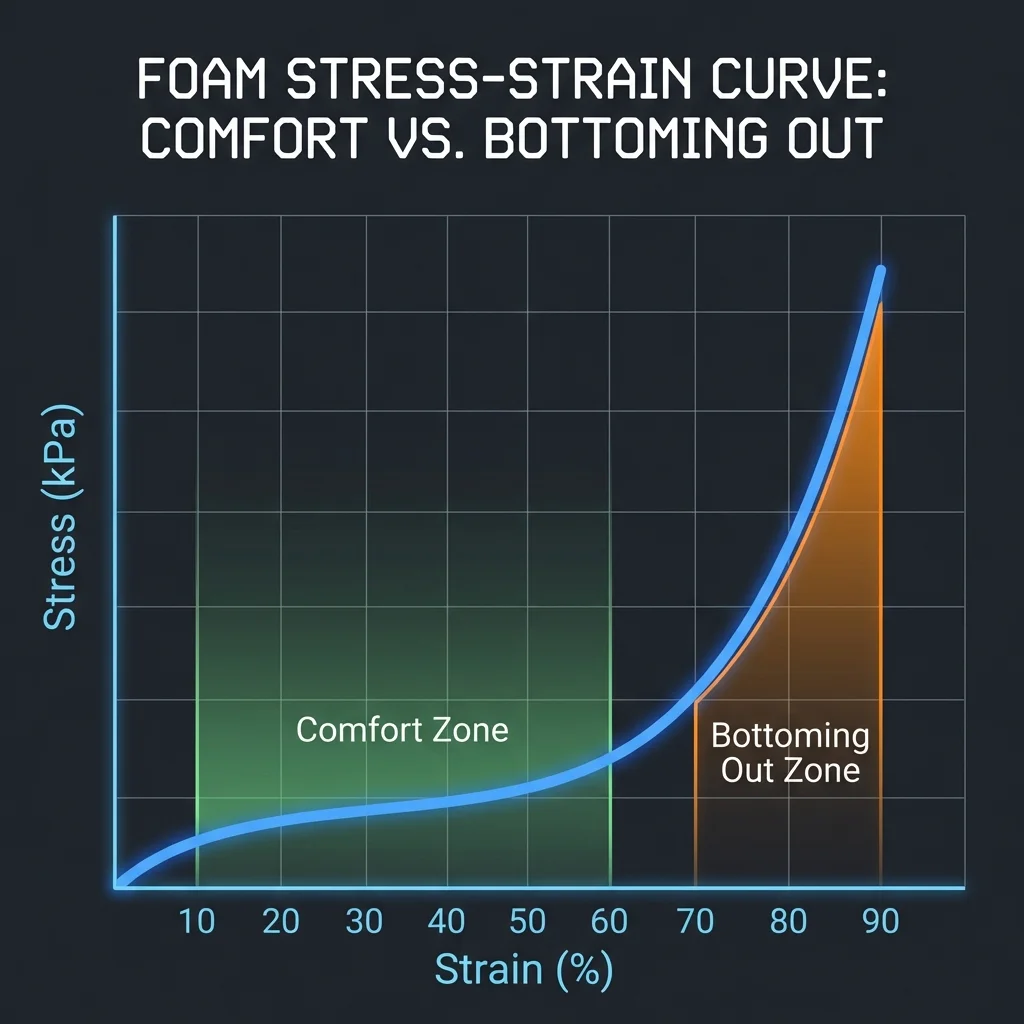
When I look at this diagram, I think about how a seat should stop me, not how soft it feels at first touch. The shape on the right is what my body expects. As I sink deeper, the cushion pushes back more, slowing me down and holding me in place.
The shape on the left is what causes bottoming out. There is almost no resistance at the top, so your body drops quickly. All the stopping force happens at the very end, which is why it feels like hitting something hard.
You can translate this diagram directly into a showroom test. When you sit down, notice whether the cushion starts resisting immediately or only at the last second. If the seat feels like it does nothing until it suddenly catches you, that is the left side of this diagram in real life.
I pay close attention to whether I feel supported halfway through sitting. A good cushion already feels engaged before I am fully seated. A bad one feels absent until my weight has nowhere else to go.
This is also why thickness alone means nothing. A thick cushion can still behave like the bad curve if the material inside collapses all at once. A thinner cushion can feel far better if it firms up progressively.
One easy thing I do is sit down a little harder than usual, not slamming, just with confidence. A good seat absorbs that extra force smoothly. A bad one makes the impact obvious and uncomfortable.
If you ever feel the need to lower yourself carefully, as if you are worried about hitting bottom, that is your body compensating for the bad curve. You should not have to brace yourself to sit on a sofa.
When I explain this to friends, I tell them to imagine a car brake. You want steady resistance as you press the pedal, not nothing followed by a violent stop. Cushions work the same way, even if no one in the store talks about it.
The reason this matters is longevity. A cushion that behaves like the left side of the diagram is already failing. It has no reserve support left to give as it wears.
When you find a sofa that clearly behaves like the right side, you feel it immediately. You settle in, you stop naturally, and your body relaxes instead of adjusting.
That feeling is what I trust most. If the cushion slows you down and holds you without drama, you are looking at a seat that was built to support you, not just impress you for ten seconds.
The Solution: Modulus (The “Spring” Effect)
Once I understood why seats fail, the fix became surprisingly simple. The cushion needs a built in spring effect, not just softness. In foam terms, that quality is called modulus, but what matters to you is how the seat changes as you sink into it.
When a cushion has good modulus, it feels welcoming at first touch and then noticeably firmer as your weight settles. The first inch feels gentle, then the resistance builds. That growing pushback is what keeps you suspended instead of dropped.
This is why I look for sofas that use what is often called high resiliency foam. I do not care about the brand name or the marketing label. I care about whether the seat behaves like a spring instead of a sponge.
In a showroom, you can feel this immediately if you know what to pay attention to. Sit down at a normal pace and notice whether the cushion starts pushing back before you are fully seated. If you feel support engaging early and increasing smoothly, that is the spring effect working.
With this kind of foam, there is a clear middle point where your body stops descending and feels held. You do not feel surprised by how low you end up. You feel guided into position.
I always do a second test by pressing my palm slowly into the cushion. At first it should give easily, then resist more and more the deeper my hand goes. If the resistance ramps up, that tells me the foam is doing real work.
Cheap foam behaves very differently. It feels soft at the top and stays soft until it suddenly cannot compress anymore. That is the linear collapse that leads straight to bottoming out.
When a salesperson says a seat is very soft, I ask myself a different question. Does it get firmer as I sink, or does it stay mushy until it hits something hard. Only the first option is safe long term.
One thing that helped me was staying seated and then gently bouncing my weight once or twice. Not jumping, just shifting with intention. A good cushion responds like a spring, pushing back in a controlled way. A bad one feels dead, like all the energy disappears downward.
If you like a plush feel, this still applies to you. The best soft seats I have owned were soft on top and supportive underneath. They never let me fall through the cushion, even after years of use.
If you prefer a firmer seat, good modulus still matters. A firm cushion should resist you early and continue resisting evenly. It should not feel like a board wrapped in fabric.
When I find a sofa that has this spring effect, my body relaxes almost instantly. I stop adjusting my posture and stop feeling pressure under my thighs or hips. That is how I know the foam is carrying my weight instead of passing it through to the frame.
You do not need to ask for compression modulus numbers. Most salespeople will not know them anyway. Your body is a better test instrument.
If a cushion feels calm and controlled as you settle, that is high resiliency behavior in practice. If it feels dramatic, collapses quickly, or makes you brace yourself, it is missing this quality.
When I shop now, I ignore thickness, loft, and buzzwords until I feel that spring effect. If it is there, the seat will age far better. If it is not, no amount of fluff or fabric will save it.
This is the point where I either commit or walk away. A sofa with good modulus protects you every single time you sit down. That is not a luxury feature, it is the difference between a seat that lasts and one that fails quietly until it hurts.
The “Deck Pad” Hack (The $20 Fix)
The "Deck Pad" Hack (The $20 Fix)
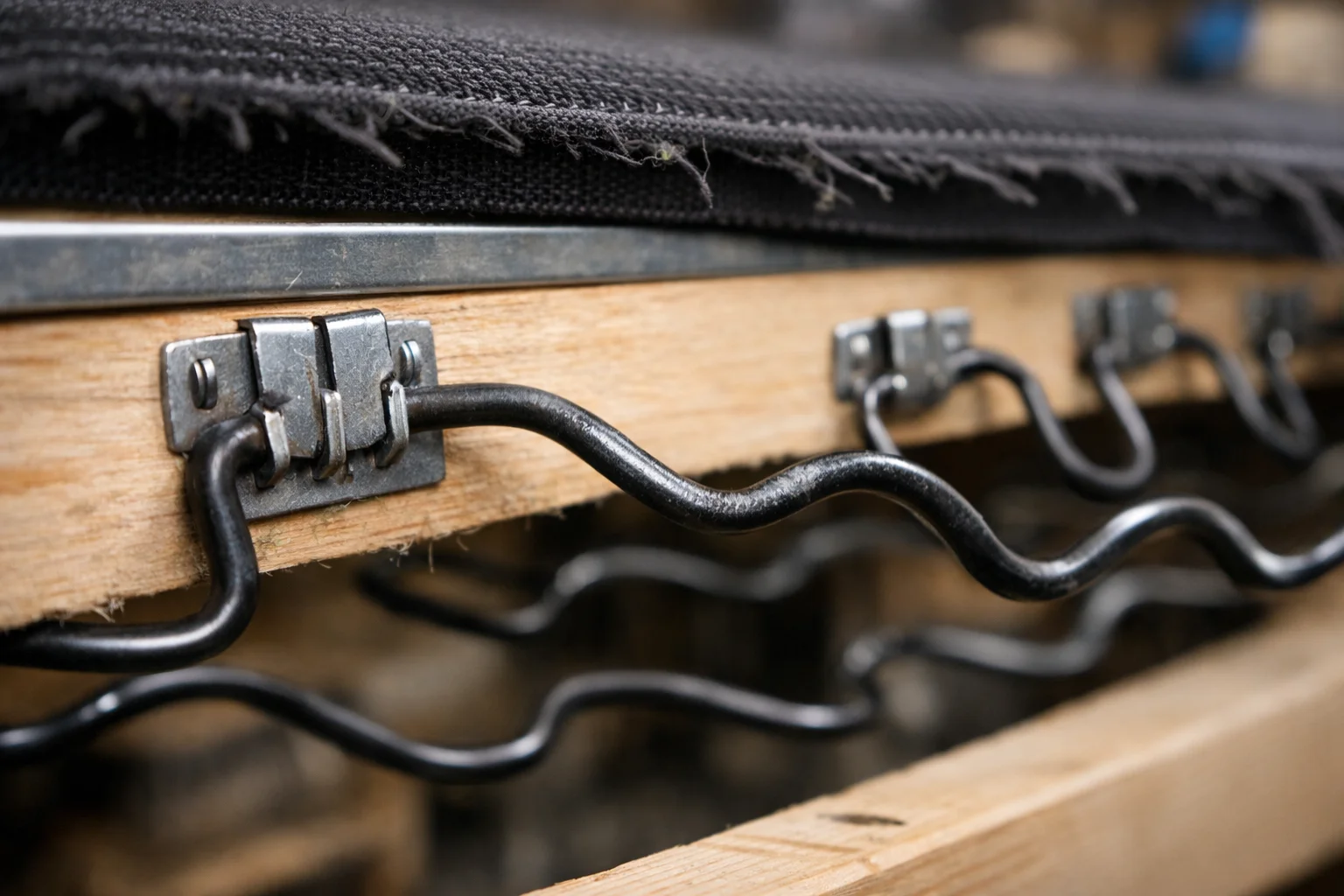
If you are already stuck with a sofa that bottoms out and replacing the cushions is not an option yet, I have used a simple stopgap that actually helps. I buy a cheap yoga mat or a heavy felt moving blanket, nothing fancy, just something dense and slightly springy.At home, I unzip the seat cushion and lift it out, then cut the mat or felt to roughly match the seat size. I lay it flat directly on the support underneath, whether that is springs, webbing, or a deck, and then put the cushion back on top.
This does not fix the sinking foam, and it will not magically restore proper support. What it does do is change the experience from a sharp clunk where your body meets the frame into a softer thud that spreads the impact and protects your joints.
I want to be very clear about what this hack is and is not. This is damage control, not a cure. I use it to make a bad seat tolerable while I save for better cushions or a better sofa.
What it adds is a thin buffer layer that slows down the final impact. Instead of bone on wood or bone on metal, you get bone on something that has at least a little give.
You can tell immediately if it is helping. Sit down normally and notice whether that hard stop feels less shocking. If your body relaxes even slightly more than before, the pad is doing its job.
This works best on sofas where the foam is shot but the frame is still solid. If the frame itself is flexing or broken, this will not solve much.
I also would not do this in a showroom and tell myself it will be fine at home. If you are already planning hacks before you buy, that is your signal to walk away.
Where this really earns its keep is with a sofa you already own and cannot replace yet. For around twenty dollars and half an hour of effort, you can buy yourself some comfort and time.
Think of it like putting a rubber mat under a thin rug. The rug is still thin, but you stop feeling the floor so sharply.
If you end up needing this trick, take it as information. Your seat is relying on the frame to stop you, not the cushion. That is not how a good sofa should work.
When I finally replaced the cushions on one of my older sofas, I took the pad out. With proper foam in place, I no longer needed that extra layer because the seat itself was doing the slowing and holding.
Until then, this hack kept me from dreading sitting down. It did not make the sofa good, but it made it usable.
I share this so you know there is a short term option if you are stuck. But when you are buying new, the real goal is never needing this trick in the first place.
Technical Summary: The Specification Fix
At this point, if you want a seat that does not bottom out permanently, I have learned there is only one real fix. The foam core itself has to be right. No fabric, fill, or frame trick can compensate for foam that collapses under your weight.
When I talk about density, this is the one number I actually care about asking for. I will not buy seat foam below about two and a half pounds density. In plain terms, this means there is enough real material in the cushion to do the work instead of just trapping air. In a showroom, foam at this level usually feels heavier when you lift the cushion and more resistant when you press into it.
Compression is the next part, and this is where people get misled. I look for foam that takes real effort to compress, roughly in the mid thirties range if they give you a number. What this means for you is that the cushion should clearly push back as you sink, not just give way and hope the frame stops you.
The type matters as much as the numbers. I stick to what is called high resiliency foam because it behaves like a spring instead of a sponge. When you sit, it firms up progressively and then rebounds without feeling dead. In real life, this is the foam that still feels supportive years later instead of turning into a dent you fall into.
One warning I want to be very clear about is extra firm cheap foam. I have been burned by this before. Hard does not mean supportive. Low quality foam can be made very stiff, but it still lacks resilience, so it feels like sitting on a stone wrapped in fabric and then breaks down anyway.
What you want is density, not just hardness. Dense foam feels calm and controlled. Cheap firm foam feels harsh and unforgiving. In a showroom, the difference shows up when you stay seated for a minute. Good foam settles and holds you. Bad firm foam just sits there and makes your body tense.
If a salesperson cannot or will not tell you anything about the foam inside the seat, I take that as a red flag. You do not need every spec, but they should at least know whether the seat uses high resiliency foam and whether it is built for long term support.
When I replace cushions or order custom ones, this is the baseline I refuse to go below. When I buy a new sofa, I test until I feel that behavior in my body. If the seat slows me down, firms up as I sink, and holds me without a hard stop, it is meeting this standard even if the salesperson never says the words.
This technical summary is not about memorizing numbers. It is about knowing what those numbers feel like when you sit down. Once you have felt dense, resilient foam working properly, it becomes very hard to accept anything else.
If you keep this in mind while shopping, you dramatically reduce the risk of bottoming out later. The seat either does the work, or it does not. Everything else is decoration.
Explore Technical Reference
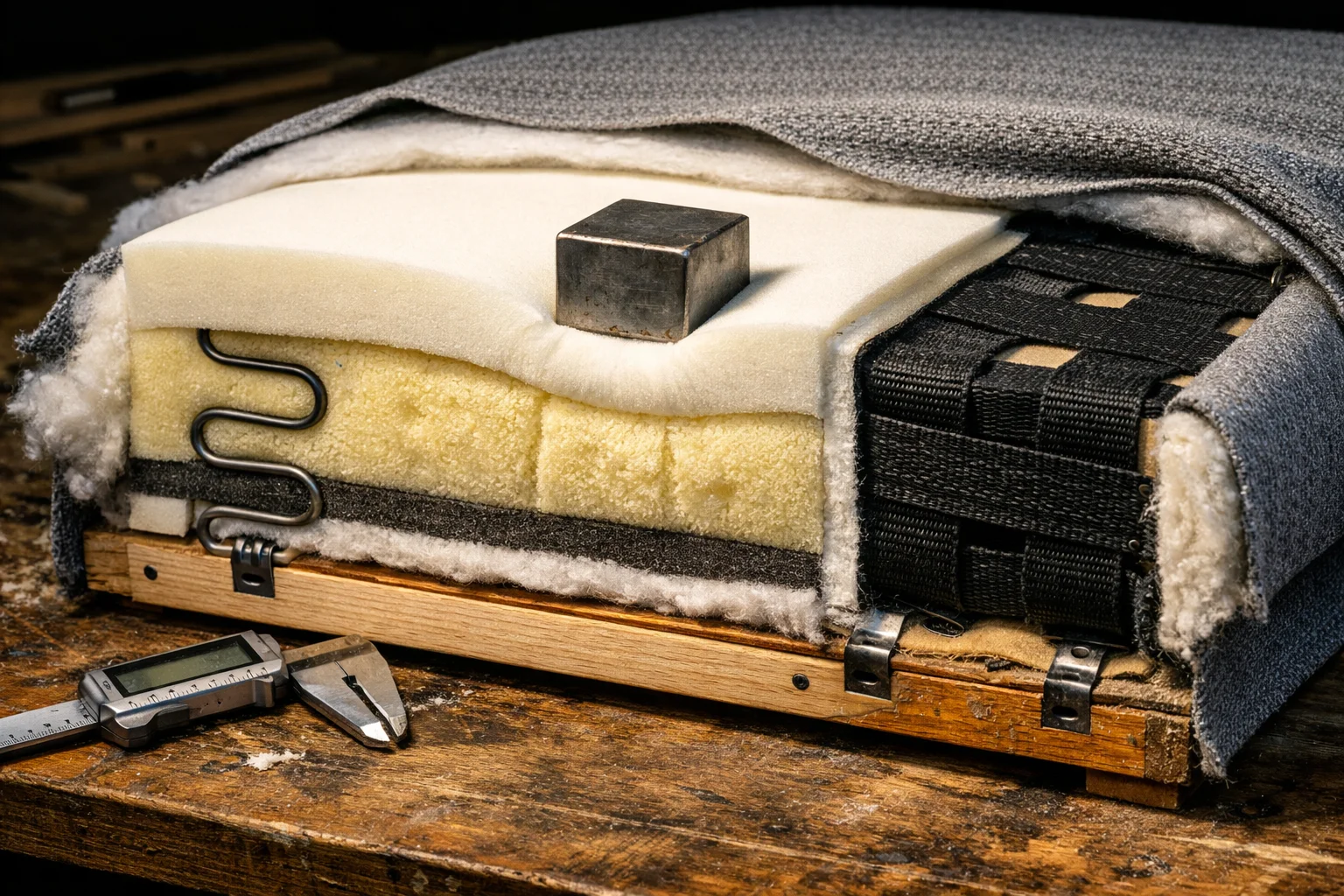
The Architecture of Failure: Why Sofas Die
Why your sofa is dying. A guide to distinguishing normal wear from structural catastrophe, and the physics behind why comfort fades.
Analyze Details →
Cushion Collapse: Why the Center Fails First
Why the front of your cushion looks fine but the center is a crater. The mechanics of point-load failure.
Analyze Details →