Metal vs. Wood Frames: The Stiffness Penalty
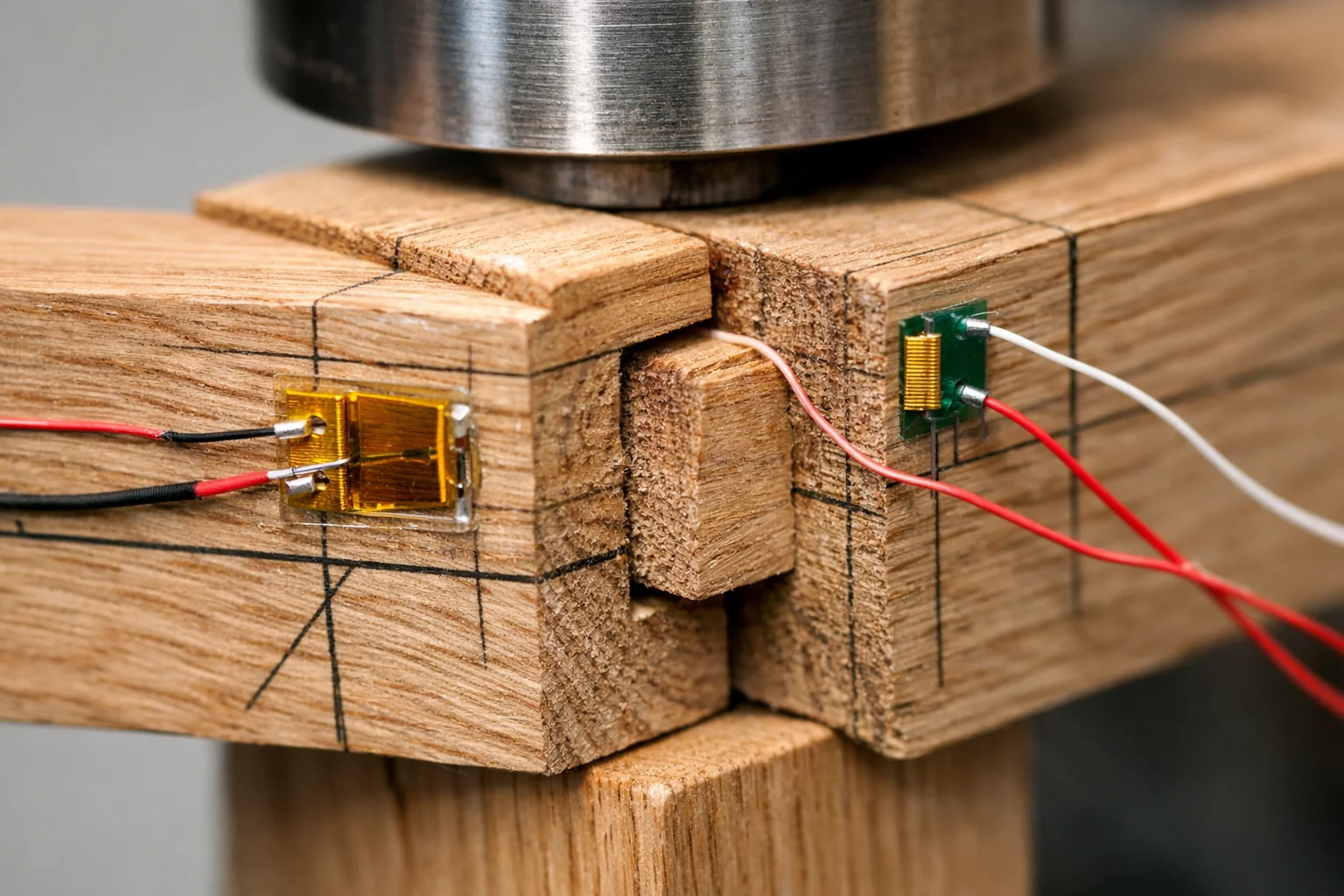
Introduction
I learned the hard way that durability alone does not make a good sofa. That steel frame never loosened or broke, but every time I sat down it felt like the impact traveled straight through my back. I stopped using it long before it showed any wear, which made all that supposed longevity pointless.
What I eventually understood is that a sofa is not just supposed to survive. It is supposed to move with you a little. Wood frames flex under load, and that tiny bit of give is what keeps a sofa from feeling harsh and tiring after twenty minutes.
When you are in a showroom, you can test this without tools or technical knowledge. Sit down firmly rather than gently, then shift your weight side to side. If the sofa feels like it absorbs the motion instead of rebounding it straight back into you, that is a good sign.
I also pay attention to sound and vibration. A steel frame often makes itself known with a sharp, hollow feel or a faint ringing when you drop into it. A decent wood frame tends to feel quieter and more muted, even if it is just as solid.
This does not mean all wood frames are good and all steel frames are bad. It means you should be suspicious of sales language that treats rigidity as a universal virtue. In seating, a little controlled flex is comfort, and comfort is what determines whether you still like the sofa five years from now.
The "Impulse Shock" Effect
When you drop your weight onto a sofa, the frame deals with that energy before the cushions ever get a chance. A wood frame has natural give, so it absorbs some of that force when you sit down instead of sending it straight back into you.A steel frame has almost no give at all. The energy of your movement reflects upward, which is why the sofa can feel hard even when the foam feels soft to the hand.
The sensation is subtle at first but it adds up. That lack of organic dampening is what makes some sofas feel tiring, even though nothing looks wrong with them.
This is where you need to stop just pressing cushions and actually use your body. I sit down a bit faster than polite and pay attention to the first second after contact. If I feel a sharp jolt instead of a muted landing, I know the frame is part of the problem.
I also do a small bounce without leaving the seat. If the sofa pushes me back up quickly, that rebound is impulse shock coming straight through the structure. A better sofa settles instead of springing.
You can test this even if the salesperson is watching. Real life is not a slow careful sit, and a sofa that only feels good when you lower yourself gently is not doing its job.
If you like a sofa but it has that hard initial impact, do not assume thicker cushions will fix it. Foam can soften pressure but it cannot change how energy moves through the frame. If the frame reflects shock, no cushion on top will fully undo that feeling.
This is one of those things you will never see on a spec sheet. You can only feel it, and once you learn to notice it, it becomes very hard to ignore.
Two Types of Metal Frames
When people say a sofa has a steel frame, they usually mean one of two very different things. I have sat on both, and they behave nothing alike once you stop looking at the spec tag and actually sit down.
The first type is a fully welded steel cage. Every joint is welded solid, the rails are box steel, and nothing is meant to move. These frames are extremely strong, and they almost never loosen or break.
They are also the ones most likely to feel harsh. When I sit on these, the frame does not help at all with impact. All the energy goes straight up into the cushions and then into me.
You can recognize this type in a showroom by how dead and rigid it feels. When you shift your weight side to side, the sofa does not seem to respond. It just resists, like sitting on a metal bench with padding on top.
If you press down hard on the arm or front rail, nothing gives. That strength looks impressive, but for long term comfort it can be a warning sign.
The second type uses metal more selectively. Instead of a full welded cage, it often combines steel rails or brackets with areas designed to flex slightly. Sometimes the steel is thinner. Sometimes the joints are bolted instead of welded solid.
These frames are still strong, but they behave differently. When I sit down, the sofa settles with me instead of fighting back. The movement is subtle, but my body notices it immediately.
You can test for this by sitting firmly, then rocking your weight forward and back. If the sofa moves just a little and then calms down, that controlled flex is doing useful work. If it snaps back instantly, it probably will not feel forgiving over time.
Sound is another clue. Fully rigid steel frames often produce a faint ring or hollow echo when you sit or shift. The more forgiving metal designs tend to sound dull and quiet, closer to what you hear from a good wood frame.
I also pay attention to how the sofa behaves when only one side is loaded. I sit on one cushion near the arm and see if the frame twists slightly or stays brutally flat. A tiny amount of twist is not weakness. It is comfort insurance.
Salespeople often lump all metal frames together as premium. I do not buy that anymore. Steel can be used in a way that helps your body, or in a way that ignores it completely.
If you are choosing between two sofas and one feels calmer and less reactive even though both claim steel frames, trust your body. The better metal frame is the one you stop thinking about after you sit down.

1. Welded Tubular Steel (Commercial Grade)
This is the kind of frame you find in airports, hospitals, and hotel lobbies, and that alone tells you what it is designed for. It is meant to survive abuse, not to make you linger.
The construction is usually a continuous cage of steel tubing, welded at every joint by machines. There are no screws to loosen and no joints meant to flex, which is why these frames can last practically forever without structural failure.
I have owned one of these, and it never degraded in any obvious way. The problem was that every sit felt the same as the first day, and not in a good way.
When you sit on a welded tubular steel frame, all the movement stops at the frame. There is no give, no absorption, just resistance. The cushions compress, then immediately push back because the structure underneath refuses to help.
In a showroom, you can spot this quickly if you know what to look for. Sit down with normal force, not carefully, and notice the first moment after you land. If it feels like sitting onto a padded floor rather than into a seat, you are probably on one of these frames.
I also press down hard on the front edge where the seat meets the floor. With this type of construction, nothing moves at all. It feels impressively strong, but also strangely unforgiving.
Another tell is how the sofa reacts when you shift around. On a welded steel cage, shifting your weight side to side feels like pushing against a wall. The sofa does not follow you, it just resists until you stop moving.
This is why these frames are used in public spaces. They hold shape, they do not rack, and they do not loosen no matter how many people drop into them all day.
What they are bad at is disappearing under you. After a while, I became aware of the sofa every time I sat down, which is the opposite of what I want at home.
Salespeople often describe this as commercial grade and say it like it is automatically a plus. I now translate that in my head as built to endure strangers, not built to comfort one person for hours.
If you are furnishing a waiting area or a rental where longevity matters more than relaxation, this kind of frame makes sense. If you want a sofa you will nap on, watch a movie on, or sink into at the end of the day, I would be very cautious.
My rule now is simple. If the frame feels completely indifferent to my body weight, I move on. Infinite durability does not help if you stop wanting to sit there long before anything breaks.
2. Bolted/Stamped Steel (Budget Grade)
This is the kind of frame I see most often in flat pack and budget sofas, and I have learned to be very cautious around it. The structure is made from thin sheets of steel that are stamped into shape, then bolted together during assembly.
At first glance it can feel solid enough. When it is new and tightly assembled, the sofa may even seem quiet and firm in the showroom.
The problem shows up over time, and I have never found a reliable way around it. Steel parts rubbing against other steel parts do not forgive movement, and movement is unavoidable in a seat.
Every time you sit down, stand up, or shift your weight, the bolts take a tiny amount of stress. Over months and years, those bolts loosen just a little, even if you tighten them once or twice.
Once that happens, the frame develops a very specific squeak. It is sharp, high pitched, and localized, and it cuts straight through cushions and fabric.
What makes it worse is that this noise comes from metal rubbing on metal. Padding, felt, or lubrication rarely fixes it for long, because the friction is structural.
In a showroom, I test for this type of construction by listening more than feeling. I sit down, then twist my torso slightly, then shift my weight from one hip to the other.
If I hear even a faint chirp or click from inside the frame, I assume it will become a full squeak later. Quiet steel does not get quieter with age.
I also gently lift one corner of the sofa by the arm and set it back down. With bolted steel frames, this sometimes produces a ticking sound as the joints settle.
Another clue is how the sofa feels when only part of it is loaded. I sit on the very edge of one cushion and lean toward the arm. If the frame feels tense and creaky rather than calm, I take that as a warning.
Salespeople often say this type of frame is strong because it is steel. That misses the point. Strength is not the issue here, tolerance is.
Wood joints can move microscopically without complaint. Thin steel sheets bolted together cannot, and they announce that fact loudly once wear begins.
I have also noticed that these frames tend to amplify vibration. When someone else sits down on the sofa, I can feel and sometimes hear the movement travel through the whole structure.
That is not something you can fix with better cushions. It comes from the way the frame is assembled.
My personal verdict is simple. If I see a sofa that requires me to bolt the main structure together myself, I assume the frame will become noisy before anything else wears out.
If you are tempted because the price is low, try to imagine living with a squeak that happens every time you shift your weight. In my experience, that annoyance shows up long before you feel like you got your money’s worth.
I now walk past these without much debate. They combine the hardness of metal with the long term problems of loose joints, and I have yet to sit on one that aged quietly.
Diagram comparing the rigidity of welded steel frames vs the flexibility of wood frames
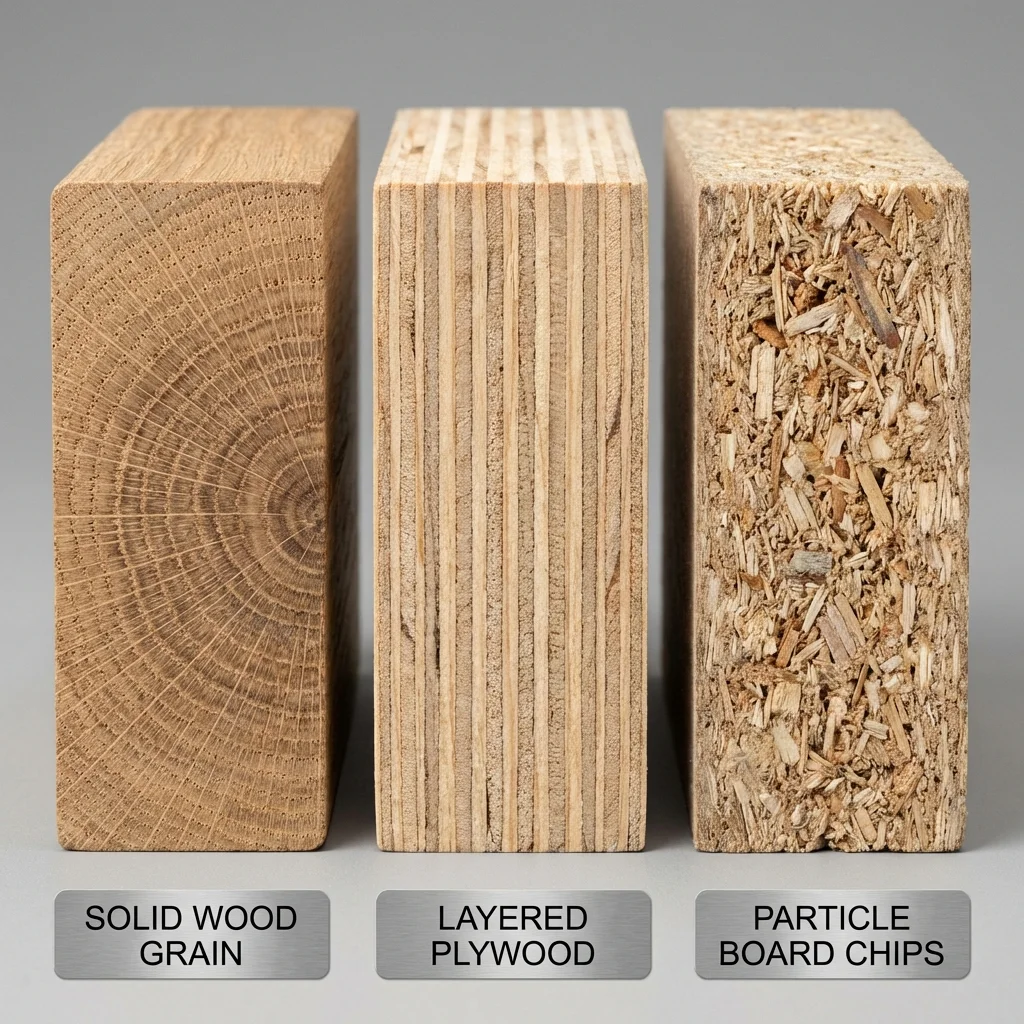
When I first saw a diagram like this, it finally explained what my body had been telling me for years. The steel side shows force bouncing straight back, while the wood side shows that force spreading out and fading. That spreading is what makes a sofa feel calm instead of aggressive.
I use this mental picture every time I sit down in a showroom. I am not thinking about materials in the abstract. I am asking myself whether my weight feels like it is being absorbed or rejected.
You can test this without seeing the frame at all. Sit down with normal speed and notice whether the impact feels sharp or muffled. If it feels sharp, imagine that left side of the diagram where nothing gives.
Then do something simple. Lean back, then lean forward, and pay attention to whether the motion feels like it gets soaked up or bounced back. A wood frame behaving well feels like the right side of the diagram, where movement fades instead of snapping.
I also test the front edge of the seat with my thighs. On a forgiving frame, the pressure spreads and feels even. On a rigid frame, I feel a hard line pushing back at me.
This diagram also explains why some sofas feel fine for five minutes but exhausting after an hour. Every small movement you make sends tiny shocks into your body. A frame that absorbs those shocks quietly keeps you relaxed without you realizing why.
When a salesperson talks about rigidity or zero flex as a selling point, I picture the left side again. That kind of stiffness is great for shelving and terrible for seating.
I am not looking for wobble or looseness. I am looking for controlled flex that disappears once I stop moving. The right side of the diagram is not weak, it is cooperative.
If you remember nothing else, remember this image when you sit. Ask yourself whether the sofa feels like it is working with your weight or standing its ground against you. The one that works with you is the one you will still enjoy years later.
The Durability Argument
This is where steel frames make their strongest case, and I understand why it is tempting. Steel ignores a lot of the things that slowly ruin wood, and if you have lived through a wobbly sofa, that promise can feel reassuring.
Humidity is the big one people forget. Wood moves with the seasons, even indoors, and over years that movement can loosen joints if the frame was not well made. Steel does not swell in summer or shrink in winter, so its joints stay exactly where they started.
If you live somewhere very humid, or in a space without consistent climate control, this matters. I have seen wood frames that were fine for a decade suddenly start to creak after a few sticky summers. Steel does not care about that at all.
Steel also does not rot and insects leave it alone. Termites can quietly destroy a wood frame from the inside, while a steel frame will look the same years later. That peace of mind is real, especially in older buildings or warm climates.
Then there is outright abuse. Steel can take drops, moves, and rough handling that would crack or split wood. If you move often, or expect the sofa to survive stairs, trucks, and disassembly, steel has an advantage.
What I had to learn is that all of this durability happens at the material level, not at the comfort level. Steel wins against nature, but it does not automatically win for your body.
In a showroom, I try to separate these two ideas on purpose. I ask myself whether I am buying protection against rare disasters, or daily comfort for ordinary use. Most of my time with a sofa is spent sitting still, not surviving a flood or a moving accident.
If a salesperson leans heavily on words like indestructible, bombproof, or lifetime frame, I slow the conversation down. I sit again and focus on how the sofa behaves in the first second after contact, not how it might look in thirty years.
There is also a practical check you can do. I press down on different parts of the frame through the cushions and fabric, especially near corners and along the front rail. With steel, everything will feel uniformly hard. With wood, well made areas feel firm but not glassy.
Neither response is automatically wrong. The question is whether that hardness feels reassuring or tiring to you. I know now that my body reacts negatively to constant hardness, even if my brain admires the strength.
I also think about failure modes. A wood frame often gives warning, a little creak, a little looseness, before it becomes a problem. Steel frames tend to be fine until they are suddenly annoying, usually through noise or harshness rather than breakage.
That means durability alone is not a free upgrade. It is a trade. You are trading biological compatibility for environmental resistance, and you need to decide which one matters more in your life.
My current rule is simple. If a steel frame sofa feels calm, quiet, and cooperative in the showroom, then its durability is a genuine bonus. If it feels hard or reactive, that durability is something I will never fully enjoy.
I no longer buy a sofa based on what it can survive. I buy it based on how it treats me on an average evening. If it passes that test, the durability argument becomes meaningful instead of theoretical.
Repairability (The Welder Problem)
This is the part almost no one talks about in the showroom, and it matters more than I expected. I used to assume that if a frame was stronger, it was automatically safer long term. What I learned is that how a frame fails is just as important as how rarely it fails.
With a wood frame, failure is usually boring in a good way. A joint loosens, a rail cracks, or a corner starts to complain. When that happens, almost any local handyman can fix it with glue, screws, or a new block, and you are often back in business for the cost of a dinner out.
Steel is different, and this is where the welder problem shows up. If a steel frame actually breaks, which is rare but not impossible, the repair is no longer casual or cheap.
Steel frames are welded, not glued or screwed. That means the only proper fix for a cracked joint is welding, and not the kind you can do in a living room.
You cannot weld inside an upholstered sofa. The heat would destroy the foam and set the fabric on fire. To even attempt a repair, the entire sofa has to be stripped down to bare metal.
By the time you factor in removing upholstery, finding a skilled welder, rewelding the joint, and then reupholstering the piece, the cost usually exceeds what the sofa is worth. In real life, that means a broken steel frame goes to the curb.
What bothers me is not that steel breaks, because it usually does not. What bothers me is that when it does, there is no graceful recovery. It goes from fine to finished.
In a showroom, you obviously cannot see future cracks. What you can do is think about whether you are comfortable owning something that has no practical repair path.
I now ask myself a simple question while sitting there. If something goes wrong five or eight years from now, do I want this to be fixable by a normal human with normal tools.
This is especially important if you plan to keep a sofa for a long time. The longer your ownership horizon, the more likely you are to encounter some kind of damage that was not part of the original plan.
I also pay attention to how the steel frame is built. Fully welded cages look reassuring, but every joint is a single point of no return. If that weld fails, there is nothing to tighten, reinforce, or cheat.
With wood, repairs can be ugly and still effective. Extra blocks can be added. Screws can go in at odd angles. Perfection is not required for function.
That tolerance is comforting to me. It means the sofa can age, get fixed, and keep going without needing a factory level intervention.
There is also a psychological side to this. I am more relaxed using a sofa when I know a future problem is solvable. I do not want to feel like I am sitting on something that is either perfect or landfill.
If you live in an apartment building, this matters even more. Getting a sofa out is often harder than getting it in, and the idea of discarding a large piece because of one failed joint is frustrating.
Salespeople rarely mention repairability because it does not help close a sale. Lifetime frame warranties sound great, but they often replace rather than repair, and replacement usually means starting over.
I now mentally discount any promise that depends on shipping a whole new sofa years later. What I value more is the ability to quietly fix what I already own.
So when you are choosing between frames, do not just ask which one is strongest. Ask which one fails in a way you can live with.
For me, that realization changed how I see steel frames. Their strength is real, but their brittleness at the repair stage is also real. Once you see that trade clearly, you can decide whether it fits how you actually live.
Technical Summary: The Selection Rule
After all of this sitting, listening, and paying attention to how my body reacts, I ended up with a simple rule that has held up surprisingly well. Most people do not need to overthink this if they are honest about how the sofa will be used day to day.
If you are buying a sofa for a normal home where people sit, lounge, nap, and occasionally flop down at the end of the day, I would choose a well made wood frame. Wood gives a little under load, absorbs shock quietly, and can usually be repaired later by an ordinary person with ordinary tools. For the vast majority of homes, that combination leads to better long term comfort and fewer regrets.
If the sofa is going into a space where comfort is secondary to survival, my advice changes. In a waiting room, a rental that sees constant turnover, or a house with kids who treat furniture like gym equipment, a fully welded steel frame can make sense. It will not loosen, it will not rack, and it will tolerate abuse that would eventually destroy wood. You just have to accept that it may never feel inviting, only serviceable.
What I now actively avoid is bolted metal construction, especially the kind found in flat pack furniture that you assemble yourself. Those frames almost always develop noise as the joints wear, and once that squeak starts, it tends to become part of your daily life. The strength of steel does not help if the sofa announces every movement you make.
When you are standing in a showroom trying to decide, I want you to simplify the choice. Ask yourself where the sofa will live and how you will actually use it. If the answer involves relaxing for hours at a time, watching movies, or falling asleep on it, favor the frame that feels calm and forgiving when you sit down. In most homes, that is still wood.
This rule is not about materials being good or bad in the abstract. It is about matching the frame to the job. Once I started thinking that way, I stopped being impressed by spec tags and started trusting what my body was telling me in the first second after I sat down.
Explore Technical Reference

Dacron Wrapped Cushions: The Illusion of Softness
Why plush-looking cushions often go flat quickly. The difference between visual loft from fiber wrapping and actual structural density from foam cores.
Analyze Details →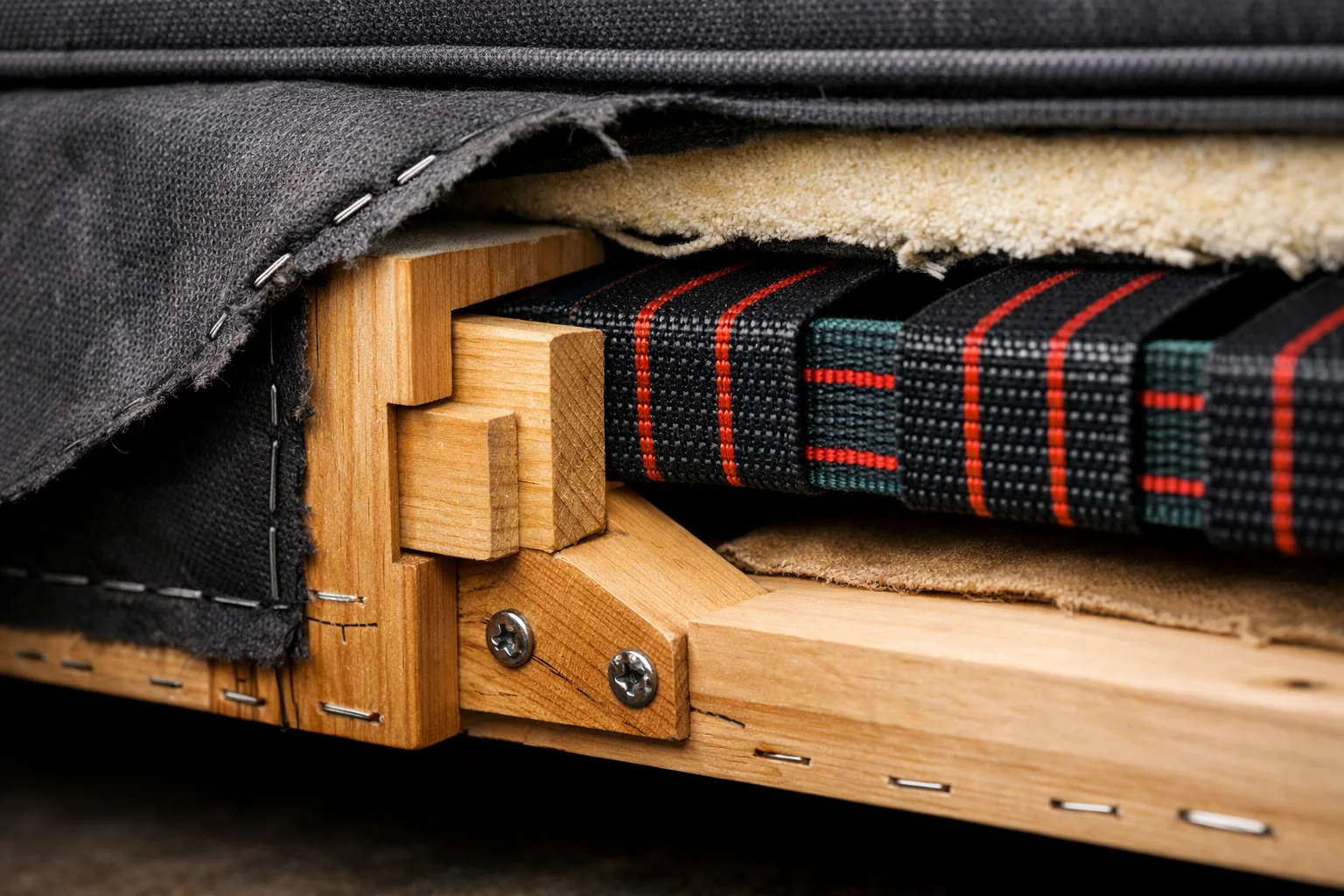
Seat Suspension: Webbing vs. Springs vs. Hand-Tied
Comparing sinuous springs, elastic webbing, and coil spring systems. Understanding why the foundation under your cushions determines sitting comfort more than the cushions themselves.
Analyze Details →